SAAB B17

SAAB B17

PaísSuecia
PapelBombardero, reconocimiento
Primer vuelo18 de mayo de 1940
Construido323

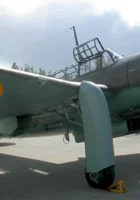
el Saab 17 was a Swedish bomber-reconnaissance aircraft. The project was initiated in response to a request in 1938 from the Swedish air force for a reconnaissance aircraft that could replace the Fokker S 6. Design work began at the end of the 1930s as the L 10 by ASJA, but after the merger with Saab in 1939 it was renamed Saab 17. The wings were reinforced to make it possible for use as a dive bomber. Since there was a shortage of engines the aircraft were flown to their destination, where the engines were removed and returned for use by the next delivery. The aircraft was also made in three versions with different engines.

Fuente: SAAB B17 en Wikipedia

Continuar leyendo

Vistas : 3048

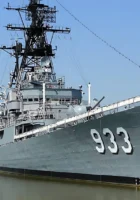
Destructor Barry del USS

USS Barry (DD-933)

PaísE.e.u.u
Clase : tipoForrest Sherman – destructor de clase
Lanzado1 de octubre de 1955
Desarmado5 de noviembre de 1982

USS Barry (DD-933) was one of eighteen Forrest Sherman–class destroyers of the United States Navy, and was the third US destroyer to be named for Commodore John Barry. Commissioned in 1954, she spent most of her career in the Caribbean, Atlantic, and Mediterranean, but also served in the Vietnam War, for which she earned two battle stars. Another notable aspect of her service was the Cuban Missile Crisis in 1962. Decommissioned in 1982, she became the “Display Ship Barry” (DS Barry), a museum ship at the Washington Navy Yard in Washington, D.C., in 1984.

Fuente: USS Barry (DD-933) en Wikipedia

Continuar leyendo

Vistas : 2182

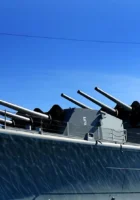
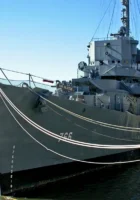
USS Salem

USS Salem (CA-139)

PaísE.e.u.u
Clase : tipoClase Des Moines – Crucero pesado
Lanzado25 de marzo de 1947
Desarmado30 de enero de 1959

La tercera USS Salem (CA-139) es uno de los tres cruceros pesados de la clase Des Moines completados para la Armada de los Estados Unidos poco después de la Segunda Guerra Mundial. Dado de alta en 1949, fue el último crucero pesado del mundo en entrar en servicio y el único que aún existe. Fue dado de baja en 1959, después de servir en el Atlántico y el Mediterráneo. Ella está abierta al público como un barco museo en Quincy, Massachusetts

Fuente: USS Salem (CA-139) en Wikipedia

Continuar leyendo

Vistas: 2959

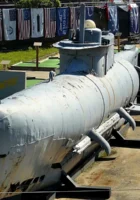
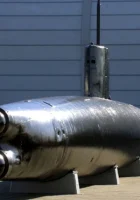
Seehund Submarino enano alemán

Seehund

PaísGermnay
PapelSubmarino midget
Producido1944–1945
Construido285

el Seehund (Alemán: "sello"), también conocido como Tipo XXVII, fue un submarino enano fabricado por la Alemania nazi durante la Segunda Guerra Mundial. Diseñado en 1944 y operado por tripulaciones de dos hombres, fue utilizado por la Kriegsmarine (Armada Alemana) durante los últimos meses de la guerra, hundiendo nueve buques mercantes y dañando otros tres, mientras que perdió 35 barcos, en su mayoría atribuidos al mal tiempo. La Marina francesa utilizó tres barcos capturados después de la guerra hasta 1953.

Fuente: Seehund en Wikipedia

Continuar leyendo

Vistas : 2780

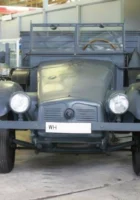
Krupp Protze Kfz

TKrupp Kfz.81 Protze

PaísGermnay
PapelTractor de artillería / Camión utilitario
Producido1934–1941
Construido7000

Los L 2 H 43 y L 2 H 143 "Krupp-Protze” (unofficial designation) was a six-wheeled 6×4 German truck and artillery tractor produced between 1934 and 1941 and heavily used in World War II. It was powered by a 4-cylinder, 55 hp or, from 1936, 60 hp Krupp M 304 petrol engine. Its main purpose was to tow artillery, especially the PaK 36, and transport motorized infantry. This vehicle was extensively used on the Eastern Front, during the North African campaign and in France and Sicily. The “Krupp-Protze” was of relatively advanced design. Its fuel consumption was relatively high (24 Litres / 100 km on road) in comparison to the comparable Opel Blitz 1.5 t truck (16.5 liters / 100 km, produced 1938 – 1942). Total production was about 7,000 units.

Fuente: Krupp Automobile.81 Protze en Wikipedia

Continuar leyendo

Vistas : 5415

Submarino enano tipo A

Type A Midget Submarine

PaísImperio de Japón
claseSubmarino clase Kō-hyōteki
PeríodoSegunda Guerra Mundial
ConstruidoUnknow

el Ko-hyoteki tipo A (甲標的甲型 Kō-hyōteki kō-gata, Target ‘A’, Type ‘A’) class was a class of Japanese midget submarines (Ko-hyoteki) used during World War II. They had hull numbers but no names. For simplicity, they are most often referred to by the hull number of the mother submarine. Thus, the midget carried by I-16-class submarine was known as I-16’s boat, or “I-16tou.” This class was followed by: Type B (甲標的乙型 Kō-hyōteki otsu-gata), Type C (甲標的丙型 Kō-hyōteki hei-gata), and Type D (甲標的丁型 Kō-hyōteki tei-gata), the last one better known as Kōryū

Fuente: Submarino midget tipo A en Wikipedia

Continuar leyendo

Vistas : 2336

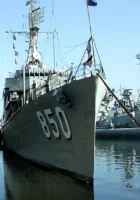
USS Joseph Kennedy

USS Joseph P. Kennedy

PaísE.e.u.u
claseDestructor clase Gearing
Lanzado26 de julio de 1945
ApodoJoey P

USS Joseph P. Kennedy Jr. (DD-850) es un antiguo destructor de la clase Gearing de la Armada de los Estados Unidos. El barco lleva el nombre del teniente Joseph P. Kennedy Jr., un aviador naval, hijo del ex embajador en Gran Bretaña, Joseph P. Kennedy Sr., y hermano mayor del futuro presidente John F. Kennedy. Joseph P. Kennedy Jr. sirvió, con interrupciones por modernización, hasta 1973. Entre los aspectos más destacados de su servicio se encuentran el bloqueo a Cuba durante la Crisis de los Misiles cubanos y los equipos de recuperación a flote para Gemini 6 y Gemini 7. Joseph P. Kennedy Jr. está en exhibición como un barco museo en Battleship Cove, Fall River, Massachusetts. Fue agregado al Registro Nacional de Lugares Históricos en 1976, y designado Monumento Histórico Nacional en 1989 como uno de un pequeño número de destructores sobrevivientes de la clase Gearing.

Fuente: USS Joseph P. Kennedy en Wikipedia

Continuar leyendo

Vistas : 1236

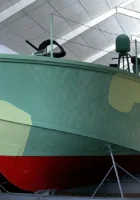
Barco PT PT-617

PT boat

PaísE.e.u.u
claseEscolta destructora clase Cannon
Lanzado20 de febrero de 1944
identificaciónDE-766

un Barco PT (abreviatura de patrullera) fue un buque de ataque rápido armado con torpedos (MTB) utilizado por la Armada de los Estados Unidos en la Segunda Guerra Mundial. Era pequeño, rápido y barato de construir, valorado por su maniobrabilidad y velocidad, pero obstaculizado al comienzo de la guerra por torpedos ineficaces, armamento limitado y construcción comparativamente frágil que limitaba algunas de las variantes a las aguas costeras.

Fuente: Barco PT en Wikipedia

Continuar leyendo

Vistas : 2987

USS Slater

USS Slater

PaísE.e.u.u
claseEscolta destructora clase Cannon
Lanzado20 de febrero de 1944
identificaciónDE-766

USS Slater (DE-766) is a Cannon-class destroyer escort that served in the United States Navy and later in the Hellenic (Greek) Navy. The ship was named for Frank O. Slater of Alabama, a sailor killed on the cruiser USS San Francisco during the Naval Battle of Guadalcanal. He was posthumously awarded the Navy Cross for gallantry in action and the Purple Heart. Following service during World War II, the ship was transferred to Greece and renamed Aetos. Decommissioned in 1991, the destroyer escort was returned to the United States. USS Slater is now a museum ship on the Hudson River in Albany, New York, the only one of its kind afloat in the United States. (USS Stewart (DE-238) is exhibited at Seawolf Park in Galveston, Texas, but located on dry land and USS Atherton (DE-169) is still in service in the Philippine Navy.) Slater was designated a National Historic Landmark on 2 March 2012

Fuente: USS Slater en Wikipedia

Continuar leyendo

Vistas : 1493

Vehículo de reconocimiento Lynx

Lynx reconnaissance vehicle

PaísE.e.u.u
PapelVehículo de reconocimiento
PeríodoUnknow
ConstruidoUnknow

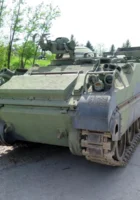
el Vehículo de reconocimiento Lynx (manufacturer’s name: M113½ Command and Reconnaissance Vehicle, abbr. M113 C&R) is a United States-built tracked reconnaissance armoured fighting vehicle, which was employed by the armed forces of the Netherlands and Canada. Dutch vehicles were exported in the 1990s to Bahrain[1] and Chile, according to SIPRI 35 and 8 vehicles respectively. The M113½ was developed in 1963 as a private venture by FMC Corp., the manufacturer of the M113. It competed with the M114 but the US Army chose the M114 for production. The design was then offered to foreign buyers and gained the name Lynx when purchased by Canada.

Fuente: Vehículo de reconocimiento Lynx en Wikipedia

Continuar leyendo

Vistas : 2310