SAAB B17

SAAB B17

KrajuSzwecja
RoliBombowiec, rekonesans
Pierwszy lot18 maja 1940 r.
Zbudowany323

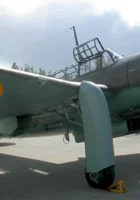
Tthe Saab 17 was a Swedish bomber-reconnaissance aircraft. The project was initiated in response to a request in 1938 from the Swedish air force for a reconnaissance aircraft that could replace the Fokker S 6. Design work began at the end of the 1930s as the L 10 by ASJA, but after the merger with Saab in 1939 it was renamed Saab 17. The wings were reinforced to make it possible for use as a dive bomber. Since there was a shortage of engines the aircraft were flown to their destination, where the engines were removed and returned for use by the next delivery. The aircraft was also made in three versions with different engines.

Źródła: SAAB B17 na Wikipedii

Czytaj dalej

Liczba wyświetleń : 3023

UsS "Barry"

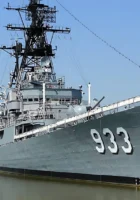
USS Barry (DD-933)

KrajuStany Zjednoczone Ameryki
Klasa – TypForrest Sherman – niszczyciel typu
Uruchomiony1 października 1955
Wycofany ze służby5 listopada 1982

USS Barry (DD-933) was one of eighteen Forrest Sherman–class destroyers of the United States Navy, and was the third US destroyer to be named for Commodore John Barry. Commissioned in 1954, she spent most of her career in the Caribbean, Atlantic, and Mediterranean, but also served in the Vietnam War, for which she earned two battle stars. Another notable aspect of her service was the Cuban Missile Crisis in 1962. Decommissioned in 1982, she became the “Display Ship Barry” (DS Barry), a museum ship at the Washington Navy Yard in Washington, D.C., in 1984.

Źródła: USS Barry (DD-933) na Wikipedii

Czytaj dalej

Liczba wyświetleń : 2181

USS Salem

USS Salem (CA-139)

KrajuStany Zjednoczone Ameryki
Klasa – TypDes Moines – Ciężki krążownik
Uruchomiony25 marca 1947 roku
Wycofany ze służby30 stycznia 1959 r.

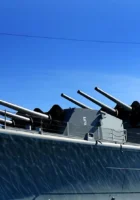
W trzecim USS Salem (CA-139) – jeden z trzech ciężkich krążowników typu Des Moines, które zostały ukończone dla United States Navy krótko po II wojnie światowej. Wszedł do służby w 1949 roku i był ostatnim ciężkim krążownikiem na świecie, który wszedł do służby i był jedynym wciąż istniejących. Został wycofany ze służby w 1959, po służbie na Atlantyku i Morzu Śródziemnym. Ona jest otwarta dla publiczności jako statek muzealny w Quincy, Massachusetts

Źródła: UsS Salem (CA-139) na Wikipedii

Czytaj dalej

Views : 2935

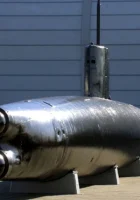
Seehund niemiecki midget okręt podwodny

Seehund

KrajuGermnay ( Germnay )
RoliŁódź podwodna Midget
Produkowane1944–1945
Zbudowany285

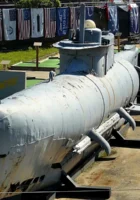
Tthe Seehund • (niem. "seal"), znany również jako Typ XXVII, był okrętem podwodnym typu midget wyprodukowanym przez nazistowskie Niemcy podczas II wojny światowej. Zaprojektowany w 1944 roku i obsługiwany przez dwuosobowe załogi, był używany przez Kriegsmarine (niemiecką marynarkę wojenną) w ostatnich miesiącach wojny, zatapiając dziewięć statków handlowych i uszkadzając dodatkowe trzy, tracąc 35 łodzi, głównie z powodu złej pogody. Francuska marynarka wojenna używała trzech zdobytych łodzi po wojnie do 1953 roku.

Źródła: Seehund na Wikipedii

Czytaj dalej

Liczba wyświetleń : 2777

Krupp Protze Kfz

TKrupp Kfz.81 Protze

KrajuGermnay ( Germnay )
RoliCiągnik artyleryjski / Samochód ciężarowy
Produkowane1934–1941
Zbudowany7000

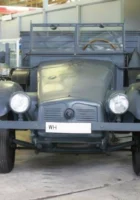
L 2 H 43 i L 2 H 143 "Krupp-Protze” (unofficial designation) was a six-wheeled 6×4 German truck and artillery tractor produced between 1934 and 1941 and heavily used in World War II. It was powered by a 4-cylinder, 55 hp or, from 1936, 60 hp Krupp M 304 petrol engine. Its main purpose was to tow artillery, especially the PaK 36, and transport motorized infantry. This vehicle was extensively used on the Eastern Front, during the North African campaign and in France and Sicily. The “Krupp-Protze” was of relatively advanced design. Its fuel consumption was relatively high (24 Litres / 100 km on road) in comparison to the comparable Opel Blitz 1.5 t truck (16.5 liters / 100 km, produced 1938 – 1942). Total production was about 7,000 units.

Źródła: Krupp Kfz.81 Protze na Wikipedii

Czytaj dalej

Liczba wyświetleń : 5407

Okręt podwodny typu A Midget

Type A Midget Submarine

KrajuCesarstwo Japonii
KlasaOkręt podwodny typu Kō-hyōteki
OkresII wojna światowa
ZbudowanyNiewiedzy

Tthe Typ A Ko-hyoteki (甲標的甲型 Kō-hyōteki kō-gata, Target ‘A’, Type ‘A’) class was a class of Japanese midget submarines (Ko-hyoteki) used during World War II. They had hull numbers but no names. For simplicity, they are most often referred to by the hull number of the mother submarine. Thus, the midget carried by I-16-class submarine was known as I-16’s boat, or “I-16tou.” This class was followed by: Type B (甲標的乙型 Kō-hyōteki otsu-gata), Type C (甲標的丙型 Kō-hyōteki hei-gata), and Type D (甲標的丁型 Kō-hyōteki tei-gata), the last one better known as Kōryū

Źródła: Okręt podwodny typu A Midget na Wikipedii

Czytaj dalej

Liczba wyświetleń : 2335

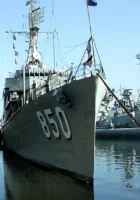
USS Joseph Kennedy

USS Joseph P. Kennedy

KrajuStany Zjednoczone Ameryki
KlasaNiszczyciel typu Gearing
Uruchomiony26 lipca 1945
PrzydomekJoey P

USS Joseph P. Kennedy Jr. (DD-850) – były niszczyciel typu Gearing będący w United States Navy. Okręt został nazwany na cześć porucznika Josepha P. Kennedy'ego Jr., lotnika marynarki wojennej, syna byłego ambasadora w Wielkiej Brytanii, Josepha P. Kennedy'ego Sr. i starszego brata przyszłego prezydenta Johna F. Kennedy'ego. Joseph P. Kennedy Jr. służył do 1973 roku, z przerwami na modernizację. Do najważniejszych osiągnięć okrętu należą: blokada Kuby podczas kryzysu kubańskiego oraz zespoły ratunkowe dla Gemini 6 i Gemini 7. Joseph P. Kennedy Jr. jest wystawiony jako okręt-muzeum w Battleship Cove, Fall River, Massachusetts. W 1976 roku został wpisany do Narodowego Rejestru Miejsc Historycznych, a w 1989 roku został wpisany na Listę Zabytków Narodowych jako jeden z nielicznych ocalałych niszczycieli typu Gearing.

Źródła: USS Joseph P. Kennedy w Wikipedii

Czytaj dalej

Liczba wyświetleń : 1211

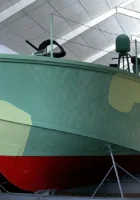
Pt Łódź PT-617

PT boat

KrajuStany Zjednoczone Ameryki
KlasaNiszczyciele eskortowe typu Cannon
Uruchomiony20 lutego 1944
IdentyfikacjaDE-766

A Łódź PT Patrolowy torpedowiec ) był uzbrojonym w torpedy statkiem szybkiego ataku (MTB) używanym przez United States Navy w czasie II wojny światowej. Był mały, szybki i niedrogi w budowie, ceniony za zwrotność i szybkość, ale utrudniony na początku wojny przez nieskuteczne torpedy, ograniczone uzbrojenie i stosunkowo delikatną konstrukcję, która ograniczała niektóre warianty do wód przybrzeżnych.

Źródła: Łódź PT na Wikipedii

Czytaj dalej

Liczba wyświetleń : 2983

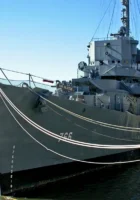
USS Slater

USS Slater

KrajuStany Zjednoczone Ameryki
KlasaNiszczyciele eskortowe typu Cannon
Uruchomiony20 lutego 1944
IdentyfikacjaDE-766

USS Slater (DE-766) is a Cannon-class destroyer escort that served in the United States Navy and later in the Hellenic (Greek) Navy. The ship was named for Frank O. Slater of Alabama, a sailor killed on the cruiser USS San Francisco during the Naval Battle of Guadalcanal. He was posthumously awarded the Navy Cross for gallantry in action and the Purple Heart. Following service during World War II, the ship was transferred to Greece and renamed Aetos. Decommissioned in 1991, the destroyer escort was returned to the United States. USS Slater is now a museum ship on the Hudson River in Albany, New York, the only one of its kind afloat in the United States. (USS Stewart (DE-238) is exhibited at Seawolf Park in Galveston, Texas, but located on dry land and USS Atherton (DE-169) is still in service in the Philippine Navy.) Slater was designated a National Historic Landmark on 2 March 2012

Źródła: USS Slater na Wikipedii

Czytaj dalej

Liczba wyświetleń : 1492

Pojazd rozpoznawczy Lynx

Lynx reconnaissance vehicle

KrajuStany Zjednoczone Ameryki
RoliPojazd rozpoznawczy
OkresNiewiedzy
ZbudowanyNiewiedzy

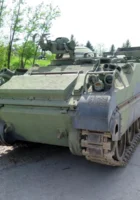
Tthe Pojazd rozpoznawczy Lynx (manufacturer’s name: M113½ Command and Reconnaissance Vehicle, abbr. M113 C&R) is a United States-built tracked reconnaissance armoured fighting vehicle, which was employed by the armed forces of the Netherlands and Canada. Dutch vehicles were exported in the 1990s to Bahrain[1] and Chile, according to SIPRI 35 and 8 vehicles respectively. The M113½ was developed in 1963 as a private venture by FMC Corp., the manufacturer of the M113. It competed with the M114 but the US Army chose the M114 for production. The design was then offered to foreign buyers and gained the name Lynx when purchased by Canada.

Źródła: Pojazd rozpoznawczy Lynx na Wikipedii

Czytaj dalej

Liczba wyświetleń : 2285