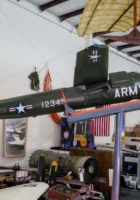
Northrop MQM-57B Sokolnik

Radioplane BTT

KrajuStany Zjednoczone Ameryki
RoliDron docelowy
Pierwsza muchaNiewiedzy
Zbudowany7300+

Tthe Radiosamolot BTT, znany jako RP-71 przez firmę, jako WS-426/2 przez Marynarkę Wojenną Stanów Zjednoczonych i jako WS-462/2 przez Siły Powietrzne Stanów Zjednoczonych, to rodzina dronów-celów produkowanych przez Radioplane Company (późniejszy oddział Northropa).

MQM-57 Sokolnik: A variant of the BTT designated the RP-71, also known as the SD-1 Observer and later redesignated MQM-57 Falconer, was built for battlefield reconnaissance, with first flight in 1955. The Falconer was similar in appearance to the Shelduck, but had a slightly longer and stockier fuselage. It had an autopilot system with radio-control backup, and could carry cameras, as well as illumination flares for night reconnaissance. Equipment was loaded through a hump in the back between the wings. Although it only had an endurance of a little more than a half-hour, making it of limited use, about 1,500 Falconers were built and the type was used internationally with several different military forces, remaining in service into the 1970s. Over 73,000 BTT targets were built in all, and the type was used by at least 18 nations. Some may still be lingering in service.

Źródła: Radiosamolot BTT na Wikipedii

Czytaj dalej

Liczba wyświetleń : 1262

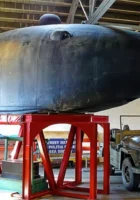
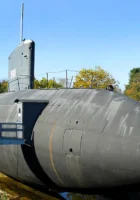
Inteligentny okręt podwodny wielorybów

Intelligent Whale

KrajuStany Zjednoczone Ameryki
Roliokręt podwodny
Ustanowione1863
Zbudowany1

Inteligentny wieloryb, an experimental hand-cranked submarine, was built on the design of Scovel Sturgis Merriam in 1863 by Augustus Price and Cornelius Scranton Bushnell. In 1864 the American Submarine Company was formed, taking over the interests of Bushnell and Price and there followed years of litigation over the ownership of the craft. When title was established by a court the submarine was sold on 29 October 1869 through a contract made by owner Oliver Halstead and Secretary of the Navy George M. Robeson to the United States Navy Department, with most of the price to be paid after successful trials. In September 1872 the first trial was held and was unsuccessful, whereupon the Department refused further payments and abandoned the project.

Źródła: Inteligentny wieloryb na Wikipedii

Czytaj dalej

Wyświetleń: 1636

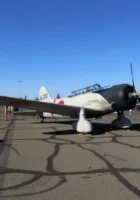
Replika Aichi D3A Val

Aichi D3A

KrajuJaponia
RoliBombowiec nurkowy na bazie lotniskowca
Pierwszy lotStyczeń 1938 r.
Zbudowany1495

Tthe Aichi D3A Type 99 Carrier Bomber (Allied reporting name “Val”) is a World War II carrier-borne dive bomber. It was the primary dive bomber of the Imperial Japanese Navy (IJN) and was involved in almost all IJN actions, including the attack on Pearl Harbor. The Aichi D3A was the first Japanese aircraft to bomb American targets in the war, commencing with Pearl Harbor and U.S. bases in the Philippines, such as Clark Air Force Base. Vals sank more Allied warships than any other Axis aircraf.

Źródła: Aichi D3A na Wikipedii

Czytaj dalej

Liczba wyświetleń : 3100

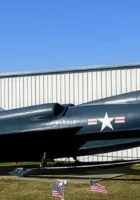
Convair YF-2Y Morze Dart

Convair F2Y Sea Dart

KrajuStany Zjednoczone Ameryki
RoliMyśliwiec wodnosamolotowy
Pierwszy lot14 stycznia 1953 r.
Zbudowany5

Tthe Convair F2Y Morze Dart was an American seaplane fighter aircraft that rode on twin hydro-skis during takeoff and landing. It flew only as a prototype, and never entered mass production. It is the only seaplane to have exceeded the speed of sound. It was created in the 1950s, to overcome the problems with supersonic planes taking off and landing on aircraft carriers. The program was canceled after a series of unsatisfactory results and a tragic accident on 4 November 1954, when test pilot Charles E. Richbourg was killed when the Sea Dart he was piloting disintegrated in midair. The four surviving planes were retired in 1957, but some were kept in reserve until 1962.

Źródła: Convair F2Y Sea Dart na Wikipedii

Czytaj dalej

Liczba wyświetleń: 2498

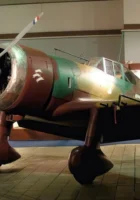
Fokker D. XXI

Fokker D. XXI

KrajuHolenderski
RoliFighter
Pierwszy lot27 marca 1936 roku
Zbudowany146

Tthe Fokker D.XXI fighter was designed in 1935 by Dutch aircraft manufacturer Fokker in response to requirements laid out by the Royal Netherlands East Indies Army Air Force (Militaire Luchtvaart van het Koninklijk Nederlands-Indisch Leger, ML-KNIL). The D.XXI was designed as an inexpensive, rugged, and compact fighter aircraft that would possess respectable performance for its era. Entering operational use in the early years of the Second World War, it provided yeoman service for both the Luchtvaartafdeling (Dutch Army Aviation Group) and the Finnish Air Force. Additionally, a few examples were constructed by the El Carmolí factory before it fell into rebel hands during the Spanish Civil War. Following the invasion and occupation of the Netherlands in May 1940, several captured Dutch D.XXIs were subsequently placed into service with the Luftwaffe.

Źródła: Fokker D. XXI na Wikipedii

Czytaj dalej

Liczba wyświetleń : 4227

USS Albacore

USS Albacore

KrajuStany Zjednoczone Ameryki
RoliResearch submarine
Uruchomiony1 August 1953
Wycofany ze służby9 December 1972

USS Albacore (AGSS-569) was a unique research submarine that pioneered the American version of the teardrop hull form (sometimes referred to as an “Albacore hull”) of modern submarines. The revolutionary design was derived from extensive hydrodynamic and wind tunnel testing, with an emphasis on underwater speed and maneuverability. She was the third ship of the United States Navy to be named for the albacore. Her keel was laid down on 15 March 1952 by the Portsmouth Naval Shipyard of Kittery, Maine. She was launched on 1 August 1953, sponsored by Mrs. J. E. Jowers, the widow of Chief Motor Machinist’s Mate Arthur L. Stanton, lost with the second Albacore (SS-218), and commissioned on 6 December 1953 with Lieutenant Commander Kenneth C. Gummerson in command

Źródła: USS Albacore na Wikipedii

Czytaj dalej

Liczba wyświetleń : 3052

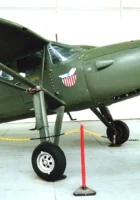
Fairchild Argus Mk.III

Fairchild 24

KrajuStany Zjednoczone Ameryki
RoliStol tuleja samolotu
Pierwszy lot1932
Zbudowany2232

Tthe Fairchild Model 24, zwany także Fairchild Model 24 Argus / UC-61 Forwarder lub Fairchild Model 24 Argus, jest czteromiejscowym, jednosilnikowym jednosilnikowym lekkim samolotem transportowym zaprojektowanym przez Fairchild Aviation Corporation w 1930 roku. Został przyjęty przez United States Army Air Corps jako UC-61, a także przez Royal Air Force. Model 24 sam w sobie był rozwinięciem poprzednich modeli Fairchild i stał się odnoszącym sukcesy cywilnym i wojskowym samolotem użytkowym.

Źródła: Fairchild 24 na Wikipedii

Czytaj dalej

Liczba wyświetleń : 1512

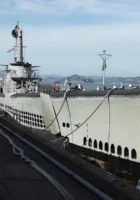
USS Pampanito

USS Pampanito (SS-383)

KrajuStany Zjednoczone Ameryki
KlasaOkręty podwodne typu Balao z napędem diesel-elektrycznym
Uruchomiony12 July 1943

USS Pampanito (SS-383/AGSS-383), a Balao-class submarine, was a United States Navy ship, the third one named for the pompano fish. She completed six war patrols from 1944 to 1945 and served as a Naval Reserve Training ship from 1960 to 1971. She is now a National Historic Landmark, preserved as a memorial and museum ship in the San Francisco Maritime National Park Association located at Fisherman’s Wharf.

Źródła: USS Pampanito na Wikipedii

Czytaj dalej

Liczba wyświetleń : 2016

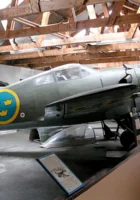
FFV J22

FFVS J 22

KrajuSzwecja
KlasaFighter
Pierwszy lotWrzesień 1942 r.
Zbudowany198

Tthe FFVS J 22 is a Swedish single-engine fighter aircraft developed for the Swedish Air Force during World War II. At the onset of World War II, the Swedish Air Force (Flygvapnet) was equipped with largely obsolete Gloster Gladiator (J 8) biplane fighters. To augment this, Sweden ordered 120 Seversky P-35 (J 9) and 144 P-66 Vanguard (J 10) aircraft from the United States. However, on 18 June 1940 after the German occupation of Norway, the United States declared an embargo against exporting weapons to any nation other than Great Britain.

Źródła: FFVS J 22 na Wikipedii

Czytaj dalej

Liczba wyświetleń : 2855

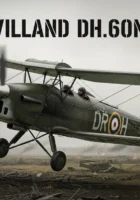
de Havilland DH.60M

de Havilland DH.60 Moth

KrajuUk
KlasaTrener
Pierwszy lot22 lutego 1925
ZbudowanyNiewiedzy

Tthe de Havilland DH.60 is a 1920s British two-seat touring and training aircraft that was developed into a series of aircraft by the de Havilland Aircraft Company. The DH.60 was developed from the larger DH.51 biplane. The first flight of the Cirrus powered prototype DH.60 Moth (registration G-EBKT) was carried out by Geoffrey de Havilland at the works airfield at Stag Lane on 22 February 1925. The Moth was a two-seat biplane of wooden construction, it had a plywood covered fuselage and fabric covered surfaces, a standard tailplane with a single tailplane and fin. A useful feature of the design was its folding wings which allowed owners to hangar the aircraft in much smaller spaces. The then Secretary of State for Air Sir Samuel Hoare became interested in the aircraft and the Air Ministry subsidised five flying clubs and equipped them with Moths.

Źródła: de Havilland DH.60 Moth na Wikipedii

Czytaj dalej

Liczba wyświetleń : 2720