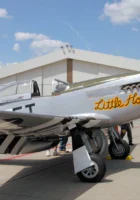
P-51D Mustang

P-51D Mustang

PaísE.e.u.u
Papel

Caza monoplaza

Primer vuelo26 de octubre de 1940
Construido15000+0

La aviación norteamericana P-51 Mustang was an American long-range, single-seat fighter and fighter-bomber used during World War II, the Korean War and other conflicts. The Mustang was conceived, designed and built by North American Aviation (NAA) in response to a specification issued directly to NAA by the British Purchasing Commission. The prototype NA-73X airframe was rolled out on 9 September 1940, 102 days after the contract was signed and, with an engine installed, first flew on 26 October. The Mustang was originally designed to use the Allison V-1710 engine, which had limited high-altitude performance. It was first flown operationally by the Royal Air Force (RAF) as a tactical-reconnaissance aircraft and fighter-bomber. The addition of the Rolls-Royce Merlin to the P-51B/C model transformed the Mustang’s performance at altitudes above 15,000 ft, giving it a performance that matched or bettered the majority of the Luftwaffe’s fighters at altitude. The definitive version, the P-51D, was powered by the Packard V-1650-7, a license-built version of the Rolls-Royce Merlin 60 series two-stage two-speed supercharged engine, and armed with six .50 caliber (12.7 mm) M2 Browning machine guns.

Fuente:P-51D Mustang en Wikipedia

Continuar leyendo

Views : 4987

SdKfz 02 - Kettenkrad - Caminar

SdKfz 02 – Kettenkrad

CountryGermany
TypeLight half-track gun tractor
In service1941–1945

el SdKfz 2, más conocido como el Kleines Kettenkraftrad HK 101 o Kettenkrad para abreviar (donde Ketten significa "cadena" o "pistas" y krad es la abreviatura militar de la palabra alemana Kraftrad, el término administrativo alemán para motocicleta), comenzó su vida como un tractor ligero para las tropas aerotransportadas. El vehículo fue diseñado para ser entregado por aviones Junkers Ju 52, aunque no en paracaídas. El vehículo tenía la ventaja de ser el único tractor de armas lo suficientemente pequeño como para caber dentro de la bodega del Ju 52, y era el vehículo militar alemán de producción masiva más ligero para utilizar el complejo Schachtellaufwerk superpuesto e intercalado ruedas de carretera utilizadas en casi todos los vehículos militares alemanes de media pista de la Segunda Guerra Mundial.

Fuente: Kettenkrad en Wikipedia

Continuar leyendo

Views : 13219

SdKfz 162 - Jagdpanzer IV

Jagdpanzer IV - Sdkfz.162

PaísAlemania
TipoDestructor de tanques
ProducidoDiciembre de 1943 – Abril de 1945
ConstruidoMás de 2000

el Jagdpanzer IV, Sd.Kfz. 162, fue un cazacarros alemán basado en el chasis Panzer IV y construido en tres variantes principales. Como uno de los diseños de Jagdpanzer (cazacarros, literalmente "tanque de caza") sin torretas de estilo casamata, fue desarrollado en contra de los deseos de Heinz Guderian, el inspector general del Panzertruppen, como reemplazo del Sturmgeschütz III (StuG III). Guderian se opuso a la innecesaria, a sus ojos, desviación de recursos de la producción de tanques Panzer IV, ya que el Sturmgeschütz III todavía era más que adecuado para su papel.

Fuente: Wikipedia

Continuar leyendo

Views : 3402

Destructor alemán Z-7 1942 - Trumpeter 05793

Trumpeter

Ref 05793
TipoKit de modelo
Escala1/700
Tema

German Destroyer Z-7 1942

Un modelo de la marca Trumpeter el kit: GGerman Destroyer Z-7 1942 – Trumpeter 05793.

Features : Hull -slide-molded upper hull and lower hull -Deck w/fine detail -Either waterline or full-hull version can be assembled -Phote Etched parts for mast, stand etc.

El destructor Z-7 pertenece al tipo 1934A, también conocido como el Z5 calss, botado el 16 de julio de 1936.Entró en servicio el 9 de septiembre de 1937.El destructor de la lección de diseño de tipo de 1934 modificó el diseño del anfitrión del barco y mejoró el mantenimiento del mar, aceleró la construcción del diseño simplificado mejorado, por lo que algunos barcos e incluso el servicio de sincronismo de 1934, pero se usó solo para disparar cañones viejos, en el rendimiento total no se puede comparar y el destructor británico. La lucha se utiliza principalmente como uso de minelayer. El barco finalmente el 2 de mayo de 1942 por HMS Edinburgh se hundió.

Source: Trumpeter

Continuar leyendo

Vistas : 1580

MK.23 MTVR Cargo Truck - Trumpeter 01011

Trumpeter

Ref 01011
TipoKit de modelo
Escala1/35
Tema

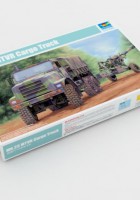
MK.23 MTVR Cargo Truck

Un modelo de la marca Trumpeter el kit: MK.23 MTVR Cargo Truck – Trumpeter 01011.

Features : Detailed multi-directional slide-molded cab. > Full drive train assembly complete with engine transmission, differential housing and suspension units. > The main tires are hollow rubber with very good tread pattern included as well as sidewall details consisting of raised section ribs. > Wheel hubs are in great details > The windshield and side windows are made of clear parts. > Photo-etched parts included

Medium Tactical Vehicle Replacement (MTVR) is a six-wheel drive all-terrain vehicle used by the USMC and US Navy. It is designed to replace the old M939 tactical trucks, and was first fielded in 1998, after the contract was awarded to Oshkosh Truck Corporation. The MTVR comes in several variants, for a wide spectrum of tasks. It offers a major improvement in off-road capability. The MTVR is often referred to as a 7-Ton as this denotes the vehicle’s off-road cargo capacity. The MTVR’s maximum payload on paved surfaces is 15 tons. The MTVR is the Marine Corps prime mover for the M777 howitzer, fuel and water assets, troops and a wide variety of equipment. Its wide versatility and off-road capability make the MTVR an integral part of the Marine Corps logistical backbone.

Source: Trumpeter

Continuar leyendo

Vistas : 1990

Douglas C-47

Douglas C-47 Skytrain

PaísE.e.u.u
TipoAviones de transporte militar
Primer vuelo23 de diciembre de 1941
Construido10174

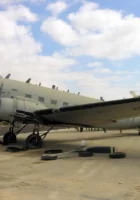
Galería de fotos de un Douglas C-47 Dakota, The Douglas C-47 Skytrain or Dakota (RAF designation) is a military transport aircraft that was developed from the Douglas DC-3 airliner. It was used extensively by the Allies during World War II and remained in front line service with various military operators through the 1950s. The C-47 differed from the civilian DC-3 in numerous modifications that included being fitted with a cargo door and a strengthened floor. During World War II, the armed forces of many countries used the C-47 and modified DC-3s for the transport of troops, cargo, and wounded. The U.S. Naval designation was R4D. More than 10,000 aircraft were produced in Long Beach and Santa Monica, California and Oklahoma City, Oklahoma. The Oklahoma City plant produced 5,354 C-47s from March 1943 until August 1945.

Fuente: Wikipedia

Continuar leyendo

Views : 6324

Grumman F-14A Tomcat

Grumman F-14 Tomcat

PaísE.e.u.u
Tipo

Aviones de combate de ala de barrido variable

Primer vuelo21 de diciembre de 1970
Construido712

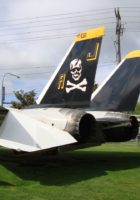
Galería de fotos de un Grumman F-14 Tomcat, The Grumman F-14 Tomcat es un avión de combate supersónico, bimotor, de dos asientos y ala de barrido variable.

Fuente: Wikipedia

Continuar leyendo

Views : 12515

Alemán Pz.Sfl.Iva Dicker Max - Trompetista 07108

Trumpeter

Ref 07108
TipoKit de modelo
Escala1/72
Tema

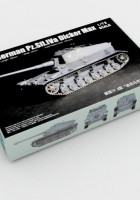
German Pz.Sfl.Iva Dicker Max

Un modelo de la marca Trumpeter el kit: German Pz.Sfl.Iva Dicker Max – Trumpeter 07108.

Features : The kit consists of over 100 parts -detailed hull and turret

En su informe del año fiscal 1938, Krupp reveló que comenzó con el diseño de un K L/52 Selbstfahrlafette de 105 mm. La máquina era famosa como "Dicker max". Estaba armado con el K18 L/52 Krupp de 105 mm. El arma estaba equipada con un freno de boca con doble deflector, esta arma podía penetrar 111 mm de blindaje bajo un ángulo vertical de 30 grados a 2000 metros. Este Panzerjagder estaba ligeramente blindado (10-50 mm), y la superestructura estaba abierta. El motor era el Maybach HL 120 estándar de 12 cilindros (gasolina) asegurando en carretera una velocidad máxima de 40 km / h. Durante los primeros meses de la operación "Barbarroja" en Rusia, fueron asignados con el Abt.521. Uno de ambos fue destruido en la batalla y el otro se perdió en 1941. Los dos prototipos fueron muy efectivos .sin embargo, contrarresta todos los modelos puestos en combate por los rusos en ese momento.

Fuente: Trompetista

Continuar leyendo

Vistas : 1219

Obús autopropulsor soviético 2S3 de 152 mm - Versión temprana - Trompetista 05543

Trumpeter

Ref 05543
TipoKit de modelo
Escala1/35
Tema

Soviet 2S3 152mm Self-Propeller Howitzer – Early Version

Un modelo de la marca Trumpeter el kit: Soviet 2S3 152mm Self-Propeller Howitzer – Early Version – Trumpeter 05543.

Features : The kit consists of over 530 parts -the kit w/refined detail -multi-slide moulded turret, upper hull and lower hull -240 individual tracks links

Designated M1973 by the US Army, the Akatsiya is armed with a 152.4 mm howitzer based on the Soviet 152.4 mm D-20 howitzer and is sometimes confused with the M109 self-propelled artillery. The artillery system was developed at the design bureau No. 9 of Kalinin Machine-Building Plant in Sverdlovsk. The factory designation of the howitzer is D-22 and the GRAU designation, 2A33. The chassis was developed by Uraltransmash. Driver’s and engine-transmission compartments are located in a front part of a hull, fighting compartment with rotatory turret – in middle and rear parts of the hull. The armour is welded rolled steel. Howitzer is equipped with R-123 radio set, R-124 intercom, automatic NBC system with filtration unit and fire-fighting equipment. The V-59 12-cylinder four stroke water-cooled diesel engine connects with a mechanical twin gear transmission, a gear box is in one block with a planetary steering gear. SO-152 has self-entrenching equipment which allows to prepare a trench within 20-40 min. The crew consists of 4-6 men: a driver, a gunner, a loader, a commander, and two ammunition bearers, which are positioned to the rear of the vehicle feeding rounds through two hatches in the hull rear when in masked firing position.

Source: Trumpeter

Continuar leyendo

Vistas : 1925