Königliche Flugzeugfabrik R.E.8

Royal Aircraft Factory R.E.8

LandGroßbritannien
RolleAufklärung, Bomber
Erstflug17. Juni 1916
Gebaut4077

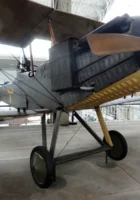
das Royal Aircraft Factory R.E.8 was a British two-seat biplane reconnaissance and bomber aircraft of the First World War designed and produced at the Royal Aircraft Factory. It was also built under contract by Austin Motors, Daimler, Standard Motors, Siddeley-Deasy and the Coventry Ordnance Works. Intended as a replacement for the vulnerable B.E.2, the R.E.8 was widely regarded as more difficult to fly and gained a reputation in the Royal Flying Corps for being “unsafe” that was never entirely dispelled. Although eventually it gave reasonably satisfactory service, it was never an outstanding combat aircraft. Nonetheless, it remained the standard British reconnaissance and artillery observation aircraft from mid-1917 to the end of the war, serving alongside the rather more popular Armstrong Whitworth F.K.8.

Quelle: Royal Aircraft Factory R.E.8 auf Wikipedia

Weiterlesen

Aufrufe : 616

CATI 90 mm

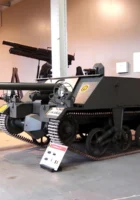
Loyd Carrier

LandGroßbritannien
RolleGepanzerter Personalträger
Im Dienst1939-1960er Jahre
Gebaut26000+

das Loyd Carrier war eines von mehreren kleinen Kettenfahrzeugen, die von den britischen und Commonwealth-Truppen im Zweiten Weltkrieg benutzt wurden, um Ausrüstung und Männer über das Schlachtfeld zu transportieren. Neben den Bren-, Scout- und Maschinengewehrträgern verlegten sie auch Infanterie-Unterstützungswaffen.

Quelle: Loyd Carrier auf Wikipedia

Weiterlesen

Aufrufe : 1403

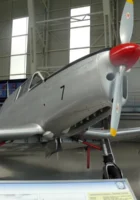
Nardi FN.305 A

Nardi FN.305

LandItalia
RolleKampftrainer und Verbindungs-Eindecker
Erstflug19. Februar 1935
Gebaut211

das Nardi FN.305 was an Italian fighter trainer and liaison monoplane developed by the Fratelli Nardi company. The FN.305 was designed as a trainer and liaison aircraft and the prototype first flew on 19 January 1935. The FN.305 was a low-wing cantilever monoplane of mixed construction. It had tailskid landing gear, with the main gear retracting inwards. It was powered by a nose-mounted 200 hp (149 kW) Fiat A.70S inline piston engine. The prototype was a tandem two-seater with an enclosed cockpit. It was intended to produce both single-seat and two-seat variants and the next prototype was a single-seat fighter trainer followed by a two-seat basic trainer prototype which both had open cockpits.

Quelle: Nardi FN.305 auf Wikipedia

Weiterlesen

Aufrufe: 864

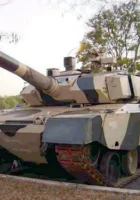
Engesa EE-T1 Osorio

EE-T1 Osério

Land Brazilien
Rolle Hauptkampfpanzer
Produziert 1986
Gebaut 2 Prototypen
das Engesa EE-T1 Osério war ein brasilianischer Hauptkampfpanzer-Prototyp, der von Engesa entwickelt wurde. Der Panzer sollte zunächst an arabische und andere Länder der Dritten Welt verkauft werden, die Produktion ankurbeln – und es der brasilianischen Armee ermöglichen, später eigene Aufträge zu erteilen, ohne Entwicklungskosten finanzieren zu müssen. Die Entwicklung des Panzers wurde zunächst privat von Engesa finanziert, aber Liquiditätsprobleme führten schließlich dazu, dass die brasilianische Regierung einen Kredit zur Unterstützung des Programms verlängerte. Zwei Prototypen des Tanks wurden gebaut, aber der EE-T1 wurde nie für den Dienst angenommen.
Quelle: EE-T1 Osério auf Wikipedia
Weiterlesen

Aufrufe: 2069

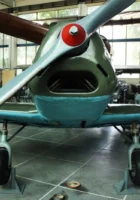
FIAT G.46-2

Fiat CR.46

LandItalien
RolleMilitärischer Ausbilder
Erstflug25. Juni 1947
Gebaut223

das Fiat G.46 was a military trainer developed in Italy shortly after World War II. The G.46 was a conventional, low-wing monoplane with tailwheel undercarriage, the main units of which retracted inwards. The pilot and instructor sat in tandem under a long canopy. The first prototype, powered by a 205 hp (153 kW) Alfa Romeo 115-Ibis engine, made its maiden flight on 25 June 1947.

Quelle: Fiat CR.46 auf Wikipedia

Weiterlesen

Aufrufe: 674

Campini-Caproni C.C.2

Caproni Campini N.1

LandItalien
RolleVersuchsflugzeug
Erstflug27. August 1940
Gebaut2

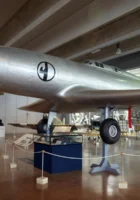
das Caproni Campini N.1, also known as the C.C.2, was an experimental jet aircraft built in the 1930s by Italian aircraft manufacturer Caproni. The N.1 first flew in 1940 and was briefly regarded as the first successful jet-powered aircraft in history, before news emerged of the German Heinkel He 178’s first flight a year earlier. During 1931, Italian aeronautics engineer Secondo Campini submitted his studies on jet propulsion, including a proposal for a so-called thermo-jet to power an aircraft. Following a high-profile demonstration of a jet-powered boat in Venice, Campini was rewarded with an initial contract issued by the Italian government to develop and manufacture his envisioned engine. During 1934, the Regia Aeronautica (the Italian Air Force) granted its approval to proceed with the production of a pair of jet-powered prototype aircraft. To produce this aircraft, which was officially designated as the N.1, Campini formed an arrangement with the larger Caproni aviation manufacturer.

Quelle: Caproni Campini N.1 auf Wiki

Weiterlesen

Ansichten : 1592

Jagdpanzer Kanone 90

Jagdpanzer Kanone 90

LandWestdeutschland
RolleJagdpanzer
Produziert1965–1967
Gebaut770

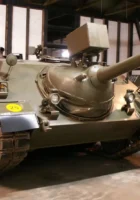
das Kanonenjagdpanzer (KanJPz; auch bekannt als Jagdpanzer Kanone 90mm, "Panzerzerstörer, Geschütz 90mm") war ein deutscher Panzerzerstörer aus dem Kalten Krieg, der mit einem 90-mm-Panzergewehr aus veralteten M47 Patton-Panzern ausgestattet war. Sein Design ähnelte dem des Jagdpanzers IV.

Quelle: Jagdpanzer Kanone 90 auf Wikipedia

Weiterlesen

Ansichten : 2303

Breguet XIV war

Breguet XIV

LandFrankreich
RolleBomber
Erstflug21 November 1916
Gebaut8000+

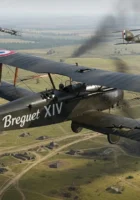
das Bréguet 14 was a French biplane bomber and reconnaissance aircraft of World War I. It was built in very large numbers and production continued for many years after the end of the war. Apart from its widespread usage, the Bréguet 14 is known for being among the first mass-produced aircraft to use large amounts of metal, rather than wood, in its structure. This allowed the airframe to be lighter than a wooden airframe of the same strength, in turn making the aircraft relatively fast and agile for its size; in combat it was able to outrun many contemporary fighters. The Bréguet 14’s strong construction allowed it to sustain considerable damage, in addition to being easy to handle and possessing favourable performance. The type has often been considered to have been one of the best aircraft of the war.

Quelle: Breguet XIV auf Wiki

Weiterlesen

Aufrufe : 1398

Breguet Aviation Br.1050 Alize

Bréguet 1050 Alizé

LandFrankreich
RolleU-Boot-Abwehrflugzeuge
Erstflug6. Oktober 1956
Gebaut89

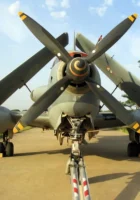
das Bréguet Br.1050 Alizé (französisch: "Tradewind") war ein französisches trägergestütztes U-Boot-Abwehrflugzeug. Es wurde in den 1950er Jahren entwickelt und basierte lose auf dem zweiten Prototyp des Bréguet Vultur-Angriffsflugzeugs, das zum U-Boot-Abwehrflugzeug Bréguet Br.965 Épaulard modifiziert worden war.

Quelle: Bréguet 1050 Alizé auf Wiki

Weiterlesen

Aufrufe : 2028

Sturer Emil 12.8cm Kanone L61

Sturer Emil

LandNazi-Deutschland
RolleSchwerer Jagdpanzer
Im Dienst1942-1943
Gebaut2

Die 12,8 cm Selbstfahrlafette auf VK 30.01(H) "Sturer Emil" (deutsch für "Stubborn Emil") war eine experimentelle deutsche Panzerabwehrkanone aus dem Zweiten Weltkrieg. Es basierte auf dem Henschel VK30.01 Chassis und war mit einem Rheinmetall 12,8 cm K40 L/61 Geschütz (basierend auf dem 12,8 cm FlaK 40) bewaffnet. Dieses Geschütz könnte 7° zu jeder Seite durchqueren, 10° erhöhen und -15° drücken. Es trug 15 Schuss für das Hauptgeschütz.

Quelle: Sturer Emil auf Wikipedia

Weiterlesen

Aufrufe : 2253