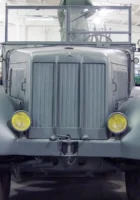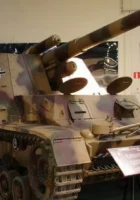
Jagdpanzer Hummel

Hummel

CountryNazi Germany
RoleSelf-propelled artillery
In service1943–1945
Built714

Hummel (German: “bumblebee”) was a self-propelled gun based on the Geschützwagen III/IV chassis and armed with a 15 cm howitzer. It was used by the German Wehrmacht during the Second World War from early 1943 until the end of the war. The full name was Panzerfeldhaubitze 18M auf Geschützwagen III/IV (Sf) Hummel, Sd.Kfz. 165. On February 27, 1944, Hitler ordered the name Hummel to be dropped as it was deemed inappropriate for a fighting vehicle.

Source: Hummel on Wikipedia

Continue reading

Views : 3476

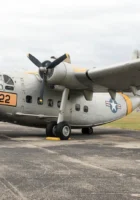
Northrop YC-125B Raider

Northrop YC-125 Raider

CountryUSA
RoleTransport aircraft
First flight1 August 1949
Built23

The Northrop YC-125 Raider was a 1940s American three-engined STOL utility transport built by Northrop Corporation, Hawthorne, California. Deliveries of the YC-125 to the USAF began in 1950. These aircraft did not serve long as they were underpowered and they were soon sent to Sheppard Air Force Base, Texas and relegated to be ground instructional trainers until retired in 1955 and declared surplus. Most of the surplus aircraft were purchased by Frank Ambrose and sold to bush operators in South and Central America.

Source: Northrop YC-125 Raider on Wikipedia

Continue reading

Views : 1765

USS Preble

USS Preble (DDG-88)

CountryUSA
Class and typeArleigh Burke-class destroyer
Launched1 June 2001
HomeportJoint Base Pearl Harbor Hickam

USS Preble (DDG-88) is an Arleigh Burke-class destroyer in the United States Navy. She is the sixth U.S. Navy ship named in honor of Commodore Edward Preble, who served in the American Revolutionary War and was one of the early leaders of the Navy. USS Preble is the 38th destroyer of her class. She was the 17th ship of this class to be built at Ingalls Shipbuilding in Pascagoula, Mississippi, and construction began on 22 June 2000. She was launched on 1 June 2001 and was christened on 9 June 2001. On 9 November 2002, she was commissioned during a ceremony at the Commonwealth Pier/World Trade Center in Boston, Massachusetts. At her commissioning ceremony USS Preble was docked bow to bow with USS Constitution, the command of her namesake. The ceremony included a symbolic welcoming aboard of the spirit of Commodore Preble signaled by the ringing of chimes. Among the speakers at the commissioning were U.S. Senator Edward Kennedy, U.S. Representative Stephen Lynch, then Chief of Naval Operations Admiral Vernon E. Clark USN (Ret.) and journalist and sailor Walter Cronkite.

Source: USS Preble on Wikipedia
Continue reading

Views : 1500

Sd.Kfz.11 3-Ton Half-Track

Sd.Kfz. 11

CountryNazi Germany
RoleLight half-track
Produced1938–45
Built9000+

The Sd.Kfz. 11 (Sonderkraftfahrzeug – special motorized vehicle) was a German half-track that saw widespread use in World War II. Its main role was as a prime mover for medium towed guns ranging from the 3.7 cm FlaK 43 anti-aircraft gun up to the 10.5 cm leFH 18 field howitzer. It could carry eight troops in addition to towing a gun or trailer. The basic engineering for all the German half-tracks was developed during the Weimar-era by the Reichswehr’s Military Automotive Department, but final design and testing was farmed out to commercial firms with the understanding that production would be shared with multiple companies. Borgward was chosen to develop the second smallest of the German half-tracks and built a series of prototypes between 1934 and 1937. However development was taken over in 1938 by Hanomag who designed the main production version, H kl 6.

Source: Sd.Kfz. 11 on Wikipedia
Continue reading

Views : 3781

Sd.Kfz.8

Sd.Kfz. 8

CountryNazi Germany
RoleHeavy half-track
Produced1937–45
Built4000

The Sonderkraftfahrzeug 8 (“special motorized vehicle 8”) was a German half-track that saw widespread use in World War II. Its main roles were as a prime mover for heavy towed guns such as the 21 cm Mörser 18, the 15 cm Kanone 18 and the 10.5 cm FlaK 38, however it was also capable of serving as an infantry transport. Approximately 4,000 were produced between 1938 and 1945. It was used in every campaign fought by the Germans in World War II, notably the Invasion of Poland, the Battle of France, the Balkans Campaign, the Eastern Front, the North African Campaign, the Battle of Normandy and the Italian Campaign.

Source: Sd.Kfz. 8 on Wikipedia
Continue reading

Views : 2808

Bushmaster 2000

Stout Bushmaster 2000

CountryUSA
RoleAirliner
First flight1964
Buily2

The Bushmaster 2000 was a small commuter airliner built in the United States in an attempt to revive the Ford Trimotor design. Work began in 1953 by testing a vintage Trimotor and in 1954 Bill Stout purchased the design rights to the original Trimotor. Due to “Ford Tri-Motor” licensing problems, the Ford 15-AT-D was given the Bushmaster 2000 name. On 15 January 1955, Stout and partner Robert Hayden from the Hayden Aircraft Corporation announced they were planning to build 1,000 new Bushmasters, but it would be eleven years before the first prototype of the new design flew.

Source: Stout Bushmaster 2000 on Wikipedia
Continue reading

Views : 1148

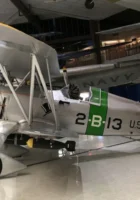
BFC-2

Curtiss F11C Goshawk

CountryUSA
RoleCarrier-borne Fighter & Fighter-Bomber
First flightSeptember 1932
Buily30

The Curtiss F11C Goshawk was a 1930s United States naval biplane fighter aircraft that saw limited success but was part of a long line of Curtiss Hawk airplanes built by the Curtiss Aeroplane and Motor Company for the American military.

Source: RCurtiss F11C Goshawk on Wikipedia
Continue reading

Views : 2322

Cruiser Avrora

Russian cruiser Aurora

CountrySoviet Union
Class and typePallada-class protected cruiser
Launched11 May 1900

Aurora (Russian: Авро́ра, tr. Avrora, IPA: [ɐˈvrorə]) is a 1900 Russian protected cruiser, currently preserved as a museum ship in Saint Petersburg. Aurora was one of three Pallada-class cruisers, built in Saint Petersburg for service in the Pacific. All three ships of this class served during the Russo-Japanese War. Aurora survived the Battle of Tsushima and was interned under US protection in the Philippines, and eventually returned to the Baltic Fleet. The second ship, Pallada, was sunk by the Japanese at Port Arthur in 1904. The third ship, Diana, was interned in Saigon after the Battle of the Yellow Sea. One of the first incidents of the October Revolution in Russia took place on the cruiser Aurora, which reportedly fired the first shot, signalling the beginning of the attack on the Winter Palace.

Source: Russian cruiser Aurora on Wikipedia
Continue reading

Views : 2266

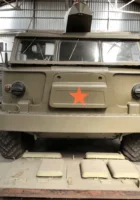
FROG-7 Luna on BAZ-135

ZIL-135

CountrySoviet Union
RoleArtillery truck
Produced1959-1963 (ZIL)
1963-1994 (BAZ)
BuiltUnknow

The ZIL-135 is a large, eight-wheeled military transport and self-propelled artillery truck produced in the Cold War by the Soviet Union starting in 1959. Its purpose was to carry and launch an artillery missile, specifically a FROG-7, from surface-to-surface. The ZIL-135 was widely exported to other communist countries, most notably North Korea, where it is a common sight in films and military marches. It also served as the TEL for the BM-27 Uragan artillery rocket system.

Source: ZIL-135 on Wikipedia
Continue reading

Views : 3223

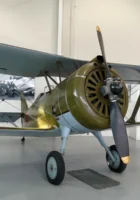
Polikarpov I-152

Polikarpov I-15

CountrySoviet Union
Role Fighter
First flightOctober 1933
Built3300+

The Polikarpov I-15 (Russian: И-15) was a Soviet biplane fighter aircraft of the 1930s. Nicknamed Chaika (Russian: Чайка, “Seagull”) because of its gulled upper wings, it was operated in large numbers by the Soviet Air Force, and together with the Polikarpov I-16 monoplane, was one of the standard fighters of the Spanish Republicans during the Spanish Civil War, where it was called Chato (snub-nose).

Source: Polikarpov I-15 on Wikipedia
Continue reading

Views : 3046