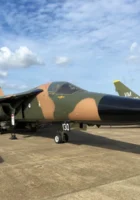
F-111C

General Dynamics F-111C

CountryUSA
RoleFighter-bomber and reconnaissance aircraft
First flightJuly 1968
Built28

The General Dynamics F-111C (nicknamed “Pig”) is a variant of the F-111 Aardvark medium-range interdictor and tactical strike aircraft, developed by General Dynamics to meet Australian requirements. The design was based on the F-111A model but included longer wings and strengthened undercarriage. The Australian government ordered 24 F-111Cs to equip the Royal Australian Air Force (RAAF) in 1963, but the aircraft were not delivered until 1973 because of long-running technical problems.

Source: General Dynamics F-111C on Wikipedia
Continue reading

Views : 3872

Fieseler Fi 103 V-1

V-1 flying bomb

CountryNazi Germany
RoleCruise missile
In service1944–1945
BuiltUnknow

The V-1 flying bomb (German: Vergeltungswaffe 1 “Vengeance Weapon 1)—also known to the Allies as the buzz bomb, or doodlebug, and in Germany as Kirschkern (cherry stone) or Maikäfer (maybug), as well as by its official RLM aircraft designation of Fi 103 was an early cruise missile and the only production aircraft to use a pulsejet for power.

Source: V-1 flying bomb on Wikipedia
Continue reading

Views : 3301

Polikarpov I-153 Chaika

Polikarpov I-153

CountrySoviet Union
Role Fighter
First flight1937
Built3400+

The Polikarpov I-153 Chaika (Russian Чайка, “Seagull”) was a late 1930s Soviet biplane fighter. Developed as an advanced version of the I-15 with a retractable undercarriage, the I-153 fought in the Soviet-Japanese combats in Mongolia and was one of the Soviets’ major fighter types in the early years of the Second World War. Three I-153s are still flying.

Source: Polikarpov I-153 on Wikipedia
Continue reading

Views : 4205

2S3 Akatsiya

2S3 Akatsiya

CountrySoviet Union
RoleSelf-propelled gun
In service1971–present
BuiltUnknow

SO-152 (СО-152) is a Soviet 152.4 mm self-propelled gun developed in 1968. It was a response to the American 155 mm M109. The development started in 1967 according to the Resolution of the Council of Ministers of the Soviet Union from July 4, 1967. In 1968 the SO-152 was completed and in 1971 entered service. Its GRAU designation is 2S3 (2С3). The fighting vehicle also received the additional designation Akatsiya (Акация), which is Russian for acacia.

Source: 2S3 Akatsiya on Wikipedia

Continue reading

Views : 2934

de Havilland DH.9

Airco DH.9

CountryUK
RoleBomber
First flightJuly 1917
Built4091

The Airco DH.9 (from de Havilland 9) – also known after 1920 as the de Havilland DH.9 – was a British single-engined biplane bomber developed and deployed during the First World War. The DH.9 was a development of Airco’s earlier successful DH.4, with which it shared many components. These were mated to an all-new fuselage and the BHP/Galloway Adriatic engine, which promised increased performance. Anticipating its usefulness, the type was ordered in very large numbers for Britain’s Royal Flying Corps (RFC).

Source: Airco DH.9 on Wikipedia

Continue reading

Views : 1990

F7U-3M Cutlass

Vought F7U Cutlass

CountryUSA
RoleNaval multirole fighter
First flight29 September 1948
Built320

The Vought F7U Cutlass was a United States Navy carrier-based jet fighter and fighter-bomber of the early Cold War era. It was a tailless aircraft based on aerodynamic data and plans captured from the German Arado company at the end of World War II, though Vought designers denied any link to the German research at the time. The F7U was the last aircraft designed by Rex Beisel, who was responsible for the first fighter ever designed specifically for the U.S. Navy, the Curtiss TS-1 of 1922.

Source: Vought F7U Cutlass on Wikipedia

Continue reading

Views : 3366

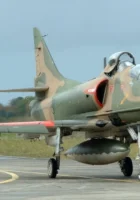
TA-4SU Skyhawk

ST Aerospace A-4SU Super Skyhawk

CountryRepublic of Singapore
RoleFighter-bomber, Advanced jet trainer
First flight19 September 1986
Built150

The ST Aerospace A-4SU Super Skyhawk is a major upgrade project of the Douglas A-4S Skyhawk attack aircraft undertaken by Singapore Aircraft Industries (SAI, now ST Aerospace) in the 1980s. It was used exclusively by the Republic of Singapore Air Force (RSAF), serving in the fighter-bomber role from 1989 until retirement from front line service in 2005. Since mid-1999, the A-4SU took on the additional role of being the designated advanced jet trainer (AJT) aircraft for the RSAF’s AJT training program/detachment in Cazaux, France.

Source: ST Aerospace A-4SU Super Skyhawk on Wikipedia

Continue reading

Views : 1556

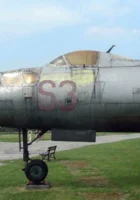
Iliushin Il-28

Ilyushin Il-28

CountrySoviet Union
RoleMedium bomber
First flight8 July 1948
Built6635

The Ilyushin Il-28 (Russian: Илью́шин Ил-28; NATO reporting name: Beagle) is a jet bomber of the immediate postwar period that was originally manufactured for the Soviet Air Forces. It was the Soviet Union’s first such aircraft to enter large-scale production. It was also licence-built in China as the Harbin H-5. Total production in the USSR was 6,316 aircraft, and over 319 H-5s were built. Only 187 examples of the HJ-5 training variant were manufactured. In the 1990s hundreds remained in service with various air forces over 50 years after the Il-28 first appeared. The only H-5s in service currently are approximately 80 aircraft which operate with the Korean People’s Air Force. The Il-28 has the USAF/DoD reporting name “Type 27” and NATO reporting name “Beagle”, while the Il-28U trainer variant has the USAF/DoD reporting name “Type 30” and NATO reporting name Mascot.

Source: Ilyushin Il-28 on Wikipedia

Continue reading

Views : 3293

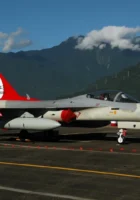
F-CK-1 Ching Kuo

AIDC F-CK-1 Ching-kuo

CountryTaiwan
RoleFighter aircraft
First flightMay 28, 1989
Built131

The AIDC F-CK-1 Ching-Kuo (Chinese: 經國號戰機; pinyin: Jīngguó Hào Zhànjī), commonly known as the Indigenous Defense Fighter (IDF), is a multirole combat aircraft named after Chiang Ching-kuo, the late President of the Republic of China. The aircraft made its first flight in 1989. It was delivered to Republic of China Air Force in January 1994 and entered service in 1997. All 130 production aircraft had been manufactured by 1999.

Source: AIDC F-CK-1 Ching-kuo on Wikipedia

Continue reading

Views : 2492

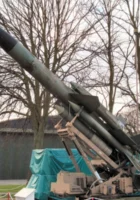
Bristol Bloodhound

Bristol Bloodhound

CountryUK
RoleSurface-to-air missile
In service1958 – 1991
Built783

The Bristol Bloodhound is a British ramjet powered surface-to-air missile developed during the 1950s. It served as the UK’s main air defence weapon into the 1990s and was in large-scale service with the Royal Air Force (RAF) and the forces of four other countries. Part of sweeping changes to the UK’s defence posture, the Bloodhound was intended to protect the RAF’s V bomber bases to preserve the deterrent force, attacking bombers that made it past the Lightning interceptor force. Bloodhound Mk. I entered service in December 1958, the first British guided weapon to enter full operational service. This was part of Stage 1 upgrades to the defensive systems, in the later Stage 2, both Bloodhound and the fighters would be replaced by a longer-range missile code named Blue Envoy. When this was ultimately cancelled in 1957, parts of its design were worked into Bloodhound Mk. II, roughly doubling the range of the missile. The Mk. I began to be replaced by the Mk. II starting in 1964.

Source: Bristol Bloodhound on Wikipedia

Continue reading

Views : 2320