Sdkfz.10/4 - Wydawnictwo Militaria 172

Wydawnictwo Militaria

SeriesWydawnictwo Militaria
Réf172
SujetSdkfz.10/4
Periodww2

Signed documentation Wydawnictwo Militaria the book "Sdkfz.10/4 - Wydawnictwo Militaria 172" .

The SdKfz 10 (Sonderkraftfahrzeug 10) was a German halftrack that had limited use during World War II. He could carry eight men and tow anti-tank guns. About 17,000 copies were produced between 1937 and 1944. The concept on which the vehicle was based was further developed with the SdKfz 250.

Source: Wikipedia

Continue reading

Views: 823

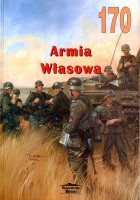
Wydawnictwo Militaria 170 - Armia Wlasowa

Wydawnictwo Militaria

SeriesWydawnictwo Militaria
Réf170
SujetArmia Wlasowa
Pedriodeww2

Signed documentation Wydawnictwo Militaria the book "Armia Wlasowa – Wydawnictwo Militaria 170".

Le 1er septembre 1939, sans déclaration de guerre formelle, l’armée allemande envahit la Pologne sous le prétexte que les troupes polonaises ont commis des provocations le long de la frontière germano-polonaise1. Ce prétexte s’ajoute au contentieux concernant les droits de l’Allemagne sur la Ville libre de Dantzig et le passage entre la Prusse-Orientale et le reste de l’Allemagne à travers le corridor de Dantzig. Conformément au Pacte germano-soviétique, la Pologne est partagée entre l’Allemagne et l’Union soviétique dont les troupes envahissent l’Est de la Pologne le 17 septembre 1939.

Source: Wikipedia

Continue reading

Views: 832

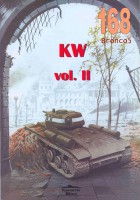
KW - KV-1 - KV2 - Wydawnictwo Militaria 168

Wydawnictwo Militaria

SeriesWydawnictwo Militaria
PeriodWorld War II
Réf168
Sujet KW – KV-1 – KV2

Signed documentation Wydawnictwo Militaria le livre «KW – KV-1 – KV2 – Wydawnictwo Militaria 034» .

The tank Kliment Voroshilov (KV) is a Soviet rupture tank. It was an unpleasant surprise for the Wehrmacht during Operation Barbarossa: at the time it was almost invulnerable to all its weapons except the 88 mm Flak anti-aircraft gun and direct artillery fire.

Source: KV sur Wikipedia

Continue reading

Views : 1513

Wydawnictwo Militaria 166 GMC

Wydawnictwo Militaria

PublisherWydawnictwo Militaria
Réf166
SujetGmc
Periodww2

Signed documentation Wydawnictwo Militaria the book "GMC - Wydawnictwo Militaria 166" .

The GMC CCKW is a six-wheel-drive U.S. military transport vehicle that served during World War II (1939-1945). It was offered in several variants, with open or closed cabs, long or short chassis.

Source: wikipedia

Continue reading

Views : 1002

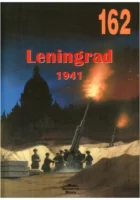
Wydawnictwo Militaria 162 Leningrad

Wydawnictwo Militaria

SeriesWydawnictwo Militaria
Réf162
SujetLeningrad (1941)
Periodww2

Signed documentation Wydawnictwo Militaria the book "Leningrad 1941 – Wydawnictwo Militaria 162".

The headquarters of Leningrad is the seat of the Russian metropolis now known as St. Petersburg by the Germans during World War II. The German operation was codenamed Operation Nordlicht. Despite colossal human losses (1,800,000 men, including more than a million civilians), the siege, lasting 872 days, which began on September 8, 1941 and ended on January 27, 1944, the city resisted until its disengagement in 1944, during the longest siege in modern history.

Source: Leningrad 1941 on Wikipedia

Continue reading

Views: 672

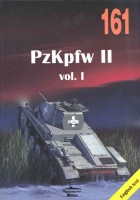
Wydawnictwo Militaria 161 - Pzkpfw II v1

Wydawnictwo Militaria

SeriesWydawnictwo Militaria
Réf161
Sujet Panzerkampfwagen II – PzKpfw II – Sd. Kfz. 121
Periodww2

Signed documentation Wydawnictwo Militaria le livre «PzKpfw II – Wydawnictwo Militaria 161» .

The Panzerkampfwagen II ( PzKpfw II ) or Sd. Kfz. 121 was a German-made tank. Like the PzKpfw I, it was designed as a temporary model, waiting for tanks like the PzKpfw III or the PzKpfw IV. Both types of vehicles were intended to provide training gear for The Panzerwaffe crews to develop the tactics of the future Blitzkrieg. However, the delay in the production of real battle tanks forced the Germans to use them massively during the beginning of the Second World War, and it was not until 1941 that they were gradually removed from the front lines. Subsequently, however, the PzKpfw II remained for a long time an important vehicle in the Wehrmacht's arsenal, thanks to reconnaissance derivatives and as a chassis for self-propelled guns, such as the Marder II and the Wespe. It had one more crew member than the Panzer I, a radio operator, also responsible for reloading the 20 mm automatic gun.

Source: Wikipedia

Continue reading

Views: 800

T-28 - Wydawnictwo Militaria 160

Wydawnictwo Militaria

SeriesWydawnictwo Militaria
Réf160
SujetT-28
Periodww2

Signed documentation Wydawnictwo Militaria the book "T-28 – Wydawnictwo Militaria 160".

The T-28 is a Soviet medium tank, the prototype of which was ready in 1931. Mass production began in late 1932. Its role was the support of infantry, during the attack of fortified defensive areas. It is designed to support the T-35 heavy tank, of which it shares many elements.

Source: Wikipedia

Continue reading

Views: 671

T-35 - SMK T-100 - Wydawnictwo Militaria 159

Wydawnictwo Militaria

SeriesWydawnictwo Militaria
PeriodWorld War II
Réf159
SujetT-35 - T-100 SMK

Signed documentation Wydawnictwo Militaria the book "T-35 - SMK T-100 - Wydawnictwo Militaria 159" .

The T-35 est un char de combat lourd soviétique. Ce monstre inspiré du Vickers Independant avec ses cinq tourelles, ses 50 t et ses 11 membres d’équipage mit quatre ans pour devenir opérationnel, après trois essais infructeux (T30, T35-1 et T35-2). Produit en petite quantité (environ 70 exemplaires), il posa continuellement des problèmes de mise au point de son moteur et de sa transmission, qui contraignirent à une modernisation en 1937 et à une standardisation de ses tourelles avec celles du Char T-28. Sa masse interdisait le renforcement de son blindage déjà trop faible lors de sa sortie et il se révéla impossible à commander du fait de la séparation de ses postes de combat.

Source: Wikipedia

Continue reading

Views : 666

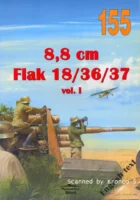
Wydawnictwo Militaria 155 8,8 cm Flak 18-36-37

Wydawnictwo Militaria

SeriesWydawnictwo Militaria
Réf155
Sujet88mm - Flak 18/36/37
PeriodWorld War II

Signed documentation Wydawnictwo Militaria the book "88mm - Flak 18/36/37 - Wydawnictwo Militaria 155" .

HistoryIn: The cannon of 88 mm désigne communément deux pièces d’artilleries allemande de la Seconde Guerre mondiale qui ont marqué les esprits, en particulier chez les tankistes[réf. nécessaire]. Elles équipèrent tous deux des blindés allemands dans la deuxième moitié de la guerre, dont le Tiger. La première, le Flak18 8,8cm et ses variantes, est une pièce à vocation antiaérienne d’une grande polyvalence, notamment l’utilisation antichar. Produite en grand nombre, c’est cette pièce qui sera à l’origine de la réputation du “88”. La seconde, le Pak43/1 8,8cm et ses variantes, apparaît en 1943 et est une pièce à vocation antichar, où elle est encore plus performante, mais n’est pas conçue pour tirer sur des avions. De fait moins polyvalente, et arrivée plus tard, elle fut bien moins produite que les pièces 8,8cm Flak. Ces deux pièces se sont fait remarquer par leur puissance de feu, leur cadence de tir élevée, leur grande capacité de pénétration, ces qualités étant soulignés par leur précision remarquable à l’époque. Elles sont si performantes dans leur utilisation terrestre qu’elles sont souvent confondues et nommées communément “88” par leurs adversaires, alors que les Allemands les appelaient plutôt “acht acht” (huit-huit).

Source: Flak88 sur Wikipedia

Continue reading

Views: 1154

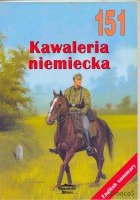
La Cavalerie Allemande - Wydawnictwo Militaria 151

Wydawnictwo Militaria

SeriesWydawnictwo Militaria
Réf151
SujetThe German Cavalry
PeriodWorld War II

Signed documentation Wydawnictwo Militaria the book "The German Cavalry - Wydawnictwo Militaria 151".

Horses in The Second World War were auxiliary elements in the strategic and tactical evolution of the armed conflict. There were only a few nations at that time with mounted units. The experience of the First World War had served and the traditional functions of the cavalry had been replaced by mechanized armoured divisions. Similarly in terms of their use as logistical support, the evolution of the automobile and transport encouraged their disappearance within the army.

Source: Wikipedia

Continue reading

Views : 1016