Offensive du lac Balaton - Wydawnictwo 246

Wydawnictwo Militaria

SeriesWydawnictwo Militaria
SujetLake Balaton Offensive - Operation Frehlingserwachen
Réf246

Signed documentation Wydawnictwo Militaria the book "Balaton Lake Offensive - Wydawnictwo 246" .

L'opération Frhlingserwachen (opération Réveil du printemps) du 6 au 16 mars 1945 fut la dernière grande offensive allemande de la Seconde Guerre mondiale. L’offensive fut lancée en Hongrie dans la région du lac Balaton, d’où le nom aussi donné d’offensive du lac Balaton. Lancée en grand secret le 6 mars 1945, l’attaque allemande fut centrée sur la région du lac Balaton, cette région présentant les dernières réserves de pétrole encore disponibles pour les Allemands. Elle incluait plusieurs unités allemandes retirées du front de l’Ouest après l’échec de l’offensive des Ardennes dont la 6e armée Panzer SS. Malgré quelques gains initiaux, cette offensive fut un échec. Elle démontra le manque de jugement militaire d’Hitler vers la fin de la guerre. Il avait décidé seul de cette opération, trop ambitieuse (Hitler espérait repousser les Soviétiques au delà du Danube) sans support aérien et avec du carburant limité. Stratégiquement, l’opération n’eut pas d’impact sur le déroulement de la fin du conflit. Si elle démontra que l’armée allemande conservait des qualités guerrières, 24 heures de contre-offensive soviétique rétablirent le front tel qu’il était avant le lancement de l’opération allemande.

Source: Wikipedia

Continue reading

Views: 901

PanzerDivision SS-Frundsberg - Wydawnictwo 245

Wydawnictwo Militaria

SeriesWydawnictwo Militaria
SujetPanzerDivision SS-Frundsberg
Réf245

Signed documentation Wydawnictwo Militaria the book "PanzerDivision SS-Frundsberg - Wydawnictwo 245" .

La 10e Panzerdivision SS Frundsberg est une division de Waffen-SS levée en janvier 1943. Son nom de Frundsberg fait référence au reitre allemand du XVIe siècle Georg von Frundsberg.

Source: Wikipedia

Continue reading

Views: 854

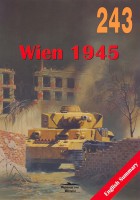
Libération de Vienne 1945 - Wydawnictwo 243

Wydawnictwo Militaria

SérieWydawnictwo Militaria
SujetVienne 1945
Réf243

Une documentation signée Wydawnictwo Militaria le livre «Libération de Vienne 1945 – Wydawnictwo 243» .

Après une nouvelle contre-attaque manquée, l’Armée Rouge entre en Autriche le 30 mars et prend Vienne le 13 avril. En tout, l’OKW rapporte la perte de 600 000 hommes, morts, blessés ou faits prisonniers entre janvier et février 1945. Le 9 avril, la garnison de Königsberg se rend mais des débris du Groupe d’Armées Nord restent encerclés dans des poches le long de la mer Baltique.

Source: Wikipedia

Continue reading

Views : 857

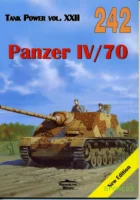
Wydawnictwo Militaria 242 Panzer IV 70

Wydawnictwo Militaria

PublisherWydawnictwo Militaria
SeriesWydawnictwo Militaria
SujetPanzer IV/70 - Sdkfz.162/1
Réf242

Signed documentation Wydawnictwo Militaria the book "Panzer IV/70 - Jagdpanzer IV - Wydawnictwo 242" .

The Jagdpanzer IV, SdKfz 162, was a German tank destroyer based on the chassis of the Panzerkampfwagen IV which was built in three main versions during World War II. It was developed despite the opposition of Heinz Guderian, Inspector General of the Panzertruppen, to replace the StuG III. Guderian felt it unnecessary to distract from the resources of the Panzer IV production because, in his view, the StuG III and StuG IV were still fully playing their part.

Source: Wikipedia

Continue reading

Views: 1346

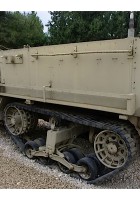
M5 HalfTrack - Walk Around

Half-Track

PaysUSA
Model

M5

PeriodWorld War II
Description

Album de 64 photos of the M5 HalfTrack

Photo gallery on an M5 HalfTrack, The self-guide Armoured Halftrack in English - was the first U.S. Army troop transport vehicle to be operationally employed. It was built and used extensively during the Second World War and continued its career well beyond the Middle East, notably where it was used in many versions in Israel or Lebanon (ALS). Some versions are still used today like the Tsefa. Its anti-aircraft version, the M 16, ended its operational career in the mid-1980s. Seventy variants representing 41,000 vehicles came out of Diamond T, White and Autocar factories.

Source: M5 HalfTrack on Wikipedia

Continue reading

Views : 5076

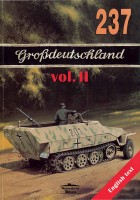
Wydawnictwo Militaria 237 - Grossdeutschland vol III

Wydawnictwo Militaria

SeriesWydawnictwo Militaria
SujetGrossdeutschland
Réf237

Signed documentation Wydawnictwo Militaria the book "Grossdeutschland – Wydawnictwo 237".

The Panzergrenadier Division Grossdeutschland (Division Großdeutschland) was an elite motorized infantry division of the German Army (Wehrmacht) during World War II.

Source: Wikipedia

Continue reading

Views: 803

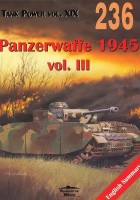
Panzerwaffe 1945 - Wydawnictwo 236

Wydawnictwo Militaria

SeriesWydawnictwo Militaria
SujetPanzerwaffe 1945
Réf236

Signed documentation Wydawnictwo Militaria le livre «Panzerwaffe 1945 – Publishing House 236» .

The Panzer Divisions spearheaded the Wehrmacht. The Pz.Div. is composed of armoured regiments equipped with Panzer, infantry and also artillery, transmissions, engineering, etc. However, the ratio of Panzer Division elements has changed over time. A Panzer Division during the Second World War could have up to 300 armoured combat vehicles and a force of 15,000 men on paper. In 1941, the German Panzer Divisions were motorized; 1945 provide for the organizing tables of these same units to provide for cycling infantry battalions and horse-drawn train units. The attrition and the too late total mobilization of the German military-industrial complex, as well as the need to raise more and more units, led to a decrease in the overall technological level of the German army.

Source: Wikipedia

Continue reading

Views : 964

Wydawnictwo Militaria 235 - Konigsberg 1945

Wydawnictwo Militaria

SeriesWydawnictwo Militaria
SujetKönigsberg 1945
Réf235

Signed documentation Wydawnictwo Militaria le livre «Königsberg 1945 – Wydawnictwo 235» .

The Battle of Königsberg (6–9 April 1945) was a strategic war operation between soviet and german armed forces at the end of World War II with the aim of liquidating the pockets of German resistance in the city and seizing the citadel of Königsberg in East Prussia. The city had already been totally destroyed by the Anglo-American aerial bombardments of 26 and 27 July 1944 and 29 and 30 July 1944. It was therefore the last phase of the East Prussian campaign which took place from 13 January to 25 April 1945. Königsberg was then far behind the front that had overtaken it since March.

Source: Wikipedia

Continue reading

Views: 1483

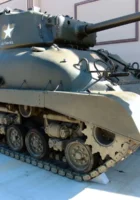
M4A1 Sherman

M4A1

PaysUSA
TypeMedium tank
PeriodWorld War II
DescriptionAlbum de 122 pictures of the tank M4A1 Sherman

Photo Gallery on an M4A1 Sherman, The Medium Tank M4 est le char américain moyen produit en plus grande quantité pendant la Seconde Guerre mondiale. Près de cinquante mille exemplaires (toutes versions confondues) furent produits. Son surnom de « Sherman », lui est attribué par les Britanniques, quand ils reçoivent leurs premiers exemplaires dans le cadre de la loi de prêt-bail, continuant leur tradition de nommer les chars d’origine américaine d’après le nom d’un général nordiste de la guerre de Sécession célèbre de ce pays. L’US Army adopte par la suite ce surnom, et le Medium Tank M4 is therefore called " M4 Sherman ». Les Soviétiques surnomment les leurs « Emcha ».

Source: M4A1 Sherman on Wikipedia

Continue reading

Views : 7364

Wydawnictwo Militaria 233 - Wespe

Wydawnictwo Militaria

SeriesWydawnictwo Militaria
SujetWasp - Sdkfz.124
Réf233

Signed documentation Wydawnictwo Militaria le livre "Wasp - Sdkfz.124 - Wydawnictwo 233" .

The SdKfz 124 Wasp (allemand pour guêpe) ou (Leichte Feldhaubitze 18 auf Fahrgestell Panzerkampfwagen II) était un canon autoporté développé et utilisé pendant la Seconde Guerre mondiale. Il était basé sur le châssis du char Panzer II. En 1940, au cours de la bataille de France, il devint évident que le char principal des forces allemandes, le Panzer II, ne faisait plus l’affaire comme véhicule de combat ; bien que mécaniquement fiable, son canon principal était insuffisant et son blindage trop faible. Dès lors, quand le besoin d’un canon d’artillerie autoporté se fit sentir, le recyclage du Panzer II s’imposa comme un choix évident : il fut retiré des unités au front et son châssis réutilisé dans ce nouvel usage.

Source: Wikipedia

Continue reading

Views : 1150