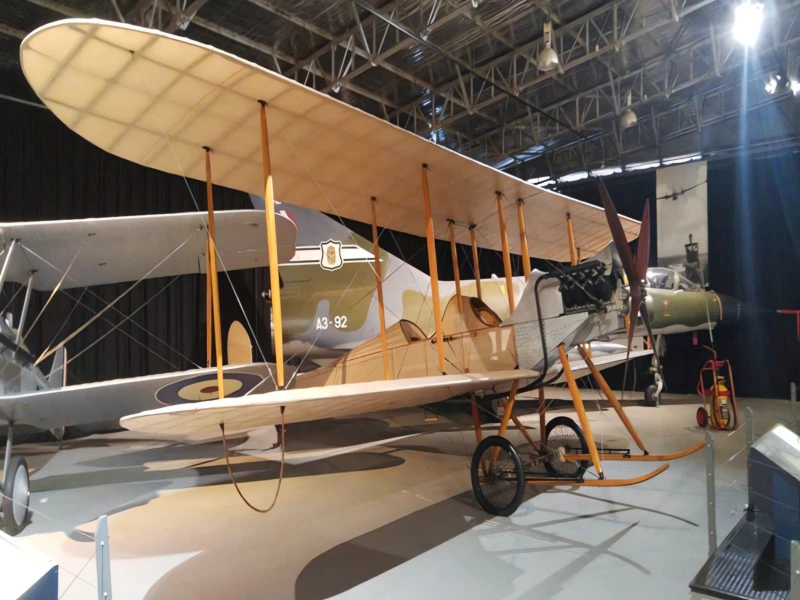
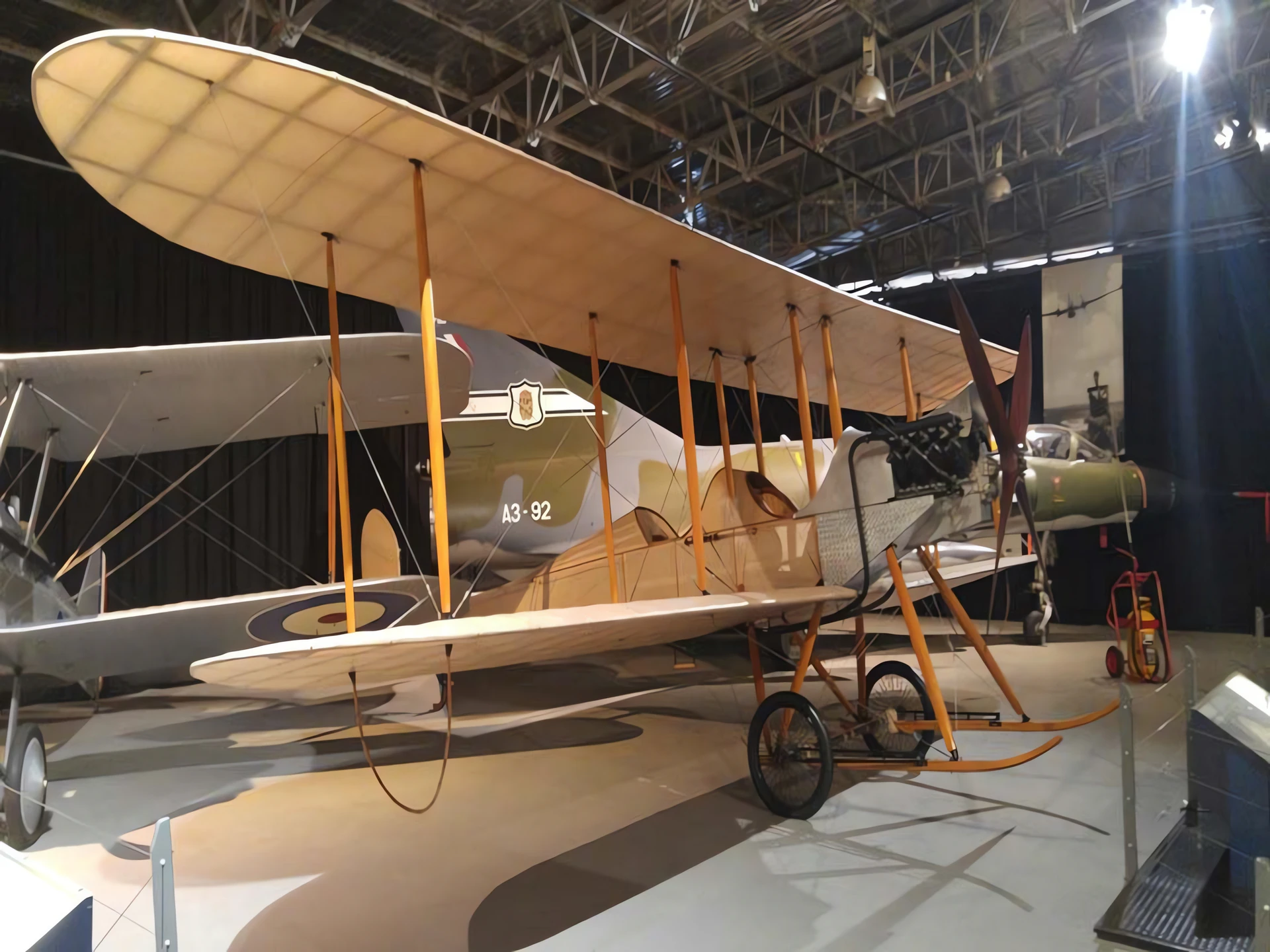
Royal Flygplan Factory BE2A | |
|---|---|
| Land | Storbritannien |
| Typ | Biplanflygplan |
| Fotografi | Vladimir Yakubov |
| plats | RAAF Museum, Point Cook, Australien |
| Ämne | Album av 53 foton walk-around av en «Royal Aircraft Factory BE2A» |
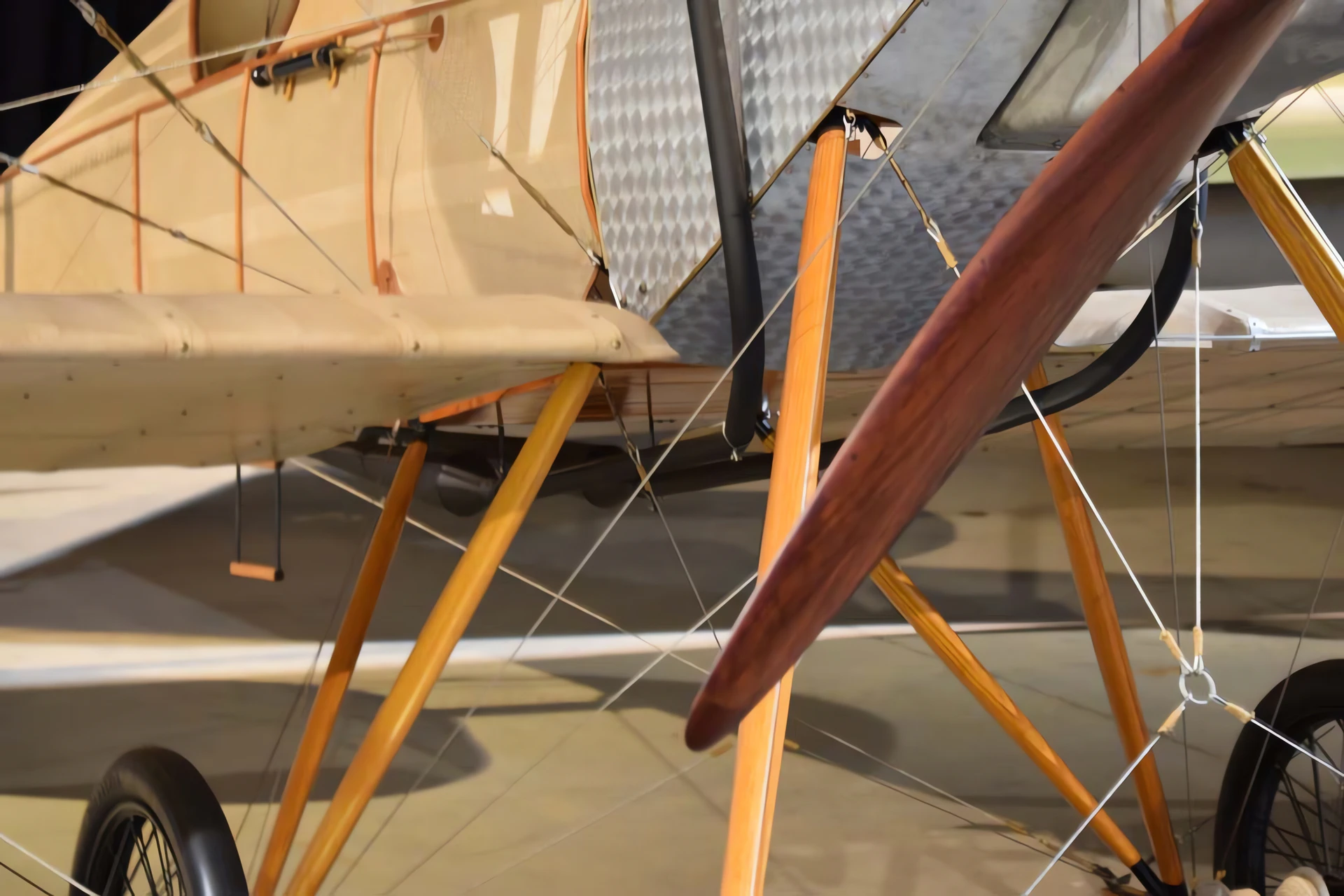
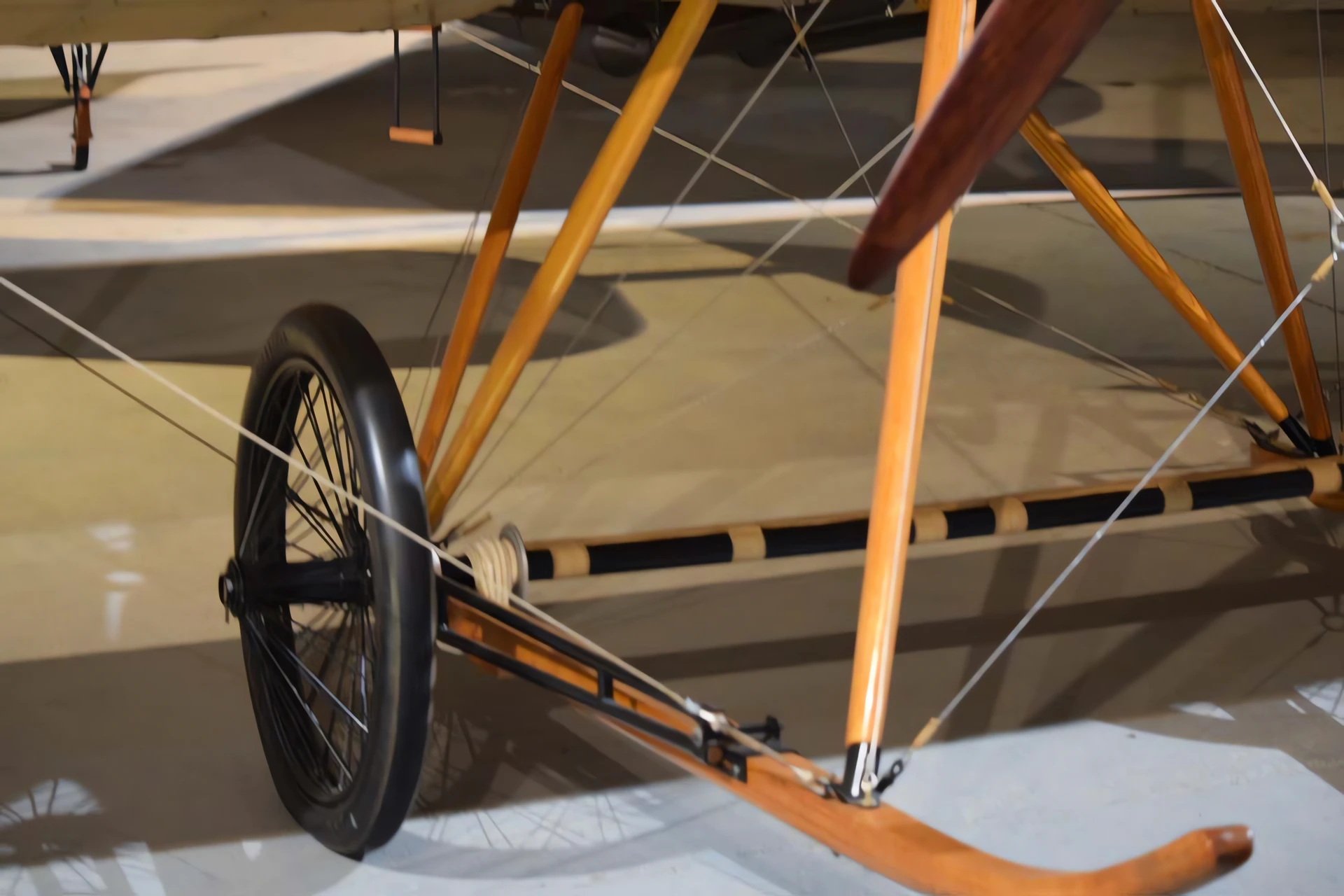
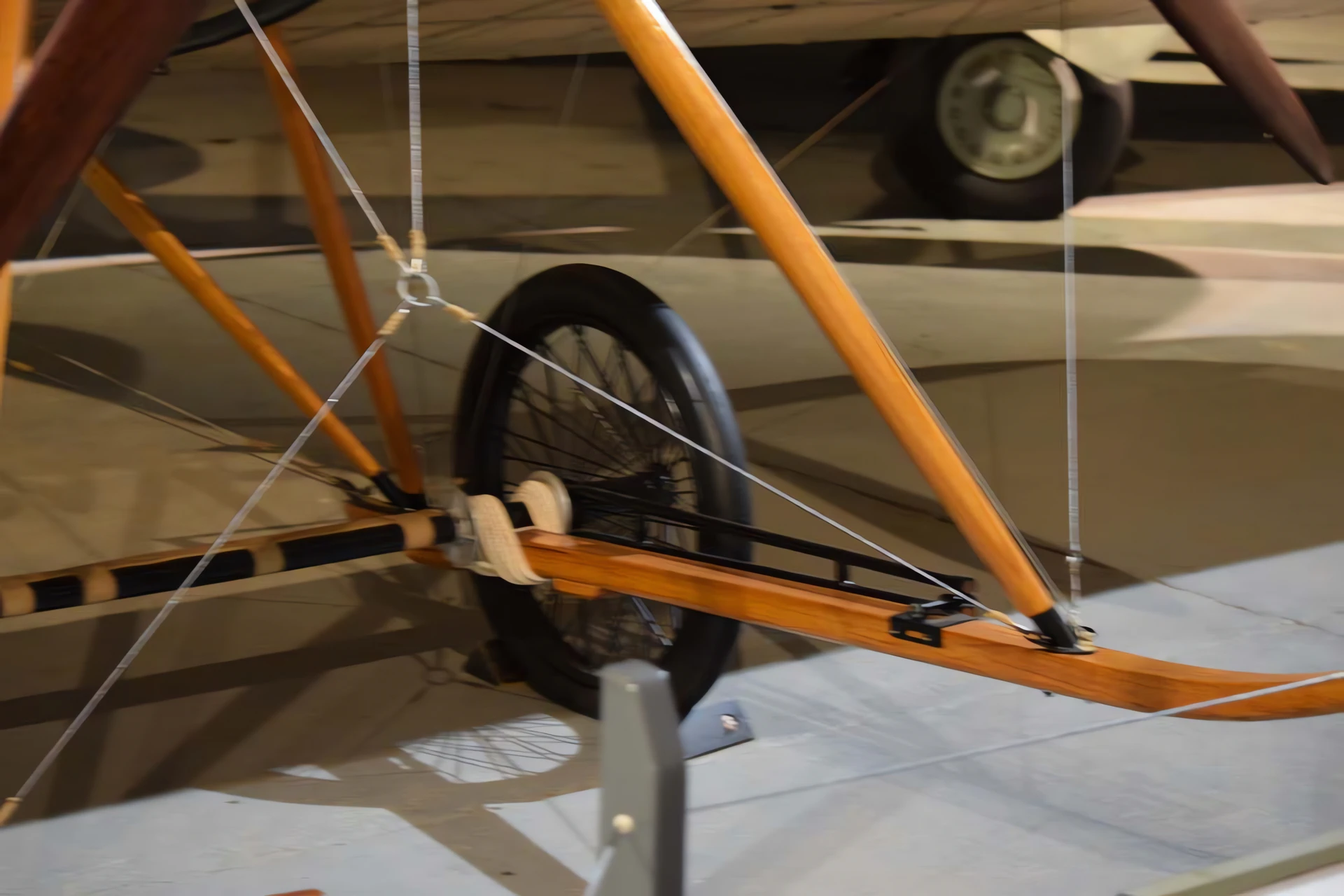
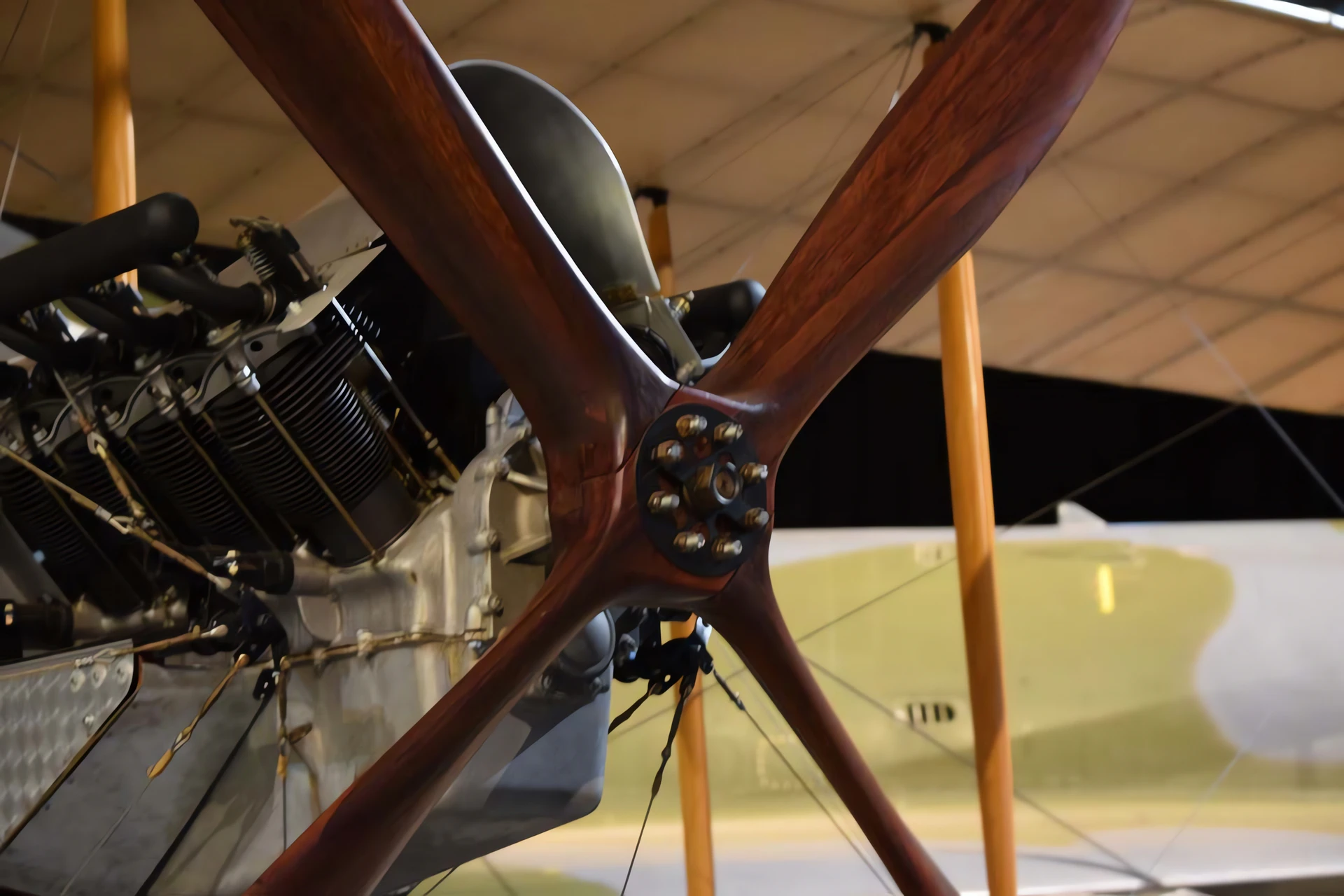
Fotogalleri av en Royal Flygplan Factory BE2A, The Royal Aircraft Factory B.E.2 was a British single-engine tractor two-seat biplane which was in service with the Royal Flying Corps (RFC) from 1912 until the end of World War I. About 3,500 were built. Initially used as front-line reconnaissance aircraft and light bombers; variants of the type were also used as night fighters. Like many warplanes since, the B.E.2 was retained in front-line service long after it had become obsolete, for want of a suitable replacement. After its belated withdrawal it finally served as a trainer, communications aircraft and on anti-submarine coastal patrol duties.





 Köp mig en kaffe
Se även:


Den Royal Aircraft Factory B.E.2a was an early production variant of the B.E.2 reconnaissance and light bomber aircraft used by the Royal Flying Corps during World War I. It had the following key features:
- Biplane design with unequal span wings (upper wing longer than lower wing)
- Slight dihedral (upward angle) on the wings
- Tractor configuration with the engine mounted in front of the crew
- Two open cockpits in tandem, with the observer/gunner position in front
- Powered by a 70 hp Renault air-cooled V8 piston engine
- Wooden construction with fabric covering
- Wing warping for lateral control instead of ailerons
- Revised fuel system with gravity tank behind the engine
- No decking between the pilot and observer positions initially (added later)
- Equal-span wings on some later production aircraft
- Deeper rear wing spar for increased strength
Views : 2515
Du kan också se:
 Letov S-20 - Foton & Videor
 Avro 504 - Foton & Videor
 Focke-Wulf Fw 44 – Foton & Videor
 Fairey Swordfish – Foton &; Videor
 Verville-Sperry M-1 Messenger – Foton &; Video
 Supermarine Seagull V – Foton &; Video
 Caproni Ca.113 – Foton &; Video
 Stampe SV.4 – Foton &; Video
 Stearman PT-13D Kaydet- Foton &; Video
 Polikarpov Po-2 – Foton &; Video