Stampe SV.4

Stampe SV.4

LandBelgien
TypUtbildningsflygplan
FotografiVladimir Yakubov
Leta uppFantasi om flygning, Polk City
BeskrivningAlbum av 77 foton walk-around av en «Stampe SV.4»

Fotogalleri av en Stampe SV.4, The Stampe et Vertongen SV.4 (also known as the Stampe SV.4 or just Stampe) is a Belgian two-seat trainer/tourer biplane designed and built by Stampe et Vertongen. The aircraft was also built under licence in France and Algeria.

Källkod: Stampe SV.4 på Wiki

Fortsätt läsa

Visningar: 3492

Curtiss-Wright SNC-1 Falcon

Curtiss-Wright SNC-1 Falcon

LandUsa
TypAvancerade skolflygplan
FotografiVladimir Yakubov
Leta uppFantasi om flygning, Polk City
BeskrivningAlbum av 80 bilder rundvandring av en «Curtiss-Wright SNC-1 Falcon»

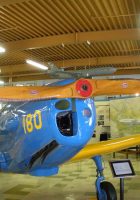
Fotogalleri av en Curtiss-Wright SNC-1 Falcon, The Curtiss-Wright CW-22 was a 1940s American general-purpose advanced training monoplane aircraft built by the Curtiss-Wright Corporation. It was operated by the United States Navy as a scout trainer with the designation SNC-1 Falcon.

Källkod: Curtiss-Wright SNC-1 Falcon på Wiki

Fortsätt läsa

Views : 3189

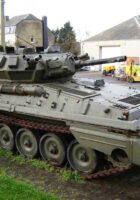
FV101 Skorpion

CVR(T) FV101 Skorpion

LandStorbritannien
TypPansarfordon
I bruk 1973–idag
TillverkareAlvis Fordon Ltd
Byggd3000+

Fotogalleri av en CVR(T) FV101 Skorpion, The FV101 Scorpion is a British armoured reconnaissance vehicle. It was the lead vehicle and the fire support type in the Combat Vehicle Reconnaissance (Tracked), CVR(T), family of seven armoured vehicles. Manufactured by Alvis, it was introduced into service with the British Army in 1973 and served until 1994. More than 3,000 were produced and used as a reconnaissance vehicle or a light tank. It holds the Guinness world record for the fastest production tank; recorded doing 82.23 km/h (51.10 mph) at the QinetiQ vehicle test track, Chertsey, Surrey, on 26 January 2002.

Källkod: CVR(T) FV101 Scorpion på Wiki

Fortsätt läsa

Views : 6505

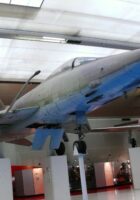
NordamerikanskA F-100 Super Sabre

NordamerikanskA F-100 Super Sabre

LandUsa
RollÖverljudsflygplan
Första flygningen25 maj 1953
Byggd2294

Den NordamerikanskA F-100 Super Sabre var ett amerikanskt överljudsflygplan som tjänstgjorde med United States Air Force (USAF) från 1954 till 1971 och med Air National Guard (ANG) fram till 1979. Den första av Century Series of USAF jet fighters, det var den första USAF-fighteren som kunde supersonisk hastighet i nivåflygning. F-100 designades av North American Aviation som en uppföljning av F-86 Sabre luftöverlägsenhetskämpe med högre prestanda.

Källkod: Nordamerikanska F-100 Super Sabre på Wiki

Fortsätt läsa

Views : 11971

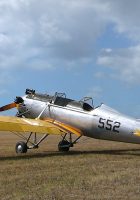
Ryan PT-22 Rekryt

Ryan PT-22 Rekryt

LandUsa
TypMilitärt tränarflygplan
TillverkareRyan Aeronautical Företag
Nummer byggt1048

Fotogalleri av en Ryan PT-22 Rekryt, The Ryan PT-22 Recruit, the main military version of the Ryan ST, is a military trainer aircraft used by the United States Army Air Corps and its successor, the United States Army Air Forces for primary pilot training.

Källkod: Ryan PT-22 Rekrytera på Wiki

Fortsätt läsa

Views : 3368

Typ 94 37mm pansarvärnskanon

Typ 94 37mm pansarvärnskanon

LandJapan
TypPansarvärnsvapen
FotografiVladimir Yakubov
Leta uppAuckland War Memorial Museum
BeskrivningAlbum av 32 foton walk-around av en «Typ 94 37mm Anti-Tank Gun»

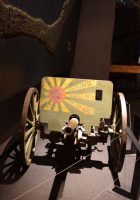
Fotogalleri av en Typ 94 37mm pansarvärnskanon, The Type 94 37 mm anti-tank gun (九四式三十七粍速射砲 Kyūyon-shiki sanjyūnana-miri sokushahō?) was an anti-tank gun developed by the Imperial Japanese Army, and used in combat during the Second Sino-Japanese War and World War II. The Type 94 number was designated for the year the gun was accepted, 2594 in the Japanese imperial year calendar, or 1934 in the Gregorian calendar

Källkod: Typ 94 37mm pansarvärnskanon på wiki

Fortsätt läsa

Visningar : 2462

Fairchild PT-19A Cornell

Fairchild PT-19A Cornell

LandUsa
TypMilitärt tränarflygplan
FotografiKåta stråle
Leta uppTravis flygvapenbasmuseum
BeskrivningAlbum av 59 foton promenad runt av en «Fairchild PT-19A Cornell»

Fotogalleri av en Fairchild PT-19A Cornell, The Fairchild PT-19 (company designation Fairchild M62) is an American Fairchild Aircraft monoplane primary trainer aircraft that served with the United States Army Air Forces, RAF and RCAF during World War II. It was a contemporary of the Kaydet biplane trainer and was used by the USAAF during Primary Flying Training as the introductory pre-solo phase trainer for introducing new pilots to flying before passing them on to the more agile Kaydet. As with other USAAF trainers of the period, the PT-19 had multiple designations based on the powerplant installed.

Källkod: Fairchild PT-19A Cornell på Wiki

Fortsätt läsa

Visningar : 2366

Stearman N2S-Kaydet

Stearman PT-13D Kaydet

LandUsa
TypMilitärt tränarflygplan

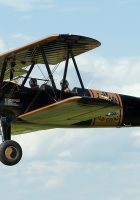
Fotogalleri av en Stearman PT-13D Kaydet, The Stearman (Boeing) Model 75 is a biplane used as a military trainer aircraft, of which at least 10,626 were built in the United States during the 1930s and 1940s. Stearman Aircraft became a subsidiary of Boeing in 1934. Widely known as the Stearman, Boeing Stearman or Kaydet, it served as a primary trainer for the United States Army Air Forces, the United States Navy (as the NS & N2S), and with the Royal Canadian Air Force as the Kaydet throughout World War II. After the conflict was over, thousands of surplus aircraft were sold on the civilian market. In the immediate postwar years they became popular as crop dusters, sports planes, and for aerobatic and wing walking use in air shows.

Källkod: Stearman PT-13D Kaydet på Wiki

Fortsätt läsa

Visningar : 4670

Polikarpov Po-2

Polikarpov Po-2

LandSovjetunionen
TypAllmänt biplan
FotografiVladimir Yakubov
Leta uppFantasi om flygning, Polk City
BeskrivningAlbum av 83 bilder walk-around av en «Polikarpov Po-2»

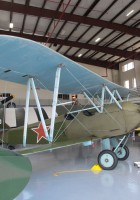
Fotogalleri av en Polikarpov Po-2, The Polikarpov Po-2 (also U-2) served as a general-purpose Soviet biplane, nicknamed Kukuruznik (Russian: Кукурузник, from Russian “kukuruza” (кукуруза) for maize; thus, “maize duster” or “crop duster”), NATO reporting name “Mule”. The reliable, uncomplicated concept of the Po-2’s design made it an ideal training aircraft, as well as doubling as a low-cost ground attack, aerial reconnaissance, psychological warfare and liaison aircraft during war, proved to be one of the most versatile light combat types to be built in the Soviet Union. As of 1978 it remained in production for a longer period of time than any other Soviet-era aircraft. It is one of the most produced aircraft, and may be the most produced biplane with production possibly as high as 30,000 Po-2s built between 1928 and 1959.However, production figures for Polikarpov U-2 and Po-2 bombers and trainers combined are between 20,000 and 30,000. with production ending as early as 1952.

Källkod: Polikarpov Po-2 på Wiki

Fortsätt läsa

Views : 8237

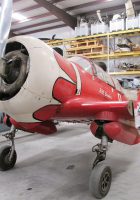
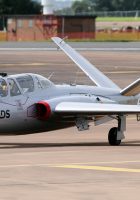
Fouga CM-170 Magister

Fouga Magister C.M.170

LandFrankrike
TypTvåsitsig jettrainer
Första flygningen23 juli 1952
Byggd929

Den Fouga CM.170 Magister is a 1950s French two-seat jet trainer. The related CM.175 Zéphyr was a carrier-capable version for the French Navy. In 1948, development commenced at Fouga on a new primary trainer aircraft design that harnessed newly developed jet propulsion technology. The initial design was evaluated by the French Air Force (Armée de l’Air, AdA) and, in response to its determination that the aircraft lacked sufficient power for its requirements, was enlarged and adopted a pair of Turbomeca Marboré turbojet engines. First flying on 23 July 1952, the first production order for the type was received on 13 January 1954. In addition, the related CM.175 Zéphyr was a carrier-capable version developed and produced for the French Navy.

Källkod: Fouga Magister C.M.170 på Wiki

Fortsätt läsa

Visningar : 5010