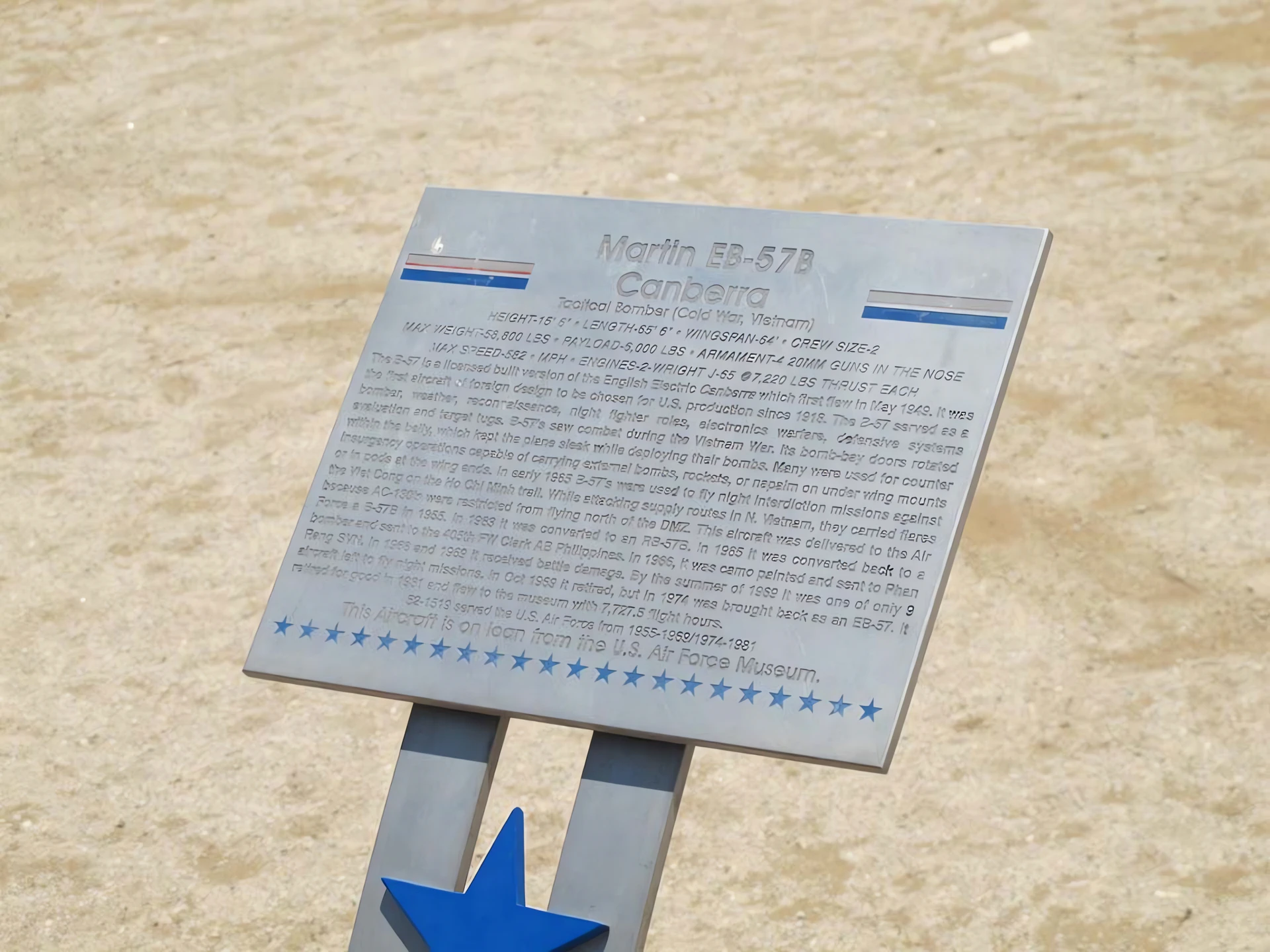
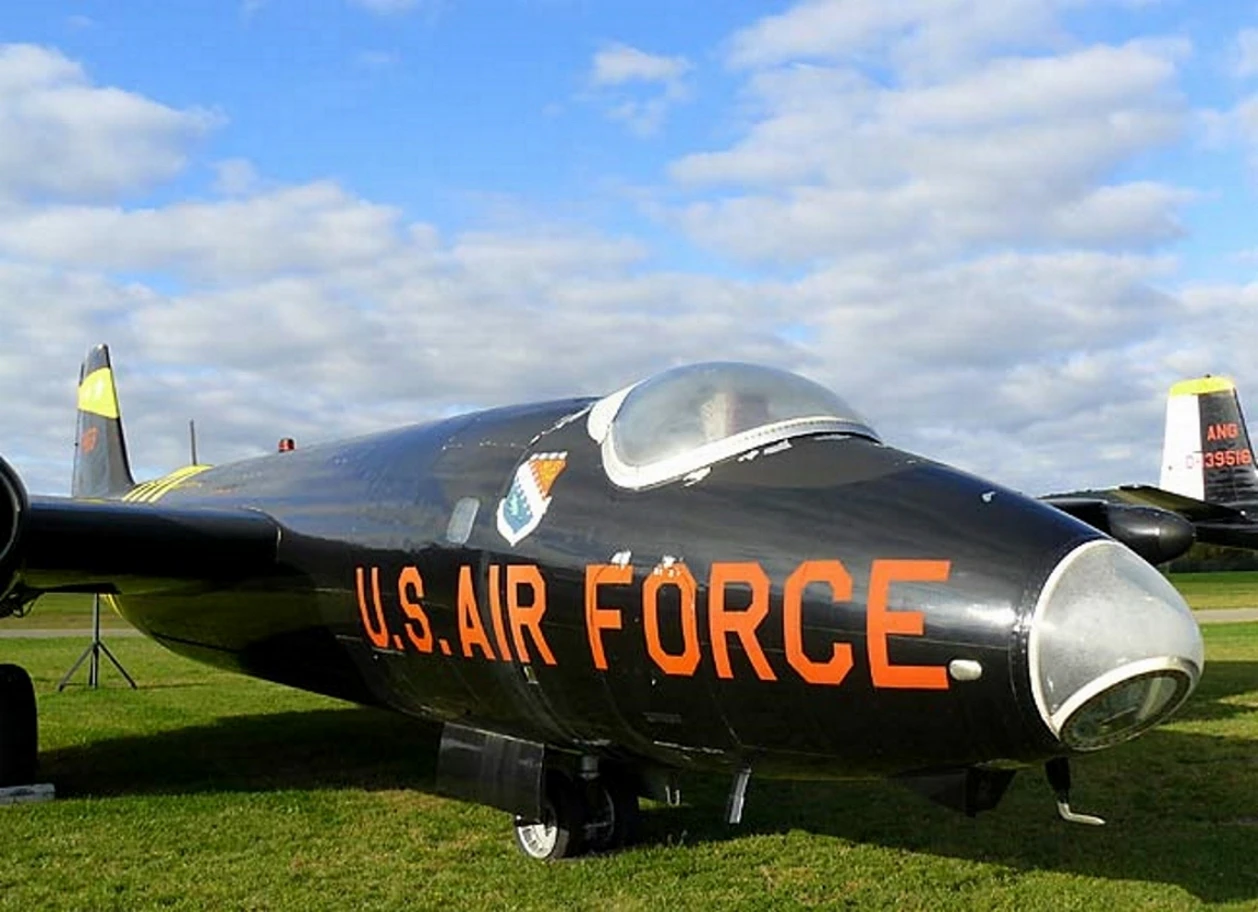
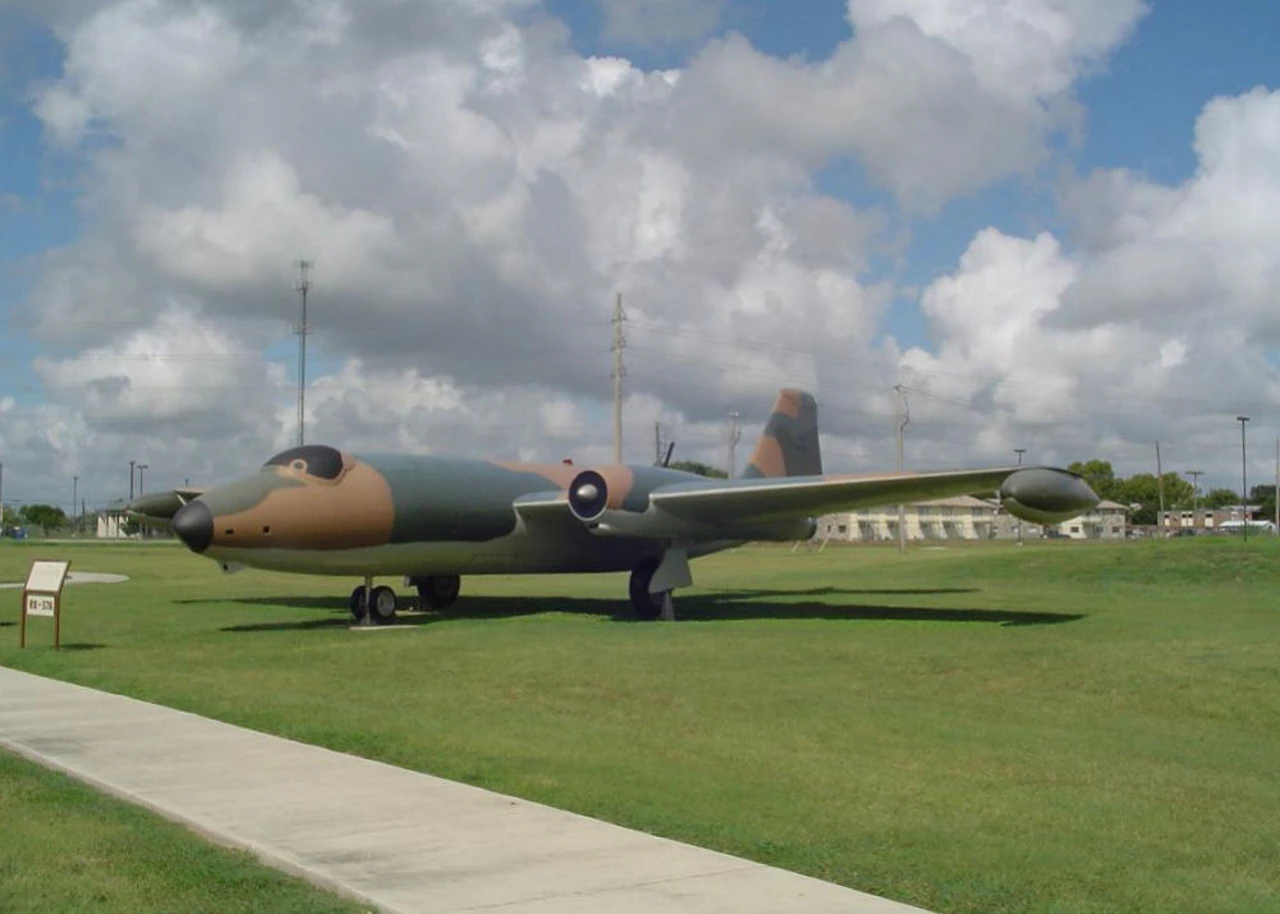
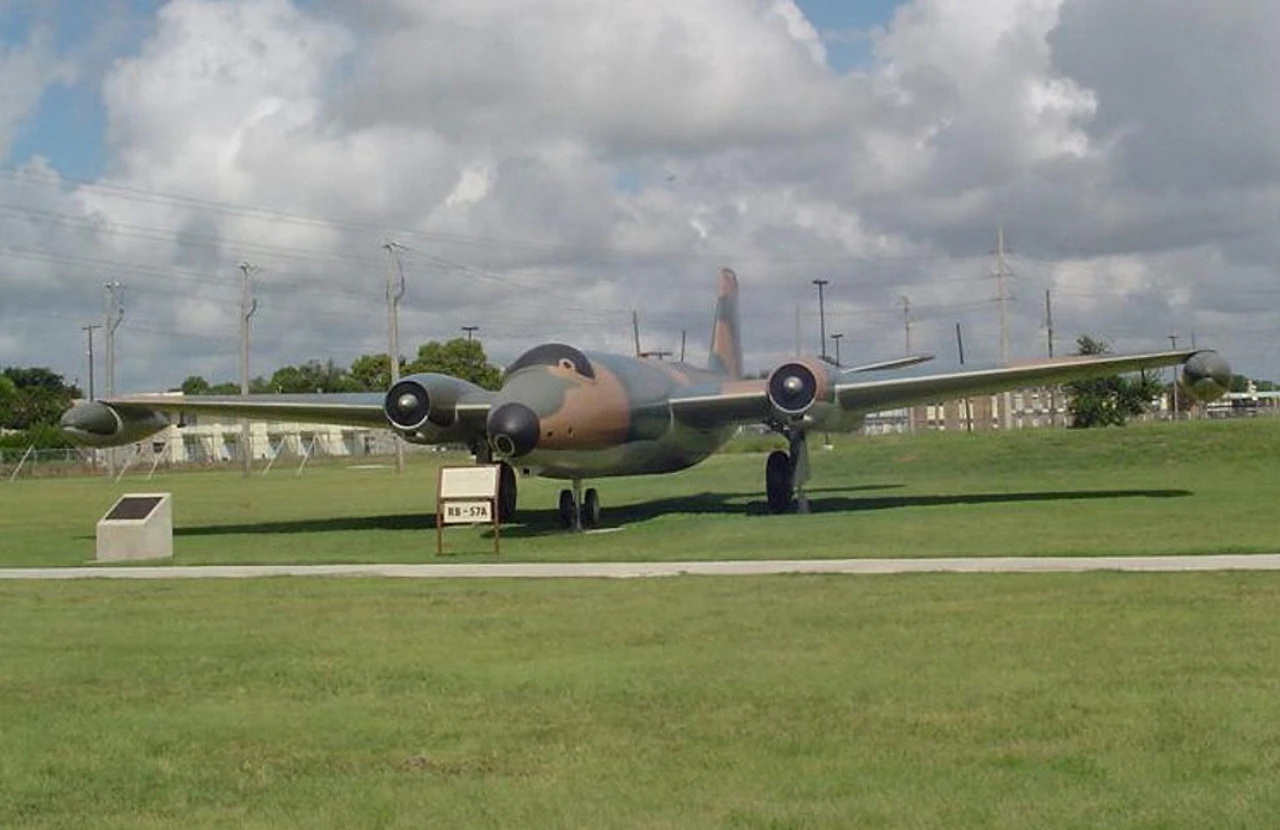
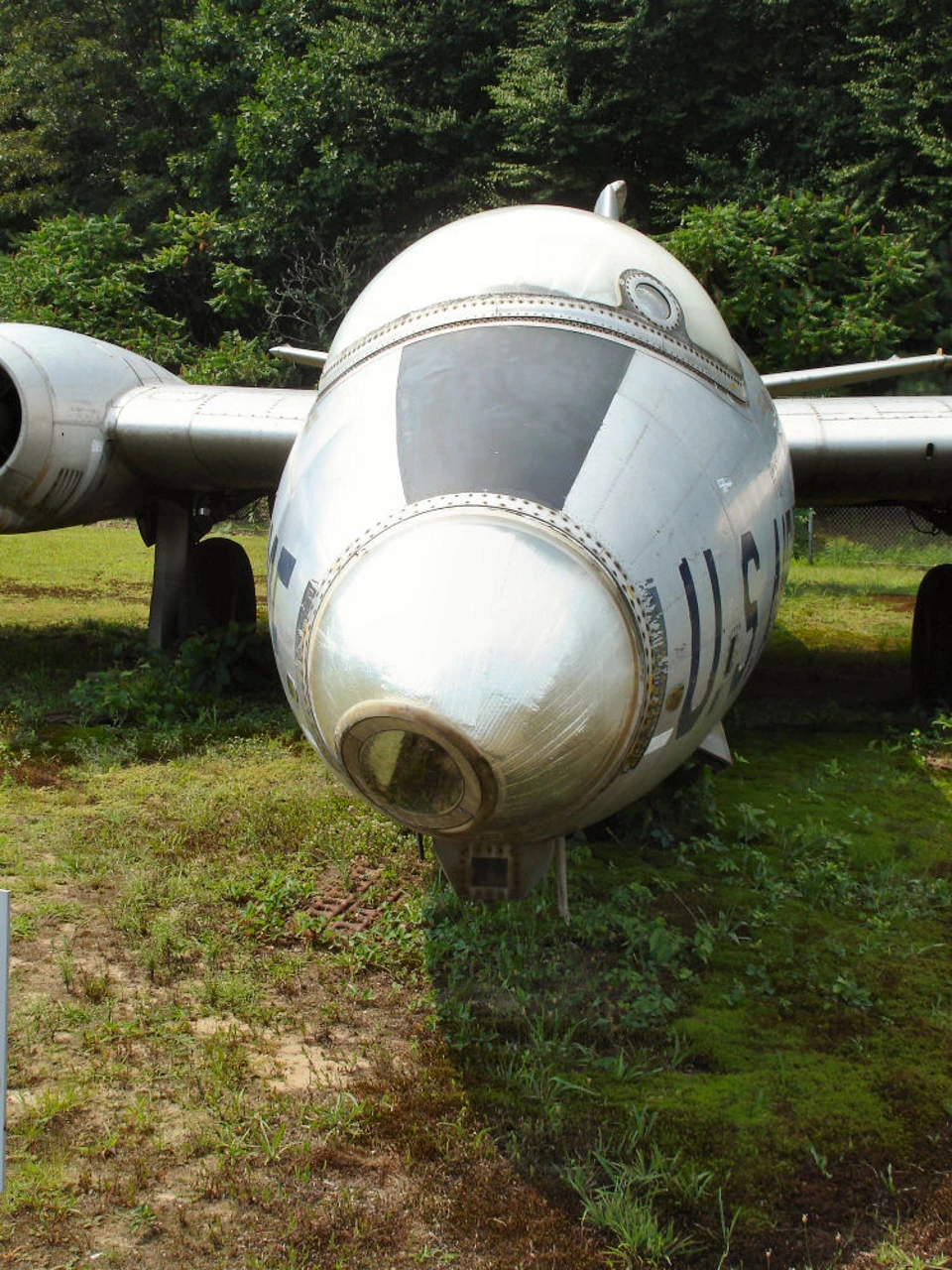
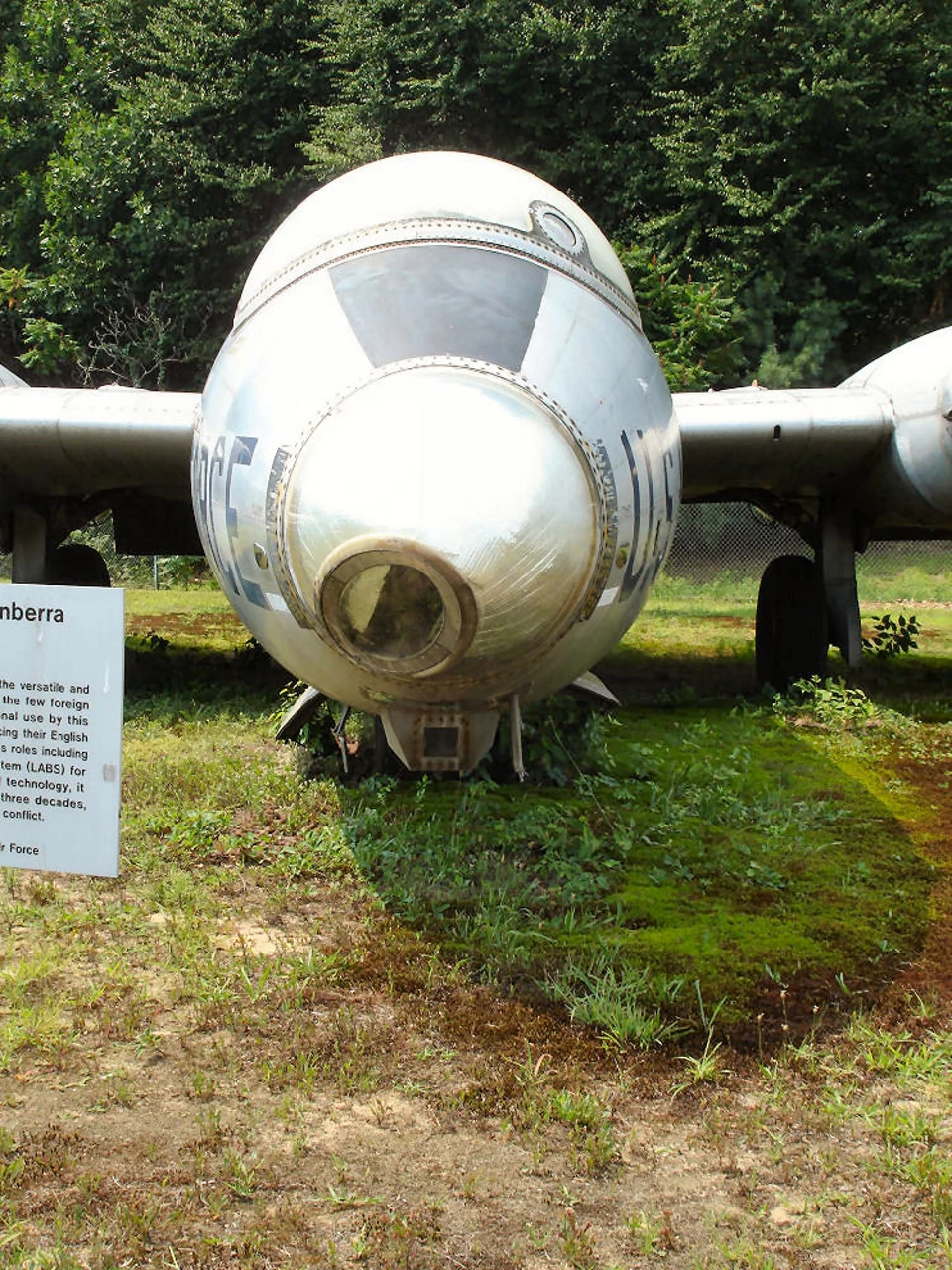
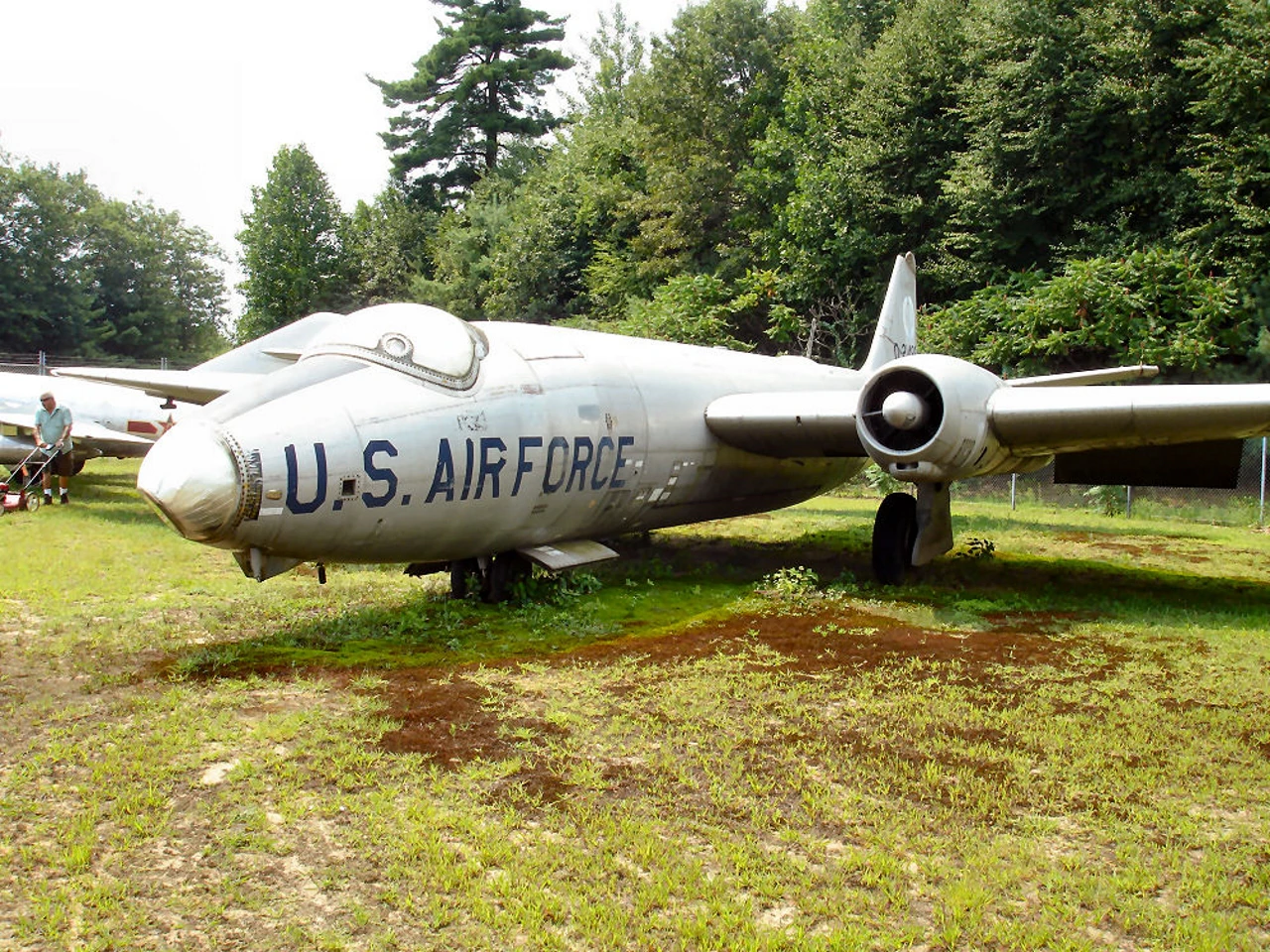
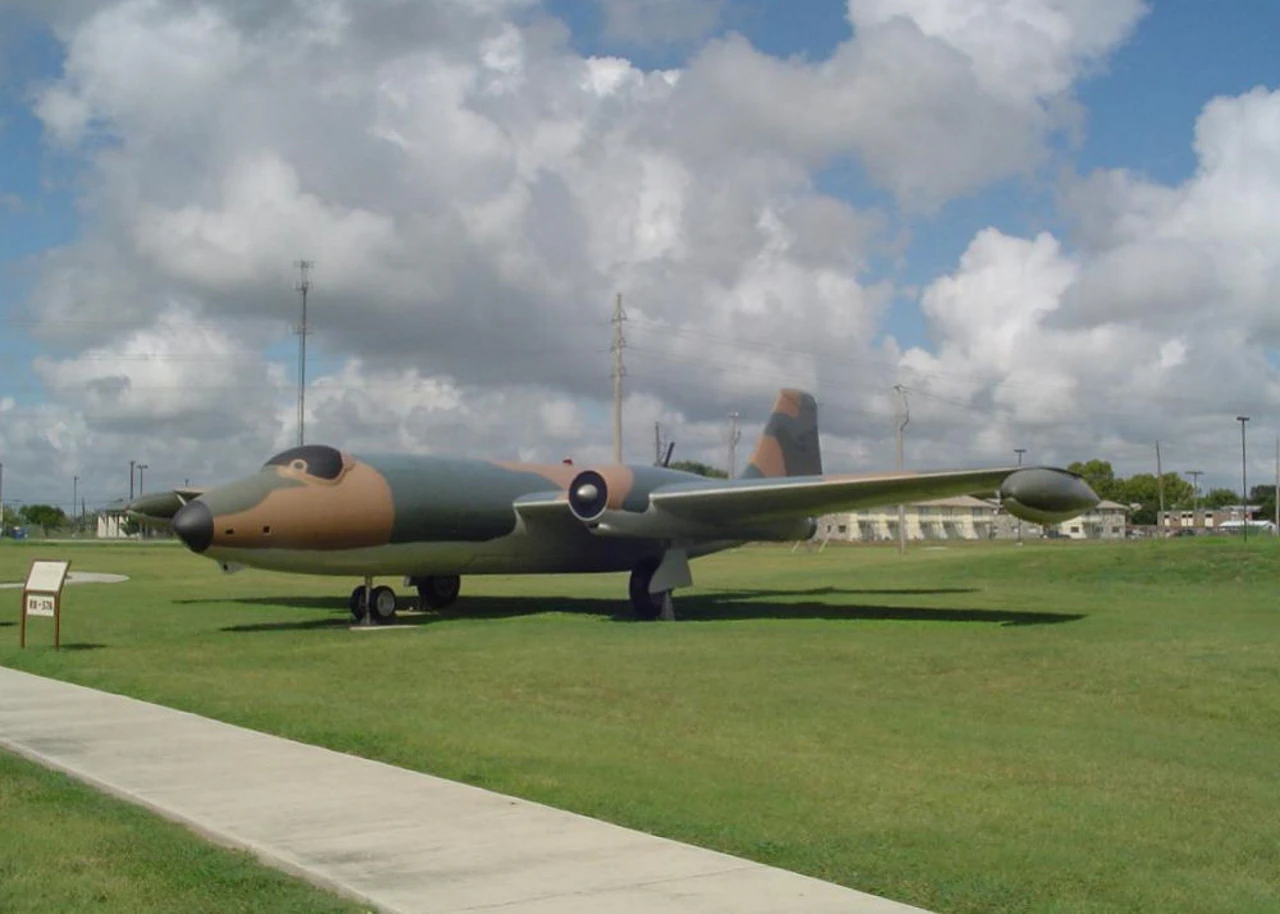
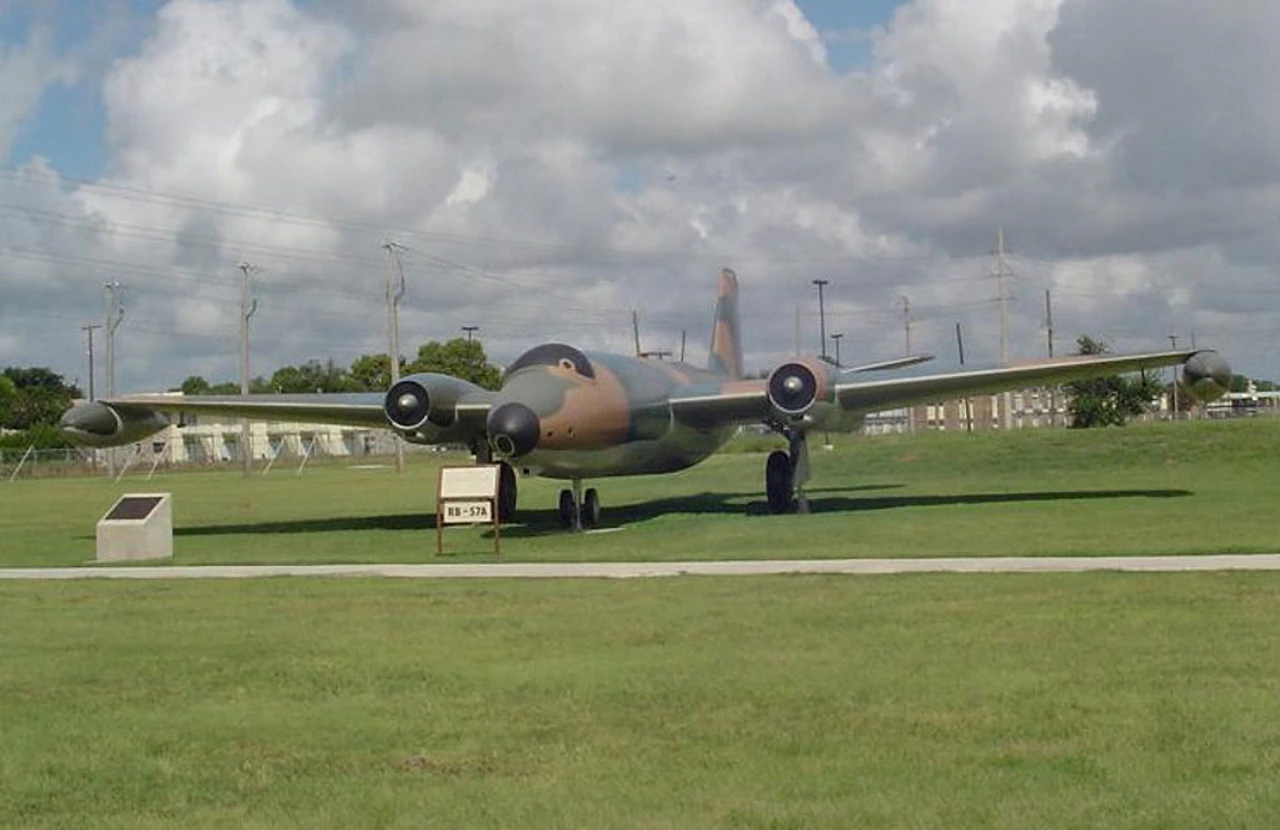
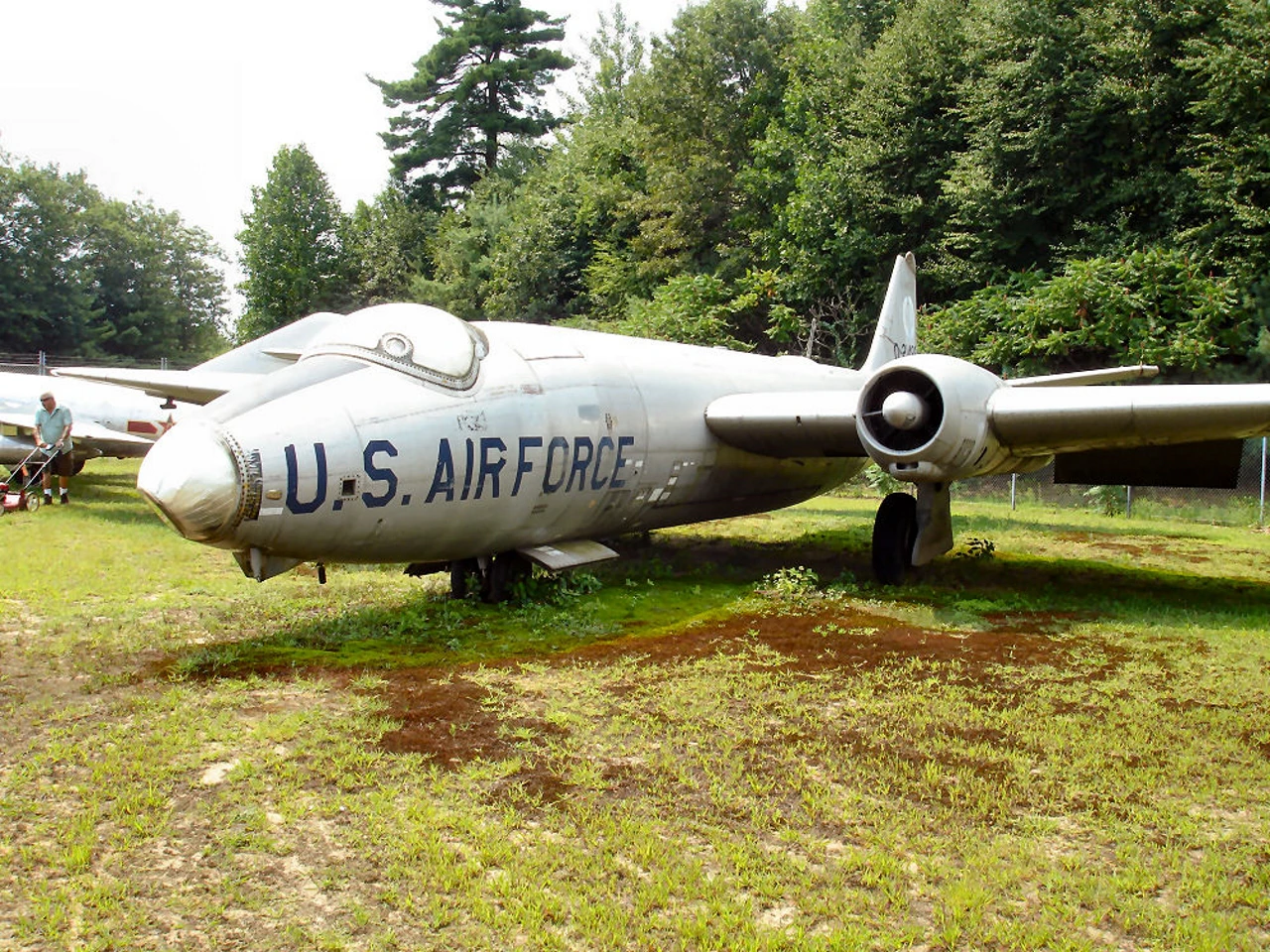
V Martin B-57 Canberra je ameriško taktično bombniško in izvidniško letalo, ki je začelo delovati z ameriškimi letalskimi silami (USAF) leta 1953. B-57 je licenčna različica britanske angleške električne Canberre, ki jo proizvaja podjetje Glenn L. Martin. Začetni Martinovi modeli so bili zelo podobni britanskim kolegom; Martin je kasneje spremenil zasnovo, da bi vključil večje količine komponent ameriškega izvora in izdelal letalo v več različnih različicah.
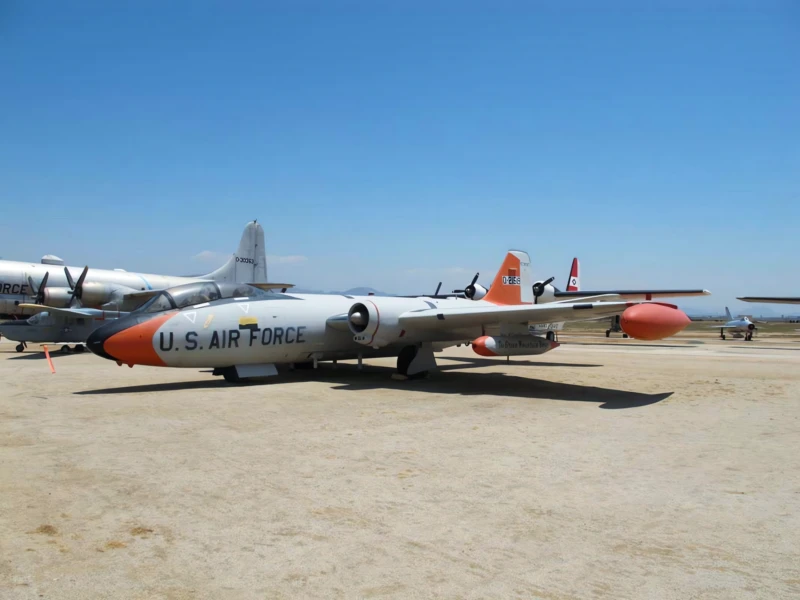
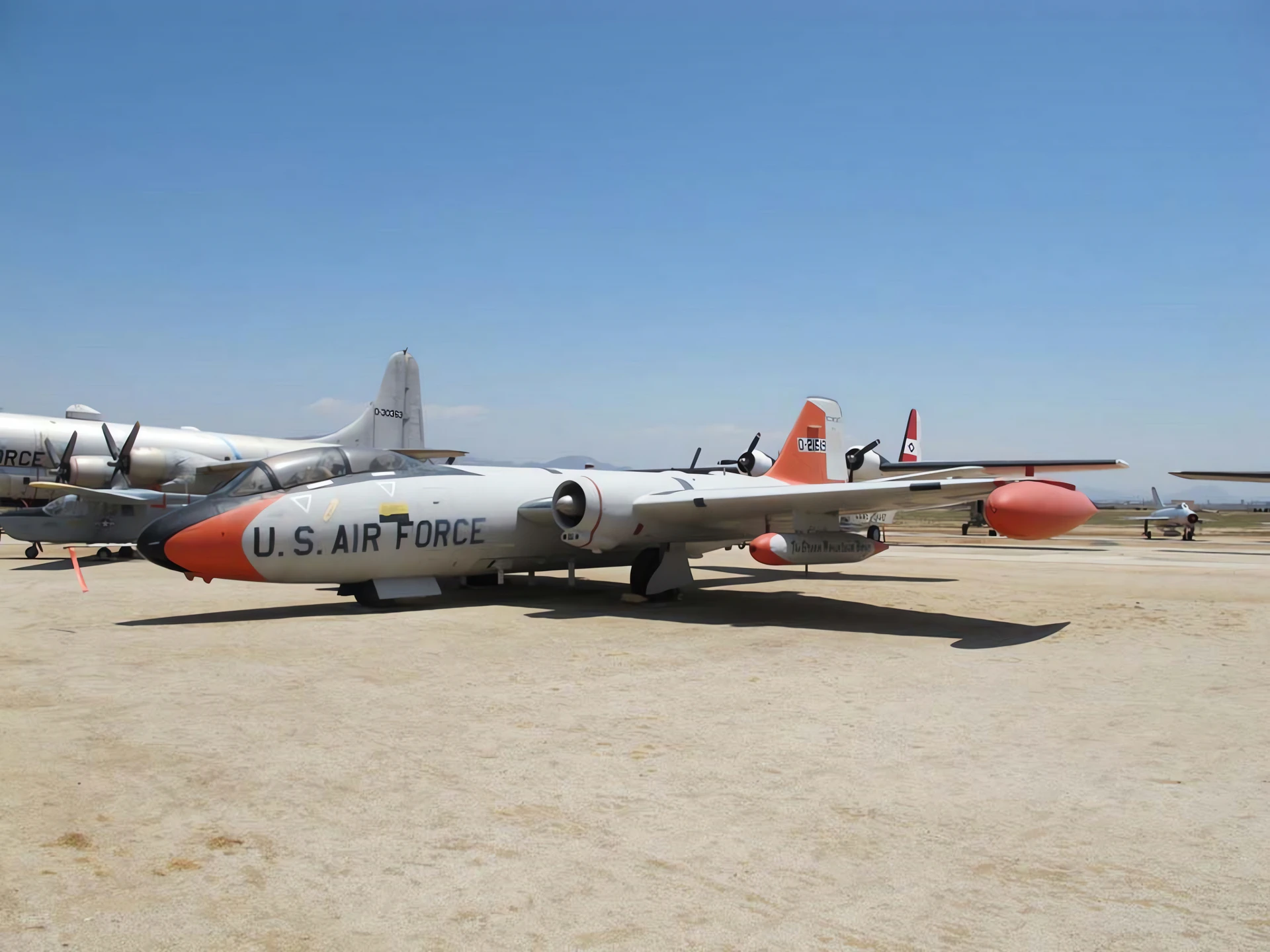
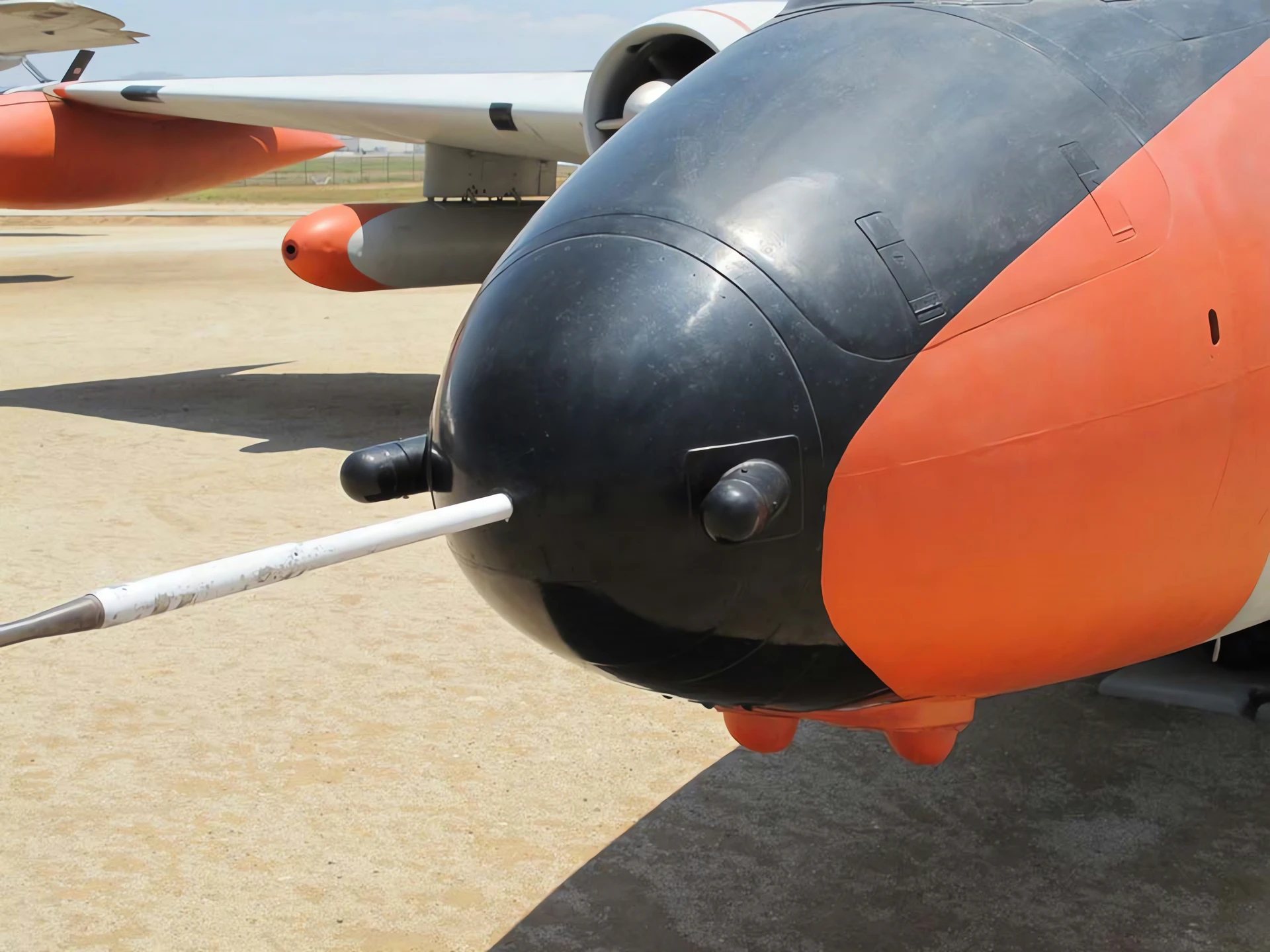
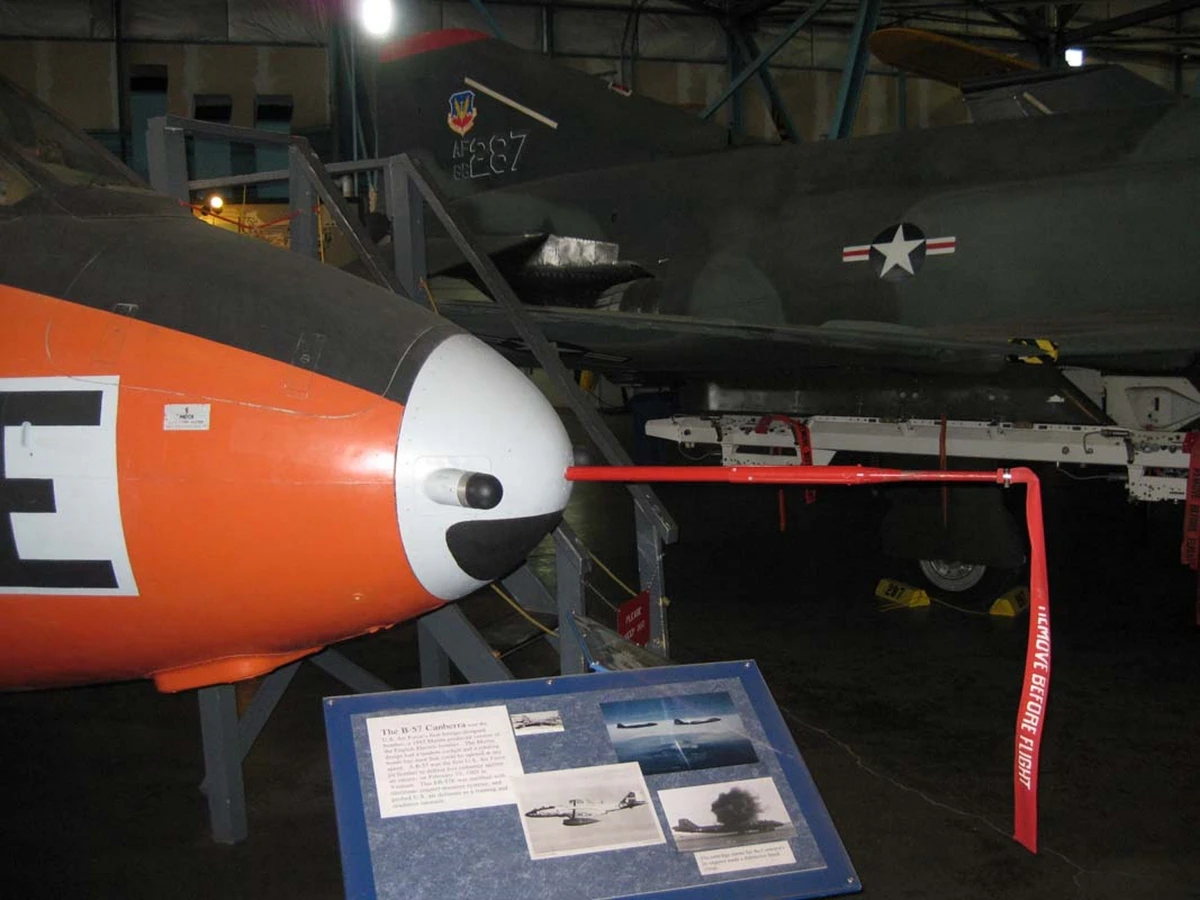
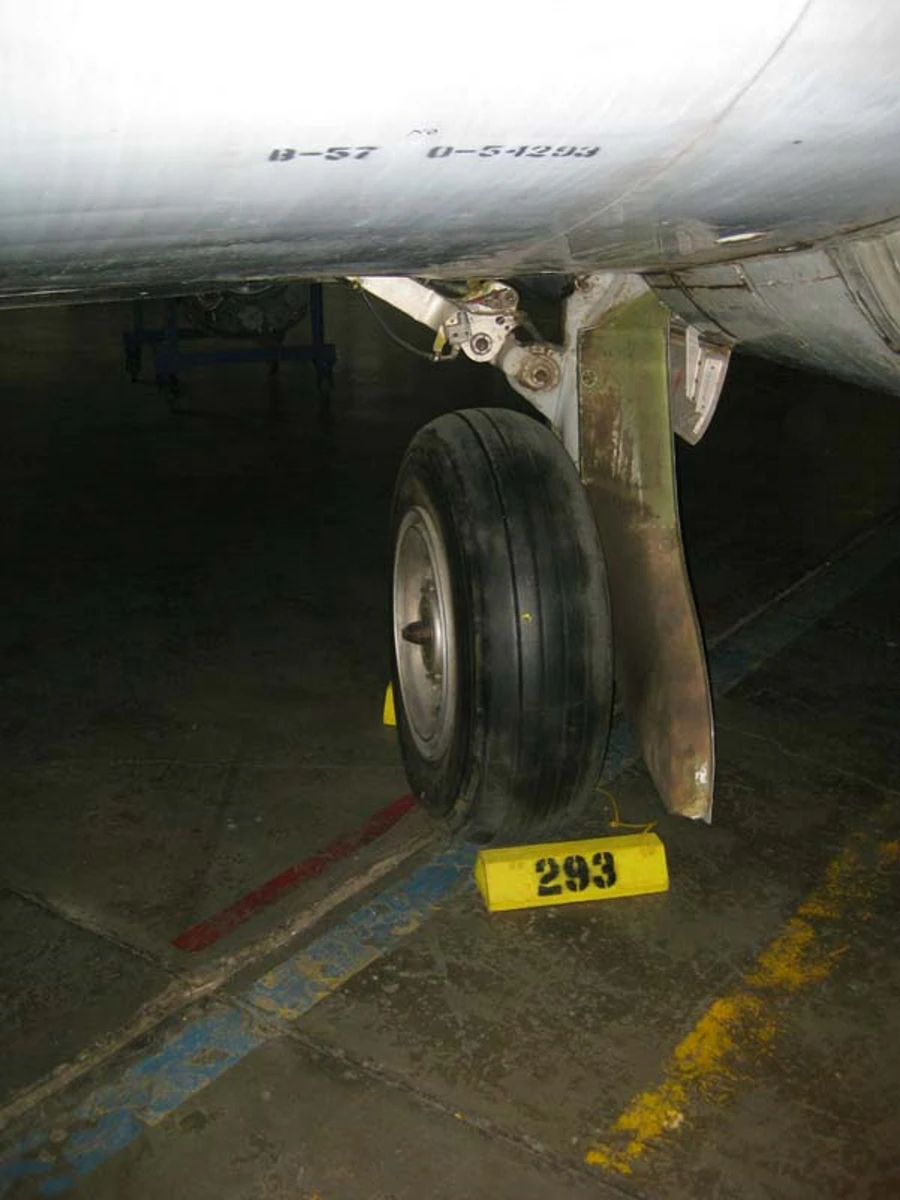
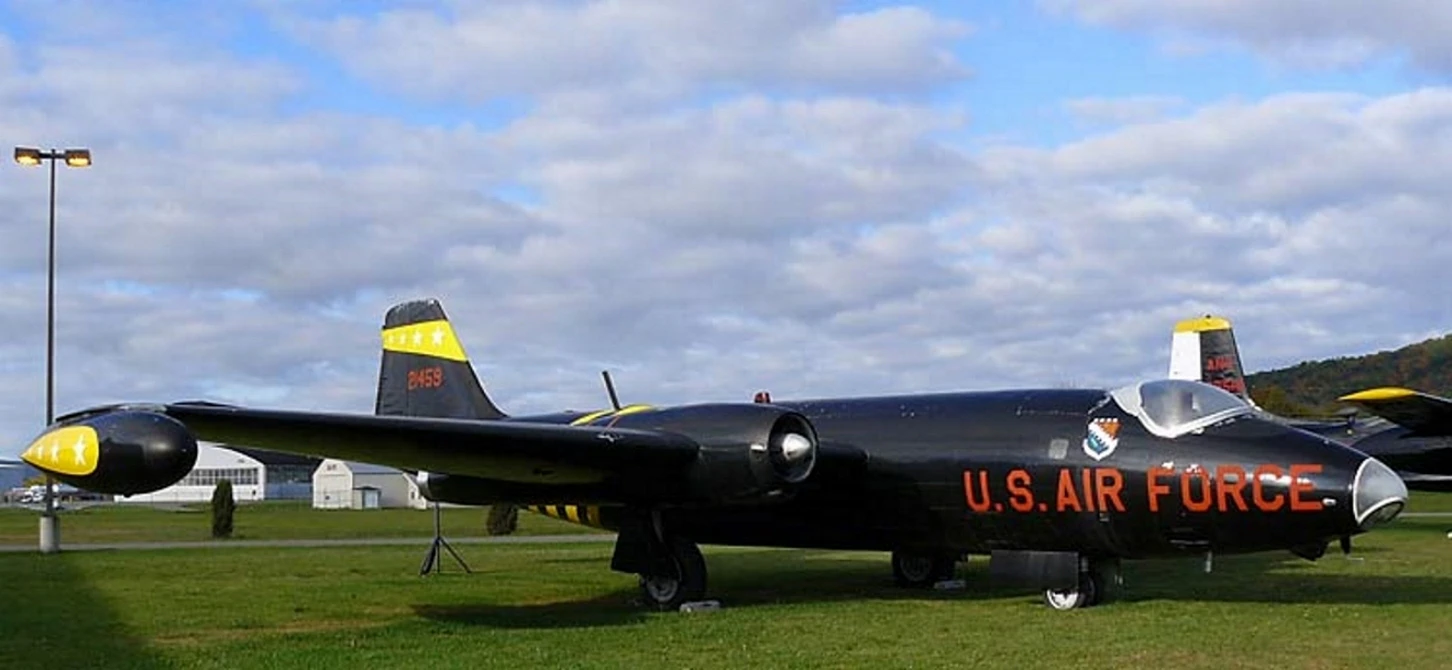
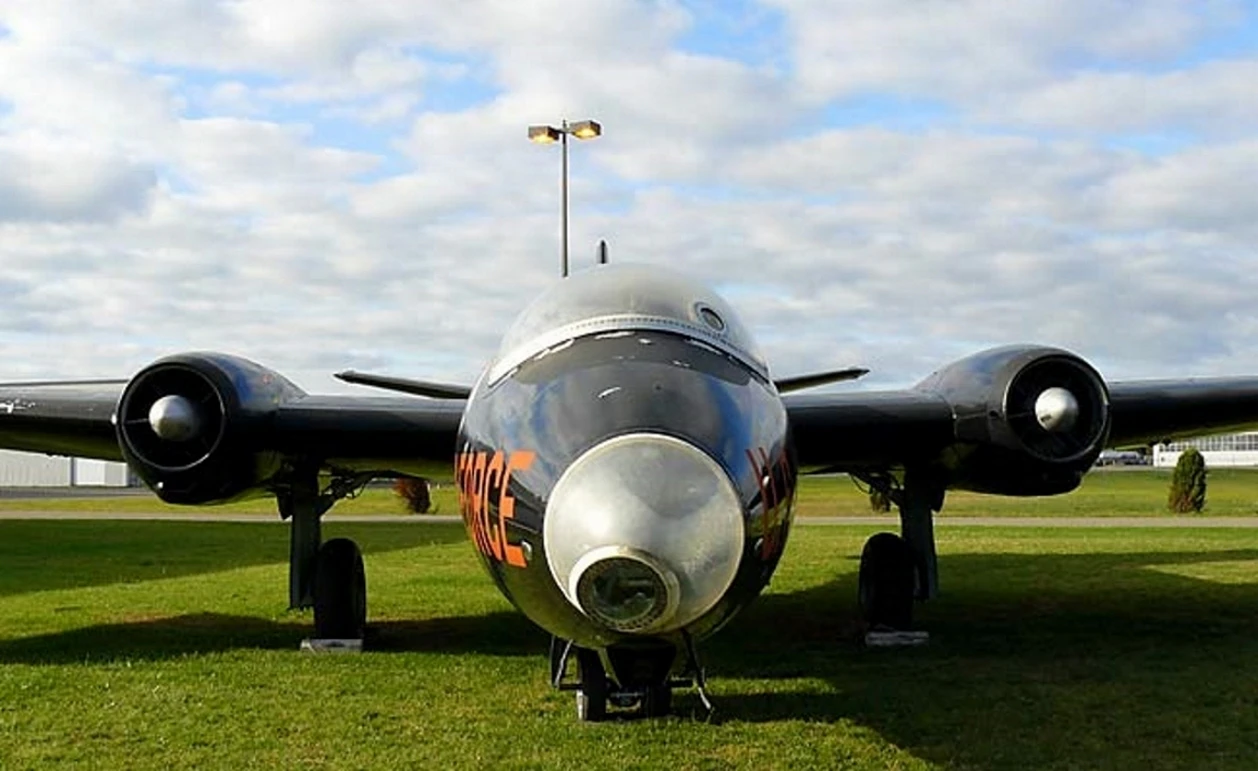
V Martin B-57 Canberrawas a rare example of a British aircraft design (the English Electric Canberra) being licensed and mass-produced in the United States. While it excelled as a tactical bomber and “night intruder,” theEB-57Bwas a specialized electronic warfare (EW) conversion. These aircraft were packed with jammers and sensors, used primarily to train air defense crews by simulating enemy electronic attacks—blinding radars and disrupting communications to keep the “defenders” sharp.
Attribute
Technical Specification (EB-57B)
Vlogo
Electronic Warfare / Aggressor Trainer
Posadke
2 (Pilot and Electronic Warfare Officer / EWO)
First Flight (B-57A)
July 20, 1953
Powerplant
2 × Wright J65-W-5 turbojets
Thrust
7,220 lbf (32.1 kN) per engine
Maximum Speed
580 mph (930 km/h)
Razpon
2,700 miles (4,345 km)
Special Equipment
Internal jammers, chaff dispensers, and wing-mounted ECM pods
Design Features: The Art of Jamming
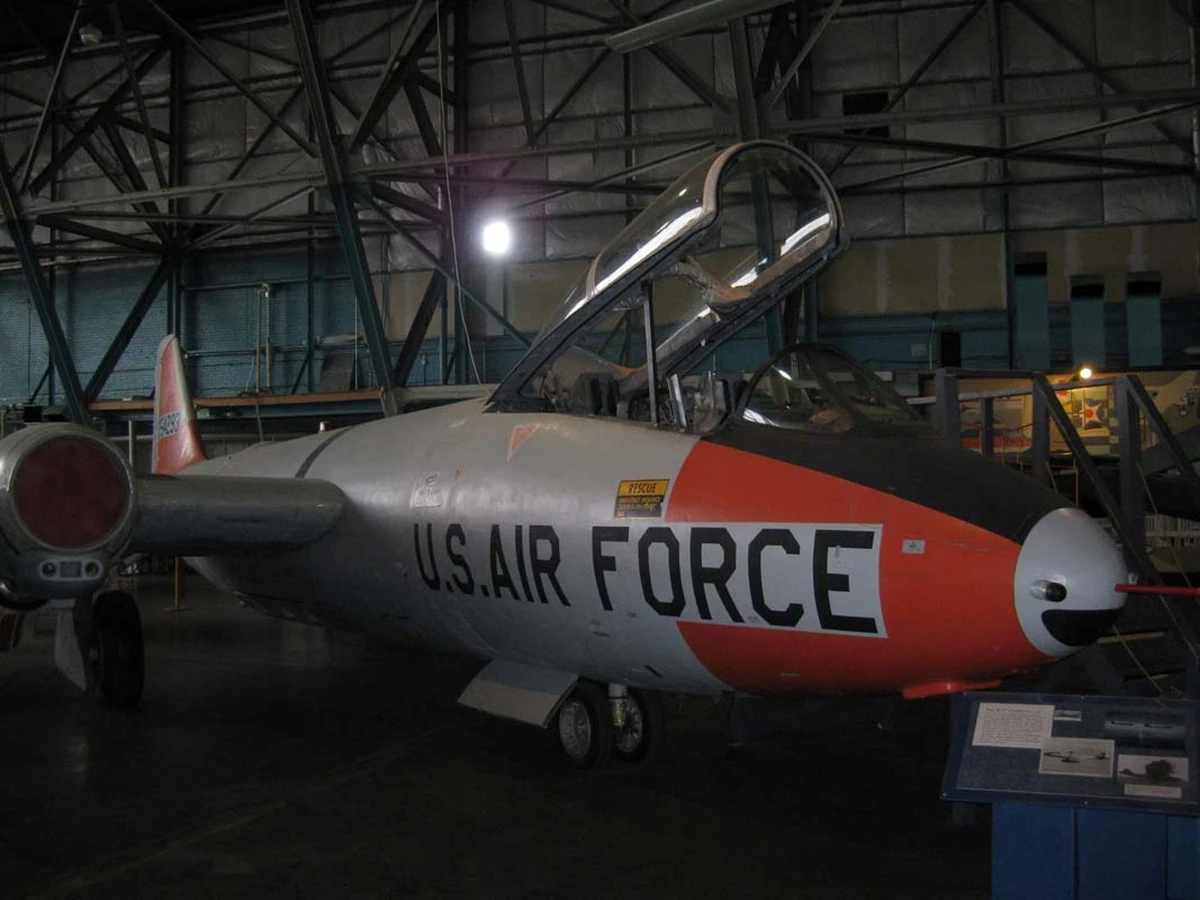
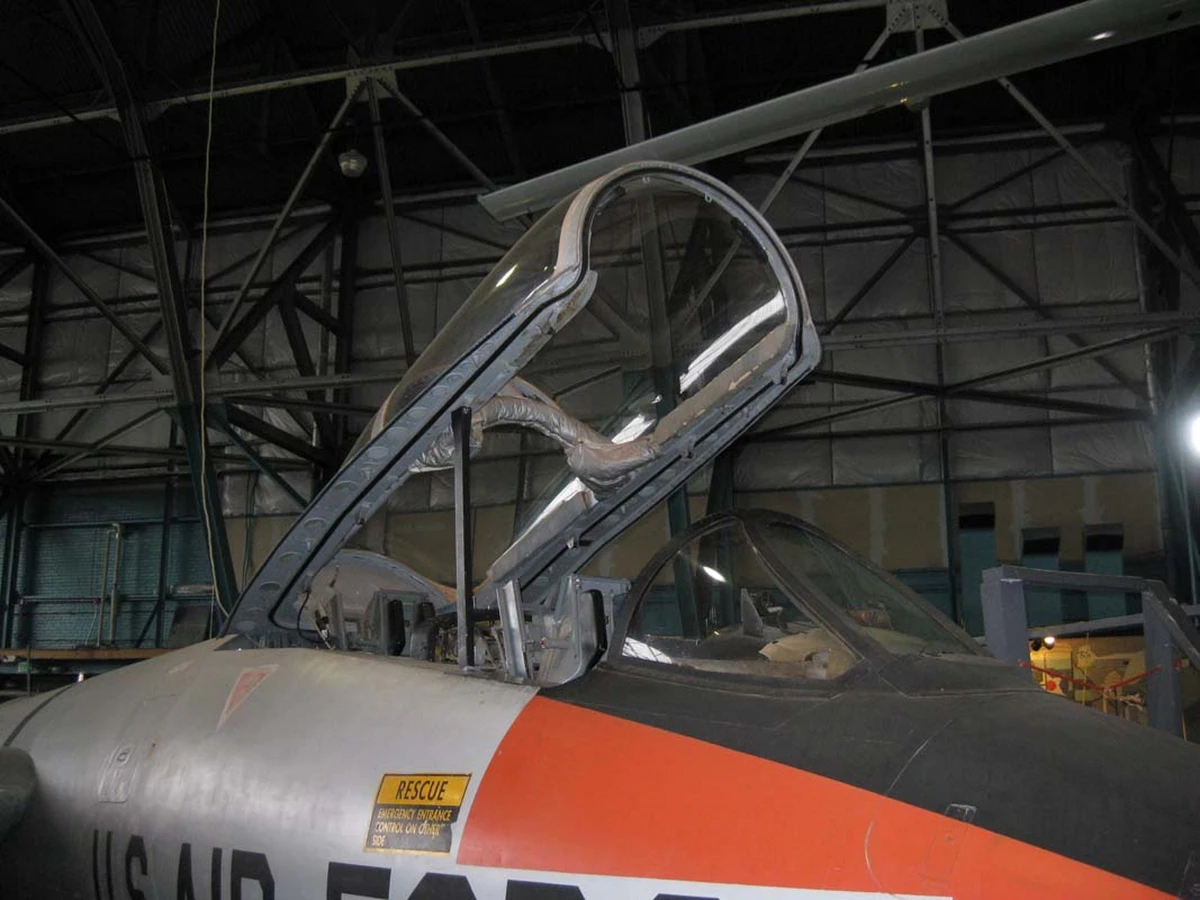
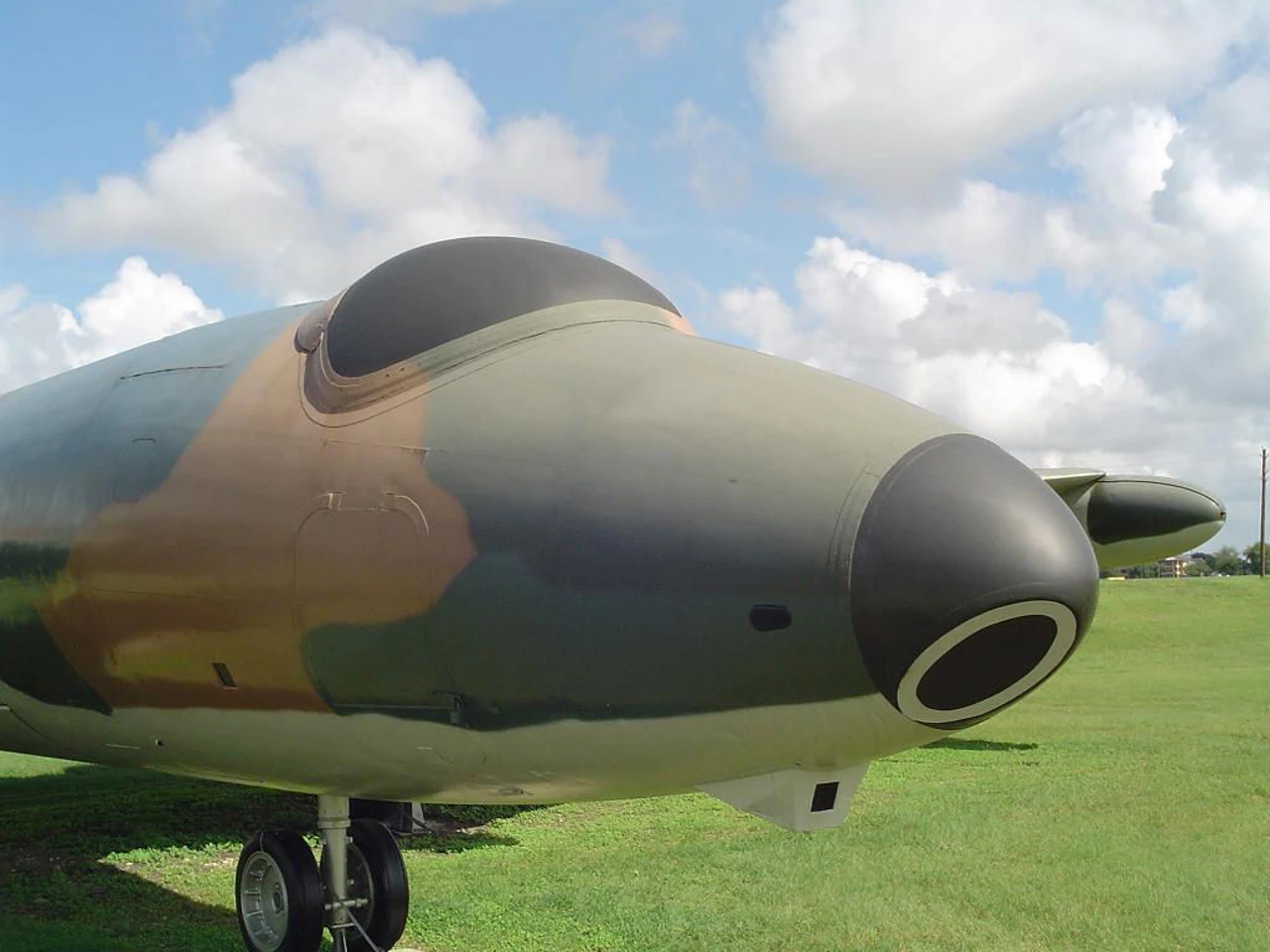
The “Tandem” Cockpit:Unlike the original British version where the navigator sat in a dark hole in the fuselage, Martin redesigned the B-57B with a fighter-style tandem cockpit under a long, continuous canopy. This gave the Electronic Warfare Officer (EWO) better situational awareness.
Rotary Bomb Bay:The B-57 featured a unique rotary bomb bay door. On the EB-57B, instead of bombs, this bay often housed massive internal electronic jamming suites and cooling systems for the high-powered vacuum tubes of the era.
Wing-Mounted ECM Pods:To expand its frequency coverage, the EB-57B frequently carried specialized Electronic Countermeasures (ECM) pods on its underwing pylons, allowing it to simulate a wide variety of Soviet radar-interference signatures.
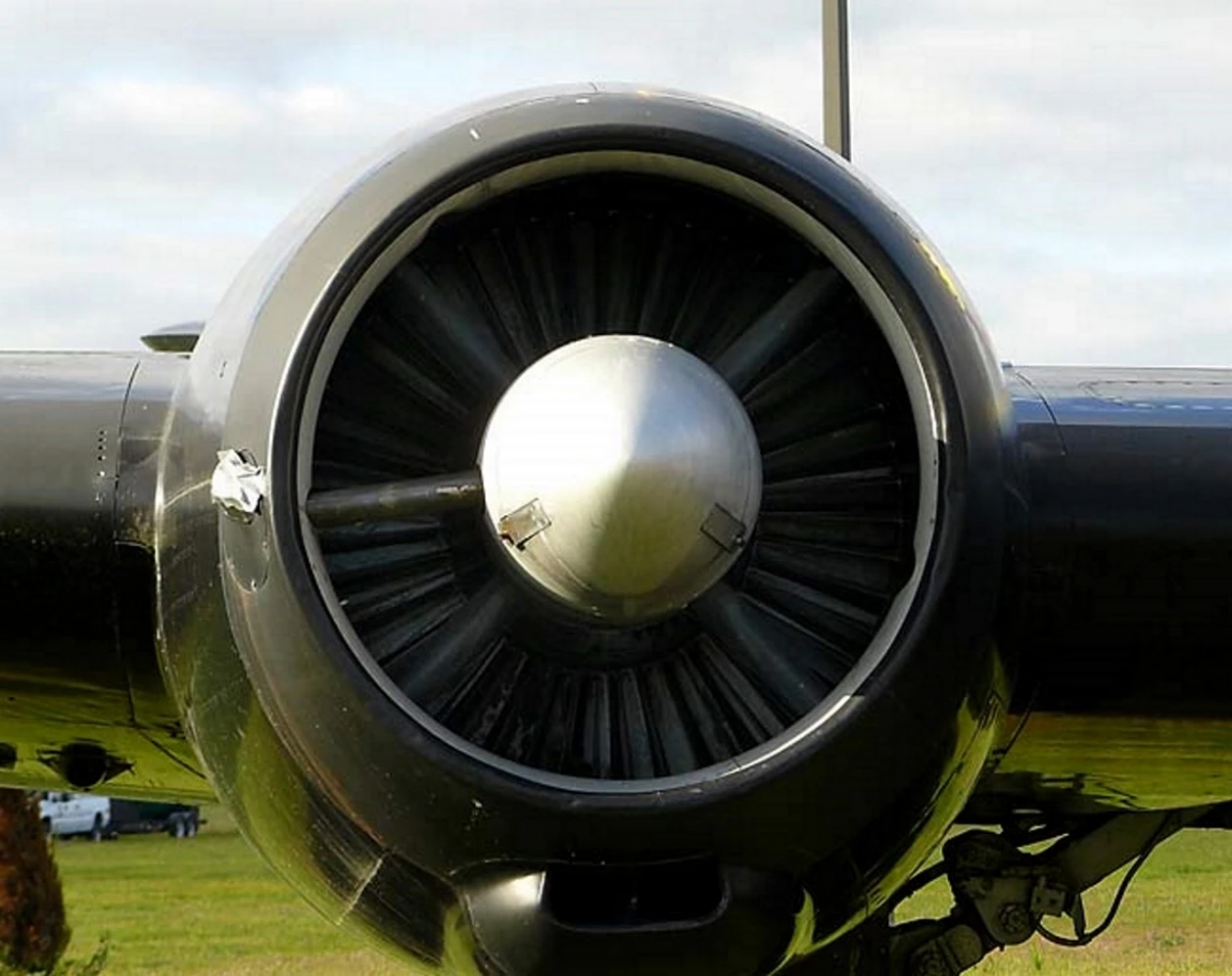
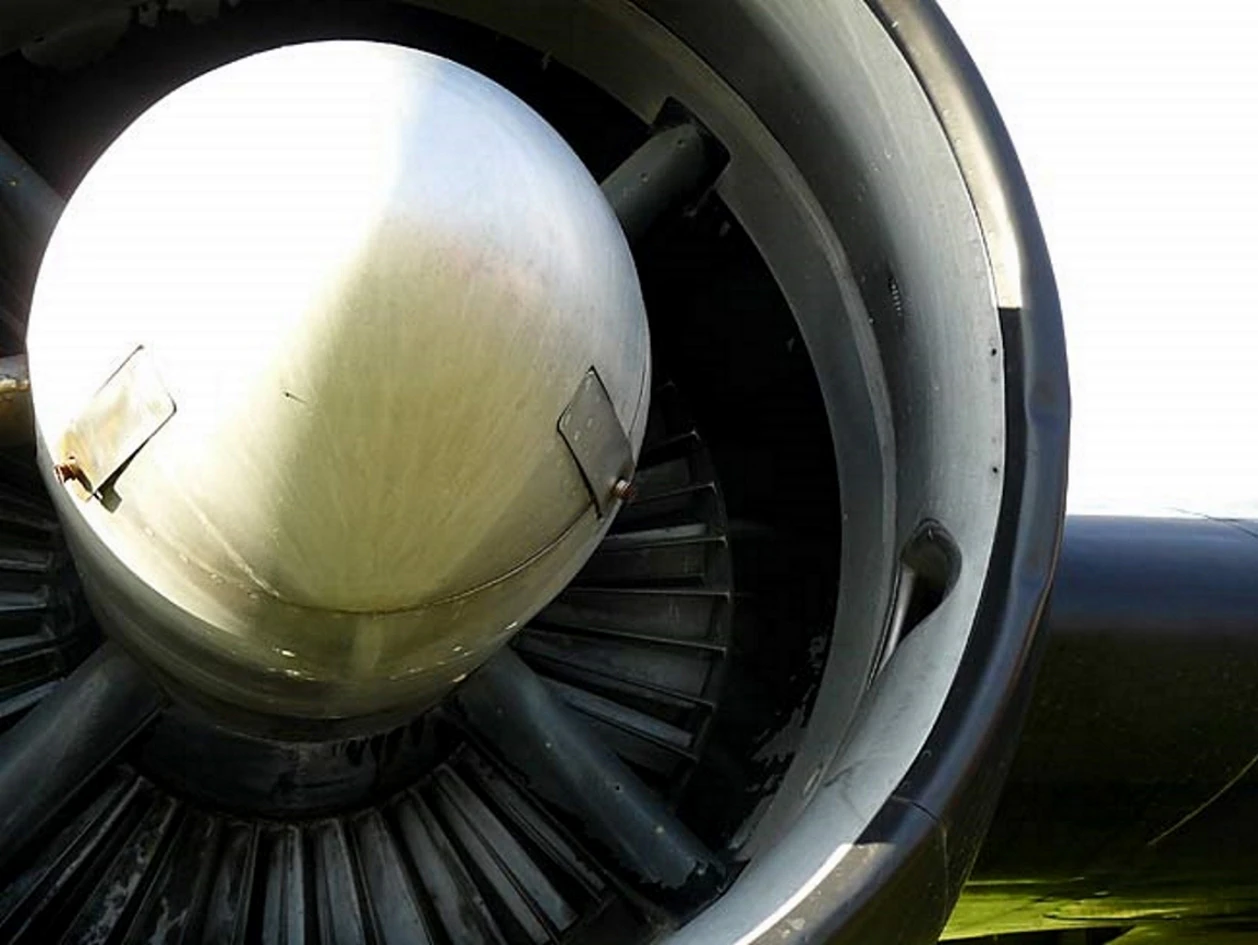
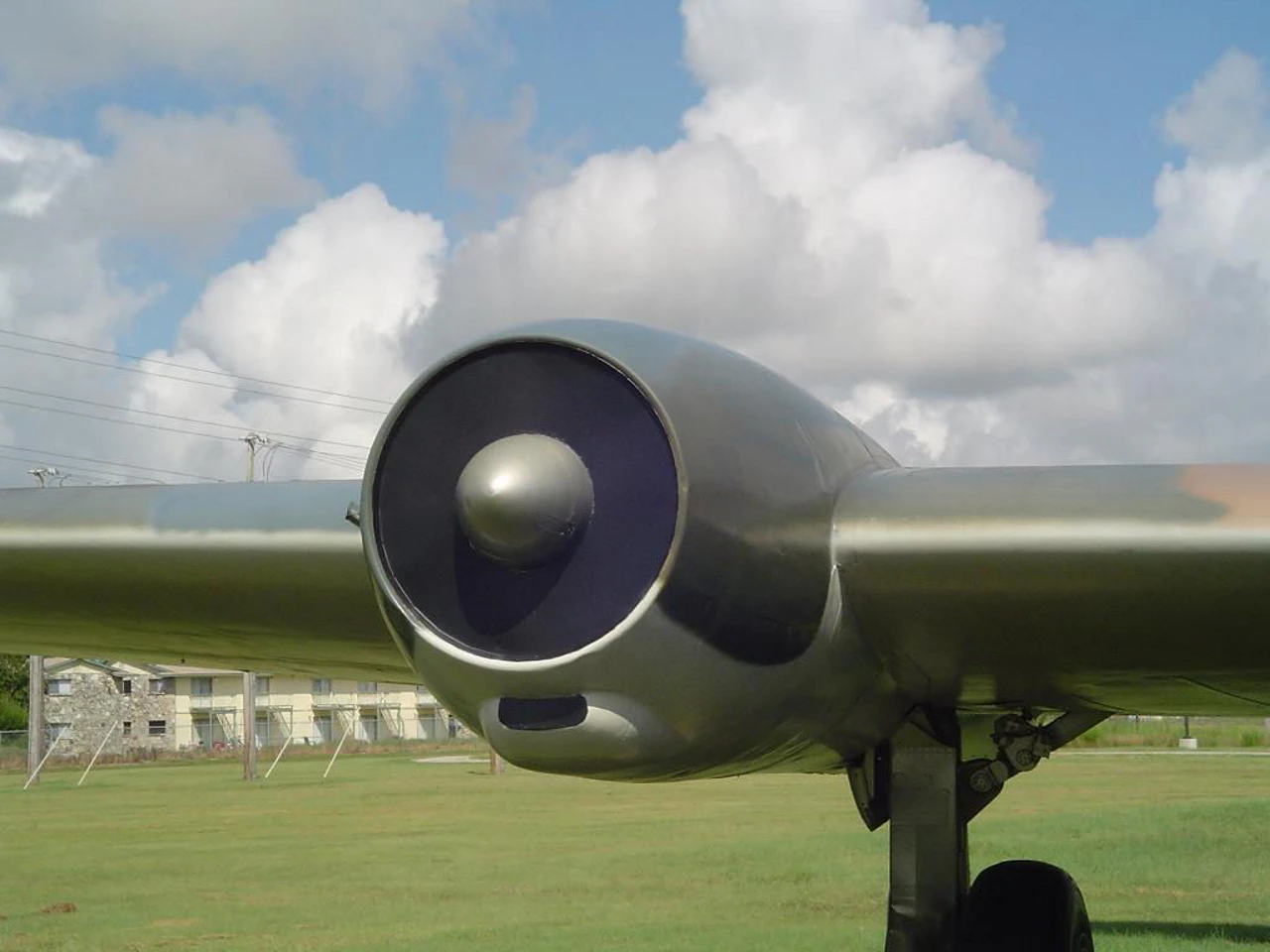
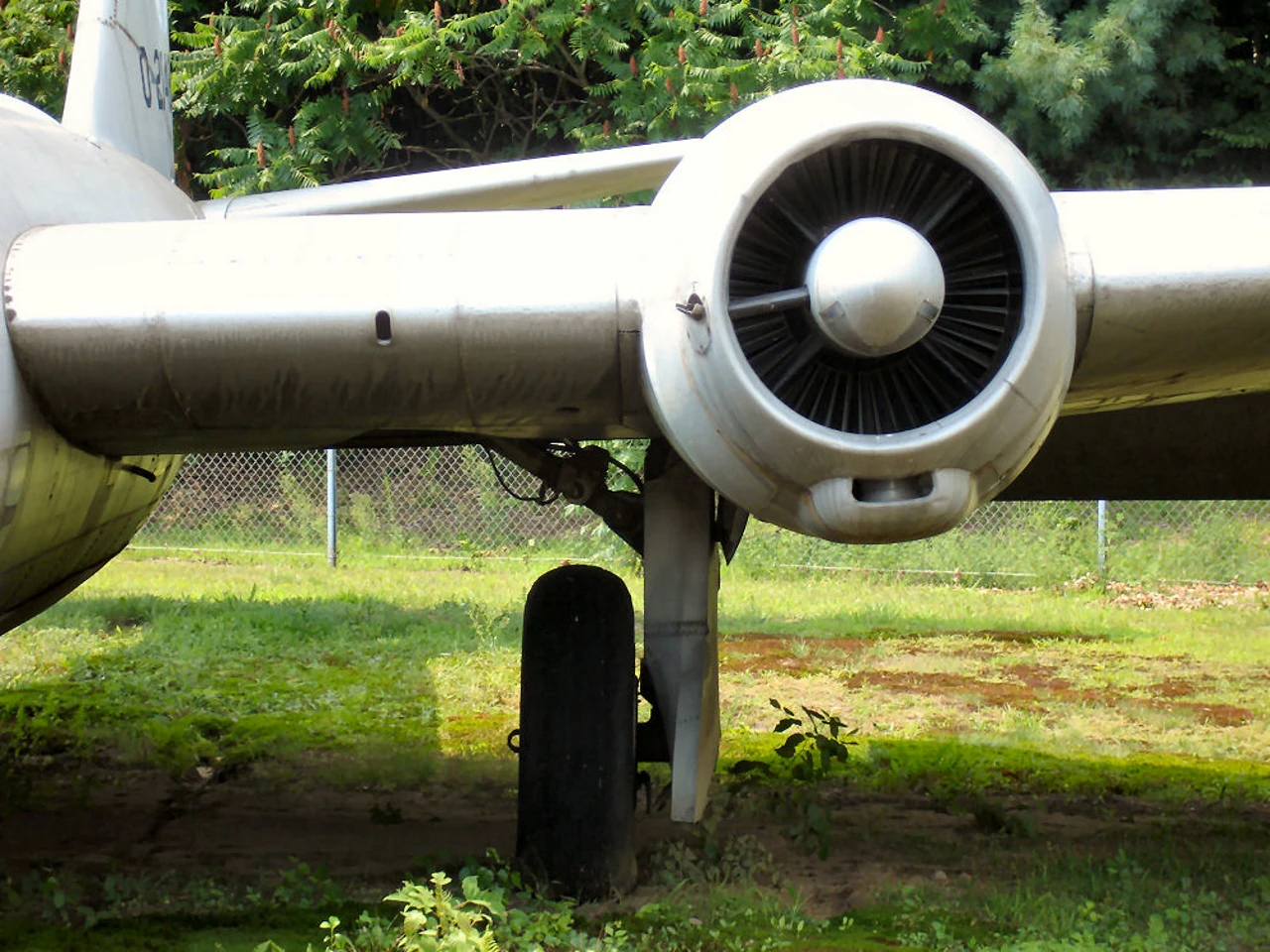
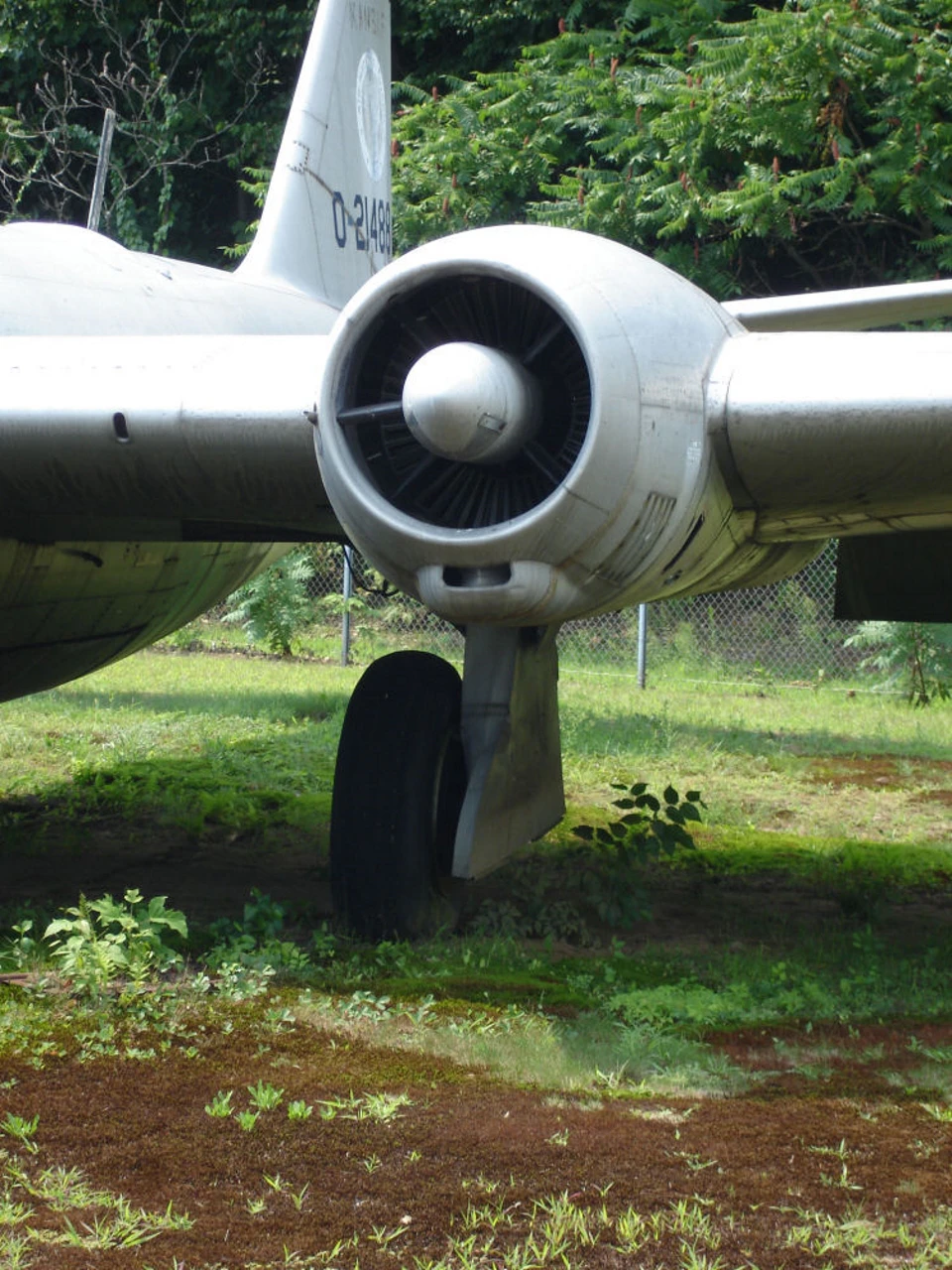
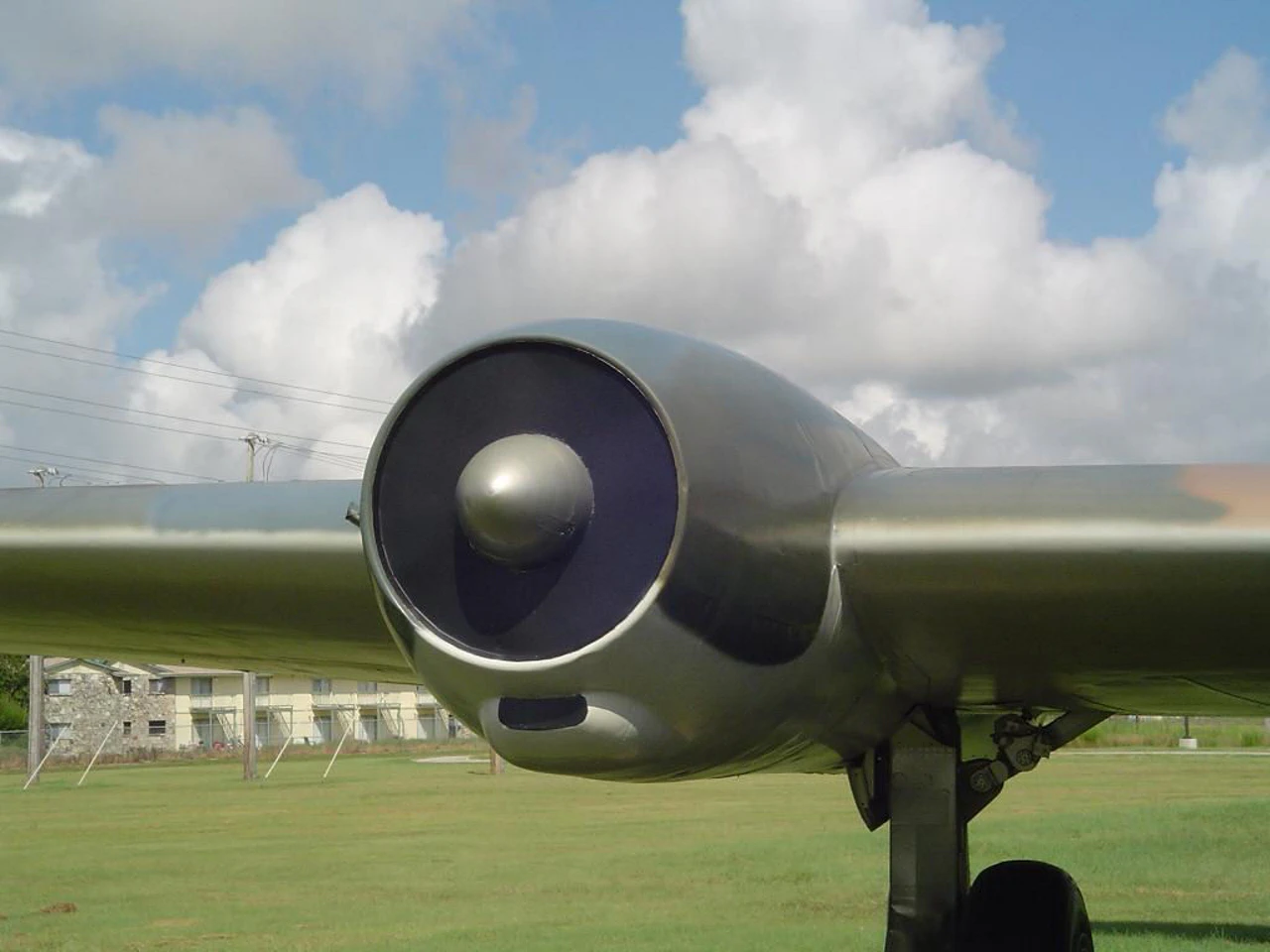
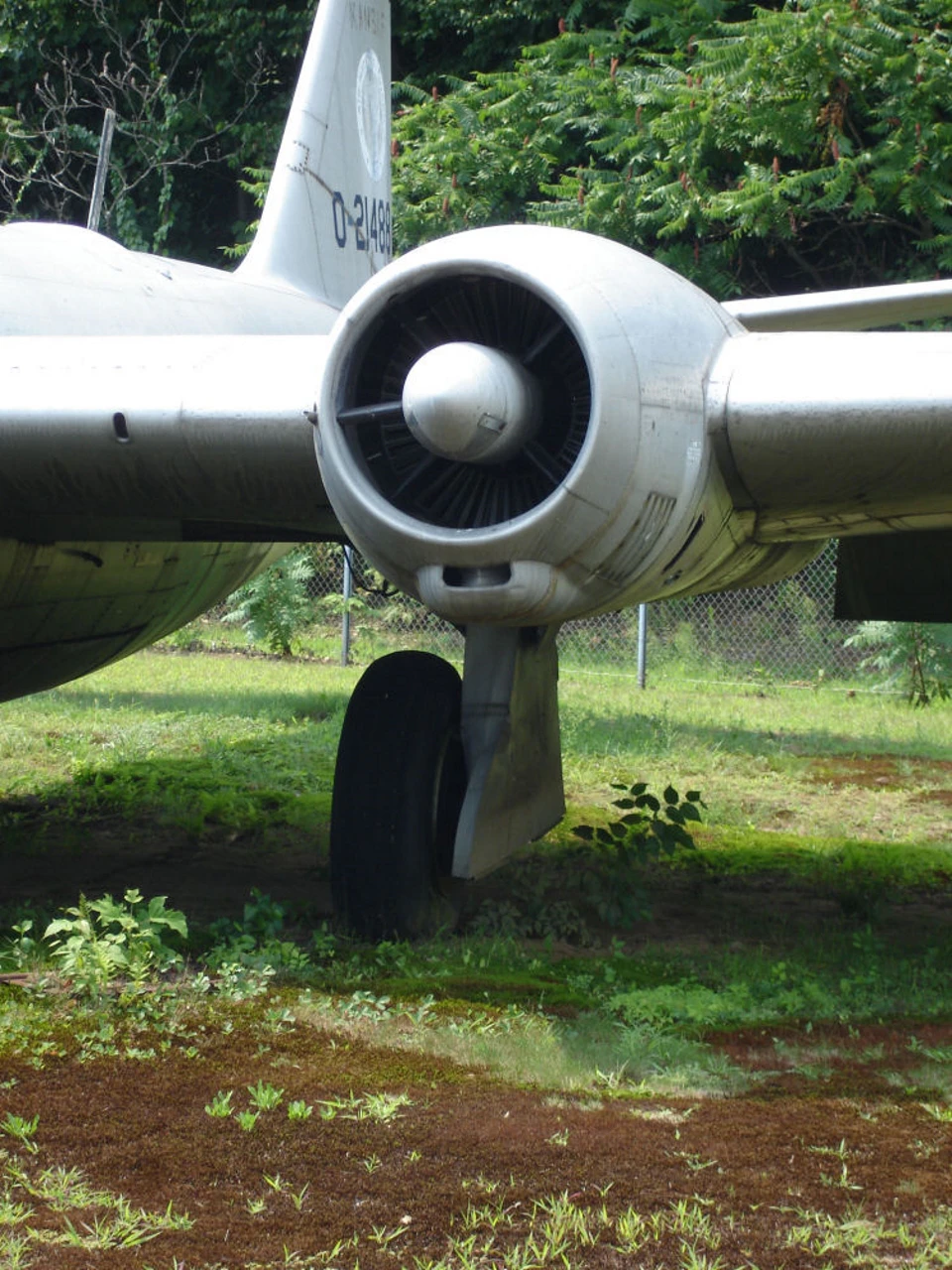
Wright J65 Engines:The US versions swapped the British Rolls-Royce Avons for the Wright J65 (a licensed Armstrong Siddeley Sapphire). These provided excellent low-altitude performance, essential for the B-57’s original mission as a “night intruder.”
Cold War Service & The “Aggressors”
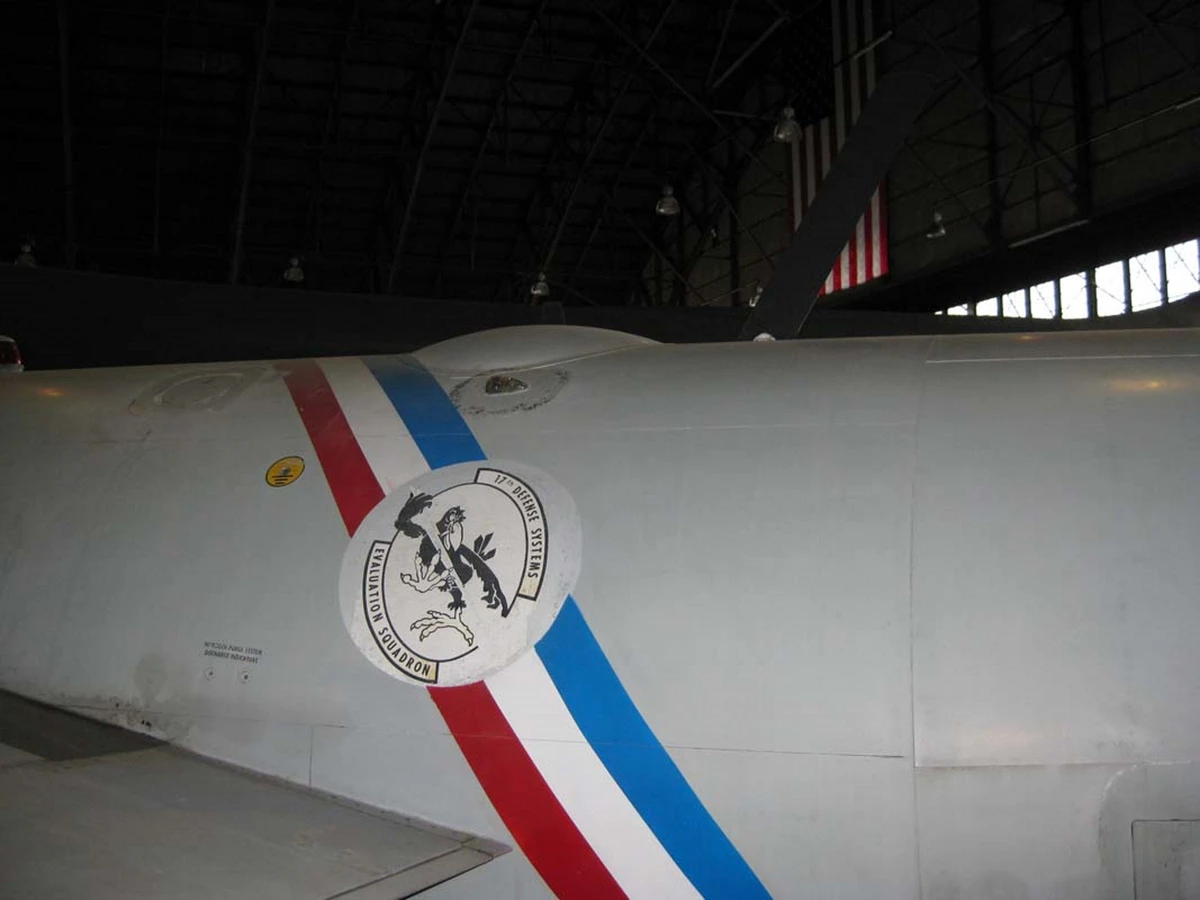
Electronic Aggressor Squadrons:The EB-57B was the backbone of the 17th and 19th Defense Systems Evaluation Squadrons. They flew against US and NATO radar sites to find “holes” in the defense network and train operators to “burn through” enemy jamming.
Vietnam Service:While the EB-57B was a trainer, its bomber brother, the B-57B, was a legend in Vietnam, notably during the “Patricia Lynn” reconnaissance missions and as the first US jet bomber to be deployed to the conflict.
Longevity:The Canberra airframe was so robust that some highly modified versions (WB-57F) arestill flying todayfor NASA, used for high-altitude atmospheric research and satellite sensor testing.
The “Whistling Wheelbarrow”:Ground crews gave the Canberra this nickname due to the high-pitched whine of its engines at idle and its tricycle landing gear configuration.

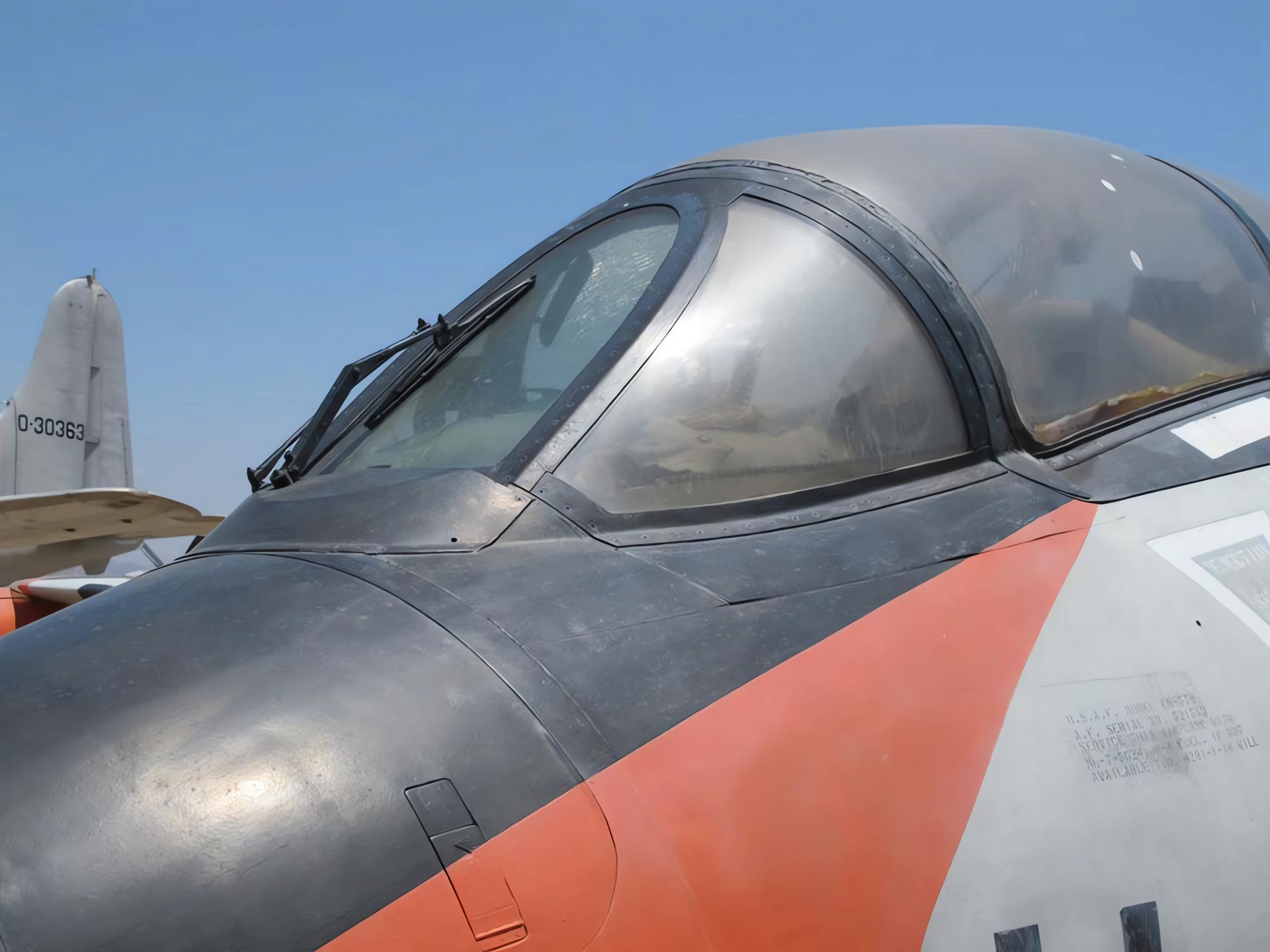
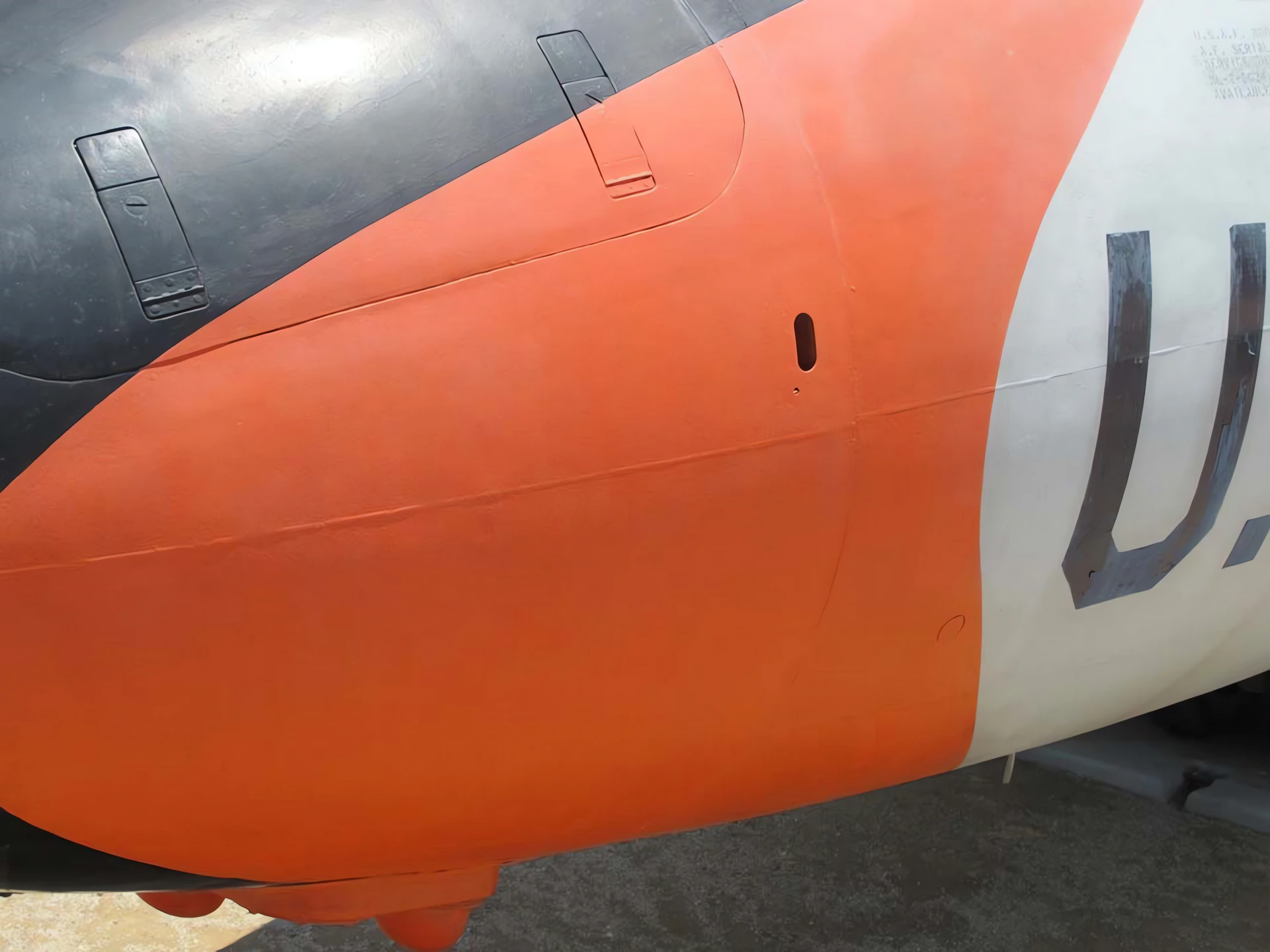
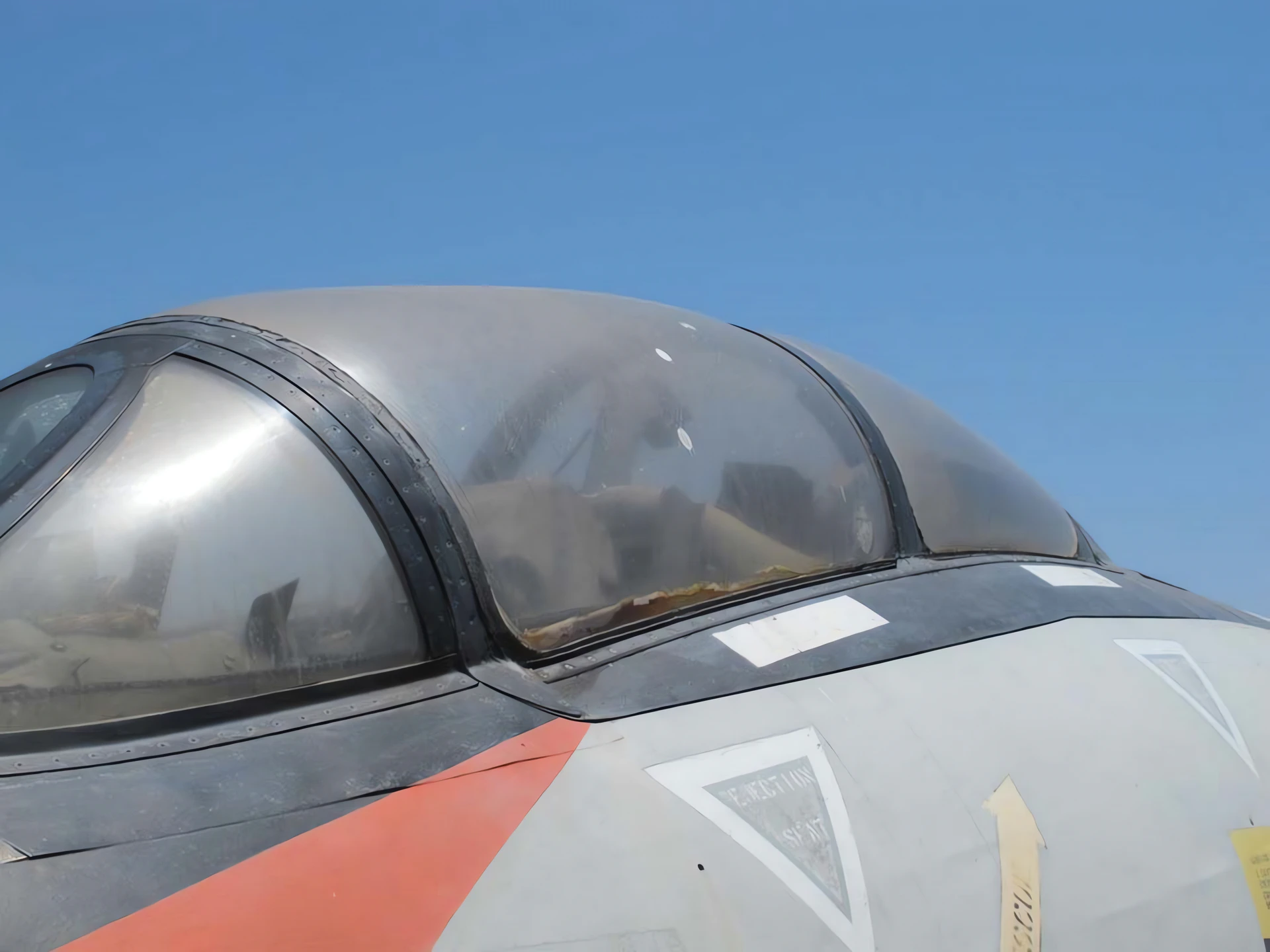
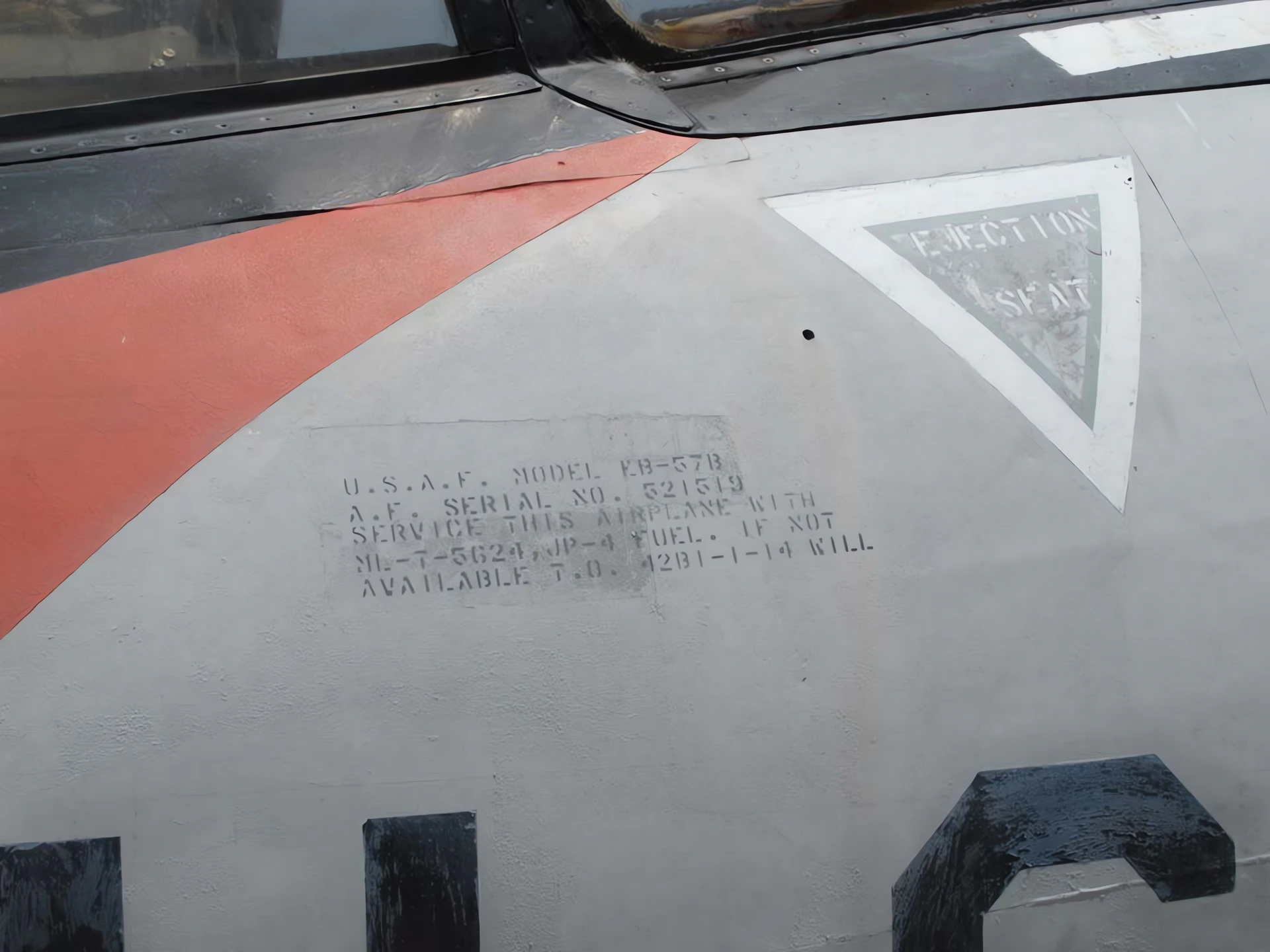
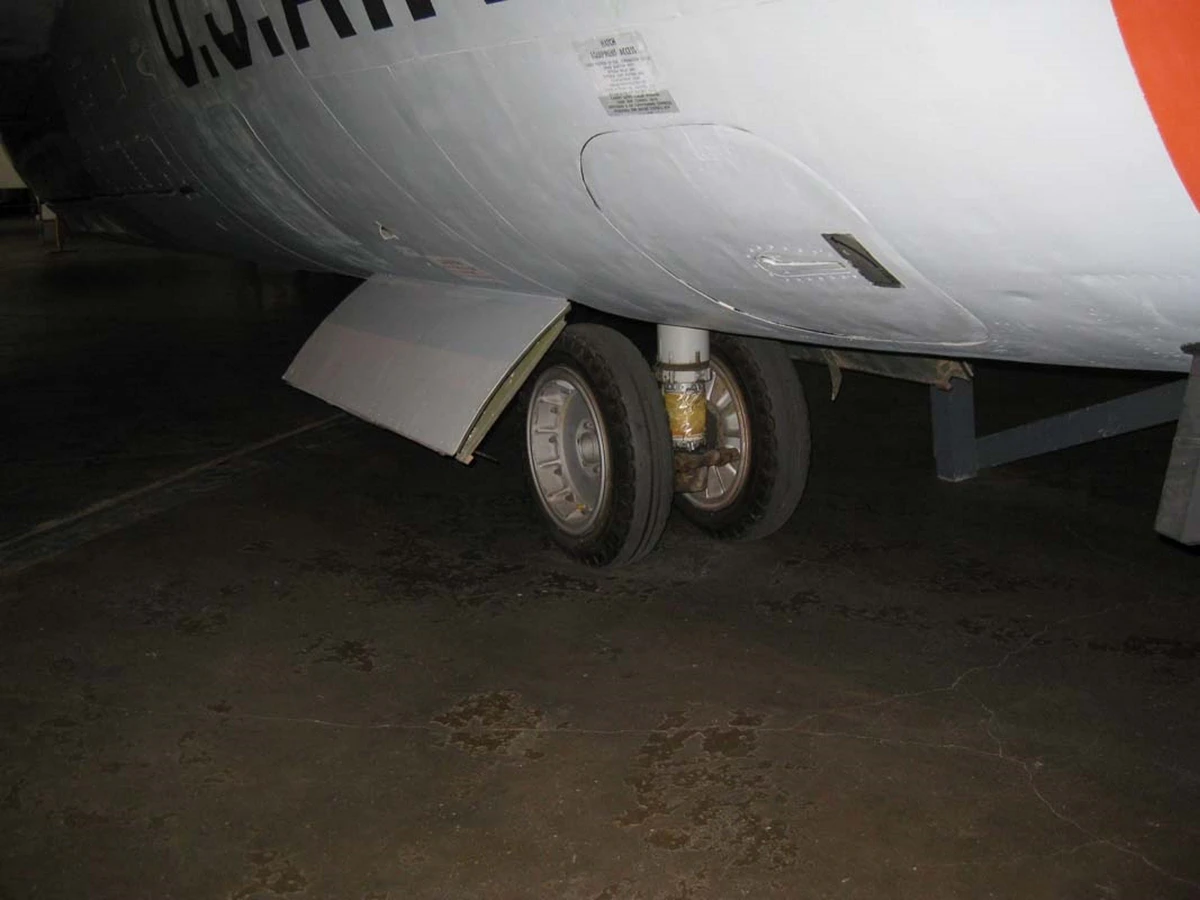
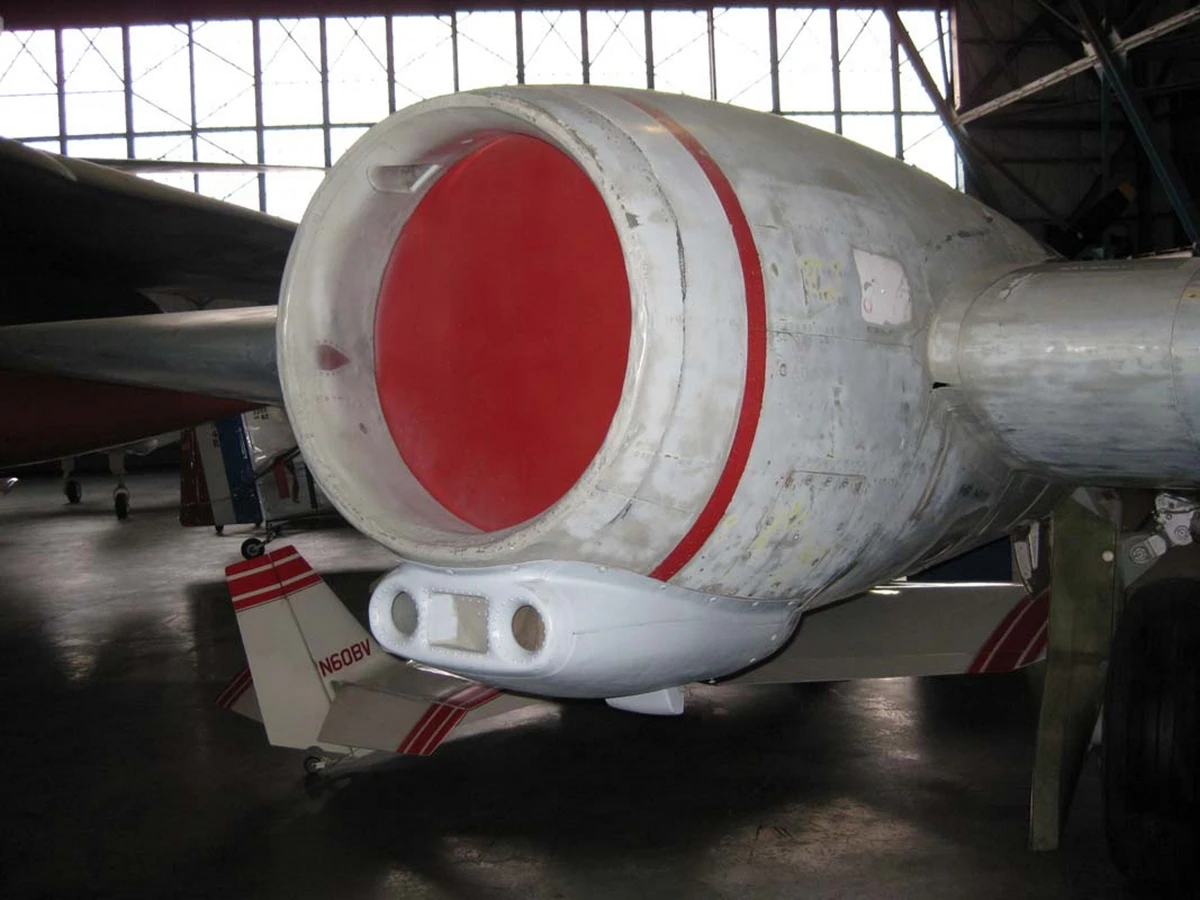
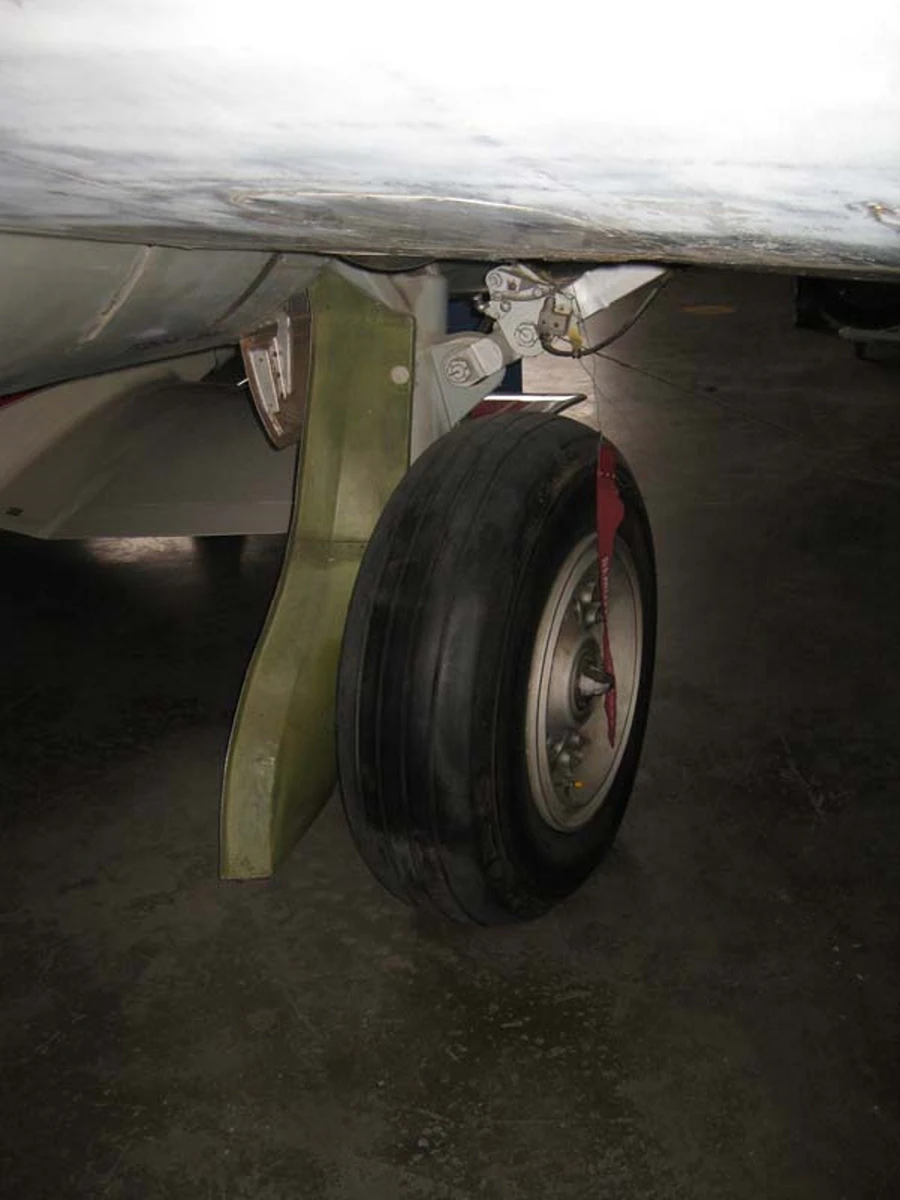
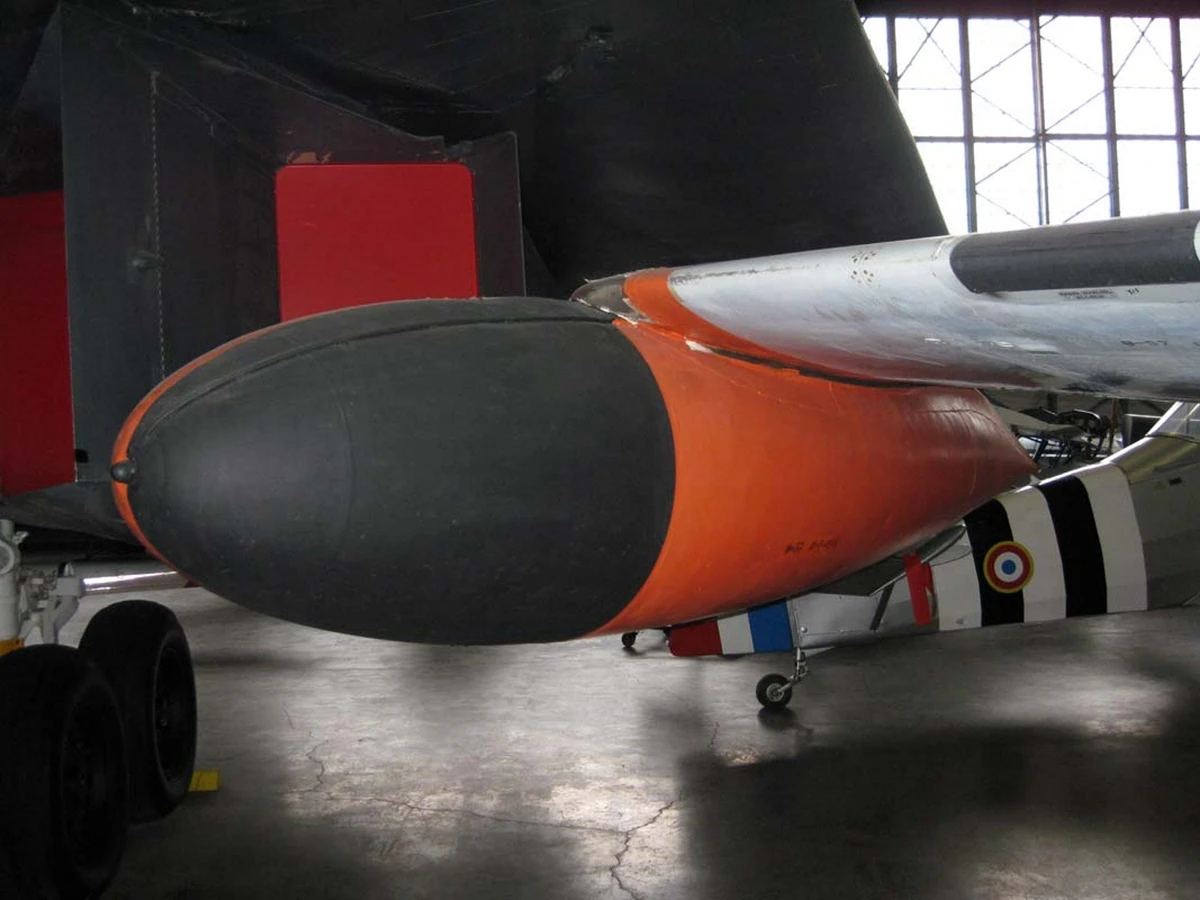
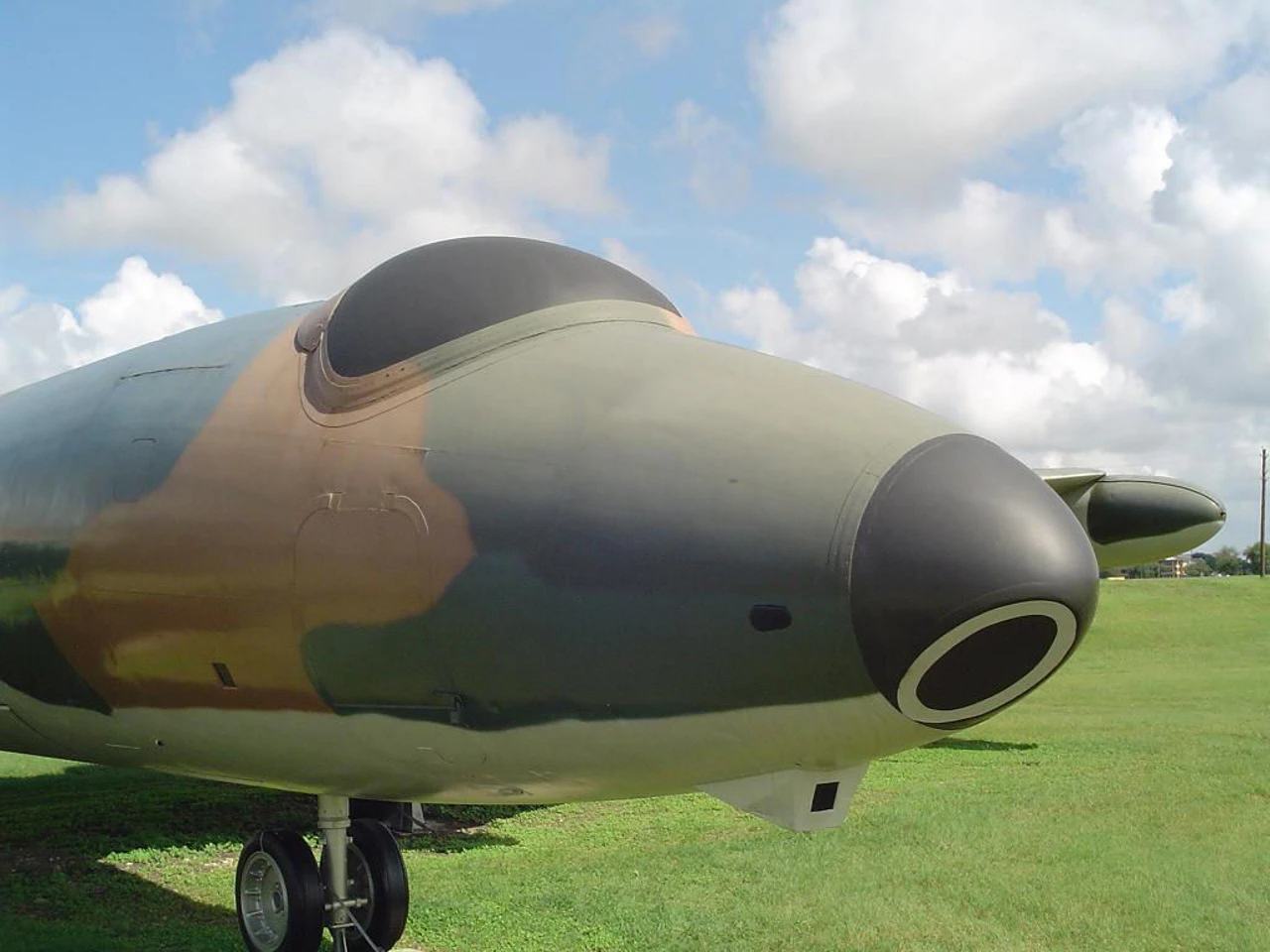
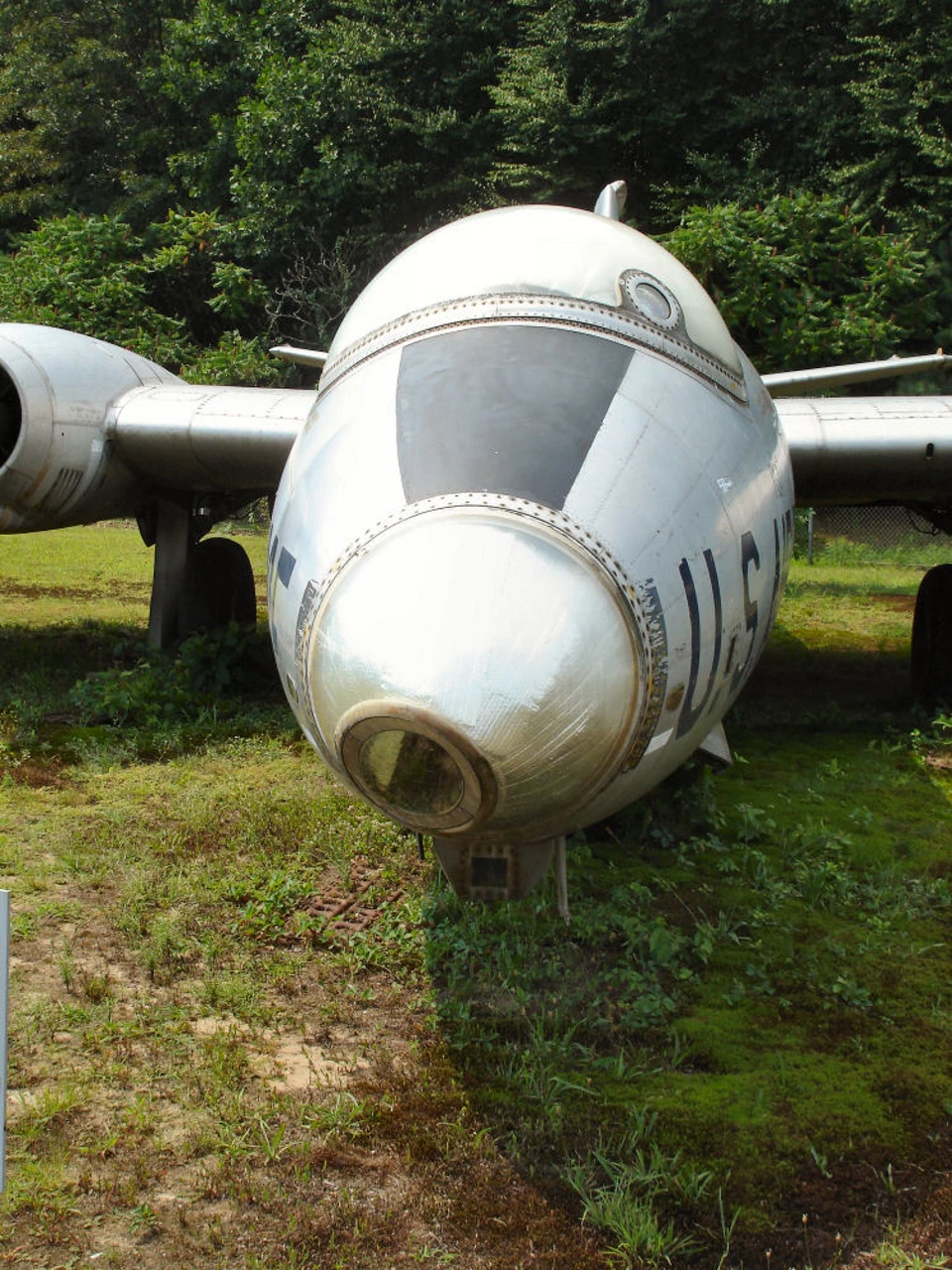
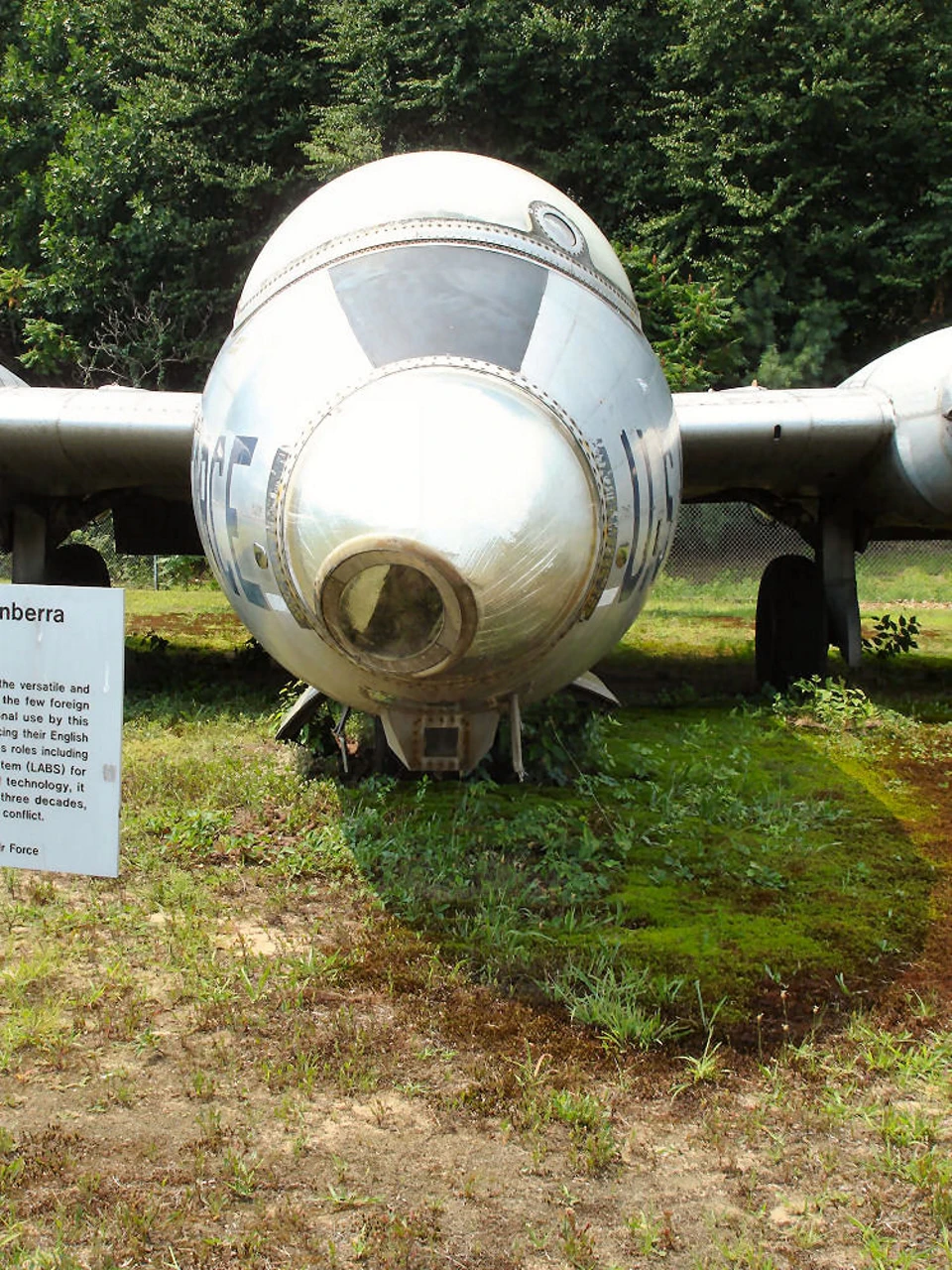
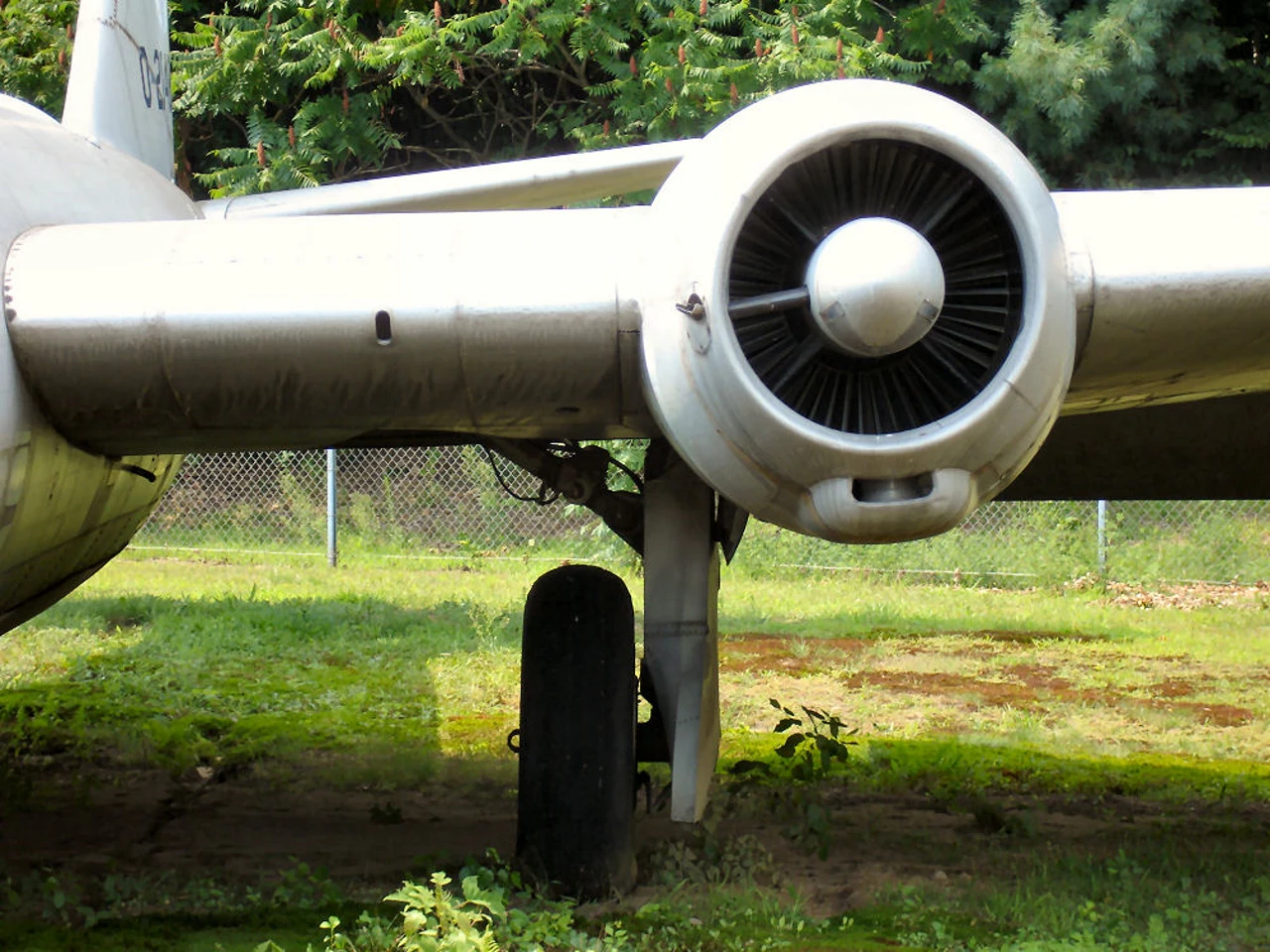


 Aero L-29 Delfín – fotografije in video
 Verville-Sperry M-1 Messenger – Fotografije & Video
 Mitsubishi A6M Zero – Sprehod Okoli
 Hawker Hurricane – Sprehod Okoli
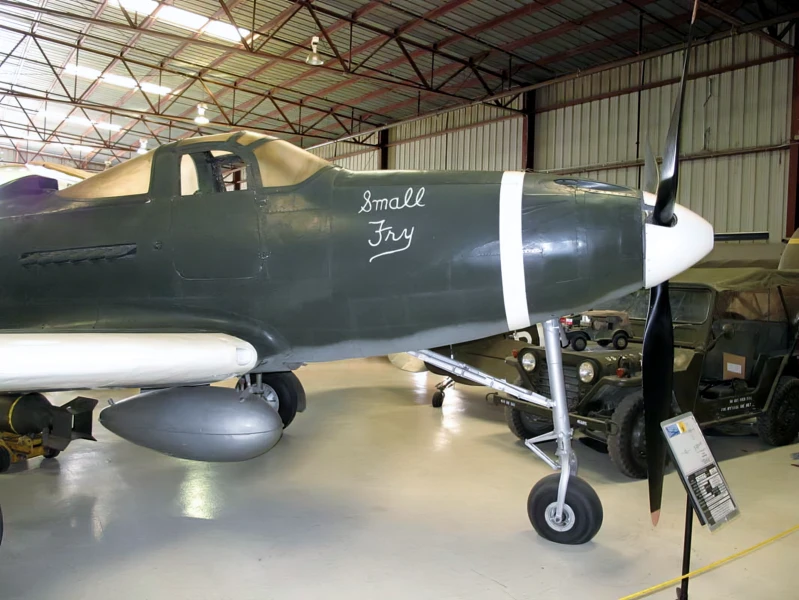 Bell P-39N Airacobra – WalkAround
 Konsolidirani B-24M Liberator – WalkAround
 P-47D Thunderbolt – WalkAround
 A-20 Havoc – WalkAround
 TBM-3E Avenger – Sprehod Okoli
 Fiat G-55 Centauro – Sprehod Okoli
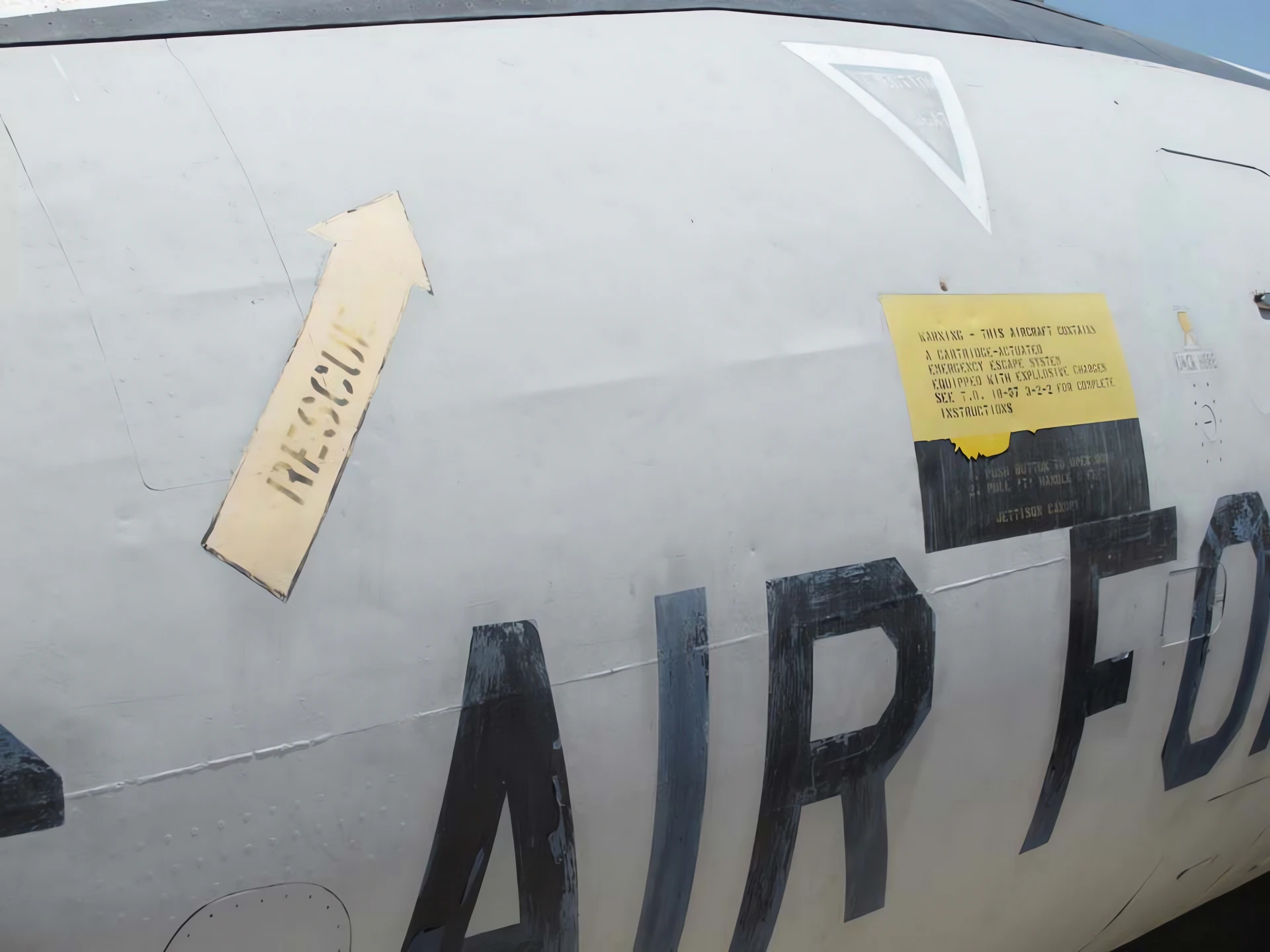
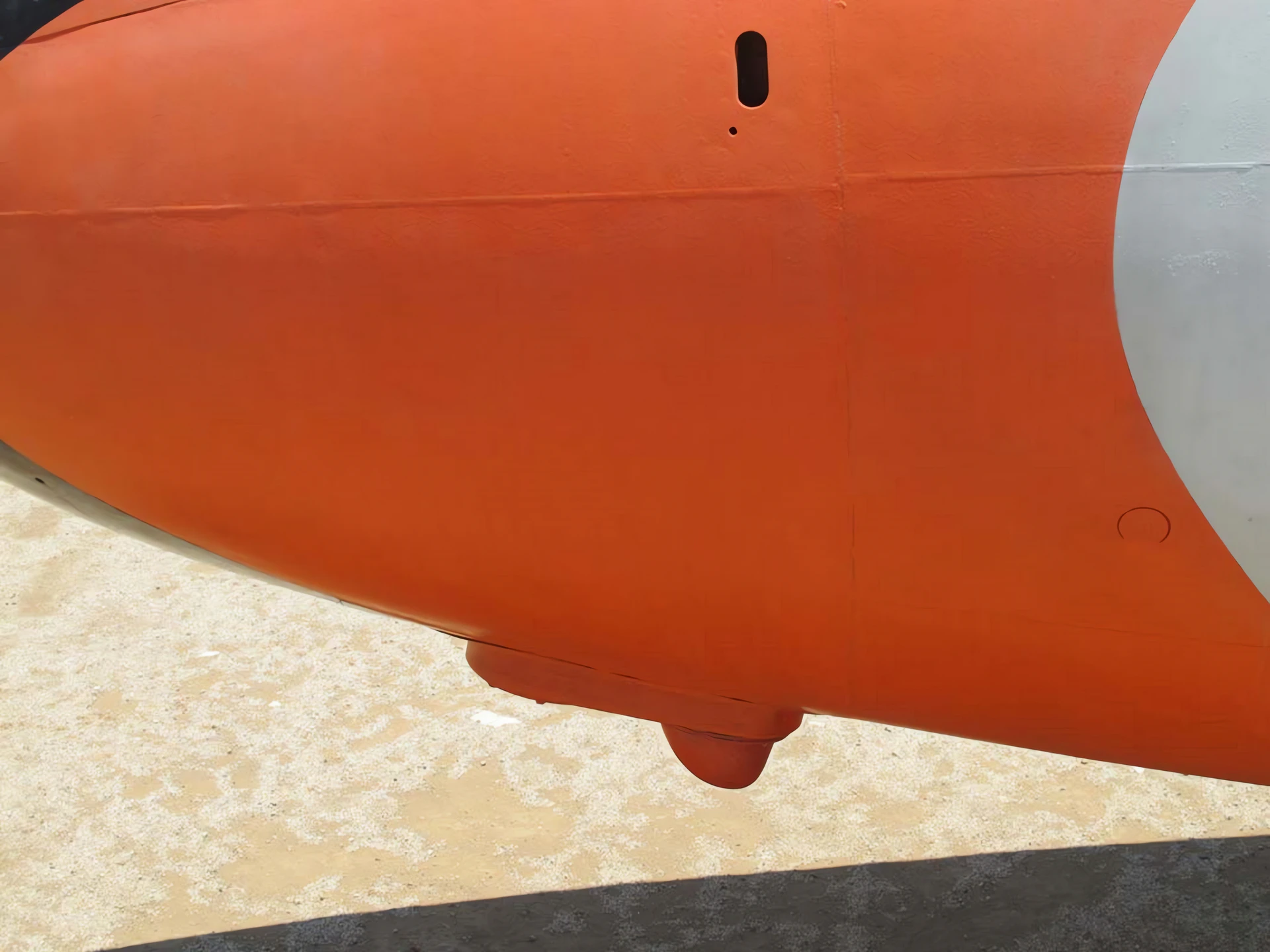
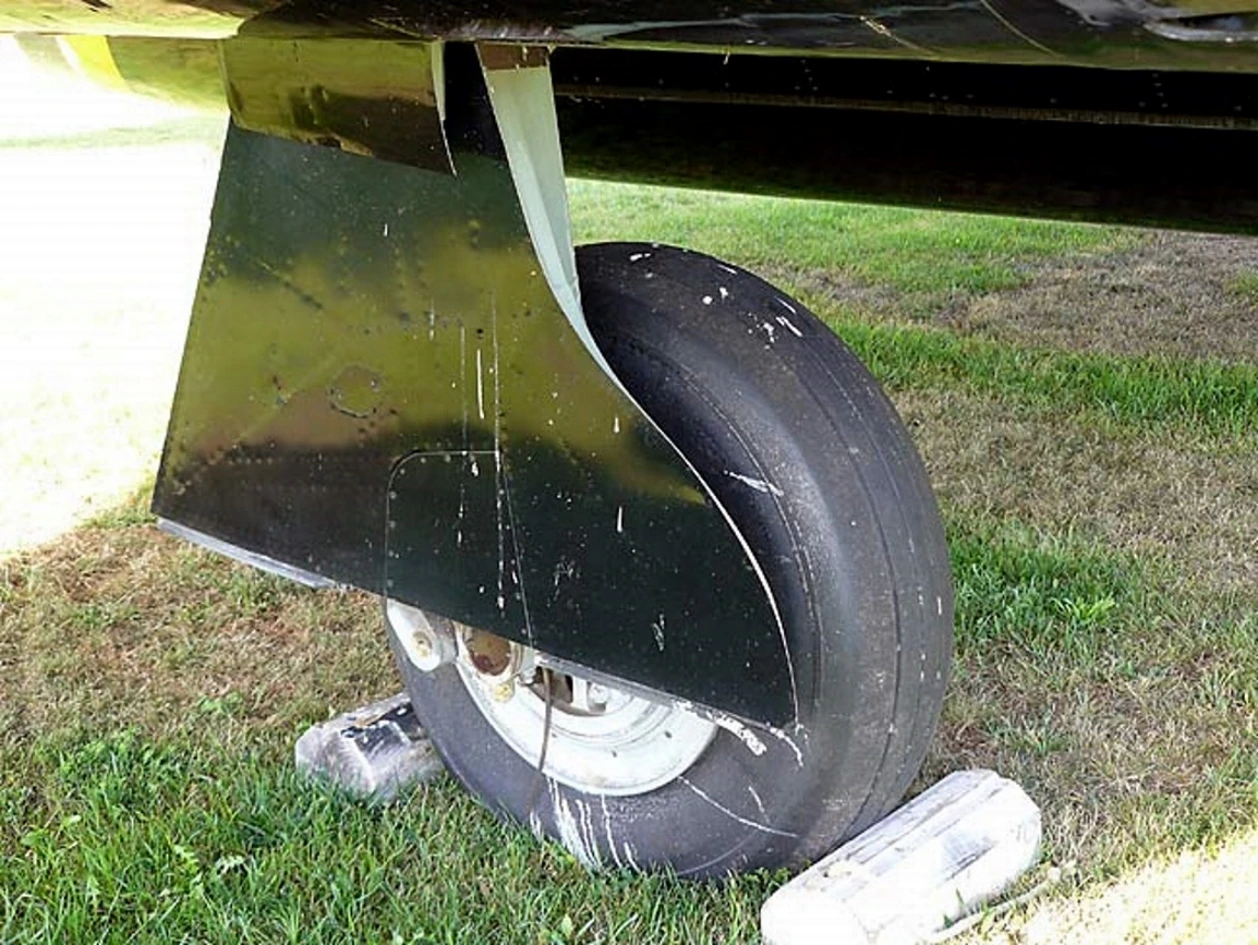
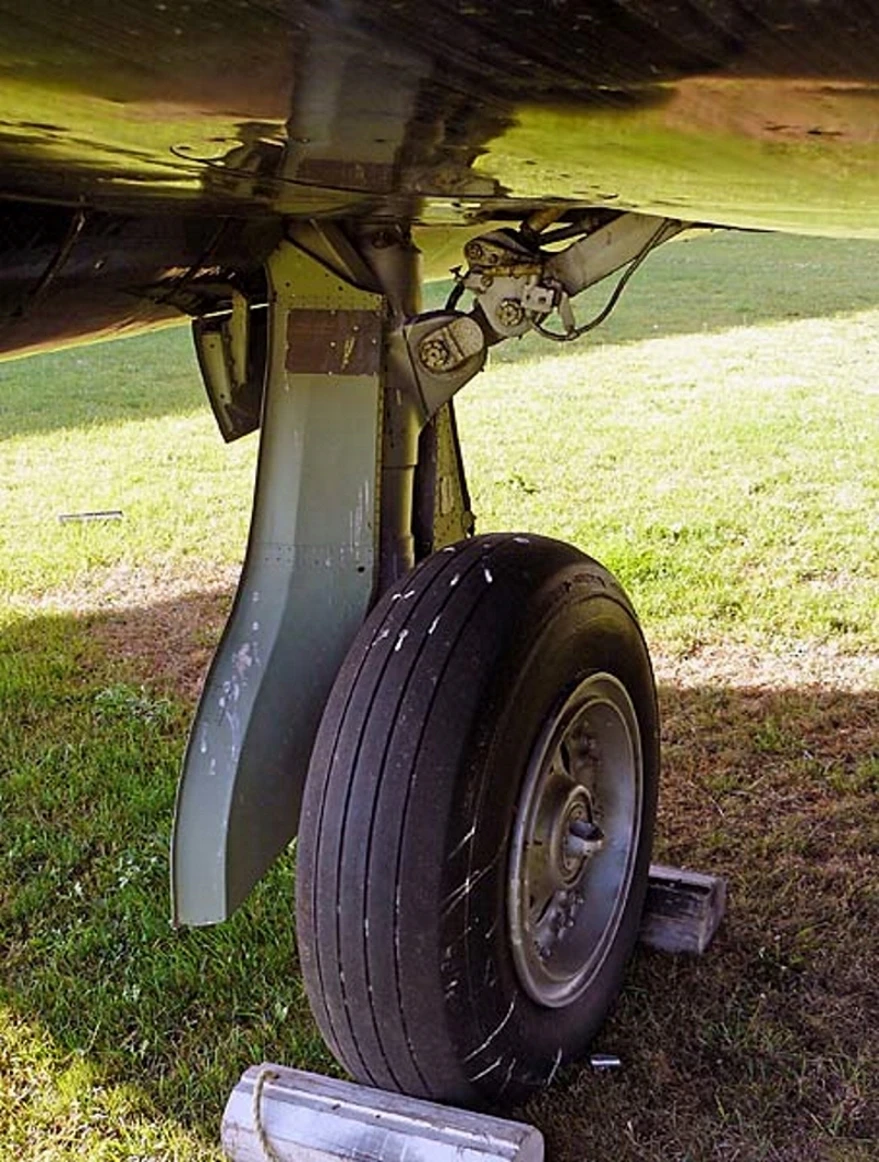
Nov komplet 81 fotografij Martin EB-57B Canberra