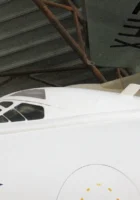
Vickers Valiant B.1

Vickers Valiant B.1

PaísReino unido
TipoBombardeiro de alta altitude de quatro jatos
FotógrafoOndrej Skarka
Descrição

Álbum de 71 fotos walk-around de um «Vickers Valiant B.1»

Galeria de fotos de um Vickers Valiant B.1, The Vickers-Armstrongs Valiant was a British four-jet high-altitude bomber, once part of the Royal Air Force’s V bomber nuclear force in the 1950s and 1960s. It was developed by Vickers in response to Specification B.35/46 issued by the Air Ministry for a nuclear-armed jet-powered bomber. The Valiant was the first of the V bombers to become operational, and was followed by the Handley Page Victor and the Avro Vulcan; it was noticeably less advanced than its counterparts. The Valiant has the distinction of being the only V bomber to drop live nuclear weapons.

Fonte: Vickers Valiant B.1 na Wikipédia

Continue lendo

Views : 2643

Touro Tupolev Tu-4

Touro Tupolev Tu-4

PaísUnião Soviética
PapelBombardeiro estratégico
Primeiro voo19 de maio de 1947
Construído847

Galeria de fotos de um Touro Tupolev Tu-4, The Tupolev Tu-4 (NATO reporting name: Bull) was a piston-engined Soviet strategic bomber that served the Soviet Air Force from the late 1940s to mid-1960s. It was a reverse-engineered copy of the American-made Boeing B-29 Superfortress.

Fonte: Tupolev Tu-4 Bull na Wiki

Continue lendo

Views : 2789

Tupolev Tu-16 Badger

Tupolev Tu-16 Badger

PaísUnião Soviética
TipoBombardeiro estratégico a jato bimotor
Primeiro voo27 de Abril de 1952
Construído1509

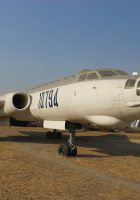
Galeria de fotos de um Tupolev Tu-16 Badger, The Tupolev Tu-16 (NATO reporting name: Badger) was a twin-engined jet strategic bomber used by the Soviet Union. It has flown for more than 60 years, and the Chinese licence-built Xian H-6 remains in service with the People’s Liberation Army Air Force.

Fonte: Tupolev Tu-16 Badger na Wiki

Continue lendo

Views : 3929

Opel Blitz 3,6-36S

Opel Blitz 3.6

PaísAlemanha nazista
TipoCaminhão de uso geral
Produção1930–1975

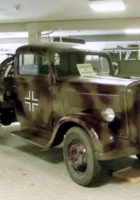
Galeria de fotos de um Opel Blitz 3.6, Opel Blitz (German for “lightning”) was the name given to various German light and middle-weight truck series built by the German Opel automobile manufacturer between 1930 and 1975. The original logo for this truck, two stripes arranged loosely like a lightning symbol in the form of a horizontally stretched letter “Z”, still appears in the current Opel logo. From 1939, the reliable Blitz 3.6 three-ton version was used in large numbers by the German Wehrmacht armed forces throughout World War II. Derived variants included an elongated version and the four-wheel drive Blitz A. To cope with the bad road conditions and the rasputitsa mud seasons on the Eastern Front, a half-tracked Maultier (mule) SdKfz 3 version was built using tracks and suspension based on the Universal Carrier. Among others, these were used as service vehicles for the Messerschmitt Me 323 military transport aircraft. It is also claimed that Opel, a subsidiary of GM, used forced labor to reap unprecedented profits. To what degree GM controlled Opel at the time is subject to debate, but it is clear that GM did in fact play a role in giving Nazi Germany the Opel Blitz truck

Fonte: Opel Blitz 3.6 na Wiki

Continue lendo

Views : 13113

Zis-151

Zis-151

PaísUnião Soviética
TipoCaminhão de uso geral
FotógrafosIgor Suhin
Descrição

Álbum de 39 fotos walk-around de um «ZiS-151»

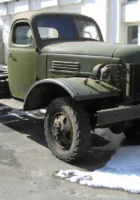
Galeria de fotos de um Zis-151, The ZiS-151 was general-purpose truck produced by the Soviet car manufacturer Automotive Factory No. 2 Zavod imeni Stalina in 1947–1958. In 1956, the factory was renamed to Zavod imeni Likhacheva, and new trucks were called ZiL-151 (ЗиЛ-151). The ZiS-151 was the first major Soviet military all-wheel-drive truck built following World War II, replacing the imported U.S. Studebaker US6 and the earlier Soviet ZiS-6. In early 1948, the cabs were made of wood, soon replaced with a steel cab. Tens of thousands were produced, including specialized versions for hauling different types of cargo. The Soviets also found the trucks an ideal platform for BM-13 Katyusha rocket launchers.

Fonte: ZiS-151 na Wiki

Continue lendo

Views : 6696

Cozinha de campo

Cozinha de campo do exército soviético

PaísUnião Soviética
TipoCozinha de campo
FotógrafosYuri Pasholok
Descrição

Álbum de 45 fotos de uma «Cozinha de Campo do Exército Soviético»

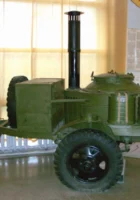
Galeria de fotos de um Cozinha de campo do exército soviético, A field kitchen is a mobile kitchen, mobile canteens or food truck used primarily by military services to provide warm food to the troops near the frontline or in temporary encampments.

Fonte: Cozinha de campo do exército soviético na Wiki

Continue lendo

Visualizações : 3900

SA.318C Alouette II

SA.318C Alouette II

PaísFrança
TipoHelicóptero leve
Produzido1956-1975
Construído1300+

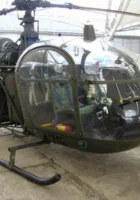
Galeria de fotos de um SA.318C Alouette II, The Aérospatiale Alouette II is a light helicopter originally manufactured by Sud Aviation and later Aérospatiale, both of France. The Alouette II was the first production helicopter to use a gas turbine engine instead of the conventional heavier piston powerplant. The Alouette II was mostly used for military purposes in observation, photography, air-sea rescue, liaison and training, but it has also carried anti-tank missiles and homing torpedoes. As a civilian helicopter it was used for casualty evacuation (with two external stretcher panniers), crop-spraying and as a flying crane, with a 500-kilogram (1,100 lb) external underslung load.

Fonte: Alouette II na Wiki

Continue lendo

Visualizações : 6352

Sukhoi Su-7

Sukhoi Su-7

PaísUnião Soviética
TipoCaça supersônico
Primeiro voo7 de setembro de 1955
Construído1847

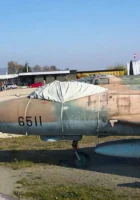
O Sukhoi Su-7 (Nome de designação da OTAN: Fitter-A) foi um caça supersônico de asa varrida desenvolvido pela União Soviética em 1955. Originalmente, foi projetado como um caça tático de baixo nível, mas não teve sucesso nessa função. Por outro lado, a série Su-7B logo introduzida tornou-se o principal caça-bombardeiro soviético e aeronave de ataque ao solo da década de 1960. O Su-7 era robusto em sua simplicidade, mas suas deficiências incluíam curto alcance e baixa carga de armas.

Fonte: Sukhoi Su-7 na Wiki

Continue lendo

Views : 12013

SPAD S.VII Cabruna & Ruffo

SPAD S.VII Cabruna & Ruffo

PaísBélgica – Itália
TipoCaça biplano
Primeiro voo6maio de 191
Construído6000

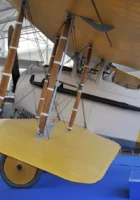
Galeria de fotos de um SPAD S.VII Cabruna & Ruffo, The SPAD S.VII was the first of a series of highly successful biplane fighter aircraft produced by Société Pour L’Aviation et ses Dérivés (SPAD) during the First World War. Like its successors, the S.VII was renowned as a sturdy and rugged aircraft with good climbing and diving characteristics. It was also a stable gun platform, although pilots used to the more manoeuvrable Nieuport fighters found it heavy on the controls. It was flown by a number of the famous aces, such as France’s Georges Guynemer, Italy’s Francesco Baracca and Australia’s Alexander Pentland.

Fonte: SPAD S.VII Cabruna & Ruffo no Wiki

Continue lendo

Visualizações : 3436

Sikorsky MH-53M

Sikorsky MH-53

PaísEua
TipoHelicóptero de busca e salvamento de combate de longo alcance
Primeiro voo15 de março de 1967
Construído72

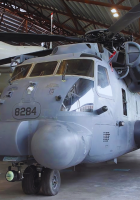
Galeria de fotos de um Sikorsky MH-53, The Sikorsky MH-53 Pave Low series is a long-range combat search and rescue (CSAR) helicopter for the United States Air Force. The series was upgraded from the HH-53B/C, variants of the Sikorsky CH-53 Sea Stallion. The HH-53 “Super Jolly Green Giant” was initially developed to replace the HH-3 “Jolly Green Giant”. The helicopters later transitioned to Special Operations missions. The U.S. Air Force’s MH-53J/M fleet was retired in September 2008.

Fonte: Sikorsky MH-53 na Wiki

Continue lendo

Views : 5916