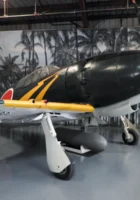
Mitsubishi J2M Raiden

Mitsubishi J2M Raiden

PaísJapão
PapelAviões
Produzido1942–1945
Construído671

O Mitsubishi J2M Raiden was a single-engined land-based fighter aircraft used by the Imperial Japanese Navy Air Service in World War II. The Allied reporting name was “Jack”. The J2M was designed by Jiro Horikoshi, creator of the A6M Zero, to meet the 14-Shi (14th year of the Showa reign, or 1939) official specification. It was to be a strictly local-defense interceptor, intended to counter the threat of high-altitude bomber raids, and thus relied on speed, climb performance, and armament at the expense of manoeuvrability. The J2M was a sleek, but stubby craft with its oversized Mitsubishi Kasei engine buried behind a long cowling, cooled by an intake fan and connected to the propeller with an extension shaft.

Fonte: Mitsubishi J2M Raiden na Wikipédia

Continue lendo

Views : 3286

SdKfz 142-1 StuG III

StuG III Ausf. G

PaísAlemanha nazista
PapelArma de assalto
ProduzidoDezembro de 1942 – Abril de 1945
Construído~8423
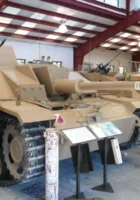
O final e, de longe, o mais comum dos Rio Stug série. A superestrutura superior foi ampliada: caixas soldadas em ambos os lados foram abandonadas. Este novo design de superestrutura aumentou sua altura para 2160 mm. A parede traseira do compartimento de combate foi endireitada, e o ventilador de ventilação no topo da superestrutura foi realocado para a parte de trás do compartimento de luta. A partir de março de 1943, o periscópio do motorista foi abandonado. Em fevereiro de 1943, a Alkett juntou-se à MIAG como um segundo fabricante. A partir de maio de 1943, as placas de blindagem espaçadas do casco lateral (Schürzen) foram instaladas nos modelos G para proteção adicional de blindagem, particularmente contra fuzis antitanque russos, mas também foram úteis contra munição de carga oca. Placas laterais foram adaptadas a alguns Ausf. Modelos F/8, pois deveriam ser instalados em todos os StuGs da linha de frente e outros tanques até junho de 1943 em preparação para a batalha de Kursk. Montagens para o Schürzen se mostraram inadequadamente fortes, já que muitos foram perdidos em campo. A partir de março de 1944, uma montagem melhorada foi introduzida; como resultado, saias laterais são vistas com mais frequência com o modelo Ausf G. A partir de maio de 1943, placas de 80 mm de espessura foram usadas para armadura frontal em vez de duas placas de 50 mm + 30 mm. No entanto, existia um acúmulo de StuGs com armadura completa de 50 mm. Para esses, uma placa de blindagem adicional de 30 mm ainda tinha que ser soldada ou aparafusada até outubro de 1943.
Fonte: StuG III Ausf. G na Wikipédia
Continue lendo

Visualizações : 11708

Biplano Farman HF.20

Farman HF.20

PaísFrança
PapelAeronave de reconhecimento
PeríodoPrimeira Guerra Mundial

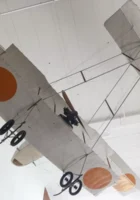
O Farman HF.20 and its derivatives were a family of reconnaissance aircraft produced in France shortly before and during the First World War. It was a refined version of the Farman MF.11 “Shorthorn” that did away with the type’s distinctive landing skids, and incorporated design features from Henri Farman’s designs. It entered service with the French, Belgian and Serbian armies in 1913 (two aircraft conducted reconnaissance during the Siege of Shkodër in the First Balkan War and one crashed), and with the British RFC and RNAS shortly after the outbreak of war. The type was also licence-built in the UK by Airco and Grahame-White. The HF.20 was seriously underpowered, and a variety of engines were trialled in the hope of correcting this, none with much success. The problem was eventually solved only when an engine of twice the power of the original powerplant was fitted to the HF.27 variant, by which time the aircraft was already obsolete. Nevertheless, the performance of the HF.20 made it adequate for use on secondary fronts.

Fonte: Farman HF.20 na Wikipédia

Continue lendo

Views : 2106

Ford 5-AT-B Tri-Motor

Ford AT-5 Tri-motor

País Eua
Papel Aeronaves de transporte
Introdução 1926
Construído 199
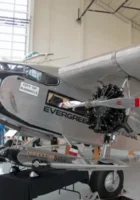
O Ford Trimotor (also called the “Tri-Motor”, and nicknamed “The Tin Goose”) is an American three-engined transport aircraft. Production started in 1925 by the companies of Henry Ford and ended on June 7, 1933. A total of 199 Ford Trimotors were made. It was designed for the civil aviation market, but also saw service with military units.
Fonte: Ford AT-5 Tri-motor na Wikipédia
Continue lendo

Visualizações : 3428

SdKfz 135 Marder I

SdKfz 135 Marder I

PaísAlemanha nazista
PapelDestruidor de tanques
Em Serviço1942–1944
Construído170

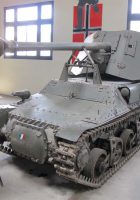
O Marder I "Marten" (Sd.Kfz.) foi um destruidor de tanques alemão da Segunda Guerra Mundial, armado com a arma anti-tanque de 75 mm. A maioria dos Marder Is foram construídos na base do Tracteur Blindé 37L (Lorraine), um trator de artilharia francês/porta-aviões blindado do qual os alemães haviam adquirido mais de trezentos após a queda da França em 1940.

Fonte: SdKfz 135 Marder I na Wikipédia

Continue lendo

Views : 6135

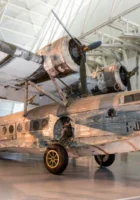
Sikorsky JRS-1

Sikorsky JRS-1

PaísEua
PapelAvião voador
Introdução1934
Construído53
O Sikorsky S-43 was a twin-engine amphibious aircraft manufactured in United States during the 1930s by the American firm Sikorsky Aircraft. The S-43 first flew in 1935, and was a smaller version of the Sikorsky S-42 “Clipper”. It accommodated between 18 and 25 passengers, with a separate two-crew forward cockpit. The S-43 was known as the “Baby Clipper” in airline service. On April 14, 1936, an S-43 with a 500 kilograms (1,100 lb) payload, piloted by Boris Sergievsky, set an altitude record for amphibious aircraft when it reached an altitude of 27,950 feet above Stamford, Connecticut. Also aboard was designer Igor Sikorsky. In total, approximately 53 S-43s were built, including examples of the twin-tailed S-43B
Fonte: Sikorsky JRS-1 na Wikipédia
Continue lendo

Visualizações : 2224

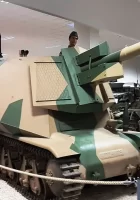
Marder Hotchkiss

Marder Hotchkiss

PaísAlemanha nazista
PapelDestruidor de tanques
PeríodoSegunda Guerra Mundial

O Marder I “Marten” (Sd.Kfz. 135) was a German World War II tank destroyer, armed with the 75 mm anti-tank gun. Most Marder Is were built on the base of the Tracteur Blindé 37L (Lorraine), a French artillery tractor/armoured personnel carrier of which the Germans had acquired more than three hundred after the Fall of France in 1940. Between July and August 1942, 170 Marder I’s were built on the Lorraine chassis. Later, several other French and Polish tanks were used as the conversion base for the Marder I, including the Hotchkiss H39 e FCM 36. Estas conversões também foram concluídas em Baustokommando Becker, embora menos delas tenham sido construídas.

Fonte: Marder Hotchkiss na Wikipédia

Continue lendo

Visualizações : 4674

Fairchild C-119G Boxcar Voador

Fairchild C-119 Boxcar Voador

PaísEua
PapelAeronaves de transporte militar
Produzido1949–1955
Construído1183

O Fairchild C-119 Boxcar Voador (designação R4Q da Marinha e do Corpo de Fuzileiros Navais) foi uma aeronave de transporte militar americana desenvolvida a partir do Fairchild C-82 Packet, da era da Segunda Guerra Mundial, projetado para transportar carga, pessoal, pacientes com lixo e equipamentos mecanizados, e para lançar carga e tropas de paraquedas. O primeiro C-119 fez seu voo inicial em novembro de 1947 e, quando a produção cessou em 1955, mais de 1.100 C-119 haviam sido construídos. Sua capacidade de transporte de carga e design incomum de lança dupla lhe renderam o apelido de "Flying Boxcar".

Fonte: Fairchild C-119G Flying Boxca na Wikipédia

Continue lendo

Views : 5235

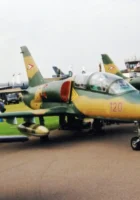
L-39ZO Albatroz

Aero L-39 Albatros

PaísChecoslováquia
PapelAvião de treinamento militar
Produzido1971–1996
Construído2900
O Aero L-39 Albatros is a high-performance jet trainer aircraft developed in Czechoslovakia by Aero Vodochody. It was designed during the 1960s as a replacement for the Aero L-29 Delfín as a principal training aircraft. The L-39 Albatros has the distinction of being the first of the second-generation jet trainers to be produced, as well as being the first trainer aircraft to be equipped with a turbofan powerplant. The type was exported to a wide range of countries as a military trainer. The L-39 Albatros later served as the basis for the updated L-59 Super Albatros, as well as the L-139 (prototype L-39 with Garrett TFE731 engine). A further development of the design, designated as the L-159 ALCA, entered production in 1997. To date, more than 2,800 L-39s have served with over 30 air forces around the world. The Albatros is the most widely used jet trainer in the world; in addition to performing basic and advanced pilot training, it has also flown combat missions in a light-attack role. The design never received a NATO reporting name.
Fonte: Aero L-39 Albatros na Wikipédia
Continue lendo

Views : 6302

Sino P-59A Airacomet

Sino P-59A Airacomet

País Eua
Papel Lutador
Primeiro voo 1 de outubro de 1942
Construído 66
O Campainha P-59 Airacomet foi um avião de caça bimotor a jato, o primeiro dos Estados Unidos, projetado e construído pela Bell Aircraft durante a Segunda Guerra Mundial. As Forças Aéreas do Exército dos Estados Unidos não ficaram impressionadas com seu desempenho e cancelaram o contrato quando menos da metade das aeronaves encomendadas foram produzidas. Embora nenhum P-59 tenha entrado em combate, o caça abriu caminho para outra geração de design de aeronaves turbojato dos EUA e foi o primeiro caça turbojato a ter seu motor turbojato e naceles de entrada de ar integrados na fuselagem principal.
Fonte: Bell P-59A Airacomet na Wikipédia
Continue lendo

Visualizações : 2992