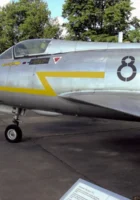
Boulton Paul Defiant I

Boulton Paul Defiant

PaísReino unido
PapelLutador de dois lugares, lutador noturno, treinador
Primeiro voo11 de agosto de 1937
Construído1064

O Boulton Paul Defiant was a British interceptor aircraft that served with the Royal Air Force (RAF) during World War II. The Defiant was designed and built by Boulton Paul Aircraft as a “turret fighter”, without any forward-firing guns, a concept successfully used in the First World War-era Bristol F.2 Fighter and also implemented by the Royal Navy’s Blackburn Roc. In combat, the Defiant was found to be reasonably effective at its intended task of destroying bombers but was vulnerable to the Luftwaffe’s more manoeuvrable, single-seat Messerschmitt Bf 109 fighters. The lack of forward-firing armament proved to be a great weakness in daylight combat and its potential was realised only when it was converted to night fighting. It was supplanted in the night fighter role by the Bristol Beaufighter and de Havilland Mosquito. The Defiant found use in gunnery training, target towing, electronic countermeasures and air-sea rescue. Among RAF pilots it had the nickname “Daffy”.

Fonte: Boulton Paul Defiant na Wikipédia

Continue lendo

Views : 4405

Hawker Nimrod MK.II

Hawker Nimrod

PaísReino unido
PapelCaça naval
Primeiro voo14 de outubro de 1931
Construído92

O Hawker Nimrod was a British carrier-based single-engine, single-seat biplane fighter aircraft built in the early 1930s by Hawker Aircraft. The Nimrod had an overall similarity to the Fury: it was a single-seater biplane with an open cockpit, fixed undercarriage and guns firing through the propeller. Its unswept, constant chord, round-tipped wings had an unequal span and strong stagger, the latter partly to enhance the pilot’s view. It was a single bay biplane braced with outward-leaning N-form interplane struts, with the upper plane held a little above the upper fuselage by cabane struts. The fabric-covered wings had metal spars and spruce ribs and carried balanced ailerons only on the upper wings.

Fonte: Hawker Nimrod na Wikipédia

Continue lendo

Views : 2519

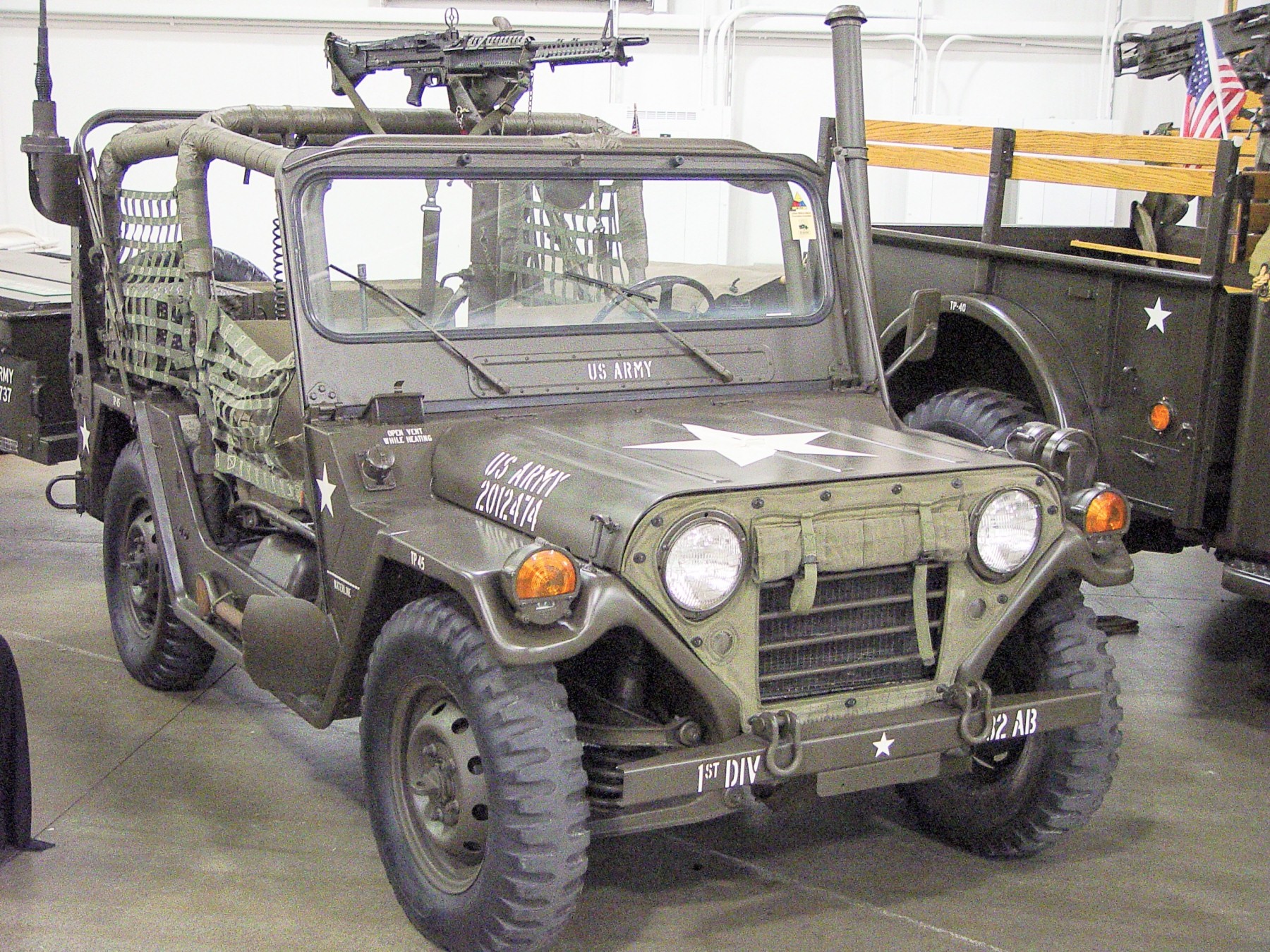
Ford M151 Mutt

M151 1/4-ton 4×4 caminhão utilitário

PaísEua
PapelTransporte de caminhão/pessoal de 1/4 tonelada, tração nas quatro rodas
Produto1959–1982
Construído100000+

O caminhão, utilitário, 1/4-ton, 4×4, M151 (M151) foi o sucessor do M38 da Guerra da Coreia e do jipe M38A1 Light Utility Vehicles. Comumente referido como um "jipe" ou "quarto de tonelada", foi produzido de 1959 a 1982 e serviu na Guerra do Vietnã. O M151 tinha um design monocoque, tornando-o mais espaçoso do que os projetos anteriores do jipe, e incorporava uma suspensão independente com molas helicoidais. Desde então, foi substituído pelo maior AM General HMMWV na maioria das funções de utilidade no uso da linha de frente. Com algumas unidades M151A2 ainda em serviço militar dos EUA em 1999, a série M151 alcançou uma série de serviço mais longa do que a das séries WW2 MB/GPW, M38 e M38A1 combinadas.

Fonte: M151 na Wikipédia

Continue lendo

Views : 11054

Heinkel Ele 219

Heinkel Ele 219

PaísAlemanha nazista
PapelLutador noturno
Primeiro voo6 de novembro de 1942
Construído300

O Heinkel He 219 Eagle Owl ("Eagle-Owl") foi um lutador noturno que serviu com a Luftwaffe alemã nos estágios posteriores da Segunda Guerra Mundial. Um design relativamente sofisticado, o He 219 possuía uma variedade de inovações, incluindo lichtenstein SN-2 avançado radar de interceptação de banda VHF, também usado nos caças noturnos Ju 88G e Bf 110G. Foi também a primeira aeronave militar operacional a ser equipada com assentos de ejeção e a primeira aeronave operacional da Segunda Guerra Mundial com trem de pouso triciclo. Se o Uhu estivesse disponível em quantidade, poderia ter tido um efeito significativo na ofensiva estratégica de bombardeio noturno da Força Aérea Real; mas, apenas 294 de todos os modelos foram construídos até o final da guerra e estes viram apenas serviço limitado. Ernst-Wilhelm Modrow foi o principal ás de lutadores noturnos no He 219. Modrow foi creditado com 33 de 34 vitórias no ar noturno no tipo.

Fonte: Heinkel He 219 na Wikipédia

Continue lendo

Views : 5570

Dornier Do.335

Dornier Do.335

PaísAlemanha nazista
PapelBombardeiro-bombardeiro
Primeiro voo26 de outubro de 1943
Construído37

O Dornier Do 335 Pfeil ("Arrow") foi um lutador pesado da Segunda Guerra Mundial construído pela empresa Dornier. A versão de treinador de dois lugares também foi chamada de Ameisenbär ("tamanduá"). O desempenho do Pfeil foi muito melhor do que outros projetos bimotores devido ao seu layout único de "push-pull" e ao arrasto aerodinâmico muito menor do alinhamento em linha dos dois motores. Foi a aeronave com motor de pistão mais rápida da Alemanha na Segunda Guerra Mundial. A Luftwaffe estava desesperada para colocar o projeto em uso operacional, mas atrasos nas entregas do motor significavam que apenas um punhado foi entregue antes do fim da guerra.

Fonte: Dornier Do.335 na Wikipédia

Continue lendo

Visualizações: 6462

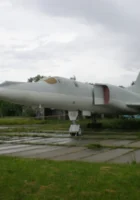
Tupolev Tu-22MO

Tupolev Tu-22M

PaísUnião Soviética
PapelBombardeiro estratégico/ataque marítimo
Primeiro voo30 de agosto de 1969
Construído497

O Tupolev Tu-22M (Russo: Туполев Ту-22М; Nome de relatório da OTAN: Backfire) é um bombardeiro supersônico, de varredura variável, de ataque estratégico e marítimo de longo alcance desenvolvido pelo Tupolev Design Bureau. De acordo com algumas fontes, acredita-se que o bombardeiro tenha sido designado Tu-26 ao mesmo tempo. Durante a Guerra Fria, o Tu-22M foi operado pela Força Aérea Soviética (VVS) em um papel de bombardeio estratégico, e pela Aviação Naval Soviética (Aviacija Vojenno-Morskogo Flota, AVMF) em um papel anti-navio marítimo de longo alcance. [2] Um número significativo permanece em serviço na Força Aérea Russa e, a partir de 2014, mais de 100 Tu-22Ms estão em uso.

Fonte: Tupolev Tu-22M na Wikipédia

Continue lendo

Views : 4516

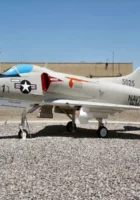
Douglas A-4F Skyhawk

Douglas A-4 Skyhawk

PaísEua
PapelAeronaves de ataque, caça, aeronaves agressoras
Primeiro voo22 de junho de 1954
Construído2960

O Douglas A-4 Skyhawk is a single seat subsonic carrier-capable attack aircraft developed for the United States Navy and United States Marine Corps in the early 1950s. The delta winged, single turbojet engined Skyhawk was designed and produced by Douglas Aircraft Company, and later by McDonnell Douglas. It was originally designated A4D under the U.S. Navy’s pre-1962 designation system. The Skyhawk is a relatively lightweight aircraft with a maximum takeoff weight of 24,500 pounds (11,100 kg) and has a top speed of more than 670 miles per hour (1,080 km/h). The aircraft’s five hardpoints support a variety of missiles, bombs and other munitions. It was capable of carrying a bomb load equivalent to that of a World War II-era Boeing B-17 bomber, and could deliver nuclear weapons using a low-altitude bombing system and a “loft” delivery technique. The A-4 was originally powered by the Wright J65 turbojet engine; from the A-4E onwards, the Pratt & Whitney J52 was used. Skyhawks played key roles in the Vietnam War, the Yom Kippur War, and the Falklands War. Sixty years after the aircraft’s first flight in 1954, some of the 2,960 produced (through February 1979) remain in service with several air arms around the world.

Fonte: Douglas A-4 Skyhawk na Wikipédia

Continue lendo

Views : 18135

Heinkel He 100 D-1

Heinkel He 100

PaísAlemanha nazista
PapelLutador
Primeiro voo22 de janeiro de 1938
Construído25

O Heinkel He 100 was a German pre-World War II fighter aircraft design from Heinkel. Although it proved to be one of the fastest fighter aircraft in the world at the time of its development, the design was not ordered into series production. Approximately 19 prototypes and pre-production examples were built. None are known to have survived the war. The reason for the He 100 failing to reach production status is mostly unknown. Officially, the Luftwaffe rejected the He 100 to concentrate single-seat fighter development on the Messerschmitt Bf 109. Following the adoption of the Bf 109 and Messerschmitt Bf 110 as the Luftwaffe’s standard fighter types, the Ministry of Aviation (the Reichsluftfahrtministerium or RLM) announced a “rationalization” policy that placed fighter development at Messerschmitt and bomber development at Heinkel.

Fonte: Heinkel He 100 na Wikipédia

Continue lendo

Views : 5207

De Havilland Vampiro FB.6

de Havilland Vampiro

PaísReino unido
PapelAviões
Primeiro voo20 de setembro de 1943
Construído3268

O de Havilland Vampiro é um caça a jato britânico desenvolvido e fabricado pela de Havilland Aircraft Company. O trabalho na aeronave começou durante a Segunda Guerra Mundial como uma aeronave amplamente experimental adequada para combate que aproveitou a inovação inovadora da propulsão a jato; foi rapidamente decidido optar por um avião monomotor, de lança dupla equipado com o motor turbojato Halford H.1 (mais tarde o de Havilland Goblin). Originalmente encomendada apenas como uma aeronave experimental, a decisão de produzir em massa a aeronave como um interceptor para a Royal Air Force (RAF) foi finalizada em maio de 1944.

Fonte: de Havilland Vampire na Wikipédia

Continue lendo

Views : 5067

Dassault Mystere IVA

Dassault Mystere

PaísFrança
PapelBombardeiro-bombardeiro
Primeiro voo23 de fevereiro de 1951
Construído171

O Dassault MD.452 Mystère is a 1950s French fighter-bomber. After the success of the Ouragan, Dassault was working on a more advanced machine based on it, which would take to the air in early 1951 as the MD.452 Mystère I. The first prototype Mystère I was essentially an Ouragan with a 30-degree swept wing and modified tail surfaces. Two further prototypes followed, powered by the Rolls-Royce Tay 250 centrifugal-flow turbojet, an improved version of the Rolls-Royce Nene, built under license by Hispano-Suiza, and rated at 28.0 kN (6,300 lbf) thrust.

Fonte: Grumman F6F Hellcat na Wikipédia

Continue lendo

Views : 2871