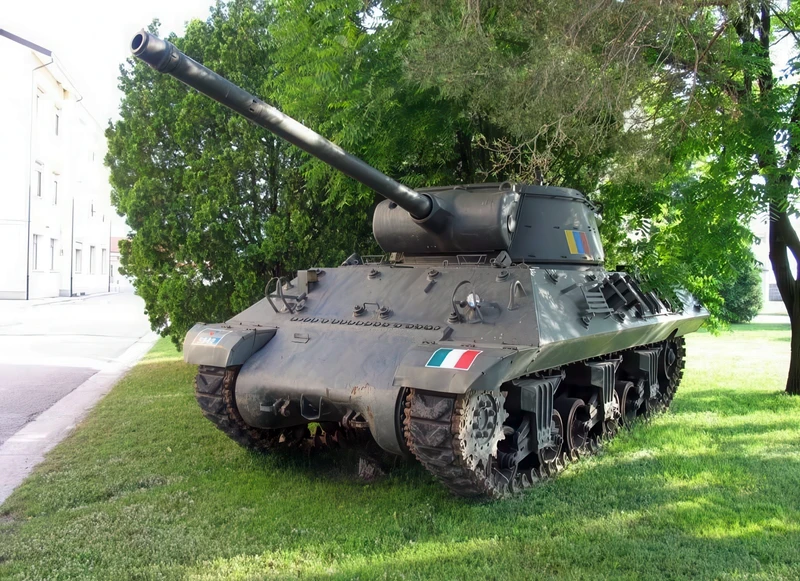
M36 tank destroyer | |
|---|---|
| Country | USA |
| Role | Tank destroyer |
| Produced | 1944-1945 |
| Built | 2,324 |
The M36 tank destroyer, formally 90 mm Gun Motor Carriage, M36, was an American tank destroyer used during World War II. The M36 combined the hull of the M10 tank destroyer, which used the M4 Sherman’s reliable chassis and drivetrain combined with sloped armor, and a new turret mounting the 90 mm gun M3. Conceived in 1943, the M36 first served in combat in Europe in October 1944, where it partially replaced the M10 tank destroyer. It also saw use in the Korean War, where it was able to defeat any of the Soviet tanks used in that conflict. Some were supplied to South Korea as part of the Military Assistance Program and served for years, as did re-engined examples found in Yugoslavia, which operated into the 1990s. Two remained in service with the Republic of China Army at least until 2001. The vehicle is also known under the unofficial nickname Jackson, but this designation appears to be a postwar appellation that was never used by the US Army.
Source: M36 tank destroyer on Wikipedia
| M36 Jackson Walk Around | |
|---|---|
| Photographer | Fabrizio Vaccari |
| Localisation | Unknow |
| Photos | 64 |

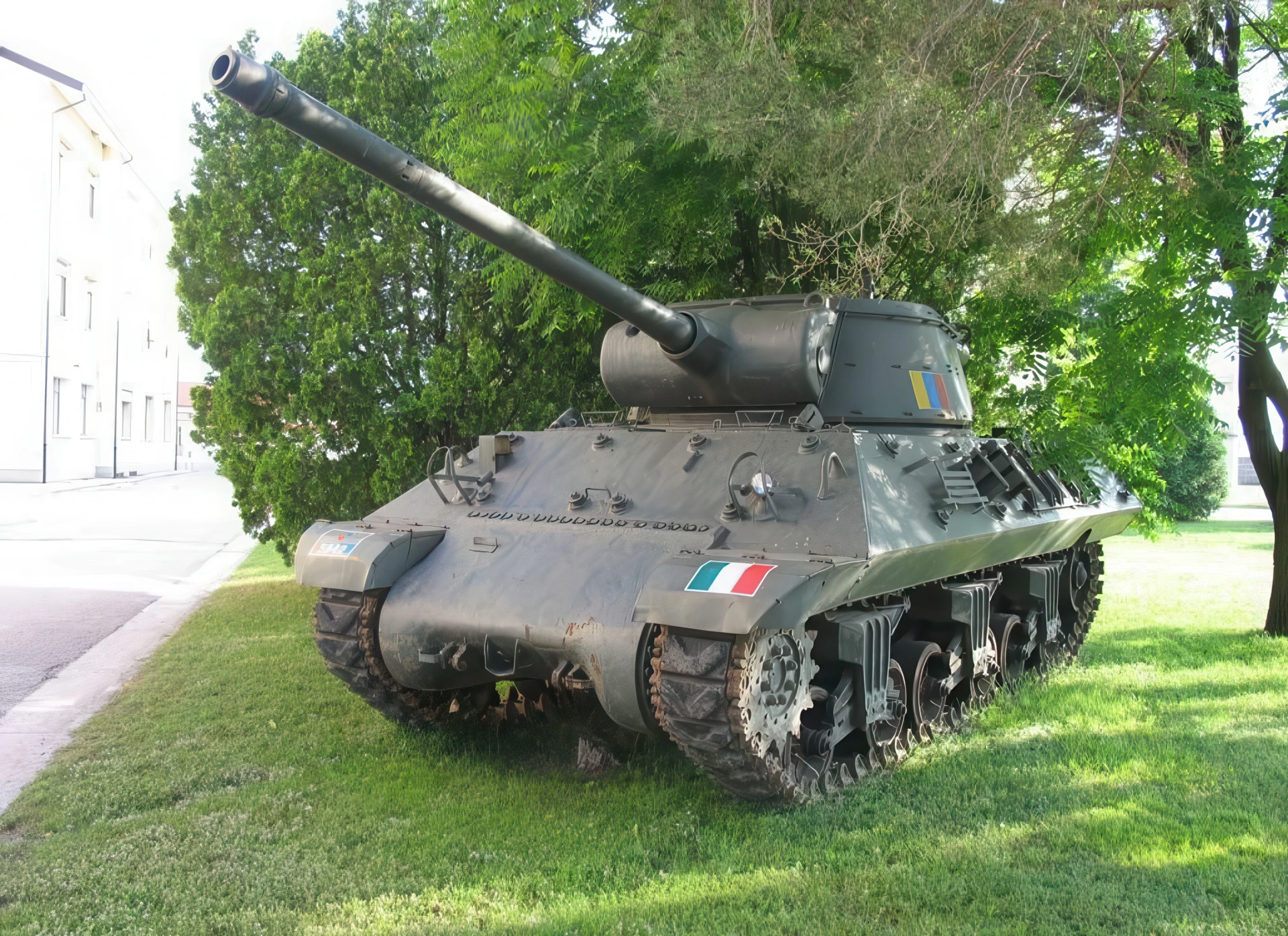


| Tank Destroyer M36 Jackson Walk Around | |
|---|---|
| Photographer | Unknow |
| Localisation | Unknow |
| Photos | 14 |

See also:


General Characteristics and Role
The M36 Tank Destroyer, officially designated the 90 mm Gun Motor Carriage M36, and often nicknamed Jackson or Slugger, was a crucial American armored fighting vehicle used in the latter stages of World War II. It was developed specifically to counter the heavily armored German tanks, particularly the Tiger and Panther, which the standard M4 Sherman’s 75mm and 76mm guns struggled to defeat at long range. The M36 was essentially an M10 tank destroyer hull fitted with a new, larger turret mounting the powerful 90 mm M3 anti-tank gun. Like other U.S. tank destroyers, it featured an open-topped turret to maximize visibility and reduce weight, adhering to the US military doctrine of fast, lightly-armored tank destroyers that relied on speed and ambush tactics.
| Property | Typical Value (M36) |
|---|---|
| Role | Tank Destroyer (Gun Motor Carriage) |
| National Origin | United States |
| Manufacturer | General Motors, Ford, Massey-Harris |
| Service Entry | September 1944 |
| Crew | 5 (Commander, Gunner, Loader, Driver, Assistant Driver) |
| Chassis Base | M10 Gun Motor Carriage (M4 Sherman derivative) |
| Length | 5.97 m (19 ft 7 in) (Hull) |
| Width | 3.05 m (10 ft 0 in) |
| Height | 2.72 m (8 ft 11 in) |
| Combat Weight | 28.6 metric tons |
Powerplant and Mobility
- Engine: 1 x Ford GAA 8-cylinder gasoline engine (M36). Some later versions used a General Motors 6046 twin diesel engine (M36B1/M36B2).
- Power Output: 450-500 hp (336-373 kW).
- Maximum Speed (Road): 48 km/h (30 mph).
- Range (Road): 240 km (150 mi).
- Suspension: Vertical Volute Spring Suspension (VVSS), inherited from the M4 Sherman design.
Armament and Armor
- Main Armament: 1 x 90 mm Gun M3 (L/53) anti-tank gun. This gun was capable of penetrating the frontal armor of most German tanks at tactical ranges.
- Ammunition Capacity: 47 rounds (90 mm).
- Secondary Armament: 1 x .50 cal (12.7 mm) Browning M2 heavy machine gun (pintle-mounted for anti-aircraft and close defense).
- Armor (Max): 38 mm (1.5 in) on the upper hull front, 19 mm on the turret sides. The light armor was its main vulnerability, trading protection for speed and a larger gun.
- Key Innovation: The M36 was the first American vehicle to field the 90 mm gun, giving Allied forces much-needed parity against heavily armored Axis opponents.
Views : 2218
You can see also :
 Semovente da 90-53 – Walk Around
 ELC project – Photos & Videos
 Sturer Emil – Photos & Videos
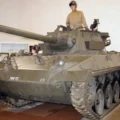 M18 Hellcat – Photos & Videos
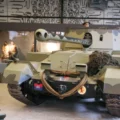 Valentine Archer – Photos & Videos
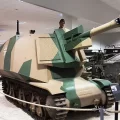 Marder Hotchkiss – Photos & Video
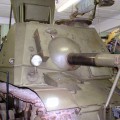 Pvkv m/43 – Photos & Video
 Type 1 Ho-Ni – Photos & Video
 Sturmgeschutz 40 – WalkAround
 Nashorn - Walk Around