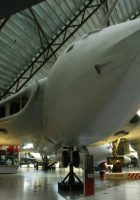
Handley Pagina Victor

Handley Pagina Victor

LandUk
TypeJet-aangedreven strategische bommenwerper
FotoOndrej Skarka
ZoekOnbewust
BeschrijvingAlbum van 102 foto's walk-around van «Handley Page Victor»

Fotogalerij van een Handley Pagina Victor, The Handley Page Victor is a British jet-powered strategic bomber, developed and produced by the Handley Page Aircraft Company, which served during the Cold War. It was the third and final of the V-bombers operated by the Royal Air Force (RAF), the other two V-bombers being the Avro Vulcan and the Vickers Valiant. The Victor had been developed to perform as part of the United Kingdom’s airborne nuclear deterrent. In 1968, the type was retired from the nuclear mission following the discovery of fatigue cracks, which had been exacerbated by the RAF’s adoption of a low-altitude flight profile to avoid interception.

Bron: Handley Page Victor op Wiki

Lees verder

Uitzicht: 5394

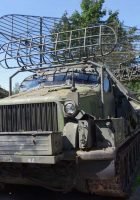
P-40 radar

P-40 radar

LandSovjet-Unie
TypeRadar
FotoVladimir Yakubov
ZoekOorlogsmachines en Transportmuseum
BeschrijvingAlbum van 139 foto's walk-around van «P-40 radar»

Fotogalerij van een P-40 radar, The P-40 “Armour” or 1S12 (also referred to by the NATO reporting name “Long Track” in the west) is a 3-D UHF radar developed and operated by the former Soviet Union.

Bron: P-40 radar op Wiki

Lees verder

Views : 4798

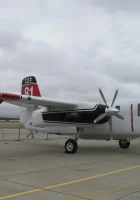
Marsh Aviation S-2F3AT Turbo Tracker

Grumman S-2 Tracker

LandUsa
RoleCasco anti-onderzeeër oorlogvoering
Eerste vlucht4 december 1952
Gebouwd1284

Fotogalerij van een Grumman S2F-1 Tracker, The Grumman S-2 Tracker (previously S2F prior to 1962) was the first purpose-built, single airframe anti-submarine warfare (ASW) aircraft to enter service with the U.S. Navy. Designed and initially built by Grumman, the Tracker was of conventional design with twin reciprocating propeller engines, a high wing and tricycle undercarriage. The type was exported to a number of navies around the world. Introduced in 1952, the Tracker and its E-1 Tracer derivative saw service in the U.S. Navy until the mid-1970s, and its C-1 Trader derivative until the mid-1980s, with a few aircraft remaining in service with other air arms into the 21st century. Argentina and Brazil are the last countries to still use the Tracker.

Bron: Grumman S2F-1 Tracker op Wiki

Lees verder

Views : 6052

Gloster E28-38

Gloster E.28-39

LandUk
TypeStraalmotor vliegtuigen
Eerste vlucht15 mei 1941
Gebouwd2 prototypes

Fotogalerij van een Gloster E.28-39, The Gloster E.28/39, (also referred to as the “Gloster Whittle”, “Gloster Pioneer”, or “Gloster G.40”) was the first British jet-engined aircraft to fly. It was designed to test the Whittle jet engine in flight, leading to the development of the Gloster Meteor.

Bron: Gloster E.28-39 op Wiki

Lees verder

Bekeken : 2858

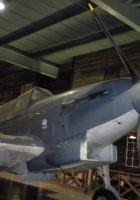
Fairey Fulmar Mk.I

Fairey Fulmar Mk.I

LandUk
TypeCarrier-borne gevechtsvliegtuigen
Eerste vlucht4 januari 1940
Gebouwd600

Fotogalerij van een Fairey Fulmar Mk.I, The Fairey Fulmar was a British carrier-borne fighter aircraft that served with the Fleet Air Arm (FAA) during the Second World War. A total of 600 were built by Fairey Aviation at its Stockport factory between January 1940 and December 1942. The Fulmar’s design was based on that of the earlier Fairey P.4/34 that was in turn developed in 1936 as a replacement for the Fairey Battle light bomber. Although its performance (like that of its Battle antecedent) was lacking, the Fulmar was a reliable, sturdy aircraft with long range and an effective armament of eight machine guns.

Bron: Fairey Fulmar Mk.I op Wiki

Lees verder

Bekeken : 4318

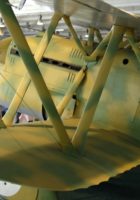
Fiat CR.32

Fiat CR.32

LandItalië
RoleTweedekker vechter
Eerste vlucht28 april 1933
Gebouwd1052

Fotogalerij van een Fiat CR.32, The Fiat CR.32 was an Italian biplane fighter used in the Spanish Civil War and World War II. It was compact, robust and highly manoeuvrable and gave impressive displays all over Europe in the hands of the Italian Pattuglie Acrobatiche. The CR.32 fought in North and East Africa, in Albania, and in the Mediterranean theatre. It saw service in the air forces of China, Austria, Hungary, Paraguay and Venezuela. Used extensively in the Spanish Civil War, it gained a reputation as one of the most outstanding fighter biplanes of all time. Subsequently it was overtaken by more advanced monoplane designs and was obsolete by 1939.

Bron: Fiat CR.32 op Wiki

Lees verder

Bekeken : 5571

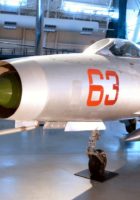
MiG-21F-F-13 Visbed

Mig-21PF

LandSovjet-Unie
RoleSupersonische straaljager
Eerste vlucht4 februari 1956
Gebouwd1496

Fotogalerij van een Mig-21PF, The Mikoyan-Gurevich MiG-21 (Russian: Микоян и Гуревич МиГ-21; NATO reporting name: Fishbed) is a supersonic jet fighter aircraft, designed by the Mikoyan-Gurevich Design Bureau in the Soviet Union. It was popularly nicknamed “Balalaika”, from the aircraft’s planform-view resemblance to the Russian stringed musical instrument or ołówek (English: pencil) by Polish pilots due to the shape of its fuselage.

Bron: Mig-21PF op Wiki

Lees verder

Aantal keren bekeken: 6311

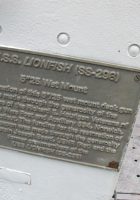
USS Lionfish SS-298

USS Lionfish SS-298

LandUsa
TypeOnderzeeër
FotoVladimir Yakubov
ZoekDe Inham van het slagschip, de Rivier van de daling
BeschrijvingAlbum van 186 foto's walk-around van «USS Lionfish SS-298»

Fotogalerij van een USS Lionfish SS-298, USS Lionfish (SS-298), a Balao-class submarine, was the only ship of the United States Navy named for the lionfish, a scorpaenid fish native to the Pacific and an invasive species found around the Caribbean. She was designated a National Historic Landmark in 1986, and is now on display at Battleship Cove in Fall River, Massachusetts.

Bron: USS Lionfish SS-298 op Wiki

Lees verder

Views : 2554

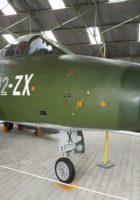
Dassault Super Mystere B2

Dassault Super Mystere

Land Frankrijk
Role Jachtbommenwerper
Eerste vlucht 2 maart 1955
Geproduceerd 1956–1959
De Dassault Super Mystère was a French fighter-bomber and was the first Western European supersonic aircraft to enter mass production. The Super Mystère represents the final step in evolution which began with the Dassault Ouragan and progressed through the Mystère II/III and Mystère IV. While earlier Mystère variants could attain supersonic speeds only in a dive, the Super Mystère could exceed the speed of sound in level flight. This was achieved thanks to the new thin wing with 45° of sweep (compared with 41° of sweep in the Mystère IV and only 33° in Mystère II) and the use of an afterburner-equipped turbojet engine.
Bron: Dassault Super Mystere B.2 op Wiki
Lees verder

Bekeken : 5060

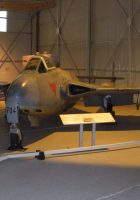
de Haviland DH112 Gif

de Havilland DH112 Venom

LandUk
TypeEenmotorige straaljager
FotoRandy Ray
ZoekRoyal Air Force Museum Cosford, Verenigd Koninkrijk
BeschrijvingAlbum van 20 foto's walk-around van «de Havilland DH112 Venom»

Fotogalerij van een de Havilland DH112 Venom, The de Havilland DH 112 Venom was a British postwar single-engined jet aircraft developed from the de Havilland Vampire. It served with the Royal Air Force as a single-seat fighter-bomber and two-seat night fighter. The Venom was an interim between the first generation of British jet fighters – straight-wing aircraft powered by centrifugal flow engines such as the Gloster Meteor and the Vampire and later swept wing, axial flow-engined designs such as the Hawker Hunter and de Havilland Sea Vixen. The Venom was successfully exported, and saw service with Iraq, New Zealand, Sweden, Switzerland and Venezuela. The Sea Venom was a navalised version for carrier operation.

Bron: de Havilland DH112 Venom op Wiki

Lees verder

Bekeken : 2851