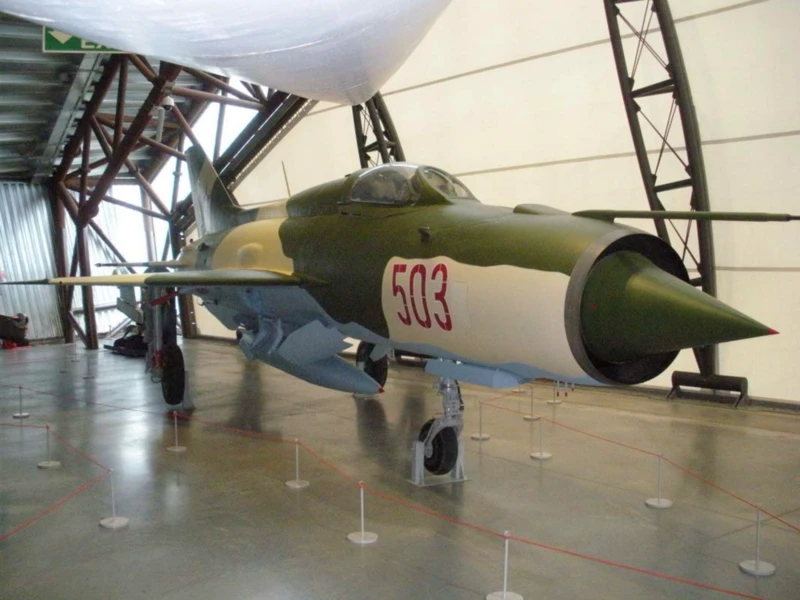
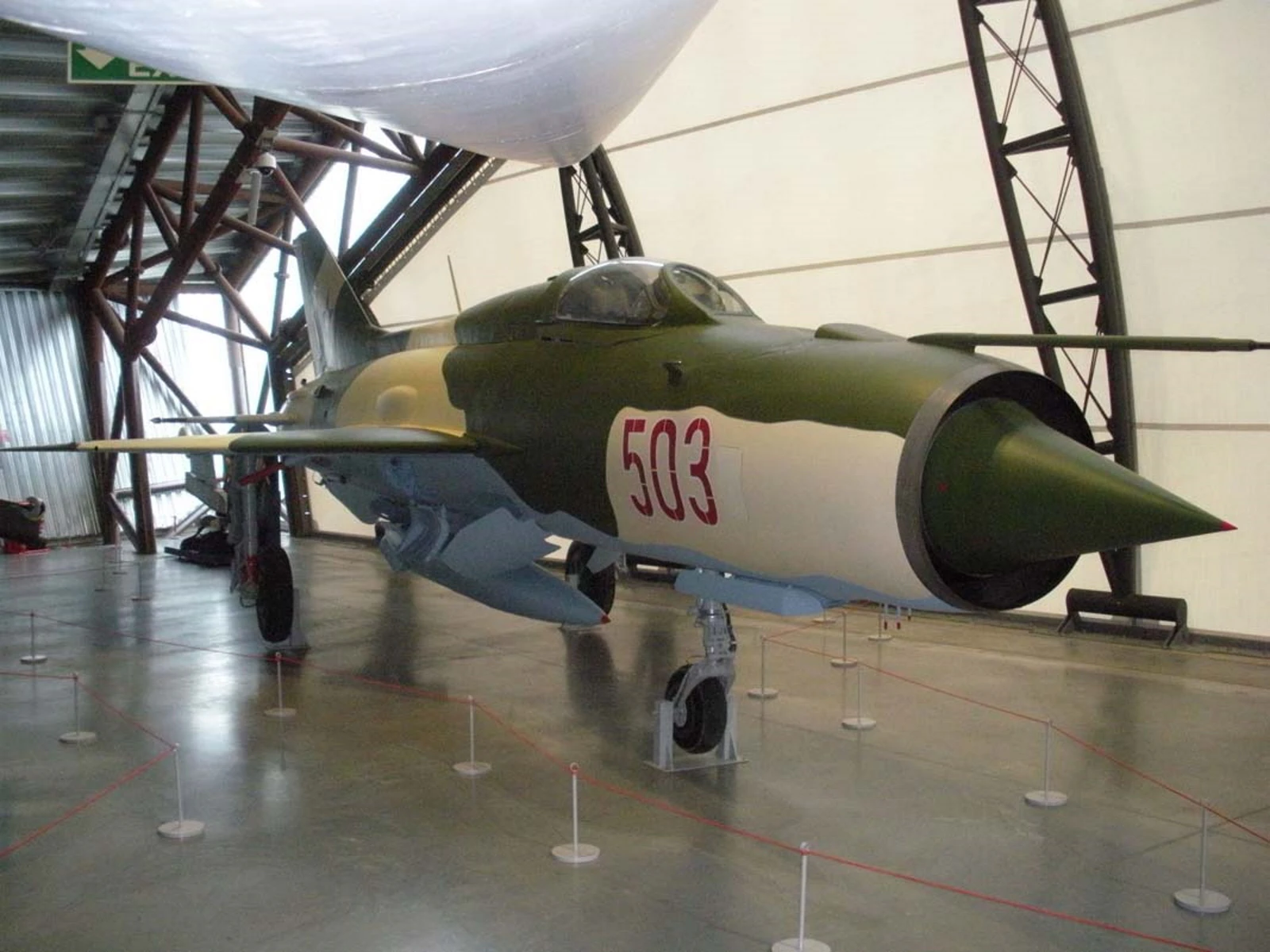
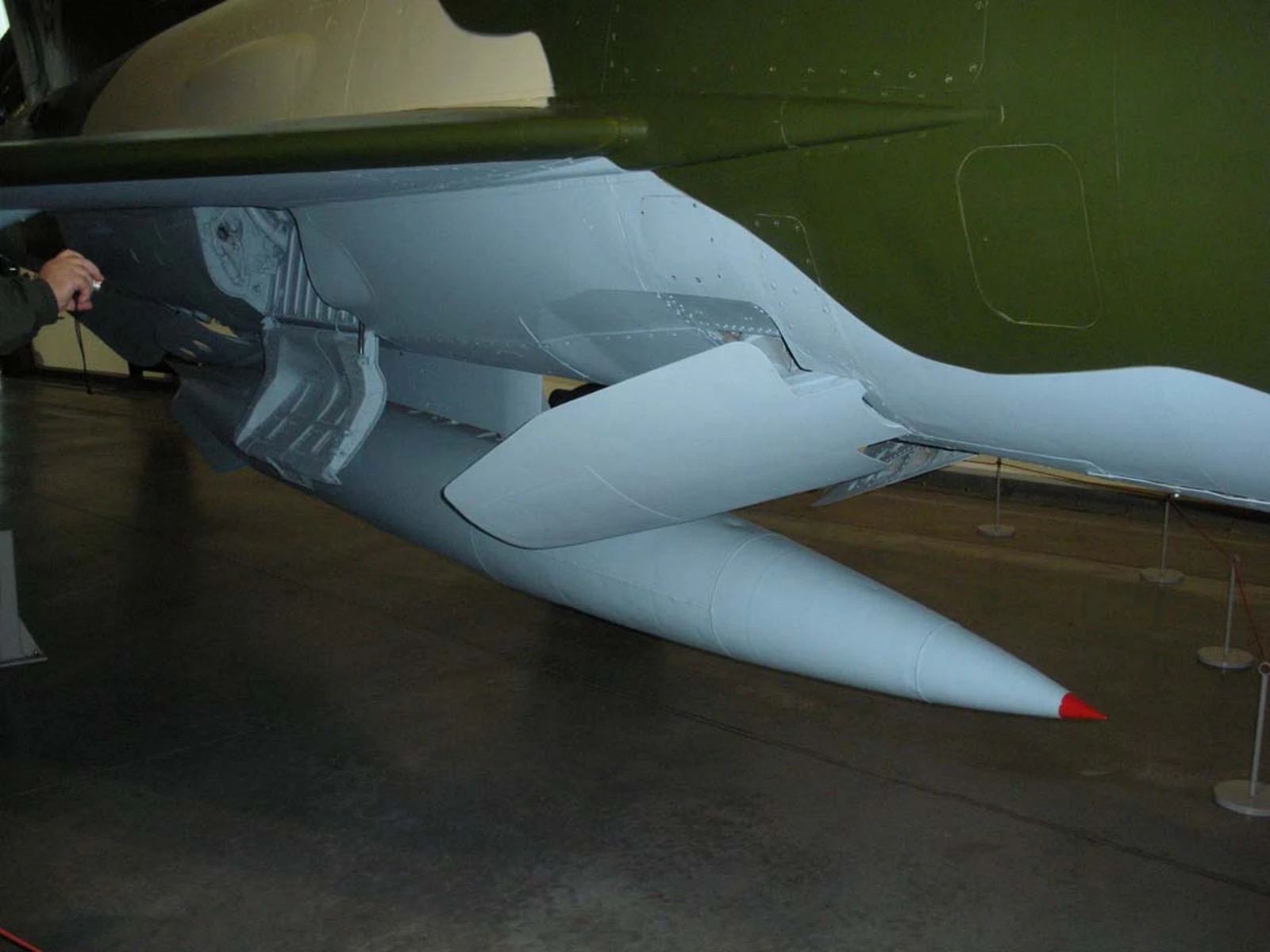
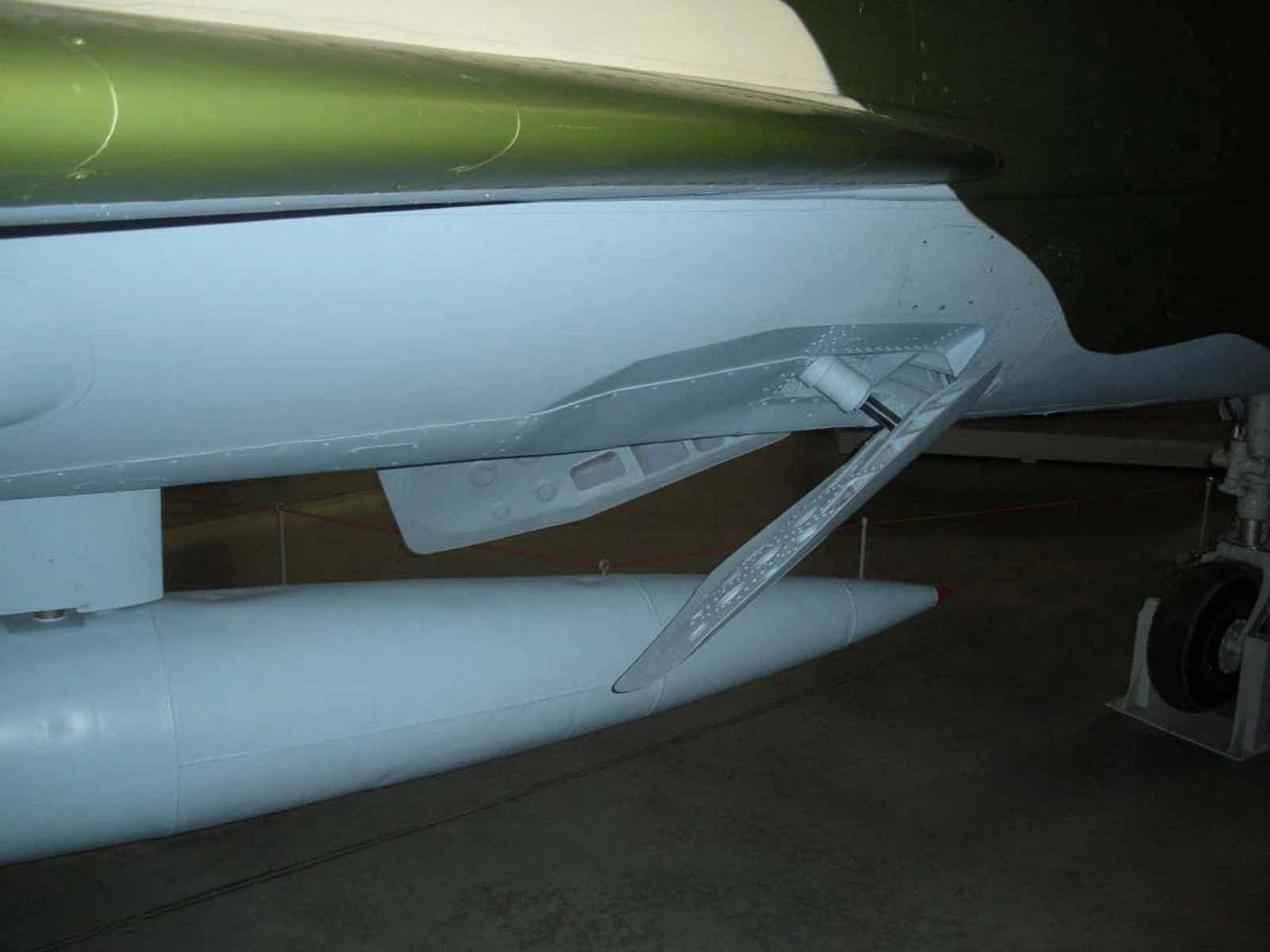
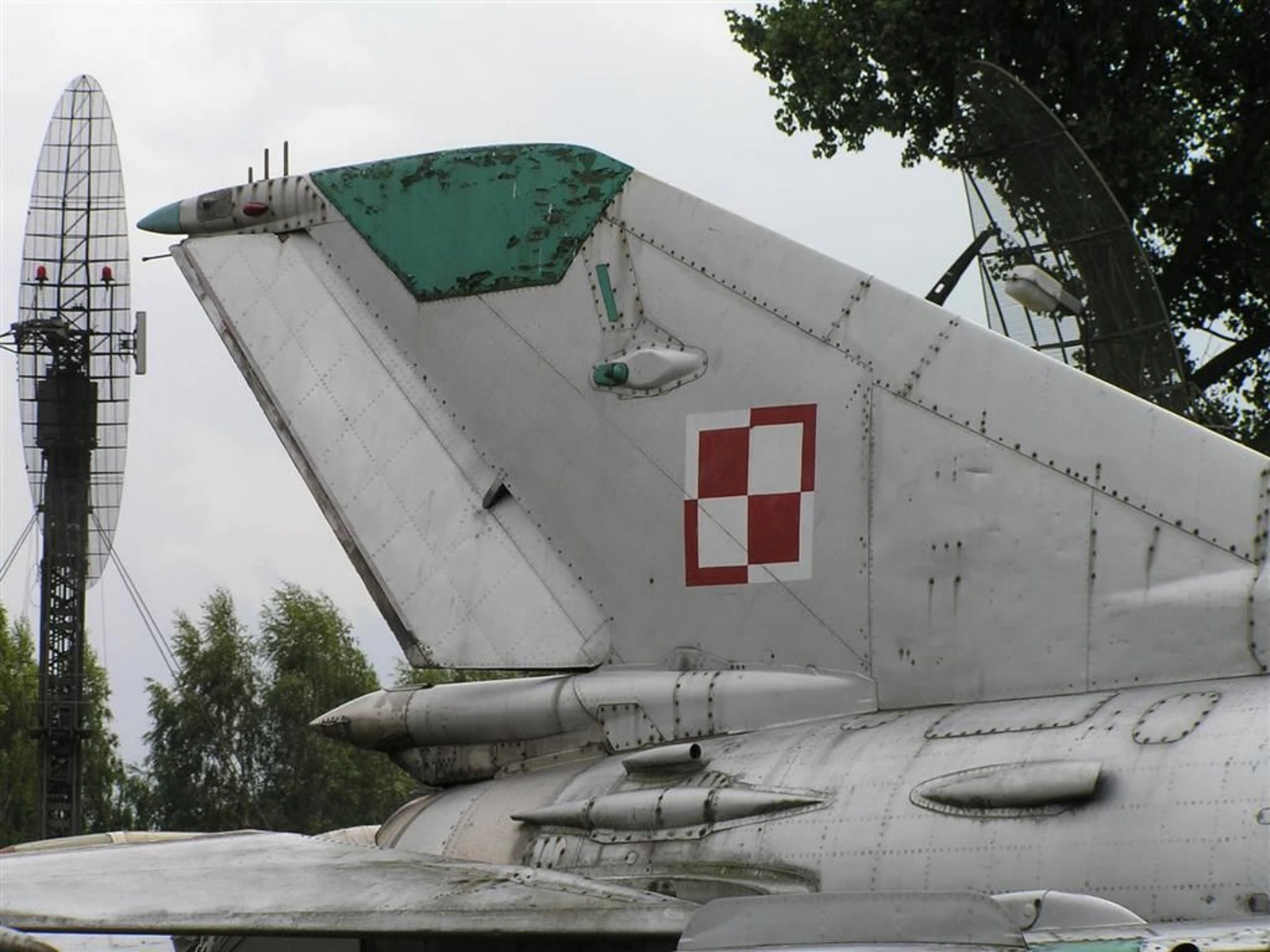
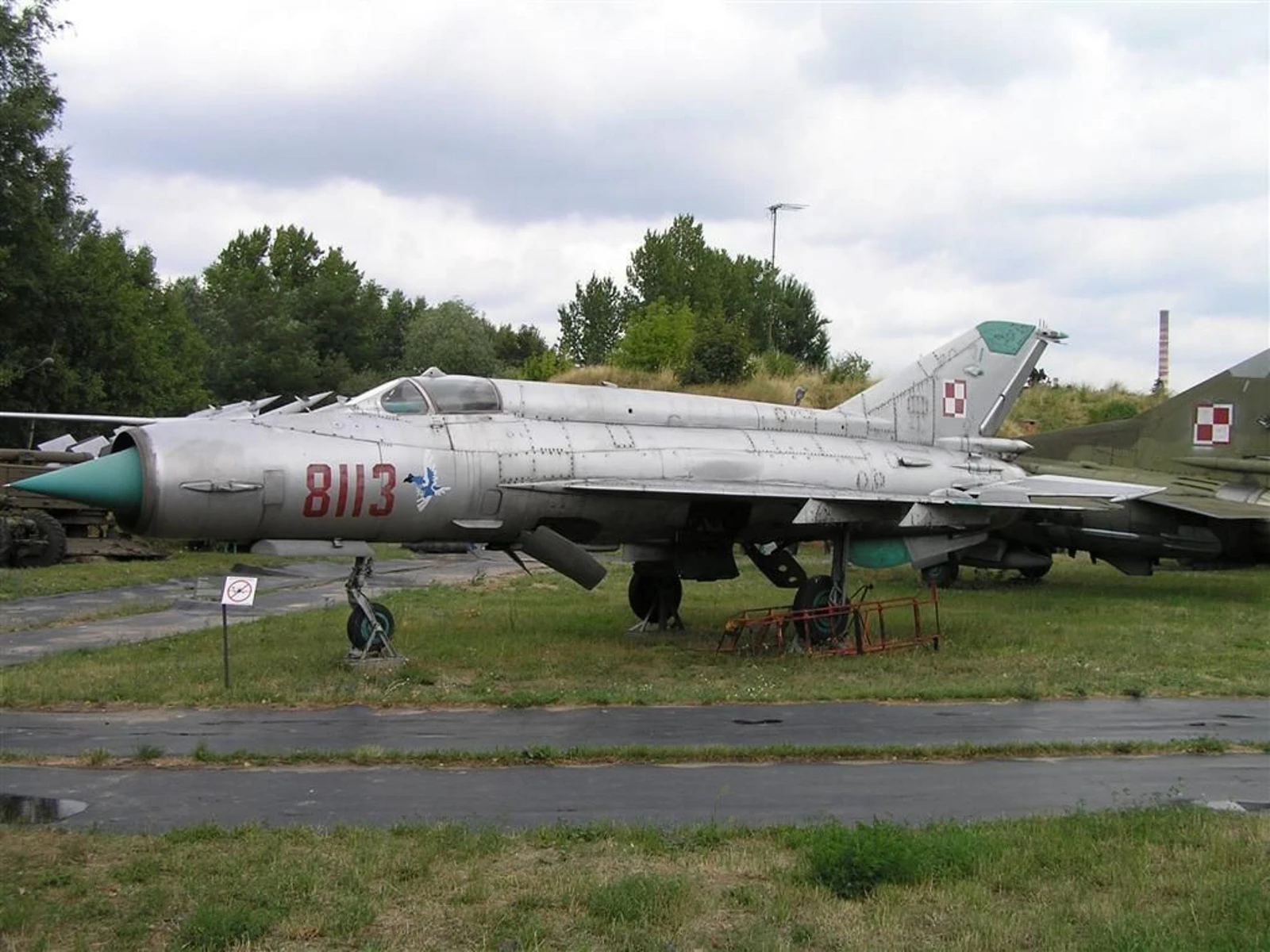
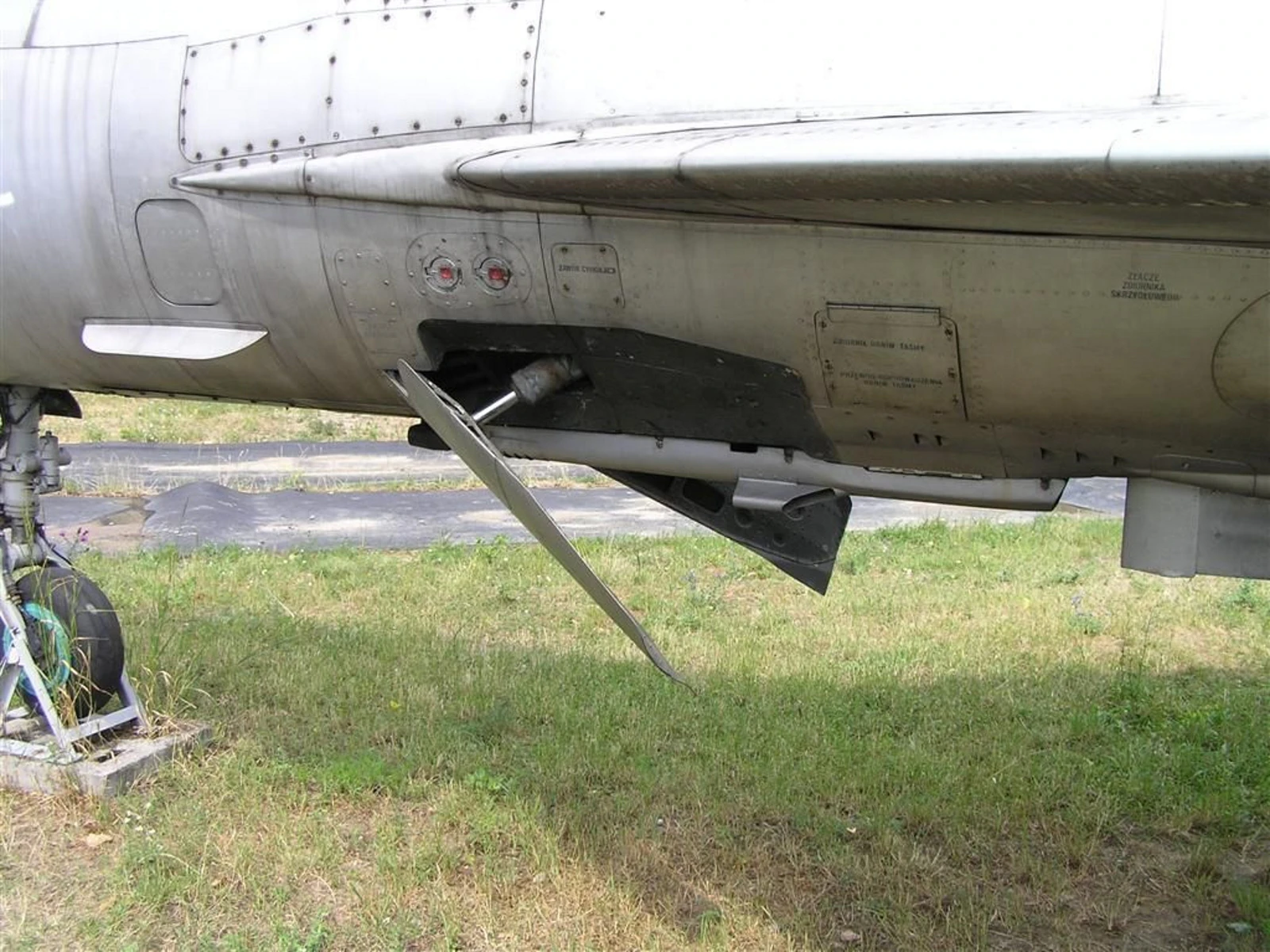
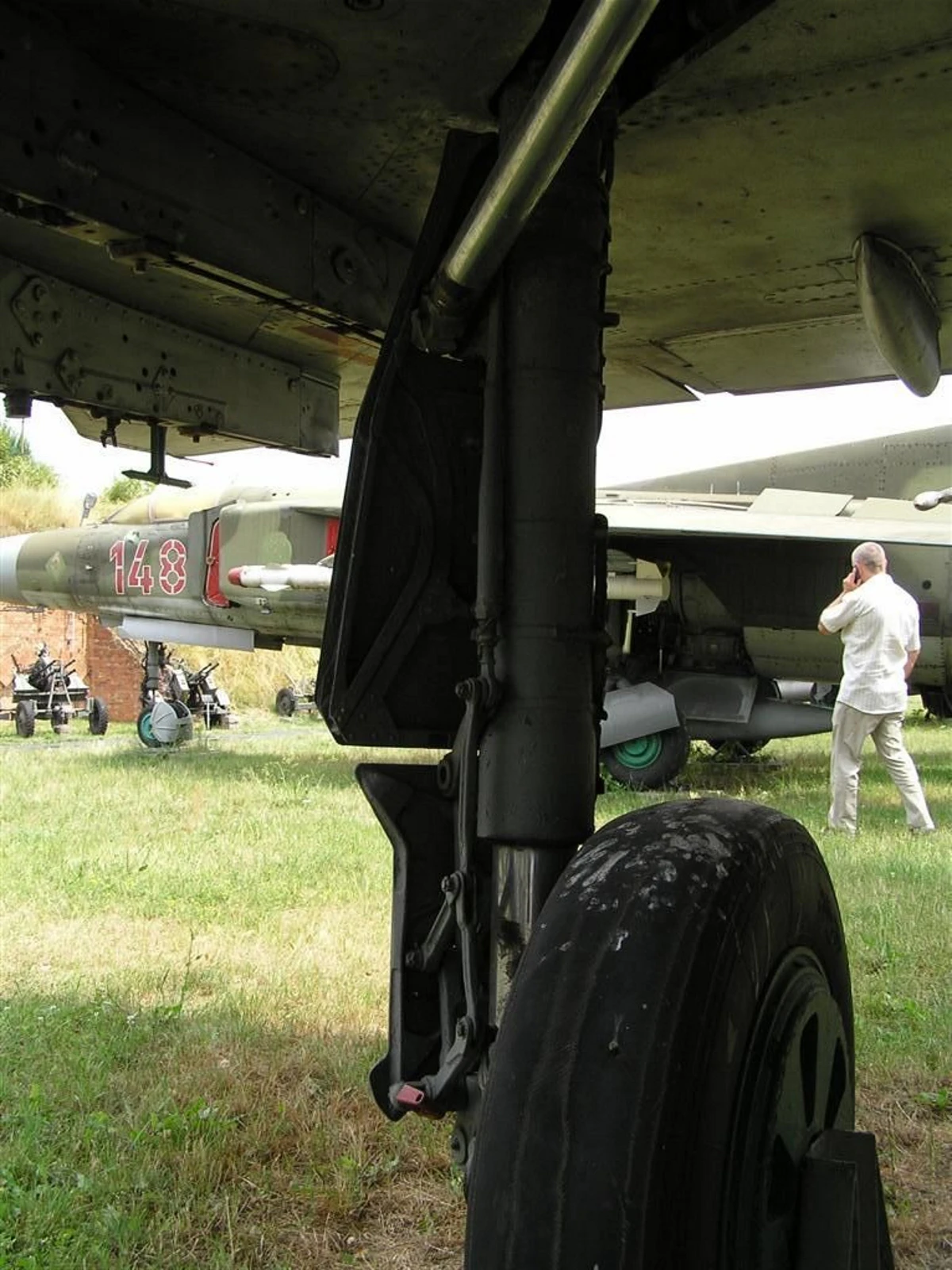
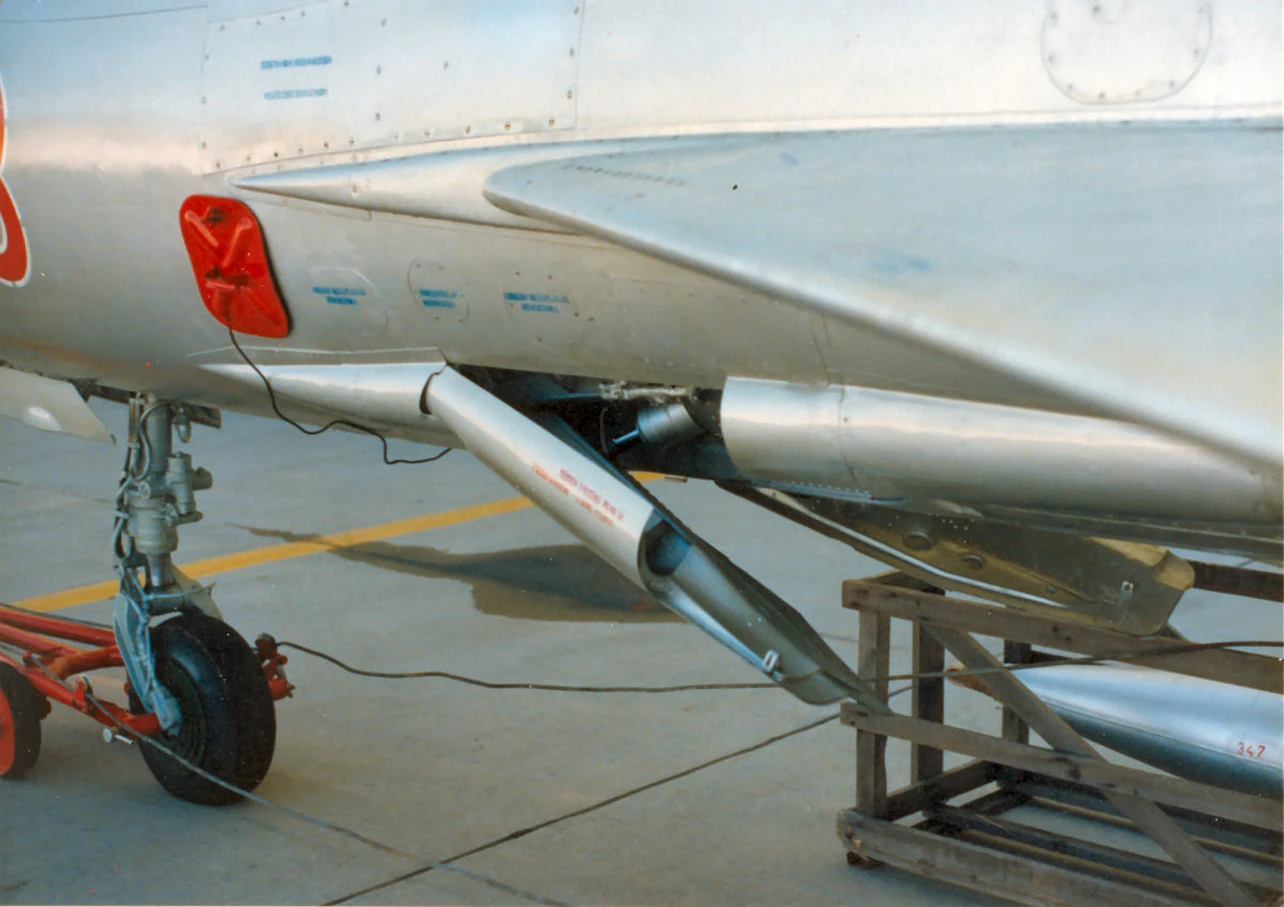
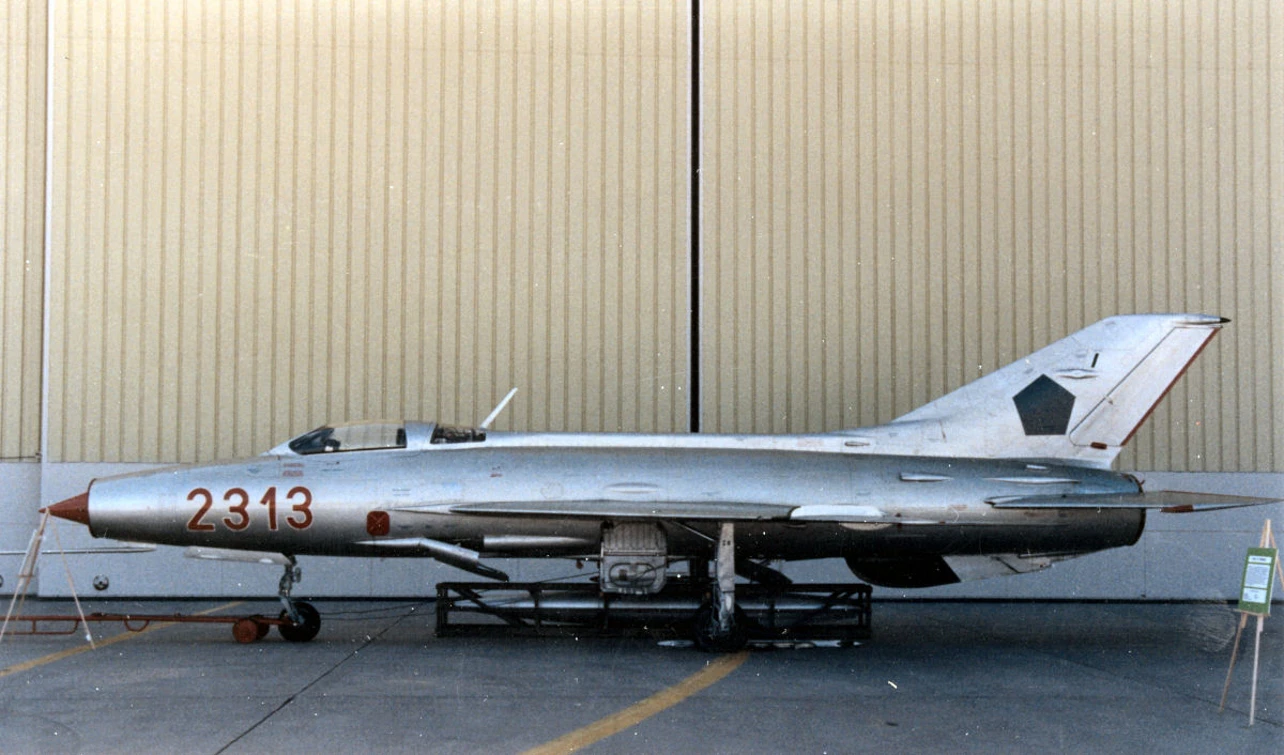
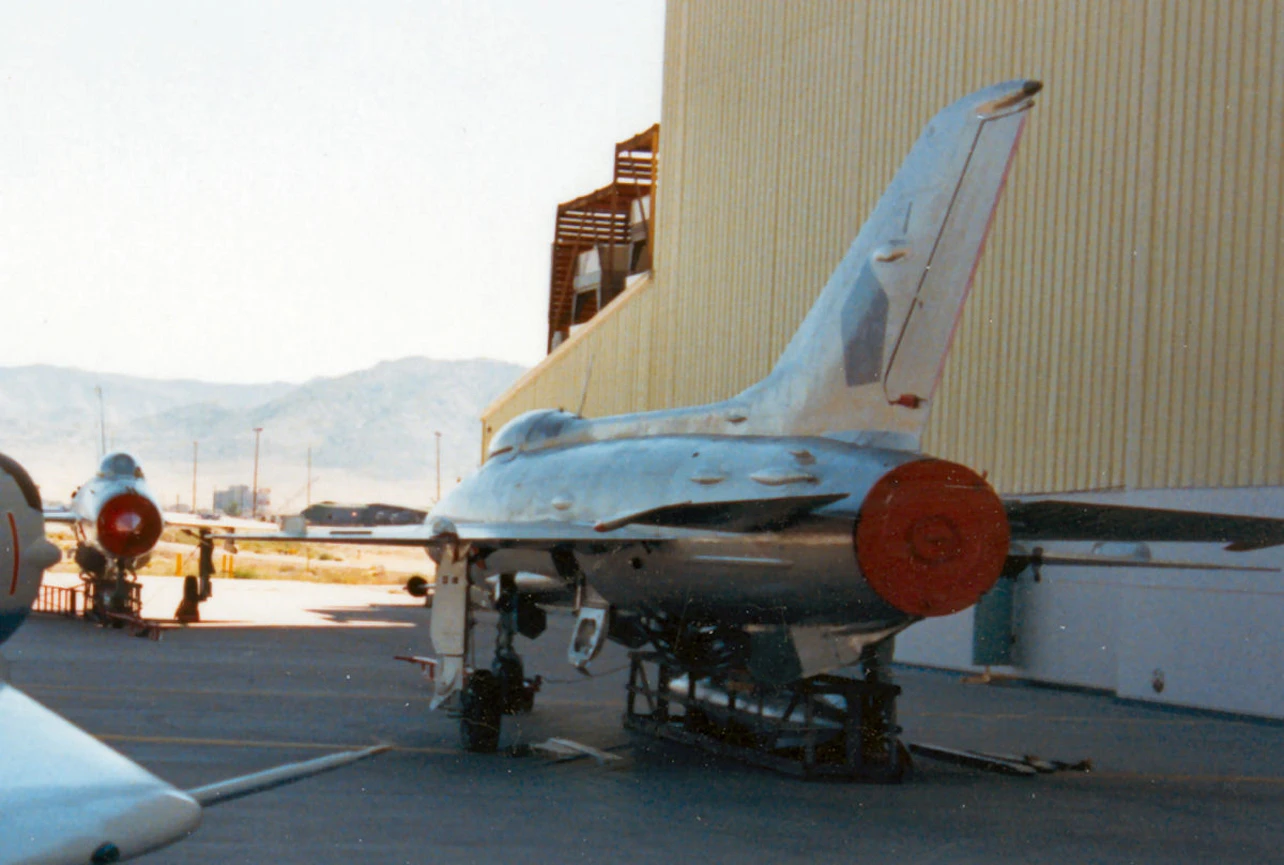
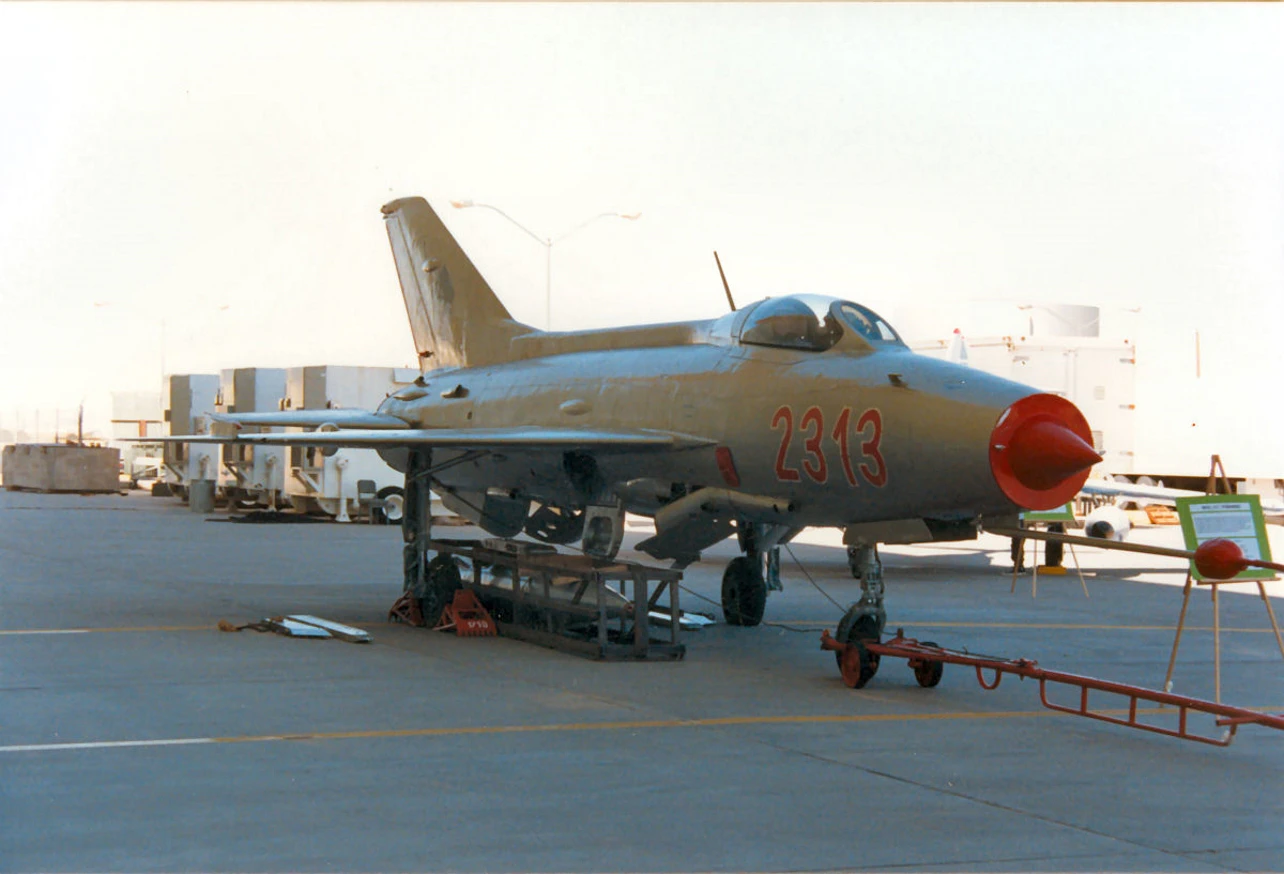
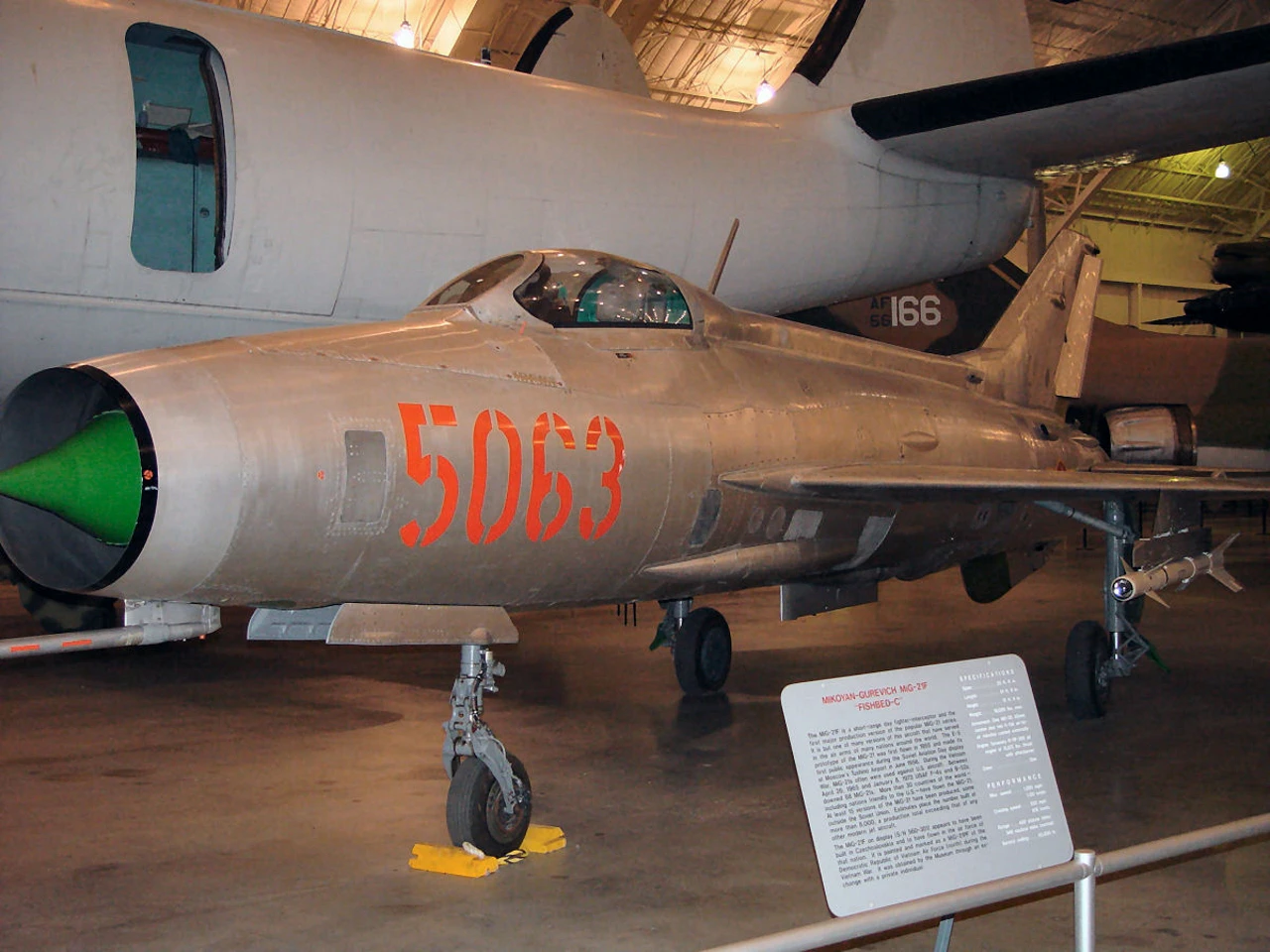
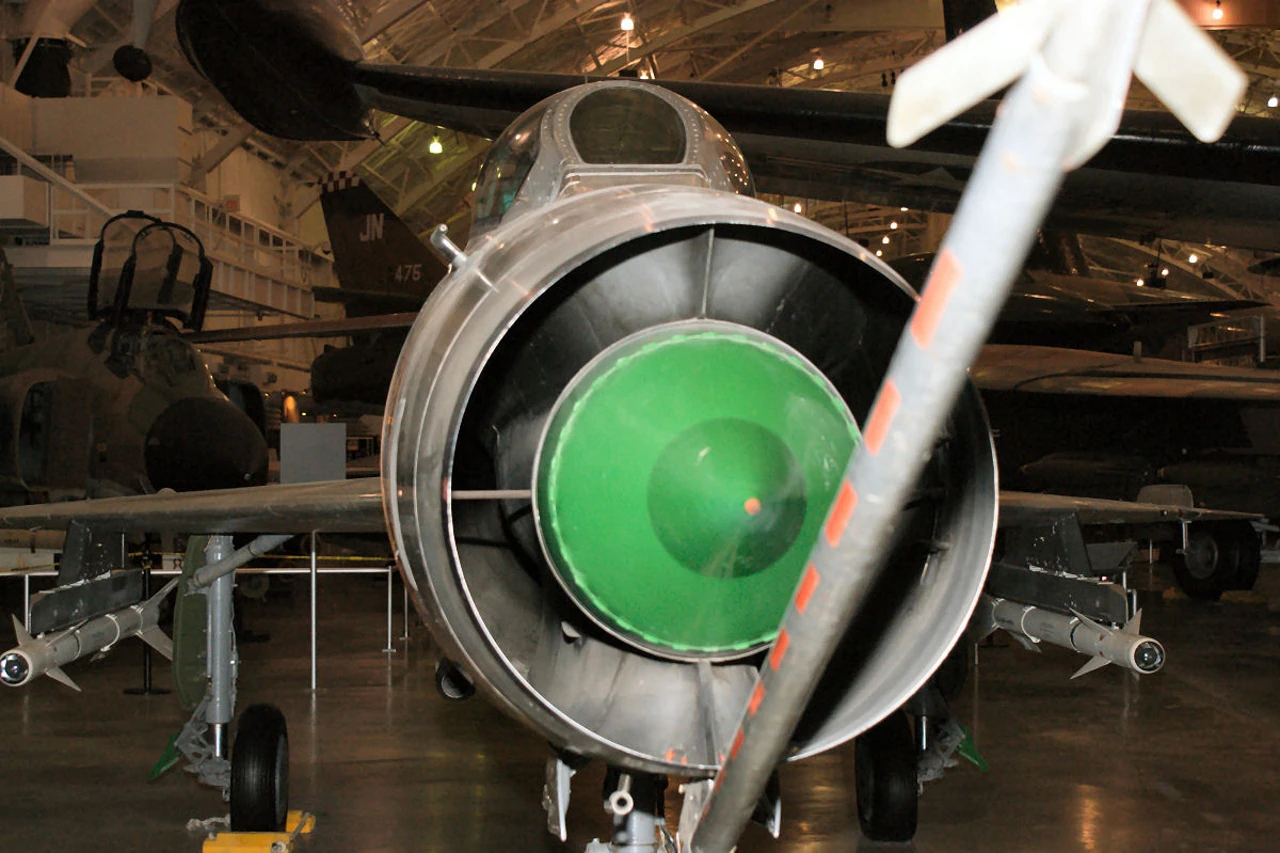
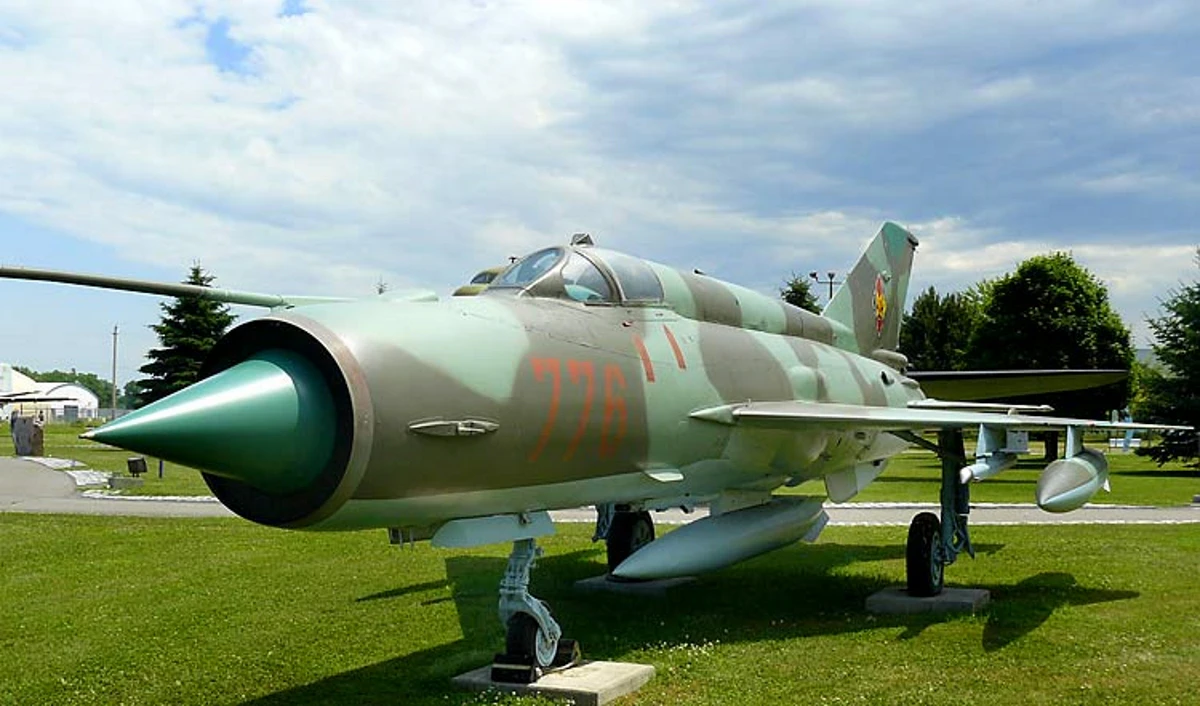
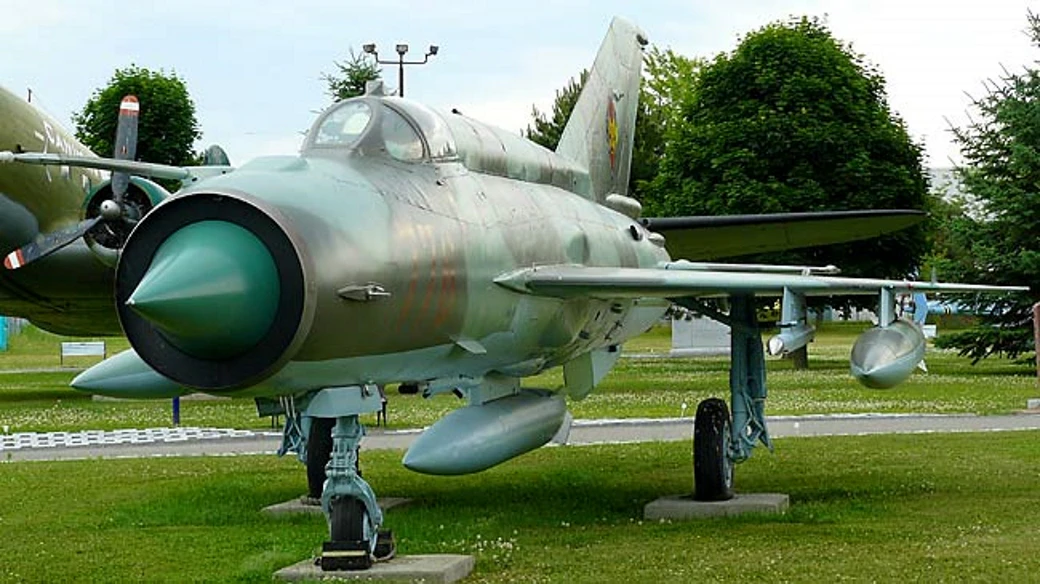
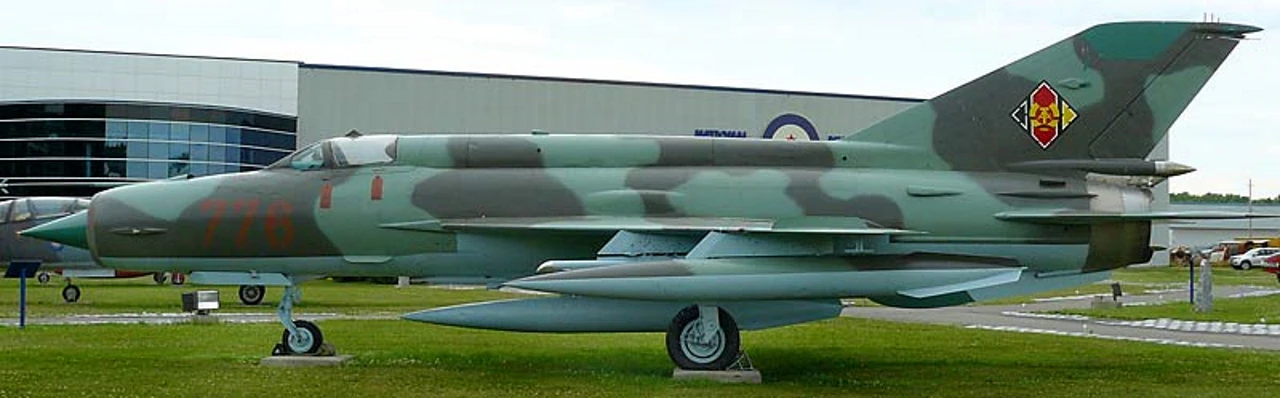
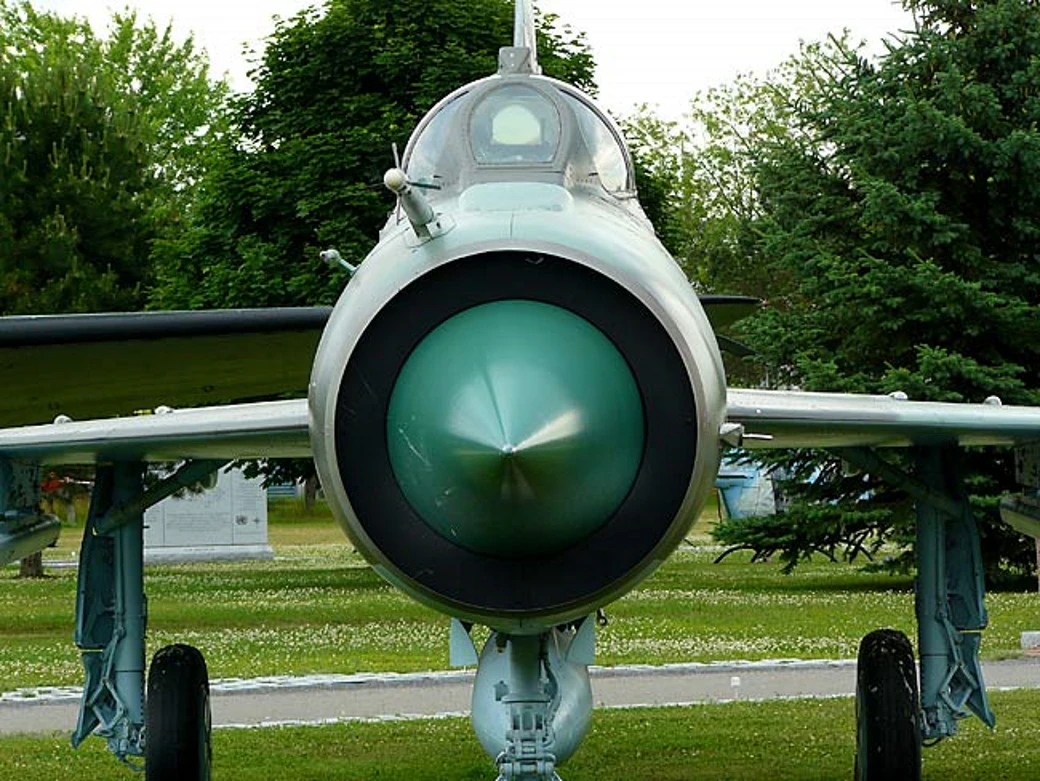
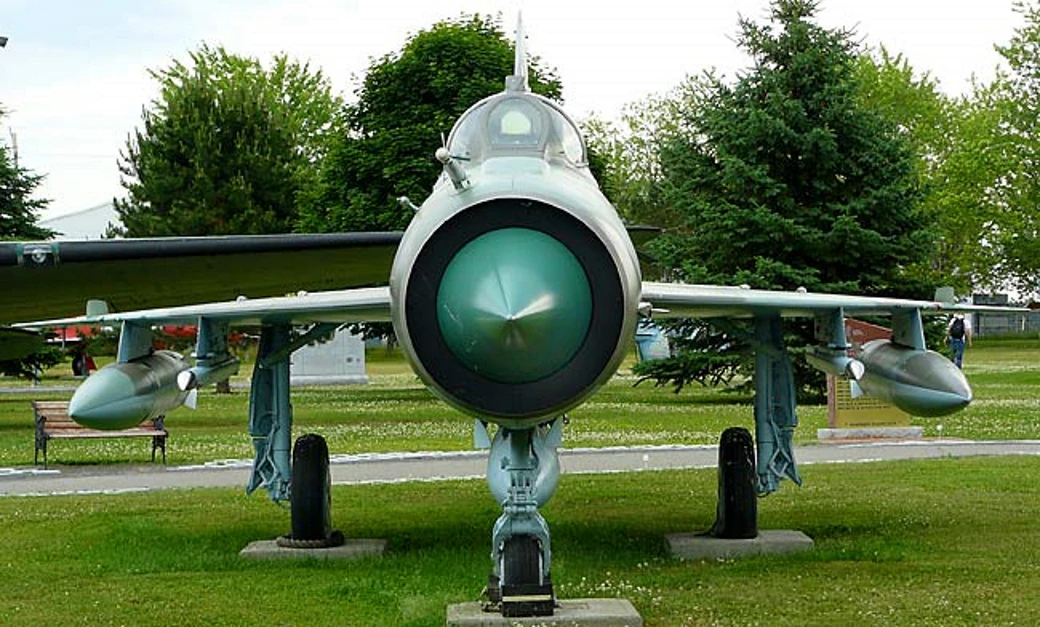
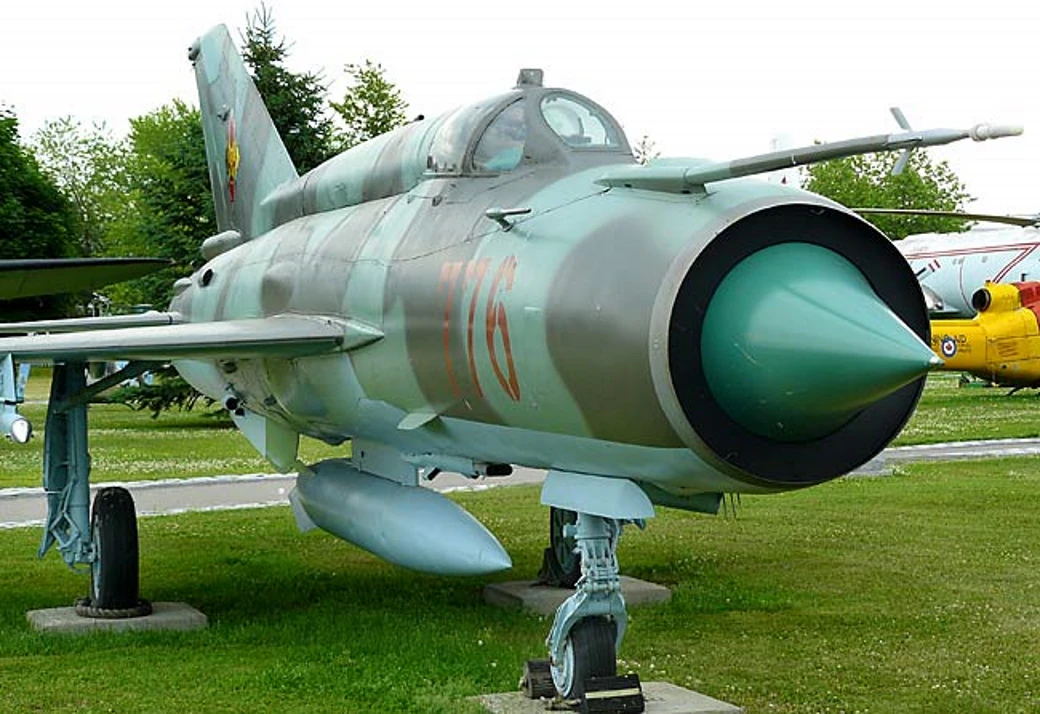
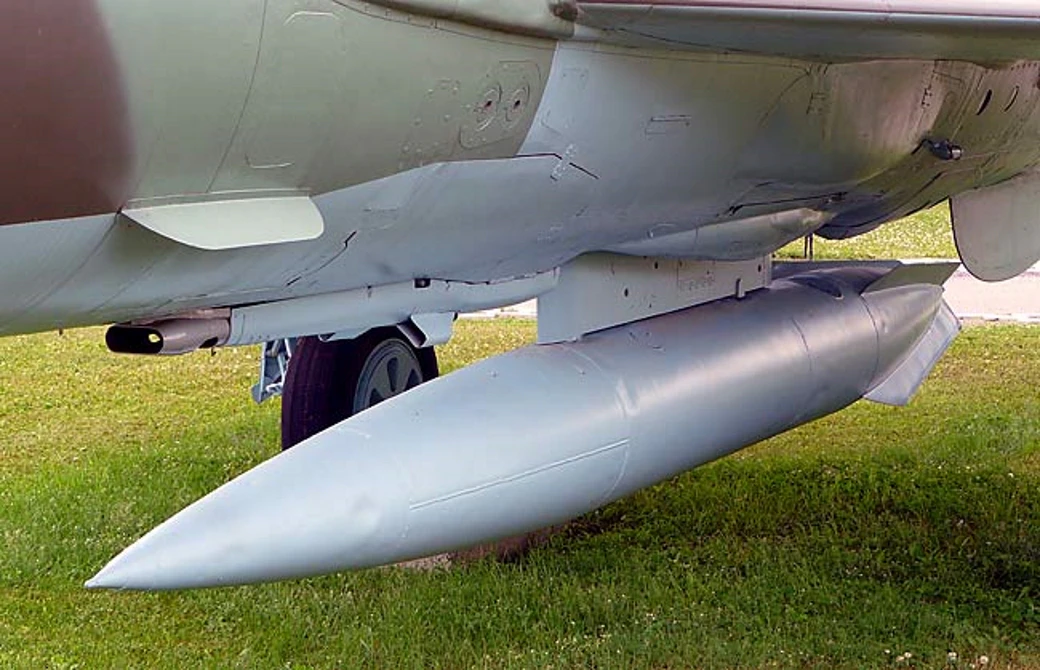
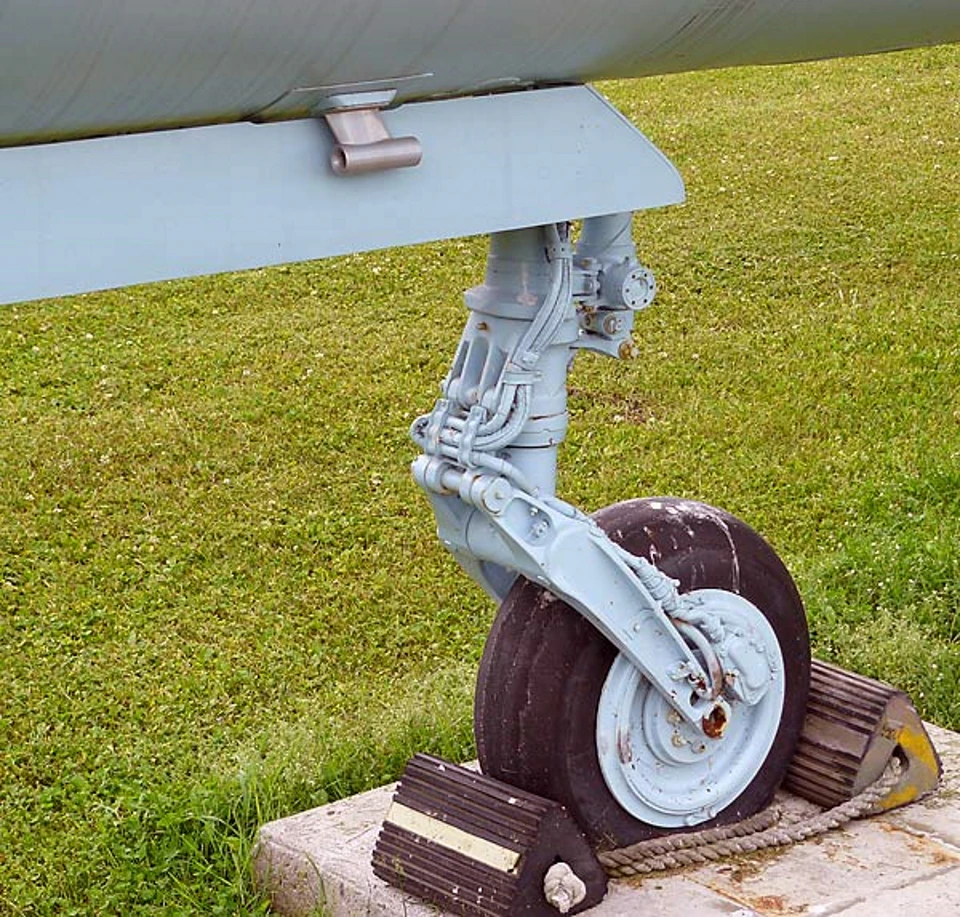
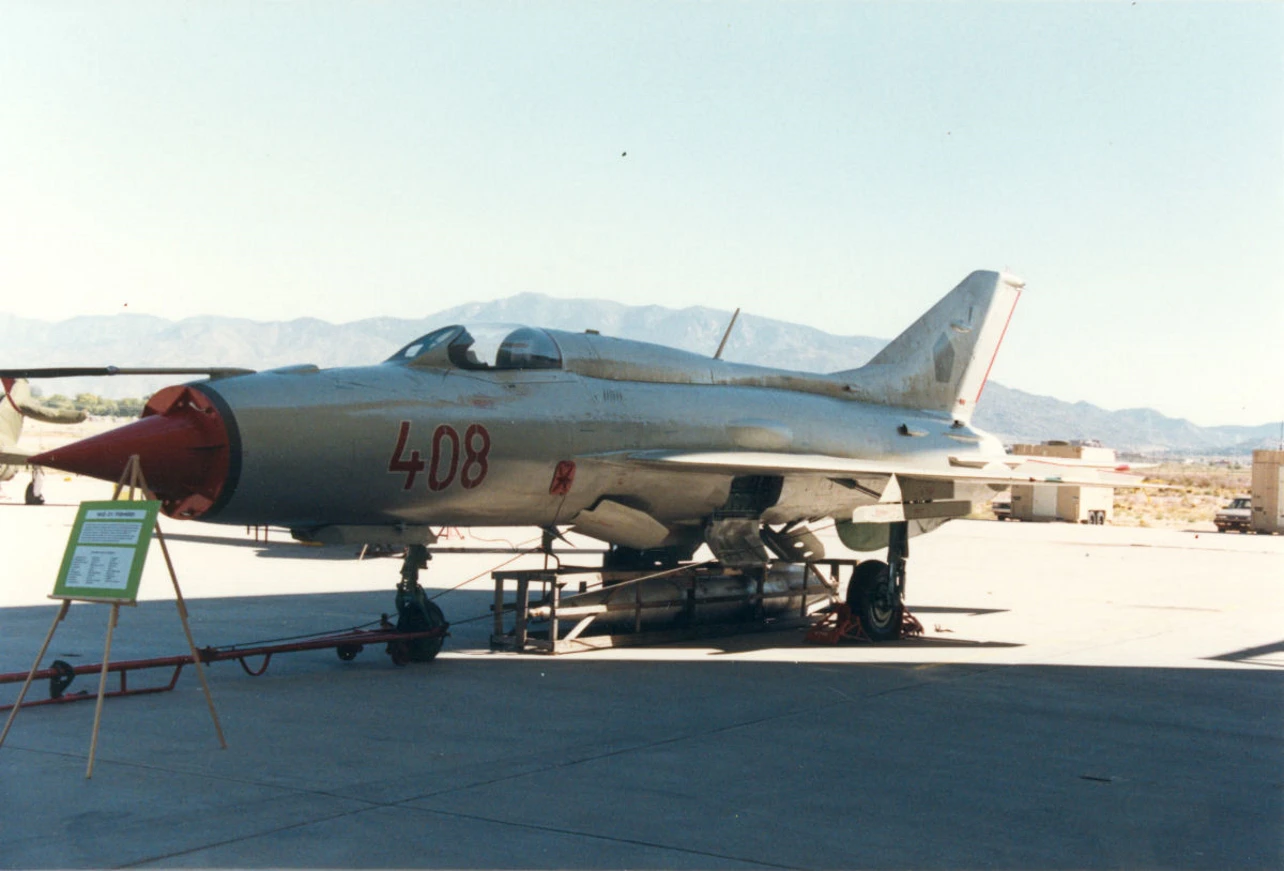
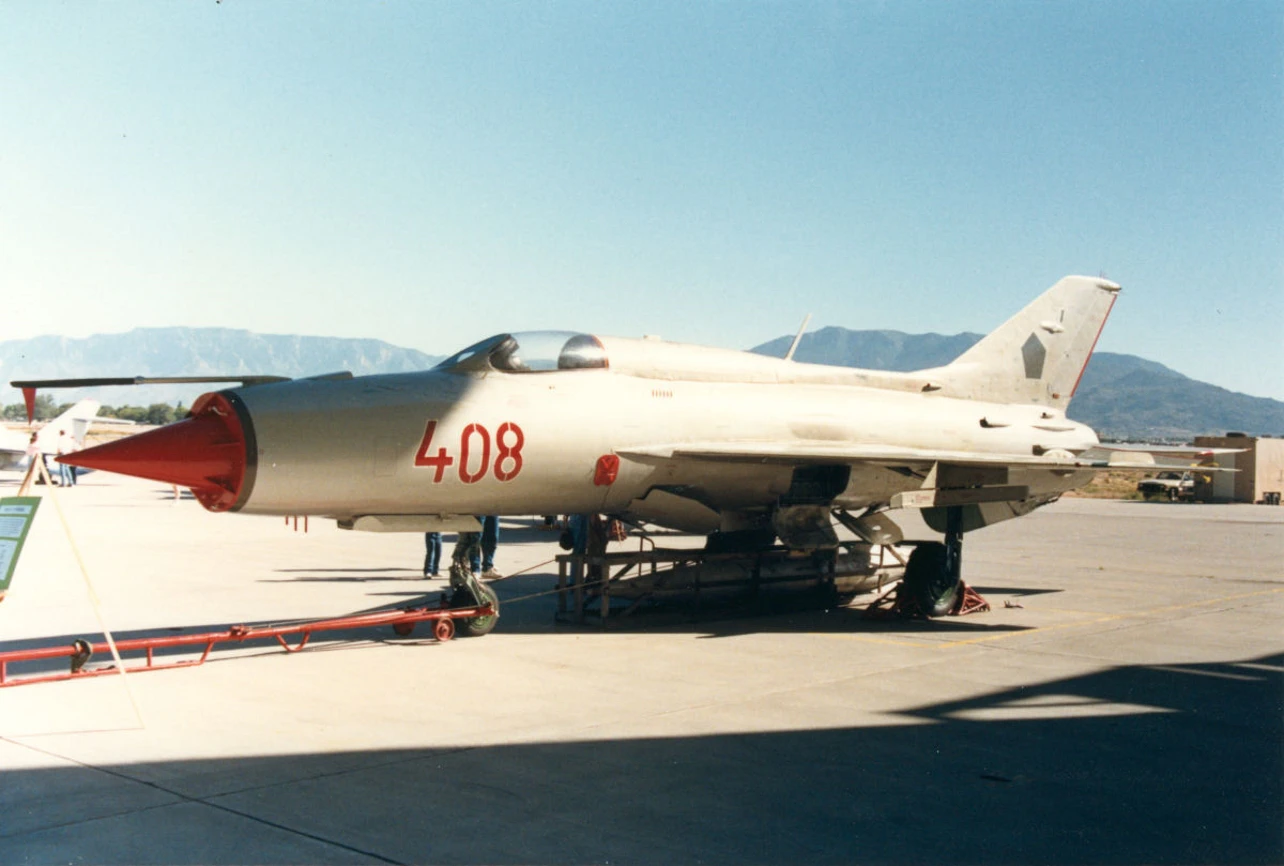
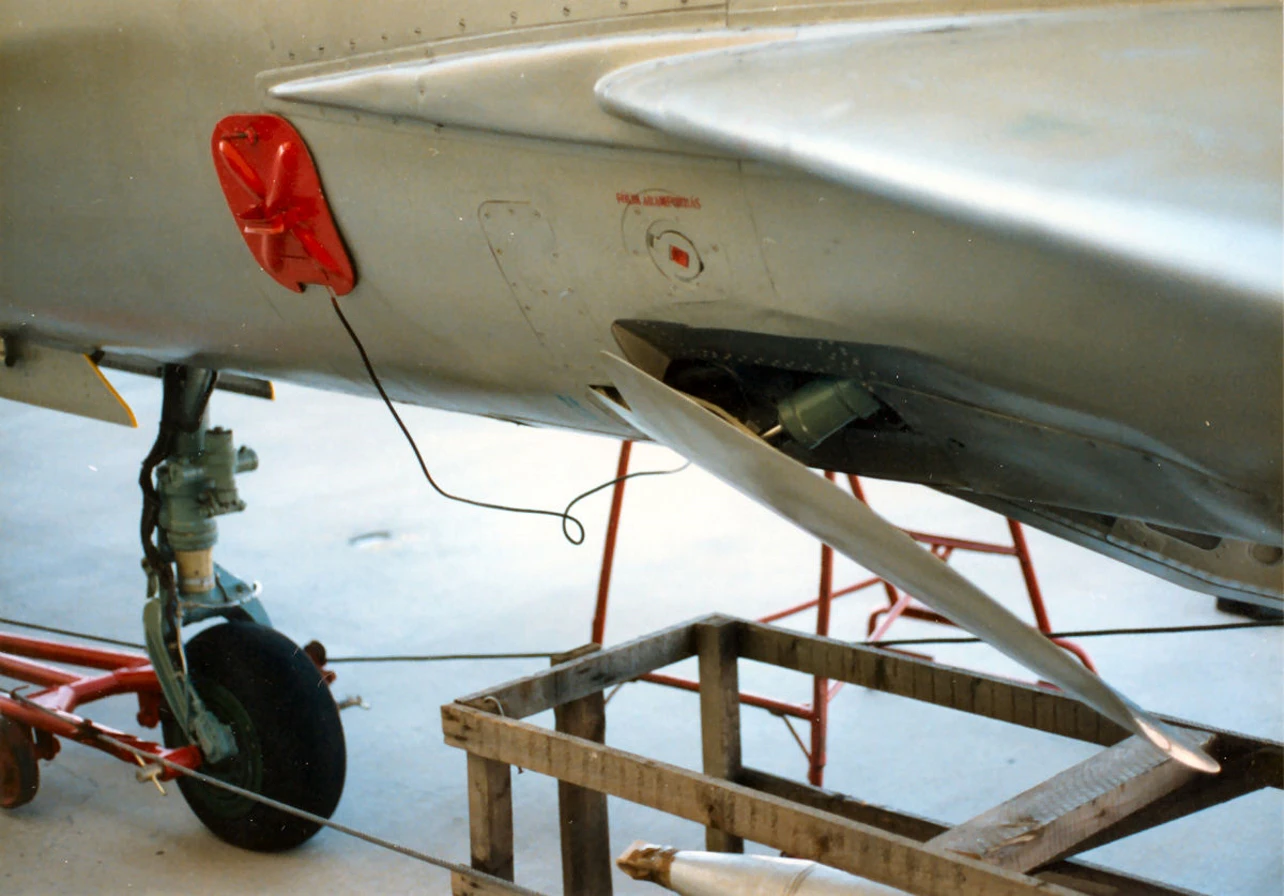
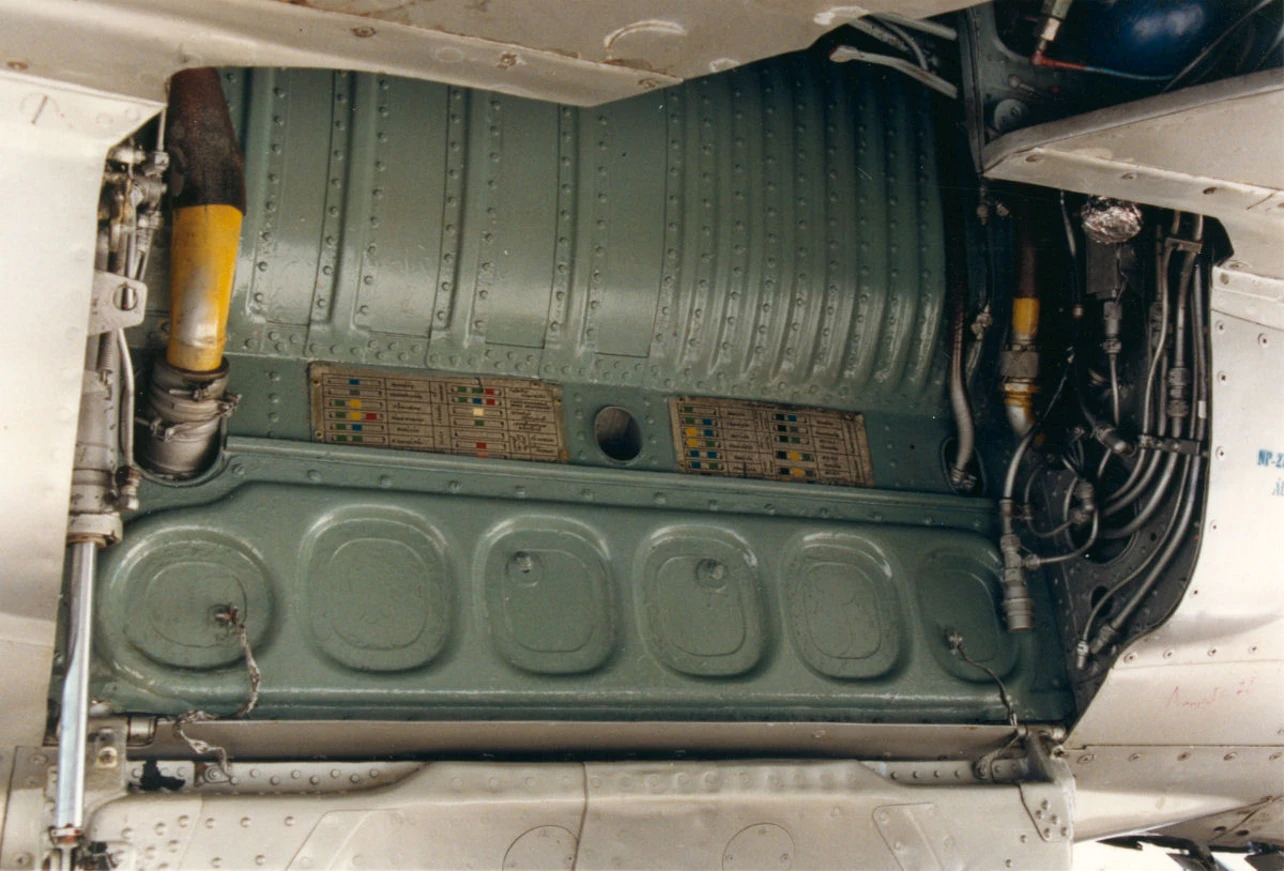
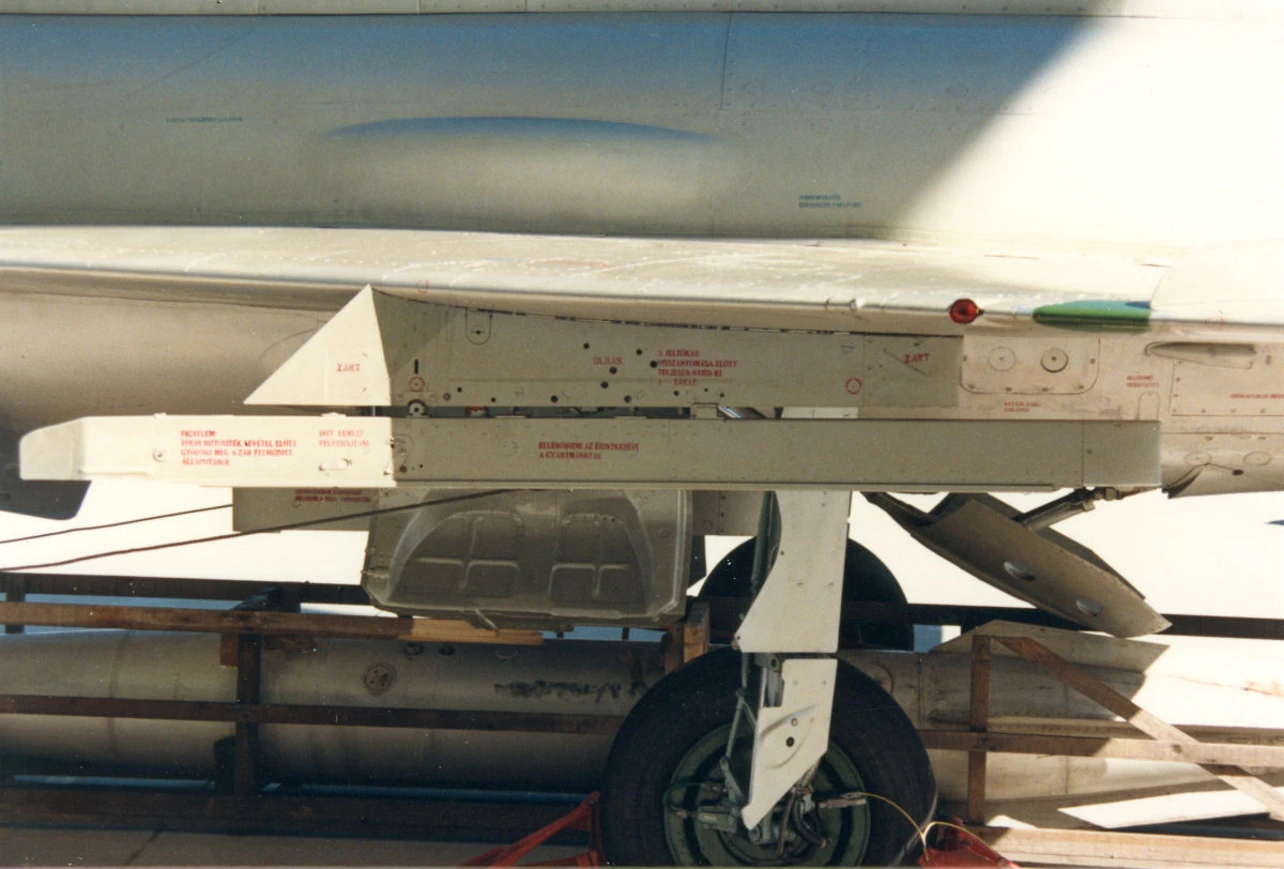
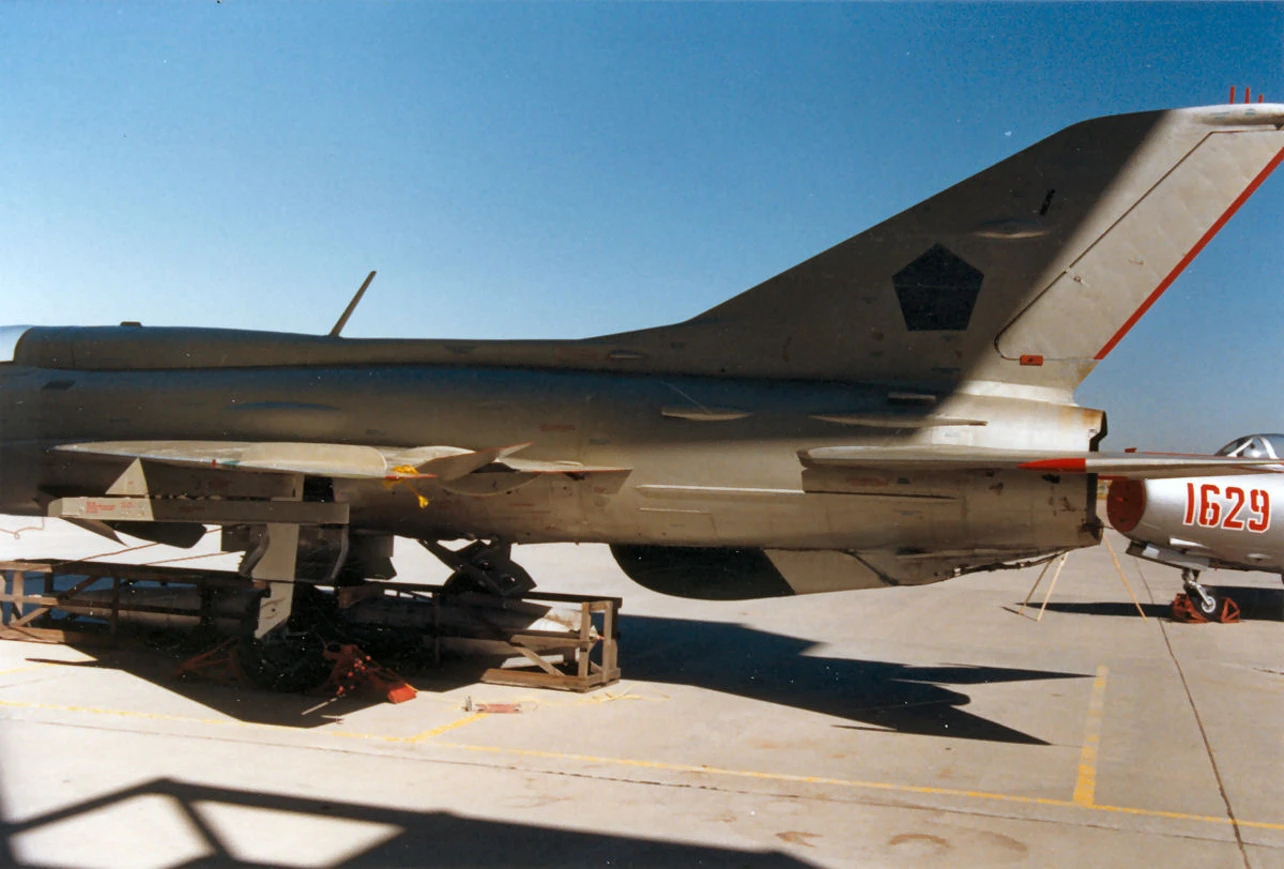
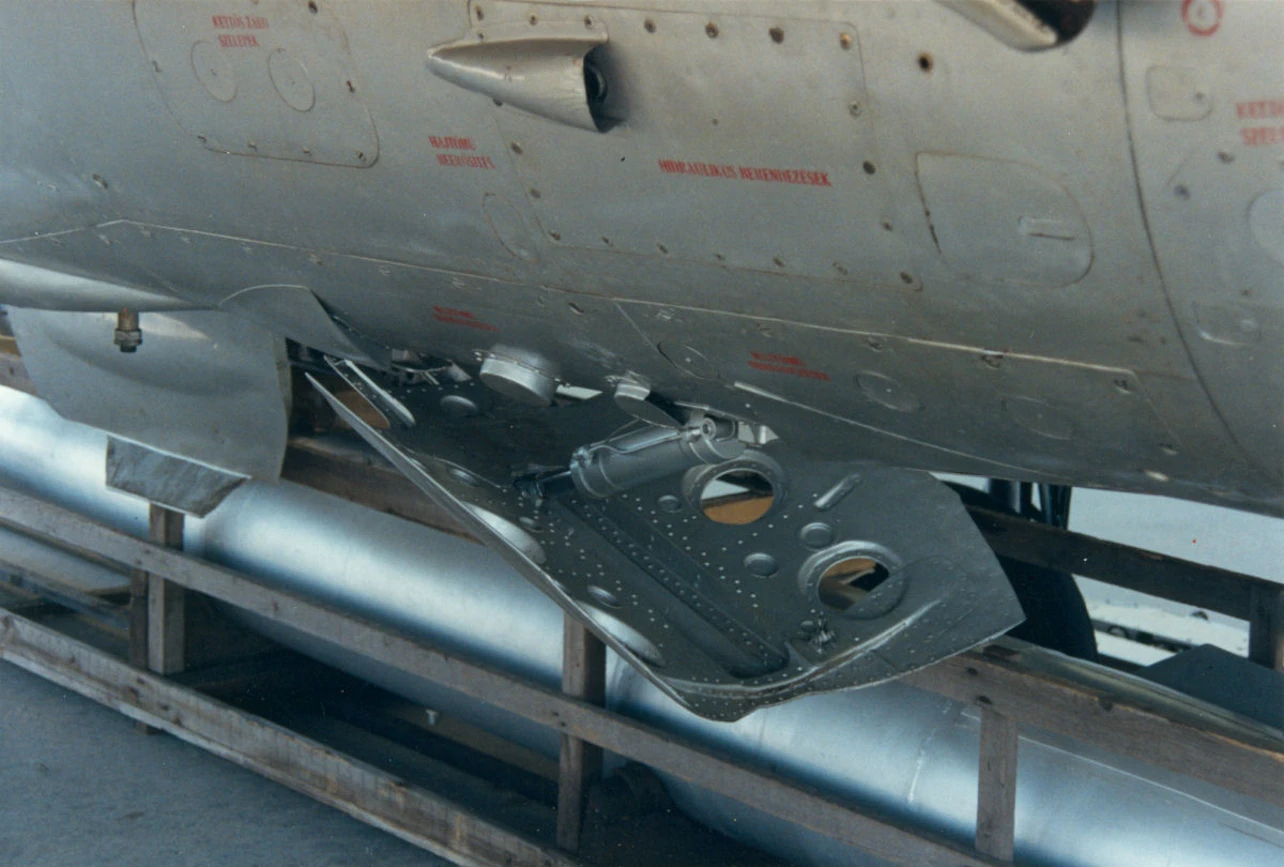
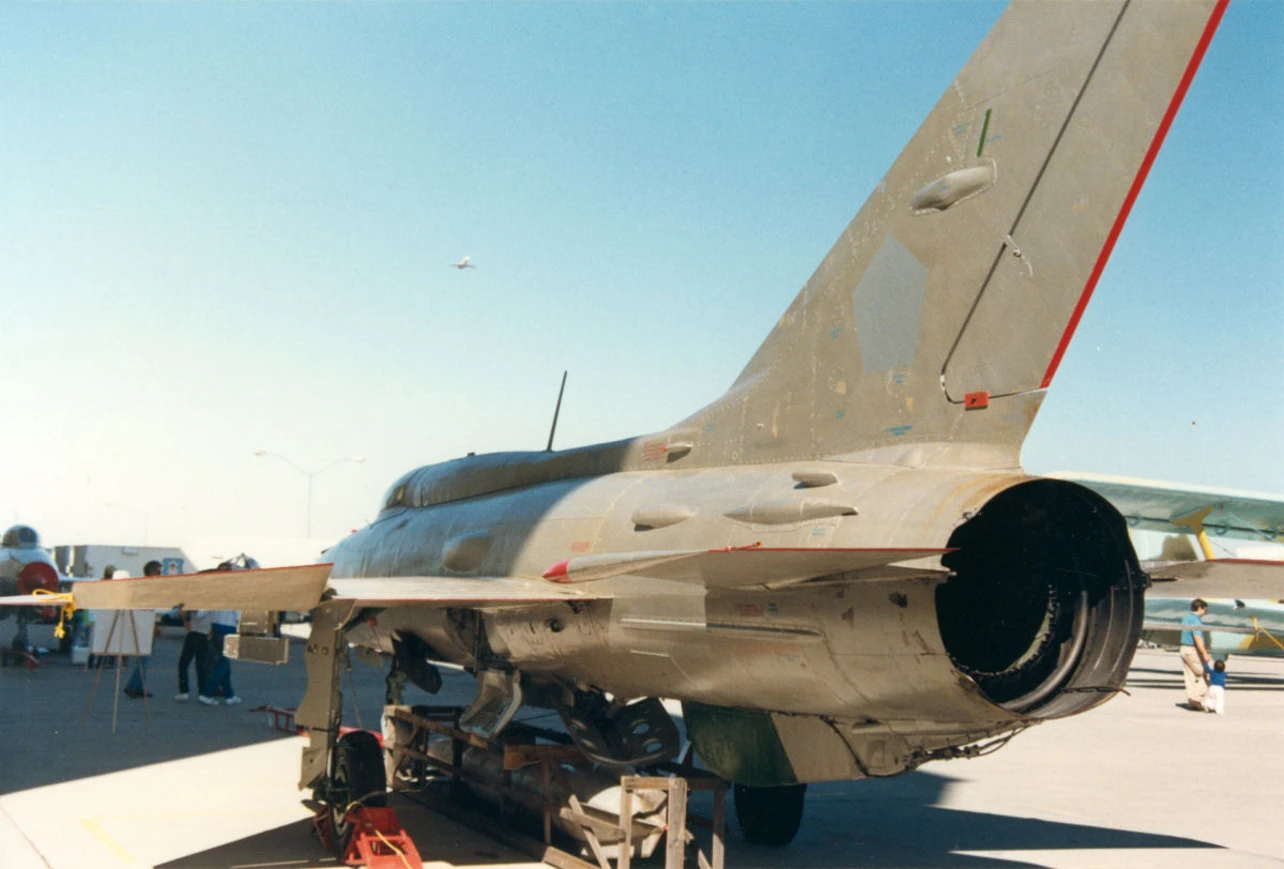
Fotogalerij van een Mig-21PF,
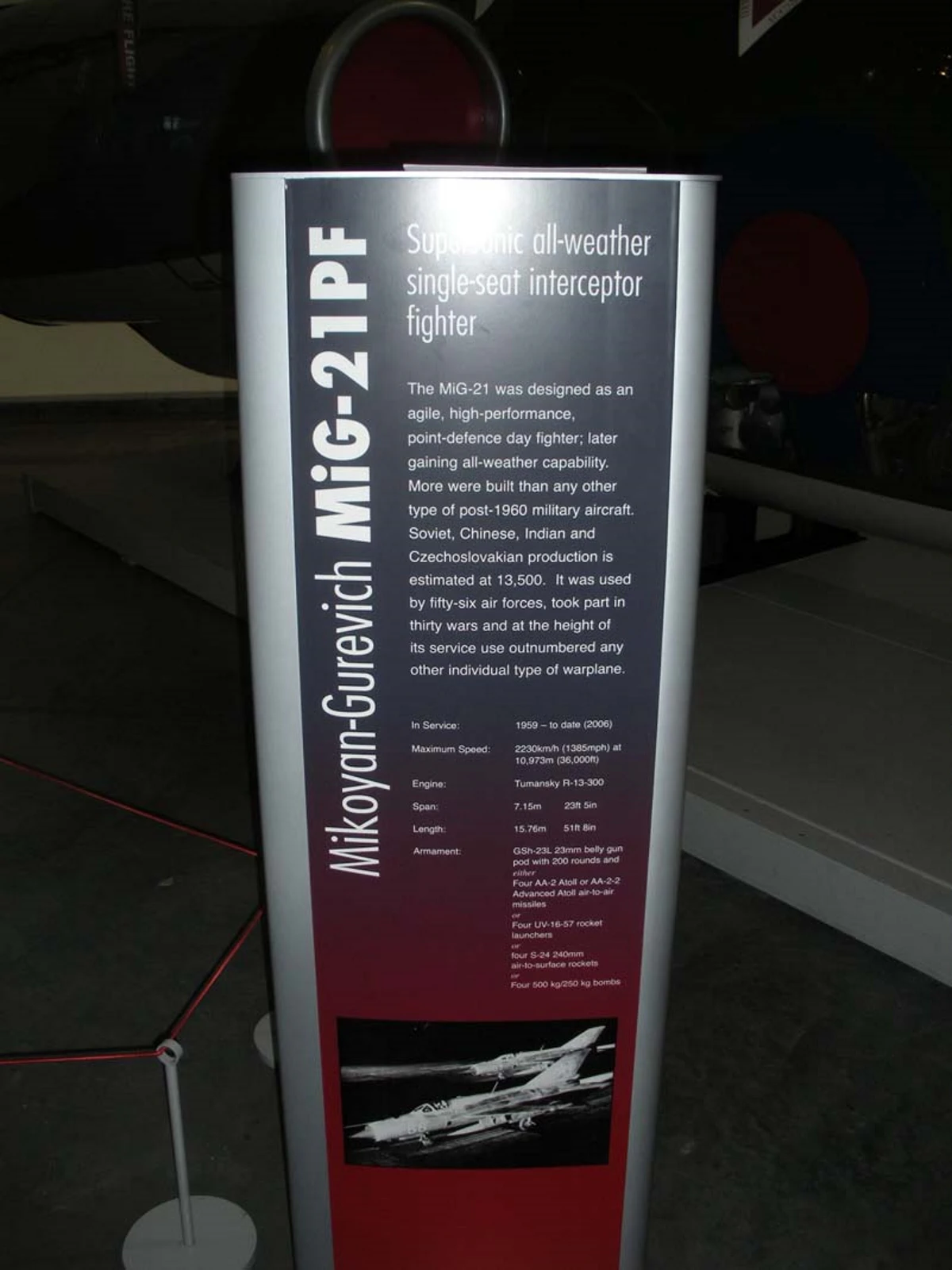
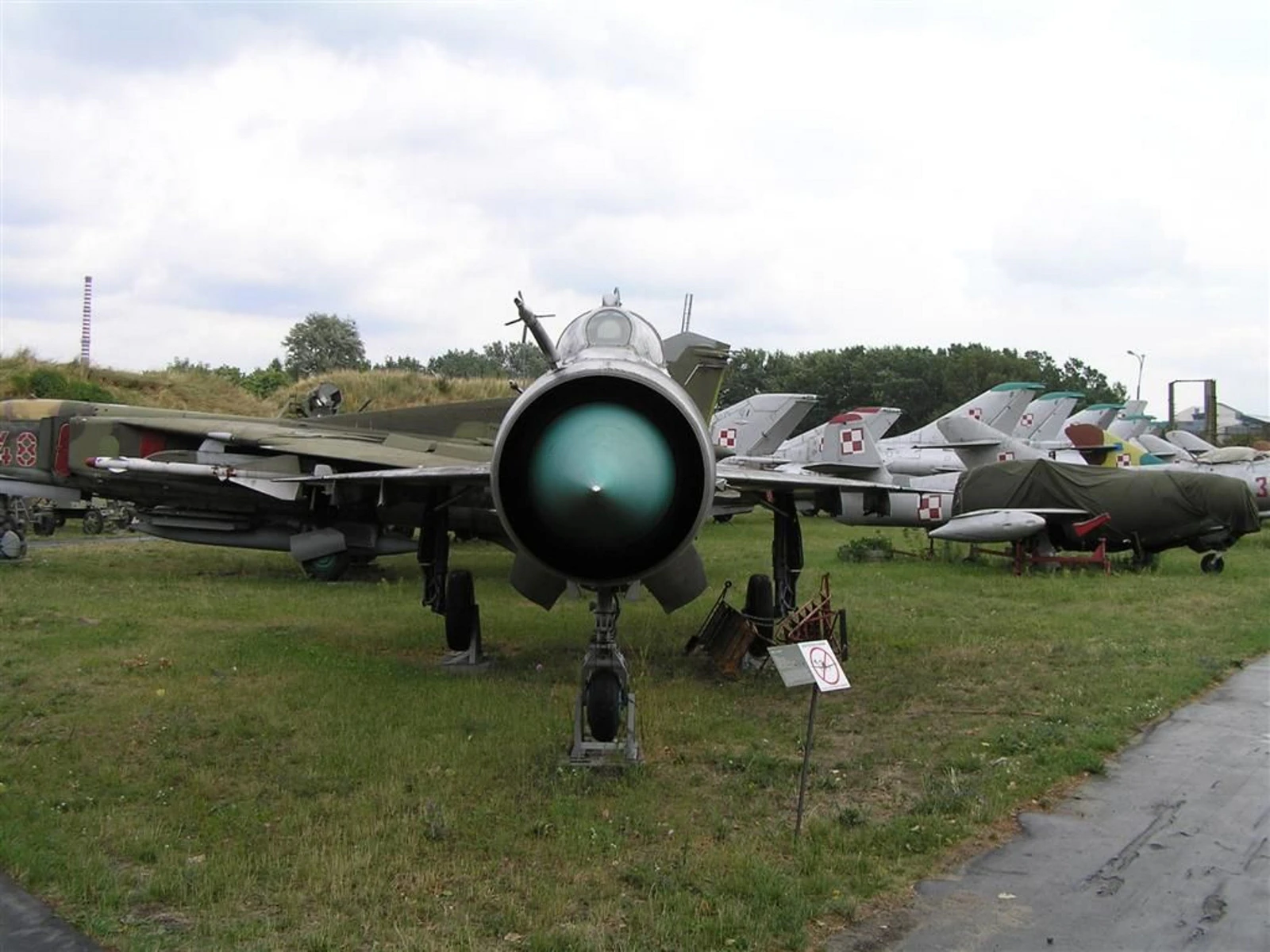
The Mikoyan-Gurevich MiG-21 (Russian: Микоян и Гуревич МиГ-21; NATO reporting name: Fishbed) is a supersonic jet fighter aircraft, designed by the Mikoyan-Gurevich Design Bureau in the Soviet Union. It was popularly nicknamed “Balalaika”, from the aircraft’s planform-view resemblance to the Russian stringed musical instrument or ołówek (English: pencil) by Polish pilots due to the shape of its fuselage.
De MiG-21PF(where ‘P’ stands forPerekhvatchikor Interceptor) was the first major redesign of the iconic MiG-21. While the original F-13 was a lightweight daytime fighter, the PF was built for the “missile-only” era of the 1960s. It introduced a larger nose to house a radar, an uprated engine, and—most controversially—removed the internal cannon entirely in favor of air-to-air missiles. It was the Soviet Union’s premier front-line interceptor during the height of the Cold War, designed to sprint toward NATO bombers at Mach 2 and destroy them before they even saw the “Pencil” in the sky.
Attribute
Technical Specification (MiG-21PF)
Role
All-Weather Interceptor
Bemanning
1 (Pilot)
First Flight
1961 (Production start)
Krachtbron
1 × Tumansky R-11F2-300 turbojet
Thrust (Afterburning)
13,490 lbf (60.0 kN)
Maximum Speed
2,175 km/h (Mach 2.1) at altitude
Internal Armament
None (Missile-only doctrine)
External Hardpoints
2 × Underwing pylons for K-13 (R-3S) missiles
Design Engineering: Radar and Aerodynamics
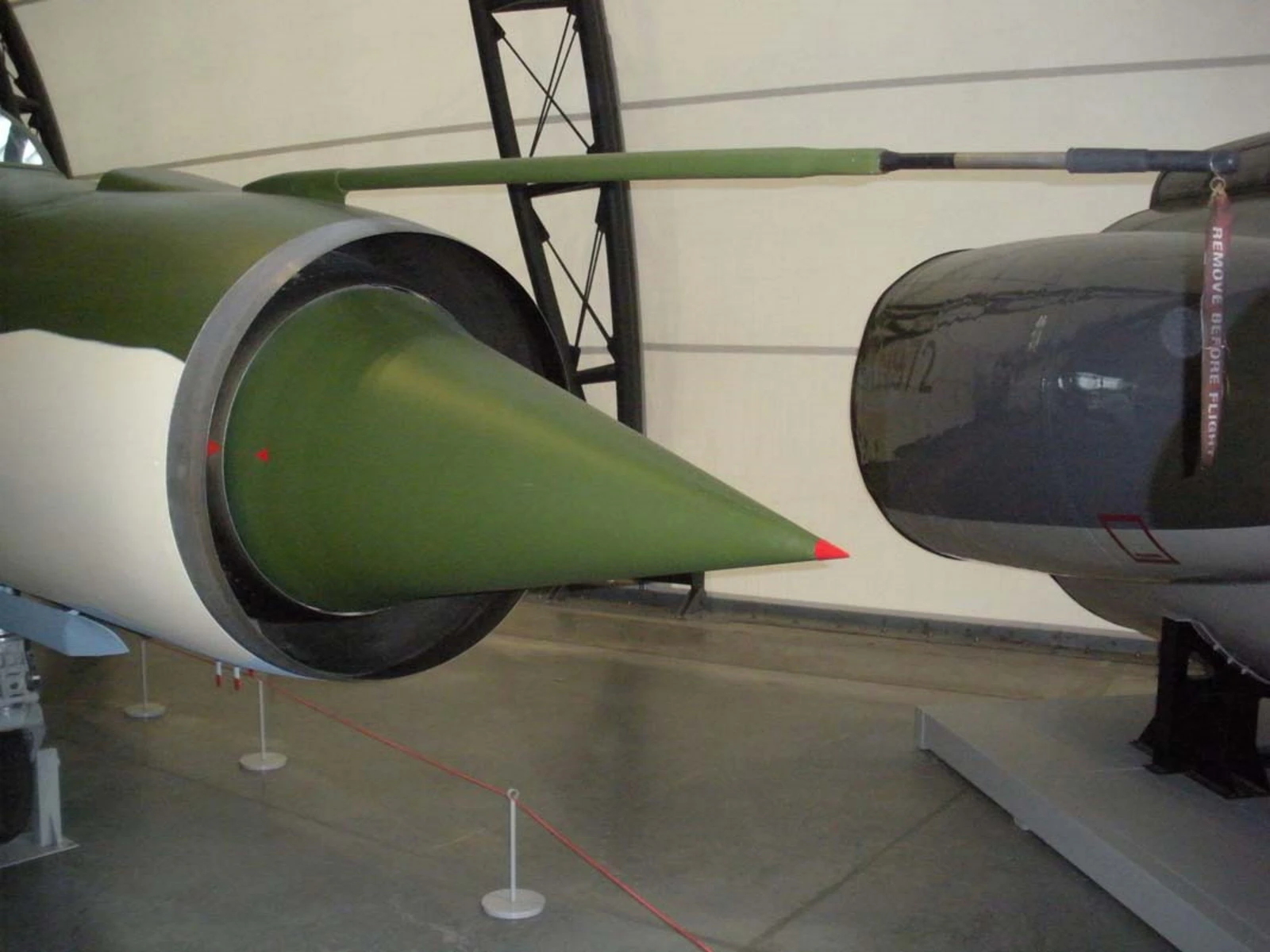
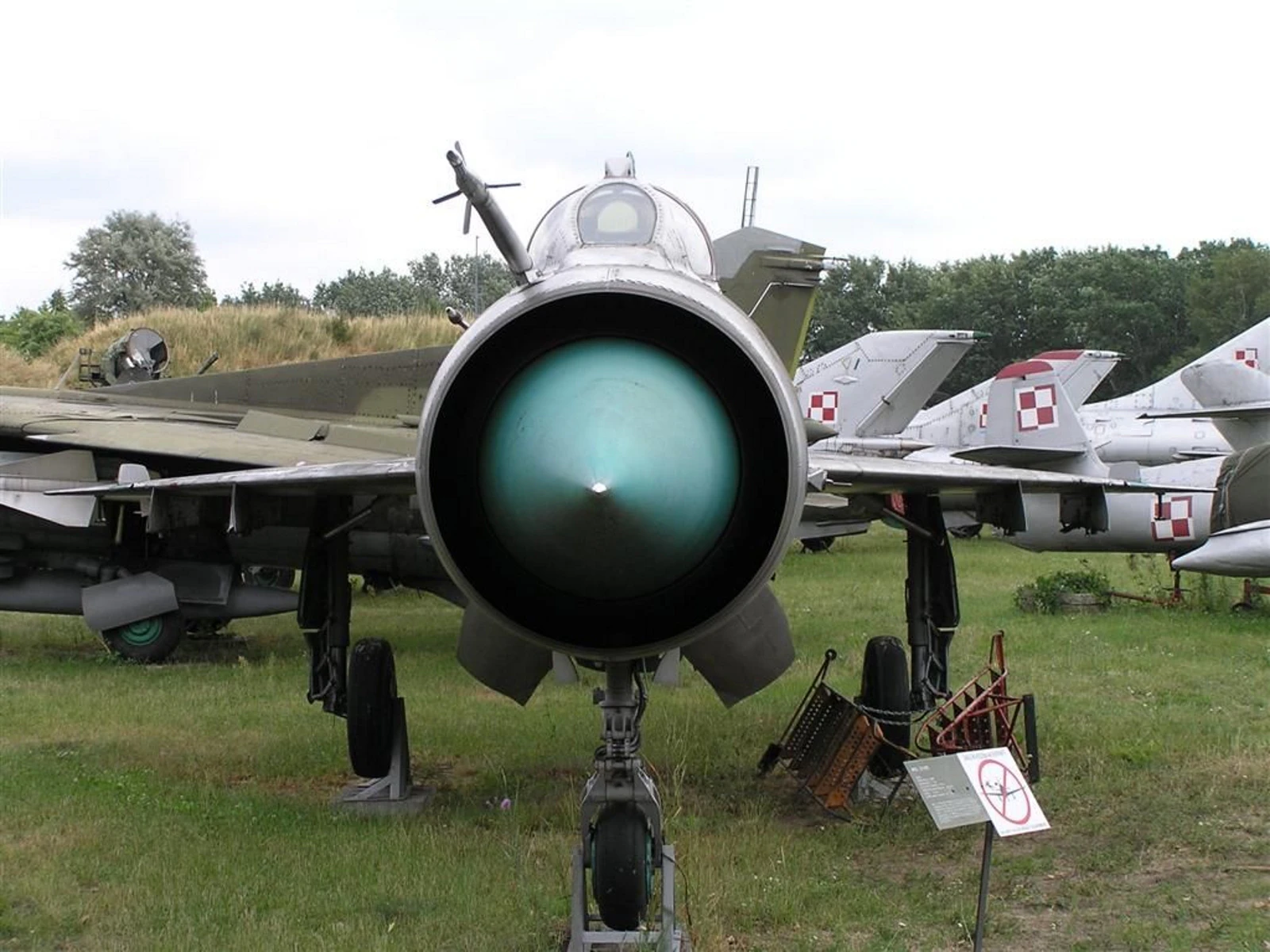
The “Fat” Nose:To fit theRP-21 Sapfirradar, the nose intake was enlarged and the centerbody (the shock cone) was widened. This gave the PF all-weather and night-fighting capabilities that the earlier “Clear Air” versions lacked.
Pitot Relocation:On the PF, the long pitot tube (the air data probe) was moved from the bottom of the intake to the top. This is the quickest way to distinguish a PF from the earlier F-13 in photographs.
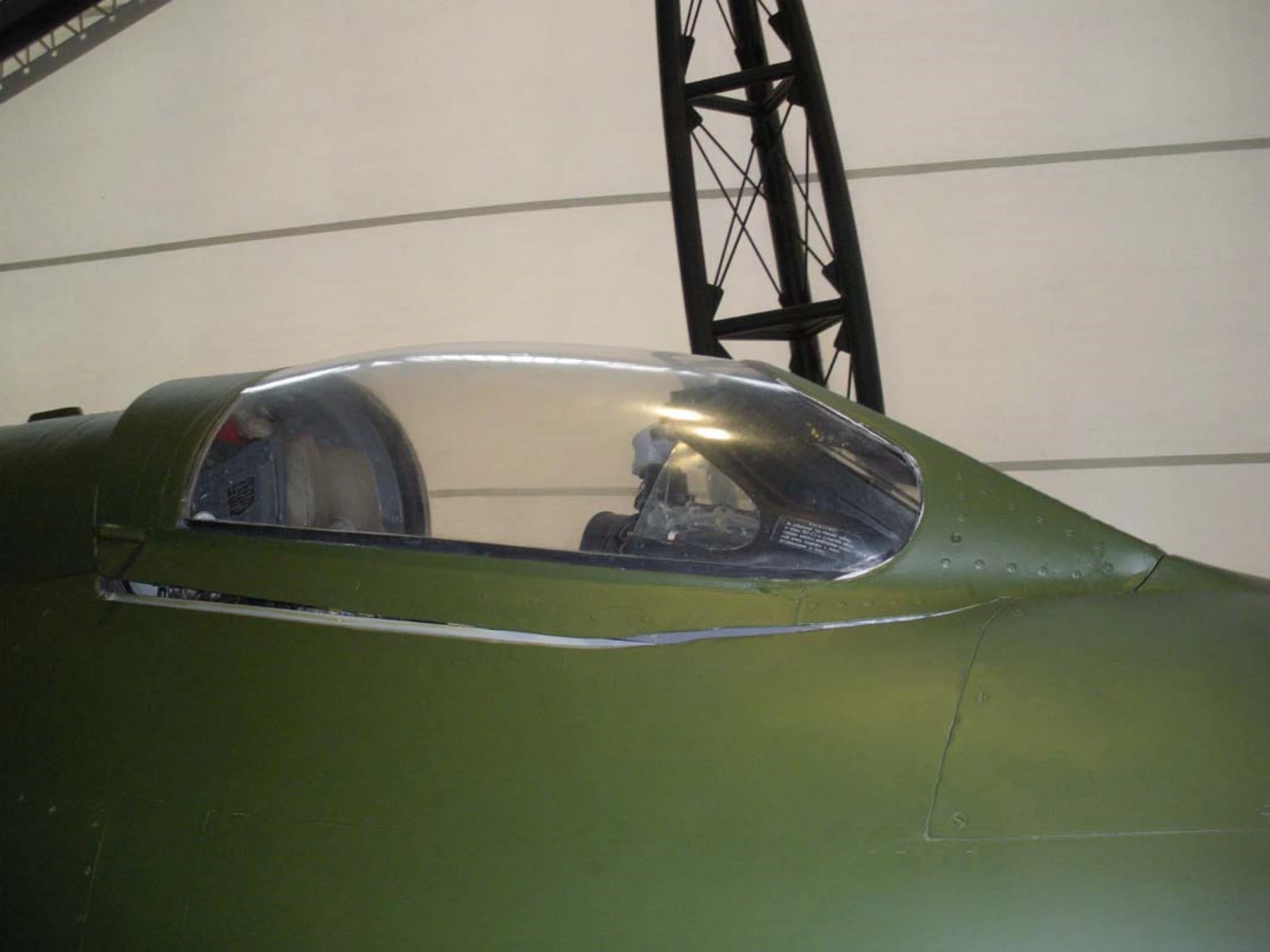
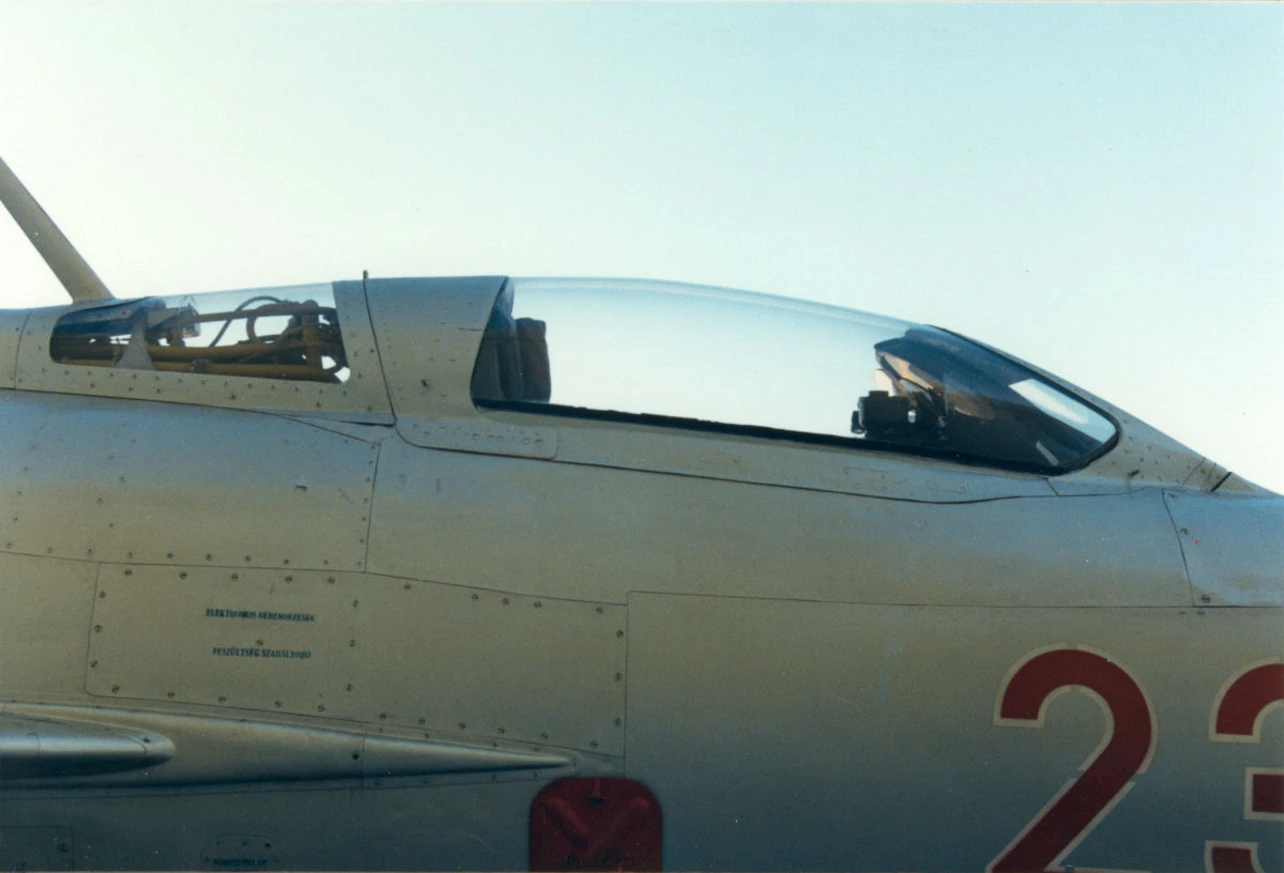
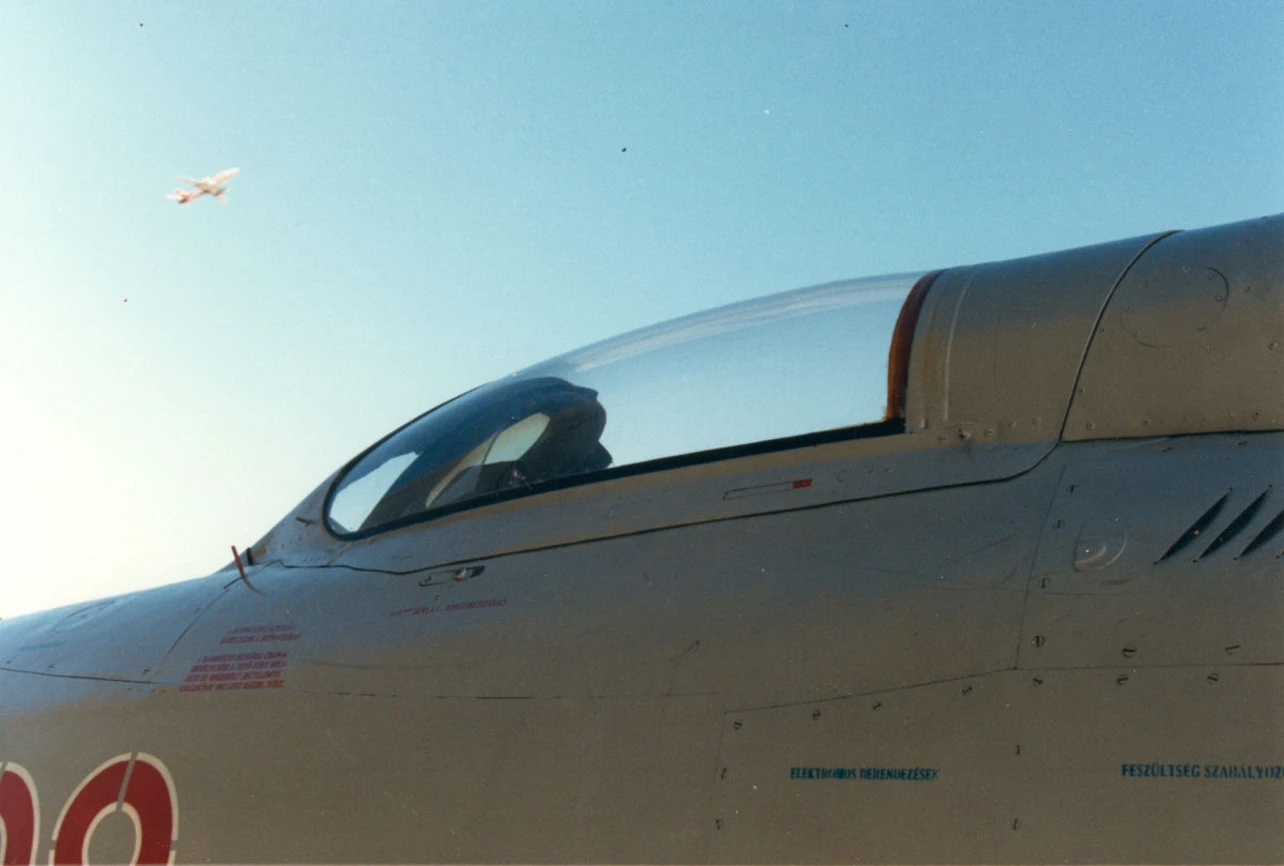
Forward-Opening Canopy:Unlike later MiGs that opened to the side, the PF canopy was hinged at the front. It was part of an “escape capsule” system where the canopy remained attached to the seat during ejection to protect the pilot from supersonic windblast.
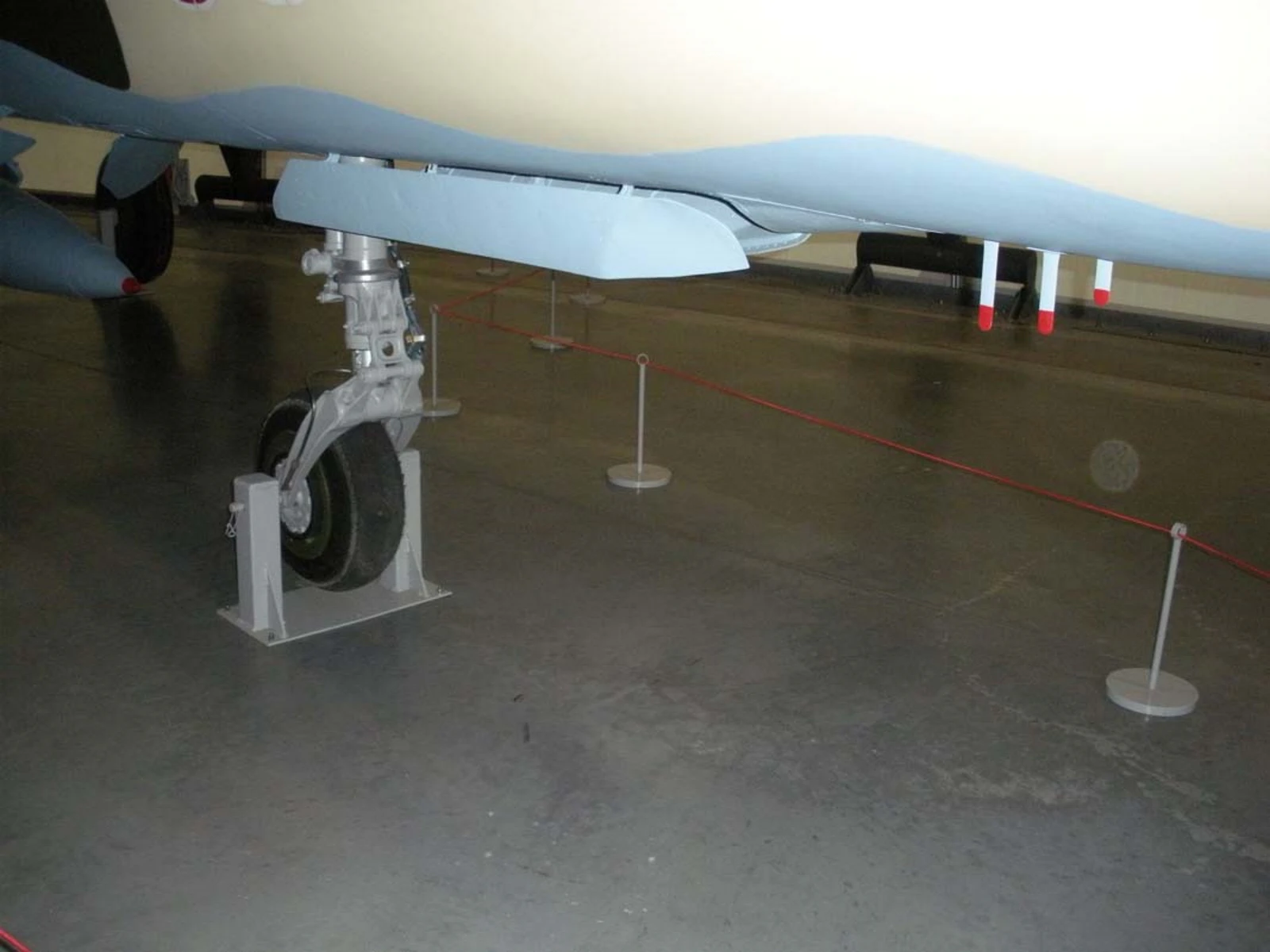
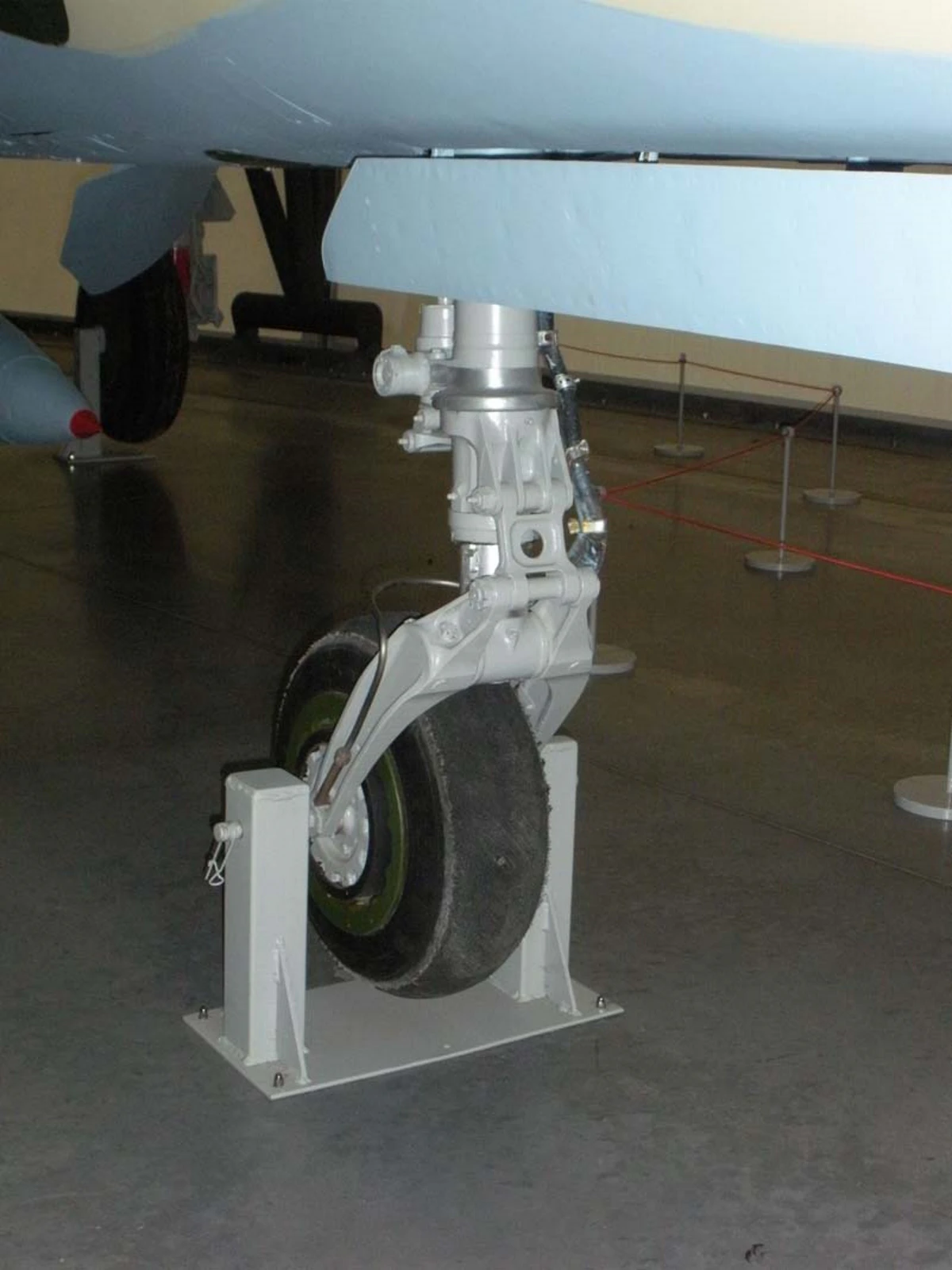
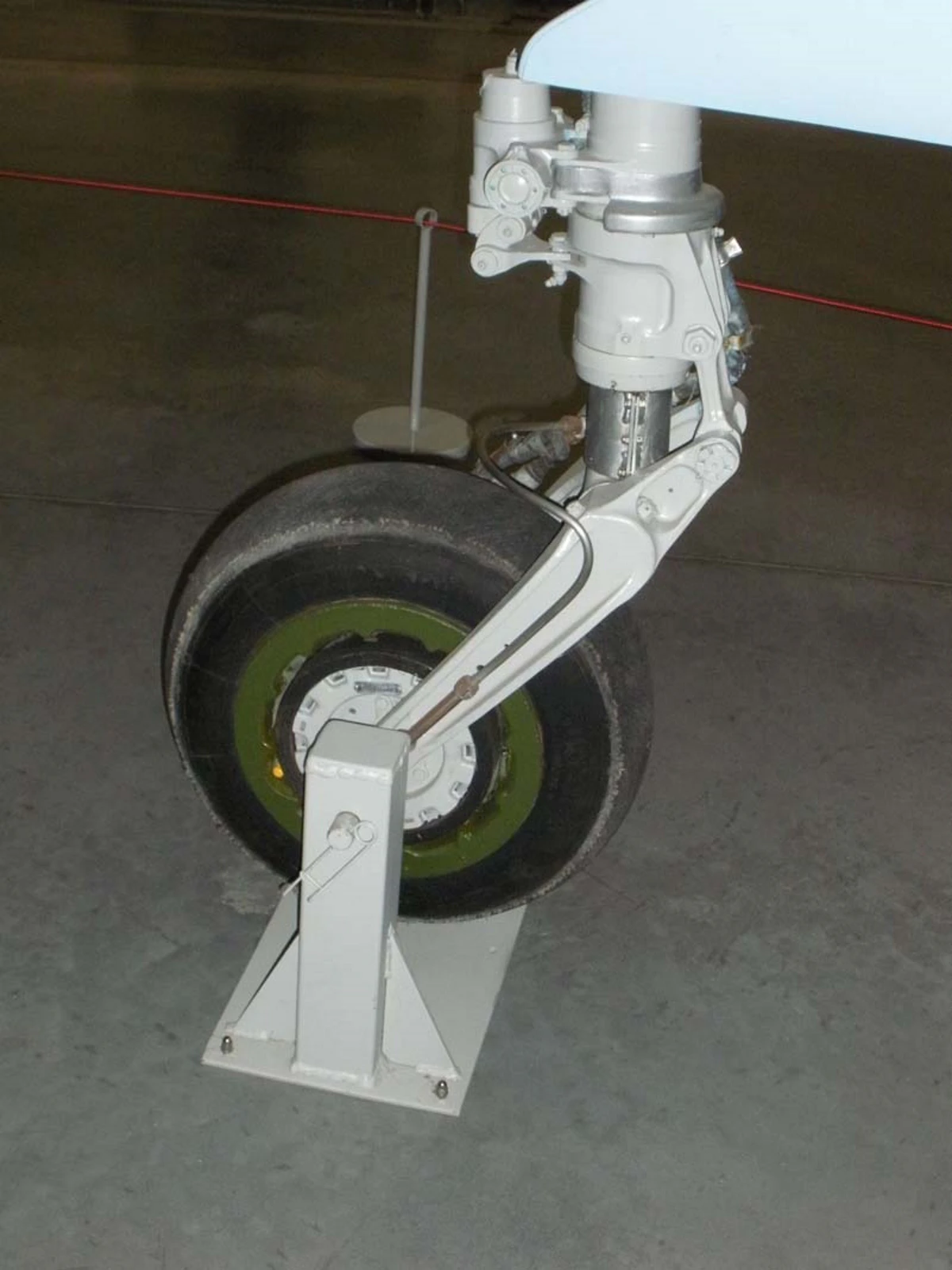
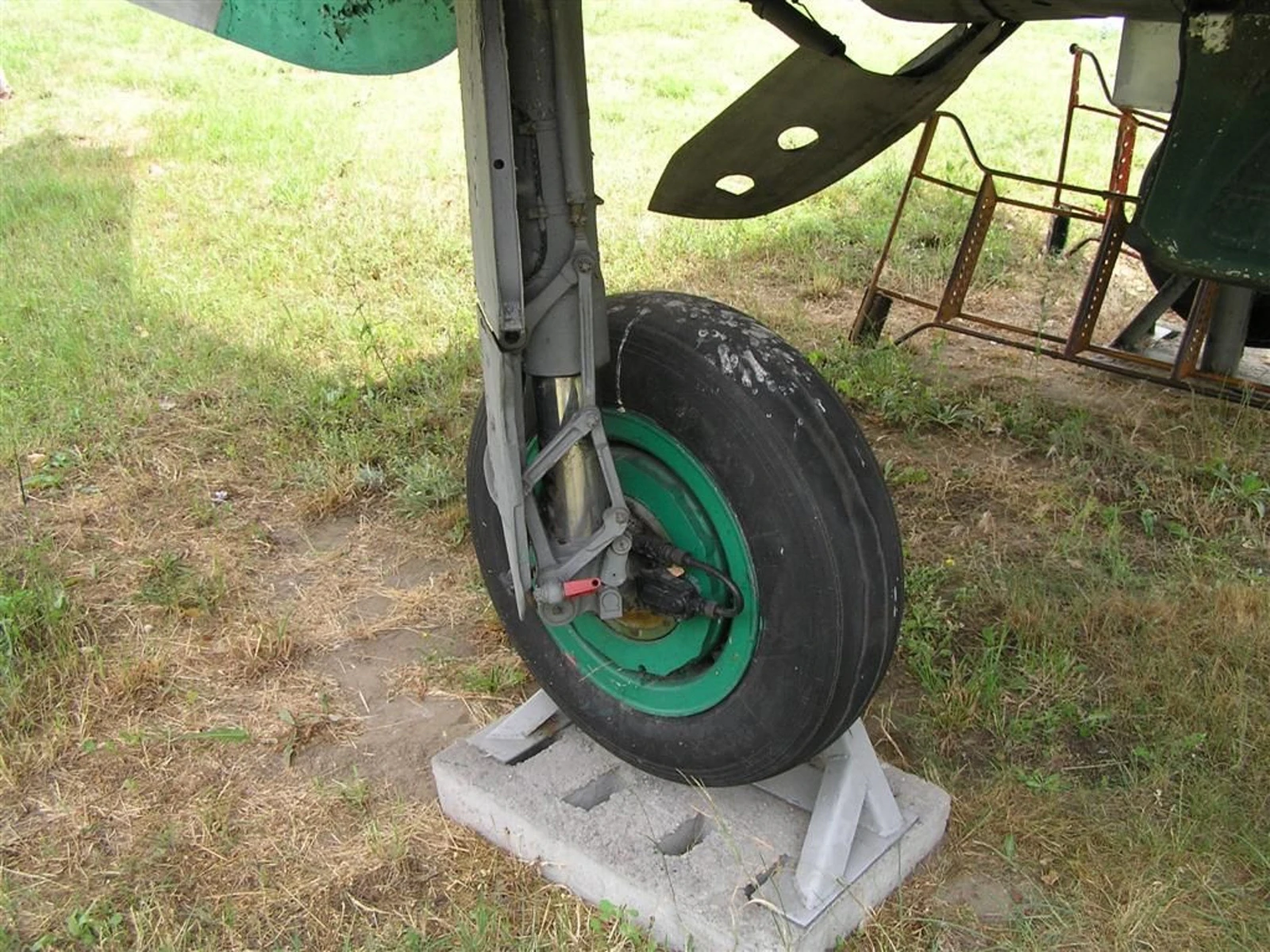
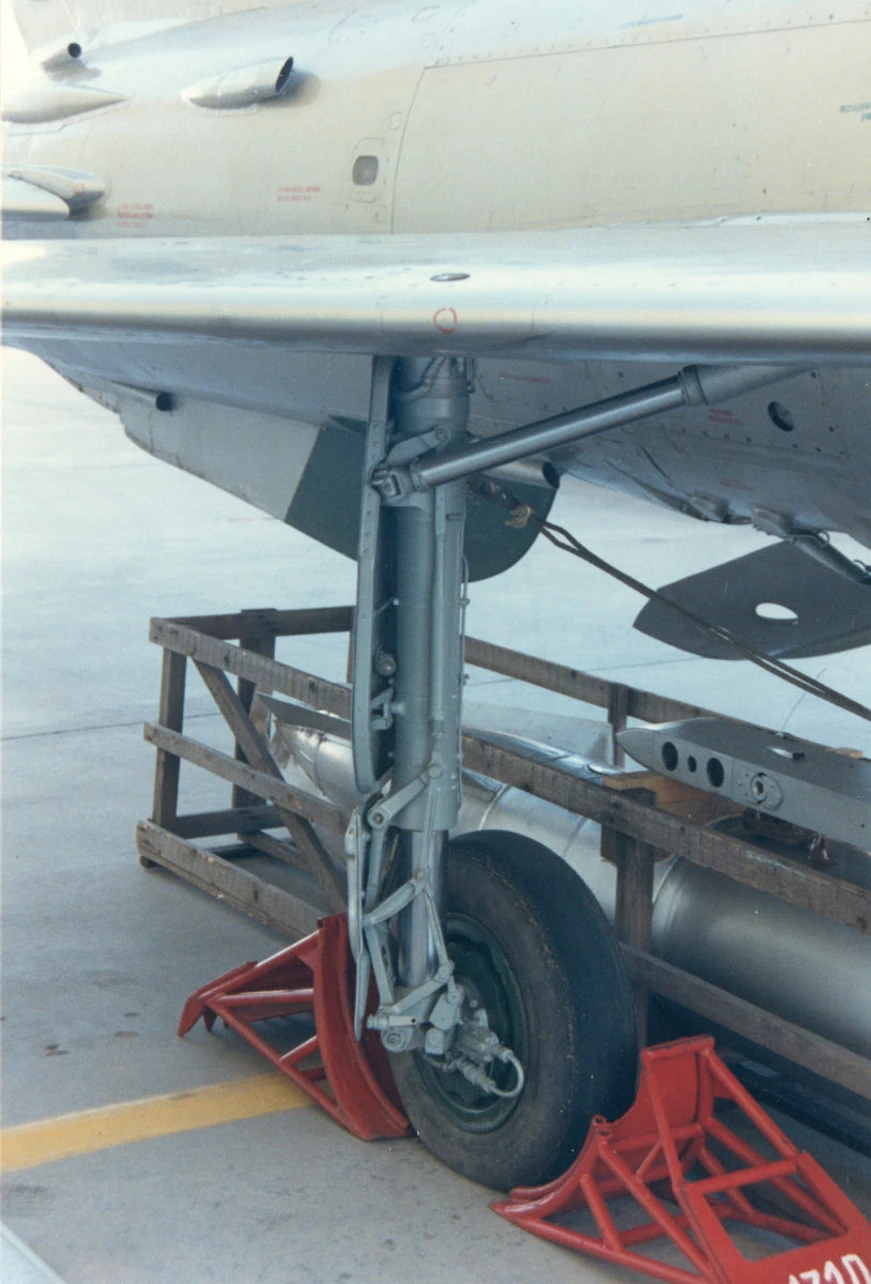
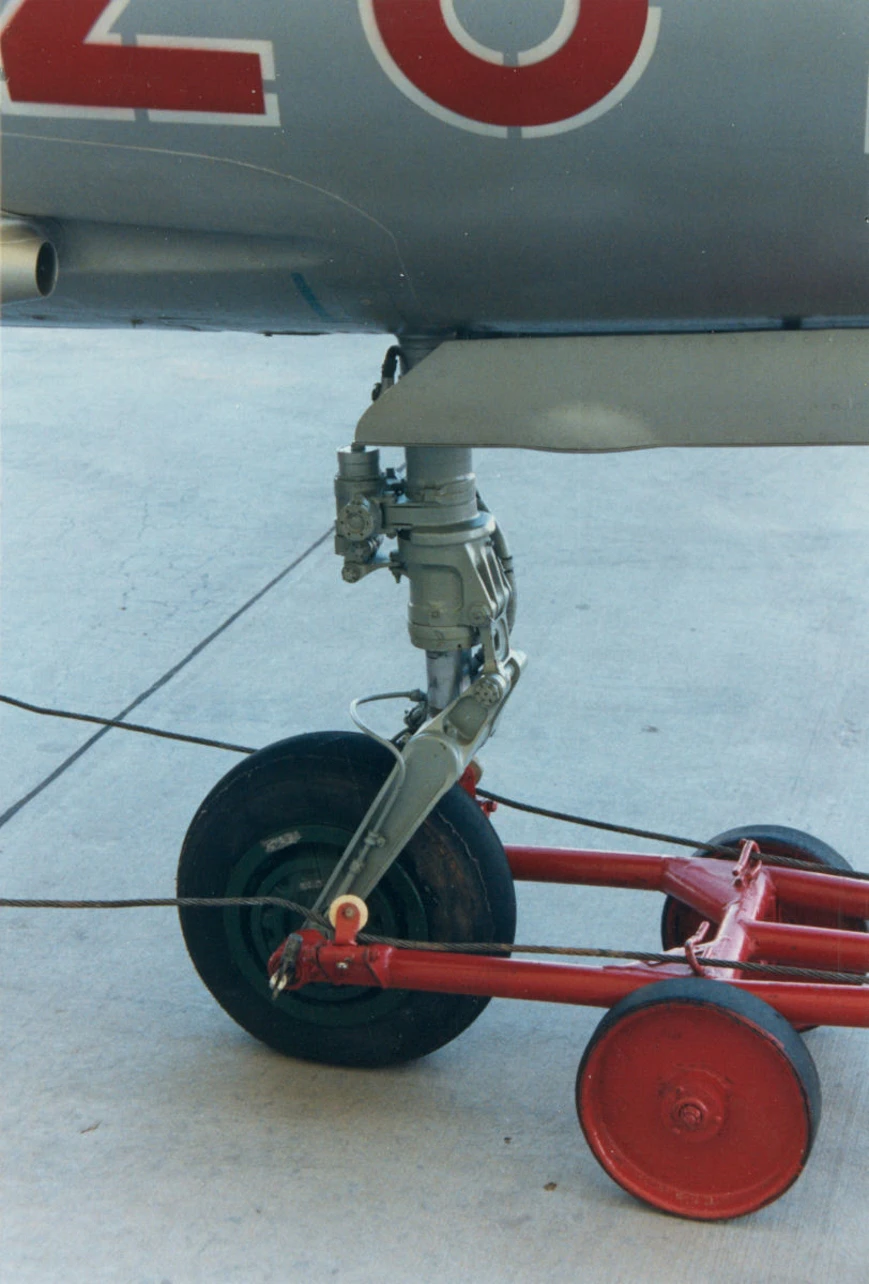
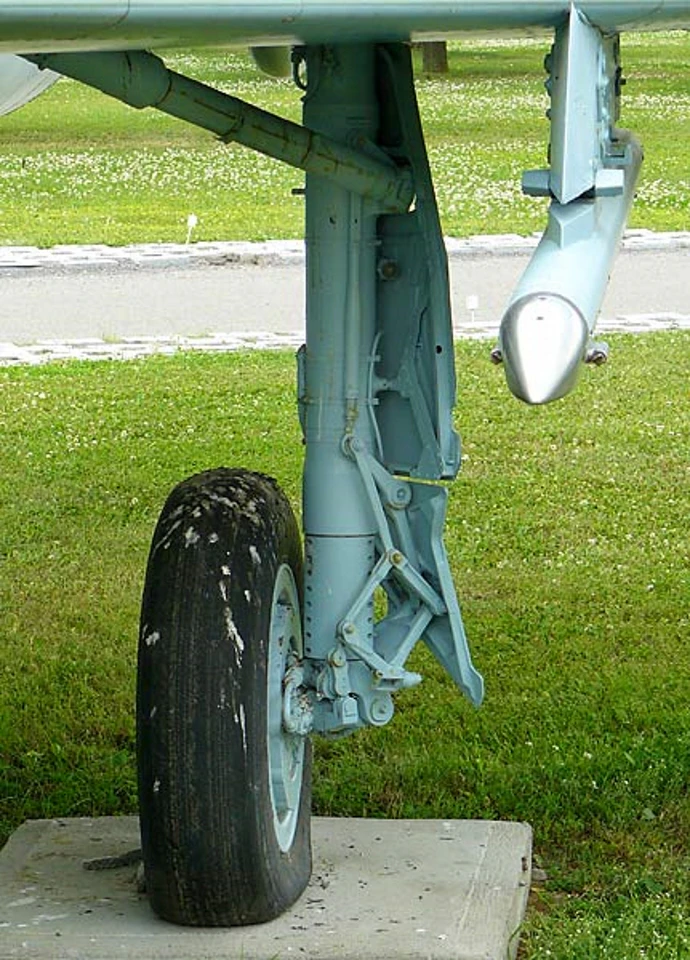
Larger Wheels:To handle the increased weight of the radar and fuel, the PF was fitted with larger main wheels. This required the addition of distinctive small “bulges” on the fuselage just above the wing roots where the wheels retracted.
Combat History: Lessons of the “No-Gun” Era
The Missing Cannon:Following the 1960s military doctrine that dogfights were dead, the PF had no internal gun. In Vietnam, North Vietnamese pilots often found themselves in positions where their missiles wouldn’t lock, but they had no gun to fire. This led to the development of the GP-9 external gun pod for later variants.
Vietnam “Hit-and-Run”:North Vietnamese PF pilots used their high speed and small radar cross-section to perform “GCI” (Ground Controlled Intercept) attacks, zooming in from behind US formations, firing a heat-seeking Atoll missile, and diving away before the escorts could react.
The Six-Day War:The MiG-21PF was the primary fighter for Egypt and Syria in 1967. While it was technically a match for the Israeli Mirage III, the lack of a gun proved to be a massive disadvantage in the turning dogfights over the Sinai.
The “Pencil” Legacy:Despite its flaws, the PF was produced in massive numbers (over 1,300 units). It served as the technological bridge to theMiG-21PFM, which added “blown flaps” for shorter landings and eventually brought back the gun.

 Koop een koffie voor mij

 Martin 4-0-4 – Foto's & Video's
 Bristol F.2 Fighter – Foto's &Video's
 Northrop JB-1 Bat – Foto's & Video's
 Convair F2Y Sea Dart – Foto's & Video's
 Miles Magister – Foto's & Video's
 Mikoyan-Gurevich MiG-19 – Foto's &video's
 Mig-27K – Foto's & Video
 MiG-15bis – Foto's & Video
 KFIR C-1 – WalkAround
 Lisunov Li-2 – WalkAround