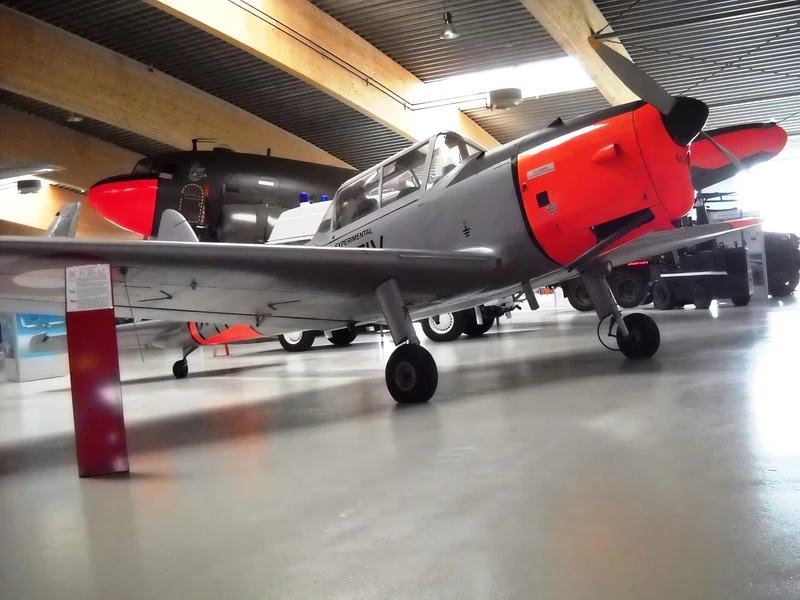
de Havilland Canada DHC-1 Chipmunk | |
|---|---|
| Šalies | JK + Kanada |
| Vaidmenį | Instruktorių orlaiviai |
| Pirmasis skrydis | 1946 m. gegužės 22 d. |
| Pastatytas | 1284 |
2007 de Havilland Canada DHC-1 burundukas yra tandeminis, dvivietis, vieno variklio pagrindinis mokomasis orlaivis, kurį suprojektavo ir sukūrė Kanados orlaivių gamintojas de Havilland Canada. Jis buvo sukurtas netrukus po Antrojo pasaulinio karo ir buvo parduodamas dideliais kiekiais artimiausiais pokario metais, paprastai naudojamas kaip de Havilland Tiger Moth biplano pakaitalas.
Šaltinis: de Havilland Canada DHC-1 Burundukas Vikipedijoje
| DHC-1 Chipmunk Walk Around | |
|---|---|
| Photographer | Josef Mezera |
| Localisation | Unkonw |
| Photos | 45 |
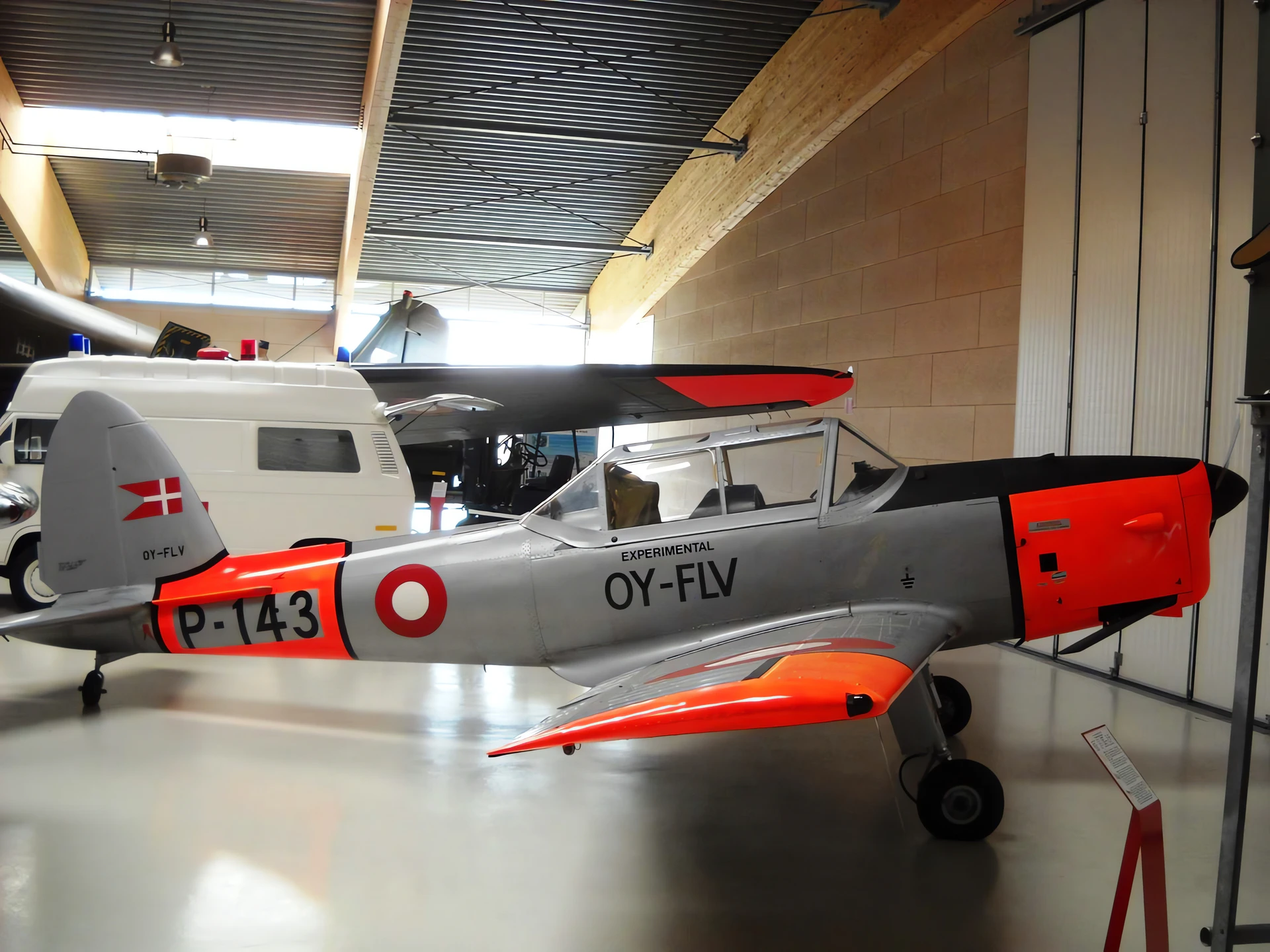
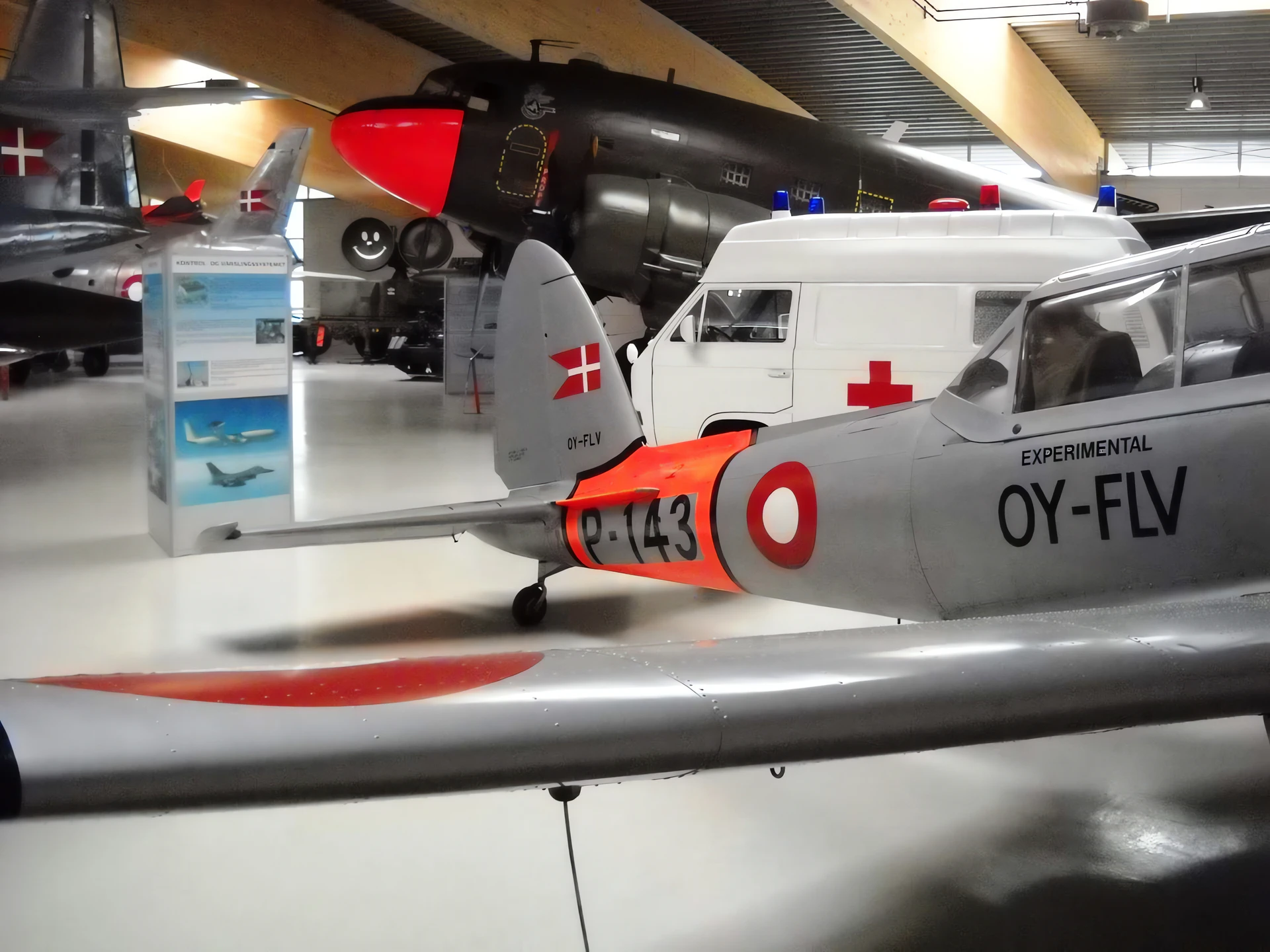
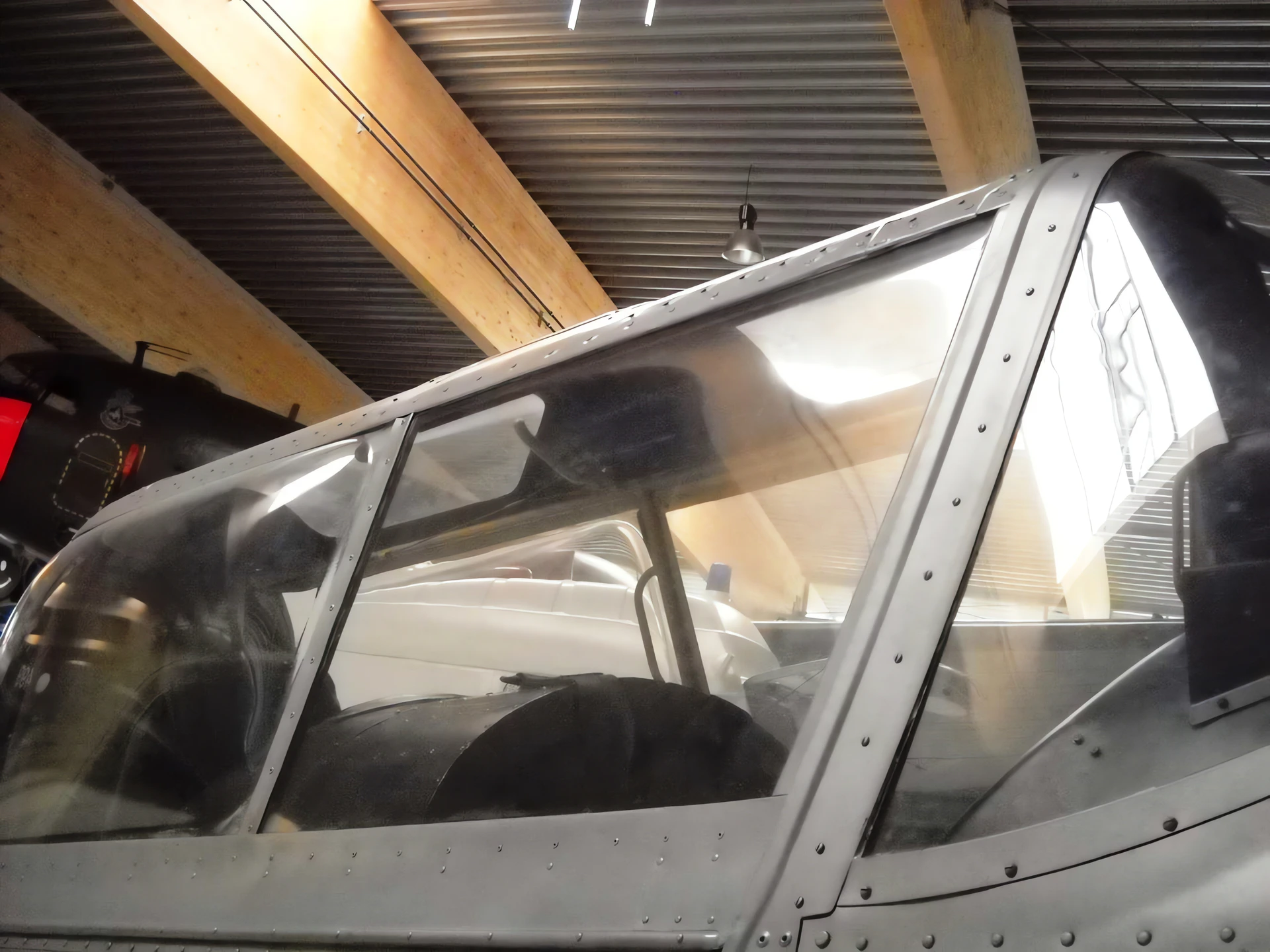
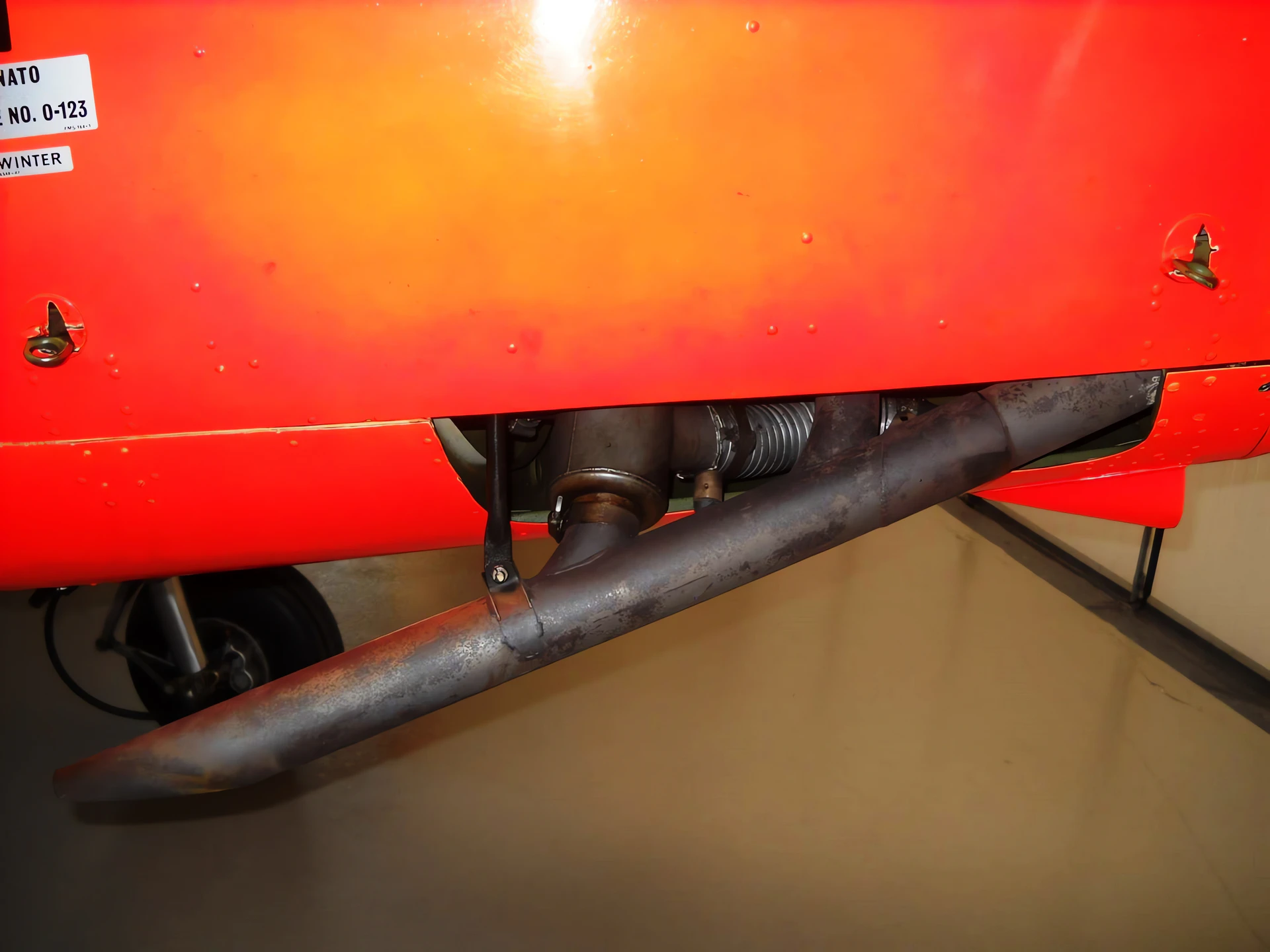
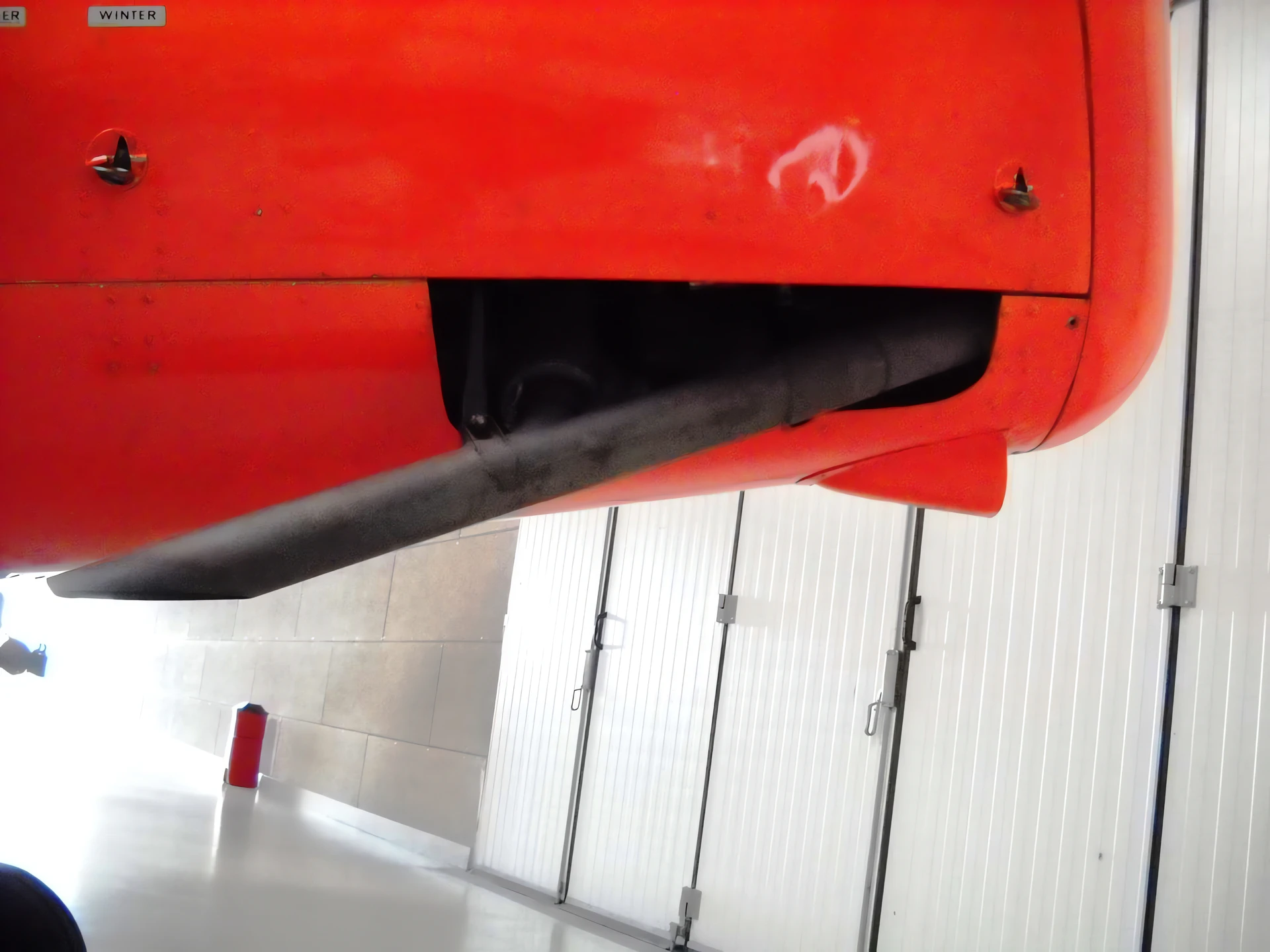
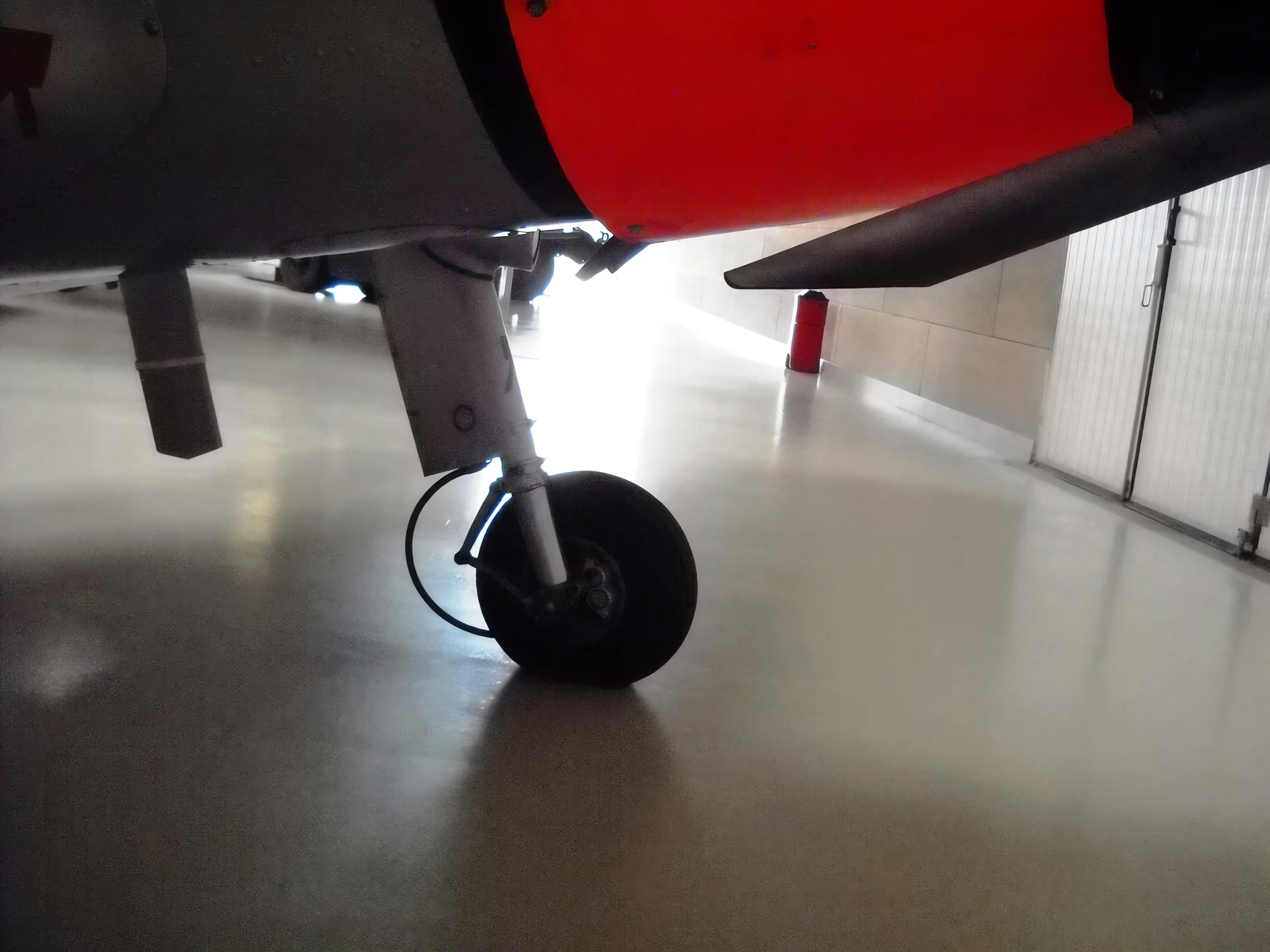

Taip pat žiūrėkite:


| De Havilland Canada DHC-1 ‘Chipmunk’ T.10 Walk Around | |
|---|---|
| Photographer | Ondrej Skarka |
| Localisation | Unkonw |
| Photos | 12 |
There is no gallery selected or the gallery was deleted.

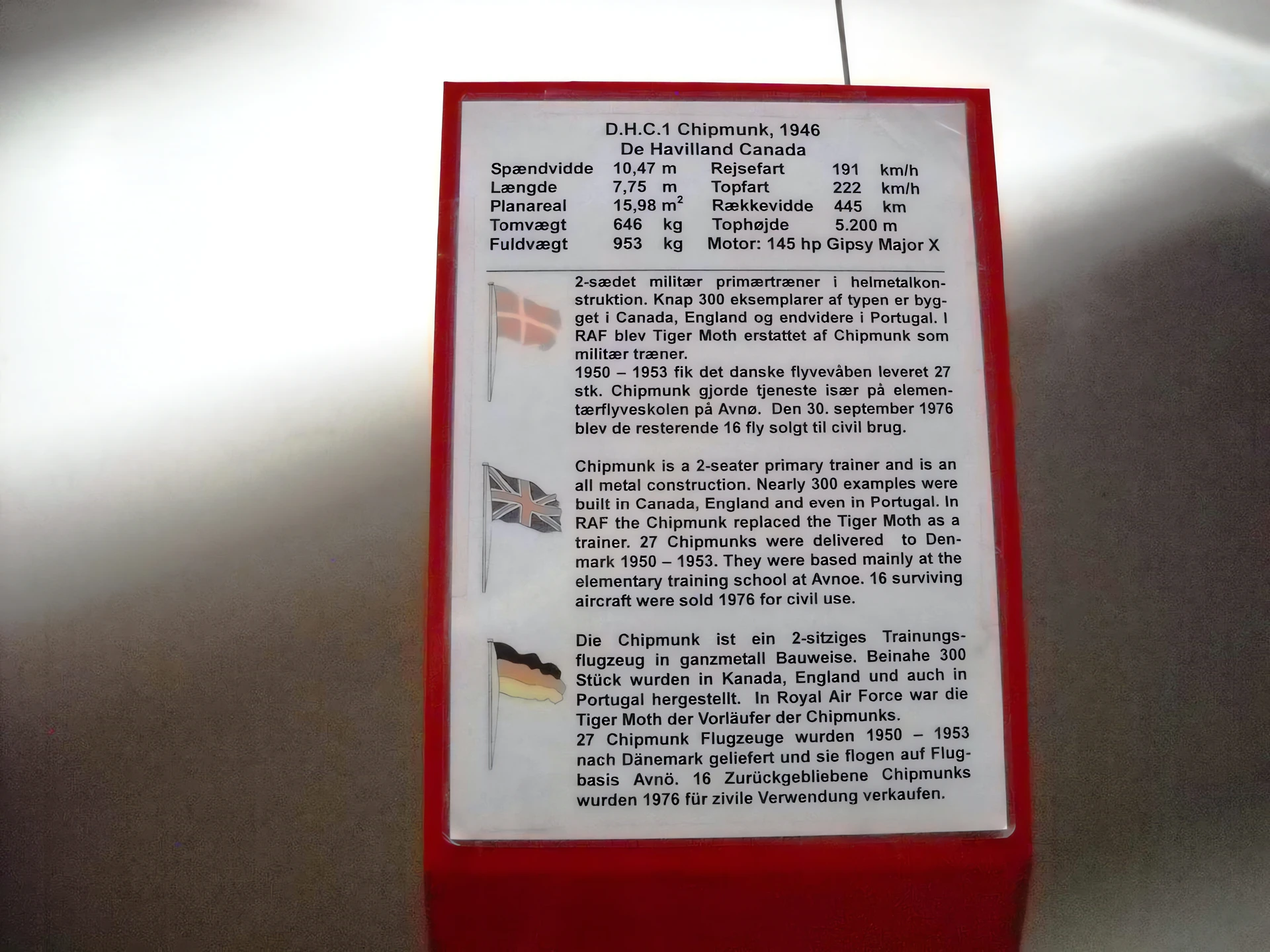
General Characteristics
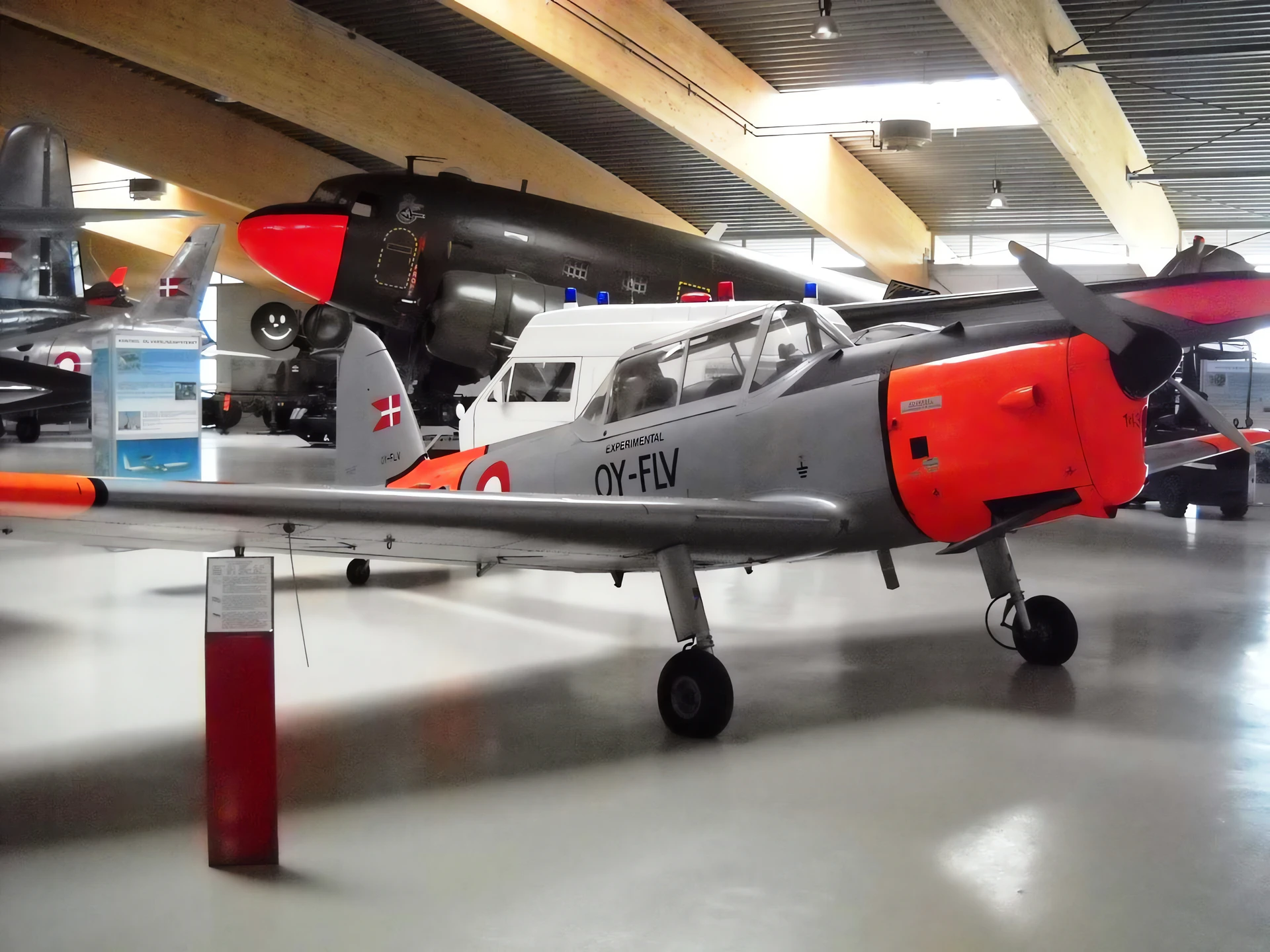
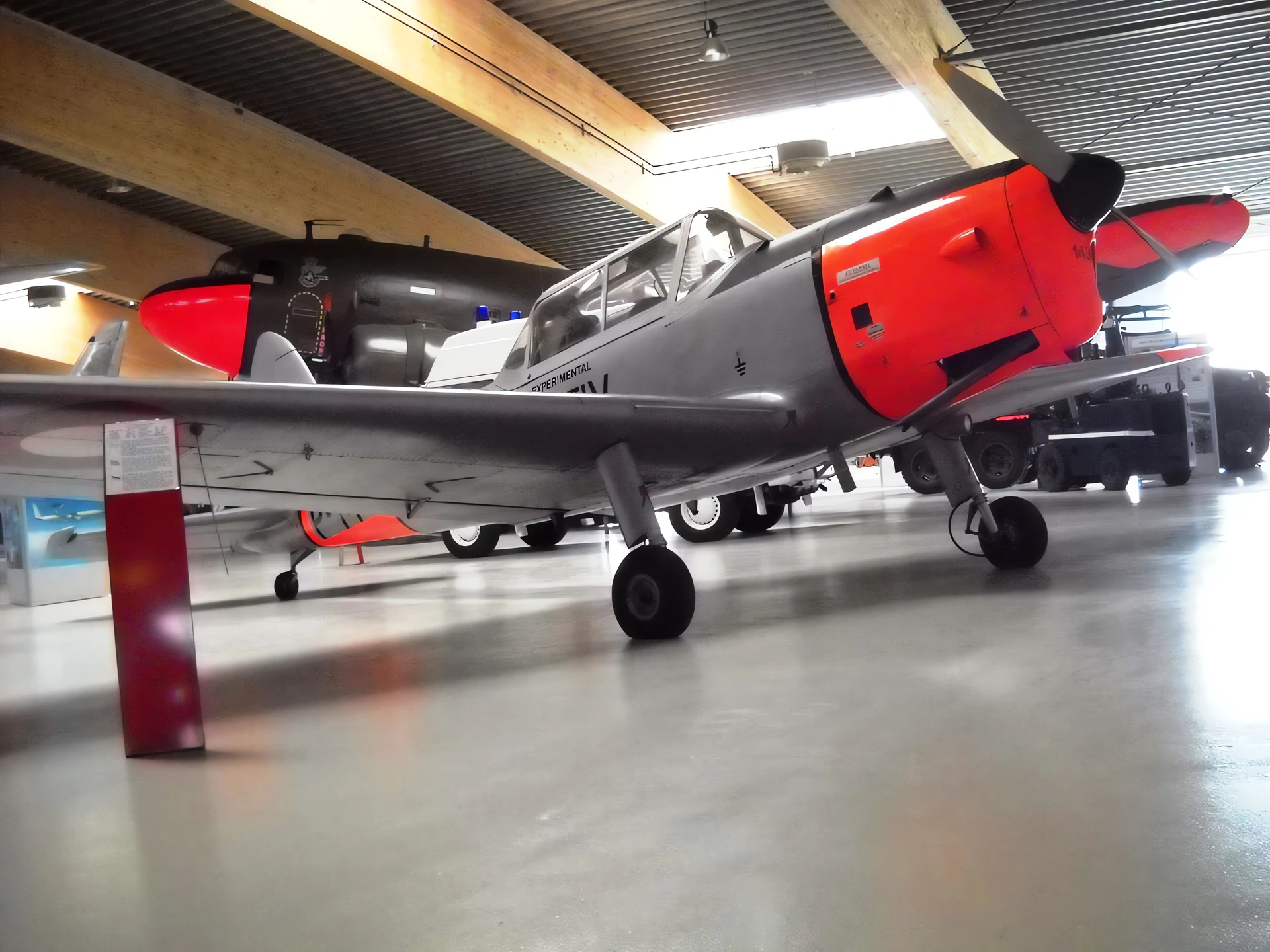
The de Havilland Canada DHC-1 Chipmunk (often nicknamed “Chippie”) is a tandem two-seat, single-engine primary trainer aircraft. It was the first aircraft designed and built by de Havilland Canada and was intended to replace the venerable **de Havilland Tiger Moth** biplane. The Chipmunk served as the standard basic trainer for the Royal Air Force (RAF), Royal Canadian Air Force (RCAF), and many other air forces from the late 1940s well into the 1990s.
| Property | Typical Value (T.Mk 10 Variant) |
|---|---|
| Vaidmenį | Primary Trainer / Aerobatic / Liaison |
| Gamintojas | de Havilland Canada (DHC), de Havilland UK, OGMA (Portugal) |
| First Flight | May 22, 1946 |
| No. Built | 1,284 (Total production) |
| Įgulos | 2 (Student and Instructor in tandem) |
| Ilgis | 7.75 m (25 ft 5 in) |
| Sparnų ilgis | 10.47 m (34 ft 4 in) |
| Max Takeoff Weight | 953 kg (2,100 lb) |
Design and Powerplant
- Engine: One de Havilland Gipsy Major 8 or 10-2 4-cylinder, air-cooled, inverted in-line piston engine.
- Power Output: 108 kW (145 hp).
- Construction: Predominantly all-metal fuselage and wings (stress-skinned alloy) with the control surfaces and the rear portion of the wings being fabric-covered.
- Configuration: Low-wing cantilever monoplane with a fixed conventional tailwheel landing gear. The cockpit features a clear perspex canopy providing excellent all-round visibility.
- Handling: Known for its delightful and responsive handling, making it an excellent platform for learning basic flight, instrument flying, and aerobatics.
Performance and Service
- Maximum Speed: Up to 222 km/h (138 mph, 120 knots) at sea level.
- Cruise Speed: Approximately 166 km/h (103 mph, 90 knots).
- Service Ceiling: 4,800 m (15,800 ft).
- Range: Approximately 417 km (259 mi, 225 nmi).
- Rate of Climb: 4.6 m/s (900 ft/min).
- Major Variants:
- Chipmunk T.Mk 10 (British-built for RAF, standard enclosed canopy).
- DHC-1B-2 (Canadian-built, often featuring a larger “bubble” canopy).
- Chipmunk Mk 23 (Agricultural/crop-spraying variant).
- Civilian Use: Hundreds of ex-military Chipmunks remain popular today with private owners for sport flying and aerobatics.
Peržiūrų : 996
Taip pat galite pamatyti:
 "McDonnell Douglas KC-10 Extender" – nuotraukos ir vaizdo įrašas
 McDonnell FH Phantom – nuotraukos ir vaizdo įrašas
 C-130J Hercules – nuotraukos ir vaizdo įrašas
 Macchi MC-200 – "WalkAround"
 PZL P.11 – WalkAround
 P-51 Mustang vol2 – Pasivaikščiojimas aplink
 Varpas P-63E KingCobra – WalkAround
 Vought F4U Corsair – WalkAround
 F4U-7 Corsair – WalkAround
 Douglas A-26 Invader – WalkAround