모리스 장갑차

모리스 CS9

국가영국
역할가벼운 장갑차
기간1936+
내장Unknow

차량은 모리스 Commercial C9 4×2 15 long cwt (760 kg) truck chassis. On this chassis, a riveted hull was mounted with an open-topped two-man turret. The armament consisted of either Boys anti-tank rifle and Bren light machine gun or Vickers machine gun. The vehicle carried a No. 19 radio set. The prototype was tested in 1936. A further 99 cars were ordered and were delivered in 1938. Thirty-eight of these cars were used by the 12th Royal Lancers in the Battle of France, where all of them were destroyed or abandoned. Another 30 served with the 11th Hussars in the North African Campaign. It was found that, when fitted with desert tyres, the vehicle had good performance on soft sand. However, its armour and armament were insufficient. The vehicle was retired halfway through the North African Campaign.

소스: 모리스 CS9 위키 백과에

계속 읽기

조회수:933

ATF 딩고 2A2-A2.3

ATF 딩고

국가독일
역할보병 이동성 차량
서비스 중2000년 - 현재
내장Unknow

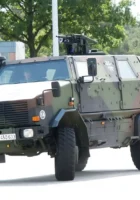
Tthe ATF 딩고 is a German heavily armored military MRAP infantry mobility vehicle based on a Unimog chassis with a V-hull design, produced by the company Krauss-Maffei Wegmann (KMW). The first prototype of the Dingo 1 was completed in 1995 and the first production Dingo 1 entered service in 2000 with the German Army. It is designed to withstand land mines, rifle fire, artillery fragments and NBC-threats. ATF stands for Allschutz-Transport-Fahrzeug, meaning all-protected transport vehicle in German. It is named after the Australian native dog, the dingo. The Dingo 2 entered service in late 2004 after undergoing trials from November 2003-May 2004. Currently KMW is developing the Dingo 2 GFF for the German Army with increased internal volume. Textron signed an exclusive deal to produce and market KMW’s Dingo in the United States. However, Textron chose its own more expensive and heavier M1117 Armored Security Vehicle for the MRAP competition, which did not receive a contract.

소스: ATF 딩고 위키 백과에

계속 읽기

전망 : 1286

영국 항공기 제트 주지사 T.Mk.5A

BAC 제트 프로보스트

국가영국
역할군사 트레이너 항공기
첫 비행1954년 6월 26일
내장734

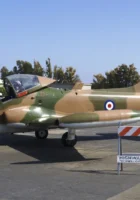
Tthe BAC 제트 프로보스트 는 1955년부터 1993년까지 영국 공군(RAF)과 함께 사용하던 영국 제트 트레이너 항공기입니다. 그것은 원래 초기 피스톤 엔진 구동 Percival Provost 기본 트레이너에서 헌팅 퍼시발에 의해 개발되었고, 나중에 영국 항공기 공사 (BAC)에 의해 생산되었습니다. 여러 RAF 명령 외에도 때로는 경무장을 갖춘 제트 프로보스트 (Jet Provost)가 전 세계 많은 공군에 수출되었습니다. 이 디자인은 또한 BAC Strikemaster라는 이름으로보다 중무장 한 지상 공격 변형으로 더욱 발전되었습니다.

소스: BAC Jet Provost on Wikipedia

계속 읽기

조회수:960

Sd.Kfz. 250 war

Sd.Kfz. 250

국가독일
형식하프 트랙 장갑차
서비스 중1941–1945
내장6600+

Tthe Sd.Kfz. 250 (German: Sonderkraftfahrzeug 250; ‘special motor vehicle’) was a light armoured half-track, very similar in appearance to the larger Hanomag-designed Sd.Kfz. 251, and built by the DEMAG firm, for use by Nazi Germany in World War II. Most variants were open-topped and had a single access door in the rear. The Sd. Kfz 250 was adopted in 1939 to supplement the standard half-track. Production delays meant that the first vehicle did not appear until mid-1941.

소스: Sd.Kfz. 250 위키백과에

계속 읽기

Views : 3496

슈나이더 CA1

슈나이더 CA1

국가프랑스
형식중전차
서비스 중1916-1918 (프랑스) / 1921-1936 (스페인)
내장400

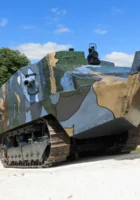
Tthe 슈나이더 CA 1 (originally named the Schneider CA) was the first French tank, developed during the First World War. The Schneider was inspired by the need to overcome the stalemate of trench warfare which on the Western Front prevailed during most of the Great War. It was designed specifically to open passages for the infantry through barbed wire and then to suppress German machine gun nests. After a first concept by Jacques Quellennec devised in November 1914, the type was developed from May 1915 onwards by engineer Eugène Brillié, paralleling British development of tanks the same year. Colonel Jean Baptiste Eugène Estienne in December 1915 began to urge for the formation of French armoured units, leading to an order in February 1916 for four hundred Schneider CA tanks, which were manufactured by SOMUA, a subsidiary of Schneider located in a suburb of Paris, between September 1916 and August 1918.

소스: 슈나이더 CA1 온 위피데디아

계속 읽기

조회수: 1877

오펠 올림피아

오펠 올림피아

국가독일
형식자동차
생산1935–1970
내장Unknow

Tthe 오펠 올림피아 is a compact car produced by the German automaker Opel from 1935 to 1940, from 1947 to 1953 and again from 1967 to 1970. The 1935 Olympia was Germany’s first mass-produced car with an all-steel unitized body (monocoque). This revolutionary technology reduced the weight of the car by 180 kilograms (400 lb.) compared to its predecessor. Production of the unibody design required new production methods and materials. Spot welding, advanced types of steel, and a new production line layout were among the many advances introduced by the Olympia.

소스: 오펠 올림피아 온 위키백과

계속 읽기

조회수 : 1704

바르티니 벨리예프 VVA-14

바르티니 벨리예프 VVA-14

국가소련
형식수륙 양용 ASW 항공기
첫 비행1972년 9월 4일
내장2

Tthe 바르티니 벨리예프 VVA-14 Vertikaşno-Vzletayushchaya 암피비야 (수직 이륙 amphibious 항공기)는 1970 년대 초 소련에서 개발 된 날개 인 지상 효과 항공기였다. 물에서 이륙하여 장거리에서 고속으로 비행할 수 있도록 설계된 이 비행은 고도가 높은 곳에서 진정한 비행을 할 수 있을 뿐만 아니라 공기역학적 지상 효과를 사용하여 해표면 바로 위를 효율적으로 비행할 수 있는 능력을 갖추게 되었습니다. VVA-14는 이탈리아 태생의 디자이너 로버트 바르티니가 미국 해군 폴라리스 미사일 잠수함을 파괴해야 한다는 인식된 요건에 대한 답변으로 설계되었습니다. 최종 항공기는 1987년에 폐기되었습니다.

소스: 바르티니 벨리예프 VVA-14 온 위키

계속 읽기

Views : 3495

룬급 에크라노플란

룬급 에크라노플란

국가소련
역할공격/수송 지상 효과 차량
서비스 중 1987년~1990년대 후반
내장2

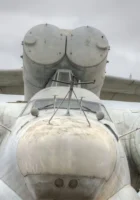
Tthe 룬급 에크라노플란 (also called Project 903) is a ground effect vehicle (GEV) designed by Rostislav Alexeyev in 1975 and used by the Soviet and Russian navies from 1987 until sometime in the late 1990s. It flew using lift generated by the ground effect acting on its large wings when within about four metres (13 ft) above the surface of the water. Although they might look similar to traditional aircraft, ekranoplans like the Lun are not classified as aircraft, seaplanes, hovercraft, or hydrofoils. Rather, crafts like the Lun-class ekranoplan are classified as maritime ships by the International Maritime Organization due to their use of the ground effect, in which the craft glides just above the surface of the water.

소스: 위키백과에 룬 클래스 에크라노플란

계속 읽기

조회수 : 1802