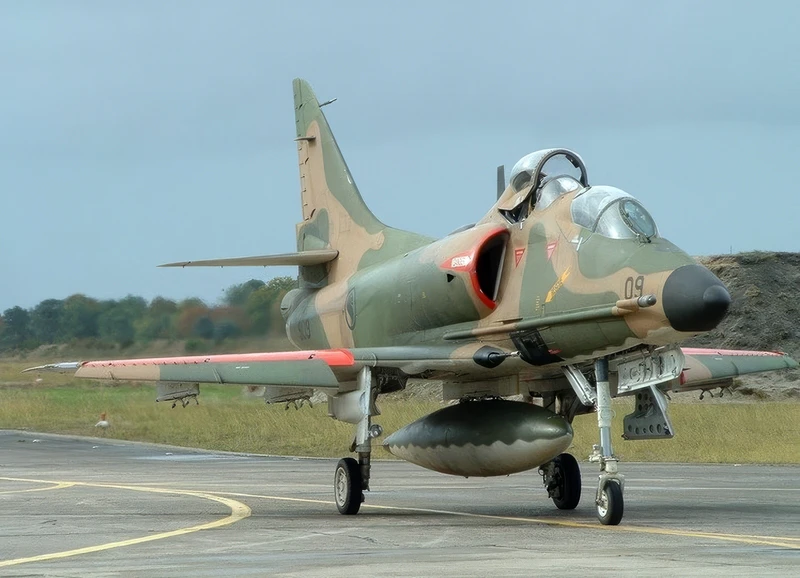
ST Aerospace A-4SU Super Skyhawk | |
|---|---|
| Paese | Repubblica di Singapore |
| Ruolo | Cacciabombardiere, addestratore a getto avanzato |
| Primo volo | 19 settembre 1986 |
| Costruito | 150 |
Le ST Aerospace A-4SU Super Skyhawk è un importante progetto di aggiornamento del velivolo d'attacco Douglas A-4S Skyhawk intrapreso da Singapore Aircraft Industries (SAI, ora ST Aerospace) nel 1980. È stato utilizzato esclusivamente dalla Republic of Singapore Air Force (RSAF), servendo nel ruolo di cacciabombardiere dal 1989 fino al ritiro dal servizio di prima linea nel 2005. Dalla metà del 1999, l'A-4SU ha assunto il ruolo aggiuntivo di essere il velivolo da addestramento avanzato (AJT) designato per il programma di addestramento AJT della RSAF a Cazaux, in Francia.
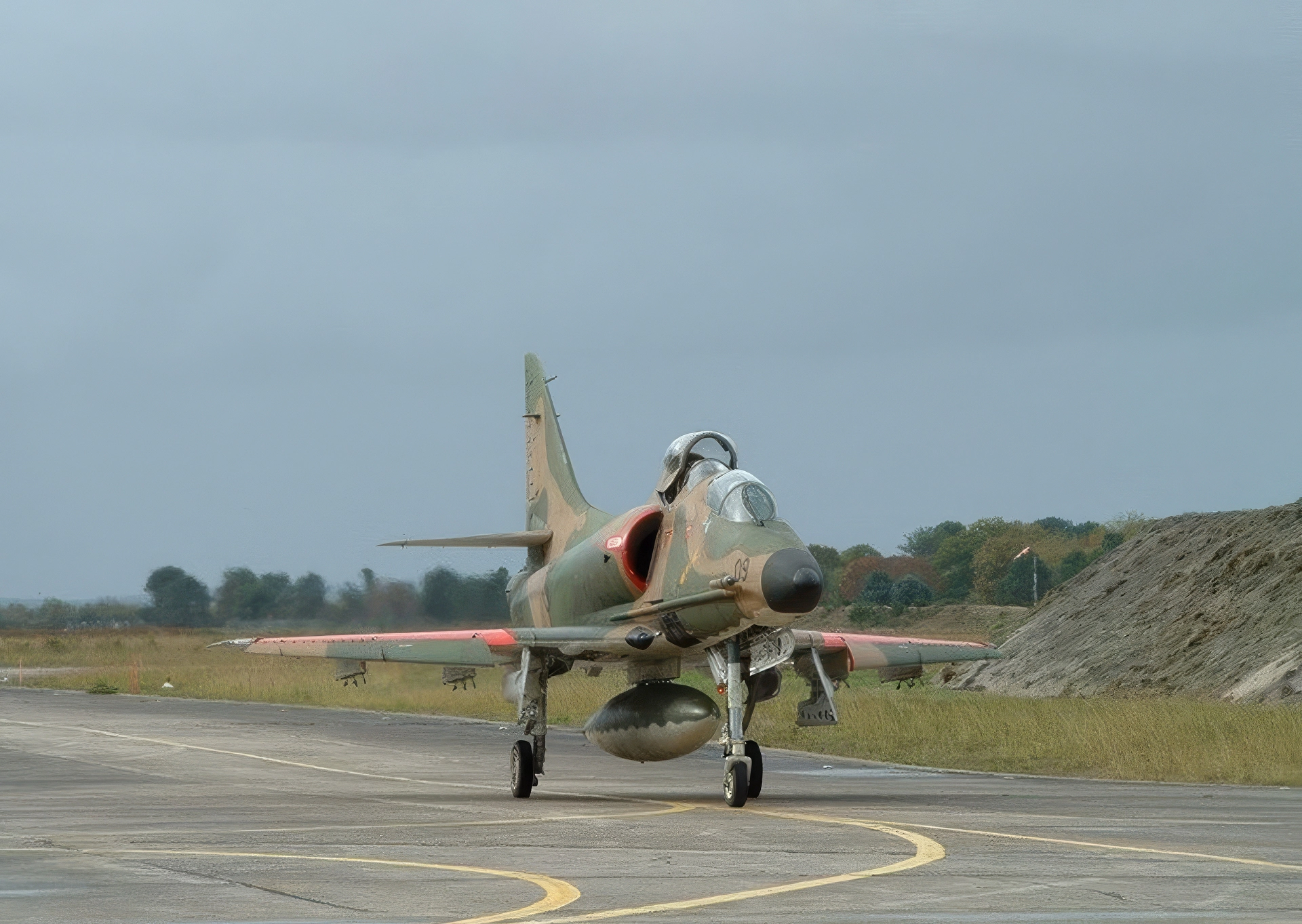
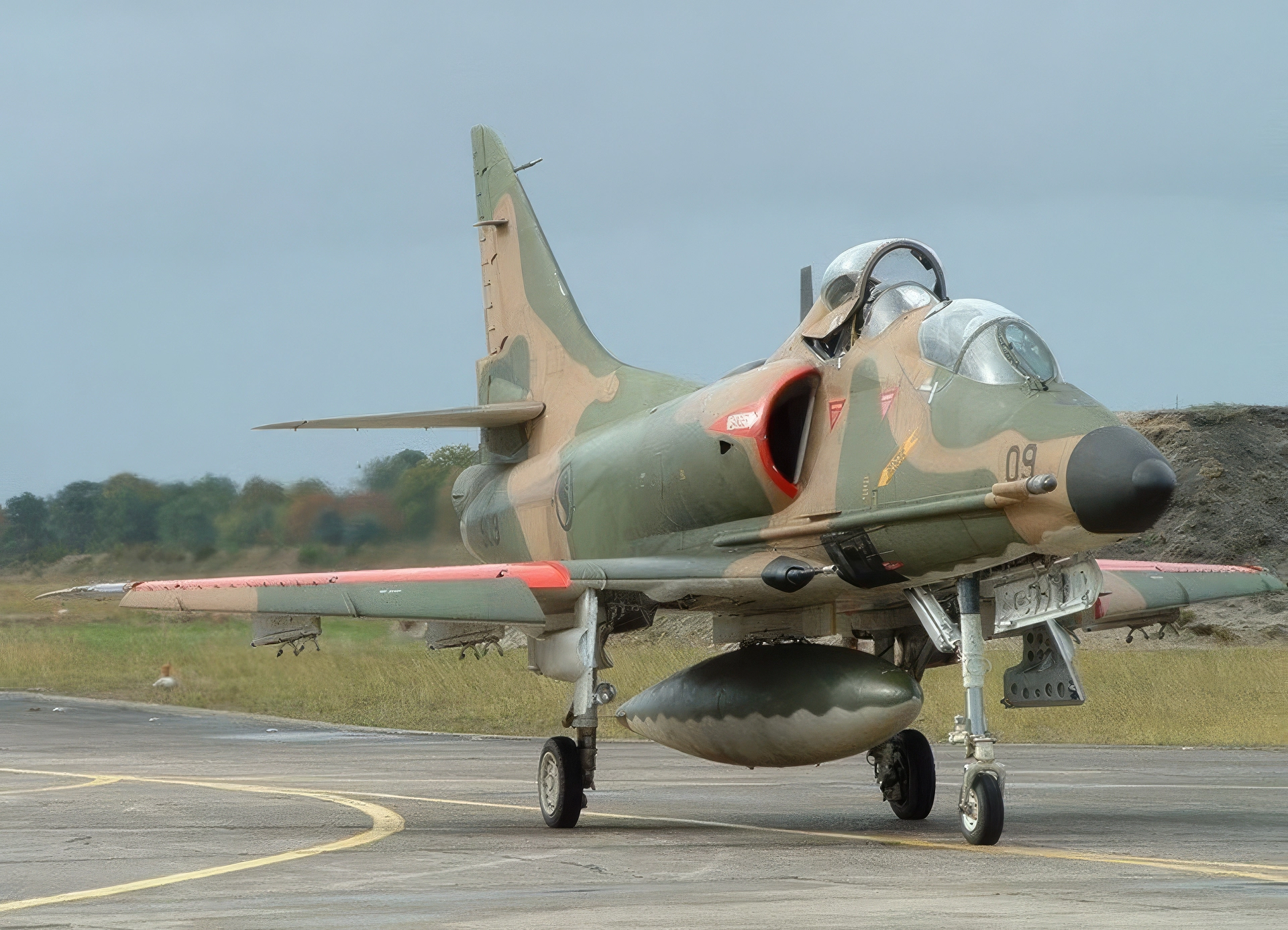
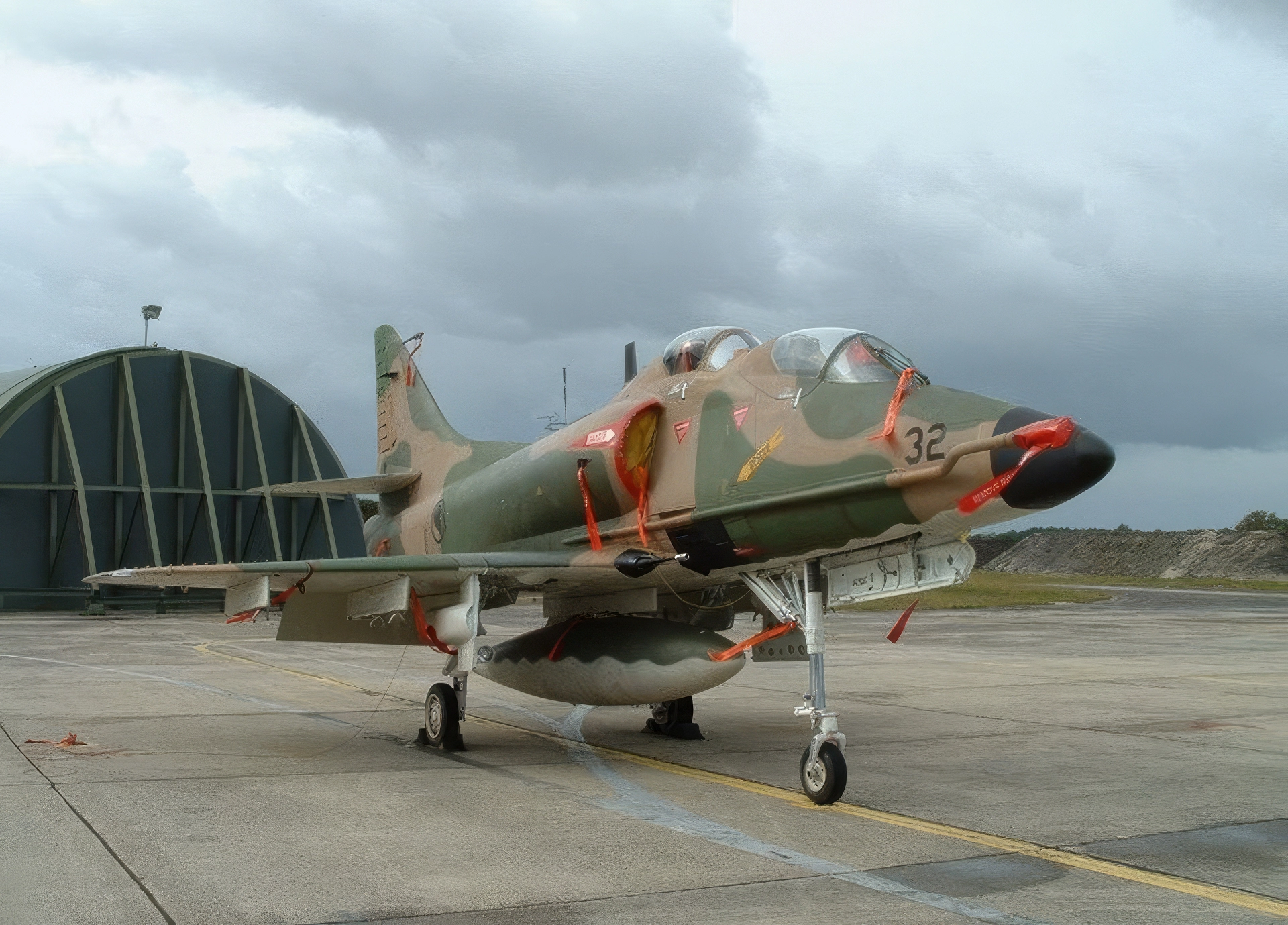
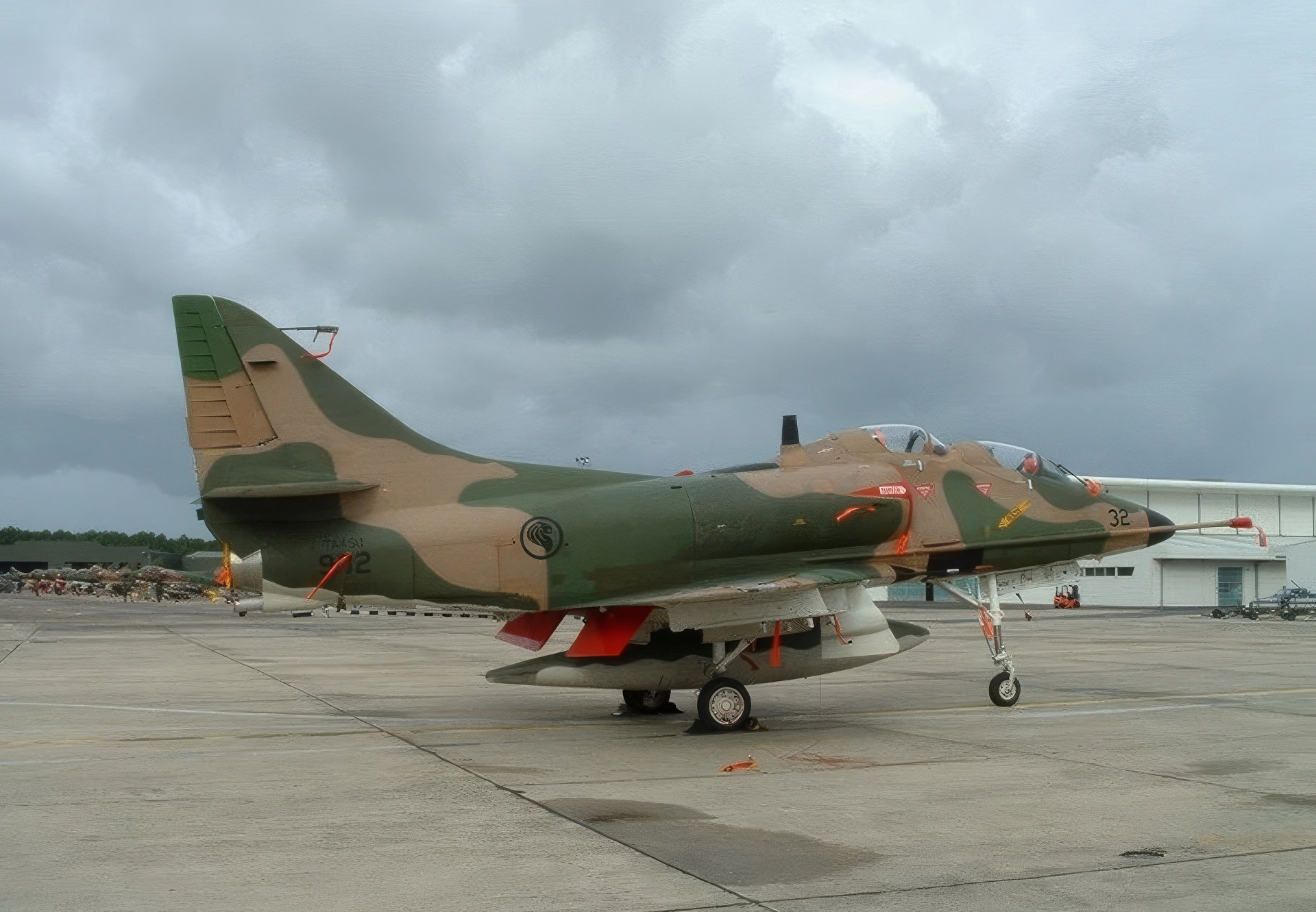
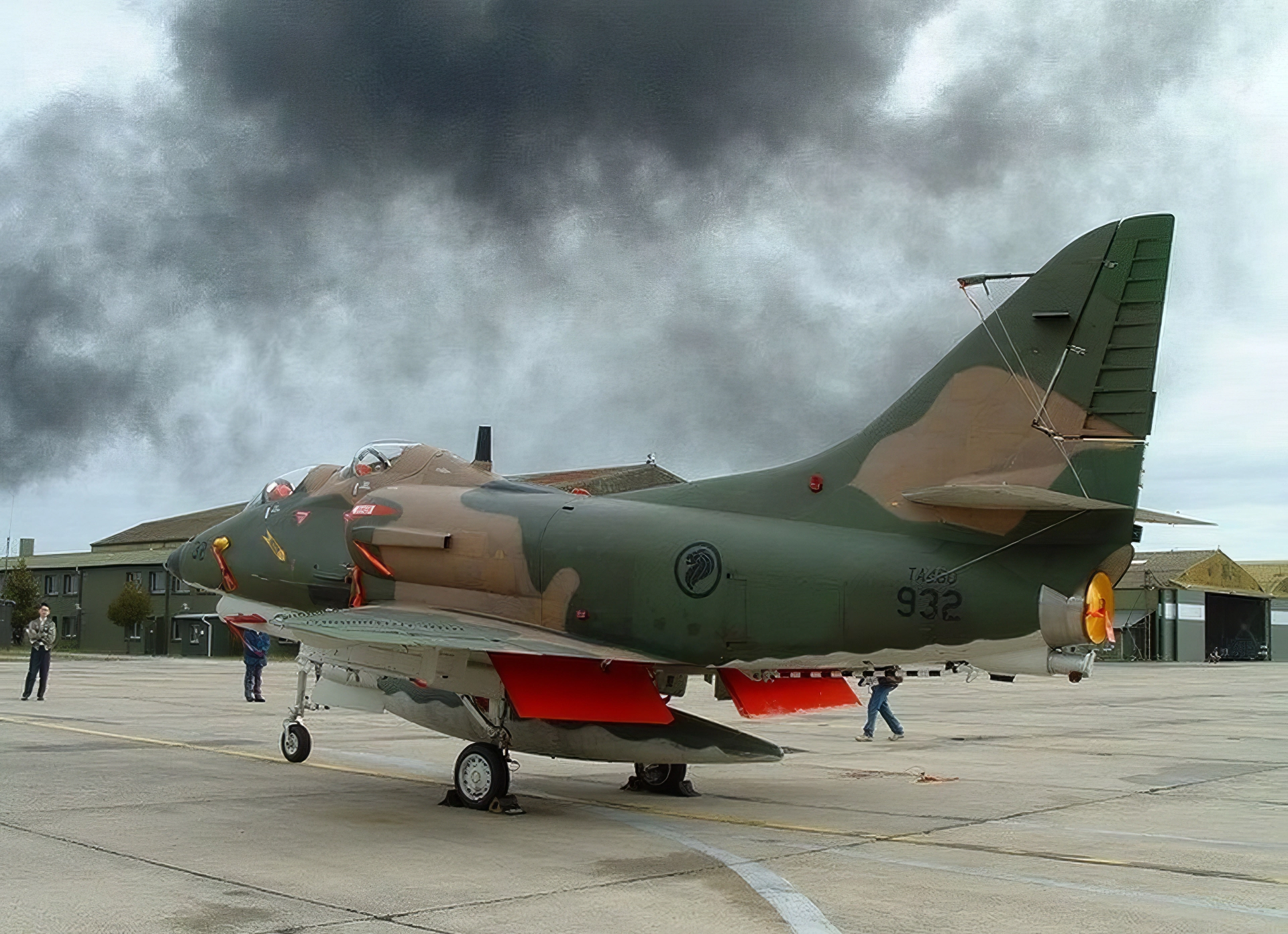
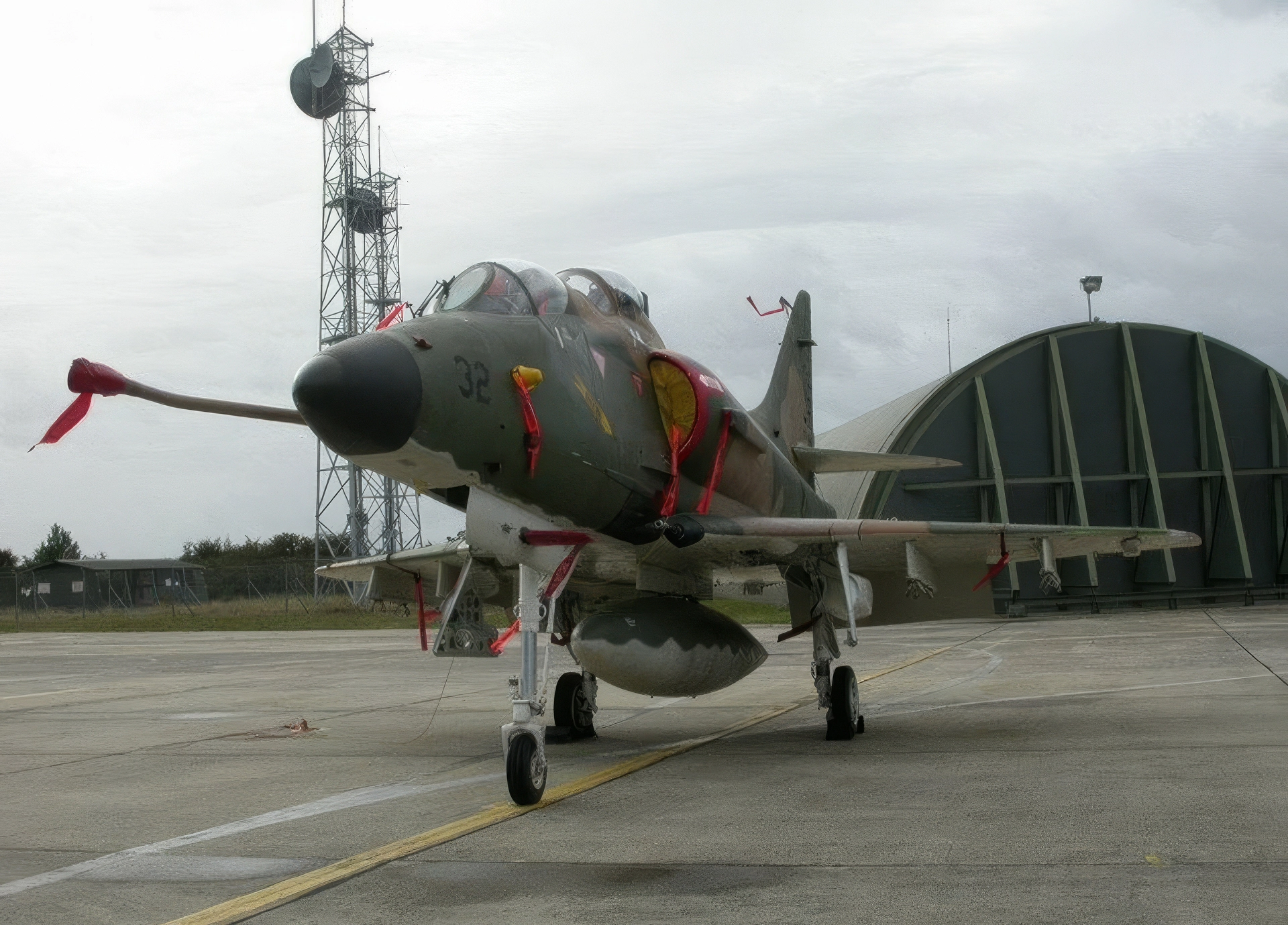
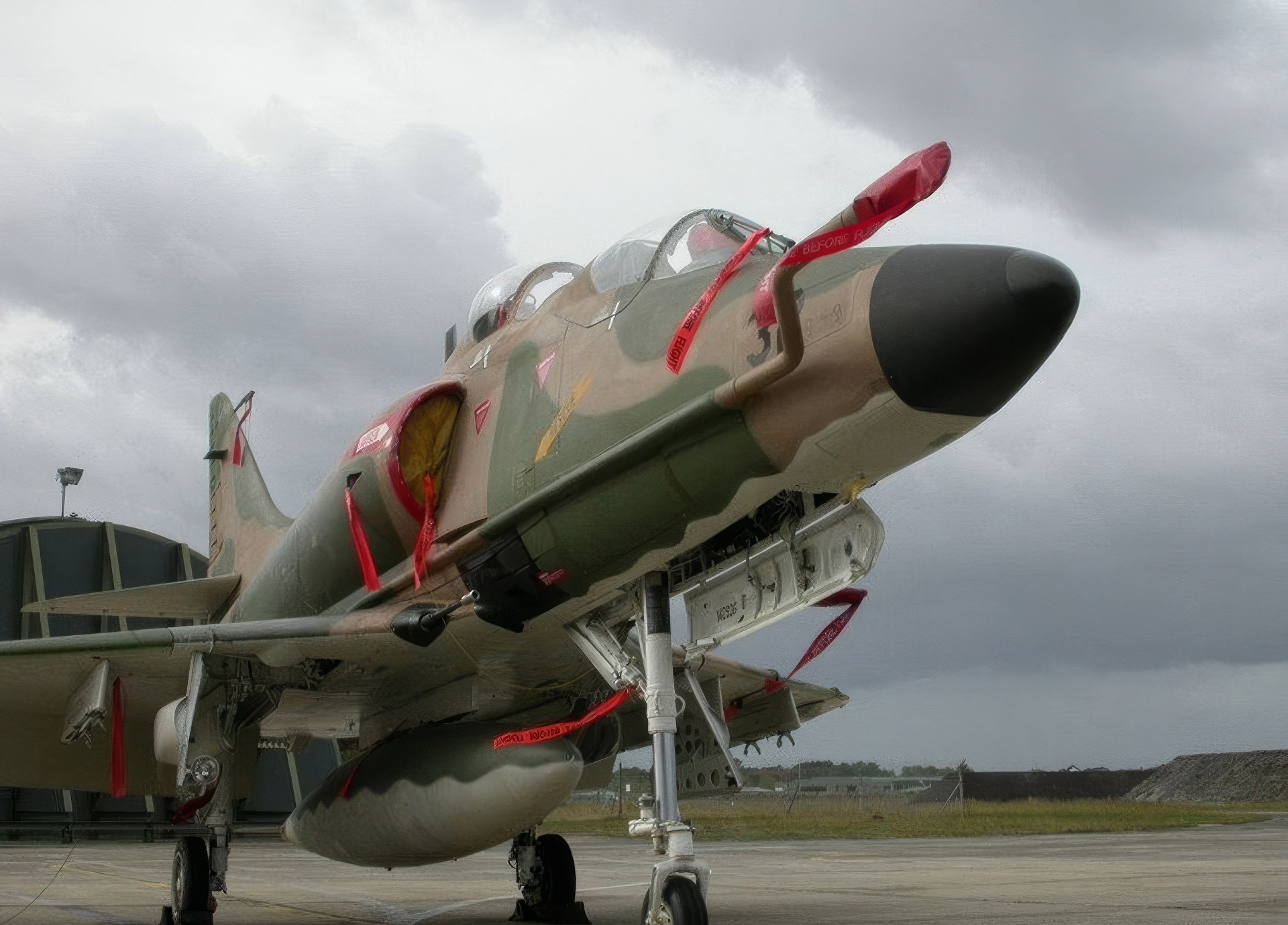
| TA-4SU Skyhawk Walk Around | |
|---|---|
| Fotografo | Robert Verhegghen |
| Localizzazione | Inconsapevole |
| Foto | 67 |




Vedi anche:


General Characteristics and Upgrade
The TA-4SU Super Skyhawk is the two-seat trainer variant of the A-4SU Super Skyhawk, which was a major modernization of the Douglas A-4S/A-4S-1 Skyhawk attack aircraft carried out by Singapore Technologies Aerospace (ST Aerospace) for the Republic of Singapore Air Force (RSAF) in the late 1980s. The upgrade transformed the aircraft by replacing its original underpowered engine with a modern turbofan and installing advanced avionics. The TA-4SU is unique among Skyhawk trainers, featuring a 710 mm (28 inch) fuselage plug and two completely separate cockpits, each with its own canopy, giving the rear-seat instructor excellent forward visibility. It was used for operational conversion and advanced jet training.
| Property | Typical Value (TA-4SU Trainer) |
|---|---|
| Ruolo | Advanced Jet Trainer / Combat Trainer |
| National Origin | United States (Original) / Singapore (Upgrade) |
| Produttore | ST Aerospace (Upgrade) |
| Service Entry (SU Variant) | 1989 |
| Equipaggio | 2 (Student and Instructor) |
| Length Overall | Approx. 13.10 m (43 ft) (Longer than single-seater due to plug) |
| Apertura alare | 8.38 m (27 ft 6 in) |
| Altezza | 4.57 m (15 ft 0 in) |
| Max Takeoff Weight | 10,205 kg (22,500 lb) |
Powerplant and Performance
- Engine: One General Electric F404-GE-100D non-afterburning turbofan engine.
- Thrust: 48.4 kN (10,800 lbf).
- Note: This replacement improved climb rate by 35% and acceleration by 40% compared to the original J65 turbojet.
- Maximum Speed: 1,128 km/h (701 mph; 609 knots).
- Rate of Climb: Approx. 55 m/s (10,913 ft/min).
- Ferry Range: 3,220 km (2,000 mi) with 3 external drop tanks.
- Service Ceiling: 12,192 m (40,000 ft).
Armament and Avionics
- Fixed Armament: 2 x 30 mm ADEN cannons (200 rounds/gun).
- Hardpoints: 5 total (1 centreline, 4 underwing) with a capacity of 4,500 kg (9,900 lb).
- Ordnance Capability: Can carry a variety of munitions, including:
- Air-to-Air Missiles: AIM-9 Sidewinder.
- Air-to-Surface Missiles: AGM-65 Maverick.
- Bombs: Paveway Laser-Guided Bombs (LGBs) and Mark 80 series unguided bombs.
- Avionics Upgrade: The suite includes a GEC/Ferranti 4510 Head-up display (HUD), Litton LN-93 Inertial Navigation System (INS), and multi-function displays.
- Trainer Feature: Fully capable of weapons delivery, serving as a combat trainer, unlike many other two-seat trainers.
Numero visioni : 1182
Puoi anche vedere:
 Douglas DC-3 – Foto e Video
 Douglas World Cruiser – Foto e Video
 Douglas C-47 Skytrain – Foto e Video
 McDonnell Douglas KC-10 Extender – Foto e video
 Douglas D-558-2 Skyrocket – Foto e Video
 Douglas A-26 Invader – Foto e Video
 Douglas TF-10B Skyknight – Foto e Video
 Lisunov Li-2 - WalkAround
 Douglas A-1 Skyraider - Walkaround
 Douglas A-26 Invader - Walkaround