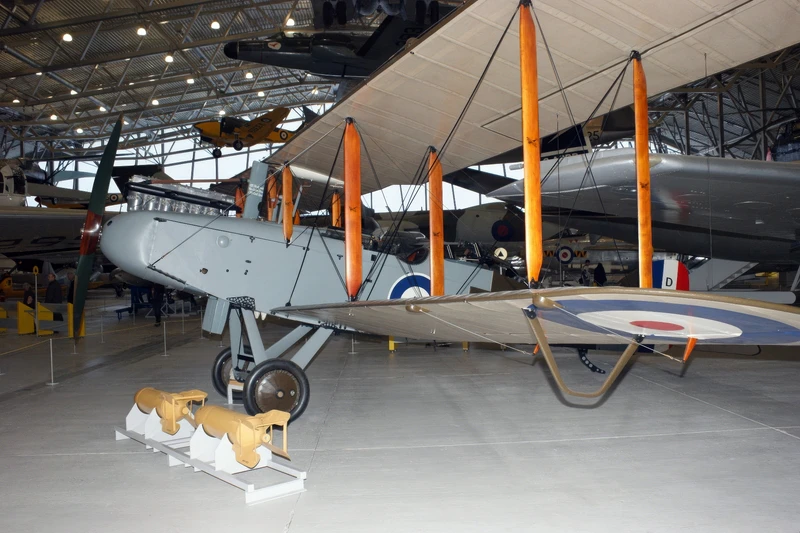
Airco DH.9 | |
|---|---|
| Paese | Regno unito |
| Ruolo | Bomber |
| Primo volo | luglio 1917 |
| Costruito | 4091 |
Le Airco DH.9 (from de Havilland 9) – also known after 1920 as the de Havilland DH.9 – was a British single-engined biplane bomber developed and deployed during the First World War. The DH.9 was a development of Airco’s earlier successful DH.4, with which it shared many components. These were mated to an all-new fuselage and the BHP/Galloway Adriatic engine, which promised increased performance. Anticipating its usefulness, the type was ordered in very large numbers for Britain’s Royal Flying Corps (RFC).
fonte: Airco DH.9 su Wikipedia
| de Havilland DH.9 Walk Around | |
|---|---|
| Fotografo | Michael Benolkin |
| Localizzazione | Inconsapevole |
| Foto | 20 |
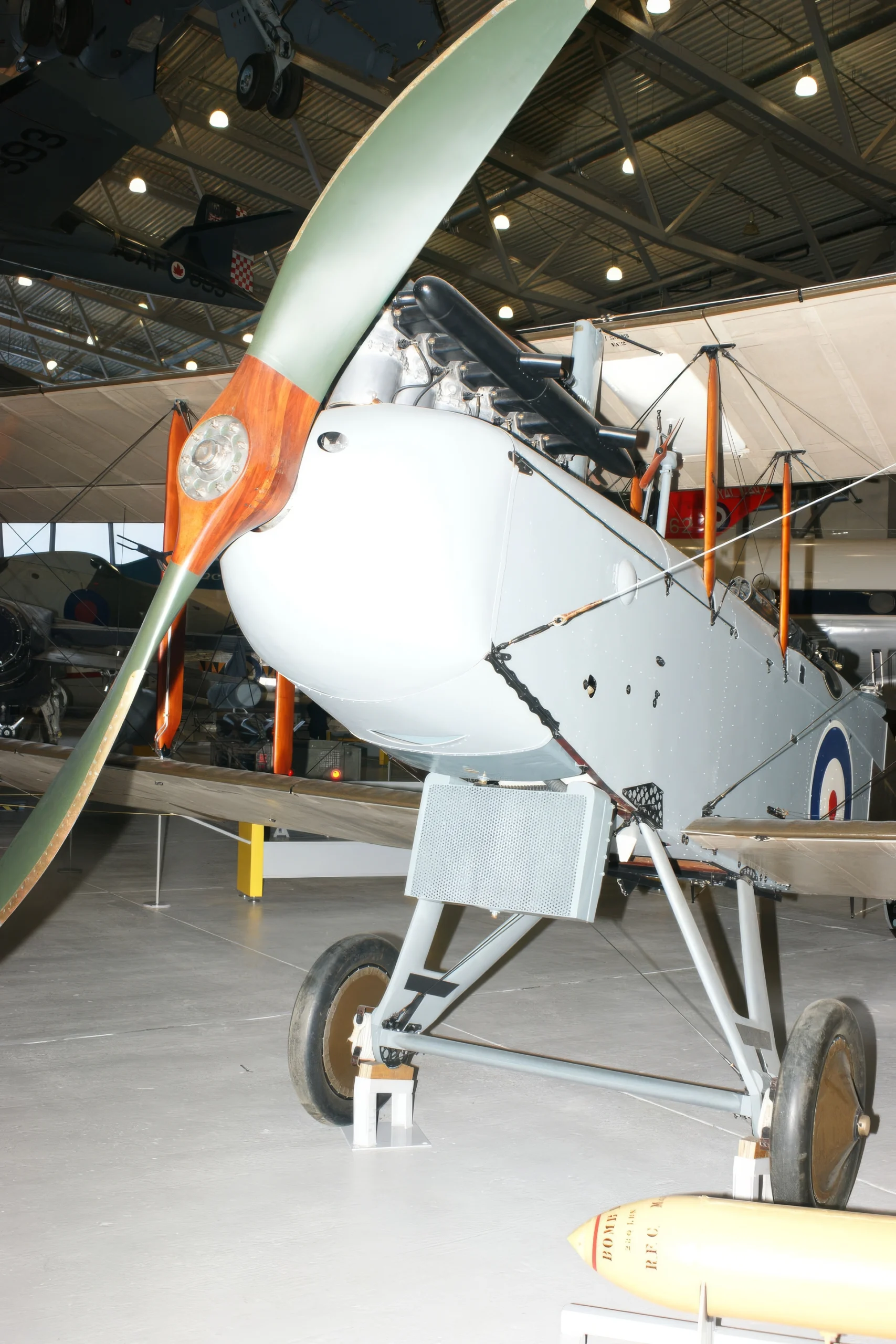
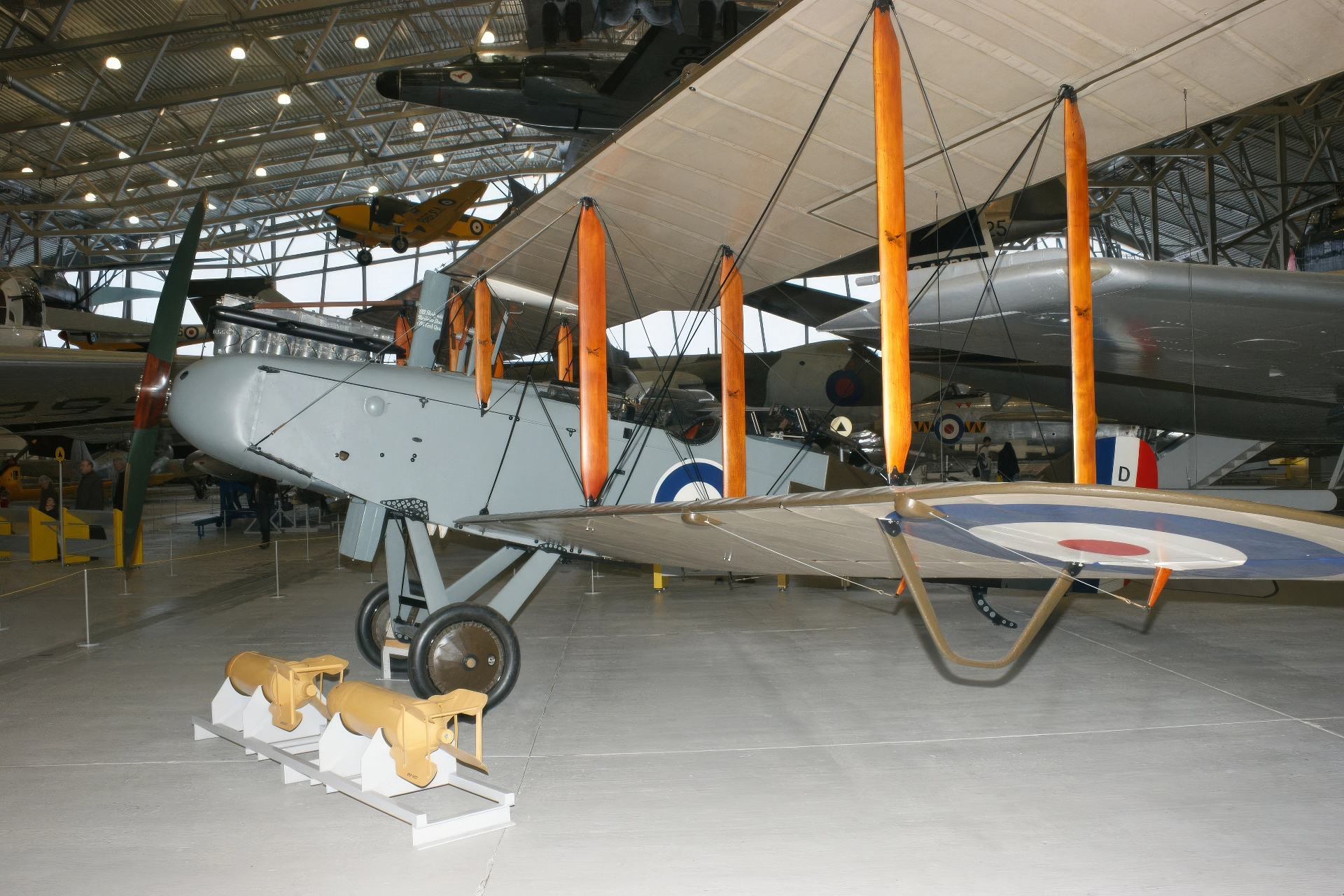
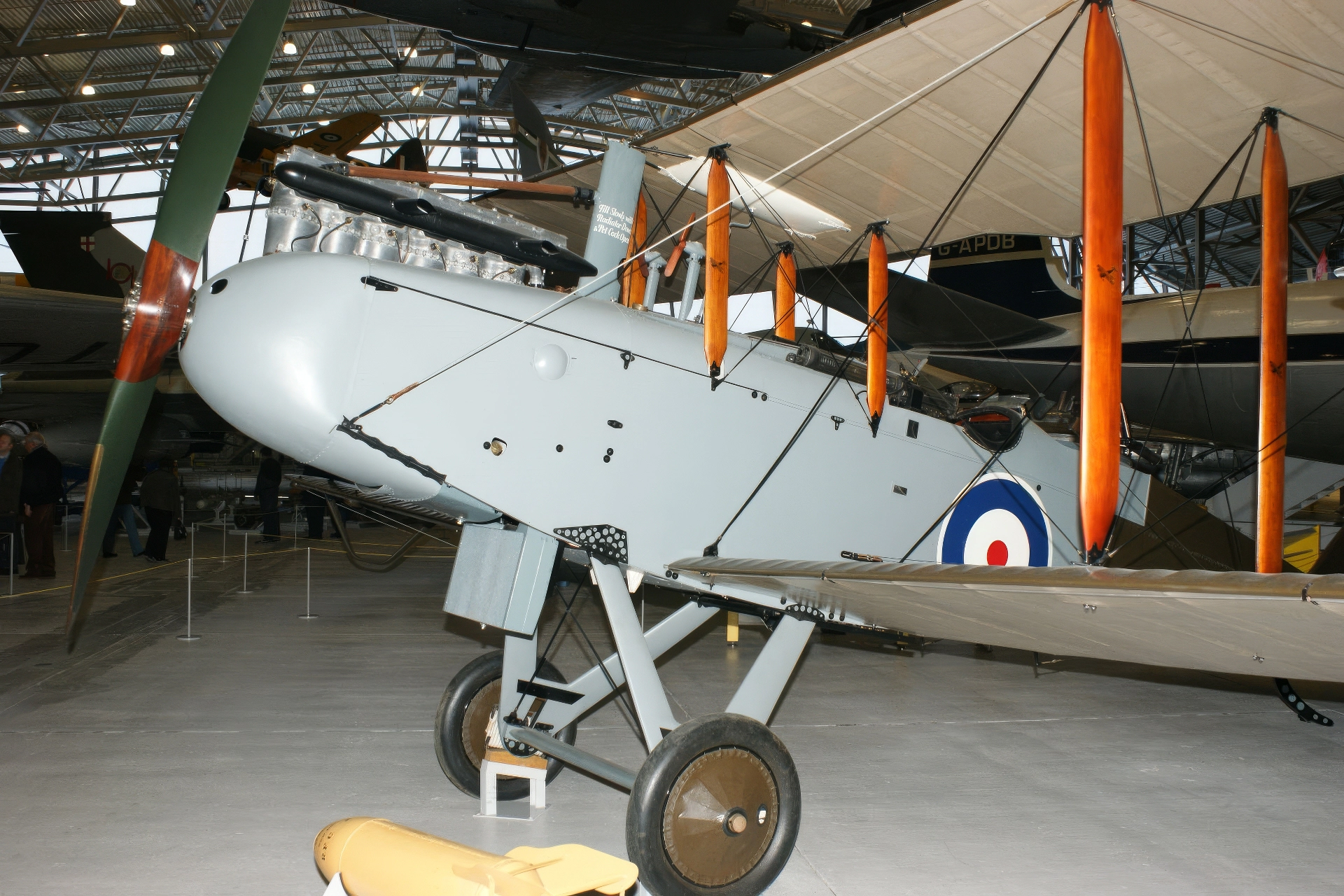
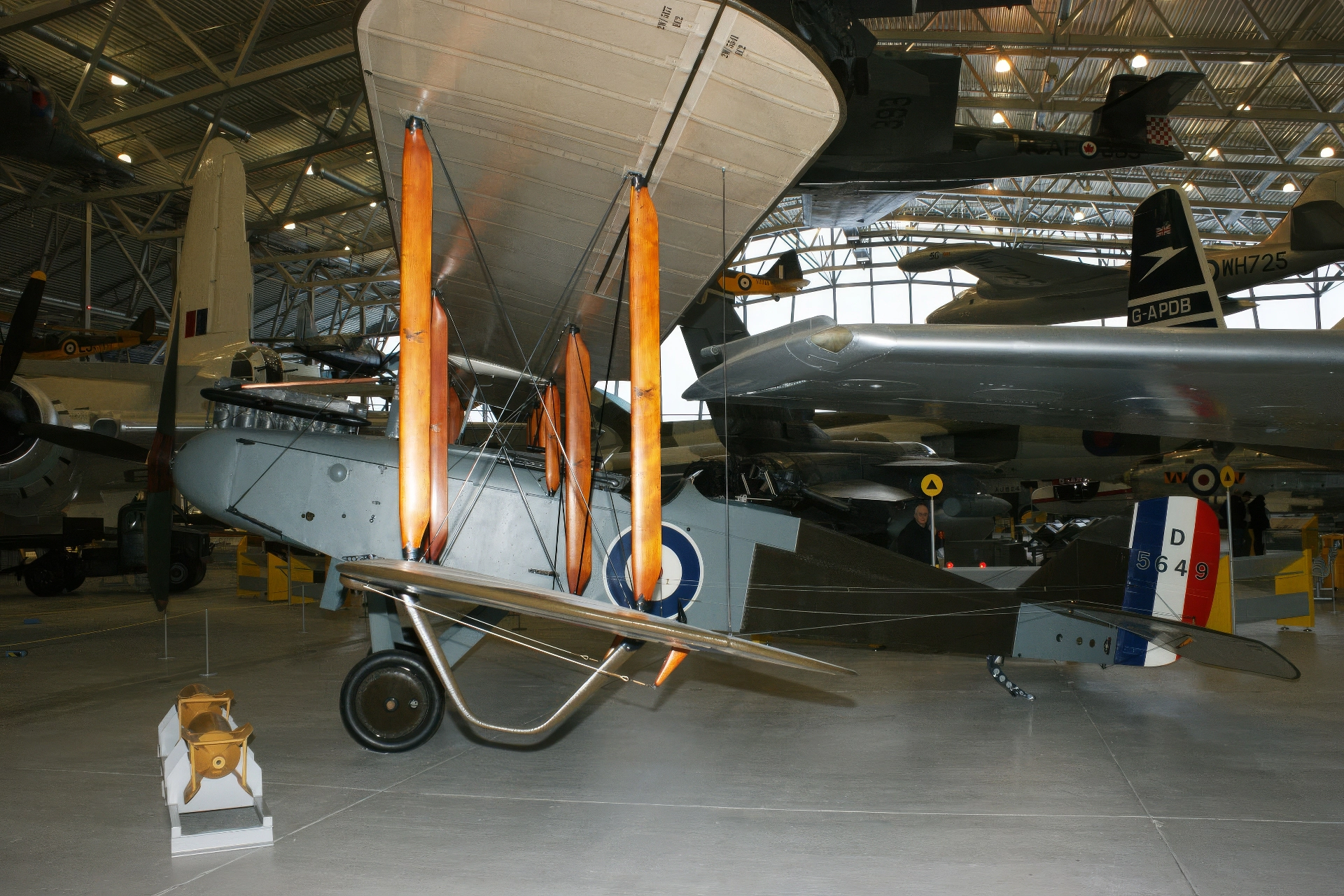
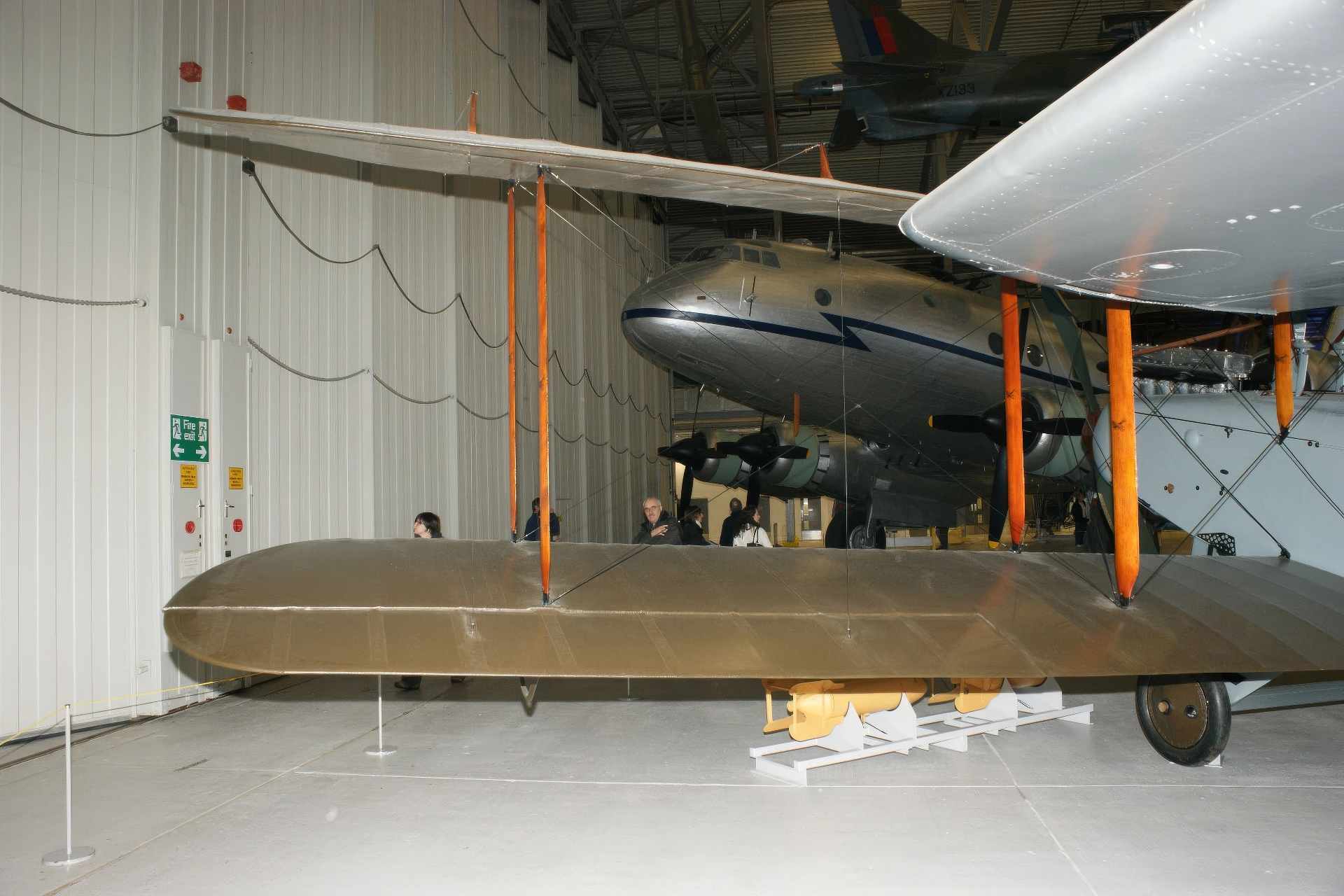
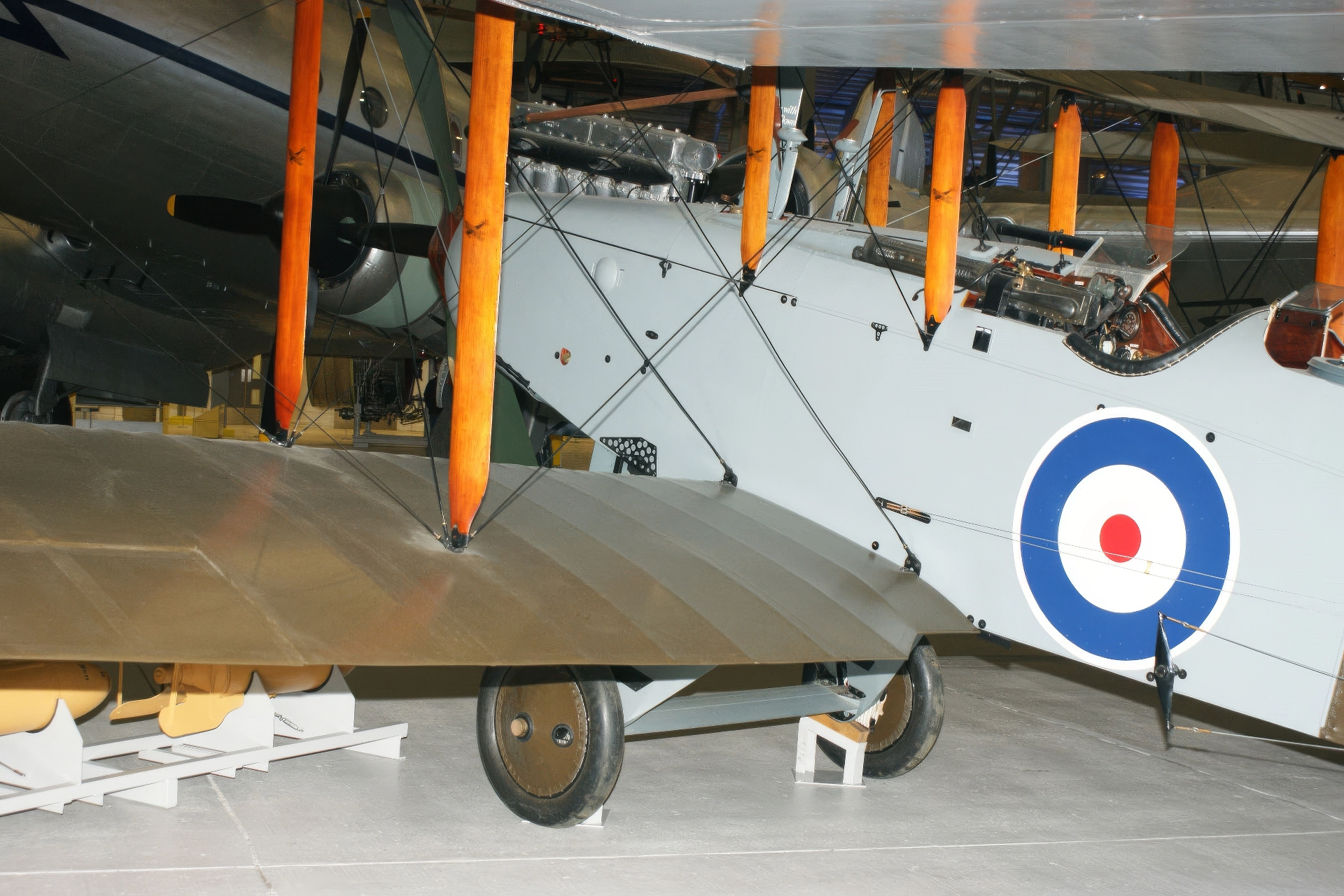
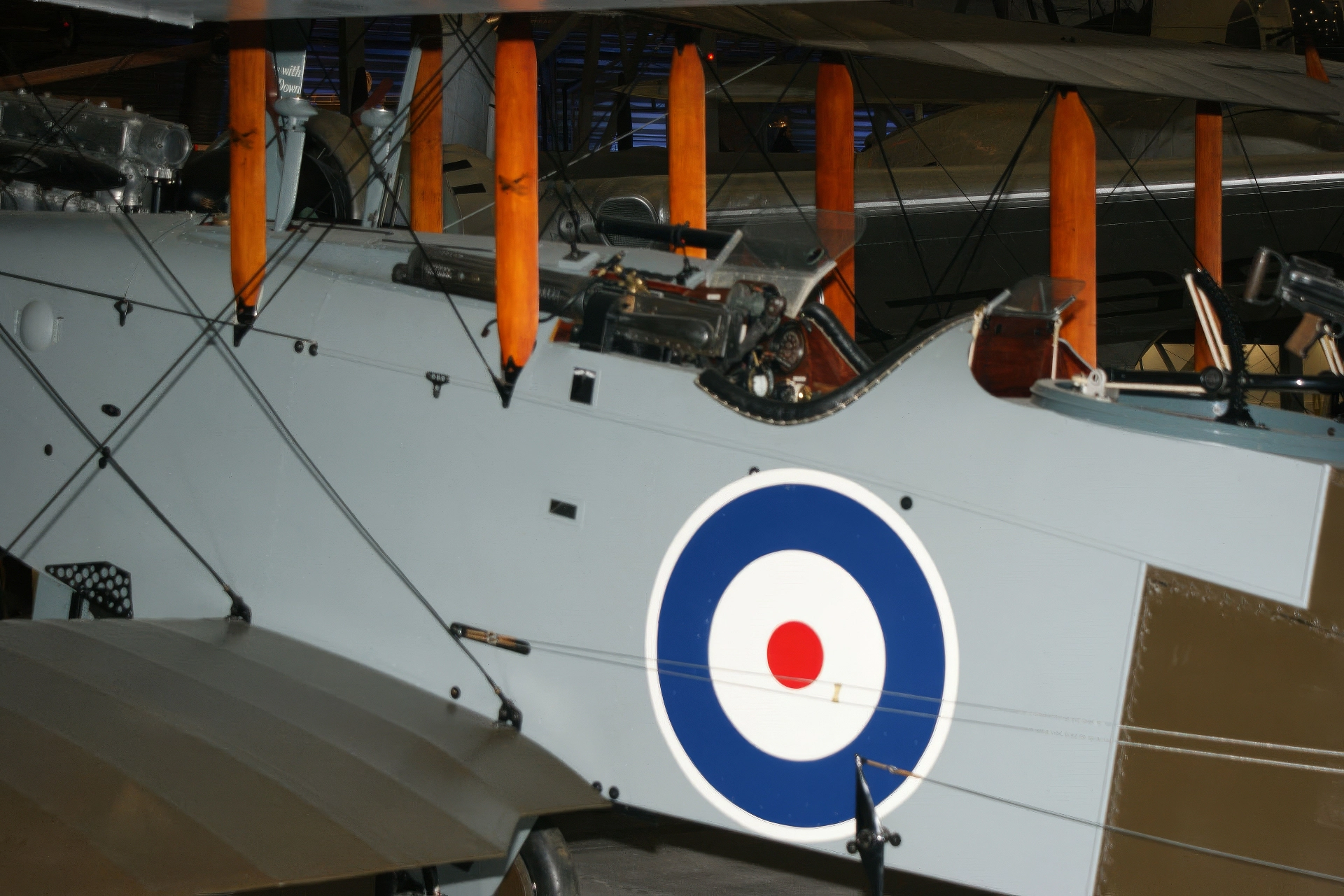
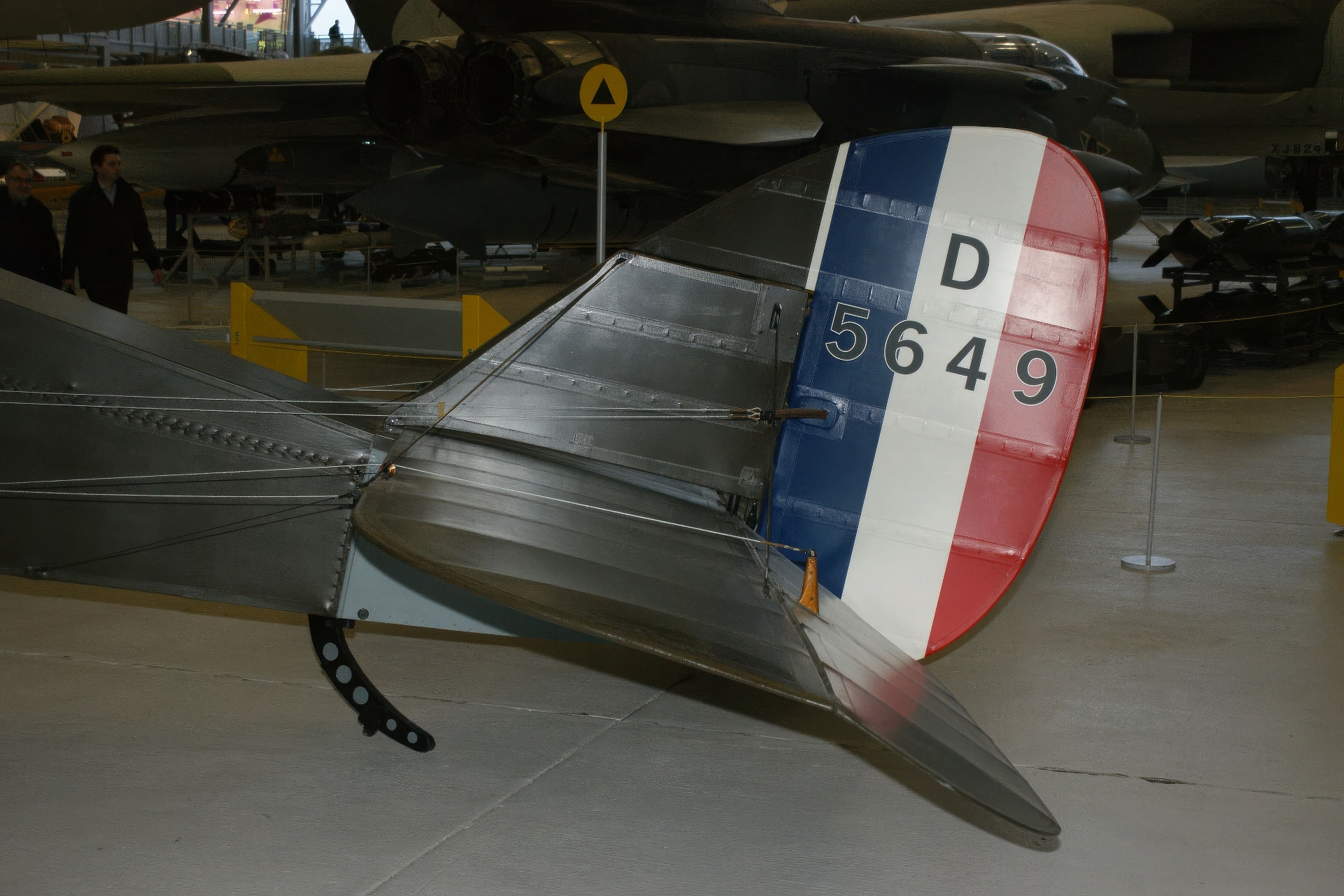
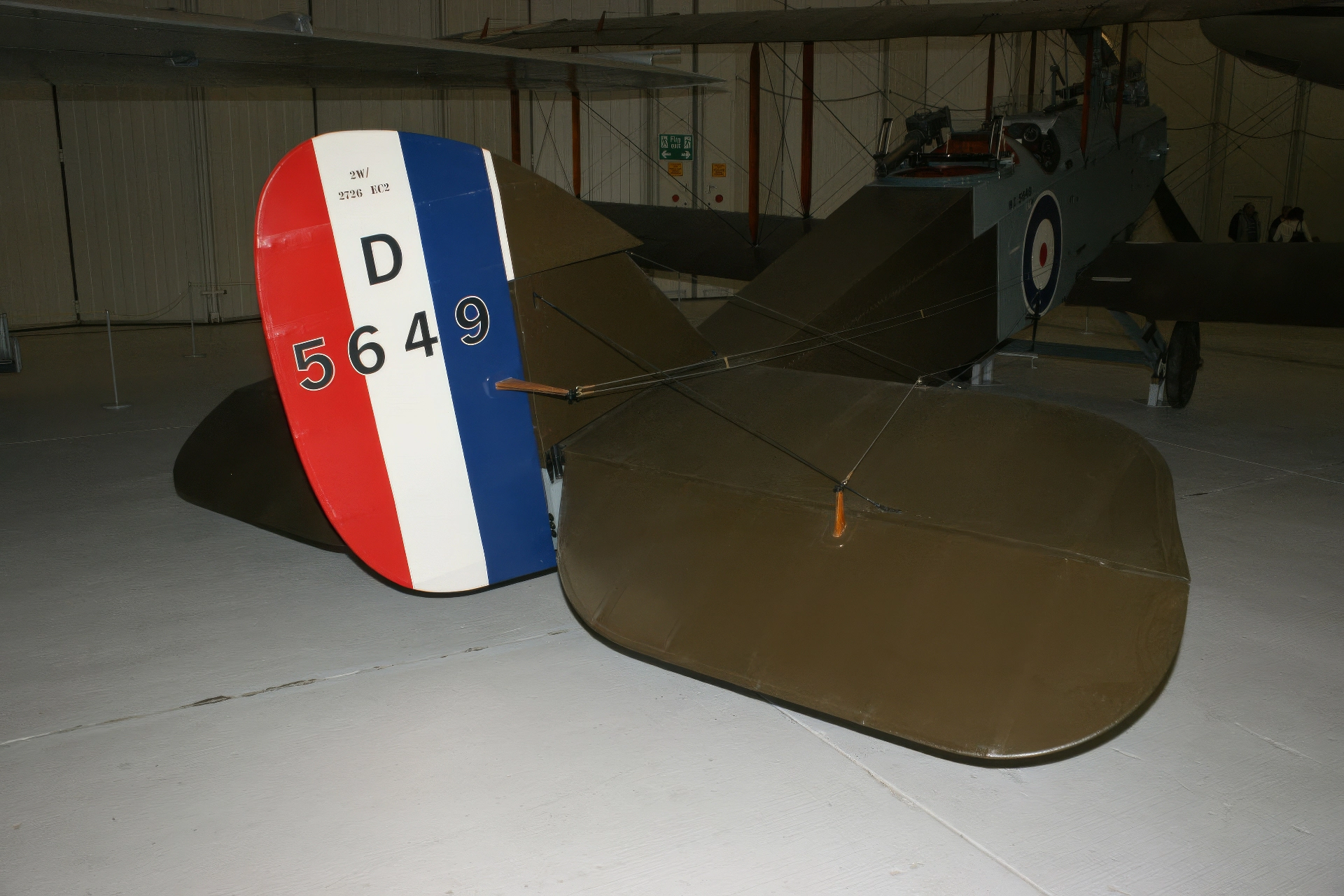


Vedi anche:


General Characteristics and Role
The Airco de Havilland DH.9 was a British two-seat biplane bomber developed from the highly successful DH.4 during World War I. Designed by Geoffrey de Havilland, it was intended to replace the DH.4 by featuring an all-new fuselage and a promised powerful new engine. However, the chosen Siddeley Puma engine proved unreliable and underpowered, severely limiting the DH.9’s performance, particularly at high altitudes. Despite its poor combat performance on the Western Front, thousands were built, and it saw extensive post-war service, including early commercial air transport roles (DH.9C variant) and as a colonial policing aircraft, which was later rectified by its successor, the greatly improved DH.9A (or “Nine-Ack”) fitted with the American Liberty L-12 engine.
| Property | Typical Value (DH.9 with Puma Engine) |
|---|---|
| Ruolo | Day Bomber / Reconnaissance Biplane |
| National Origin | Regno Unito |
| Produttore | Aircraft Manufacturing Company (Airco) |
| First Flight | luglio 1917 |
| Equipaggio | 2 (Pilot and Observer/Gunner) |
| Lunghezza | 9.27 m (30 ft 5 in) |
| Apertura alare | 12.92 m (42 ft 5 in) |
| Empty Weight | Approx. 1,012 kg (2,231 lb) |
| Maximum Takeoff Weight | Approx. 1,723 kg (3,800 lb) |
Powerplant and Performance
- Engine: One Armstrong Siddeley Puma (BHP-derived) six-cylinder, liquid-cooled inline engine.
- Power Output: 230 hp (170 kW). (The engine failed to reach its intended 300 hp output).
- Maximum Speed: Approx. 180 km/h (112 mph) at 3,000 m (10,000 ft).
- Service Ceiling: Approx. 4,724 m (15,500 ft).
- Endurance: Approx. 4.5 hours.
- Performance Issue: The engine’s lack of power and unreliability meant the DH.9 often had inferior performance to the aircraft it was intended to replace, the DH.4.
Armamento
- Pilot Armament: 1 x fixed, forward-firing .303 in (7.7 mm) Vickers machine gun (synchronized).
- Observer Armament: 1 or 2 x flexible-mounted .303 in (7.7 mm) Lewis machine gun(s) on a Scarff ring in the rear cockpit.
- Bomb Load: Up to 209 kg (460 lb) of bombs.
- Note: The fuselage redesign moved the pilot aft, creating a more suitable internal bomb bay nearer the center of gravity.
- Key Distinction: The successor DH.9A was a greatly improved aircraft, featuring a more reliable 400 hp Liberty L-12 engine and larger wings, resolving the key deficiencies of the original DH.9.
Visualizzazioni : 1603
Puoi anche vedere:
 Rutan Voyager – Foto e Video
 Canadair CF-5 – Foto e Video
 LTV A-7 Corsair II – Foto e Video
 de Havilland Canada DHC-2 – Foto e Video
 McDonnell Douglas C-9 – Foto e Video
 Fairchild 24 – Foto e video
 CASA 2.111 vol3 – WalkAround
 AV-8B Harrier II Plus - WalkAround
 Mikoyan MiG-29 - Walkaround
 C-17 Globemaster - WalkAround