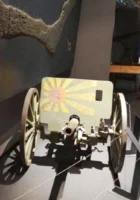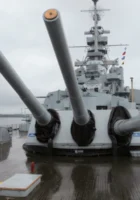
USS Massachusetts

USS Massachusetts BB-59

PaeseUsa
digitarecorazzata
FotografiaVladimir Jakubov
IndividuareBaia della corazzata, fiume di caduta, MA
DescrizioneAlbum di 676 foto walk-around di «USS Massachusetts BB-59»

Galleria fotografica di un USS Massachusetts BB-59, USS Massachusetts (BB-59), known as “Big Mamie” to her crewmembers during World War II, was a battleship of the second South Dakota class. She was the seventh ship of the United States Navy to be named in honor of the sixth state, and one of two ships of her class (along with her sister Alabama) to be donated for use as a museum ship. Massachusetts has the distinction of having fired the US Navy’s first and last 16-in (406 mm) shells of the war.

fonte: USS Massachusetts BB-59 su Wiki

Continua a leggere

Views : 7947

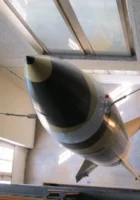
V-2 Missile

V-2 Missile

PaeseGermania nazista
digitaremissile
Prodotto16 marzo 1942 – 1945
Costruito3000+

Galleria fotografica di un V-2 Missile, The V-2 (German: Vergeltungswaffe 2, “Retribution Weapon 2”), technical name Aggregat 4 (A4), was the world’s first long-range guided ballistic missile. The missile with a liquid-propellant rocket engine was developed during the Second World War in Germany as a “vengeance weapon,” designed to attack Allied cities as retaliation for the Allied bombings against German cities. The V-2 rocket also became the first artificial object to cross the boundary of space with the vertical launch of MW 18014 on 20 June 1944.

fonte: Missile V-2 su Wiki

Continua a leggere

Visualizzazioni : 2982

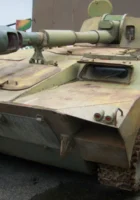
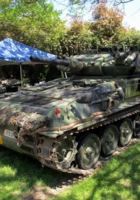
2S1 Gvozdika

2S1 Gvozdika

PaeseUnione Sovier
digitareObice semovente
In servizioDal 1972 ad oggi
CostruitoOltre 10000

Galleria fotografica di un 2S1 Gvozdika, The 2S1 Gvozdika (in russo: 2С1 «Гвоздика», "Garofano") è un obice semovente sovietico basato sul telaio MT-LB APC, che monta l'obice 2A18 da 122 mm. "2S1" è la sua designazione GRUG. Una designazione russa alternativa è SAU-122, ma nell'esercito russo è comunemente conosciuta come Gvozdika. Il 2S1 è completamente anfibio con pochissima preparazione, e una volta a galla è spinto dai suoi cingoli. È inoltre disponibile una varietà di cingoli più larghi per consentire al 2S1 di operare in condizioni di neve o palude. È protetto NBC e ha capacità di visione notturna a infrarossi.

fonte: 2S1 Gvozdika su Wiki

Continua a leggere

Visualizzazioni : 8669

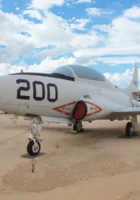
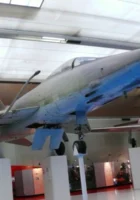
Lockheed T-1A Seastar

Lockheed T-1A

PaeseUsa
digitareAerei da addestramento
FotografiaVladimir Jakubov
IndividuareMuseo dell'aria e dello spazio di Pima, Tuscon
DescrizioneAlbum di 133 foto walk-around di un «Lockheed T-1A»

Galleria fotografica di un Lockheed T-1A, The Lockheed T2V SeaStar, later called the T-1 SeaStar, was a turbojet trainer aircraft for the U.S. Navy that entered service in May 1957. It was developed from the Lockheed T-33 and powered by one Allison J33 engine.

fonte: Lockheed T-1A su Wiki

Continua a leggere

Visualizzazioni : 2961

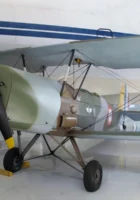
Stampe SV

Stampe SV.4

PaeseBelgio
digitareAerei da addestramento
FotografiaVladimir Jakubov
IndividuareFantasy of Flight, Polk City
DescrizioneAlbum di 77 foto walk-around di una "Stampe SV.4"

Galleria fotografica di un Stampe SV.4, The Stampe et Vertongen SV.4 (also known as the Stampe SV.4 or just Stampe) is a Belgian two-seat trainer/tourer biplane designed and built by Stampe et Vertongen. The aircraft was also built under licence in France and Algeria.

fonte: Stampe SV.4 su Wiki

Continua a leggere

Views : 3823

Curtiss-Wright SNC-1 Falco

Curtiss-Wright SNC-1 Falco

PaeseUsa
digitareVelivoli da addestramento avanzato
FotografiaVladimir Jakubov
IndividuareFantasy of Flight, Polk City
DescrizioneAlbum di 80 foto walk-around di un «Curtiss-Wright SNC-1 Falcon»

Galleria fotografica di un Curtiss-Wright SNC-1 Falco, The Curtiss-Wright CW-22 was a 1940s American general-purpose advanced training monoplane aircraft built by the Curtiss-Wright Corporation. It was operated by the United States Navy as a scout trainer with the designation SNC-1 Falcon.

fonte: Curtiss-Wright SNC-1 Falcon su Wiki

Continua a leggere

Punti di vista: 3457

FV101 Scorpione

CVR(T) FV101 Scorpion

PaeseRegno unito
digitareVeicolo corazzato da ricognizione
In servizio 1973–presente
ProduttoreAlvis Veicoli Ltd
Costruito3000+

Galleria fotografica di un CVR(T) FV101 Scorpion, The FV101 Scorpion is a British armoured reconnaissance vehicle. It was the lead vehicle and the fire support type in the Combat Vehicle Reconnaissance (Tracked), CVR(T), family of seven armoured vehicles. Manufactured by Alvis, it was introduced into service with the British Army in 1973 and served until 1994. More than 3,000 were produced and used as a reconnaissance vehicle or a light tank. It holds the Guinness world record for the fastest production tank; recorded doing 82.23 km/h (51.10 mph) at the QinetiQ vehicle test track, Chertsey, Surrey, on 26 January 2002.

fonte: CVR(T) FV101 Scorpion su Wiki

Continua a leggere

Views : 7154

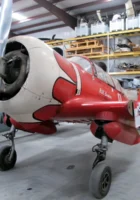
Super Sciabola F-100 nordamericana

Super Sciabola F-100 nordamericana

PaeseUsa
RuoloCaccia a reazione supersonico
Primo voloIl 25 maggio 1953
Costruito2294

Le Super Sciabola F-100 nordamericana Il è stato un caccia a reazione supersonico statunitense che ha prestato servizio con la United States Air Force (USAF) dal 1954 al 1971 e con l'Air National Guard (ANG) fino al 1979. Il primo della Serie Century di caccia a reazione USAF, fu il primo caccia USAF in grado di velocità supersonica nel volo di livello. L'F-100 è stato progettato dalla North American Aviation come un seguito ad alte prestazioni del caccia di superiorità aerea F-86 Sabre.

fonte: Super sciabola F-100 nordamericana su Wiki

Continua a leggere

Views : 12883

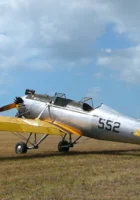
Ryan PT-22 Recluta

Ryan PT-22 Recluta

PaeseUsa
digitareAerei da addestramento militare
ProduttoreRyan Aeronautical Company
Numero costruito1048

Galleria fotografica di un Ryan PT-22 Recluta, The Ryan PT-22 Recruit, the main military version of the Ryan ST, is a military trainer aircraft used by the United States Army Air Corps and its successor, the United States Army Air Forces for primary pilot training.

fonte: Ryan PT-22 Recluta su Wiki

Continua a leggere

Visualizzazioni : 3616

Cannone anticarro Tipo 94 da 37 mm

Cannone anticarro Tipo 94 da 37 mm

PaeseGiappone
digitareCannone anticarro
FotografiaVladimir Jakubov
IndividuareMuseo commemorativo della guerra di Auckland
DescrizioneAlbum di 32 photos walk-around of a «Type 94 37mm Anti-Tank Gun»

Galleria fotografica di un Cannone anticarro Tipo 94 da 37 mm, The Type 94 37 mm anti-tank gun (九四式三十七粍速射砲 Kyūyon-shiki sanjyūnana-miri sokushahō?) was an anti-tank gun developed by the Imperial Japanese Army, and used in combat during the Second Sino-Japanese War and World War II. The Type 94 number was designated for the year the gun was accepted, 2594 in the Japanese imperial year calendar, or 1934 in the Gregorian calendar

fonte: Type 94 37mm Anti-Tank Gun on Wiki

Continua a leggere

Punti di vista : 2677