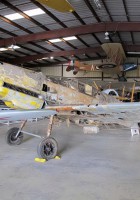
Messerschmitt Bf-109E-7 - Girovadi

Messerschmitt Bf-109E-7

PaeseGermania
CategoriaAerei militari
digitareCaccia monomotore

The Messerschmitt Bf 109 Era un caccia tedesco monoposto della Luftwaffe. Su richiesta del Reichsluftfahrtministerium (RLM) il suo progettista, l'ingegnere tedesco Willy Messerschmitt, sta sviluppando questo cacciatore che equipaggerà il futuro Luftwaffe. Questo aereo è progettato da un motore Junkers Jumo 210 con 12 cilindri v rovesciati, l'ingegnere Messerschmitt lo ha incorporato in una cella monoscafo con un design molto elegante. Il Bf 109 si dimostrò ben al di sopra dei suoi diretti concorrenti e quindi equipaggiò la flotta aerea tedesca.

Il suo battesimo del fuoco durante la guerra spagnola migliorò il Bf 109 e il suo motore fu cambiato da un modello della fabbrica Daimler Benz che lo rese ancora più efficiente.

fonte: Bf 109E su Wikipedia

Visto sul forum

Continua a leggere

Views : 10899

SdKfz.179 - Bergepanzerwagen - Passeggiata

Bergepanther

PaeseGermania
CategoriaVeicoli corazzati
digitareRisoluzione dei problemi relativi al serbatoio
Descrizione

Album de 50 walk-around foto del SdKfz.179 – Bergepanzerwagen

Galleria fotografica di un SdKfz.179 – Bergepanzerwagen, The SdKfz 171 Panzer V PANTHER è stato un carro medio utilizzato dall'esercito tedesco durante la seconda guerra mondiale, dal 1943 durante la battaglia di Kursk, fino all ' 8 maggio 1945. Bergepanther : veicolo guasto, 347 prodotti dal 1943 al 1945.

fonte: Panther sur Wikipedia

Continua a leggere

visualizzazioni : 3481

M7 Light Tank - WalkAround

Carro armato leggero M7

PaeseUsa
CategoriaVeicoli corazzati
digitareSerbatoio leggero
Descrizione

Album de 94 foto walk-around del "M7 Light Tank"

Galleria fotografica su un carro leggero M7, ordinato come successore del popolare carro armato M5 non andò mai oltre lo stadio di prototipo, ne furono costruiti solo 7. L'M5 non poteva competere con lo Sherman M4.

Caratteristiche tecniche: Armement: canon de 75mm et une mitrailleuse MG 0.3″ Moteur: Wright R975, 9 cyl. Whirlwind radial, gas, 340 hp Vitesse: 50 Km/h Autonomie: 160 Km Poids: 25t

Continua a leggere

Visualizzazioni : 2820

Char lourd IS-3 vol3 - WalkAround

IS-3 JS-3

PaeseURSS
CategoriaVeicoli corazzati
digitareCarro pesante

Galleria fotografica su un carro armato pesante IS-3, che fa il suo debutto alla fine della seconda guerra mondiale il carro pesante Is-3, che è un carro armato sovietico, non è stato in grado di prendere parte molto attiva agli ultimi combattimenti. Partecipò, tuttavia, alla parata militare del 7 settembre 1945 a Berlino, principalmente per scopi propagandistici. È stato un calcolo che ha dato i suoi frutti, in quanto ha impressionato gli osservatori delle potenze occidentali con la sua potenza e modernità. Il nome (IS o JS) deriva dalle iniziali di Joseph Stalin all'epoca leader sovietico ("J" per Joseph o "I" per "Iossif" a seconda che si usi o meno la versione russa del nome), il numero 3 che designa il numero della versione nella serie di carri armati Josef Stalin.

fonte: IS-3 su Wikipedia

Continua a leggere

Punti di vista: 3359

Cacciacarri M10

M10 Wolverine

PaeseUsa
CategoriaVeicoli corazzati
digitareCacciatore di carri armati

Galleria fotografica su un Wolverine M10, The M10 Wolverine était un chasseur de char américain utilisé pendant la Seconde Guerre mondiale. Ce véhicule blindé voit sa construction débuter dans le courant de l’année 1942 en portant l’appellation officielle de «affût automoteur». Les chars Sherman en activité ayant des capacités anti-char très faibles l’armée américaine décida de doter leurs unités blindées de véhicules spécialisés dans la lutte antichar imitant ainsi les Allemands avec leus chasseurs de chars. Le M10 Wolverine reprend le bas de caisse et le train de roulement du Sherman, seules la tourelle et sa superstructure différent. Le canon de 76mm2 employé était un bon canon mais pas assez puissant par contre pour attaquer correctement les blindages des chars lourds allemands. Les Britanniques ont adaptés à leur convenance leurs unités M10 et leur donnèrent le nom d’Achilles ainsi que quelques fois le surnom de Wolverine.

fonte: M10 Wolverine su Wikipedia

Continua a leggere

Visualizzazioni : 5047

M3 Lee vol2 - WalkAround

M3 Lee

PaeseUsa
CategoriaVeicoli corazzati
digitareCarro armato da battaglia
Descrizione

Album de 86 foto walk-around du char M3 Lee

Galleria fotografica di un M3 Lee, The Carro medio M3 Era un carro armato americano in uso durante la seconda guerra mondiale. Era anche in carica negli altri eserciti alleati, a volte con un altro nome, quindi nel Regno Unito l'M3 fu battezzato Generale Lee en référence au nom du général de la guerre de Sécession américaine. Les britanniques modifièrent la tourelle de ce char ce qui donna une nouvelle unité dénommée “Grant” (le général nordiste vainqueur du général Lee). Bien que correctement armé et protégé le M3 n’était pas assez à l’aise en mode tout terrain et était trop visible à cause de sa hauteur, il fut donc remplacé par le Sherman M4 dès la sortie de ce dernier.

fonte: M3 Lee tank su Wikipedia

Continua a leggere

Views : 4964

Jagdtiger vol2 - Passeggiata

Jagdpanzer VI – Jagdtiger – Sdkfz.186

PaeseGermania
CategoriaVeicoli corazzati
digitareCacciatore di carri armati
Descrizione

Album de 82 foto a piedi del "Jagdtiger"

Galleria fotografica su un Jagdtiger, Il Jagdpanzer VI fu un cacciacarri tedesco durante la seconda guerra mondiale.

Continua a leggere

Visualizzazioni : 4957

LB-30 Liberatore

Consolidated B-24 Liberator

PaeseUsa
RuoloBombardiere pesante / Guerra antisommergibile / Pattugliamento marittimo
Prima mosca29 dicembre 1939
Costruito19000+

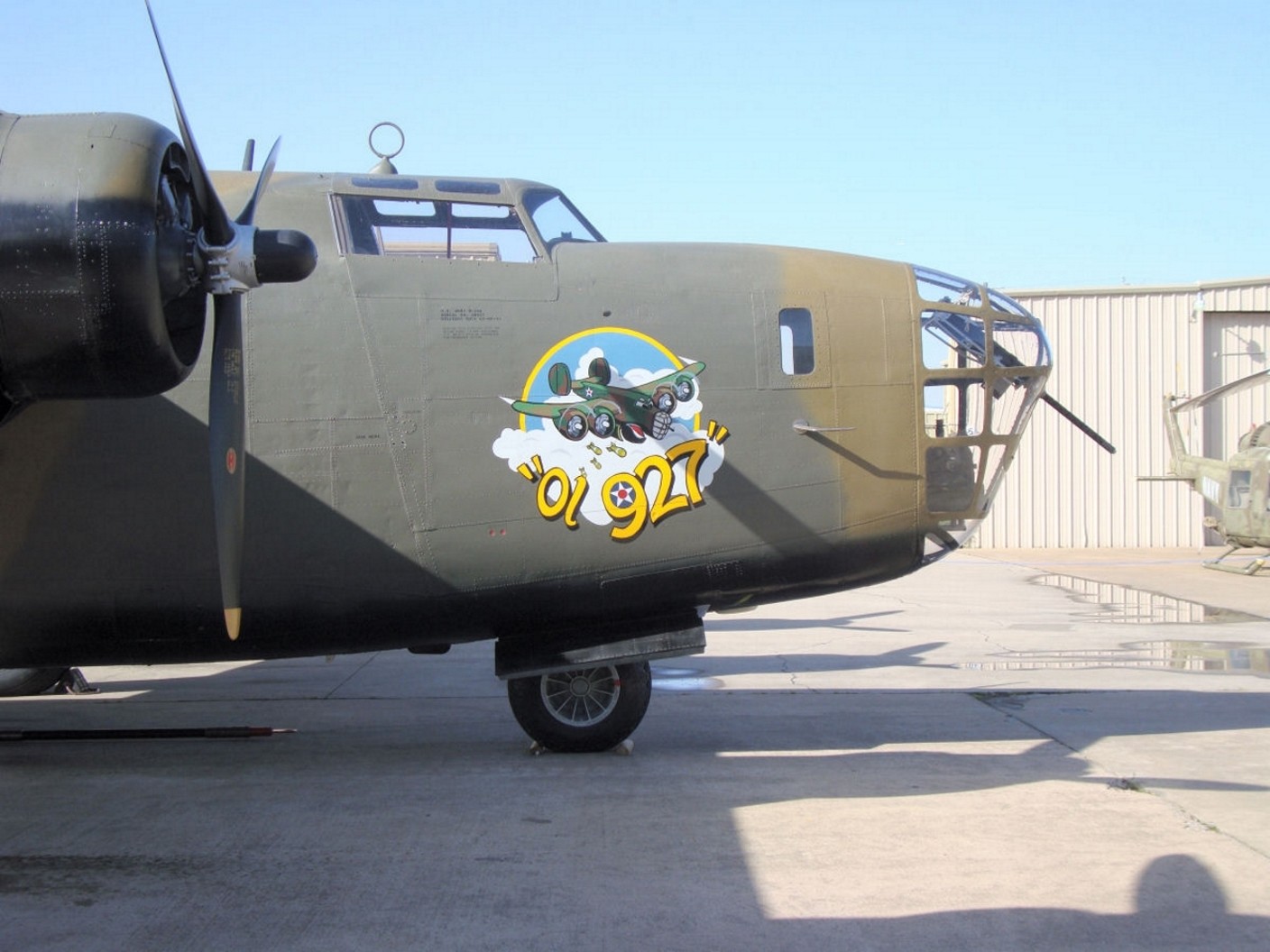
Le Consolidato B-24 Liberator is an American heavy bomber, designed by Consolidated Aircraft of San Diego, California. It was known within the company as the Model 32, and some initial models were laid down as export models designated as various LB-30s, in the Land Bomber design category. At its inception, the B-24 was a modern design featuring a highly efficient shoulder-mounted, high aspect ratio Davis wing. The wing gave the Liberator a high cruise speed, long range and the ability to carry a heavy bomb load. Early RAF Liberators were the first aircraft to cross the Atlantic Ocean as a matter of routine. However, the type was difficult to fly and had poor low speed performance. It also had a lower ceiling and was less robust than the Boeing B-17 Flying Fortress. While aircrews tended to prefer the B-17, General Staff favored the B-24, and procured it in huge numbers for a wide variety of roles. At nearly 19,000 units, with over 8,000 manufactured by Ford Motor Company, it holds records as the world’s most produced: bomber; heavy bomber; multi-engine aircraft; and American military aircraft in history.

fonte: Consolidato B-24 Liberator su Wikipedia

Continua a leggere

Views : 6319

Panzerkampfwagen 35(t) - LT-35 - Passeggiata

Panzerkampfwagen 35(t) – LT-35

PaeseGermania
digitareChar
Descrizione

Album de 66 foto walk-around du char Panzerkampfwagen 35(t) – LT-35

Galleria fotografica su un Panzerkampfwagen 35(t) – LT-35, The Panzerkampfwagen 35(t) era un carro armato cecoslovacco utilizzato dai tedeschi durante la seconda guerra mondiale. Il suo nome ceco era LT vz 35. la conception du char LT vz 35 est typique des procédés en vigueur durant les années 1930 en employant un blindage riveté au lieu d’être soudé, le positionnement du moteur à l’arrière de l’engin et enfin la tourelle conçue pour deux hommes. Son armement se constitue d’un canon de 37mm Škoda vz 34 manoeuvré par le chef de char ainsi que de deux mitrailleuses de 7,92mm (une positionnée dans l’habitacle et une coaxiale). Le moteur situé à l’arrière est un Škoda à six cylindres de 120 chevaux, les roues motrices elles aussi sont à l’arrière entrainées par une transmission à six vitesses avec un changement de vitesse actionné par air, le char compte huit roues porteuses avec une roue libre à l’avant. Le LT-35 était le prédécesseur du LT-38 et a été produit à 424 exemplaires entre 1935 et 1939 par Skoda et CKD. Quand l’Allemagne annexa la Tchécoslovaquie plus de 200 unités furent rattachées à la Wehrmacht au sein de la 6e Panzerdivision. La fin de la production se déroula sous la supervision allemande en 1939.

fonte: Panzerkampfwagen 35(t) su Wikipedia

Continua a leggere

Punti di vista: 4258