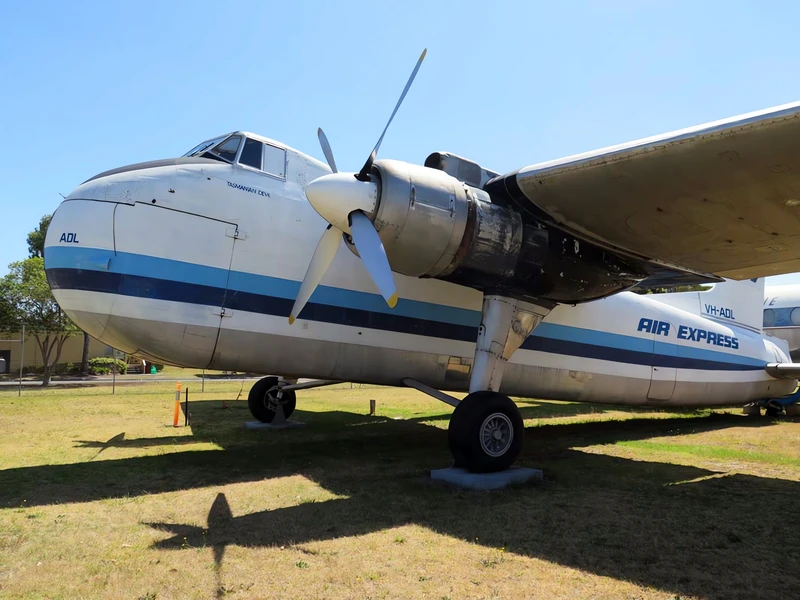
Bristol Freighter | |
|---|---|
| País | Uk |
| Papel | Aviones de carga |
| Primer vuelo | 2 de diciembre de 1945 |
| Construido | 214 |
el Carguero Bristol Tipo 170 was a British twin-engine aircraft designed and built by the Bristol Aeroplane Company as both a freighter and airliner. Its best known use was as an air ferry to carry cars and their passengers over relatively short distances. A passenger-only version was also produced, known as the Wayfarer. The Freighter was developed during the Second World War, having attracted official attention from the British Air Ministry, which sought the development of a rugged vehicle capable of carrying various cargoes, including a 3-ton truck. Various changes to the design were made to accommodate their requirements, but being completed too late to participate in the conflict, the majority of sales of the Freighter were to commercial operators. In response to customer demand, an enlarged version to maximise vehicle-carrying capacity, known as the Bristol Superfreighter, was developed.
Fuente: Bristol Freighter en Wikipedia
| Bristol 170 Freighter Mk 31 Caminar alrededor | |
|---|---|
| Fotógrafos | Vladimir Yakubov |
| Localización | Museo Nacional de Aviación de Australia |
| Fotos | 73 |


Ver también:


General Characteristics and Role
The Bristol Type 170 Freighter was a British medium-range transport aircraft designed and built by the Bristol Aeroplane Company immediately after World War II. It was conceived as a rugged, low-cost “workhorse” for moving freight, vehicles, and passengers over short distances. The aircraft’s most distinctive feature was its box-like fuselage with clamshell doors in the nose, allowing for easy, direct loading of vehicles and bulky cargo. The Mk 31 variant, introduced in 1951, was a stretched version of the original design (Mk 21) offering greater payload and range. It was famously used by various airlines, notably Silver City Airways, as a “car ferry” to transport passengers and their automobiles across the English Channel.
| Property | Typical Value (Mk 31 Freighter) |
|---|---|
| Tipo | Medium-Range Cargo/Car Ferry Transport |
| National Origin | Reino Unido |
| Fabricante | Bristol Aeroplane Company |
| Service Entry (Mk 31) | 1951 |
| Equipo | 2-3 |
| Capacity (Car Ferry) | 32 passengers and 3 automobiles (varies by configuration) |
| Capacity (Cargo) | Approx. 5,000 kg (11,000 lb) |
| Longitud | 20.86 m (68 ft 5 in) |
| Envergadura | 29.87 m (98 ft 0 in) |
| Maximum Takeoff Weight | 19,958 kg (44,000 lb) |
Powerplant and Performance
- Engine: 2 x Bristol Hercules 734 or 738 14-cylinder radial engines.
- Power Output (Each): 2,000 hp (1,491 kW).
- Propellers: Three-bladed constant-speed propellers.
- Maximum Speed: 236 mph (380 km/h).
- Cruising Speed: 165 mph (266 km/h).
- Range: Approximately 1,400 km (870 mi).
- Design Note: The high wing placement kept the engines and props clear of the loading area, and the fixed tricycle undercarriage was robust for operations from rough or unprepared strips.
Service and Legacy
- Car Ferry Service: The Freighter, particularly the Mk 31, defined the post-war air car ferry concept. Silver City Airways alone transported millions of passengers and vehicles across the English Channel, proving the concept viable before the introduction of dedicated roll-on/roll-off ferries.
- Military Use: The aircraft was used extensively by the Royal Canadian Air Force (RCAF) and the Royal New Zealand Air Force (RNZAF) for utility and transport duties.
- Production: 214 aircraft were built between 1945 and 1958.
- Retirement: Although gradually replaced by faster turboprop and jet aircraft, a few examples remained in use in remote parts of the world well into the 1970s and 1980s.
Vistas : 2571
También puede ver:
 Bristol Bolingbroke – Fotos y Videos
 Bristol F.2 Fighter – Fotos y Videos
 Lockheed U-2 – Fotos y Video
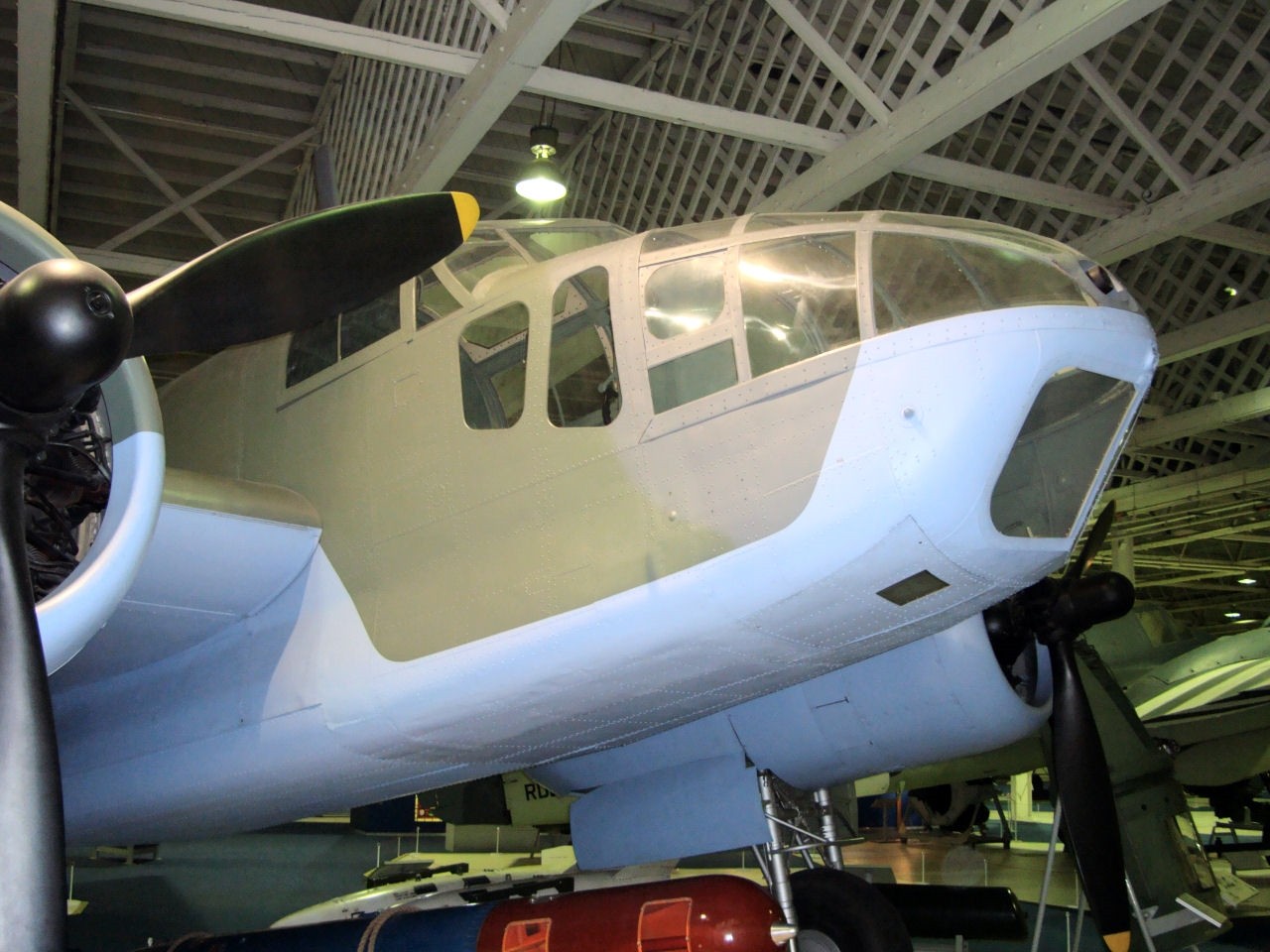 Bristol Beaufort – Fotos y Video
 P-51D Mustang vol2 – Caminar
 B-17G Flying Fortress – WalkAround
 Messerschmitt Bf 109G-2 - Caminar
 General Motors FM-2 Wildcat – WalkAround
 Junkers Ju-52 Tante Ju – Caminar
 Messerschmitt Me-109E – Caminar