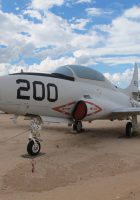
Lockheed T-1A (T2V-1) Seastar

Lockheed T-1A

PaísE.e.u.u
TipoAviones de entrenamiento
FotografíaVladimir Yakubov
LocalizarMuseo del Aire y el Espacio Pima, Tuscon
DescripciónÁlbum de 133 fotos de un «Lockheed T-1A»

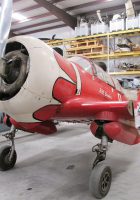
Galería de fotos de un Lockheed T-1A, The Lockheed T2V SeaStar, later called the T-1 SeaStar, was a turbojet trainer aircraft for the U.S. Navy that entered service in May 1957. It was developed from the Lockheed T-33 and powered by one Allison J33 engine.

Fuente: Lockheed T-1A en Wiki

Continuar leyendo

Vistas : 2763

Stampe SV.4

Stampe SV.4

PaísBélgica
TipoAviones de entrenamiento
FotografíaVladimir Yakubov
LocalizarFantasía de vuelo, Polk City
DescripciónÁlbum de 77 fotos de un «Stampe SV.4»

Galería de fotos de un Stampe SV.4, The Stampe et Vertongen SV.4 (also known as the Stampe SV.4 or just Stampe) is a Belgian two-seat trainer/tourer biplane designed and built by Stampe et Vertongen. The aircraft was also built under licence in France and Algeria.

Fuente: Stampe SV.4 en Wiki

Continuar leyendo

Vistas : 3471

Curtiss-Wright SNC-1 Halcón

Curtiss-Wright SNC-1 Halcón

PaísE.e.u.u
TipoAviones de entrenamiento avanzado
FotografíaVladimir Yakubov
LocalizarFantasía de vuelo, Polk City
DescripciónÁlbum de 80 fotos de un «Curtiss-Wright SNC-1 Falcon»

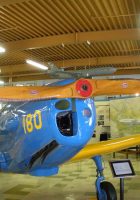
Galería de fotos de un Curtiss-Wright SNC-1 Halcón, The Curtiss-Wright CW-22 was a 1940s American general-purpose advanced training monoplane aircraft built by the Curtiss-Wright Corporation. It was operated by the United States Navy as a scout trainer with the designation SNC-1 Falcon.

Fuente: Curtiss-Wright SNC-1 Falcon en Wiki

Continuar leyendo

Views : 3175

FV101 Escorpión

CVR(T) Escorpión FV101

PaísUk
TipoVehículo blindado de reconocimiento
En servicio 1973–presente
FabricanteAlvis Vehículos Ltd
Construido3000+

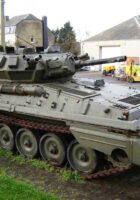
Galería de fotos de un CVR(T) Escorpión FV101, The FV101 Scorpion is a British armoured reconnaissance vehicle. It was the lead vehicle and the fire support type in the Combat Vehicle Reconnaissance (Tracked), CVR(T), family of seven armoured vehicles. Manufactured by Alvis, it was introduced into service with the British Army in 1973 and served until 1994. More than 3,000 were produced and used as a reconnaissance vehicle or a light tank. It holds the Guinness world record for the fastest production tank; recorded doing 82.23 km/h (51.10 mph) at the QinetiQ vehicle test track, Chertsey, Surrey, on 26 January 2002.

Fuente: CVR(T) FV101 Scorpion en Wiki

Continuar leyendo

Vistas : 6411

Super Sabre F-100 norteamericano

Super Sabre F-100 norteamericano

PaísE.e.u.u
PapelAviones de combate supersónicos
Primer vuelo25 de mayo de 1953
Construido2294

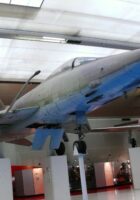
el Super Sabre F-100 norteamericano fue un avión de combate supersónico estadounidense que sirvió con la Fuerza Aérea de los Estados Unidos (USAF) de 1954 a 1971 y con la Guardia Nacional Aérea (ANG) hasta 1979. El primero de la Serie Century de aviones de combate de la USAF, fue el primer caza de la USAF capaz de velocidad supersónica en vuelo nivelado. El F-100 fue diseñado por North American Aviation como un seguimiento de mayor rendimiento al caza de superioridad aérea F-86 Sabre.

Fuente: Super Sabre F-100 de América del Norte en Wiki

Continuar leyendo

Views : 11915

Ryan PT-22 Recluta

Ryan PT-22 Recluta

PaísE.e.u.u
TipoAviones de entrenamiento militar
FabricanteCompañía Aeronáutica Ryan
Número construido1048

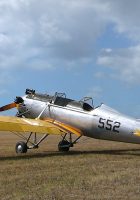
Galería de fotos de un Ryan PT-22 Recluta, The Ryan PT-22 Recruit, the main military version of the Ryan ST, is a military trainer aircraft used by the United States Army Air Corps and its successor, the United States Army Air Forces for primary pilot training.

Fuente: Ryan PT-22 Recluta en Wiki

Continuar leyendo

Vistas : 3337

Pistola antitanque tipo 94 de 37 mm

Pistola antitanque tipo 94 de 37 mm

PaísJapón
TipoPistola antitanque
FotografíaVladimir Yakubov
LocalizarMuseo Conmemorativo de la Guerra de Auckland
DescripciónÁlbum de 32 fotos de un «Cañón antitanque Tipo 94 de 37 mm»

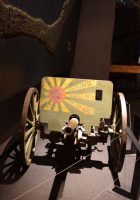
Galería de fotos de un Pistola antitanque tipo 94 de 37 mm, The Type 94 37 mm anti-tank gun (九四式三十七粍速射砲 Kyūyon-shiki sanjyūnana-miri sokushahō?) was an anti-tank gun developed by the Imperial Japanese Army, and used in combat during the Second Sino-Japanese War and World War II. The Type 94 number was designated for the year the gun was accepted, 2594 in the Japanese imperial year calendar, or 1934 in the Gregorian calendar

Fuente: Cañón antitanque Tipo 94 de 37 mm en Wiki

Continuar leyendo

Vistas : 2438

Fairchild PT-19A Cornell

Fairchild PT-19A Cornell

PaísE.e.u.u
TipoAviones de entrenamiento militar
FotografíaRandy Ray
LocalizarMuseo de la Base de la Fuerza Aérea Travis
DescripciónÁlbum de 59 fotos walk-around de un «Fairchild PT-19A Cornell»

Galería de fotos de un Fairchild PT-19A Cornell, The Fairchild PT-19 (company designation Fairchild M62) is an American Fairchild Aircraft monoplane primary trainer aircraft that served with the United States Army Air Forces, RAF and RCAF during World War II. It was a contemporary of the Kaydet biplane trainer and was used by the USAAF during Primary Flying Training as the introductory pre-solo phase trainer for introducing new pilots to flying before passing them on to the more agile Kaydet. As with other USAAF trainers of the period, the PT-19 had multiple designations based on the powerplant installed.

Fuente: Fairchild PT-19A Cornell en Wiki

Continuar leyendo

Vistas : 2356

Stearman N2S-Kaydet

Stearman PT-13D Kaydet

PaísE.e.u.u
TipoAviones de entrenamiento militar

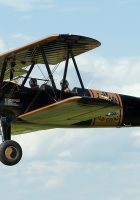
Galería de fotos de un Stearman PT-13D Kaydet, The Stearman (Boeing) Model 75 is a biplane used as a military trainer aircraft, of which at least 10,626 were built in the United States during the 1930s and 1940s. Stearman Aircraft became a subsidiary of Boeing in 1934. Widely known as the Stearman, Boeing Stearman or Kaydet, it served as a primary trainer for the United States Army Air Forces, the United States Navy (as the NS & N2S), and with the Royal Canadian Air Force as the Kaydet throughout World War II. After the conflict was over, thousands of surplus aircraft were sold on the civilian market. In the immediate postwar years they became popular as crop dusters, sports planes, and for aerobatic and wing walking use in air shows.

Fuente: Stearman PT-13D Kaydet en Wiki

Continuar leyendo

Vistas : 4654

Polikarpov Po-2

Polikarpov Po-2

PaísUnión Soviética
TipoBiplano de propósito general
FotografíaVladimir Yakubov
LocalizarFantasía de vuelo, Polk City
DescripciónÁlbum de 83 fotos walk-around de un «Polikarpov Po-2»

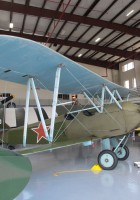
Galería de fotos de un Polikarpov Po-2, The Polikarpov Po-2 (also U-2) served as a general-purpose Soviet biplane, nicknamed Kukuruznik (Russian: Кукурузник, from Russian “kukuruza” (кукуруза) for maize; thus, “maize duster” or “crop duster”), NATO reporting name “Mule”. The reliable, uncomplicated concept of the Po-2’s design made it an ideal training aircraft, as well as doubling as a low-cost ground attack, aerial reconnaissance, psychological warfare and liaison aircraft during war, proved to be one of the most versatile light combat types to be built in the Soviet Union. As of 1978 it remained in production for a longer period of time than any other Soviet-era aircraft. It is one of the most produced aircraft, and may be the most produced biplane with production possibly as high as 30,000 Po-2s built between 1928 and 1959.However, production figures for Polikarpov U-2 and Po-2 bombers and trainers combined are between 20,000 and 30,000. with production ending as early as 1952.

Fuente: Polikarpov Po-2 en Wiki
Continuar leyendo

Vistas : 8198