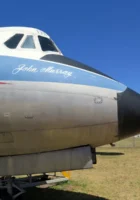
Vizconde de Vickers V.818

Vickers Viscount

PaísUk
PapelAvión de pasajeros turbohélice
Primer vuelo16 de julio de 1948
Construido445

el Vizconde de Vickers was a British medium-range turboprop airliner first flown in 1948 by Vickers-Armstrongs. A design requirement from the Brabazon Committee, it entered service in 1953 and was the first turboprop-powered airliner. The Viscount was well received by the public for its cabin conditions, which included pressurisation, reductions in vibration and noise, and panoramic windows. It became one of the most successful and profitable of the first post-war transport aircraf, 445 Viscounts were built for a range of international customers, including in North America.

Fuente: Vickers Viscount en Wikipedia

Continuar leyendo

Vistas : 1664

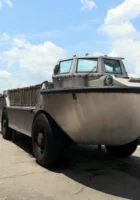
LARC V

LARC-V

PaísE.e.u.u
PapelVehículo de carga anfibio
ProducidoDécada de 1950
ConstruidoUnknow

LARC-V (Lighter, Amphibious Resupply, Cargo, 5 ton), is an aluminium-hulled amphibious cargo vehicle capable of transporting 5 tons. It was developed in the United States during the 1950s, and is used in a variety of auxiliary roles to this day. In addition to the United States, Larc-Vs have been used by military forces in Australia, Argentina, Portugal, Philippines, Singapore and Iceland. Approximately 968 were made. About 500 were destroyed, most by scuttling during the American withdrawal from South Vietnam. About 200 have been retained in U.S. military service. Roughly 100 are privately owned and mostly used for tourism. These include tourist trips on the Jökulsárlón ice lake in Iceland and city and harbour tours in Halifax, Nova Scotia.

Fuente: LARC-V en Wikipedia

Continuar leyendo

Vistas : 3327

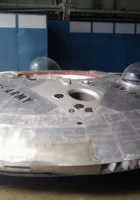
Avro Canadá VZ-9AV Avrocar

Avro Canada VZ-9 Avrocar

PaísE.e.u.u
PapelVehículo experimental VTOL
Primer vuelo12 de noviembre de 1959
Construido2

The Avro Canada VZ-9 Avrocar was a VTOL aircraft developed by Avro Canada as part of a secret U.S. military project carried out in the early years of the Cold War. The Avrocar intended to exploit the Coandă effect to provide lift and thrust from a single “turborotor” blowing exhaust out the rim of the disk-shaped aircraft. In the air, it would have resembled a flying saucer. Originally designed as a fighter-like aircraft capable of very high speeds and altitudes, the project was repeatedly scaled back over time and the U.S. Air Force eventually abandoned it. Development was then taken up by the U.S. Army for a tactical combat aircraft requirement, a sort of high-performance helicopter. In flight testing, the Avrocar proved to have unresolved thrust and stability problems that limited it to a degraded, low-performance flight envelope; subsequently, the project was cancelled in September 1961.

Fuente: Avro Canada VZ-9 Avrocar en Wikipedia

Continuar leyendo

Vistas : 2088

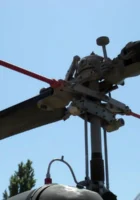
Bell UH-13H Sioux

Bell H-13 Sioux

PaísE.e.u.u
PapelHelicóptero ligero de observación
Primer vuelo8 de diciembre de 1945
Construido2400+

el Bell H-13 Sioux fue un helicóptero ligero monomotor de un solo rotor construido por Bell Helicopter. Westland Aircraft fabricó los Sioux bajo licencia para el ejército británico como los Sioux AH.1 y HT.2.

Fuente: Bell H-13 Sioux en Wikipedia

Continuar leyendo

Vistas : 4990

Doak 16 VZ-4DA

Doak VZ-4

PaísE.e.u.u
PapelConvertiplano de investigación VTOL
Primer vuelo25 de febrero de 1958
Construido1

el Doak VZ-4 (o Doak Model 16) fue un prototipo estadounidense de avión de despegue y aterrizaje vertical (VTOL) construido en la década de 1950 para el servicio en el Ejército de los Estados Unidos. Solo se construyó un prototipo, y el Ejército de los Estados Unidos lo retiró de las pruebas activas en 1963.

Fuente: Doak VZ-4 en Wikipedia

Continuar leyendo

Vistas : 2086

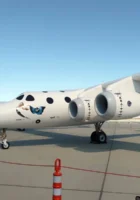
Modelo 348 de compuestos a escala

Scaled Composites Model 348

PaísE.e.u.u
PapelAvión espacial volador
Primer vuelo21 de diciembre de 2008
Construido1

el Modelo 348 de compuestos a escala White Knight Two (WK2) is a quadjet cargo aircraft that is used to lift the SpaceShipTwo spacecraft to release altitude. It was developed by Scaled Composites from 2007 to 2010 as the first stage of Tier 1b, a two-stage to suborbital-space manned launch system. WK2 is based on the successful mothership to SpaceShipOne, White Knight, which itself is based on Proteus. With an “open architecture” design and explicit plans for multi-purpose use, the aircraft could also operate as a zero-g aircraft for passenger training or microgravity science flights, handle missions in high-altitude testing more generally, or be used to launch payloads other than SpaceShipTwo. A study of use of the aircraft as a forest fire water bomber has also been mentioned, one that would utilize a large carbon composite water tank that could be quickly replenished to make repeat runs over fires.

Fuente: Modelo 348 de scaled Composites en Wikipedia

Continuar leyendo

Vistas : 1114

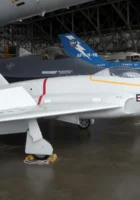
Northrop X-4 Bantam

Northrop X-4 Bantam

PaísE.e.u.u
PapelPrototipo de avión sin cola
Primer vuelo15 de diciembre de 1948
Construido2

el Northrop X-4 Bantam fue un prototipo de pequeño avión twinjet fabricado por Northrop Corporation en 1948. No tenía superficies de cola horizontales, dependiendo en cambio de las superficies combinadas de control de elevador y alerón (llamadas elevons) para el control en actitudes de cabeceo y balanceo, casi exactamente a la manera del Messerschmitt Me 163 de formato similar, propulsado por cohetes de la Luftwaffe de la Alemania nazi. Algunos aerodinámicos habían propuesto que la eliminación de la cola horizontal también eliminaría los problemas de estabilidad a velocidades rápidas (llamados bloqueos) resultantes de la interacción de las ondas de choque supersónicas de las alas y los estabilizadores horizontales. La idea tenía mérito, pero los sistemas de control de vuelo de esa época impidieron que el X-4 tuviera éxito.

Fuente: Northrop X-4 Bantam en Wikipedia

Continuar leyendo

Vistas : 1834

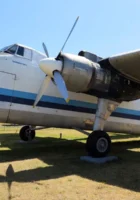
Carguero Bristol 170

Bristol Freighter

PaísUk
PapelAviones de carga
Primer vuelo2 de diciembre de 1945
Construido214

el Carguero Bristol Tipo 170 was a British twin-engine aircraft designed and built by the Bristol Aeroplane Company as both a freighter and airliner. Its best known use was as an air ferry to carry cars and their passengers over relatively short distances. A passenger-only version was also produced, known as the Wayfarer. The Freighter was developed during the Second World War, having attracted official attention from the British Air Ministry, which sought the development of a rugged vehicle capable of carrying various cargoes, including a 3-ton truck. Various changes to the design were made to accommodate their requirements, but being completed too late to participate in the conflict, the majority of sales of the Freighter were to commercial operators. In response to customer demand, an enlarged version to maximise vehicle-carrying capacity, known as the Bristol Superfreighter, was developed.

Fuente: Bristol Freighter en Wikipedia

Continuar leyendo

Vistas : 2377

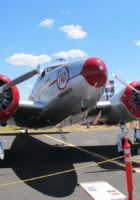
Lockheed Electra 12A

Lockheed Electra 12

PaísE.e.u.u
PapelAeronaves utilitarias civiles y militares
Primer vuelo27 de junio de 1936
Construido130

el Lockheed Modelo 12 Electra Junior, más comúnmente conocido como Lockheed 12 o L-12, es un avión de transporte bimotor totalmente metálico de ocho asientos y seis pasajeros de finales de la década de 1930 diseñado para su uso por pequeñas aerolíneas, empresas y particulares ricos. Una versión reducida del Lockheed Model 10 Electra, el Lockheed 12 no fue popular como avión de pasajeros, pero fue ampliamente utilizado como transporte corporativo y gubernamental. Varios también se utilizaron para probar nuevas tecnologías de aviación.

Fuente: Lockheed Electra 12 en Wikipedia

Continuar leyendo

Vistas : 2216

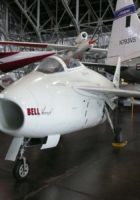
Campana X-5

Bell X-5

PaísE.e.u.u
PapelAviones de investigación
Primer vuelo20 de junio de 1951
Construido2

el Campana X-5 fue el primer avión capaz de cambiar el barrido de sus alas en vuelo. Se inspiró en el diseño P.1101 no probado en tiempos de guerra de la compañía alemana Messerschmitt. En contraste con el diseño alemán, que sólo podía tener el ángulo de barrido de las alas ajustado en el suelo, los ingenieros de Bell idearon un sistema de motores eléctricos para ajustar el barrido en vuelo.

Fuente: Bell X-5 en Wikipedia

Continuar leyendo

Vistas : 1285