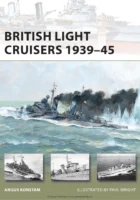
194 - Britiske lette krydsere 1939-45

Osprey Publishing

Ref

New Vanguard 194

ISBN9781849086844
Author
IllustratorPaul Wright

En bog signeret Fiskeørn Publishing bogen «British Light Cruisers 1939-45 – NEW VANGUARD 194» .

Den lette krydser var en naturlig udvikling af sejlfregatten – et hurtigt multifunktionelt krigsskib, der kunne patruljere søvejene, beskytte konvojer og spejde efter fjendtlige kampflåder. I mellemkrigstiden var behovet for denne type skibe endnu vigtigere i betragtning af det stigende behov for beskyttelse mod fly og behovet for at afskærme flåden mod ubåde eller destroyere. Krigserfaringerne havde vist, at den britiske lette krydser var en af de mest alsidige skibstyper i Royal Navy, der var i stand til at beskytte andre krigsskibe, bombardere fjendens kyster, bevogte livreddende konvojer og opfange og ødelægge fjendtlige krigsskibe. Disse var virkelig arbejdshestene i krigstidens Royal Navy. Mens slagskibene og hangarskibene tog overskrifterne, gik disse slanke, elegante krigsskibe stille og roligt i gang med arbejdet med at sikre kontrol over havene.

Kilde: Osprey

Fortsæt med at læse

Visninger: 815

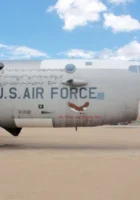
Boeing NB-52A Stratofortress

Boeing NB-52A Stratofortress

LandUsa
Type

Langtrækkende, subsonisk, jetdrevet strategisk bombefly

Første flyvning15. april 1952
Bygget744

Photo gallery of a Boeing NB-52A Stratofortress, The Boeing B-52 Stratofortress is a long-range, subsonic, jet-powered strategic bomber. The B-52 was designed and built by Boeing, who have continued to provide support and upgrades. It has been operated by the United States Air Force (USAF) since the 1950s. The bomber carries up to 70,000 pounds (32,000 kg) of weapons. Beginning with the successful contract bid in June 1946, the B-52 design evolved from a straight-wing aircraft powered by six turboprop engines to the final prototype YB-52 with eight turbojet engines and swept wings. The B-52 took its maiden flight in April 1952. Built to carry nuclear weapons for Cold War-era deterrence missions, the B-52 Stratofortress replaced the Convair B-36. Although a veteran of several wars, the Stratofortress has dropped only conventional munitions in combat. Its Stratofortress name is rarely used outside of official contexts; it has been referred to by Air Force personnel as the BUFF (Big Ugly Fat/Flying Fucker/Fellow).

Kilde: Boeing NB-52A Stratofortress på Wikipedia

Fortsæt med at læse

Views : 2704

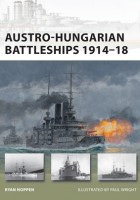
Østrig-ungarske slagskibe 1914-18 - NY FORTROP 193

Fiskeørn Publishing

Ref

Ny fortrop 193

ISBN9781849086882
Forfatter
IllustratorPaul Wright

En bog signeret Fiskeørn Publishing bogen «Østrig-ungarske slagskibe 1914-18 - NY AVANTGARDE 193» .

Østrig-Ungarn havde ikke et oversøisk imperium; dets imperium lå inden for sine egne grænser, og det primære formål med dets flåde indtil begyndelsen af det tyvende århundrede var forsvaret af dets kystlinje. Da handelsflåden voksede dramatisk, mente admiralerne, at flåden skulle tage en mere proaktiv forsvarspolitik. I 1890'erne begyndte en række flådebygningsprogrammer, der ville skabe en velafbalanceret moderne flåde. Krydsere blev bygget til beskyttelse af oversøisk handel og for at "vise flaget", men den afgørende projektion af Østrig-Ungarns forpligtelse til at kontrollere Adriaterhavet var opførelsen af en styrke af moderne slagskibe. På trods af flådevåbenkapløbet i hele Europa på det tidspunkt havde flåden svært ved at skaffe midler til nye skibe. Vanskelighederne med finansiering og konstruktion af slagskibe afspejlede de politiske vanskeligheder og etniske rivaliseringer inden for imperiet. Ikke desto mindre havde østrig-ungareren i august 1914 en flåde af slagskibe. Denne bog beskriver de fem klasser af østrig-ungarske slagskibe i tjeneste under første verdenskrig.

Kilde: Fiskeørn Publishing

Fortsæt med at læse

Set antal gange : 1222

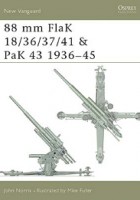
88 mm FlaK 18/36/37/41 og PaK 43 1936-45 - NY FORTROP 46

Fiskeørn Publishing

Ref

New Vanguard 46

ISBN9781841763415
Forfatter
IllustratorMike Fuller

Un livre signé Fiskeørn Publishing le livre «88 mm FlaK 18/36/37/41 and PaK 43 1936–45 – NEW VANGUARD 46» .

The German 88 mm was by far the most famous and versatile artillery weapon of World War II. It was first used as an anti-aircraft weapon by the Condor Legion during the Spanish Civil War and saw further service in the German invasions of Poland and France, where it was first used in its anti-tank role. This role was particularly successful and the 88 became feared by tank crews from North Africa to Russia. Apart from these two main roles the 88 mm was used as the main weapon on late-war German tanks, as a self-propelled gun, and even as an aerial weapon. This book covers all these variants, explaining their design, development and operational use.

Kilde: osprey

Fortsæt med at læse

Visninger : 1124

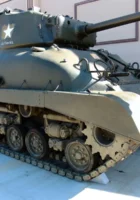
M4A1 ShermanM4A1 Sherman

M4A1 Sherman

LandUsa
Rolle

Mellemstor tank

Fotogalleri af en M4A1 Sherman, The M4 Sherman, formally Medium Tank, M4, was the primary tank used by the United States during World War II. Thousands were also distributed to the Allies, including the British Commonwealth and the Soviet Union, via lend-lease. In the United Kingdom, the M4 was named after Union General William Tecumseh Sherman, following the British practice of naming their American-built tanks after famous American Civil War generals. Subsequently, the British name found its way into common use in the U.S. The Sherman evolved from the Grant and Lee medium tanks, which had an unusual side-sponson mounted 75 mm gun. It retained much of the previous mechanical design, but added the first American main 75 mm gun mounted on a fully traversing turret, with a gyrostabilizer enabling the crew to fire with reasonable accuracy while the tank was on the move. The designers stressed mechanical reliability, ease of production and maintenance, durability, standardization of parts and ammunition in a limited number of variants, and moderate size and weight. These factors made the Sherman superior in some regards to the earlier German light and medium tanks of 1939-41. The Sherman ended up being produced in large numbers and formed the backbone of most Allied offensives, starting in late 1942.

Kilde: M4A1 på Wikipedia

Fortsæt med at læse

Views : 11061

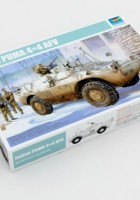
Italiensk PUMA 4×4 AFV - Trompetist 05525

Trumpeter

Ref 05525
EmneModeller
Skala1/35
Emne

Italian PUMA 4×4 AFV

En model af mærket Trumpeter sættet: Italian PUMA 4×4 AFV – Trumpeter 05525.

Features : The kit consists of over 410 parts -multi-slide moulded upper hull -the kit w/refined detail -Rubber tyres w/fine detail -Included Photo-etched parts

The Puma Armoured Fighting Vehicles are a family of light wheeled armoured vehicles developed in a 4×4 and 6×6 configuration by the Consorzio Iveco Fiat – Oto Melara based in Rome. The Puma were developed for the Italian Army to complement the fleet of Centauro Tank Destroyer. Iveco Fiat were awarded a contract by the Italian Army for the development of Puma platforms carrying missiles, a mortar carrier, an ambulance and a command post vehicle. At the end of 1999, the Italian Army ordered 580 Puma vehicles, 250 of the 6×6 configuration, and 330 4×4 vehicles. First vehicles were completed in mid-2003. The Puma was first deployed operationally in Southern Iraq in early 2005.

Kilde: Italian PUMA 4×4 AFV on Trumpeter

Fortsæt med at læse

Set antal gange : 1043

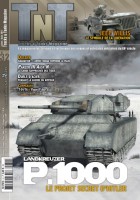
S.1000 Ratte Jorden leviathan - Anmeldelse TnT 32

Magasinet Trucks & Tanks

forlægger Carakterian
TiterS.1000 Ratte Den jordiske Leviathan
Ref32
Emner

P.1000 Ratte, Jeep Willys, Panzer III, Bagration...

S.1000 Ratte : Le Léviathan terrestre – The Jeep Willys : Le symbole de la Victoire – Panzer III Ausf. N : La garde rapprochée des Tiger – Mappe: Bagration : L’Armée Rouge reprend la main – Stål dueller : Les combats de chars pendant la guerre du Kippour – Camouflere : LT vz. 35 sous les couleurs étrangères – Komparativ : T-34/76 mod. Panzer IV Ausf. G
Kilde: Magasinet Trucks & Tanks
Fortsæt med at læse

Set antal gange : 1258

NY VANGUARD 33

Osprey Publishing

Ref33
SerieNy fortrop
ISBN9781855329119
AuteurSteven J Zaloga
IllustratorUlla Tørnæs

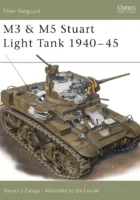
Un livre signé Fiskeørn Publishing le livre «M3 & M5 Stuart Light Tank 1940–45 – NEW VANGUARD 33» .

The M3 and M5 family of light tanks were the culmination of American tank development of the 1930s. By the time of the outbreak of the World War II, they were approaching obsolescence, as tank forces in Europe were shifting from light to medium tanks as the main element of their armored forces. First entering combat in the autumn of 1941 in the Western Desert with the British Army, the Stuart quickly proved its inadequacies. The M3 and M5 light tanks proved more suitable in the Pacific theater than in Europe, and fought successfully in many of the major battles including Guadalcanal, Tarawa and Peleliu. This title narrates this distinctive and unusual fighting vehicle’s history.

Kilde: osprey

Fortsæt med at læse

Visninger : 1073