USS Intrepid CVA-11

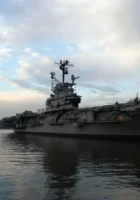
USS Intrepid

CountryUSA
Class and typeEssex-class aircraft carrier
Launched26 April 1943
Decommissioned15 March 1974

USS Intrepid (CV/CVA/CVS-11), also known as The Fighting “I”, is one of 24 Essex-class aircraft carriers built during World War II for the United States Navy. She is the fourth US Navy ship to bear the name. Commissioned in August 1943, Intrepid participated in several campaigns in the Pacific Theater of Operations, most notably the Battle of Leyte Gulf. Decommissioned shortly after the end of the war, she was modernized and recommissioned in the early 1950s as an attack carrier (CVA), and then eventually became an antisubmarine carrier (CVS). In her second career, she served mainly in the Atlantic, but also participated in the Vietnam War.

Source: USS Intrepid on Wikipedia
Continue reading

Views : 2570

Handley-Page-Halifax

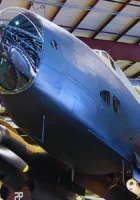
Handley Page Halifax

CountryUK
RoleHeavy bomber
First flight25 October 1939
Built6176

The Handley Page Halifax was a Royal Air Force (RAF) four-engined heavy bomber of the Second World War. It was developed by Handley Page to the same specification as the contemporary twin-engine Avro Manchester. The Halifax has its origins in the twin-engine HP56 proposal of the late 1930s, produced in response to the British Air Ministry’s Specification P.13/36 for a capable medium bomber for “world-wide use.” The HP56 was ordered as a backup to the Avro 679, both aircraft being designed to use the underperforming Rolls-Royce Vulture engine. The Handley Page design was altered at the Ministry to a four-engine arrangement powered by the Rolls-Royce Merlin engine; the rival Avro 679 was produced as the twin-engine Avro Manchester which, while regarded as unsuccessful mainly due to the Vulture engine, was a direct predecessor of the famed Avro Lancaster. Both the Lancaster and the Halifax would emerge as capable four-engined strategic bombers, thousands of which would be built and operated by the RAF and several other services during the War.

Source: Handley Page Halifax on Wikipedia
Continue reading

Views : 3553

Canadair-CP-107-Argus

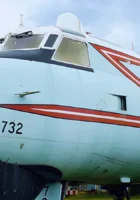
Canadair CP-107 Argus

CountryCanada
RoleMaritime patrol aircraft
First flight28 March 1957
Built33

The Canadair CP-107 Argus (CL-28) was a marine reconnaissance aircraft designed and manufactured by Canadair for the Royal Canadian Air Force (RCAF). In its early years, the Argus was reputedly the finest anti-submarine patrol bomber in the world. The Argus served throughout the Cold War in the RCAF’s Maritime Air Command and later the CF’s Maritime Air Group and Air Command.

Source: Canadair CP-107 Argus on Wikipedia
Continue reading

Views : 1887

Canadair CF-104D Starfighter

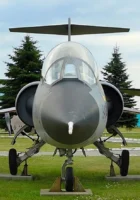
Canadair CF-104 Starfighter

CountryCanada
RoleInterceptor aircraft, Fighter-bomber
First flight26 May 1961
Built200

The Canadair CF-104 Starfighter (CF-111, CL-90) was a modified version of the Lockheed F-104 Starfighter supersonic fighter aircraft built in Canada by Canadair under licence. It was primarily used as a ground attack aircraft, despite being designed as an interceptor. It served with the Royal Canadian Air Force (RCAF) and later the Canadian Armed Forces (CAF) until it was replaced by the McDonnell Douglas CF-18 Hornet.

Source: Canadair CF-104 Starfighter on Wikipedia
Continue reading

Views : 1861

Canadair CF-116 F5 Freedom Fighter

Canadair CF-5

CountryCanada
RoleFighter-bomber
First flight6 May 1968
Built240

The Canadair CF-5 (officially designated the CF-116 Freedom Fighter) is the Canadair licensed-built version of the American Northrop F-5 Freedom Fighter aircraft primarily for the Canadian Forces (as the CF-5) and the Royal Netherlands Air Force (as the NF-5). The CF-5 was upgraded periodically throughout its service career in Canada. The Canadian Forces retired the type in 1995, although CF-5s continue to be used by other countries.

Source: Canadair CF-5 on Wikipedia
Continue reading

Views : 2083

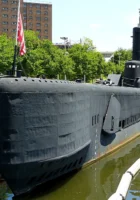
Submarine USS Croaker

USS Croaker

CountryUSA
RoleNasty-class patrol boat
Launched19 December 1943
Decommissioned2 April 1968

USS Croaker (SS/SSK/AGSS/IXSS-246), a Gato-class submarine, was the first ship of the United States Navy to be named for the croaker, any of various fishes which make throbbing or drumming noises. Her keel was laid down on 1 April 1943 by Electric Boat Company in Groton, Connecticut. She was launched on 19 December 1943 (sponsored by the wife of Admiral William H. P. Blandy), and commissioned on 21 April 1944, with Commander John E. Lee in command.

Source: USS Croaker on Wikipedia
Continue reading

Views : 1383

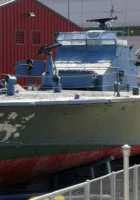
Trumpy PTF-17 Patrol Torpedo Fast Boat

Trumpy PTF-17 Patrol Torpedo Fast Boat

CountryUSA
RoleNasty-class patrol boat
Entered service1967
BuiltUnknow

The Nasty class of fast patrol boats were a set of 20 vessels built for the United States Navy to a Norwegian design and purchased in the 1960s for covert operations during the Vietnam War. Following the conflict they remained in service until the early 1980s. PTF 17: 1967 by Trumpy (Stricken 1981)

Source: PTF-17 Patrol Torpedo on Wikipedia
Continue reading

Views : 1805

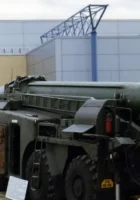
MAZ-543 SCUD B

MAZ-543

CountrySoviet Union
RoleSpecialist carrier vehicle
Entered service1962
BuiltUnknow

The MAZ-543/MAZ-7310 “Uragan” (Russian: МАЗ-543/МАЗ-7310 “Ураган”/Hurricane) is a Soviet/Belarusian 8×8 artillery truck designed and developed by MAZ (Minsk Automobile Plant), in what is now Belarus.

Source: MAZ-543 on Wikipedia
Continue reading

Views : 7115

Fairey Swordfish Mk III

Fairey Swordfish

CountryUK
RoleTorpedo-bomber
First flight17 April 1934
Built2391

The Fairey Swordfish was a biplane torpedo bomber designed by the Fairey Aviation Company. Originating in the early 1930s, the Swordfish, nicknamed “Stringbag”, was operated by the Fleet Air Arm of the Royal Navy, in addition to having been equipped by the Royal Air Force (RAF) alongside multiple overseas operators, including the Royal Canadian Air Force (RCAF) and the Royal Netherlands Navy. It was initially operated primarily as a fleet attack aircraft. During its later years, the Swordfish became increasingly used as an anti-submarine and training platform. The type was in frontline service throughout the Second World War, but it was already considered obsolete at the outbreak of the conflict in 1939.

Source: Fairey Swordfish on Wikipedia
Continue reading

Views : 4559

9K33 Osa

9K33 Osa

CountrySoviet Union
Role6×6 amphibious SAM system
In serviceN1971–present
Built1200

The 9K33 Osa (English: wasp; NATO reporting name SA-8 Gecko) is a highly mobile, low-altitude, short-range tactical surface-to-air missile system designed in the Soviet Union. Its export version name is Romb.

Source: 9K33 Osa on Wikipedia
Continue reading

Views : 2413