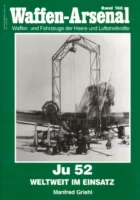
Das waffen arsenal 168 - Ju 52 Weltweit im Einsatz

Waffen Arsenal

SujetJunkers JU 52
Réf168

Une documentation signée Waffen Arsenal la revue «Junkers JU 52 – Waffen Arsenal 168» .

Le Junkers Ju 52 (surnommé Tante Ju en allemand, Iron Annie par les Anglais), était un avion de transport en tôle ondulée fabriqué par la firme allemande Junkers à partir des années 1930. Construit à plus de 4800 exemplaires, il a été utilisé par de nombreuses compagnies aériennes, mais aussi comme avion de transport militaire et bombardier pendant la Seconde Guerre mondiale. Preuve de sa robustesse, trois exemplaires du Junkers Ju 52 ont été utilisés par l’armée suisse jusque dans les années 1980.

Source: Wikipedia

Continue reading

Views : 736

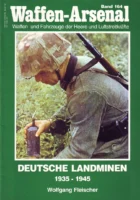
Waffen-Arsenal 164 - deutsche landminen 1935-1945

Waffen Arsenal

SeriesWaffen Arsenal
Sujet

German Landminen - Mines

Réf164

Signed documentation Waffen Arsenal "German Landminen - Waffen Arsenal 164" magazine .

A landmine is an explosive charge that is triggered by the involuntary action of the enemy in the passage of persons (anti-personnel mine) or vehicles (anti-tank or anti-vehicle mine).

Source: Wikipedia

Continue reading

Views: 863

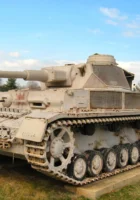
Panzer IV

Panzer IV

CountryNazi Germany
RoleMedium tank
In service1939–1945
Built8550+

The Panzerkampfwagen IV (PzKpfw IV), commonly known as the Panzer IV, was a German medium tank developed in the late 1930s and used extensively during the Second World War. Its ordnance inventory designation was Sd.Kfz. 161. The Panzer IV was the most widely manufactured German tank of the Second World War, with some 8,500 built. The Panzer IV chassis was used as the base for many other fighting vehicles, including the Sturmgeschütz IV assault gun, Jagdpanzer IV tank destroyer, the Wirbelwind self-propelled anti-aircraft gun, and the Brummbär self-propelled gun.

Source: Panzer IV on Wikipedia

Continue reading

Views : 21390

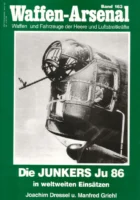
Waffen-Arsenal 163 - Ju-86_in_weltweiten_Einsatzen

Waffen Arsenal

SeriesWaffen Arsenal
Sujet

Junkers JU 86

Réf163

Signed documentation Waffen Arsenal magazine "Junkers JU 86 - Waffen Arsenal 163" .

The Junkers Ju 86 is a twin-engine, low-wing monoplane used by the Luftwaffe in the 1930s and 1940s. Approximately 900 copies of the aircraft were delivered between 1936 and 1942, all civilian and military versions combined.

Source: Wikipedia

Continue reading

Views : 1282

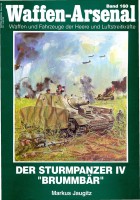
Sturmpanzer IV - Brummbär - Waffen Arsenal 160

Waffen Arsenal

SeriesWaffen Arsenal
Sujet

Sturmpanzer IV - Brummbur

Réf160

Signed documentation Waffen Arsenal the magazine "Sturmpanzer IV - Brummbur - Waffen Arsenal 160" .

The Sturmpanzer IV (also known as Sturmpanzer 43 or Sd.Kfz 166) was an assault cannon for infantry support based on the chassis of the Panzer IV and used by the Wehrmacht during World War II. He was nicknamed Brummbur by the Allied intelligence services, Stupa by the Germans.

Source: Wikipedia

Continue reading

Views : 1900

Waffen-Arsenal 159 - Heinkel He-112

Waffen Arsenal

SeriesWaffen Arsenal
Sujet

Heinkel He 112

Réf159

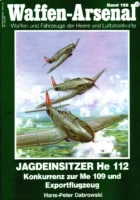
Signed documentation Waffen Arsenal the magazine "Heinkel He 112 - Waffen Arsenal 159" .

Heinkel He 112 is an interwar military aircraft, a fighter aircraft designed by Walter and Siegfried Gonter. It was one of four competing aircraft in the Luftwaffe tender in 1933, which was eventually won by the Messerschmitt Bf 109. A small number were used for a short time by the Luftwaffe, and small series were made for several other countries, but fewer than 100 were built in total. This remains one of the least known hunter designs.

Source: Heinkel He 112 on Wikipedia

Continue reading

Views: 1123

Waffen-Arsenal 154 - Flammenwerfer

Waffen Arsenal

SérieWaffen Arsenal
Sujet

Flammenwerfer

Réf

154


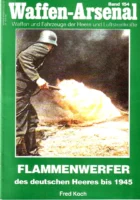
Une documentation signée Waffen Arsenal la revue «Flammenwerfer – Waffen Arsenal 154» .

Le lance-flammes est un dispositif mécanique conçu pour jeter des flammes ou, plus précisément, projeter un liquide mis à feu. Son usage est notamment militaire mais est également utilisé par ceux qui ont besoin de brûler des terres et des espaces boisés, comme dans l’agriculture ou l’aménagement forestier. Beaucoup de lance-flammes non militaires modernes n’utilisent pas un jet brûlant de liquide, mais mettent à feu un jet de gaz inflammable à haute pression, tel que le propane ou le gaz naturel, et sont considérés plus sûrs pour l’usage agricole, industriel, ou récréatif.

Source: Flammenwerfer sur Wikipedia

Continue reading

Views : 645

Waffen-Arsenal 151 - Junkers Ju-87 Stuka

Waffen Arsenal

SeriesWaffen Arsenal
Sujet

Junkers JU 87

Réf151

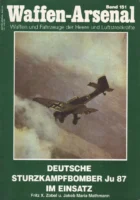
Signed documentation Waffen Arsenal the magazine «Junkers JU 87 – Waffen Arsenal 151» .

Le Junkers Ju 87 en service de 1937 à 1945, était le plus célèbre des bombardiers en piqué (Sturzkampfflugzeug en allemand, soit Stuka en abrégé) de la Luftwaffe, employé essentiellement durant la Seconde Guerre mondiale. Nota : Le terme Stuka désigne en allemand tout appareil de bombardement en piqué. Cependant, la légende du Ju87 et son exclusivité dans ce rôle au sein de la Luftwaffe de la Seconde Guerre mondiale fit que ce nom lui est maintenant spécifiquement (mais non exclusivement) attribué.

Source: Wikipedia

Continue reading

Views : 1218

Waffen-Arsenal 150 - Deutsche Minen-und Granatwerfer 1914-1945

Waffen Arsenal

Sujet

Deutsche Minen – Granatwerfer 1914 -1945

Réf150
 

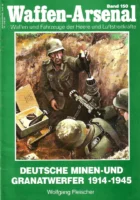
Une documentation signée Waffen Arsenal la revue «Deutsche Minen – Granatwerfer 1914 -1945 – Waffen Arsenal 150» .

Le Granatwerfer 34 est un mortier de calibre 81 mm allemand de la Seconde Guerre mondiale.

Source: Wikipedia

Continue reading

Views : 1238

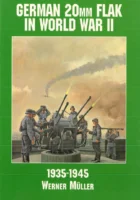
Waffen-Arsenal 142 - German-20mm-flak-in-world-war-ii-1935-1945

Waffen Arsenal

EditeurWerner Müller
Sujet

Flak 2cm

Réf142

Une documentation signée Waffen Arsenal la revue «Flak 2cm – Wydawnictwo Militaria 142» .

Flak est l’abréviation du mot allemand Fliegerabwehrkanone, signifiant « canon antiaérien ». Le mot peut être pris selon deux sens : la flak (n.f., lui-même abréviation de Flakartillerie) étant le nom générique des unités de batteries antiaériennes statiques, ou les unités de DCA attachées aux unités combattantes ; le flak (n.m.) peut désigner quant à lui un canon antiaérien (par exemple le Flak 43).

Source: Wikipedia

Continue reading

Views : 817