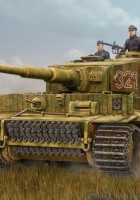
Pz.Kpfw. VI Tiger I - HOBBY BOSS 82601

Hobby Boss

Scale1/35
Ref82601
Topic

Pz.Kpfw. VI Tiger I

A model of the brand HobbyBoss the kit : Pz.Kpfw. VI Tiger I – HOBBY BOSS 82601

Features : the kit is a simplified version consists of over 460 parts

Panzerkampfwagen VI Tiger Ausf.E, often shortened to Tiger. It was an answer to the unexpectedly formidable Soviet armour encountered in the initial months of the Axis invasion of the Soviet Union, particularly the T-34 and the KV-1. The Tiger I is the first tank mounting the 88 mm gun, in its initial armored fighting vehicle-dedicated version, which in its Flak version had previously demonstrated its effectiveness against both air and ground targets. During the course of the war, the Tiger I saw combat on all German battlefronts. It was usually deployed in independent tank battalions, which proved to be quite formidable. While the Tiger I was feared by many of its opponents, it was over-engineered, used expensive and labour intensive materials and production methods, and was time-consuming to produce. Only 1,347 were built between August 1942 and August 1944.

Source: Hobby Boss

Continue reading

Views : 3693

Israel Merkava ARV - HOBBY BOSS 82457

Hobby Boss

Scale1/35
Ref82457
Topic

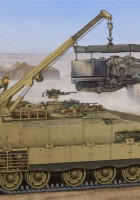
Israel Merkava ARV

A model of the brand HobbyBoss the kit : Israel Merkava ARV – HOBBY BOSS 82457

Features : The kit consists of over 1070 parts – Multi-directional slide moulded lower hull and upper hull – 216 individual tracks links – Photo-etched parts included

One of the two types of Merkava-based armoured recovery vehicles being trialed. This is the variant with the lighter lift capacity. Although officially built upon the hull of a Merkava 3,this model seems to have many of the characteristics of the Merkava 4. Note the characteristic Merkava 4 style engine exhaust and glacis plate. The machine is fitted with Merkava 3 style tracks. Also note the type of grid armour for the side skirts characteristic of the Merkava 4. Note the two FN 7.62mm machine guns for crew protection.

Source: Hobby Boss

Continue reading

Views : 1365

Soviet T-64B MOD 1975 - Trumpeter 01581

Trumpeter

Ref 01581
TypeModel kit
Scale1/35
Topic

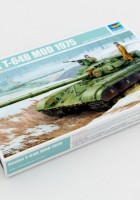
Soviet T-64B MOD 1975

A model of the brand Trumpeter the kit: Soviet T-64B MOD 1975 – Trumpeter 01581.

Features : The kit consists of over 550 parts -the kit w/refined detail -multi-slide moulded lower hull -plastic tracks links -Included Photo-etched parts

The T-64 was conceived in Kharkov as the next-generation main battle tank by Alexander A. Morozov, the designer of the T-54. A revolutionary feature of the T-64 is the incorporation of an automatic loader for its 125-mm gun,allowing a crewmember’s position to be omitted, and helping to keep the size and weight of the tank down,and the T-64B of 1976 would be able to fire a guided antitank missile through its gun barrel. The T-64 would be used only by the Soviet Army and never exported, unlike the T-54/55. It was superior to these tanks in most qualitative terms, until the introduction of the T-72B model in 1985. The tank equipped elite and regular formations in Eastern Europe and elsewhere, the T-64A model being first deployed with East Germany’s Group of Soviet Forces in Germany (GSFG) in 1976, and some time later in Hungary’s Southern Group of Forces (SFG). By 1981 the improved T-64B began to be deployed in East Germany and later in Hungary.

Source: Trumpeter

Continue reading

Views : 1286

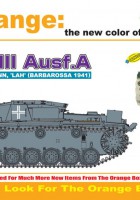
StuG.III Ausf.A, Michael Wittmann, 'LAH' (Barbarossa 1941) - Cyber-Hobby 9143

Cyber-Hobby

Ref 9143
TypeModel kit
Scale1/35
Topic

StuG.III Ausf.A, Michael Wittmann, ‘LAH’ (Barbarossa 1941)

A model of the brand Cyber-Hobby the kit : StuG.III Ausf.A, Michael Wittmann, ‘LAH’ (Barbarossa 1941) – Cyber-Hobby 9143.

Source: Cybber-Hobby

The Sturmgeschütz III (StuG III) assault gun was Germany’s most produced armoured fighting vehicle during World War II. It was built on the chassis of the proven Panzer III tank. Initially intended as a mobile, armoured light gun for infantry support, the StuG was continually modified and was widely employed as a tank destroyer.

Source: Wikipedia

Continue reading

Views : 1695

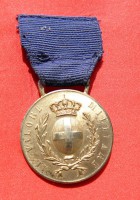
Medal "Gold Medal of Military Valor"

Italy

TypeMilitary decoration
EligibilityJunior officers and soldiers
Awarded forDeeds of outstanding gallantry in war
Established21 May 1793
Total awardednc

The Gold Medal of Military Valor is an Italian medal established on 21 May 1793 by King Victor Amadeus III of Sardinia “….per bassi ufficiali e soldati che avevano fatto azioni di segnalato valore in guerra” (for deeds of outstanding gallantry in war by junior officers and soldiers). The face of the medal displayed the profile of the king, and on its reverse was a flag decoration and the words “al valore” (for valor). On 14 August 1815, Victor Emmanuel I of Sardinia replaced it with the Military Order of Savoy (“l’Ordine militare di Savoia”), now known as the Military Order of Italy. Charles Albert of Sardinia revived it on March 26, 1833, and added to it the Silver and Bronze medals. These had, on their faces, the coat of arms of Savoy with laurel branches, the royal crown, and the words “al valor militare” (for military valor). On the reverse were two laurel branches enclosing the name of the decorated soldier, and the place and date of the action. With the proclamation of the Republic on June 2, 1946, the coat of arms of Savoy was replaced with the emblem of the Italian Republic

Source: Wikipedia

Continue reading

Views : 1846

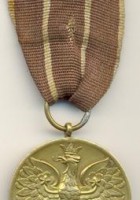
Medal "Army Medal for War 1939-45"

Poland

Type Campaign medal
EligibilityAll members of the Polish Ground Forces
Awarded for6 months of meritorious service
Established 3 July 1945
Total awardednc

The Army Medal for War 1939-45 (Polish: Medal Wojska za Wojne 1939-45) was created in 1945 by the Polish government in Exile (in London) to reward members of the Polish ground forces for service during World War II. The eligibility criteria were: six months of operational service during World War II, or 12 months in a non-operational role. The medal could be conferred up to four times, although for a subsequent award the period of service was doubled.

Source: Wikipedia

Continue reading

Views : 1400

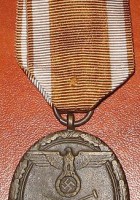
Medal "West Wall Medal"

Nazi Germany

Type Medal
EligibilityMilitary personnel
Awarded forpersonnel who built the fortifications on Germany’s western borders
Established 2 August 1939
Total awarded622,064

The West Wall Medal was a military decoration of Nazi Germany. It was instituted on 2 August 1939 and was given to those who designed and built the fortifications on Germany’s western borders, known as the West Wall or, in English, the Siegfried Line, and to the troops who served there prior to May 1940. In 1944, as Germany was expecting the arrival of the allied invasion, it was again awarded to those who took part in the fortification of the western borders. In all 622,064 medals were awarded until the end of the war.

Source: Wikipedia

Continue reading

Views : 1696

Eastern Front Medal

Nazi Germany

TypeChest order
EligibilityMilitary personnel
Awarded forpersonnel who participated in the first winter of Operation Barbarossa
EstablishedMay 26, 1942
Total awardedover 3 000 000

The Eastern Front Medal, (Winterschlacht Im Osten), more commonly known as the Ostmedaille was instituted on May 26, 1942 to mark service on the German Eastern Front (World War II) during the period November 15, 1941 to April 15, 1942. It was commissioned to recognise the hardship endured by German and Axis Powers personnel, combatant or non-combatant, during the especially bitter Russian winter of ’41/’42. It was wryly called the “Gefrierfleischorden” (Frozen Meat Medal) by the Heer, Luftwaffe & Waffen-SS personnel to whom it was awarded.

Source: Wikipedia

Continue reading

Views : 2109

Hero of the Soviet Union (recto)

Soviet Union

TypeHonorary title
EligibilityCitizens of the Soviet Union
Awarded forheroic feats in service to the Soviet state and society
EstablishedApril 16, 1934
Total awarded12,775

The title Hero of the Soviet Union was the highest distinction in the Soviet Union, awarded personally or collectively for heroic feats in service to the Soviet state and society. The award was established on May 5, 1934, by the Central Executive Committee of the Soviet Union. The first recipients of the title originally received only the Order of Lenin, the highest Soviet award, along with certificate (грамота, gramota) describing the heroic deed from the Presidium of the Supreme Soviet of the USSR. Because the Order of Lenin could be awarded for deeds not qualifying for the title of hero, and to distinguish heroes from other Order of Lenin holders, the Gold Star medal was introduced on August 1, 1939. Earlier heroes were retroactively eligible for these items. The title was also given posthumously, though often without the actual Gold Star medal given. The title could be revoked only by the Presidium of the Supreme Soviet.

Source: Wikipedia

Continue reading

Views : 2265

Medal Defense of Sevastopol (recto)

Soviet Union

TypeCampaign medal
EligibilityCitizens of the Soviet Union
Awarded forParticipation in the defence of Sevastopol
EstablishedDecember 22, 1942
Total awarded52,540

The Medal “For the Defence of Sevastopol” was a World War 2 campaign medal of the Soviet Union established on December 22, 1942 by decree of the Presidium of the Supreme Soviet of the USSR to reward the participants of the defence of the port city of Odessa against the armed forces of NAZI Germany.

Source:

Continue reading

Views : 1300