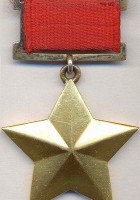
Herói da União Soviética (reto)

União Soviética

TipoTítulo honorário
ElegibilidadeCidadãos da União Soviética
Premiado porfeitos heróicos a serviço do Estado e da sociedade soviética
Estabelecido16 de abril de 1934
Total concedido12,775

The title Hero of the Soviet Union was the highest distinction in the Soviet Union, awarded personally or collectively for heroic feats in service to the Soviet state and society. The award was established on May 5, 1934, by the Central Executive Committee of the Soviet Union. The first recipients of the title originally received only the Order of Lenin, the highest Soviet award, along with certificate (грамота, gramota) describing the heroic deed from the Presidium of the Supreme Soviet of the USSR. Because the Order of Lenin could be awarded for deeds not qualifying for the title of hero, and to distinguish heroes from other Order of Lenin holders, the Gold Star medal was introduced on August 1, 1939. Earlier heroes were retroactively eligible for these items. The title was also given posthumously, though often without the actual Gold Star medal given. The title could be revoked only by the Presidium of the Supreme Soviet.

Fonte: Wikipédia

Continue lendo

Visualizações : 1701

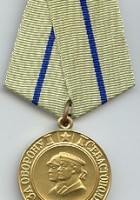
Medalha de Defesa de Sebastopol (reto)

União Soviética

TipoMedalha de campanha
ElegibilidadeCidadãos da União Soviética
Premiado porParticipação na defesa de Sebastopol
Estabelecido22 de dezembro de 1942
Total concedido52,540

A Medalha "Pela Defesa de Sevastopol" foi uma medalha de campanha da 2ª Guerra Mundial da União Soviética estabelecida em 22 de dezembro de 1942 por decreto do Presidium do Soviete Supremo da URSS para recompensar os participantes da defesa da cidade portuária de Odessa contra as forças armadas da Alemanha nazista.

Fonte:

Continue lendo

Views : 858

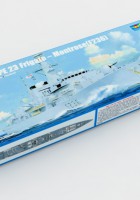
Fragata HMS TYPE 23 - Montrose (F236) - Trompetista 04545

Trumpeter

Ref 04545
TipoKit modelo
Escala1/350
Tópico

HMS TYPE 23 Frigate – Montrose(F236)

Um modelo da marca Trumpeter o kit: HMS TYPE 23 Frigate – Montrose(F236) – Trumpeter 04545.

Features : The kit consists of over 400 parts – Detailed hull w/accurate design – 1 HAS-3 helicopters with fine details included. – photo-etched frets for antenna etc.

The Type 23 frigate is a class of frigate serving with the Royal Navy of the United Kingdom. All the ships are named after British Dukes, thus the class is also known as the Duke class. The first Type 23 was commissioned in 1989, and the sixteenth, HMS St Albans was launched in May 2000 and commissioned in June 2002. The combination of Merlin helicopters with their advanced anti submarine equipment, and Sonar 2087, has according to the Royal Navy, re-affirmed its reputation as a leader in anti-submarine warfare. HMS Montrose is commissioned in June 1994 at Devonport Dockyard.HMS Montrose is attached to the Devonport Flotilla, based in Plymouth.

Fonte: Trompetista

Continue lendo

Vistas: 1629

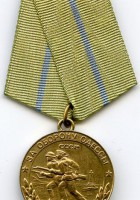
Medal "For the Defence of Odessa"

União Soviética

TipoMedalha de campanha
ElegibilidadeCidadãos da União Soviética
Premiado porParticipação na defesa de Odessa
Estabelecido22 de dezembro de 1942
Total concedido38,000

A Medalha "Para a Defesa de Odessa" foi uma medalha de campanha da 2ª Guerra Mundial da União Soviética estabelecida em 22 de dezembro de 1942 por decreto do Presidium do Soviete Supremo da URSS para recompensar os participantes da defesa da cidade portuária de Odessa das forças armadas da Alemanha nazista.

Fonte: Wikipédia

Continue lendo

Visualizações : 1076

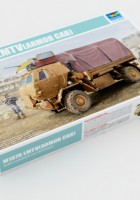
M1078 LMTV (CABINE DE ARMADURA) - Trompetista 01009

Trumpeter

Ref01009
TipoKit modelo
Escala1/35
Tópico

M1078 LMTV(ARMOR CAB)

Um modelo da marca Trumpeter o kit: M1078 LMTV(ARMOR CAB) – Trumpeter 01009.

Features : Detailed multi-directional slide-molded cab. – Full drive train assembly complete with engine transmission, differential housing and suspension units. – The main tires are hollow rubber with very good tread pattern included as well as sidewall details consisting of raised section ribs. – Wheel hubs are in great details with separate hub rings. – The windshield and side windows are made of clear parts. – Photo-etched parts included

O caminhão de carga padrão M1078 foi projetado para transportar cargas e soldados. O M1078 tem uma capacidade de carga útil de 5.000 libras e, para facilitar o carregamento/descarregamento, os trilhos laterais da cama são montados em dobradiças e podem ser abaixados. A caçamba de carga pode ser equipada com um kit opcional de banco corrido para transporte de soldados. Os bancos corridos são construídos em material não madeireiro e fixados às grades laterais da caçamba de carga. Os assentos podem ser rebatidos e arrumados quando não estiverem em uso. Os soldados são auxiliados a entrar e sair da área da caçamba de carga com a ajuda de uma escada guardada no veículo quando não estiver em uso. Um kit de lona e arcos está disponível para manter os soldados e a carga protegidos das intempéries. O M1078 pode ser equipado com um kit de guincho de auto-recuperação opcional capaz de operações de recuperação de veículos dianteiros e traseiros. O guincho tem 308 pés de capacidade de linha e 10.000 libras nuas.

Fonte: Trompetista

Continue lendo

Views : 1183

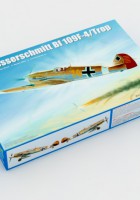
Messerschmitt Bf 109F-4/Trop - Trompetista 02293

Trumpeter

Ref 02293
TipoKit modelo
Escala1/32
Tópico

Messerschmitt Bf 109F-4/Trop

Um modelo da marca Trumpeter o kit: Messerschmitt Bf 109F-4/Trop – Trumpeter 02293.

Features : The kit consists of over 240 parts Fuselage -Left and right fuselage moulded w/ authentic details Engine -Finely detailed engine. Interior -Finely detailed engine accessory compartment, -Finely detailed cockpit Wings – Optional position flaps – Rubber tires. PE -Photo-etched parts to upgrade details

O segundo grande redesenho do Bf109 é a série F. O "Friedrich" passou por um redesenho completo das asas, do sistema de refrigeração e da aerodinâmica da fuselagem, e foi movido pelo DB 601N de 1.175 cv (F-1, F-2) ou pelo DB 601E de 1.350 cv (F-3, F-4). Considerada por muitos como a marca d'água do desenvolvimento do Bf 109, a série F abandonou o canhão de asa e concentrou todo o armamento na fuselagem dianteira: um par de metralhadoras acima e um único canhão de 15 ou 20 mm atrás do motor, o último disparando entre os bancos de cilindros e através do cubo da hélice e do spinner. Esta configuração foi usada por todas as variantes subsequentes. Um punhado de Bf 109Fs foram usados operacionalmente no final da Batalha da Grã-Bretanha em 1940, mas só se espalharam em serviço no primeiro semestre de 1941, substituindo o Bf109E.

Fonte: Trompetista

Continue lendo

Visualizações : 2239

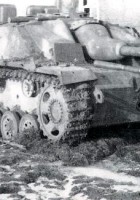
Sturmgeschütz

Sturmgeschütz

Tópico

Álbum de 156 fotos do Sturmgeschütz

PeríodoSegunda Guerra Mundial
ExércitoWehrmacht alemã

Sturmgeschütz (or StuG) is an “assault gun” used by the German Wehrmacht during the Second World War. The vehicle was built on the chassis of the proven Panzer III. Initially intended as a mobile, armoured light gun for providing close fire support to infantry, panzer, and panzergrenadier units, the StuG was continually modified throughout its existence. It was often used as a mobile artillery platform to destroy bunkers, pillboxes and other entrenched positions. After the invasion of Soviet Russia in 1941, the StuG III was also converted to use as a tank destroyer because its main armament was the only weapon with sufficient power to take on the Soviet T-34 or KV-1 tanks. It would go on to become Nazi Germany’s most produced armoured fighting vehicle during World War II. The StuG was used primarily within the Sturmartillerie, a branch of the artillery in the Wehrmacht.

Fonte:

Continue lendo

Views : 5276

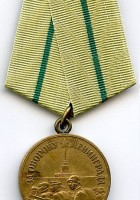
Medal "For the Defence of Leningrad"

União Soviética

TipoMedalha de campanha
ElegibilidadeCidadãos da União Soviética
Premiado porParticipation in the defence of Leningrad
Estabelecido22 de dezembro de 1942
Total concedido1,470,000

The Medal “For the Defence of Leningrad” was a World War 2 campaign medal of the Soviet Union established on December 22, 1942 by decree of the Presidium of the Supreme Soviet of the USSR to recognise the valour and hard work of the Soviet civilian and military defenders of Leningrad during the 872 day siege of the city by the German armed forces between September 8, 1941 and January 27, 1944.

Fonte: Wikipédia

Continue lendo

Visualizações : 1097

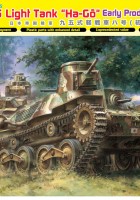
Imperial Japanese Army Type 95 Light Tank "Ha-Go" Early Production - DML 6767

Dragon Model

Ref 6767
Tipo1/35 Militar
Escala1/35
Tópico

Imperial Japanese Army Type 95 Light Tank “Ha-Go” Early Production

Um modelo da marca Modelo Dragão o kit : Imperial Japanese Army Tipo 95 Light Tank "Ha-Go" Produção Antecipada – DML 6767

Dragon has introduced a great many exciting new kits in 2012, and there is one more 1/35 scale AFV gem to come this year. The new item is a Type 95 “Ha-Go” light tank of the Imperial Japanese Army (IJA). The Type 95 tank was used in combat against China and Russia, as well as fully participating in operations in WWII. Weighing just 7.4 tonnes, it was designed primarily as an infantry support weapon. Indeed, it was the most common light tank used by the IJA in the Pacific, with about 2,300 units manufactured. It had a crew of three, and the main armament was a Type 94 37mm gun. Its maximum speed was 45km/h.

The kit depicts an Early-Production variant and it’s based on actual measurements from real tanks. Although it’s a small vehicle, Dragon’s 1/35 scale kit is brimming with detail, something facilitated by the widespread use of slide molds. In fact, every single sprue in the kit employs slide molds, which is an astounding achievement! For example, the turret is of single-piece construction, with the multi-directional slide mold allowing details such as rivets to be rendered. The commander’s cupola is a similar story. The one piece lower hull has the correct armor panels and bolts on it. The upper hull is also one piece, and the gun barrel has a hollow end. The road wheels, idlers, sprockets and return rollers are slide-molded too. The DS slide-molded track links are accurately replicated in miniature so as to incorporate side details. This is an extremely exciting subject from Dragon, and because the Ha-Go was used in such diverse locations, modelers can produce any scenario such as jungle-clad terrain or a Pacific island!

Fonte: Modelos de Dragão

Continue lendo

Visualizações : 1138

Pz.Kpfw.III (5cm) Ausf.G, Sd.Kfz.141, Produção Antecipada - DML 6639

Dragon Model

Ref 6639
Tipo1/35 Militar
Escala1/35
Tópico

Pz.Kpfw.III (5cm) Ausf.G, Sd.Kfz.141, Early Production

Um modelo da marca Modelo Dragão o kit : Pz.Kpfw.III (5cm) Ausf.G, Sd.Kfz.141, Produção Antecipada – DML 6639

História: Panzer III foi o nome comum de um tanque médio que foi desenvolvido na década de 1930 pela Alemanha e foi usado extensivamente na Segunda Guerra Mundial. A designação oficial alemã era Panzerkampfwagen III Sd Kfz. 141 (abreviado PzKpfw III) traduzindo como "veículo de combate blindado". Destinava-se a lutar contra outros veículos blindados de combate e servir ao lado do Panzer IV de apoio à infantaria. No entanto, quando os alemães enfrentaram o formidável T-34, armas antitanque mais fortes foram necessárias. Como o Panzer IV tinha um anel de torre maior, o papel foi invertido. O Panzer IV montou o canhão KwK 40 de cano longo de 7,5 cm e se envolveu em batalhas de tanque a tanque. O Panzer III tornou-se obsoleto neste papel e, para a maioria dos propósitos, foi suplantado pelo Panzer IV. A partir de 1942, a última versão do Panzer III montou o KwK 37 L/24 de 7,5 cm, mais adequado para o apoio de infantaria. A produção do Panzer III terminou em 1943. No entanto, o chassi capaz do Panzer III forneceu cascos para o Sturmgeschütz III até o final da guerra.

Fonte: Wikipédia e Modelos de Dragão

Continue lendo

Views : 1149