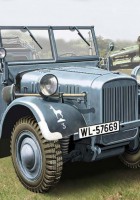
Medal "For the Defence of Leningrad"

União Soviética

TipoMedalha de campanha
ElegibilidadeCidadãos da União Soviética
Premiado porParticipation in the defence of Leningrad
Estabelecido22 de dezembro de 1942
Total concedido1,470,000

The Medal “For the Defence of Leningrad” was a World War 2 campaign medal of the Soviet Union established on December 22, 1942 by decree of the Presidium of the Supreme Soviet of the USSR to recognise the valour and hard work of the Soviet civilian and military defenders of Leningrad during the 872 day siege of the city by the German armed forces between September 8, 1941 and January 27, 1944.

Fonte: Wikipédia

Continue lendo

Visualizações : 1021

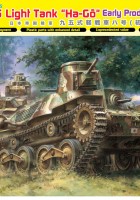
Imperial Japanese Army Type 95 Light Tank "Ha-Go" Early Production - DML 6767

Dragon Model

Ref 6767
Tipo1/35 Militar
Escala1/35
Tópico

Imperial Japanese Army Type 95 Light Tank “Ha-Go” Early Production

Um modelo da marca Modelo Dragão o kit : Imperial Japanese Army Tipo 95 Light Tank "Ha-Go" Produção Antecipada – DML 6767

Dragon has introduced a great many exciting new kits in 2012, and there is one more 1/35 scale AFV gem to come this year. The new item is a Type 95 “Ha-Go” light tank of the Imperial Japanese Army (IJA). The Type 95 tank was used in combat against China and Russia, as well as fully participating in operations in WWII. Weighing just 7.4 tonnes, it was designed primarily as an infantry support weapon. Indeed, it was the most common light tank used by the IJA in the Pacific, with about 2,300 units manufactured. It had a crew of three, and the main armament was a Type 94 37mm gun. Its maximum speed was 45km/h.

The kit depicts an Early-Production variant and it’s based on actual measurements from real tanks. Although it’s a small vehicle, Dragon’s 1/35 scale kit is brimming with detail, something facilitated by the widespread use of slide molds. In fact, every single sprue in the kit employs slide molds, which is an astounding achievement! For example, the turret is of single-piece construction, with the multi-directional slide mold allowing details such as rivets to be rendered. The commander’s cupola is a similar story. The one piece lower hull has the correct armor panels and bolts on it. The upper hull is also one piece, and the gun barrel has a hollow end. The road wheels, idlers, sprockets and return rollers are slide-molded too. The DS slide-molded track links are accurately replicated in miniature so as to incorporate side details. This is an extremely exciting subject from Dragon, and because the Ha-Go was used in such diverse locations, modelers can produce any scenario such as jungle-clad terrain or a Pacific island!

Fonte: Modelos de Dragão
Continue lendo

Visualizações : 1120

Pz.Kpfw.III (5cm) Ausf.G, Sd.Kfz.141, Produção Antecipada - DML 6639

Dragon Model

Ref 6639
Tipo1/35 Militar
Escala1/35
Tópico

Pz.Kpfw.III (5cm) Ausf.G, Sd.Kfz.141, Early Production

Um modelo da marca Modelo Dragão o kit : Pz.Kpfw.III (5cm) Ausf.G, Sd.Kfz.141, Produção Antecipada – DML 6639

História: Panzer III foi o nome comum de um tanque médio que foi desenvolvido na década de 1930 pela Alemanha e foi usado extensivamente na Segunda Guerra Mundial. A designação oficial alemã era Panzerkampfwagen III Sd Kfz. 141 (abreviado PzKpfw III) traduzindo como "veículo de combate blindado". Destinava-se a lutar contra outros veículos blindados de combate e servir ao lado do Panzer IV de apoio à infantaria. No entanto, quando os alemães enfrentaram o formidável T-34, armas antitanque mais fortes foram necessárias. Como o Panzer IV tinha um anel de torre maior, o papel foi invertido. O Panzer IV montou o canhão KwK 40 de cano longo de 7,5 cm e se envolveu em batalhas de tanque a tanque. O Panzer III tornou-se obsoleto neste papel e, para a maioria dos propósitos, foi suplantado pelo Panzer IV. A partir de 1942, a última versão do Panzer III montou o KwK 37 L/24 de 7,5 cm, mais adequado para o apoio de infantaria. A produção do Panzer III terminou em 1943. No entanto, o chassi capaz do Panzer III forneceu cascos para o Sturmgeschütz III até o final da guerra.

Fonte: Wikipédia e Modelos de Dragão

Continue lendo

Visualizações : 1130

Antonov AN-2W Colt - HOBBY BOSS 81706

Chefe hobby

Assunto

Antonov AN-2W Colt

Escala1/48
Ref81706

Um modelo da marca HobbyBoss o kit : Antonov AN-2W Colt – HOBBY BOSS 81706

Características : the kit consists of over 230+ parts -Detailed fuselage&wing w/accurate design -Detailed cockpit

The An-2 Colt has been used as a paratroop transport, glider tug, navigation trainer, utility transport and light bomber. The An-2 prototype was first flown on August 31, 1947, and the aircraft is still in production, although the Antonov Bureau has not produced any since 1960. The An-2s designer, Oleg Antonov, had been an aircraft designer during the Second World War. Originally designed for the Ministry of Agriculture and Forestry in the former Soviet Union, the aircraft was soon adopted by the Soviet Air Force and built for its client states. It is ideally suited to less developed countries because it requires little maintenance and is easy to fly.

Fonte: Chefe hobby

Continue lendo

Visualizações : 814

Pz.Kpfw.VI Tiger I Ausf.E produção média - ITALERI 6507

Italeri

Ref 6507
TipoKit modelo
Escala1/35
Tópico

Pz.Kpfw.VI Tiger I Ausf.E mid production

Um modelo da marca Italeri o kit Pz.Kpfw.VI Tiger I Ausf.E mid production – ITALERI 6507.

O Tigre I tank, which has been produced in the second half of 1943, was based on the hull of the firstoperational version used in North Africa and Russia. At the beginning this tank had wheels with rubber rim,which will be replaced in the following productions starting from February 1944, but it was equipped withthe new turret with increased protection and better cupola for the commander. Besides some of thesevehicles maintained the characteristic system of dust filters Feifel, and the smoke grenade launchers. On thetanks produced since August 1943 was also applied a magnetic mine paste that will become standard on alltanks of the German Army.

Fonte: Italeri

Continue lendo

Visualizações : 1595

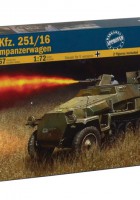
Sd. Kfz. 251/16 Flammpanzerwagen - ITALERI 7067

Italeri

Ref 7067
TipoKit modelo
Escala1/72
Assunto

Sd. Kfz. 251/16 Flammpanzerwagen

Um modelo da marca Italeri o kit Sd. Kfz. 251/16 Flammpanzerwagen – ITALERI 7067.

História:

The Sd.Kfz.251 half-track was an armored fighting vehicle and was used by the Wehrmacht on all fronts, during the Second World War. Powered by a Maybach 6-cylinder petrol engine was able to achieve, even in off-road terrain, the speed of 55 km / h. Produced in huge numbers, it was mainly used to transport the “Panzergranadiers” but, during the war, several versions has been developed to meet various operational needs. The half-track Sd.Kfz. 251/16 Flammpanzerwagen was developed as real flame tank to support infantry attacks against fortification or enemy positions. It was equipped with two flamethrowers on the sides of the vehicle. Furthermore, inside the vehicle, two tanks of flammable liquid, that allowed weapons to operate for about 160 seconds, has been installed.

Fonte: Italeri

Continue lendo

Views : 1398

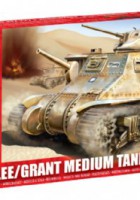
M3 Lee Grant Medium Tank - Airfix A01317

Airfix

RefA01317
TipoKit modelo
Escala1/76
Tópico

M3 Lee Grant Tanque Médio

Um modelo da marca Airfix o kit : M3 Lee Grant Medium Tank – Airfix A01317.

Chamado de General Lee se equipado com a torre mais alta projetada pelos americanos e o General Grant se equipado com a torre menor construída pelos britânicos, o Lee Grant foi um dos primeiros tanques americanos a alcançar os britânicos durante a Segunda Guerra Mundial. Também usado em todo o Pacífico, o Lee Grant levou ao projeto do tanque Sherman, o tanque mais importante e numericamente vital da guerra.

Fonte: M3 Lee Grant Tanque Médio no Airfix

Continue lendo

Visualizações : 1516

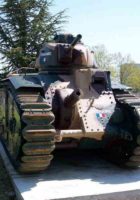
Renault B1 Bis

Renault B1 bis |

PaísFrança
Modelo

B1a

TipoTanque Pesado
Em serviço1936–1940 (França)
Construído405)

Galeria de fotos de um Renault B1 bis |O desenvolvimento do tanque provou ser um processo longo e não foi padronizado imediatamente por causa de problemas econômicos, políticos e internacionais. Pelas mesmas razões, as quantidades encomendadas foram mantidas pequenas. Uma primeira ordem de "série" é assinada em 6 de abril de 1934 para 7 exemplares, uma segunda em outubro de 1934 para mais 20, e a última um terço de 5 em 29 de abril de 1935. 50, com os 3 protótipos, o total chega a 35 exemplares, suficientes para equipar um batalhão completo. A construção é confiada aos diferentes co-empreiteiros do programa, sendo a montagem final da responsabilidade da Renault e da FCM.

Fonte: Trackstory

Continue lendo

Visualizações : 4869

3.7cm FlaK 43 auf Fahrgestell, Pz.Kpfw.III Ausf.M (Versuchsaufbau) - Cyber-Hobby 6771

Cyber-Hobby

Ref 6771
TipoKit modelo
Escala1/35
Tópico

3.7cm FlaK 43 auf Fahrgestell, Pz.Kpfw.III Ausf.M (Versuchsaufbau)

Um modelo da marca Cyber-Hobby o kit : 3.7cm FlaK 43 auf Fahrgestell, Pz.Kpfw.III Ausf.M (Versuchsaufbau) – Cyber-Hobby 6771.

Fonte: Cybber-Hobby

The 3.7 cm Flak 18/36/37/43 was a series of anti-aircraft cannon produced by Nazi Germany that saw widespread service in the Second World War. The cannon was fully automatic and effective against aircraft flying at altitudes up to 4,200 m. The cannon was produced in both towed and self-propelled versions. Having a flexible doctrine, the Germans used their anti-aircraft pieces in ground support roles as well; 37 mm caliber guns were no exception to that. With Germany’s defeat, production ceased, and, overall, 37 mm caliber anti-aircraft cannon fell into gradual disuse, being replaced by the Bofors 40 mm gun, and later, 35-mm anti-aircraft pieces produced by Switzerland.

Fonte: Wikipédia

Continue lendo

Visualizações: 2002

Einheits-Pkw Kfz.2 - sinais de veículo motorizado - Ace Models 72511

Modelos Ace

Ref 72511
TipoKit modelo
Escala1/72
Tópico

Einheits-Pkw Kfz.2 – signals motor vehicle – Ace Models 72511

Um modelo da marca Modelos Ace o kit: Einheits-Pkw Kfz.2 – signals motor vehicle – Ace Models 72511.

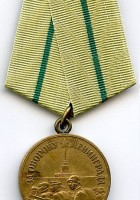
Nachrichtenkraftwagen – Kfz. 2 O carro todo-o-terreno de uniforme leve – leichten gelnde Einheits Personen-Kraftwagen foi fabricado pela Stoewer Company e também pela BMW e Hanomag desde 1936. De 1940 a 1943, a Stoewer produziu o modelo simplificado Tipo 40 sem a caixa de direção das rodas traseiras. Ao todo, foram produzidos cerca de 13000 le.gl.Einheits-Pkw. Os carros uniformes pareciam ser muito pesados, muito complicados e não confiáveis na exploração real. Os carros le.gl.Einheits-Pkw foram produzidos com diferentes tipos de carrocerias, em particular, o carro de rádio Kfz.2 de três lugares

Fonte: Modelos Ace

Continue lendo

Visualizações : 1560