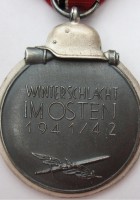
Oostfront Medaille

Nazi-Duitsland

TypeKist bestelling
VerkiesbaarheidMilitair personeel
Toegekend voorpersoneel dat deelnam aan de eerste winter van Operatie Barbarossa
Vastgesteld26 mei 1942
Totaal toegekendmeer dan 3 000 000

De Oostfrontmedaille (Winterschlacht Im Osten), beter bekend als de Ostmedaille, werd op 26 mei 1942 ingesteld ter gelegenheid van de dienst aan het Duitse Oostfront (Tweede Wereldoorlog) in de periode van 15 november 1941 tot 15 april 1942. Het werd opgedragen om de ontberingen te erkennen die het Duitse personeel en de Asmogendheden, strijders of niet-strijders, hebben doorstaan tijdens de bijzonder bittere Russische winter van '41/'42. Het werd wrang de "Gefrierfleischorden" (Frozen Meat Medal) genoemd door het personeel van Heer, Luftwaffe en Waffen-SS aan wie het werd toegekend.

Bron: Wikipedia

Lees verder

Views : 1541

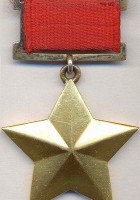
Held van de Sovjet-Unie (recto)

Sovjet-Unie

TypeEretitel
VerkiesbaarheidBurgers van de Sovjet-Unie
Toegekend voorheldhaftige prestaties in dienst van de Sovjetstaat en de Sovjetsamenleving
Vastgesteld16 april 1934
Totaal toegekend12,775

The title Hero of the Soviet Union was the highest distinction in the Soviet Union, awarded personally or collectively for heroic feats in service to the Soviet state and society. The award was established on May 5, 1934, by the Central Executive Committee of the Soviet Union. The first recipients of the title originally received only the Order of Lenin, the highest Soviet award, along with certificate (грамота, gramota) describing the heroic deed from the Presidium of the Supreme Soviet of the USSR. Because the Order of Lenin could be awarded for deeds not qualifying for the title of hero, and to distinguish heroes from other Order of Lenin holders, the Gold Star medal was introduced on August 1, 1939. Earlier heroes were retroactively eligible for these items. The title was also given posthumously, though often without the actual Gold Star medal given. The title could be revoked only by the Presidium of the Supreme Soviet.

Bron: Wikipedia

Lees verder

Bekeken : 1702

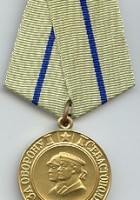
Medailleverdediging van Sebastopol (recto)

Sovjet-Unie

TypeCampagnemedaille
VerkiesbaarheidBurgers van de Sovjet-Unie
Toegekend voorDeelname aan de verdediging van Sebastopol
Vastgesteld22 december 1942
Totaal toegekend52,540

De Medaille "Voor de Verdediging van Sevastopol" was een campagnemedaille uit de 2e Wereldoorlog van de Sovjet-Unie, opgericht op 22 december 1942 bij decreet van het Presidium van de Opperste Sovjet van de USSR om de deelnemers aan de verdediging van de havenstad Odessa tegen de strijdkrachten van nazi-Duitsland te belonen.

Bron:

Lees verder

Bekeken: 858

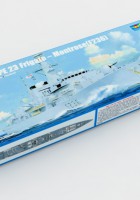
HMS TYPE 23 Fregat – Montrose(F236) - Trompettist 04545

Trumpeter

Ref 04545
TypeModelkit
Schaal1/350
Onderwerp

HMS TYPE 23 Frigate – Montrose(F236)

Een model van het merk Trumpeter de kit: HMS TYPE 23 Frigate – Montrose(F236) – Trumpeter 04545.

Features : The kit consists of over 400 parts – Detailed hull w/accurate design – 1 HAS-3 helicopters with fine details included. – photo-etched frets for antenna etc.

The Type 23 frigate is a class of frigate serving with the Royal Navy of the United Kingdom. All the ships are named after British Dukes, thus the class is also known as the Duke class. The first Type 23 was commissioned in 1989, and the sixteenth, HMS St Albans was launched in May 2000 and commissioned in June 2002. The combination of Merlin helicopters with their advanced anti submarine equipment, and Sonar 2087, has according to the Royal Navy, re-affirmed its reputation as a leader in anti-submarine warfare. HMS Montrose is commissioned in June 1994 at Devonport Dockyard.HMS Montrose is attached to the Devonport Flotilla, based in Plymouth.

Bron: Trompettist

Lees verder

Bekeken : 1629

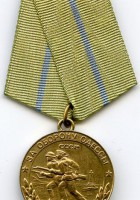
Medal "For the Defence of Odessa"

Sovjet-Unie

TypeCampagnemedaille
VerkiesbaarheidBurgers van de Sovjet-Unie
Toegekend voorDeelname aan de verdediging van Odessa
Vastgesteld22 december 1942
Totaal toegekend38,000

De Medaille "Voor de Verdediging van Odessa" was een campagnemedaille uit de 2e Wereldoorlog van de Sovjet-Unie, ingesteld op 22 december 1942 bij decreet van het Presidium van de Opperste Sovjet van de USSR om de deelnemers aan de verdediging van de havenstad Odessa tegen de strijdkrachten van nazi-Duitsland te belonen.

Bron: Wikipedia

Lees verder

Bekeken : 1076

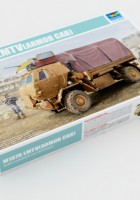
M1078 LMTV (ARMOR CAB) - Trompettist 01009

Trumpeter

Ref01009
TypeModelkit
Schaal1/35
Onderwerp

M1078 LMTV(ARMOR CAB)

Een model van het merk Trumpeter de kit: M1078 LMTV(ARMOR CAB) – Trumpeter 01009.

Features : Detailed multi-directional slide-molded cab. – Full drive train assembly complete with engine transmission, differential housing and suspension units. – The main tires are hollow rubber with very good tread pattern included as well as sidewall details consisting of raised section ribs. – Wheel hubs are in great details with separate hub rings. – The windshield and side windows are made of clear parts. – Photo-etched parts included

De M1078 Standard Cargo Truck is ontworpen om vracht en soldaten te vervoeren. De M1078 heeft een laadvermogen van 5.000 pond en om het laden / lossen te vergemakkelijken, zijn de zijrails van het bed op scharnieren gemonteerd en kunnen ze worden neergelaten. De laadbak kan worden uitgerust met een optionele bankzittingset voor het vervoer van soldaten. De bankzittingen zijn gemaakt van een niet-hout materiaal en worden bevestigd aan de zijrails van de laadbak. De stoelen kunnen worden neergeklapt en opgeborgen wanneer ze niet in gebruik zijn. Soldaten worden geholpen bij het klimmen in en uit de laadruimte met behulp van een ladder die op het voertuig is opgeborgen wanneer ze niet in gebruik zijn. Een canvas en bogen kit is beschikbaar om soldaten en lading te beschermen tegen de elementen. De M1078 kan worden uitgerust met een optionele zelfherstellierset die geschikt is voor voor- en achtervoertuigterugwinningsoperaties. De lier heeft 308 voet lijncapaciteit en 10.000 pond kaal.

Bron: Trompettist

Lees verder

Bekeken : 1183

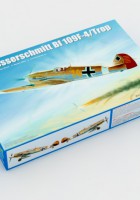
Messerschmitt Bf 109F-4/Trop - Trumpeter 02293

Trumpeter

Ref 02293
TypeModelkit
Schaal1/32
Onderwerp

Messerschmitt Bf 109F-4/Trop

Een model van het merk Trumpeter de kit: Messerschmitt Bf 109F-4/Trop – Trumpeter 02293.

Features : The kit consists of over 240 parts Fuselage -Left and right fuselage moulded w/ authentic details Engine -Finely detailed engine. Interior -Finely detailed engine accessory compartment, -Finely detailed cockpit Wings – Optional position flaps – Rubber tires. PE -Photo-etched parts to upgrade details

The second major redesign of Bf109 is the F series. The “Friedrich” saw a complete redesign of the wings, the cooling system and fuselage aerodynamics, and was powered by the 1,175 PS DB 601N (F-1, F-2) or the 1,350 PS DB 601E (F-3, F-4). Considered by many as the high watermark of the Bf 109 development, the F series abandoned the wing cannon and concentrated all armament in the forward fuselage: a pair of machine guns above and a single 15 or 20mm cannon behind the engine, the latter firing between the cylinder banks and through the propeller hub and spinner. This configuration was used by all subsequent variants. A handful of Bf 109Fs were used operationally late in the Battle of Britain in 1940, but only become widespread in service in the first half of 1941, replacing the Bf109E.

Bron: Trompettist

Lees verder

Views : 2239

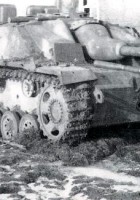
Sturmgeschz

Sturmgeschz

Onderwerp

Album met 156 foto's van het Sturmgeschütz

PeriodeTweede Wereldoorlog
LegerDuitse Wehrmacht

Sturmgeschz (or StuG) is an “assault gun” used by the German Wehrmacht during the Second World War. The vehicle was built on the chassis of the proven Panzer III. Initially intended as a mobile, armoured light gun for providing close fire support to infantry, panzer, and panzergrenadier units, the StuG was continually modified throughout its existence. It was often used as a mobile artillery platform to destroy bunkers, pillboxes and other entrenched positions. After the invasion of Soviet Russia in 1941, the StuG III was also converted to use as a tank destroyer because its main armament was the only weapon with sufficient power to take on the Soviet T-34 or KV-1 tanks. It would go on to become Nazi Germany’s most produced armoured fighting vehicle during World War II. The StuG was used primarily within the Sturmartillerie, a branch of the artillery in the Wehrmacht.

Bron:

Lees verder

Views : 5276

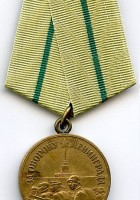
Medal "For the Defence of Leningrad"

Sovjet-Unie

TypeCampagnemedaille
VerkiesbaarheidBurgers van de Sovjet-Unie
Toegekend voorParticipation in the defence of Leningrad
Vastgesteld22 december 1942
Totaal toegekend1,470,000

The Medal “For the Defence of Leningrad” was a World War 2 campaign medal of the Soviet Union established on December 22, 1942 by decree of the Presidium of the Supreme Soviet of the USSR to recognise the valour and hard work of the Soviet civilian and military defenders of Leningrad during the 872 day siege of the city by the German armed forces between September 8, 1941 and January 27, 1944.

Bron: Wikipedia

Lees verder

Bekeken: 1097

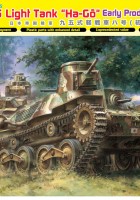
Imperial Japanese Army Type 95 Light Tank "Ha-Go" Early Production - DML 6767

Dragon Model

Ref 6767
Type1/35 Militair
Schaal1/35
Onderwerp

Imperial Japanese Army Type 95 Light Tank “Ha-Go” Early Production

Een model van het merk Het Model van de draak de kit : Imperial Japanse Leger Type 95 Light Tank "Ha-Go" Vroege Productie – DML 6767

Dragon has introduced a great many exciting new kits in 2012, and there is one more 1/35 scale AFV gem to come this year. The new item is a Type 95 “Ha-Go” light tank of the Imperial Japanese Army (IJA). The Type 95 tank was used in combat against China and Russia, as well as fully participating in operations in WWII. Weighing just 7.4 tonnes, it was designed primarily as an infantry support weapon. Indeed, it was the most common light tank used by the IJA in the Pacific, with about 2,300 units manufactured. It had a crew of three, and the main armament was a Type 94 37mm gun. Its maximum speed was 45km/h.

The kit depicts an Early-Production variant and it’s based on actual measurements from real tanks. Although it’s a small vehicle, Dragon’s 1/35 scale kit is brimming with detail, something facilitated by the widespread use of slide molds. In fact, every single sprue in the kit employs slide molds, which is an astounding achievement! For example, the turret is of single-piece construction, with the multi-directional slide mold allowing details such as rivets to be rendered. The commander’s cupola is a similar story. The one piece lower hull has the correct armor panels and bolts on it. The upper hull is also one piece, and the gun barrel has a hollow end. The road wheels, idlers, sprockets and return rollers are slide-molded too. The DS slide-molded track links are accurately replicated in miniature so as to incorporate side details. This is an extremely exciting subject from Dragon, and because the Ha-Go was used in such diverse locations, modelers can produce any scenario such as jungle-clad terrain or a Pacific island!

Bron: Dragon Modellen
Lees verder

Bekeken : 1139