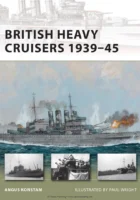
190 - British Heavy Cruisers 1939-45

Osprey Publishing

Ref

New Vanguard 190

ISBN9781849086868
Author
IllustratorPaul Wright

The idea of a heavy cruiser emerged in the aftermath of World War I, and was closely linked to the limits set by the inter-war Washington Naval Treaty. The pre-World War I concept of armoured cruisers had been abandoned, but in their stead the Admiralty saw a place for powerful cruisers, able to patrol the sea lanes of the British Empire, and which were well-armed enough that they could destroy enemy commerce cruisers. The result was a group of British warships, known as the ‘Washington Treaty Cruisers’, that did everything the Admiralty wanted, but which conformed to the limits imposed by the treaty. These impressive cruisers were high-sided, spacious and stately – perfect peacetime ambassadors for British power. In war they also packed a considerable punch. During World War II the Royal Navy’s thirteen heavy cruisers saw service in every theatre of the war, whether facing the Bismarck in the North Atlantic or enduring kamikaze attacks in the Pacific.

Source: Osprey Publishing

Continue reading

Views : 894

Mikoyan MiG-29 Fulcrum

MiG-29

CountrySoviet Union
Role

Air-superiority fighter

First flight6 October 1977
Built1600+

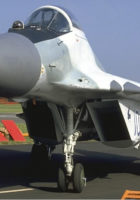
Photo gallery of a MiG-29, The Mikoyan MiG-29 is a fourth-generation jet fighter aircraft designed in the Soviet Union for an air superiority role. Developed in the 1970s by the Mikoyan design bureau, it entered service with the Soviet Air Force in 1983, and remains in use by the Russian Air Force as well as in many other nations. The NATO name “Fulcrum” was sometimes unofficially used by Soviet pilots in service. The MiG-29, along with the Sukhoi Su-27, was developed to counter new American fighters such as the McDonnell Douglas F-15 Eagle, and the General Dynamics F-16 Fighting Falcon.

Source: MiG-29 on Wiki

Continue reading

Views : 17695

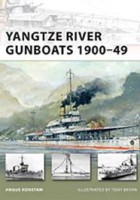
Yangtze River Gunboats 1900–49 - NEW VANGUARD 181

Osprey Publishing

Ref

New Vanguard 181

ISBN9781849084086
Author
IllustratorTony Bryan

A book signed Osprey Publishing the magazine «Yangtze River Gunboats 1900–49 – NEW VANGUARD 181» .

From the end of the 19th century through the first half of the 20th, most Western powers maintained a naval presence in China. These gunboats protected traders and missionaries, safeguarded national interests, and patrolled Chinese rivers in search of pirates. It was a wild, lawless time in China as ruthless warlords fought numerous small wars to increase their power and influence. This book covers the gunboats of all the major nations that stationed naval forces in China, including America, Britain, France, Germany, Italy, Portugal, and Japan, and looks at such famous incidents as the Japanese bombing of the USS Patay and the dramatic escape of the HMS Amethyst from Communist forces in 1947, which marked the end of the gunboat era.

Source: Osprey Publishing

Continue reading

Views : 817

Boeing AH-64 Apache - WalkAround

Boeing AH-64 Apache

CountryUSA
Type

Twin-engine attack helicopter

Topic

Album of 52 photos walk-around of a «Boeing AH-64 Apache»

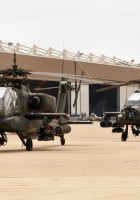
Photo gallery of a Boeing AH-64 Apache, The Boeing AH-64 Apache is a four-blade, twin-engine attack helicopter with a tailwheel-type landing gear arrangement, and a tandem cockpit for a two-man crew.

Source: Wikipedia

Continue reading

Views : 13061

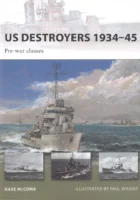
162 - US Destroyers 1934-45 - Pre-war classes

Osprey Publishing

Ref

New Vanguard 182

ISBN9781846034435
Author
IllustratorPaul Wright

Une documentation signée Osprey Publishing le livre «US Destroyers 1934–45: Pre-war classes – NEW VANGUARD 162» .

Since the beginning of the 20th century, destroyers have been all-purpose ships, indispensable in roles large and small – from delivering the mail at sea to screening other vessels and, where larger ships were not present, forming the front line in battle. This title details the 169 ships of ten classes introduced in the 1930s: early 1,500-tonners and 1,850-ton destroyer leaders designed to conform to the 1930 London Naval Treaty, plus the successor 1,570-ton Sims class and 1,620- and 1,630-ton Benson and Gleaves classes. In wartime, most 1,500-tonners and leaders initially saw front line duty in the Pacific but were relegated to secondary assignments as newer vessels arrived; while the later 1,620- and 1,630-tonners became the standard destroyers of the Atlantic War. This volume reveals the fascinating design story behind these pioneering classes – from the constraints of peacetime treaties to advances in propulsion engineering, and wartime modifications. With an operational overview of their service and tables listing all ships by class, builder, and initial squadron, this is the definitive guide to the pre-war US destroyer classes.

Source: Osprey Publishing

Continue reading

Views : 748

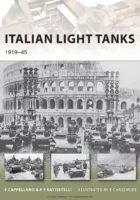
191 - Italian Light Tanks 1919-45

Osprey Publishing

Ref

New Vanguard 191

ISBN9781849087773
Author
IllustratorRichard Chasemore

The Italian army, unlike those of the British and French, did not use tanks in combat during World War I and, by November 1918, only one training unit equipped with French Schneider and Renault tanks had been formed. Consequently, during the 1920s the Italian army had just one single tank type in its armoured inventory – the Fiat 3000. Only in 1927 was the first tank unit formed as a branch of the infantry and not as an independent organization, while the cavalry rejected the idea of both tanks and armoured cars and decided to stand by the use of horses for its mounted units. Between 1933 and March 1939, a further 2,724 CV 33 / L 3 tanks were built, 1,216 of which were exported all over the world. By the time Italy entered the war in June 1940, the army had 1,284 light tanks, 855 of which were in combat units, including three armoured divisions. Variants of the CV 33 / L 3 tanks included flame-throwers, bridge-layers, recovery vehicles, and a radio command tank. Some L 3 tanks were still in use in 1945, by both the Germans and the German-allied Italian units of the Repubblica Sociale.

Source: Osprey Publishing

Continue reading

Views : 939

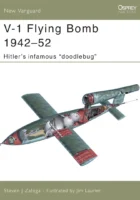
106 - V-1 Flying Bomb Hitler’s infamous doodlebug

Osprey Publishing

Ref

New Vanguard 106

ISBN9781841767918
Author
IllustratorJim Laurier

Une documentation signée Osprey Publishing le livre «V-1 Flying Bomb 1942–52 – NEW VANGUARD 106» .

The first deployment of the V-1 was in June 1944 when, following two years of tests, Hitler gave the order to attack England. Known to the Allies as the Buzz Bomb or Doodlebug, the V-1 was the world’s first cruise missile. This book explores the V-1 in detail, from its initial concept, first use in 1944, the various Allied counter-measures, and the later use of the V-1 during the Battle of the Bulge. The major foreign derivatives, including the US copy JB-2 Loon and numerous post-war Soviet variants, are also covered.

Source: Osprey Publishing

Continue reading

Views : 627

Grumman F-14 Tomcat - WalkAround

Grumman F-14 Tomcat

CountryUSA
Type

Variable-sweep wing fighter aircraft

First flight21 December 1970
Built712

The Grumman F-14 Tomcat is a supersonic, twin-engine, two-seat, variable-sweep wing fighter aircraft. The Tomcat was developed for the United States Navy’s Naval Fighter Experimental (VFX) program following the collapse of the F-111B project. The F-14 was the first of the American teen-series fighters which were designed incorporating the experience of air combat against MiG fighters during the Vietnam War.

Source: F-14 Tomcat on Wikipedia

Continue reading

Views : 18638

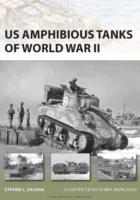
192 - US Amphibious Tanks of World War II

Osprey Publishing

Ref

New Vanguard 192

ISBN9781849086363
Author
IllustratorHenry Morshead
 

The advent of combined arms operations in World War II created the need for specialized armored vehicles. In the case of amphibious attacks, the issue arose of how best to land tanks on a beach. Although a variety of specialized landing craft were developed, the Dieppe raid in 1942 encouraged the development of tanks that could be deployed from further off-shore to limit the vulnerability of the LCT craft. The deep-wading equipment that they developed was first used during Operation Husky on Sicily in July 1943, and subsequently for Operations Avalanche (Salerno, September 1943), Shingle (Anzio, January 1944) and Overlord (Normandy, June 1944). The US-manufactured DD tanks were used during Overlord by both US and British forces, and again in 1945 during the Rhine crossings. Initially, developments in the Pacific Theater were separate from those in Europe. The Marines learned from the Tarawa landings in 1943 that unprepared tanks could not be safely landed even in shallow water. DD tanks were never seriously considered for the Pacific, so other solutions were sought. A detailed study of specialized US amphibious tanks, this is a title that will appeal to those interested in both Pacific and European Theaters, modellers and collectors.

Source: Osprey Publishing

Continue reading

Views : 1286

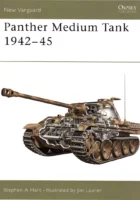
067 - Panther Medium Tank 1942-45

Osprey Publishing

Ref

New Vanguard 67

ISBN9781841765433
Author
IllustratorJim Laurier

Une documentation signée Osprey Publishing le livre «Panther Medium Tank 1942–45 – NEW VANGUARD 67» .

The Panzerkampfwagen V Panther is one of the best-known German tanks in existence and is considered one of the greatest tanks of World War II. When in June of 1941, Germany invaded Russia, Panzertruppe encountered KV series and T-34/76 tanks, far superior in firepower and armour protection to any Panzer in service at the time. It was therefore decided to design a new more powerful medium tank, which could be quickly put into production. This book details the result, the Medium Battle Tank, available for service in January 1943. Later models ensured that it became one of the most feared tanks of WWII.

Source: osprey

Continue reading

Views : 977