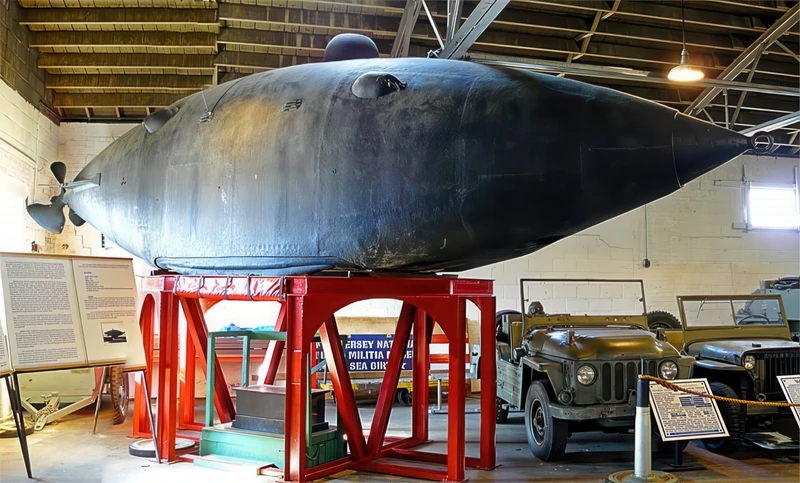
Intelligent Whale | |
|---|---|
| Land | Usa |
| Roll | Ubåt |
| Fastställs | 1863 |
| Byggd | 1 |
Intelligent val, en experimentell handvevad ubåt, byggdes på design av Scovel Sturgis Merriam 1863 av Augustus Price och Cornelius Scranton Bushnell. År 1864 bildades American Submarine Company som tog över Bushnells och Price intressen och det följde år av tvister om ägandet av fartyget. När titeln fastställdes av en domstol såldes ubåten den 29 oktober 1869 genom ett kontrakt som gjordes av ägaren Oliver Halstead och marinministern George M. Robeson till United States Navy Department, med det mesta av priset som skulle betalas efter framgångsrika försök. I september 1872 hölls den första rättegången och misslyckades, varpå departementet vägrade ytterligare betalningar och övergav projektet.
Källkod: Intelligent Whale på Wikipedia
| Intelligent Whale Submarine Walk Around | |
|---|---|
| Photographer | Bill Maloney |
| Localisation | Navy Museum, Washington Navy Yard |
| Photos | 27 |

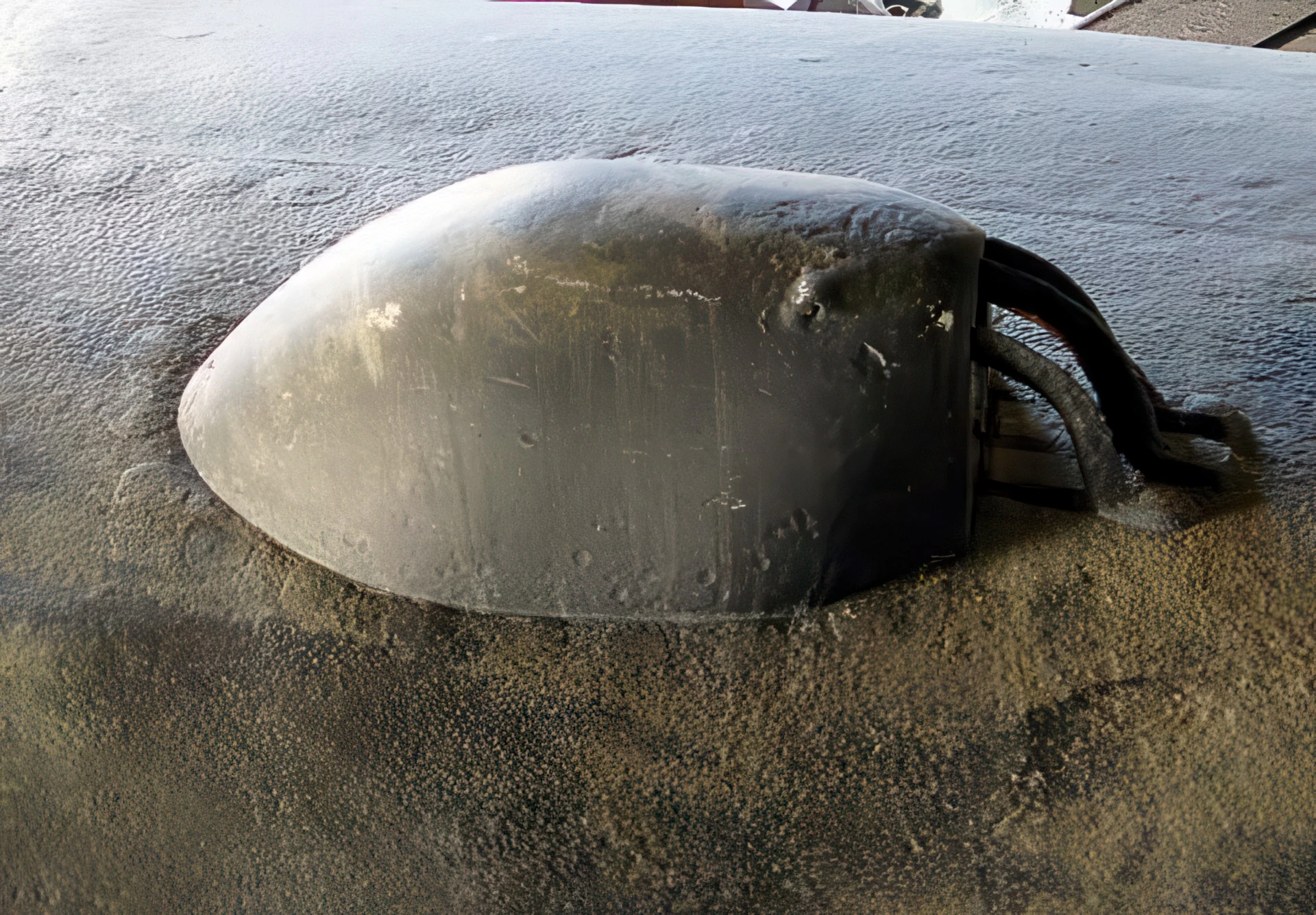


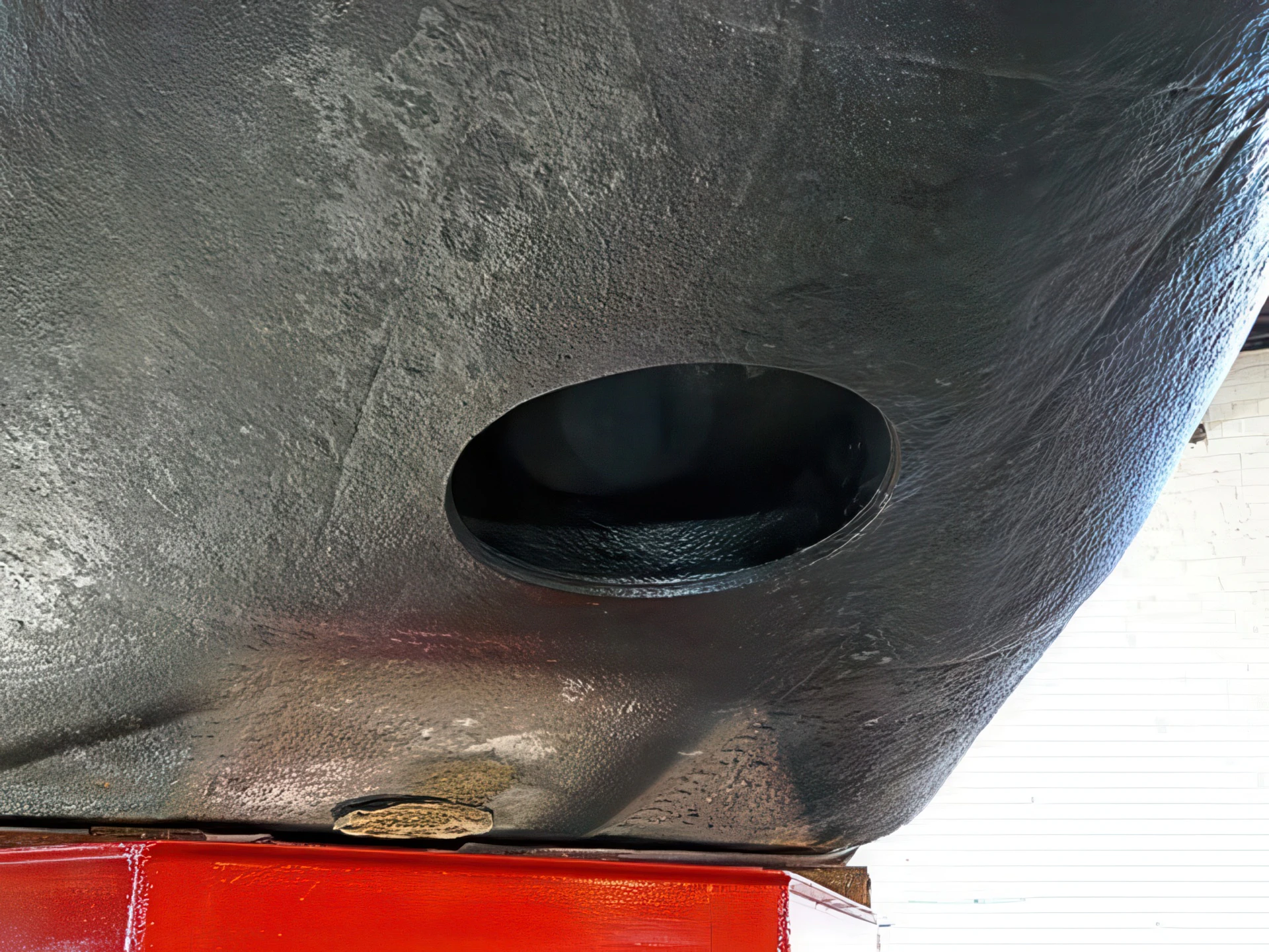

Se även:


General Characteristics and Role
The Intelligent Whale was an experimental, iron-hulled submarine developed on the design of Scovel S. Merriam, with construction starting in 1863 during the American Civil War. Its purpose was to carry out clandestine underwater missions, primarily placing explosive charges (mines) on enemy ships or clearing underwater obstacles. The vessel was unique in its reliance on entirely manual power and its method of armament delivery, which required a diver to exit the submerged craft. Although intended for the U.S. Navy, the project was plagued by ownership disputes, litigation, and ultimately failed its official trials.
| Property | Typical Value (Intelligent Whale) |
|---|---|
| Roll | Experimental / Mine-Laying Submersible |
| National Origin | USA |
| Designer | Scovel S. Merriam |
| Construction Began | 1863 |
| Acquired by U.S. Navy | October 1869 (Under contingent contract) |
| Hull Construction | Iron (approx. 1/2 inch boiler plate) |
| längd | 8.74 m (28 ft 8 in) |
| Width (Beam) | 2.1 m (7 ft) |
| Height (Depth) | 2.7 m (9 ft) |
| Displacement | Estimated 1.8 – 2 tons (approx. 4,000 lbs) |
Operation and Propulsion
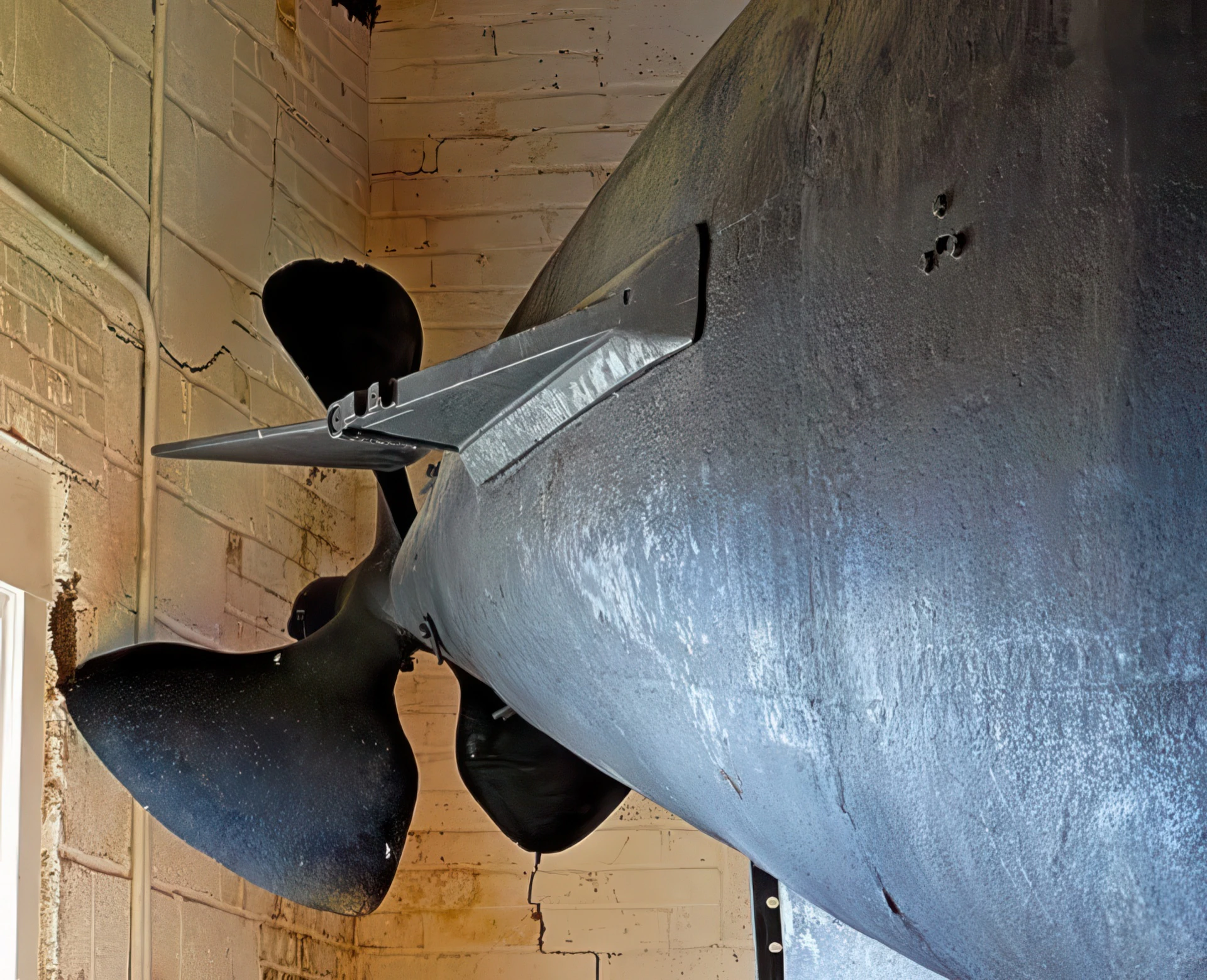
- Propulsion: Hand-cranked propeller, operated manually by four crewmen turning a large crank.
- Maximum Speed: Approximately 4 knots (7.4 km/h).
- Crew: 6 to 13 men (6 required for operation).
- Submersion: Achieved by filling water ballast compartments; water was expelled using pumps and compressed air tanks (estimated 10 hours of submerged endurance).
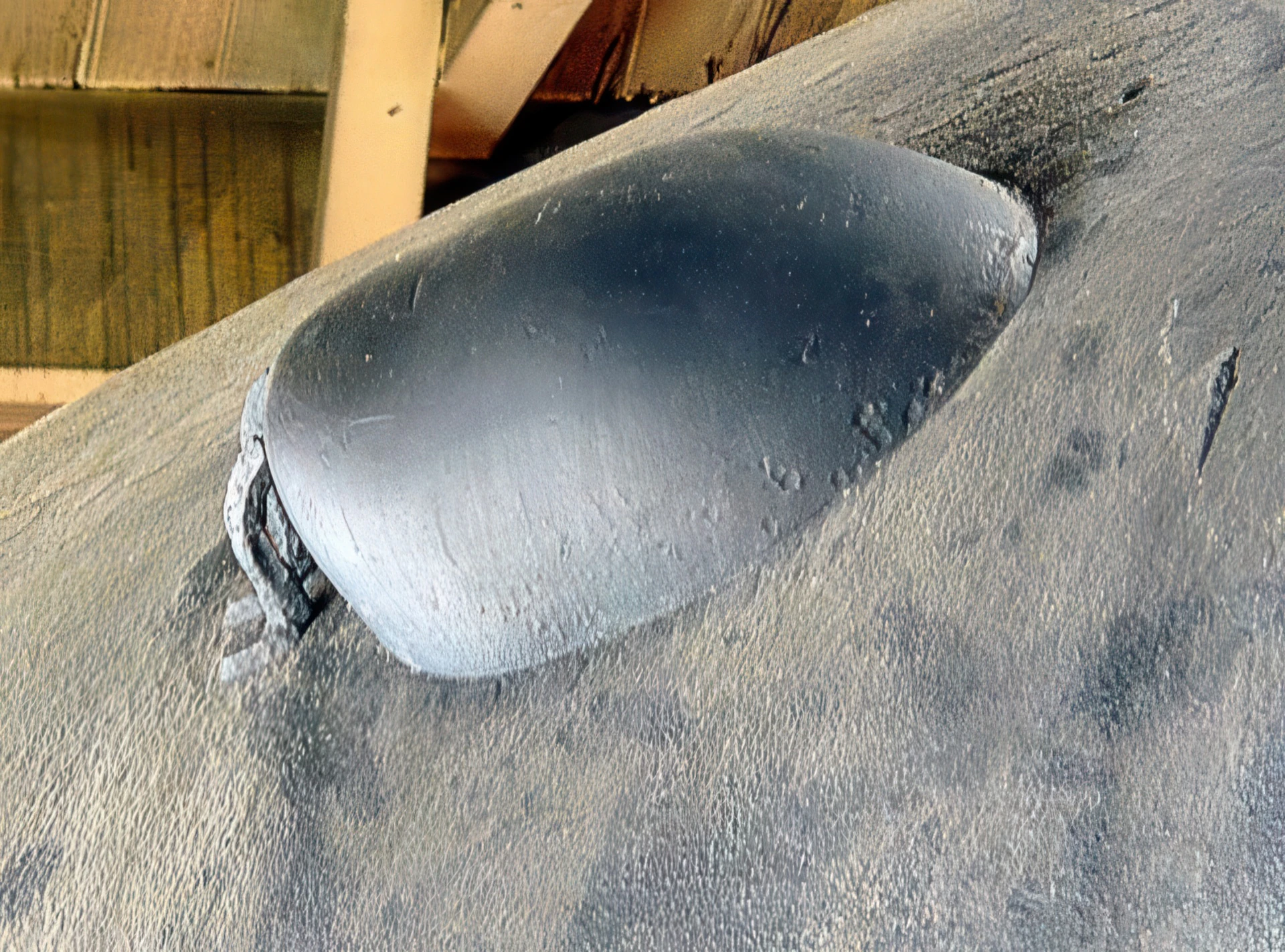
- Armament Delivery: Through a wooden hatch in the bottom of the hull, a diver would exit in a hard hat suit to place an external mine on a target vessel, then return.
Trials and Legacy
- Early Tests: Unofficial tests in 1866 were successful, including a demonstration where a diver placed a charge under a scow and blew it up.
- Official Trial: The critical trial for the Navy purchase took place in 1872 at the Brooklyn Navy Yard. The trial failed due to excessive leaks from the top hatch and the submarine becoming fouled under a dock.
- Navy Abandonment: Following the unsuccessful 1872 test, the Navy refused final payment and abandoned the project, judging it a failure.
- Historical Significance: Despite its lack of operational success, the Intelligent Whale is a rare surviving example of early submarine technology. It is credited by some as having inspired later successful submarine pioneer John Philip Holland.
- Current Status: The Intelligent Whale is preserved and displayed at the National Guard Militia Museum of New Jersey in Sea Girt, New Jersey.
Visningar : 1145
Du kan också se:
 USS Becuna - Foton & Videor
 USS Cod – Foton och videor
 USS Requin SS-481 – Foton och videor
 USS Croaker – Foton och videor
 USS Pampanito (SS-383) – Foton och videor
 Seehund – Foton & Videos
 USS Blueback (SS-581) – Foton &; Video
 USS Bowfin SS-287 – Foton och video
 USS Lionfish SS-298 – Foton &; Video
 U-505 Typ IXc U-båt – Foton &; Video