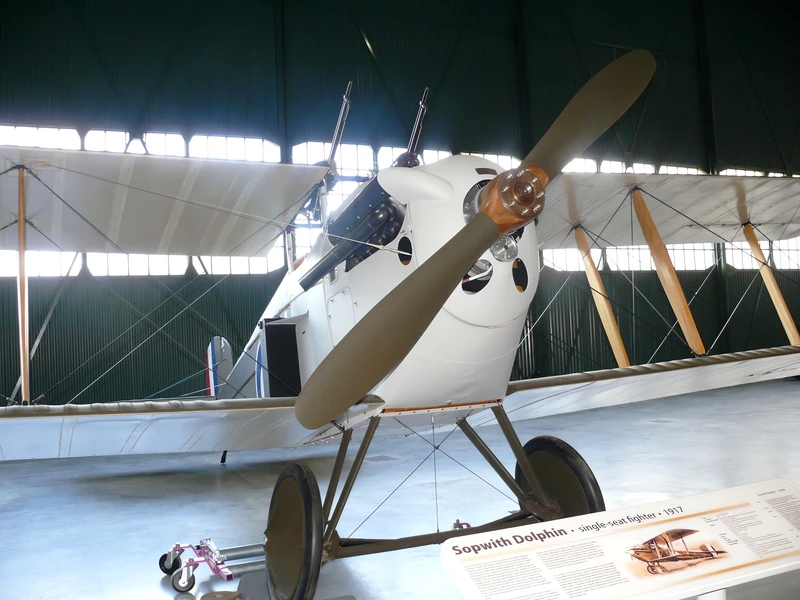
Sopwith Delfin | |
|---|---|
| Kraju | Uk |
| Roli | Fighter |
| Pierwsza mucha | 23 maja 1917 roku |
| Zbudowany | 2072 |
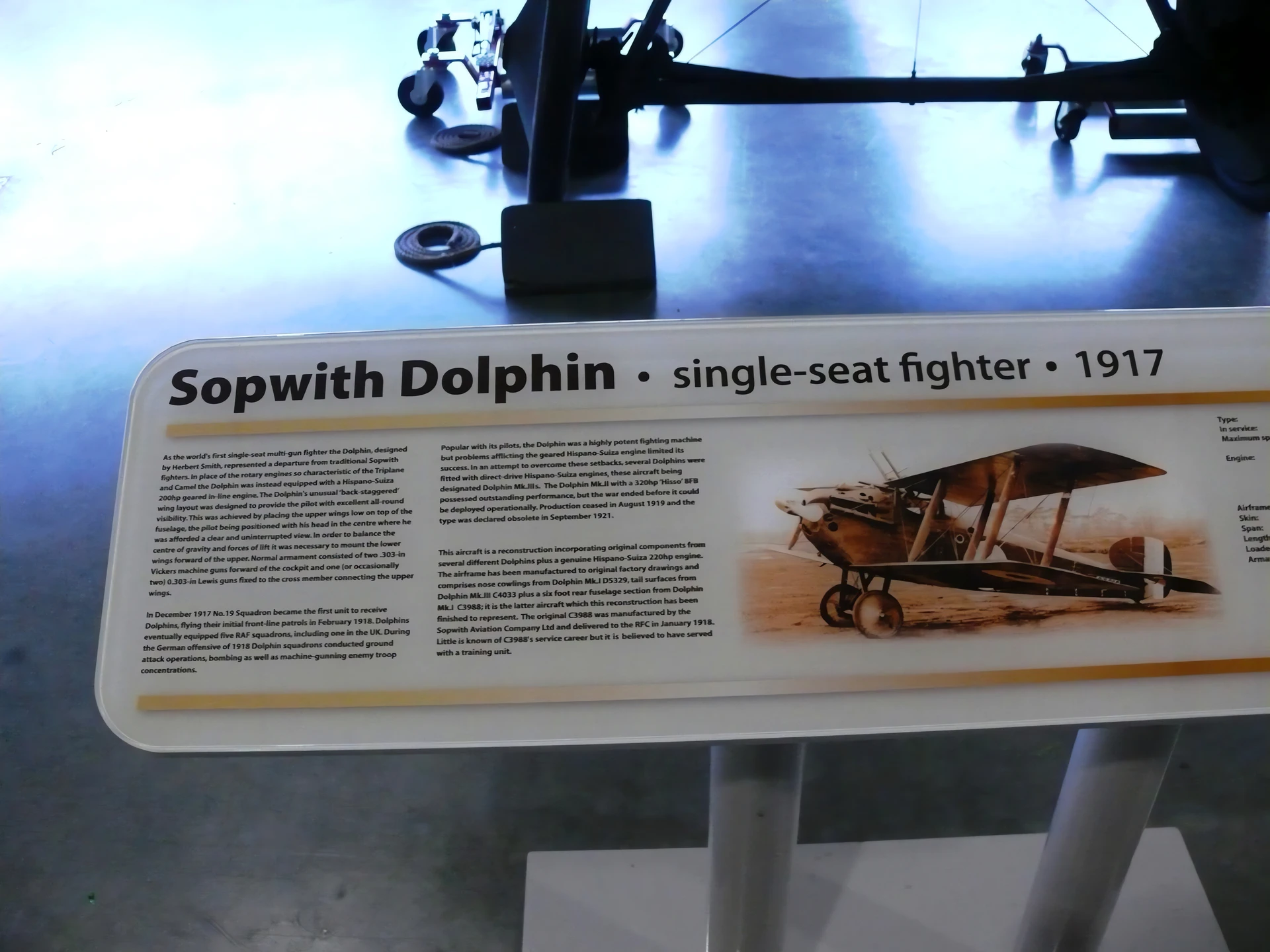
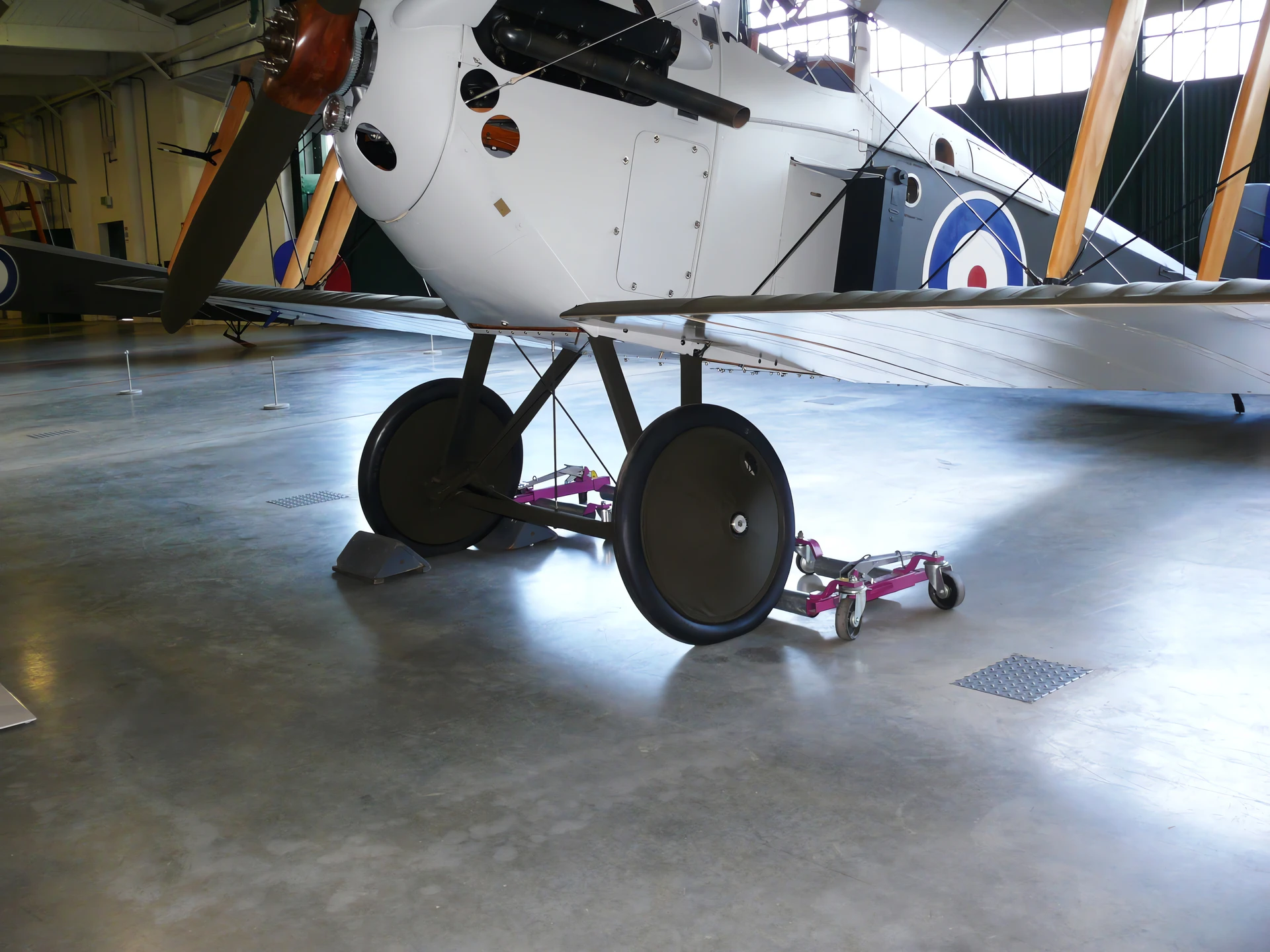
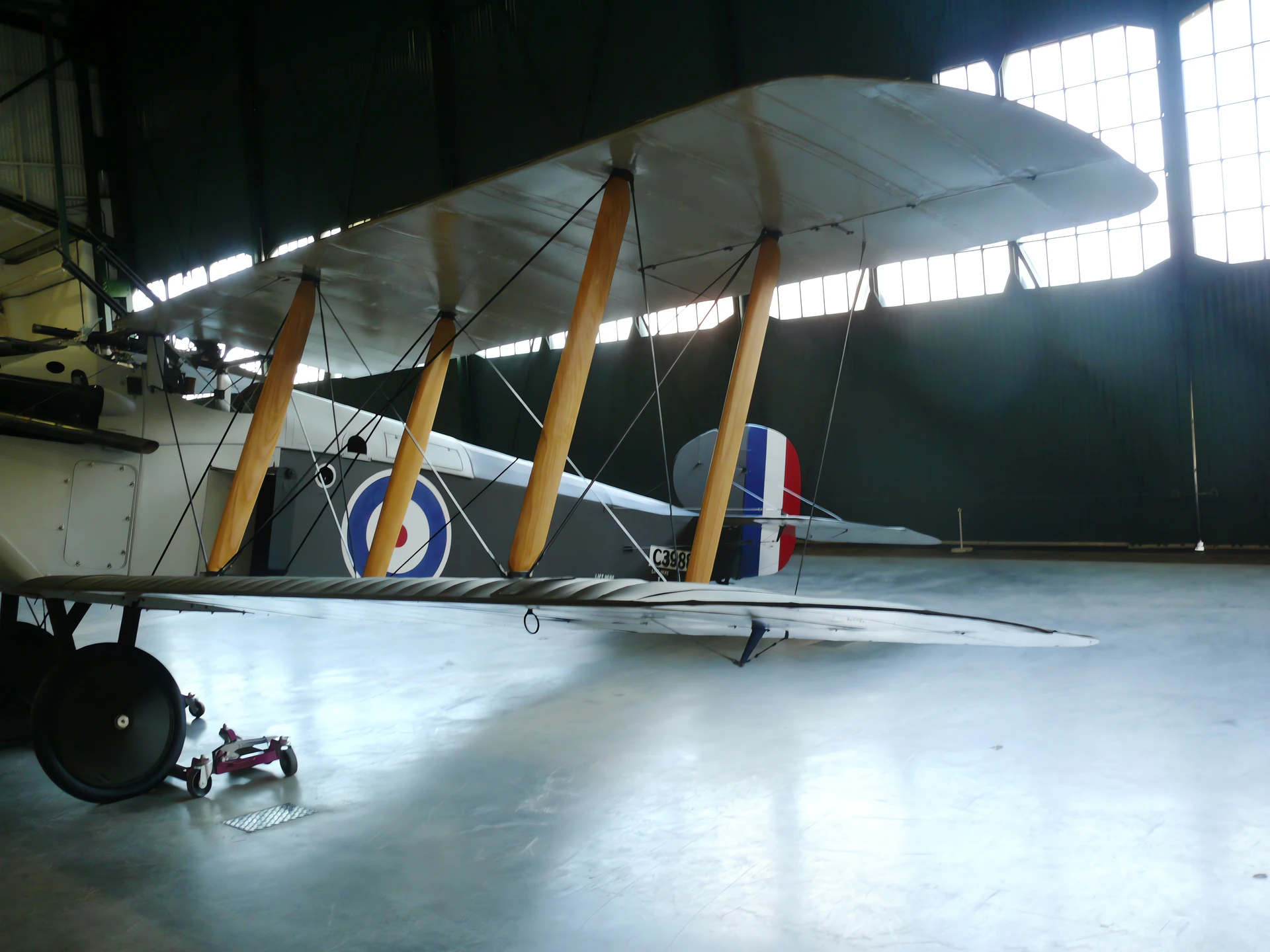
Tthe Sopwith 5F.1 Delfin – brytyjski samolot myśliwski produkowany przez Sopwith Aviation Company. Był używany przez Royal Flying Corps i jego następcę, Royal Air Force, podczas I wojny światowej. Delfin wszedł do służby na froncie zachodnim na początku 1918 roku i okazał się potężnym wojownikiem. Samolot nie został zachowany w powojennym inwentarzu i został wycofany wkrótce po wojnie.
Źródła: Sopwith Dolphin na Wikipedii
| Sopwith Dolphin Spacer | |
|---|---|
| Fotograf | Niewiedzy |
| Lokalizacja | Niewiedzy |
| Zdjęcia | 15 |
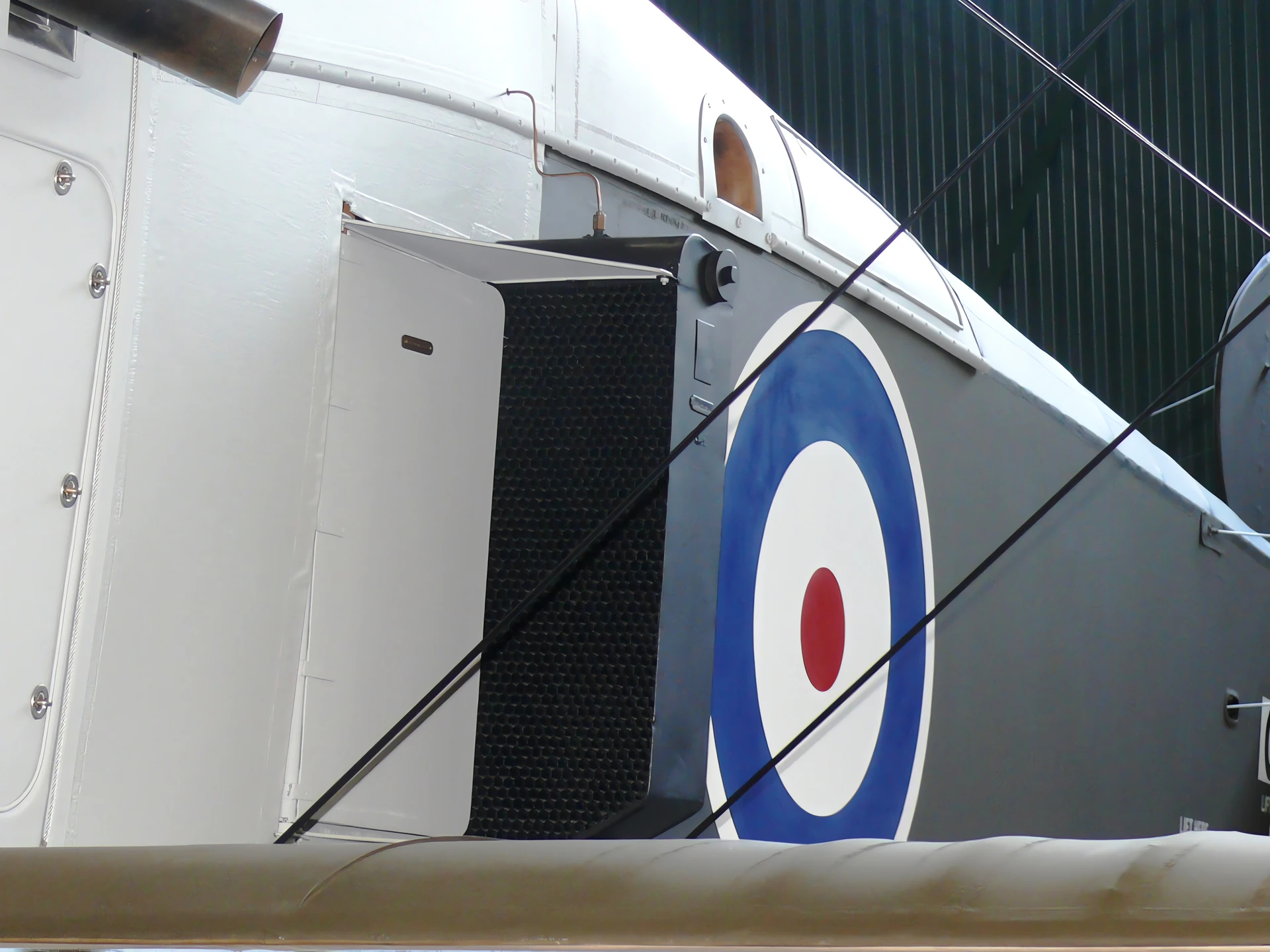
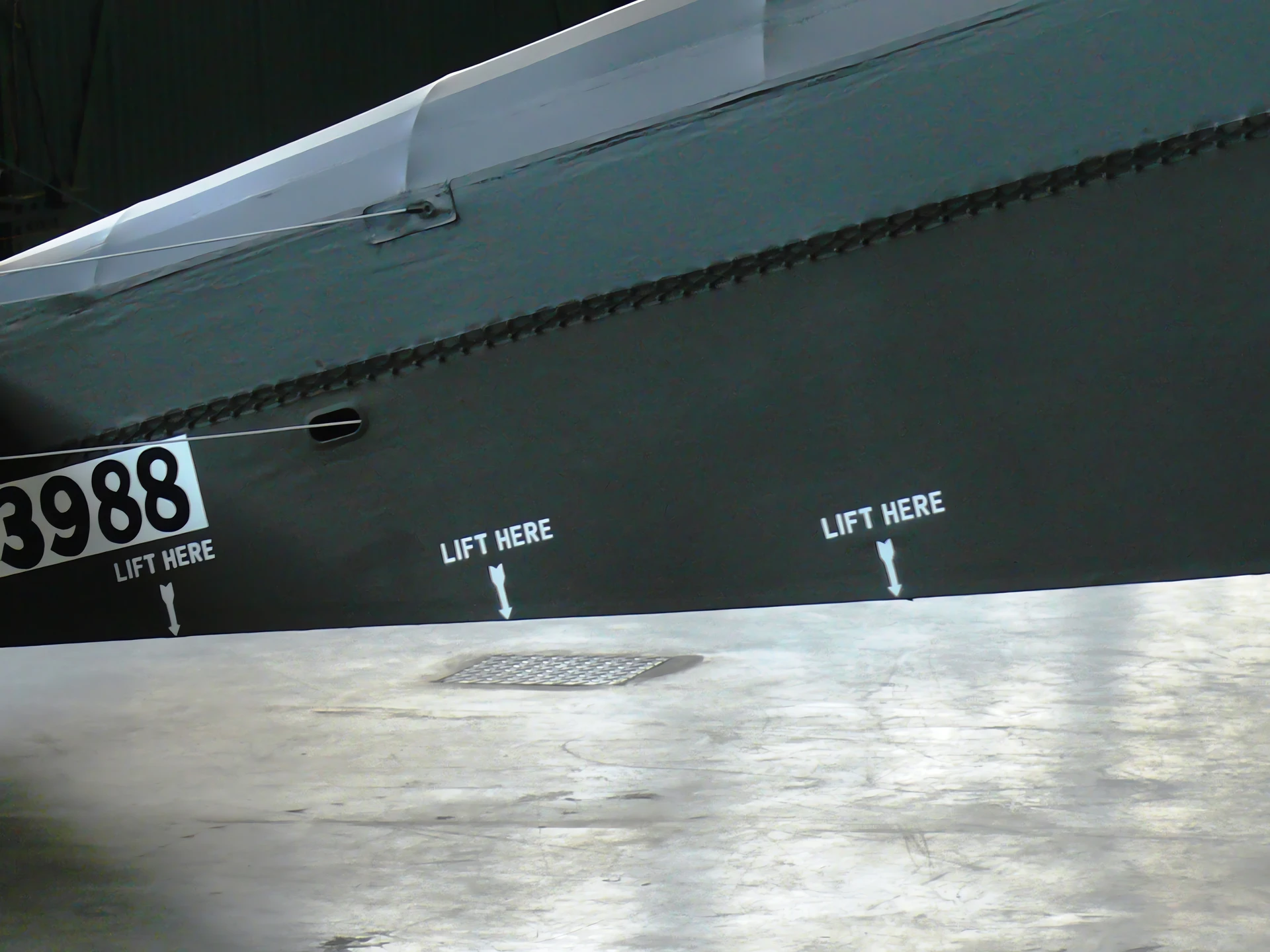
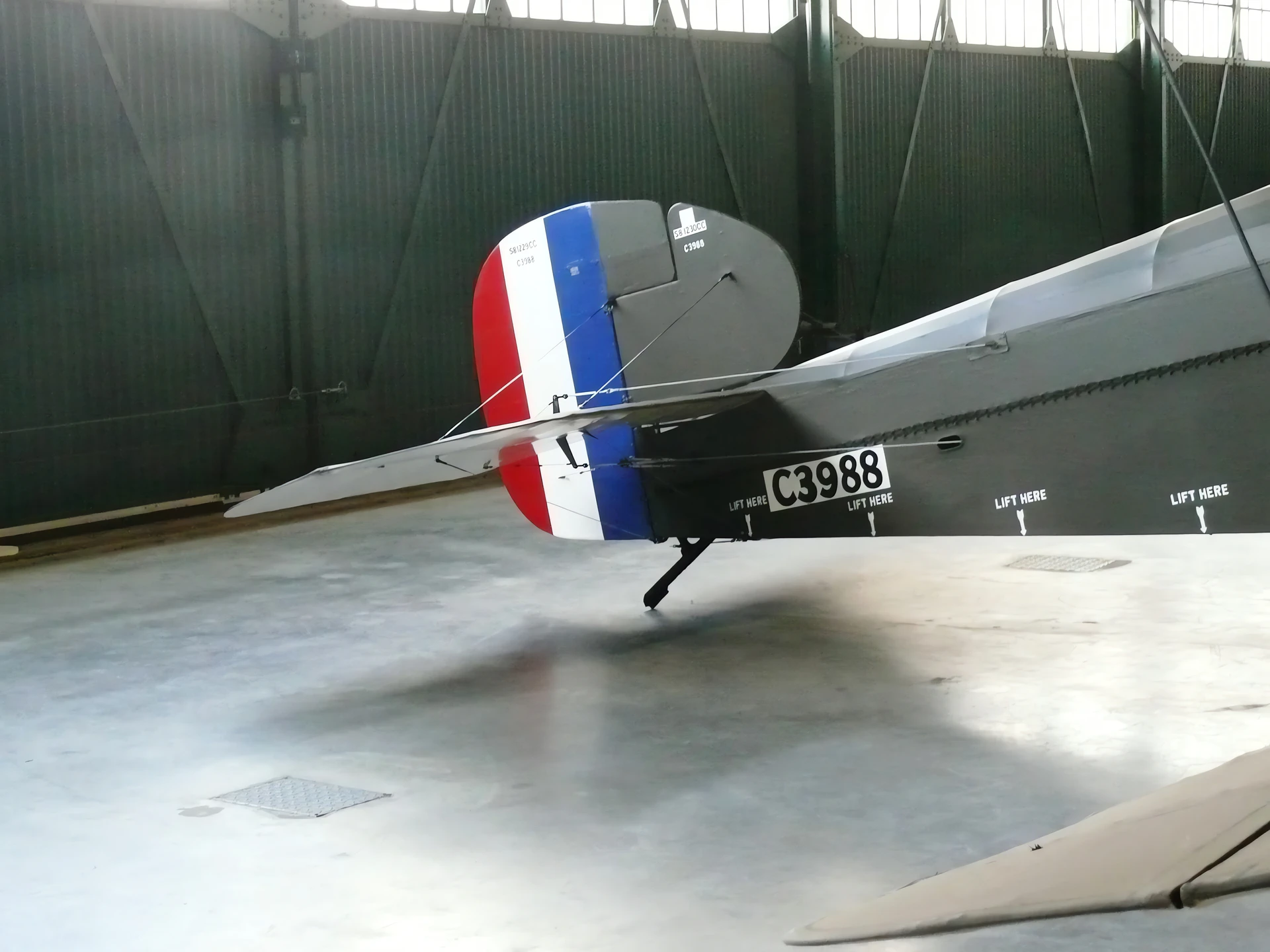


Zobacz też:


General Characteristics
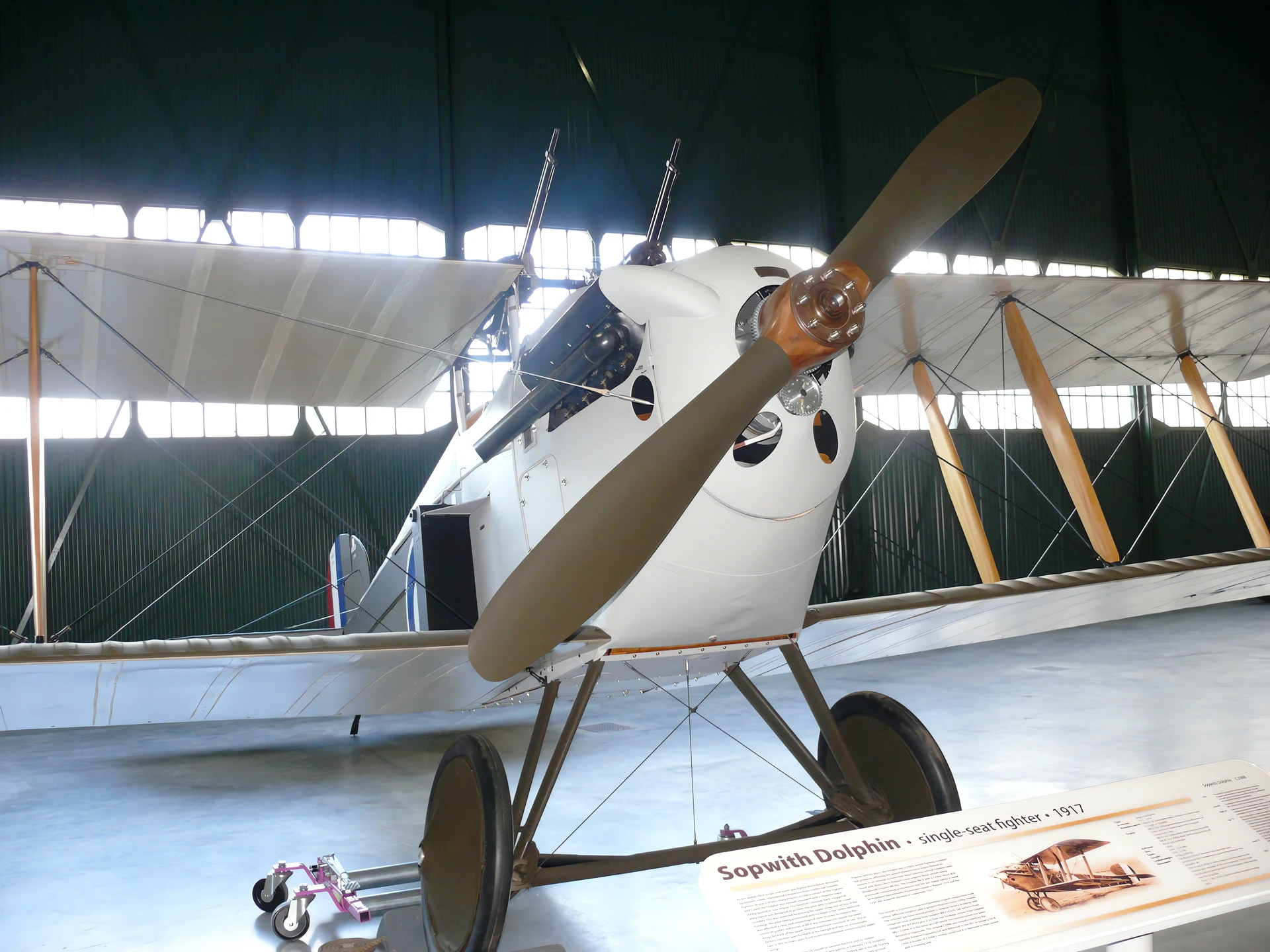
The Sopwith 5F.1 Dolphin was a British fighter aircraft used by the Royal Flying Corps and Royal Air Force during the final stages of World War I. Designed to excel at high altitudes, the Dolphin featured a unique wing arrangement known as “negative stagger,” where the upper wing was set back behind the lower wing. This, along with the pilot’s head protruding slightly through the upper wing’s center section, provided exceptional upward visibility, though it was initially unpopular with pilots who feared injury in a crash.
| Property | Typical Value (Dolphin Mk I) |
|---|---|
| Roli | Single-Seat Fighter Biplane |
| Producent | Sopwith Aviation Company |
| First Flight | May 23, 1917 |
| W eksploatacji | February 1918 – Post-War |
| No. Built | Approx. 2,072 (Total orders) |
| Załogi | 1 (Pilot) |
| Długość | 6.78 m (22 ft 3 in) |
| Rozpiętość | 9.91 m (32 ft 6 in) |
| Max Takeoff Weight | 890 kg (1,959 lb) |
Design and Powerplant
- Engine: One Hispano-Suiza 8B 8-cylinder, water-cooled V-8 engine (typically geared).
- Power Output: 149 kW (200 hp).
- Construction: Conventional wooden airframe with fabric covering.
- Engine Issues: A major drawback was the unreliability of the geared Hispano-Suiza engine, particularly the reduction gearing built by some subcontractors, which limited the Dolphin’s service readiness.
- Visibility: The innovative cockpit design placed the pilot’s head high, providing excellent upward and forward visibility, crucial for high-altitude combat.
Performance and Armament
- Maximum Speed: Up to 211 km/h (131 mph, 114 knots) at sea level.
- Service Ceiling: 6,100 m (20,000 ft).
- Climb Rate: Approximately 10 minutes 20 seconds to reach 3,048 m (10,000 ft).
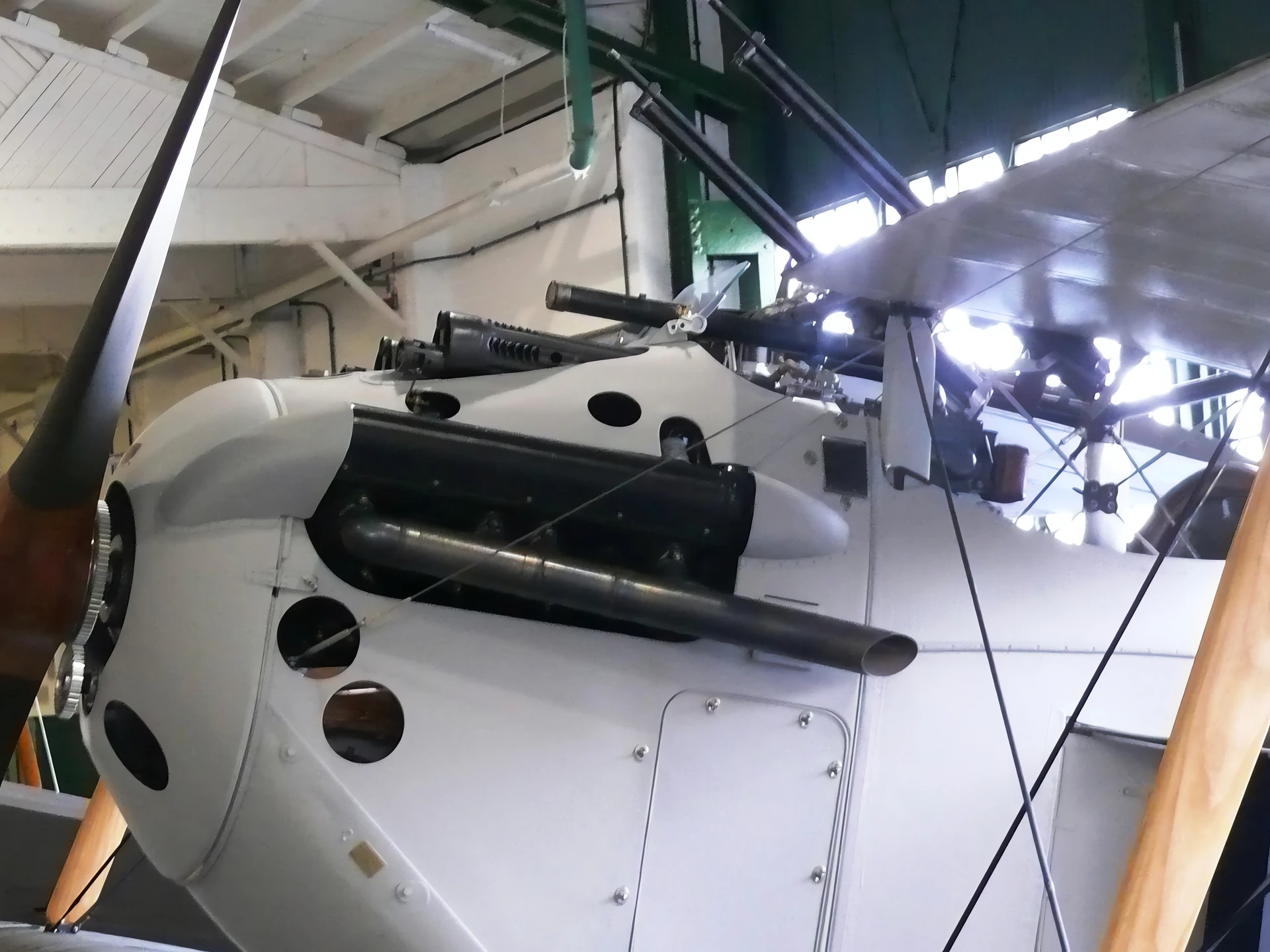
- Standard Armament: Two fixed, synchronized 7.7 mm (.303 in) Vickers machine guns mounted in the forward fuselage.
- Additional Armament: Provision for one or two Lewis guns mounted on the upper wing center section, firing upwards over the propeller arc. These guns were often removed by pilots to improve performance and safety.
- Ordnance: Could carry up to four 11 kg (25 lb) Cooper bombs for ground attack roles.
- Combat Role: It was a fast and maneuverable fighter, particularly effective in high-altitude engagements against German reconnaissance aircraft.
Liczba wyświetleń : 1147
Możesz również zobaczyć:
 Letov S-20 – Zdjęcia i filmy
 Avro 504 – Zdjęcia i filmy
 Polikarpow I-15 – zdjęcia i filmy
 Beechcraft Model 17 Staggerwing – zdjęcia i filmy
 Beechcraft Model 17 – Zdjęcia i filmy
 Verville-Sperry M-1 Messenger – Zdjęcia & Wideo
 Curtiss P-6 Hawk – Zdjęcia & Wideo
 Farman HF.20 – Zdjęcia & wideo
 Caudron G.4 – Zdjęcia & wideo
 Boeing PT-13 – Zdjęcia i film