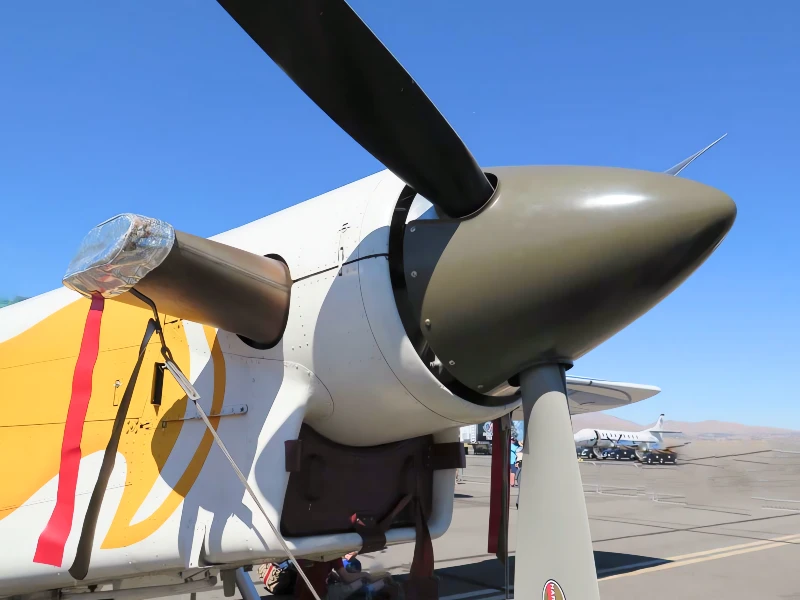
Pilatus PC-6 Porter | |
|---|---|
| Kraju | Szwajcaria |
| Roli | Samoloty pasażerskie i użytkowe STOL |
| Pierwszy lot | 4 maja 1959 |
| Zbudowany | 600 |
Pilatus PC-6 Porter to jednosilnikowy samolot użytkowy STOL zaprojektowany przez Pilatus Aircraft ze Szwajcarii. Po raz pierwszy oblatany w 1959 roku, PC-6 kontynuuje produkcję w Pilatus Flugzeugwerke w Stans w Szwajcarii. Został zbudowany zarówno w wersji z silnikiem tłokowym, jak i turbośmigłowym i był produkowany na licencji przez Fairchild Hiller w Stanach Zjednoczonych. Po około 600 dostawach w ciągu sześciu dekad, Pilatus wyprodukuje ostatnią na początku 2019 roku.
Źródła: Pilatus PC-6 Porter na Wikipedii
| Pilatus PC-6 Porter Spacer dookoła | |
|---|---|
| Fotograf | Władimir Yakubov |
| Lokalizacja | Wyścigi lotnicze Reno |
| Zdjęcia | 107 |

Zobacz też:


The Legendary Swiss STOL Bush Transport
Tthe Pilatus PC-6 Porter (and its turbine-powered counterpart, the PC-6/B Turbo-Porter) is a world-renowned single-engine Short Takeoff and Landing (STOL) utility aircraft designed and built by the Swiss manufacturer Pilatus Aircraft. First flown in 1959 with a piston engine and later upgraded to turboprop power, the PC-6 was engineered to operate out of the world’s most extreme environments—from high-altitude Alpine glaciers to short, unpaved jungle airstrips. Featuring a high-wing configuration, long high-lift wings, a boxy cabin with large double doors, and a rugged taildragger landing gear system, the Porter earned an unmatched reputation as the ultimate bush plane. Over six decades of production, it served military forces, humanitarian agencies, skydiving centers, and covert intelligence operators around the globe.
| Attribute | Technical Specification (Pilatus PC-6/B2-H4 Turbo-Porter Standard) |
|---|---|
| Roli | Single-Engine Utility STOL Transport / Skydiving & Bush Aircraft |
| Crew / Capacity | 1 Pilot + up to 10 Passengers (or 1,200 kg / 2,646 lbs cargo load) |
| Zespół napędowy | 1 × Pratt & Whitney Canada PT6A-27 turboprop engine (680 shp, flat-rated to 550 shp) |
| Prędkość maksymalna | 232 km/h (144 mph / 125 knots) max cruise | ~96 km/h (60 mph / 52 knots) stall speed |
| Gross / Takeoff Weight | 2,800 kg (6,173 lbs) maximum gross weight | ~1,270 kg (2,800 lbs) empty weight |
| Service Ceiling / Operational Range | 8,150 m (26,740 ft) ceiling | ~1,612 km (1,002 miles) max range with external tanks |
| Takeoff / Landing Distance | Takeoff ground roll: ~197 m (646 ft) | Landing ground roll: ~130 m (427 ft) |
| Wing Structure & Dimensions | Wingspan: 15.87 m (52 ft 1 in) | High constant-chord wing with full-span trailing-edge flaps |
| Landing Gear & Tail Structure | Fixed heavy-duty taildragger gear with long-stroke oil/pneumatic shock absorbers; wheel, ski, or float options |
| Production Total | 604 units produced in Switzerland by Pilatus (1959–2022) plus 92 licensed Fairchild Hiller units in the US |
Design Engineering: Turboprop Integration, Beta Propeller Braking, and High-Lift Wings
- High-Lift Unswept Constant-Chord Wing: The PC-6 incorporates a large, rectangular high-mounted wing utilizing a modified NACA 64-series airfoil. Combined with large electrically operated trailing-edge slotted flaps, the wing generates massive lift at low airspeeds, allowing the aircraft to maintain control at speeds down to 50 knots.
- PT6A Turboprop Engine & Reversible Beta Pitch: Transitioning from early Lycoming piston engines to the Pratt & Whitney Canada PT6A turboprop transformed the airframe. The engine’s reversible-pitch propeller allows pilots to enter “Beta mode” immediately upon touchdown, providing reverse thrust that halts the aircraft on impossibly short landing strips or permits steep combat dive descents without exceeding speed limits.
- High Ground Clearance Taildragger Gear: Built specifically for unprepared turf, mud, or snow, the long-legged main landing gear uses wide-track oleo-pneumatic shock absorbers. The gear layout raises the nose high off the ground, shielding the large propeller blades from debris damage during rough landings.
- Modular Box Cabin & Sliding Cargo Doors: The rectangular, slab-sided fuselage maximizes interior volume. Featuring large sliding side doors and removable passenger seating, the cabin can be reconfigured in minutes from passenger transport to freight hauling, air ambulance evacuation, or skydiving jump runs.
Operational History: Air America in Southeast Asia, Himalayan Records, and Skydiving Dominance
- Air America and CIA Operations in Laos (1960s
Liczba wyświetleń : 4892
Możesz również zobaczyć:
 Arava 202 – Zdjęcia & wideo
 PZL M28 Skytruck – Zdjęcia & Film
 de Havilland Canada DHC-2 – Zdjęcia i filmy
 Lockheed P-80 Shooting Star – zdjęcia i filmy
 Ball-Bartoe Jetwing – Zdjęcia & Video
 North American NA-64 Yale – Zdjęcia i filmy
 de Havilland Canada DHC-4 Caribou – Zdjęcia & Video
 Aeritalia G.222 – Zdjęcia & wideo
 Sud-Ouest Triton – Zdjęcia & wideo
 Hawker Siddeley Harrier – Zdjęcia & Video