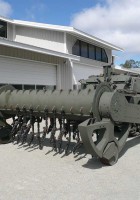
FV3902 Churchill Flail Ługi

FV3902 Churchill Flail Ługi

KrajuUk
TypuUrządzenie montowane w pojeździe
ZdjęcieWładimir Yakubov
ZlokalizujKolekcja Jacques'a Littlefielda
OpisAlbum 206 zdjęcia spaceru po ropuchy "FV3902 Churchill Flail"

Galeria zdjęć FV3902 Churchill Flail Ługi, A mine flail is a vehicle-mounted device that makes a safe path through a mine-field by deliberately detonating land mines in front of the vehicle that carries it. They were first used by the British during World War II. The mine flail consists of a number of heavy chains, ending in fist-sized steel balls, (flails) that are attached to a horizontal, rapidly rotating rotor mounted on two arms in front of the vehicle. The rotor’s rotation makes the flails spin wildly and violently pound the ground. The force of a flail strike above a buried mine mimics the weight of a person or vehicle and causes the mine to detonate, but in a safe manner that does little damage to the flails or the vehicle.

Źródła: FV3902 Churchill Ropucha na Wiki

Czytaj dalej

Liczba wyświetleń : 2240

Francuski VAB

Francuski VAB

KrajuFrancja
TypuOpancerzony pojazd ratowniczy
ZdjęcieLaurent Tabib
OpisAlbum 53 zdjęcia spacer wokół «francuski VAB»

Galeria zdjęć Francuski VAB, The Véhicule de l’avant blindé or VAB (“Armoured vanguard vehicle” in French) is an armoured personnel carrier and support vehicle designed by the Euro Mobilité Division of GIAT Industries of France. It entered service in 1976; around 5,000 were produced.

Źródła: Francuski VAB na Wiki

Czytaj dalej

Views : 4528

FV106 Samson CVRT ARV

FV106 Samson

KrajuUk
TypuOpancerzony pojazd ratowniczy
ZdjęcieWładimir Yakubov
ZlokalizujFundacja Technologii Pojazdów Wojskowych
OpisAlbum 57 zdjęcia spacer po «FV106 Samson»

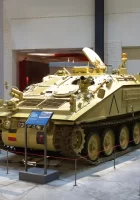
Galeria zdjęć FV106 Samson, FV106 Samson is a British Army armoured recovery vehicle, one of the CVR(T) family. The main role of this vehicle is to recover the CVR(T) family of vehicles, but can recover other light tracked vehicles such as the FV430 series.

Źródła: FV106 Samson na Wiki

Czytaj dalej

Liczba wyświetleń : 2476

FV180 Ciągnik inżyniera bojowego

FV180 Ciągnik inżyniera bojowego

KrajuUk
TypuAmfibijny specjalistyczny pojazd opancerzony
ZdjęcieWładimir Yakubov
ZlokalizujFundacja Technologii Pojazdów Wojskowych
OpisAlbum 122 zdjęcia spacer wokół «FV180 Combat Engineer Tractor»

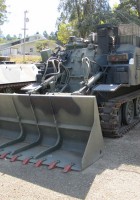
Galeria zdjęć FV180 Ciągnik inżyniera bojowego, The FV180 Combat Engineer Tractor or C.E.T. is an amphibious specialist armoured vehicle of the British Army and has been in general service since 1976. A tracked, lightly armoured vehicle, with amphibious capability, the CET is used by Royal Engineers in ground preparation for bridge construction and towing activities in the front line of battle, such as digging vehicle fighting pits, constructing earthen barriers, repairing roads, recovery of disabled vehicles from water and other obstacles, preparing riverbanks for vehicle crossings and clearing obstacles.

Źródła: FV180 Combat Engineer Tractor na Wiki

Czytaj dalej

Liczba wyświetleń : 2923

BAC 167 Strikemaster Mk80A

BAC 167 Strikemaster Mk80A

KrajuUk
TypuSzkolenie z napędem odrzutowym
Produkowane1967-1984
Zbudowany146

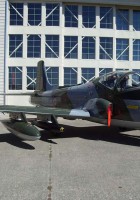
Galeria zdjęć BAC 167 Strikemaster Mk80A, The BAC 167 Strikemaster is a British jet-powered training and light attack aircraft. It was a development of the Hunting Jet Provost trainer, itself a jet engined version of the Percival Provost, which originally flew in 1950 with a radial piston engine.

Źródła: BAC 167 Strikemaster Mk80A na Wiki

Czytaj dalej

Views : 3500

Curtiss F9C-2 Wróbel

Curtiss F9C-2 Wróbel

KrajuStany Zjednoczone Ameryki
TypuDwupłatowe myśliwce
Pierwszy lot12 lutego 1931
Zbudowany7+

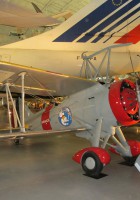
Curtiss F9C Sparrowhawk to lekki dwupłatowy samolot myśliwski z lat 30. XX wieku, który był przenoszony przez sterowce Marynarki Wojennej Stanów Zjednoczonych USS Akron i Macon. Jest to przykład myśliwca pasożytniczego, małego samolotu zaprojektowanego do użycia z większego samolotu, takiego jak sterowiec lub bombowiec.

Źródła: Curtiss F9C-2 Sparrowhawk na Wiki

Czytaj dalej

Liczba wyświetleń : 3429

North American Rockwell OV-10 Bronco

North American Rockwell OV-10 Bronco

KrajuStany Zjednoczone Ameryki
TypuLekkie samoloty szturmowe i obserwacyjne
Produkowane1965–86
Liczba zbudowanych360

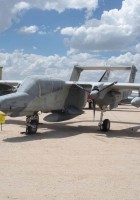
Tthe North American Rockwell OV-10 Bronco to amerykański samolot turbośmigłowy i obserwacyjny. Został on opracowany w 1960 roku jako specjalny samolot do walki z rebelią (COIN), a jedną z jego podstawowych misji był jako wysunięty samolot kontroli powietrza (FAC). Może przenosić do trzech ton amunicji zewnętrznej, ładunków wewnętrznych, takich jak spadochroniarze lub nosze, i może marudzić przez trzy lub więcej godzin.

Źródła: North American Rockwell OV-10 Bronco na Wiki

Czytaj dalej

Liczba wyświetleń : 2678

HMAS Castlemaine (J244)

HMAS Castlemaine (J244)

KrajuAustralia
TypuKorweta
ZdjęcieWładimir Yakubov
ZlokalizujWarszawa, Australia
OpisAlbum 89 zdjęcia spaceru wokół «HMAS Castlemaine (J244)»

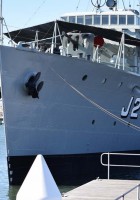
Galeria zdjęć HMAS Castlemaine (J244), HMAS Castlemaine (J244/M244/A248), named for the city of Castlemaine, Victoria, was one of 60 Bathurst-class corvettes constructed during World War II, and one of 36 initially manned and commissioned solely by the Royal Australian Navy (RAN). Launched in 1941 and commissioned in 1942, Castlemaine operated during World War II in the waters of Australia, New Guinea, and Timor. She remained in service until 1945, when she was decommissioned into reserve and converted into an immobilised training ship. In 1973, Castlemaine was presented to the Maritime Trust of Australia for conversion of a museum ship. She is one of two surviving examples of the Bathurst class, the other being HMAS Whyalla.

Źródła: HMAS Castlemaine (J244) na Wiki

Czytaj dalej

Liczba wyświetleń : 2632

Caudron G.4

Caudron G.4

KrajuFrancja
TypuDwupłatowiec
ZdjęcieWładimir Yakubov
ZlokalizujNarodowe Muzeum Lotnictwa i Przestrzeni Kosmicznej – Udvar-Hazy Center, Chantilly
OpisAlbum 84 zdjęcia spacer po «Caudron G.4»

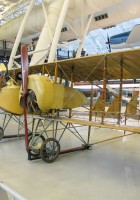
Galeria zdjęć Caudron G.4, The Caudron G.4 was a French biplane with twin engines, widely used during World War I as a bomber aircraft. It was designed by René and Gaston Caudron as an improvement over their single engined Caudron G.3. The aircraft employed wing warping for banking. The first G.4 was built in 1915, and it was manufactured in France, England and Italy. The Caudron G.4 was used as a reconnaissance bomber into the heart of Germany. Later, when Germany developed a fighter force, the aircraft had to be used for night bombings.

Źródła: Caudron G.4 na Wiki

Czytaj dalej

Liczba wyświetleń : 5179

M53/59 Praga

M53/59 Praga

KrajuCzechosłowacji
TypuSamobieżne działo przeciwlotnicze
Produkowane1950
Zbudowany900+

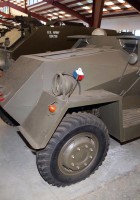
Tthe M53/59 Praga is a Czechoslovak self-propelled anti-aircraft gun developed in the late 1950s. It consists of a heavily modified Praga V3S six-wheel drive truck chassis, armed with a twin 30 mm AA autocannon mounted on the rear for which the vehicle typically carries 900 rounds of ammunition, each gun being gravity fed from distinctive 50 round magazines. The vehicle has an armoured cabin. In Czechoslovakia it was known as Praga PLDvK vz. 53/59 – “Ještěrka” (PLDvK Model 53/59 – “Lizard”[2]). PLDvK stands for Protiletadlový dvojkanón = Anti-aircraft twin-gun.

Źródła: M53/59 Praga na Wiki

Czytaj dalej

Liczba wyświetleń : 3749