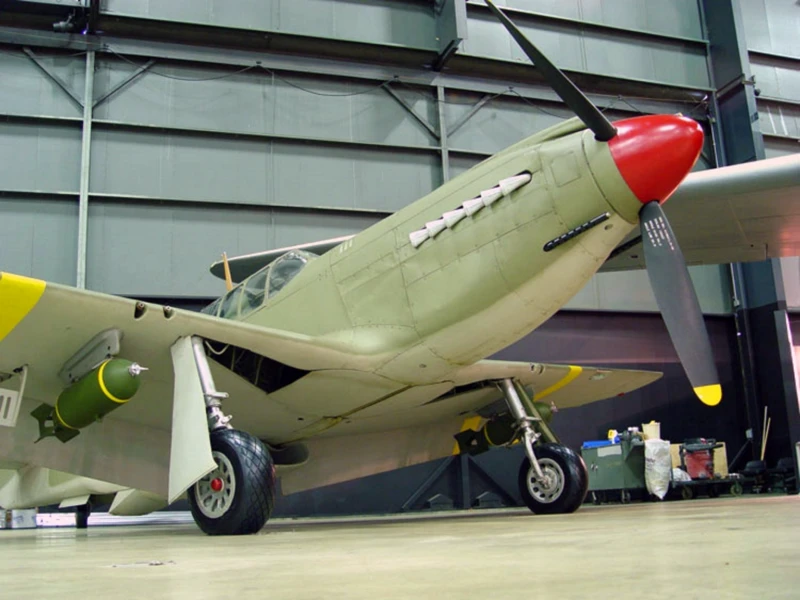
Noord-Amerikaanse A-36A Apache | |
|---|---|
| Land | Verenigde Staten |
| Role | Grondaanval/duikbommenwerper |
| Eerste vlucht | oktober 1942 |
| Gebouwd | 500 |
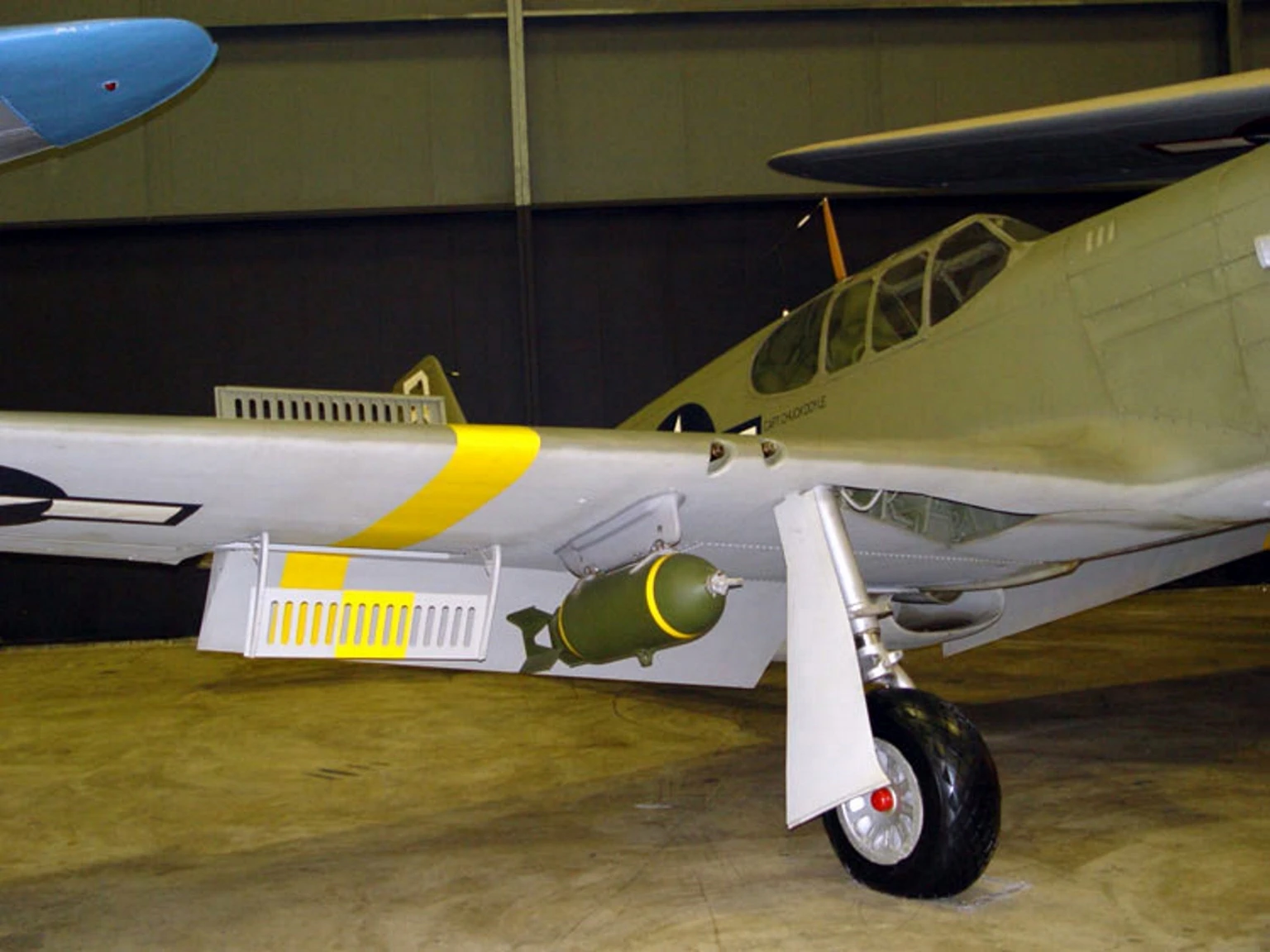
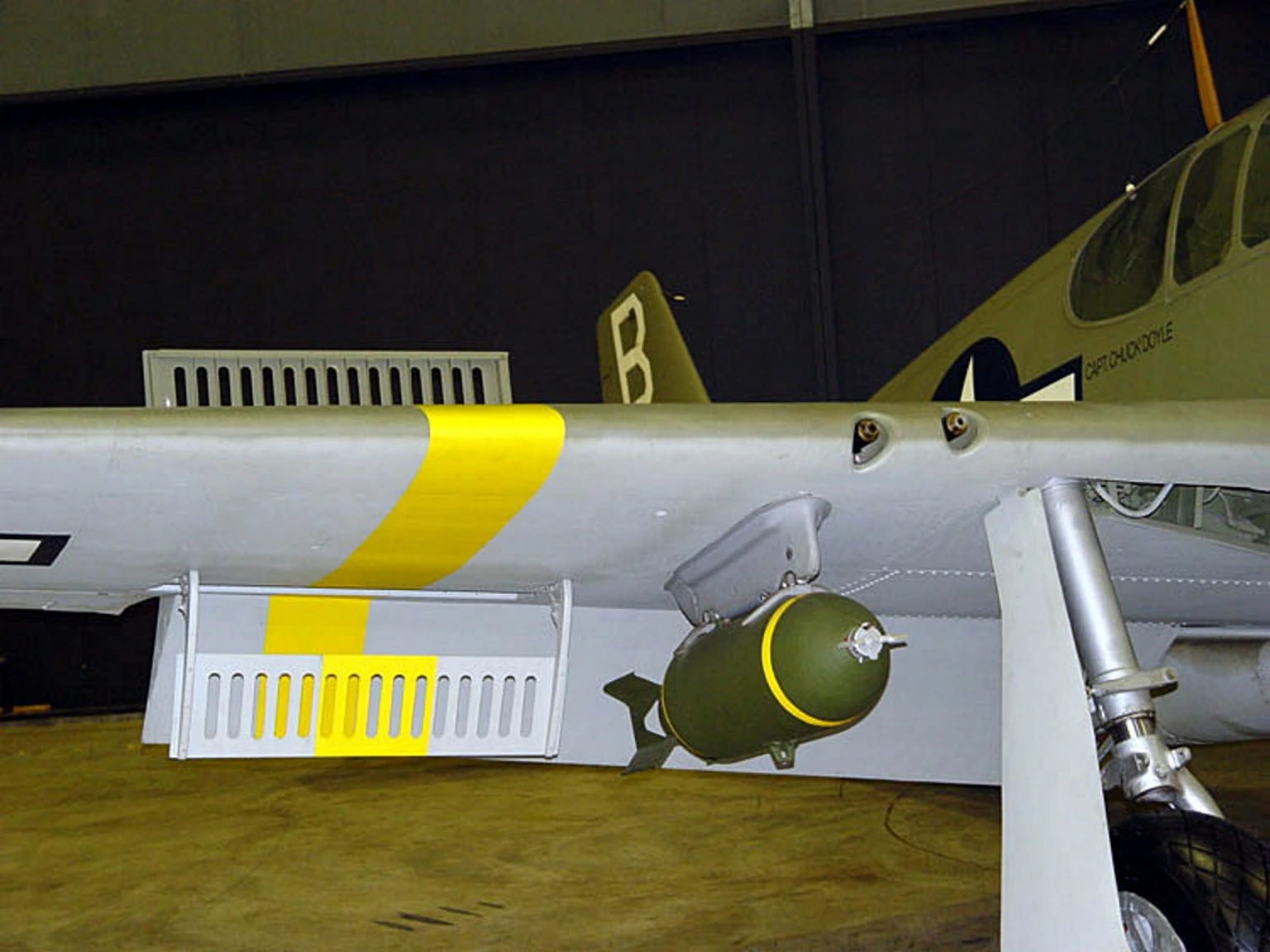
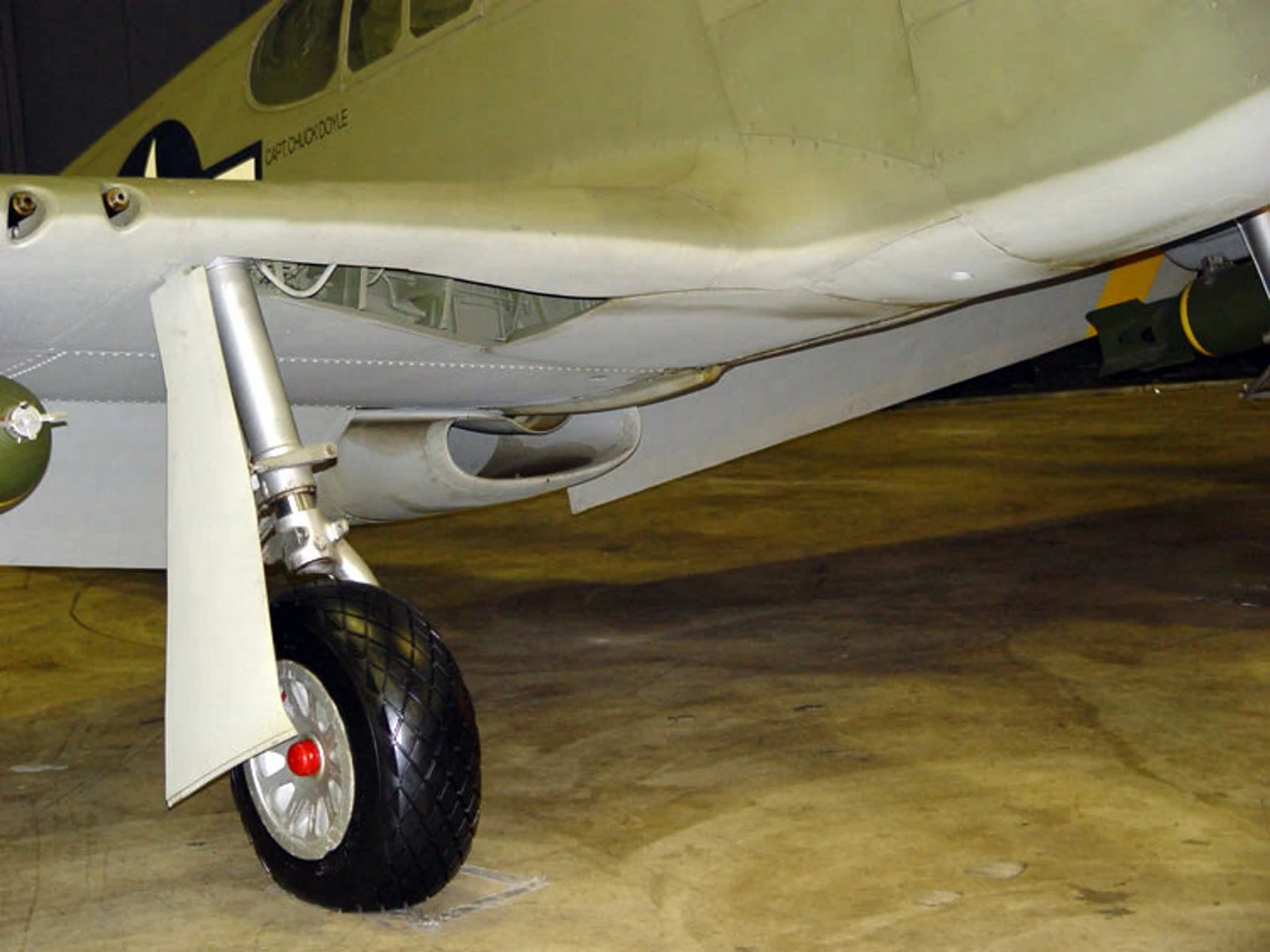
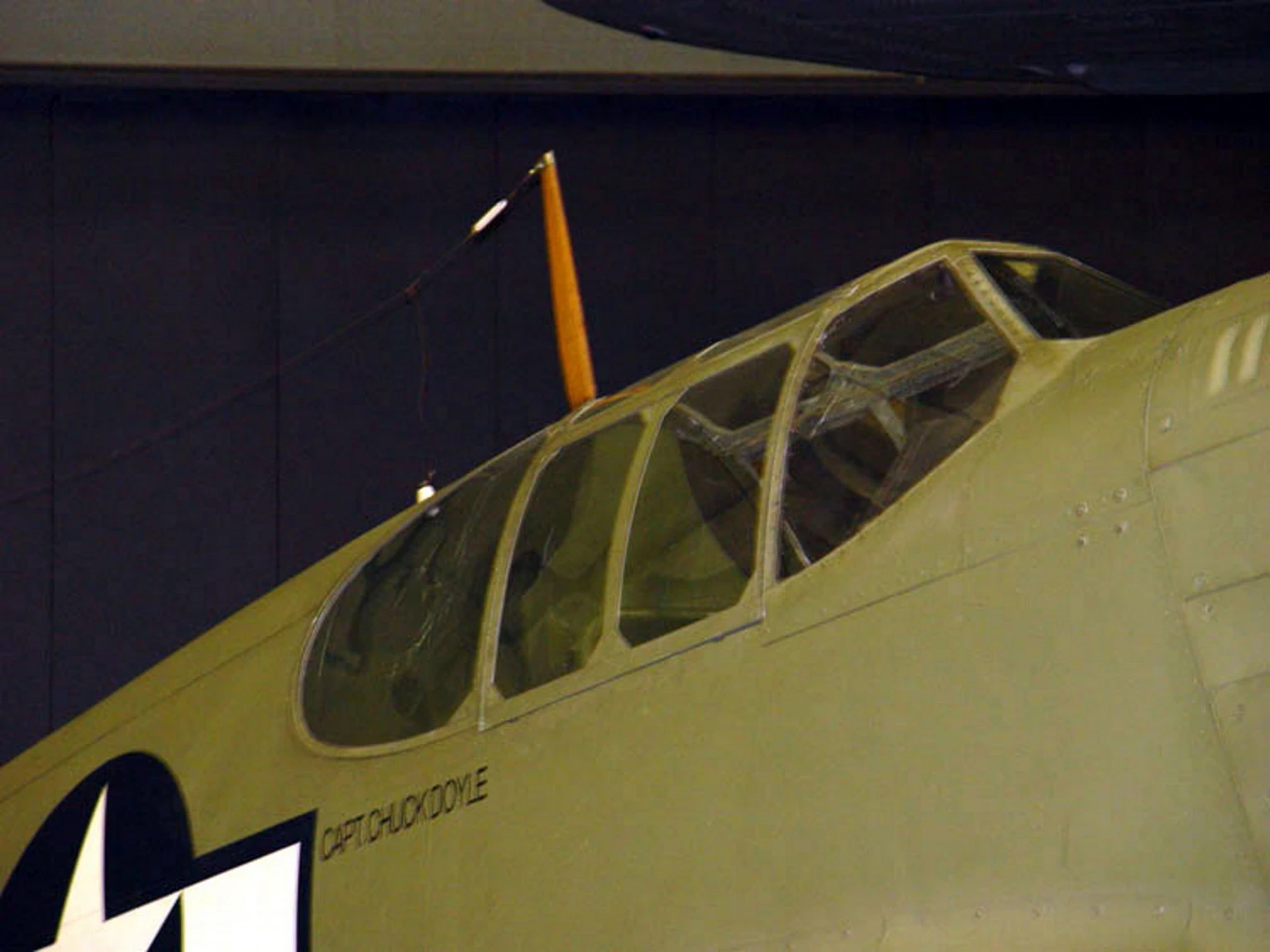
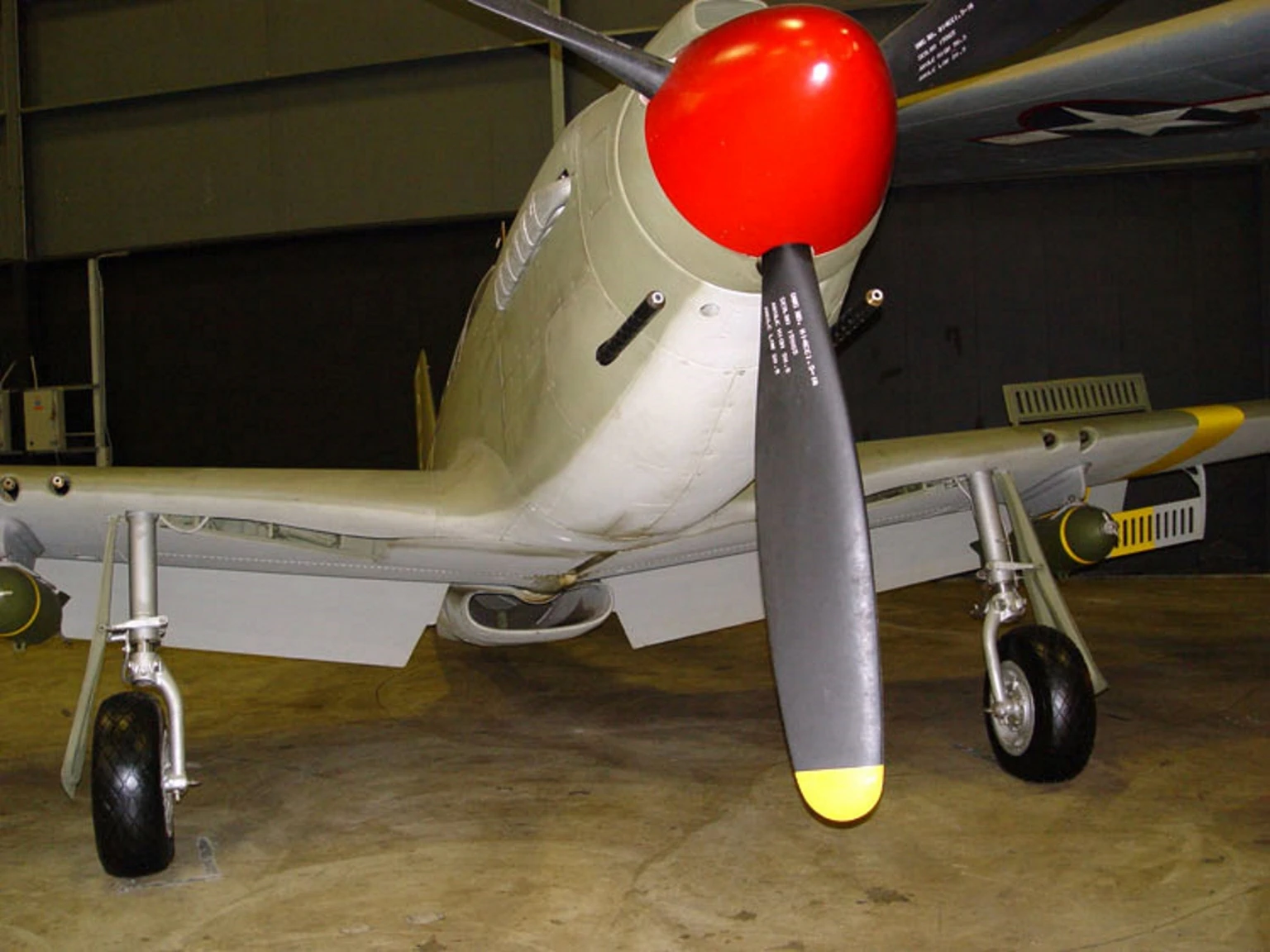
De Noord-Amerikaanse A-36 Apache (in sommige bronnen vermeld als "Invader", maar ook mustang genoemd) was de grondaanval / duikbommenwerperversie van de Noord-Amerikaanse P-51 Mustang, waarvan deze kon worden onderscheiden door de aanwezigheid van rechthoekige, lattenbodemduikremmen boven en onder de vleugels. Een totaal van 500 A-36 duikbommenwerpers diende in Noord-Afrika, de Middellandse Zee, Italië en het China-Birma-India theater tijdens de Tweede Wereldoorlog voordat ze in 1944 uit operationeel gebruik werden teruggetrokken.
| North American A-36A Apache | |
|---|---|
| Fotograaf | John Heck |
| Lokalisatie | Onbewust |
| Foto 's | 14 |
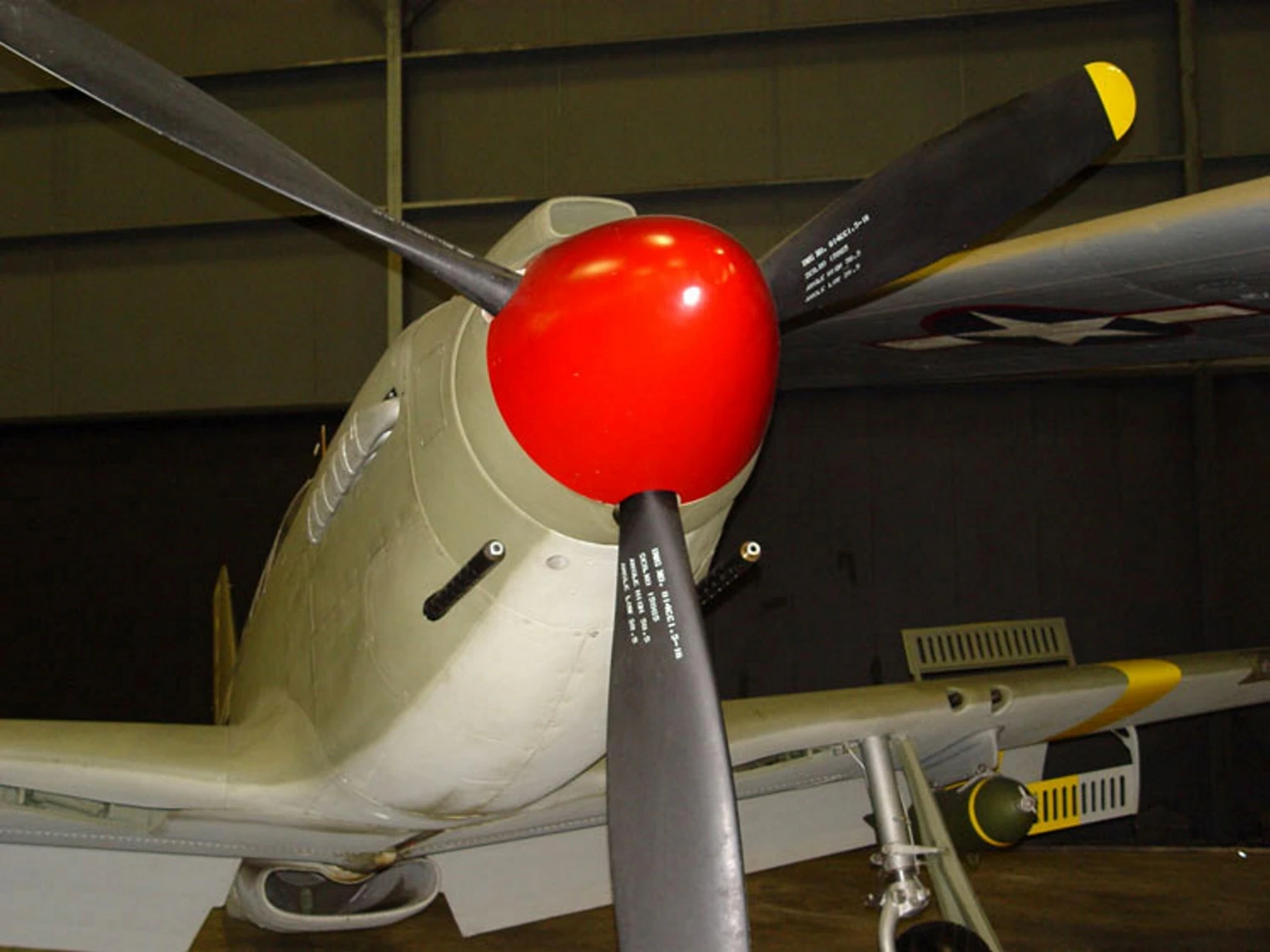
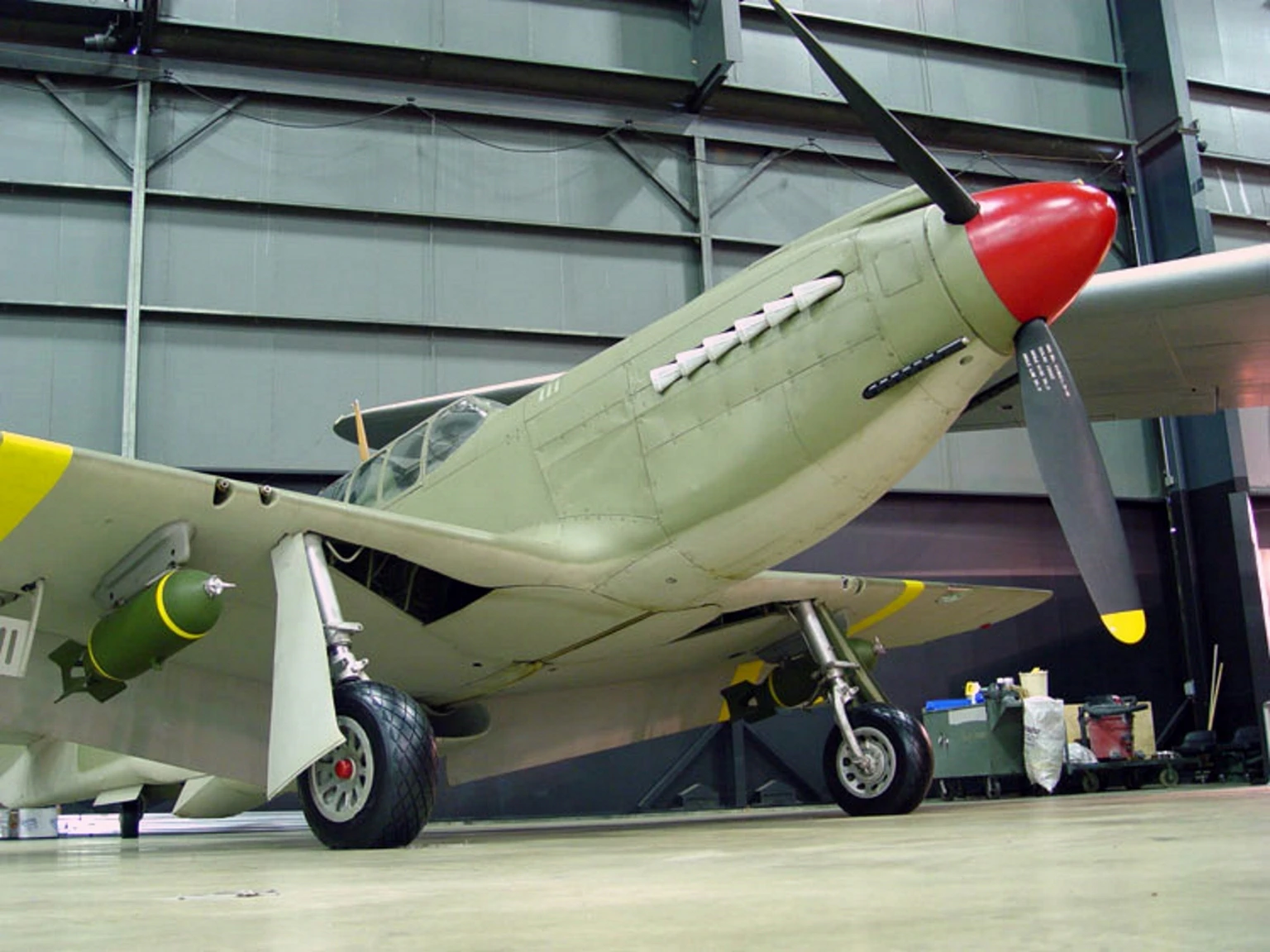

| Info | |
|---|---|
| Role | Grondaanval/duikbommenwerper |
| Fabrikant | Noord-Amerikaanse luchtvaart |
| Designer | Edgar Schmued |
| Eerste vlucht | oktober 1942 |
| Introductie | 1942 |
| Voormalig | 1945 |
| Primaire gebruiker | United States Army Air Forces |
| Aantal gebouwd | 500 |
| Ontwikkeld uit | P-51 Mustang |
 Koop een koffie voor mij
Zie ook:


| North American A-36A Apache | |
|---|---|
| Fotograaf | Vladimir Yakubov |
| Lokalisatie | Onbewust |
| Foto 's | 26 |
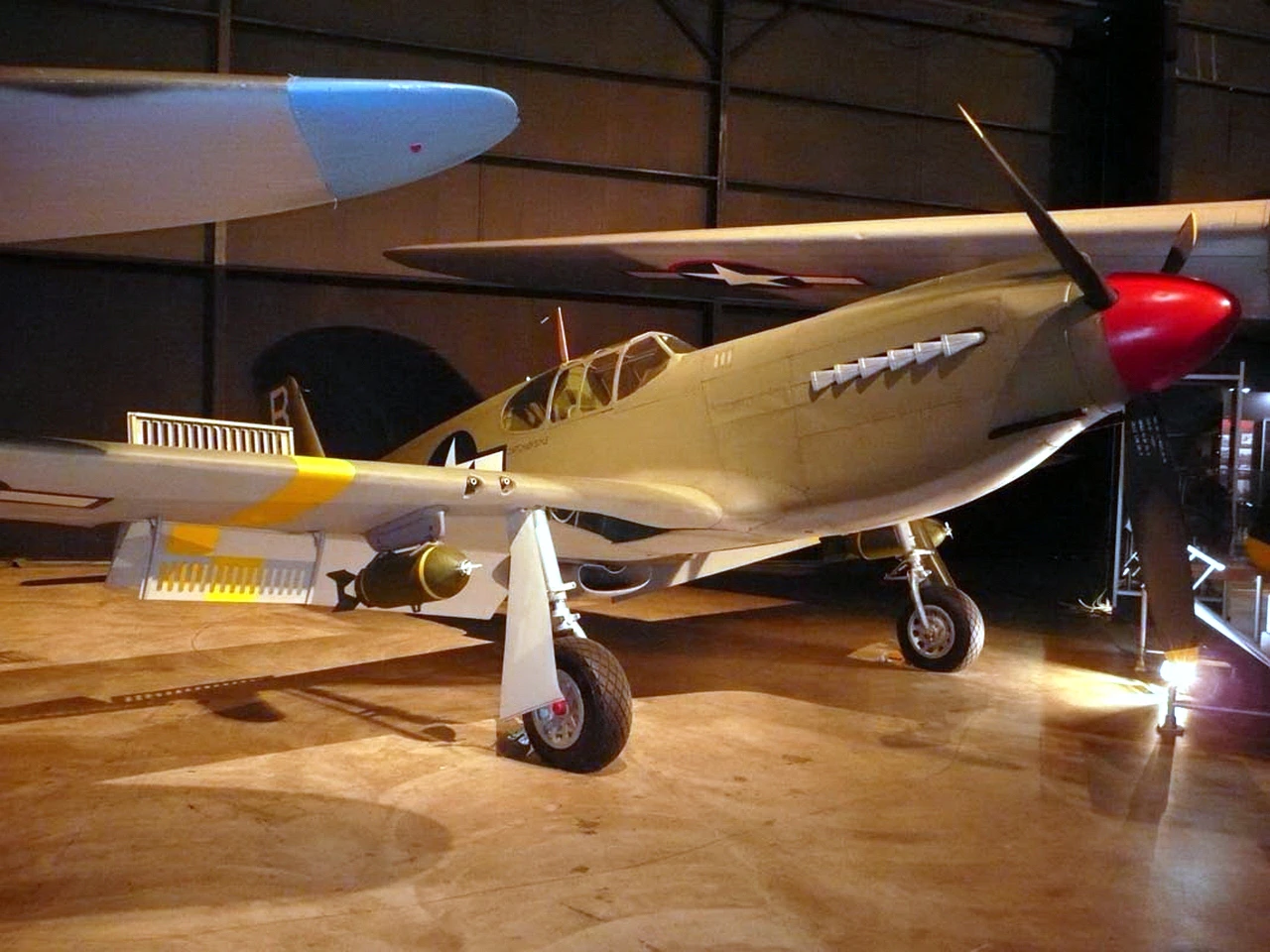
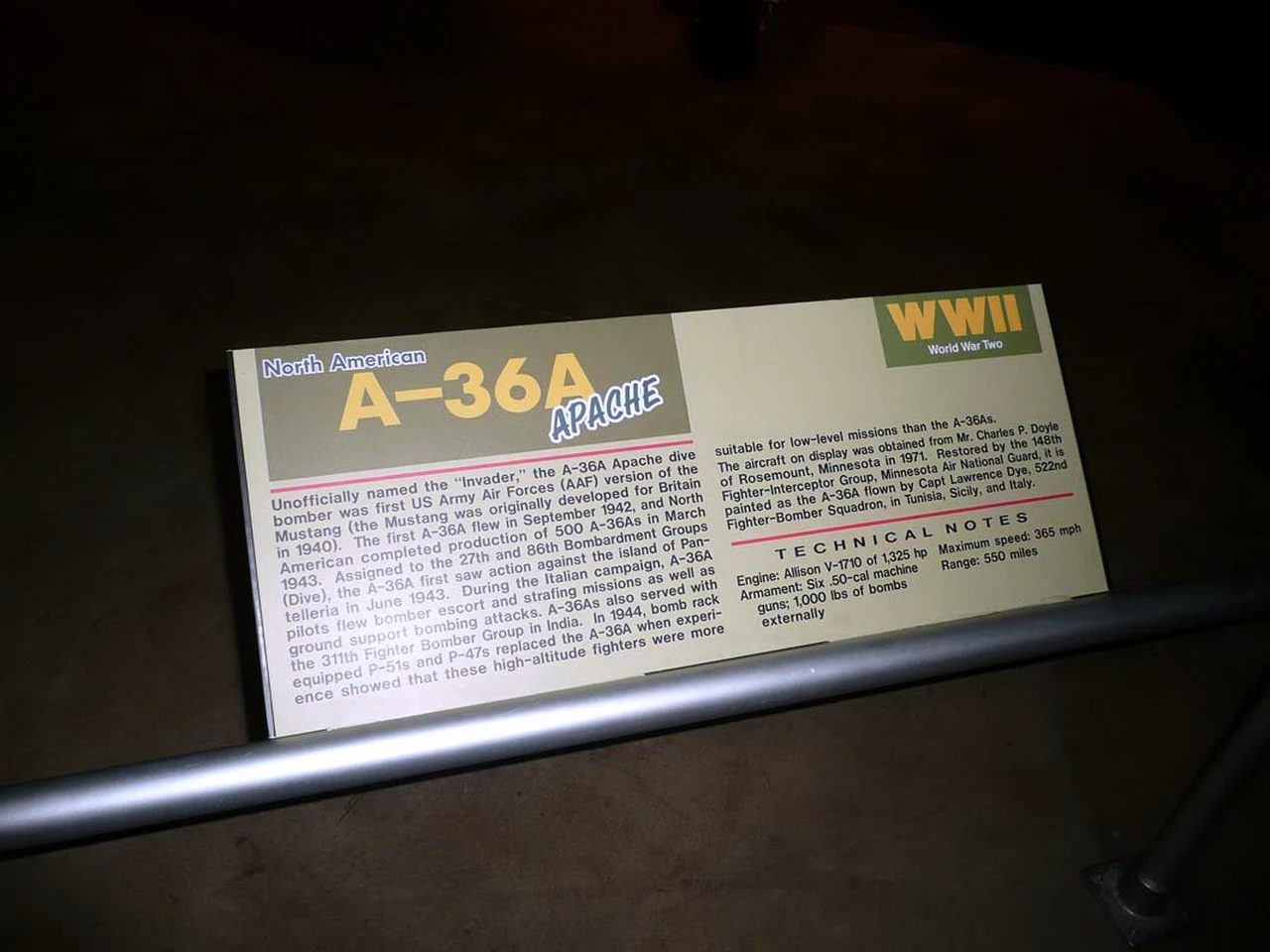
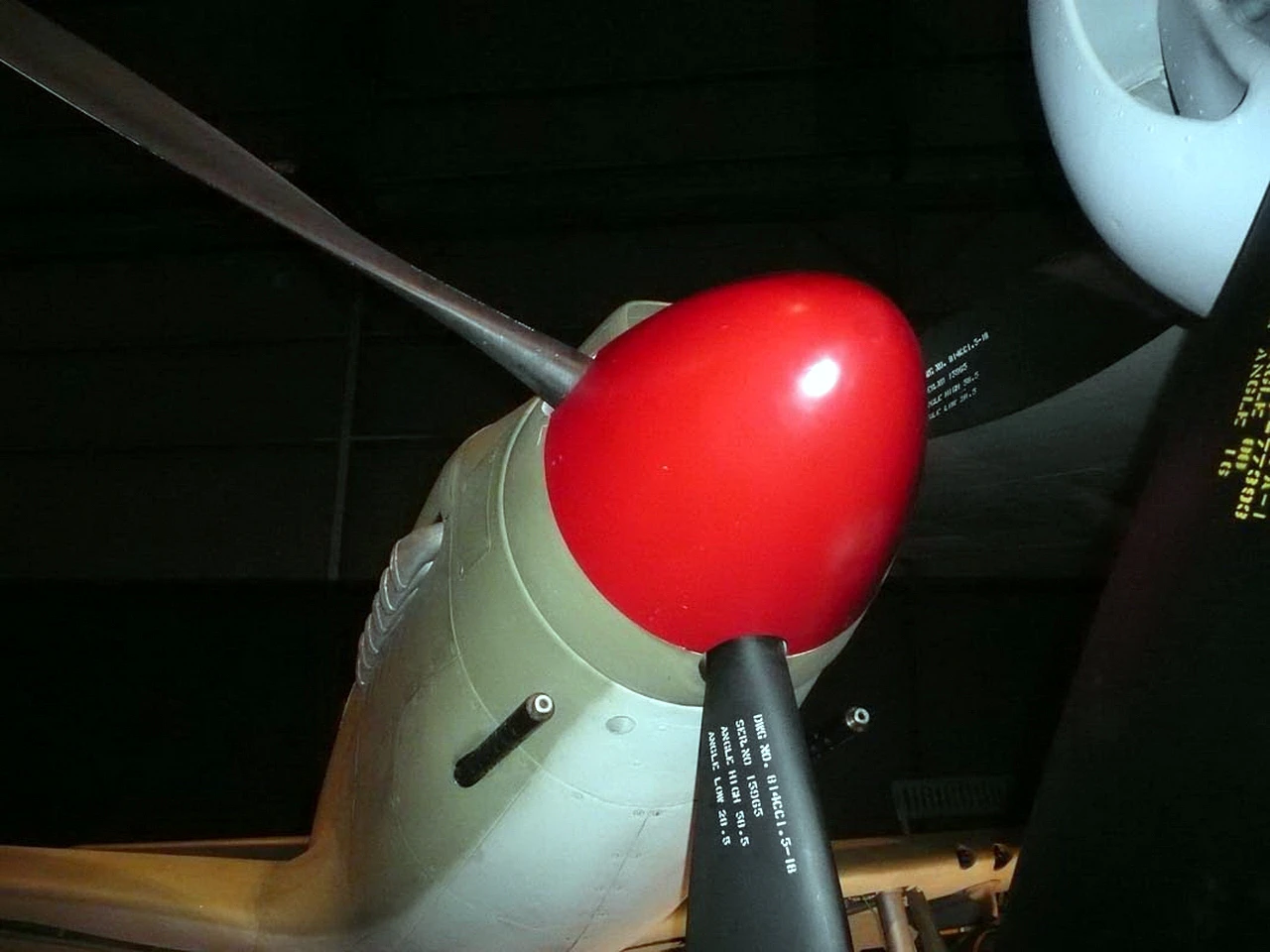
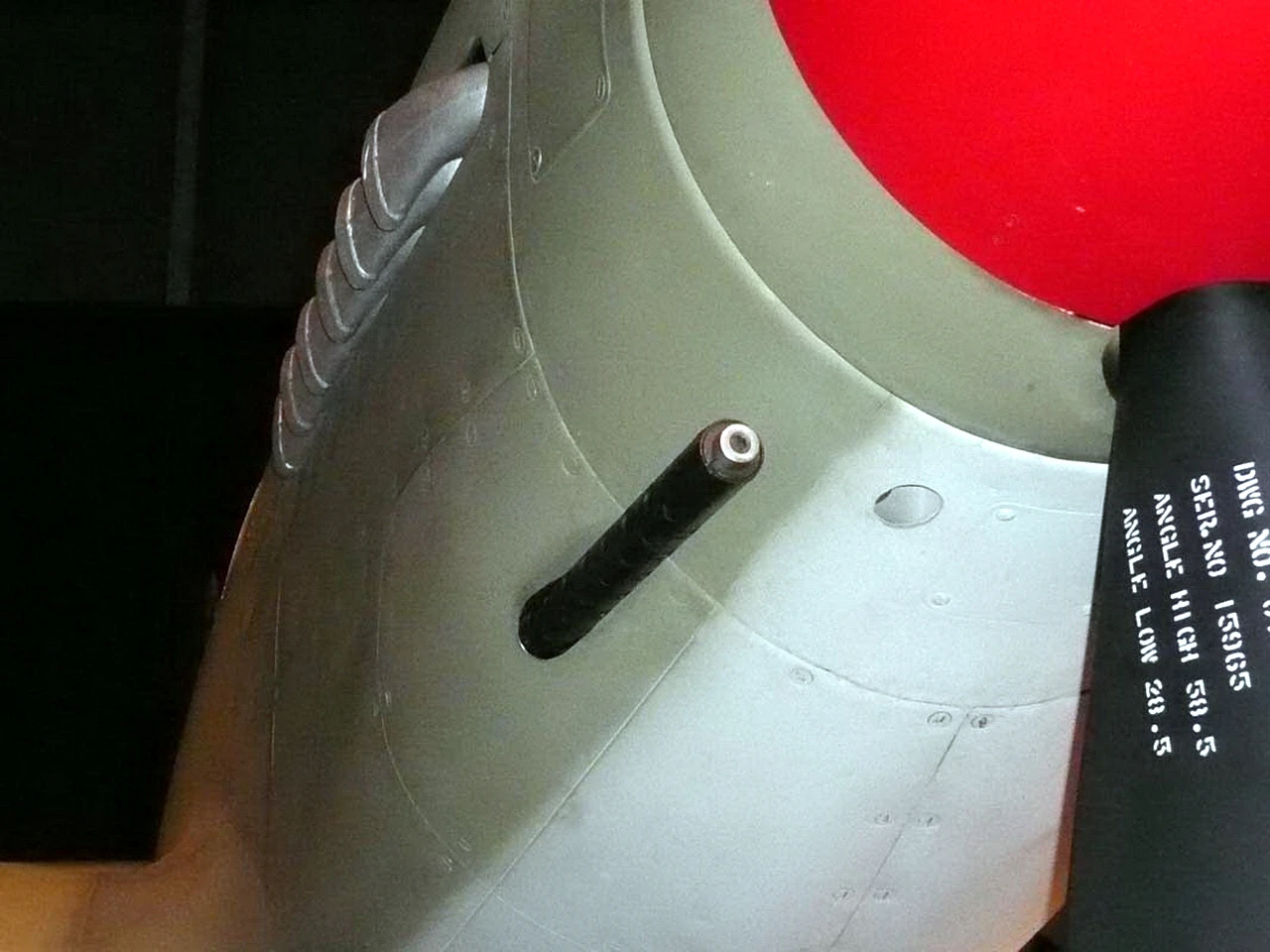
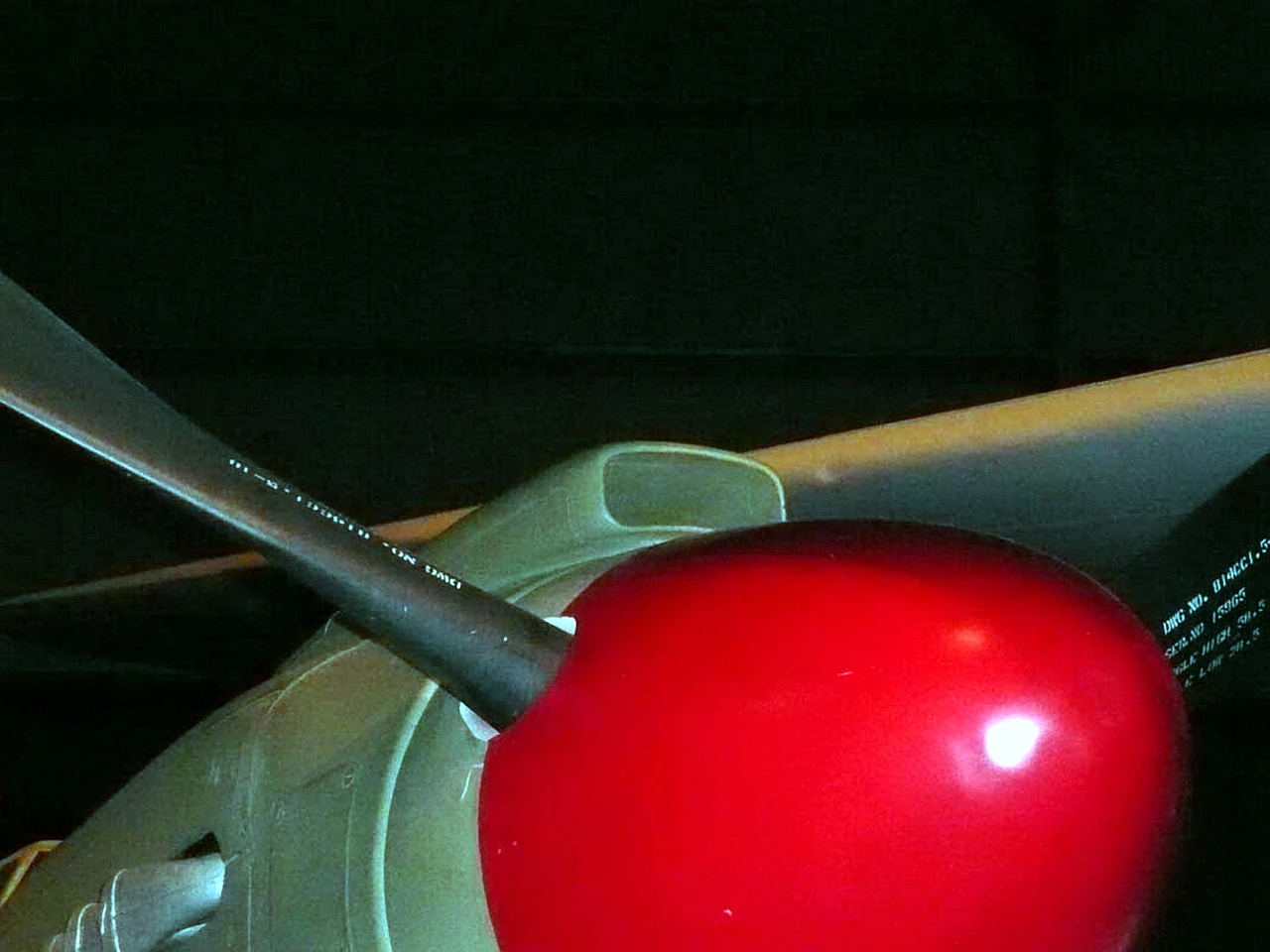
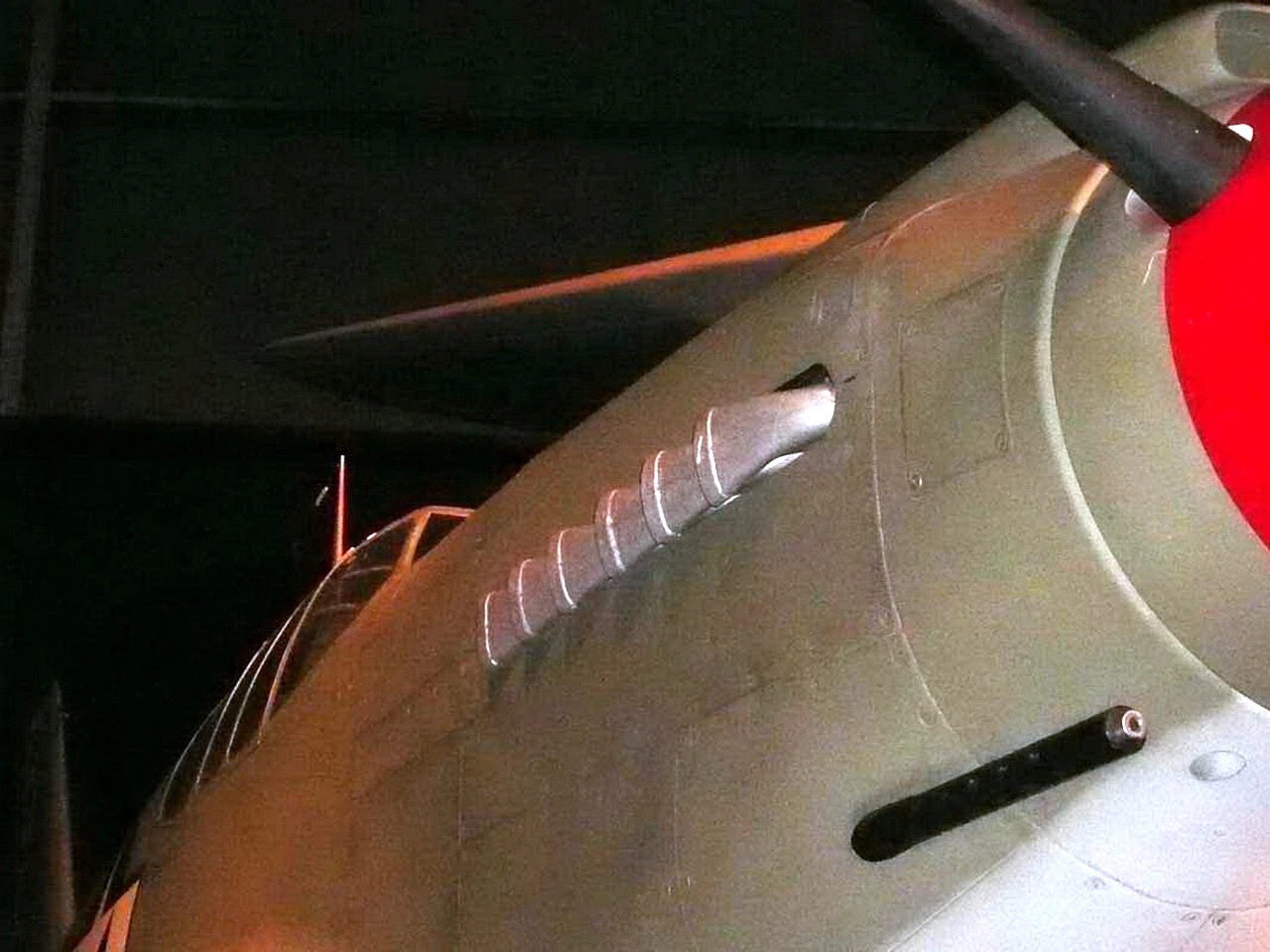
The Mustang’s Forgotten Warrior
De Noord-Amerikaanse A-36A Apache (often called the “Invader” by its crews) was the ground-attack version of the early P-51 Mustang. Before the Mustang became a high-altitude escort legend with a Merlin engine, it was a low-level specialist powered by the Allison V-1710. The A-36A was specifically adapted for the dive-bombing role to satisfy U.S. Army Air Corps contracts. It was rugged, fast, and surprisingly effective, proving that the Mustang airframe was a winner long before it ever saw a drop of British-designed power.
| Attribute | Technical Specification (A-36A) |
|---|---|
| Role | Dive Bomber / Ground Attack |
| Bemanning | 1 (Pilot) |
| Krachtbron | 1 × Allison V-1710-87 liquid-cooled V12 |
| Horsepower | 1,325 hp (at low altitude) |
| Maximum Speed | 365 mph (587 km/h) at 5,000 ft |
| Dive Speed Limit | 390 mph (with brakes deployed) |
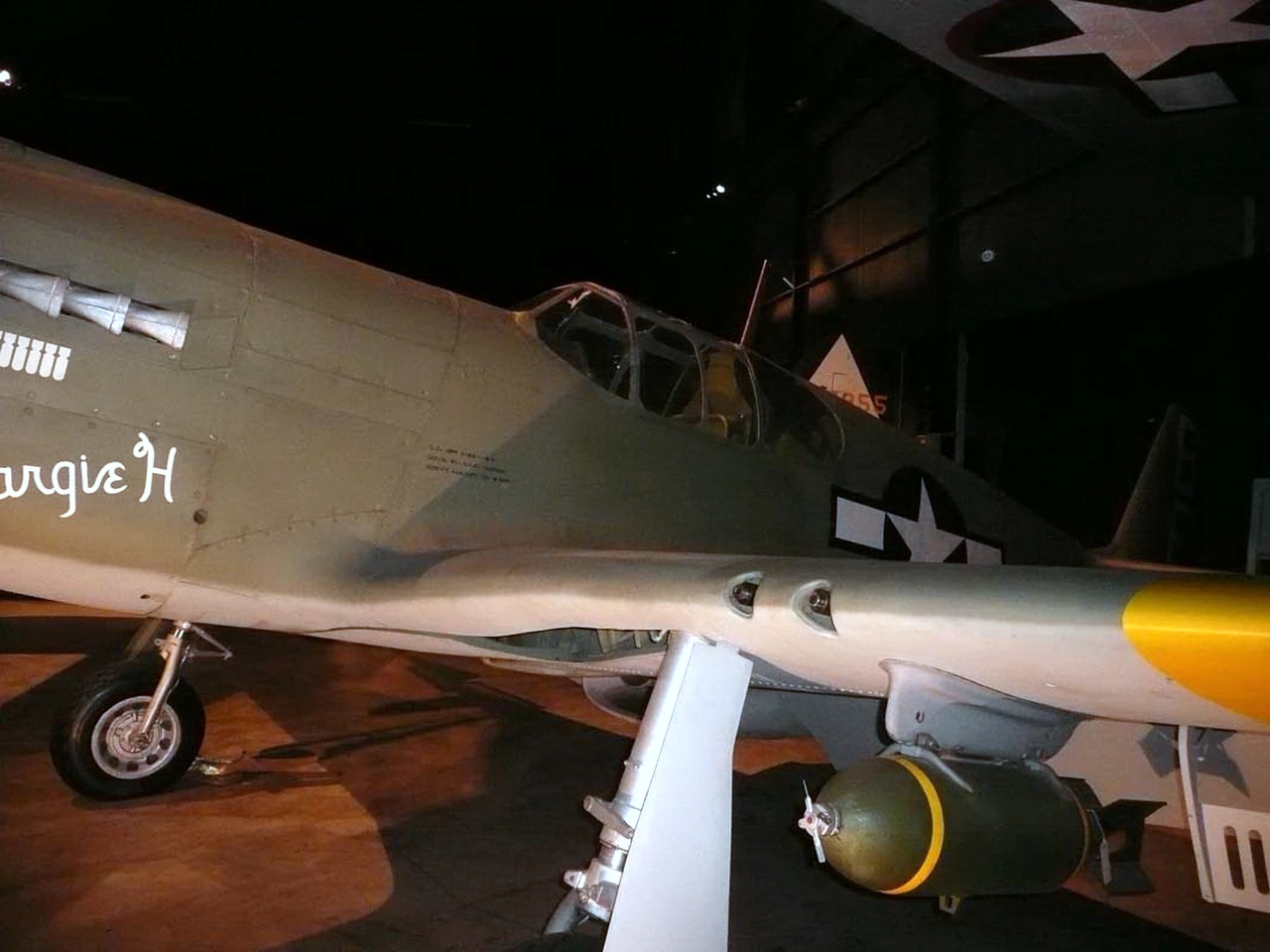
| Bewapening | 6 × .50 cal Browning M2 machine guns; 2 × 500 lb bombs |
| First Combat | June 1943 (North Africa/Sicily) |
Design Engineering: Brakes and Brownings
- Hydraulic Dive Brakes: The most distinctive feature of the A-36A was the set of rectangular, cast-aluminum “slats” on the upper and lower wings. These acted as fences to limit dive speeds to a manageable 390 mph, allowing for much greater bombing accuracy during a steep descent.
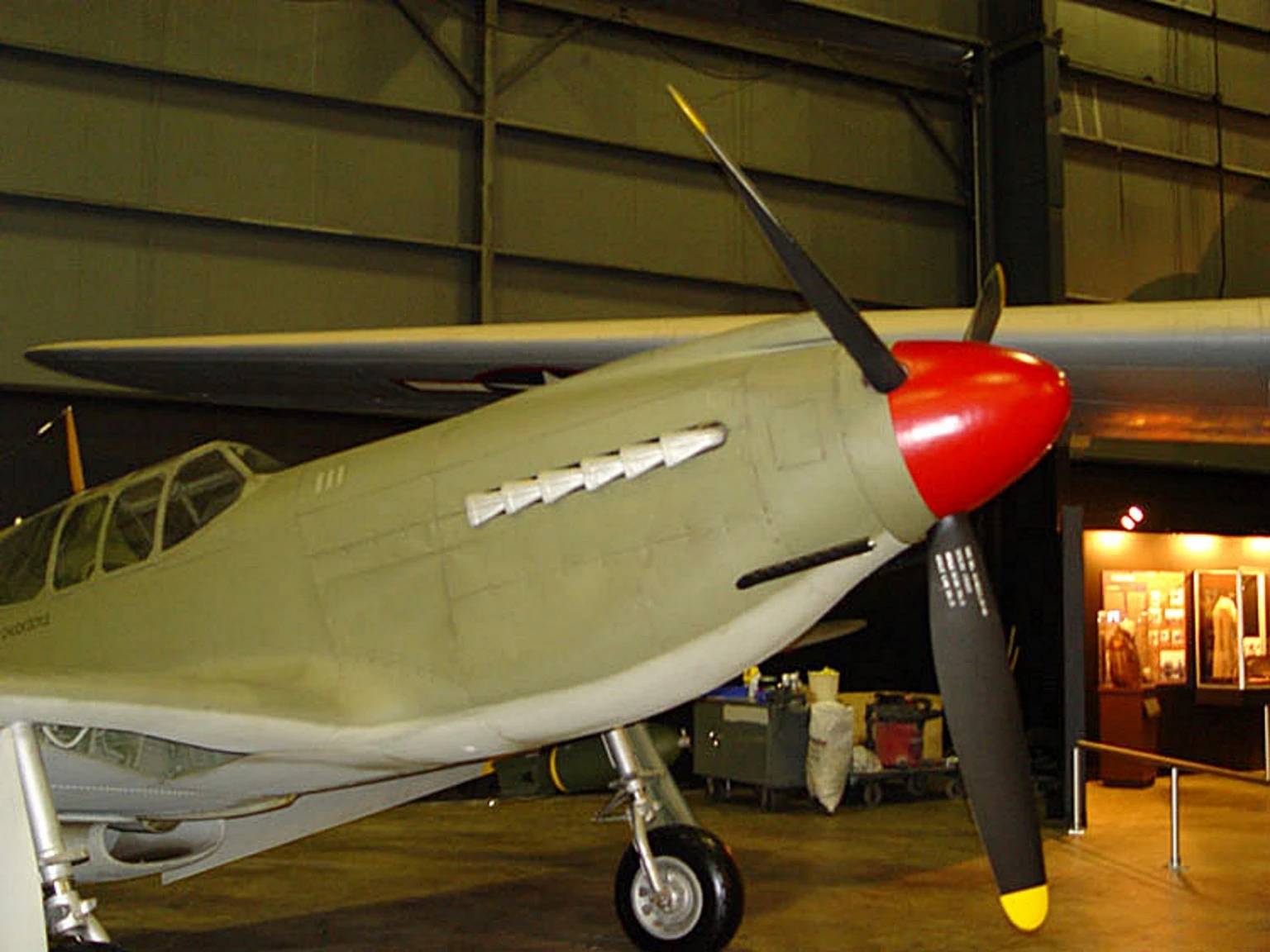
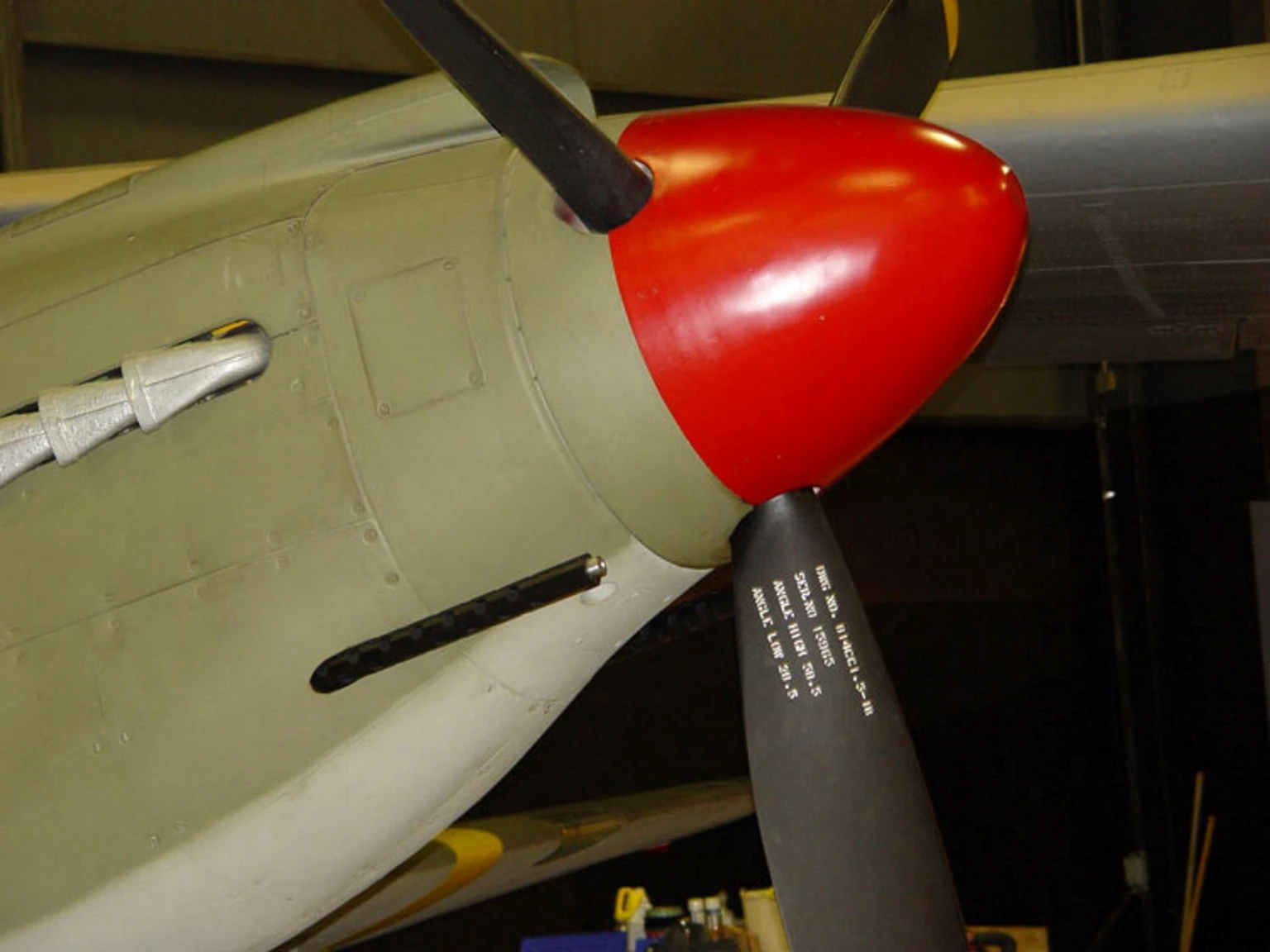
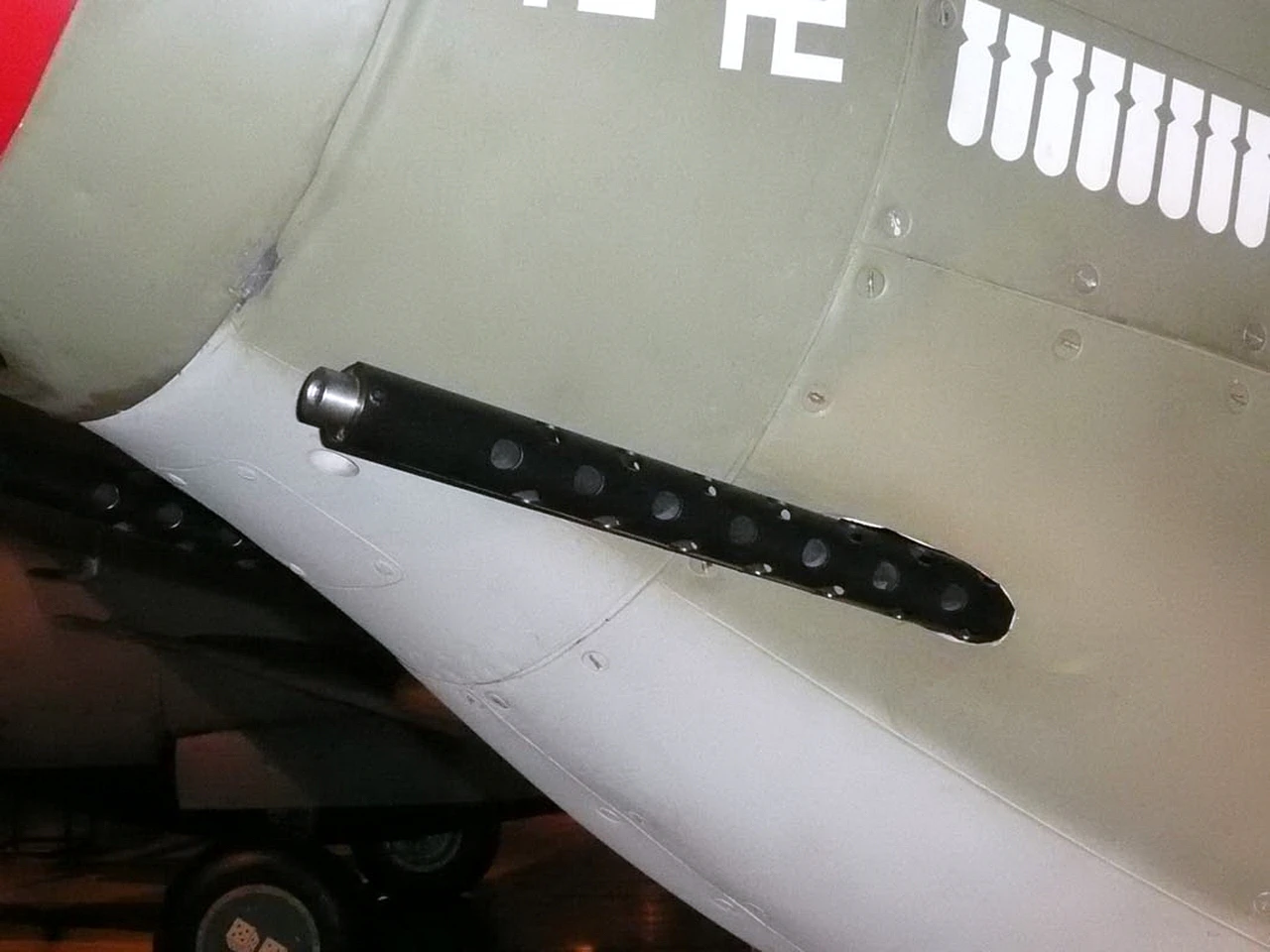
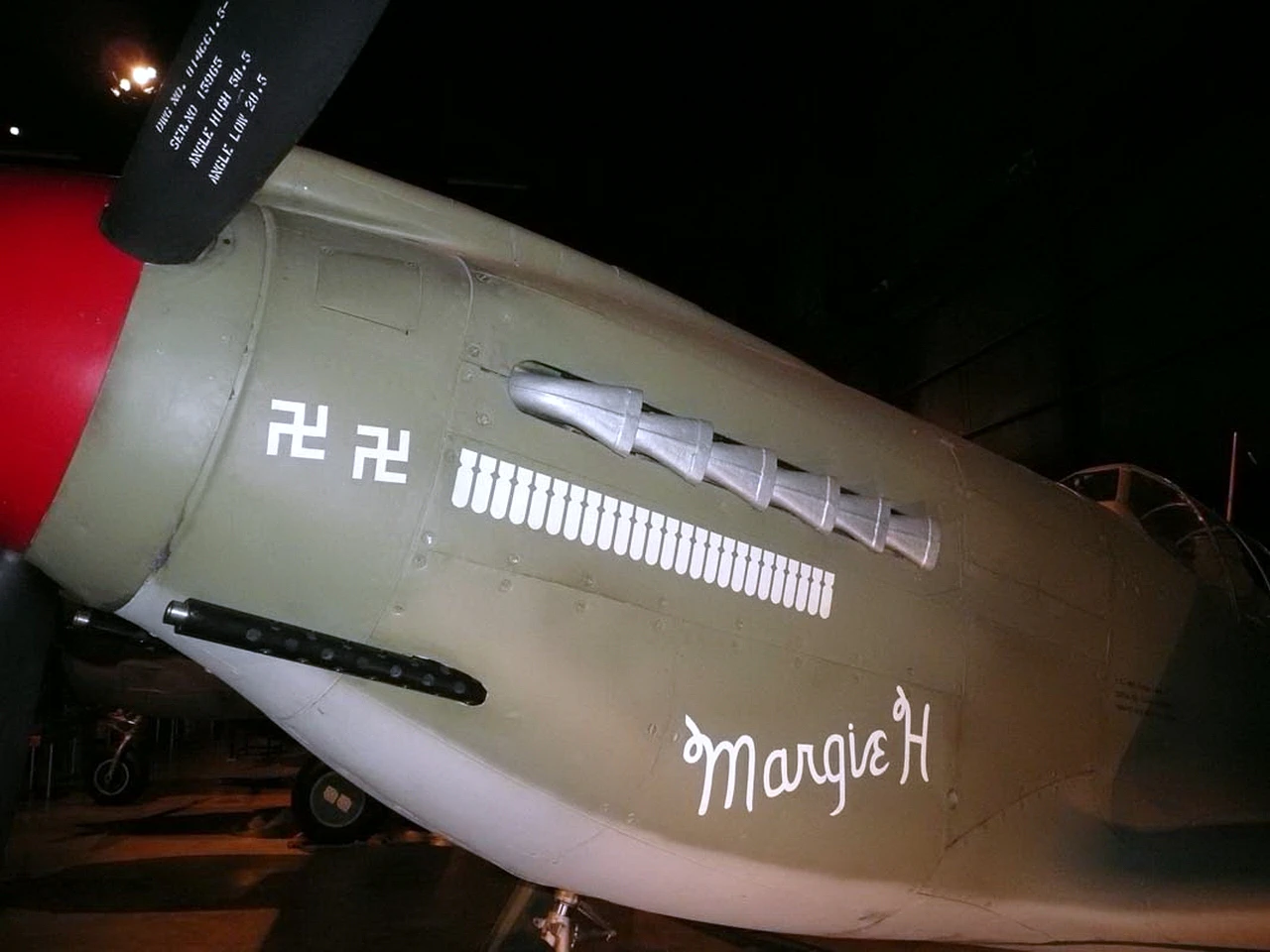
- Nose-Mounted Guns: Unlike later Mustangs which carried all their guns in the wings, the A-36A carried two of its six .50 caliber machine guns in the lower engine cowling, synchronized to fire through the propeller arc. This provided a very concentrated “point” of fire for strafing.
- The Allison Engine: The V-1710 was a fantastic engine at low altitudes, but it lacked a multi-stage supercharger. This made the A-36A a “mud-mover” by necessity, as its performance dropped off significantly above 12,000 feet.
- Rugged Cooling: The iconic scoop under the belly was reinforced on the A-36 to handle the debris and high-stress maneuvers associated with “hedge-hopping” and low-level ground support.
Combat History: Screaming Over the Mediterranean
- Sicily and Italy: The A-36A saw its heaviest use in the Mediterranean Theater. Pilots would dive at 70-degree angles to drop bombs on bridges, trains, and bunkers. It was so quiet in a dive that it often achieved total surprise over German and Italian positions.
- A Surprising Dogfighter: Despite being weighed down by bombs and dive brakes, the A-36A was still a Mustang. A-36 pilots were credited with 84 aerial victories, and the type even produced one ace: Lt. Michael T. Russo.
- The Name Game: While the factory called it the “Apache,” the AAF initially tried to name it the “Invader.” However, crews and the public eventually just started calling them “Mustangs,” leading to the A-36 name largely fading into the shadow of the P-51.
- The Burma Front: The A-36A also served in the China-Burma-India (CBI) theater, where its long range (compared to the P-40) allowed it to strike Japanese supply lines deep in the jungle.
Views : 3412
U ook zien :
 North American XB-70 Valkyrie – Foto's & Video's
 Noord-Amerikaanse NA-64 Yale – Foto's & Video's
 Noord-Amerikaanse FJ-4 Fury – Foto's &Video
 Canadair Sabre – Foto's &Video
 Noord-Amerikaanse T-28 Trojan - Foto's & Video
 Noord-Amerikaanse T-2 Buckeye - Foto's & Video
 Noord-Amerikaanse F-100 Super Sabre – Foto's & Video
 Noord-Amerikaanse AT-6D Texan - Foto's & Video
 Noord-Amerikaanse B-45 Tornado - Foto's & Video
 QF-100D Super Sabre – Foto's & Video