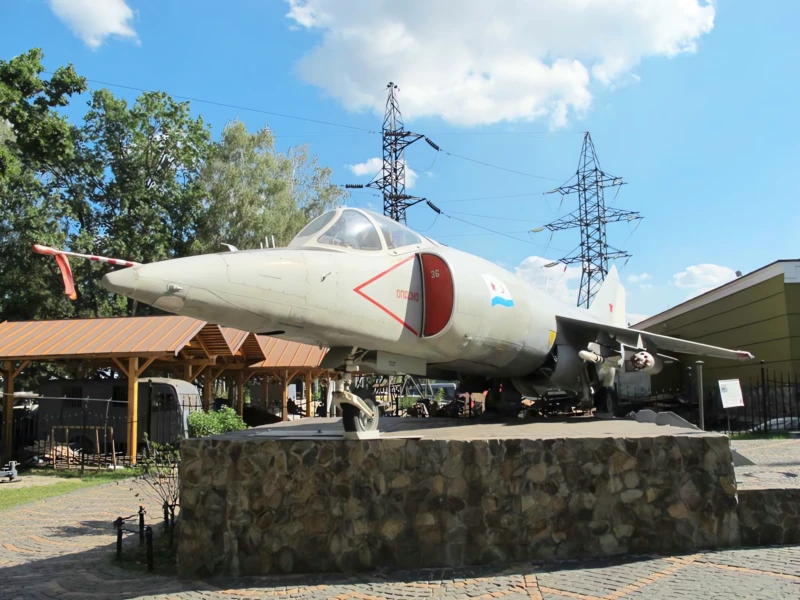
Jakovlev Jak-38 | |
|---|---|
| Šalies | Sovietų Sąjunga |
| Tipas | VTOL naikintuvai |
| Pirmasis skrydis | 1971 |
| Pastatytas | 231 |
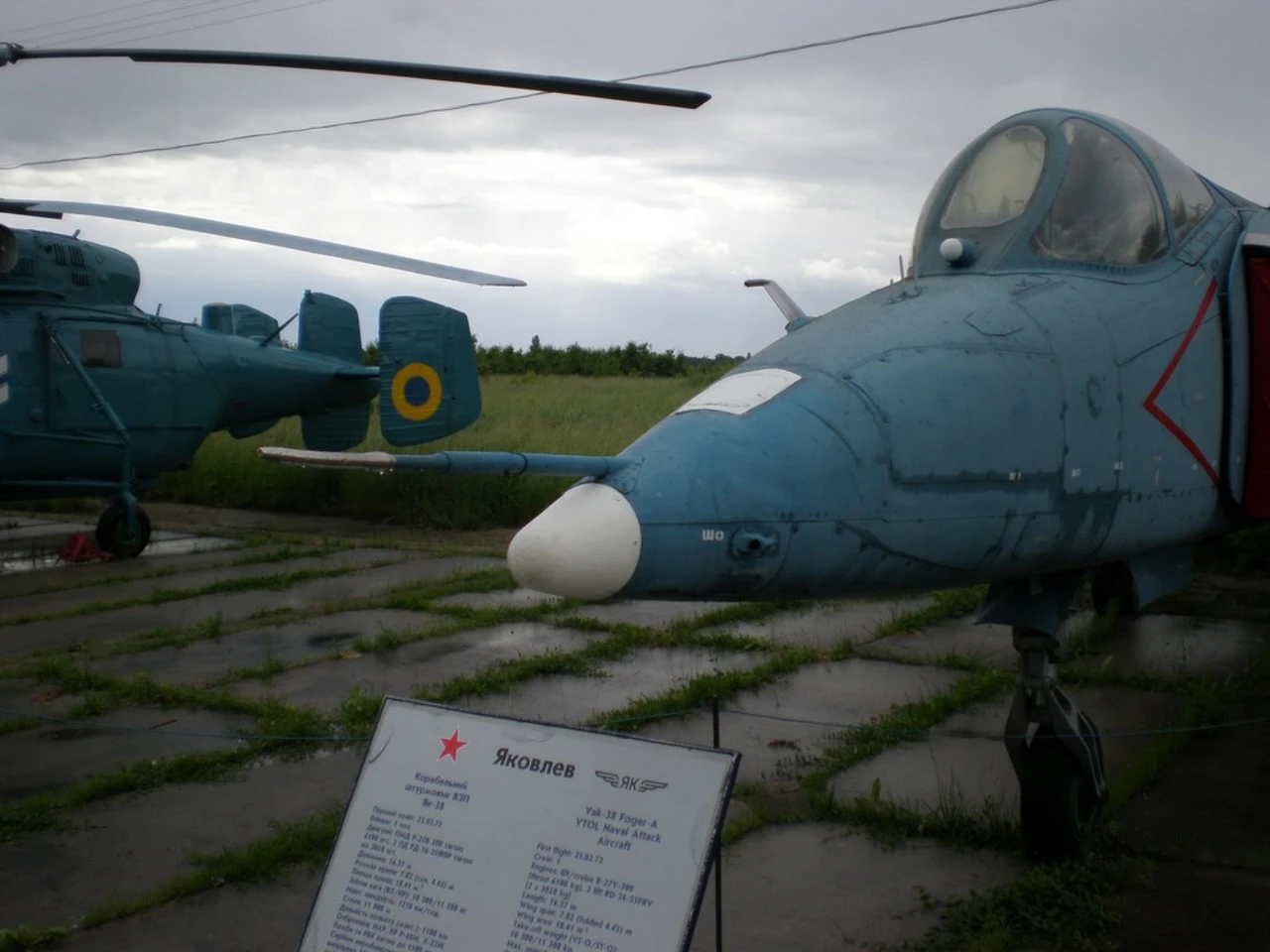
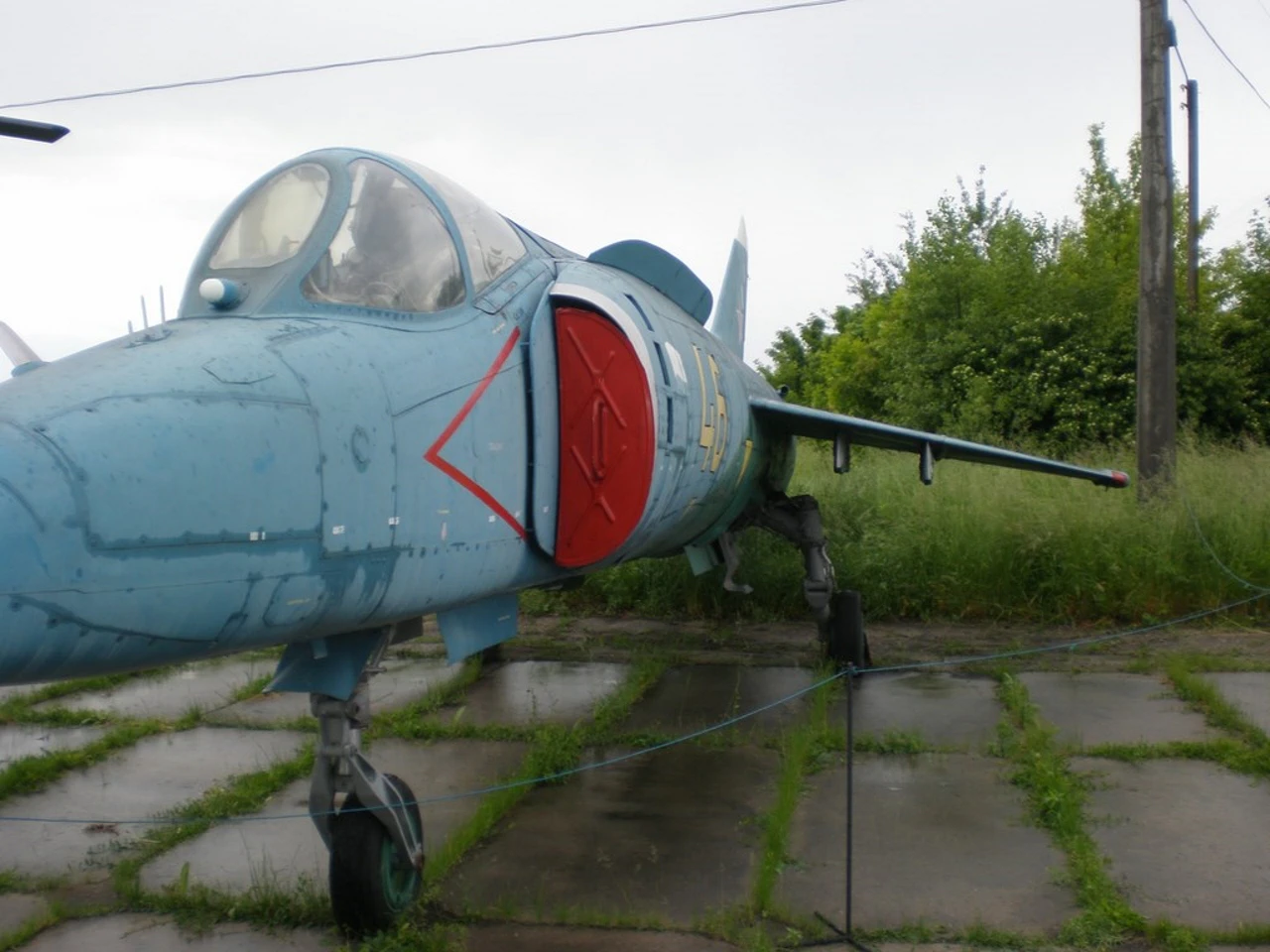
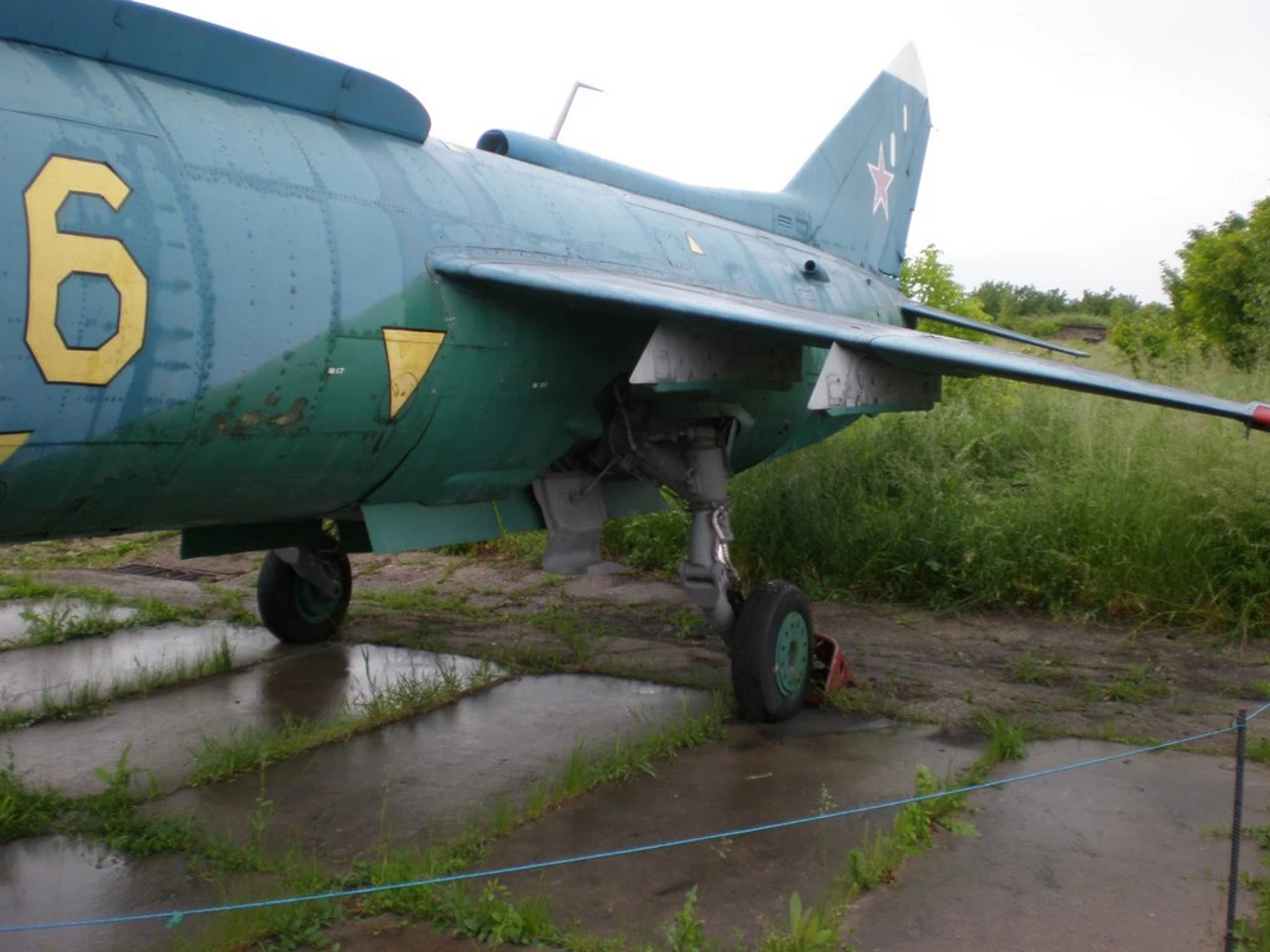
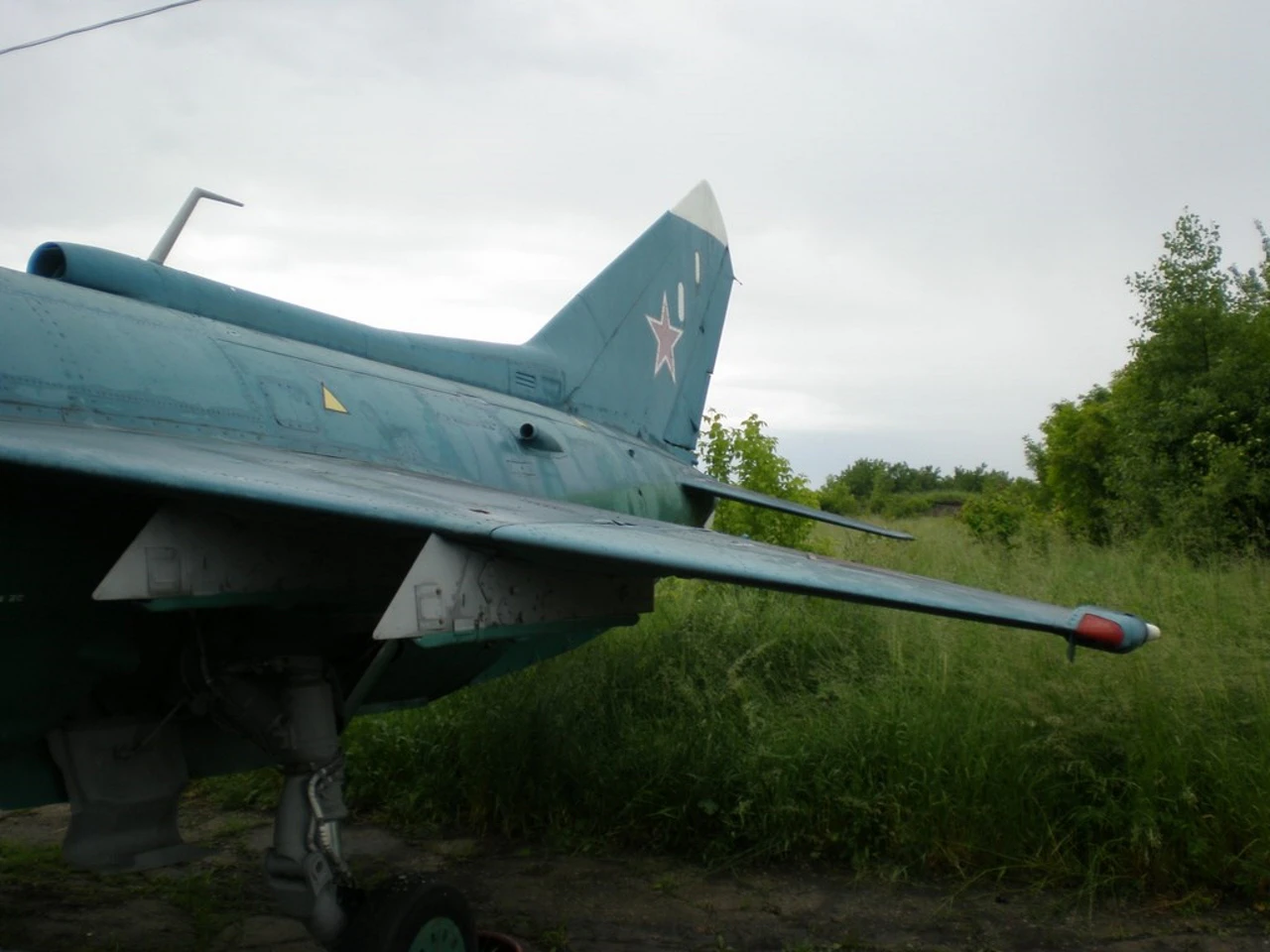
2007 Jakovlev Jak-38 (Rusų kalba: Яковлев Як-38; NATO reportažinis pavadinimas: "Forger") buvo vienintelis sovietų karinio jūrų laivyno aviacijos veikiantis VTOL smogiamasis naikintuvas, be to, tai buvo pirmasis veikiantis vežėjo pagrindu veikiantis fiksuoto sparno orlaivis. Jis buvo sukurtas specialiai ir tarnavo beveik vien tik Kijevo klasės orlaivių vežėjams.
Jak-36M "Klastotojas" : Pradinė priešgamybinė versija, šiek tiek skiriasi nuo Jak-38. Jis svėrė tik 6,650 kg (14,660 lb), palyginti su "Jak-38" 7,370 kg (16,250 lb), o varikliai buvo šiek tiek mažiau galingi.
Šaltinis: Jakovlev Jak-38 Vikipedijoje
| Jakovlev Jak-38 | |
|---|---|
| Fotografas | Vladimiras Yakubovas |
| Lokalizavimo | Nežinoti |
| Nuotraukos | 111 |
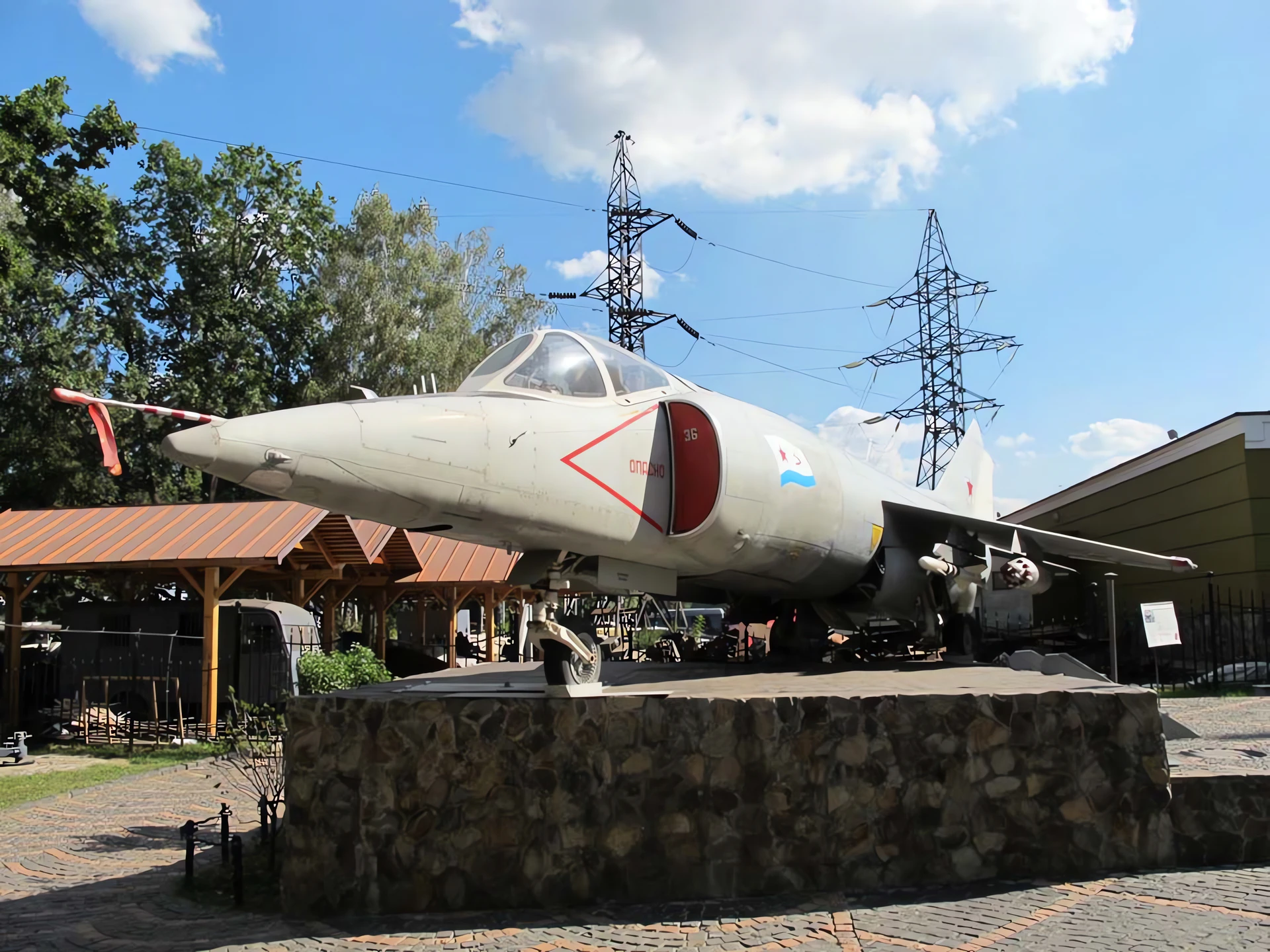
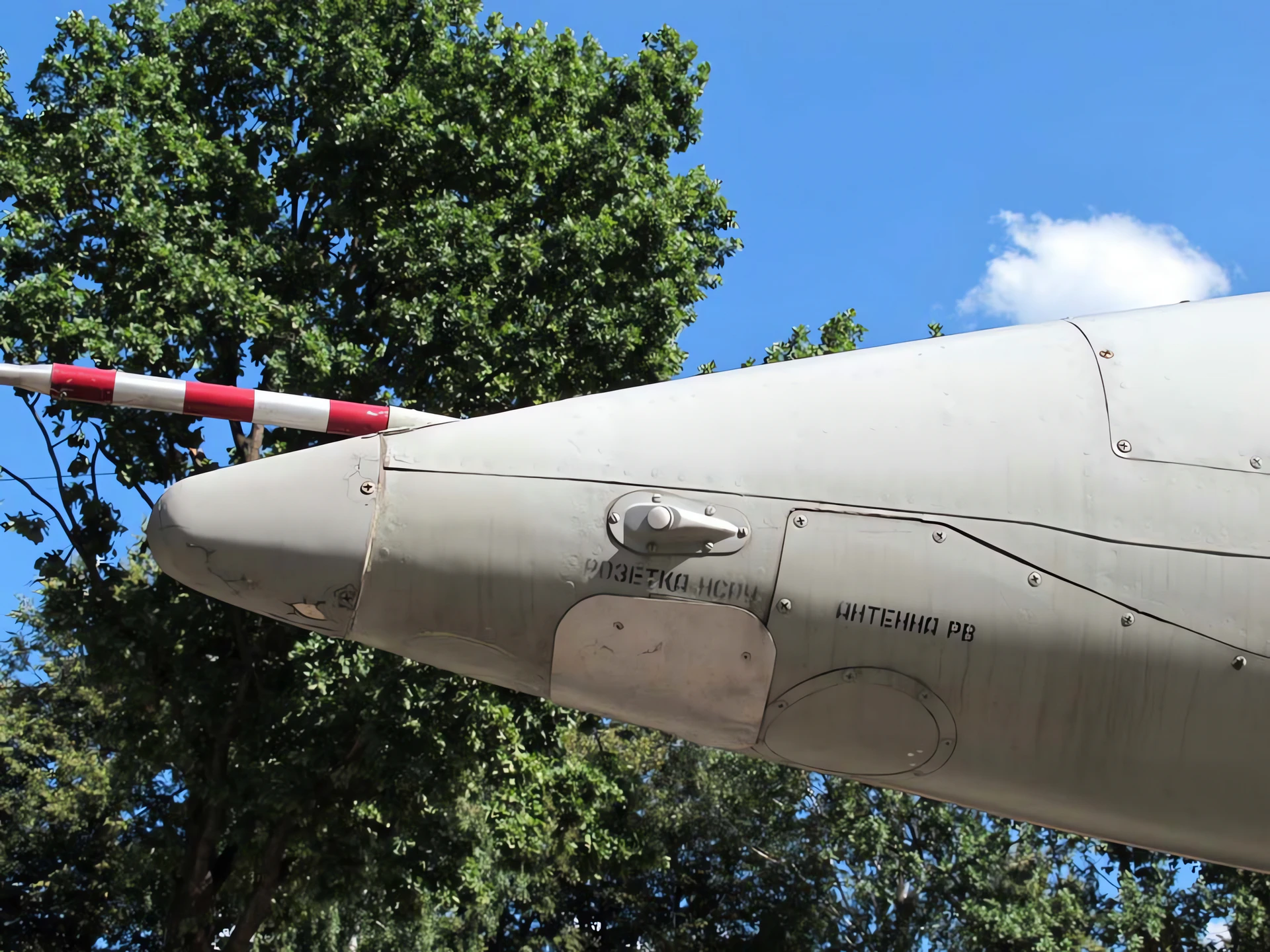
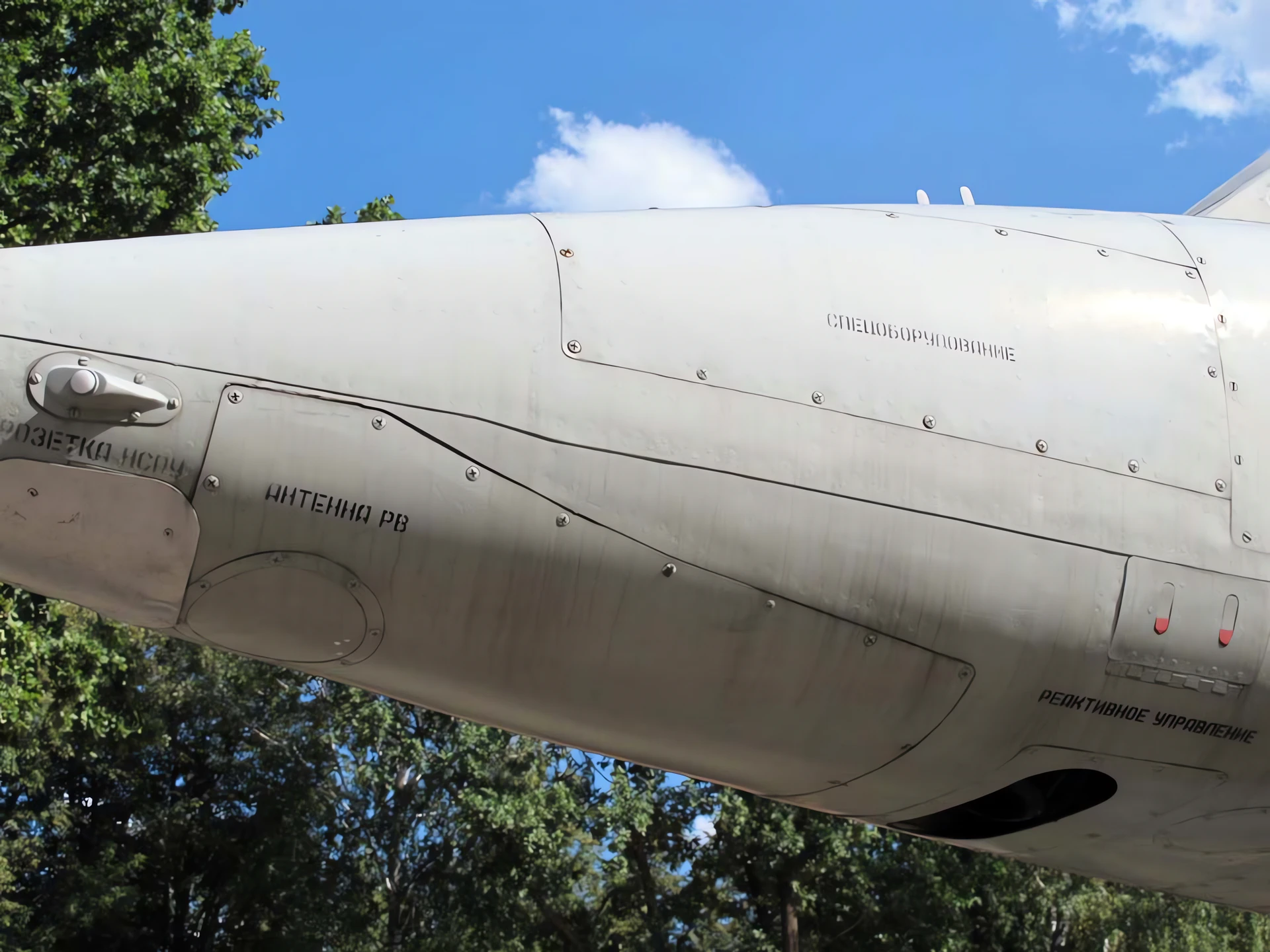
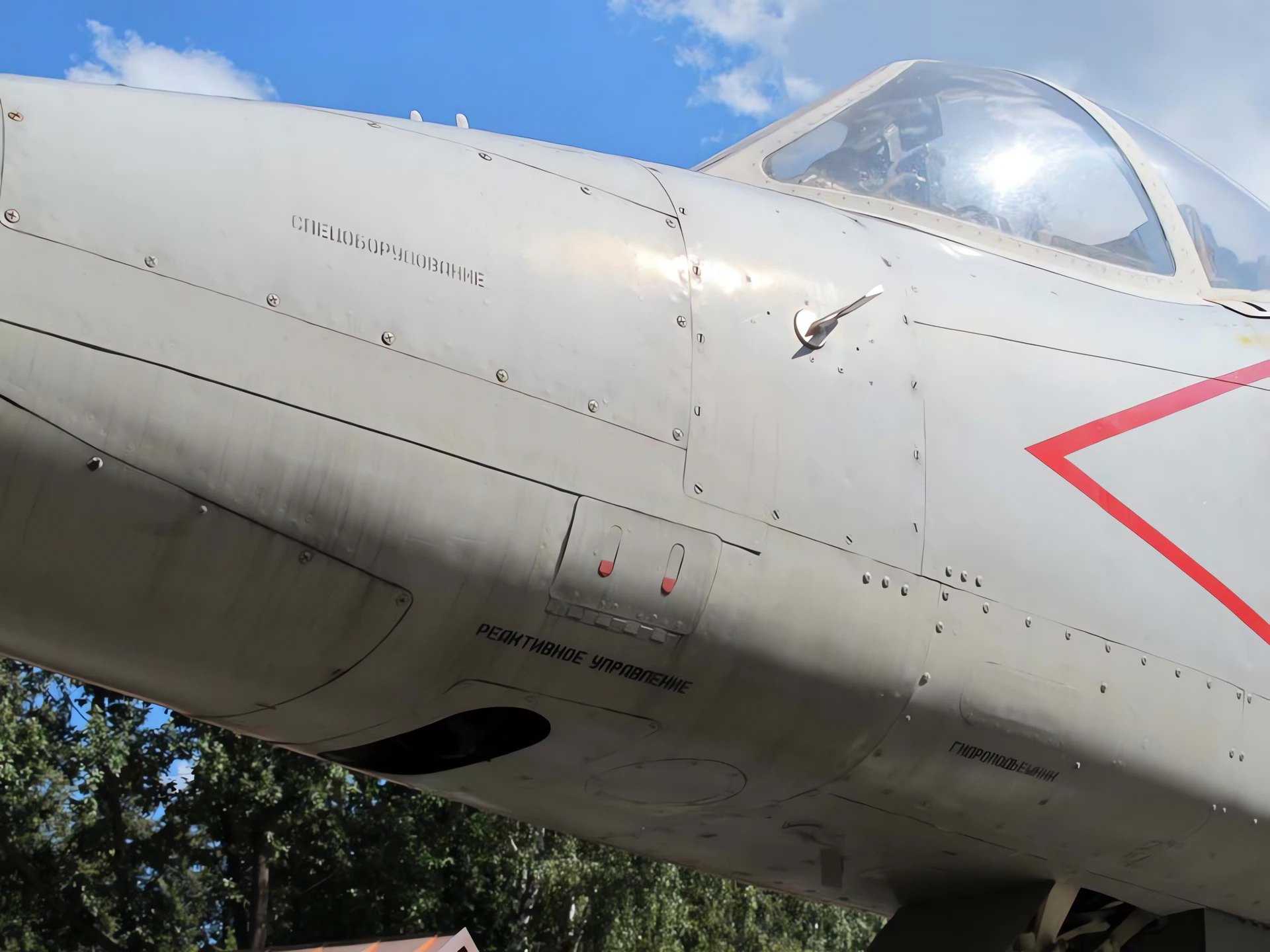
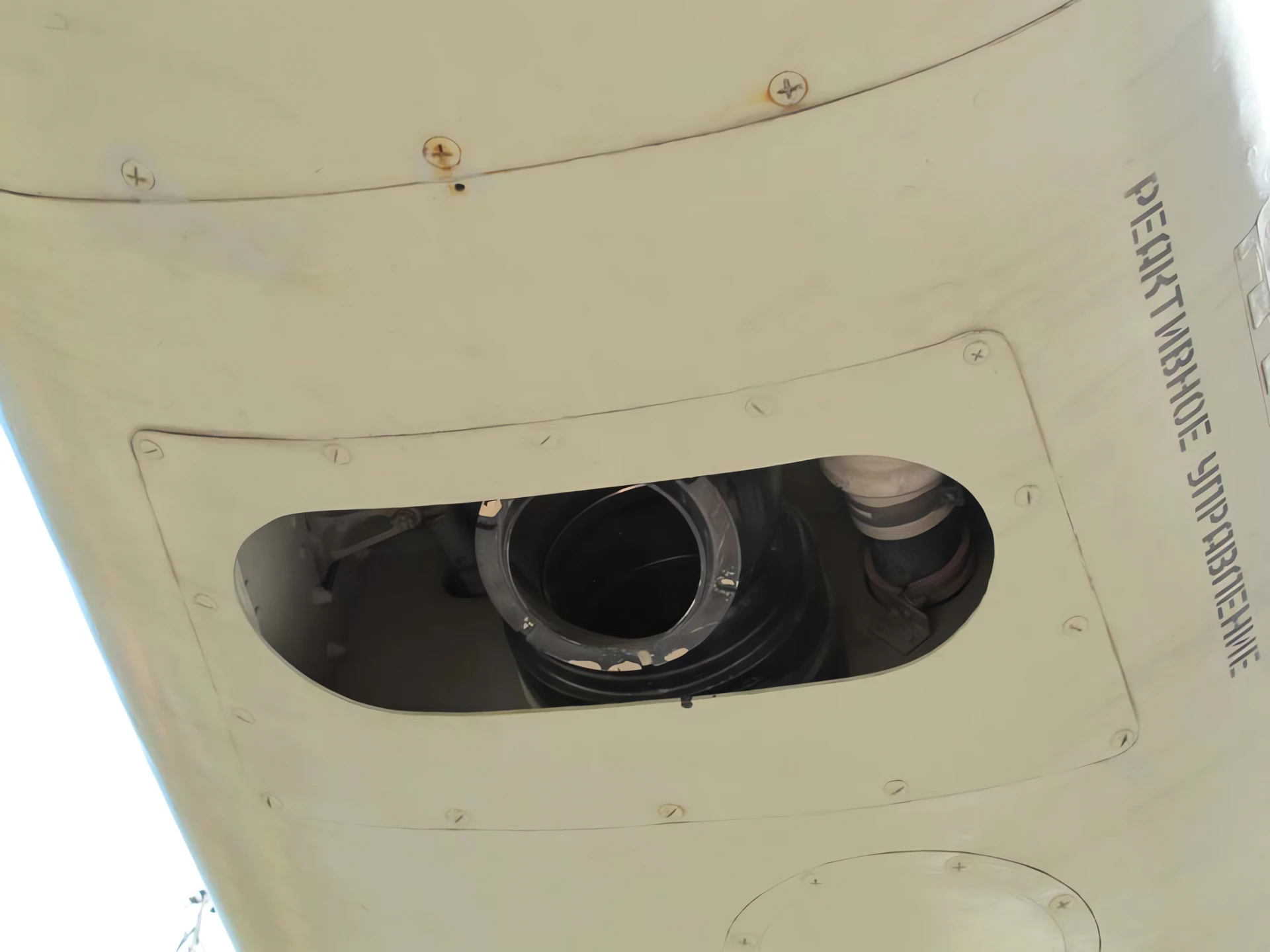
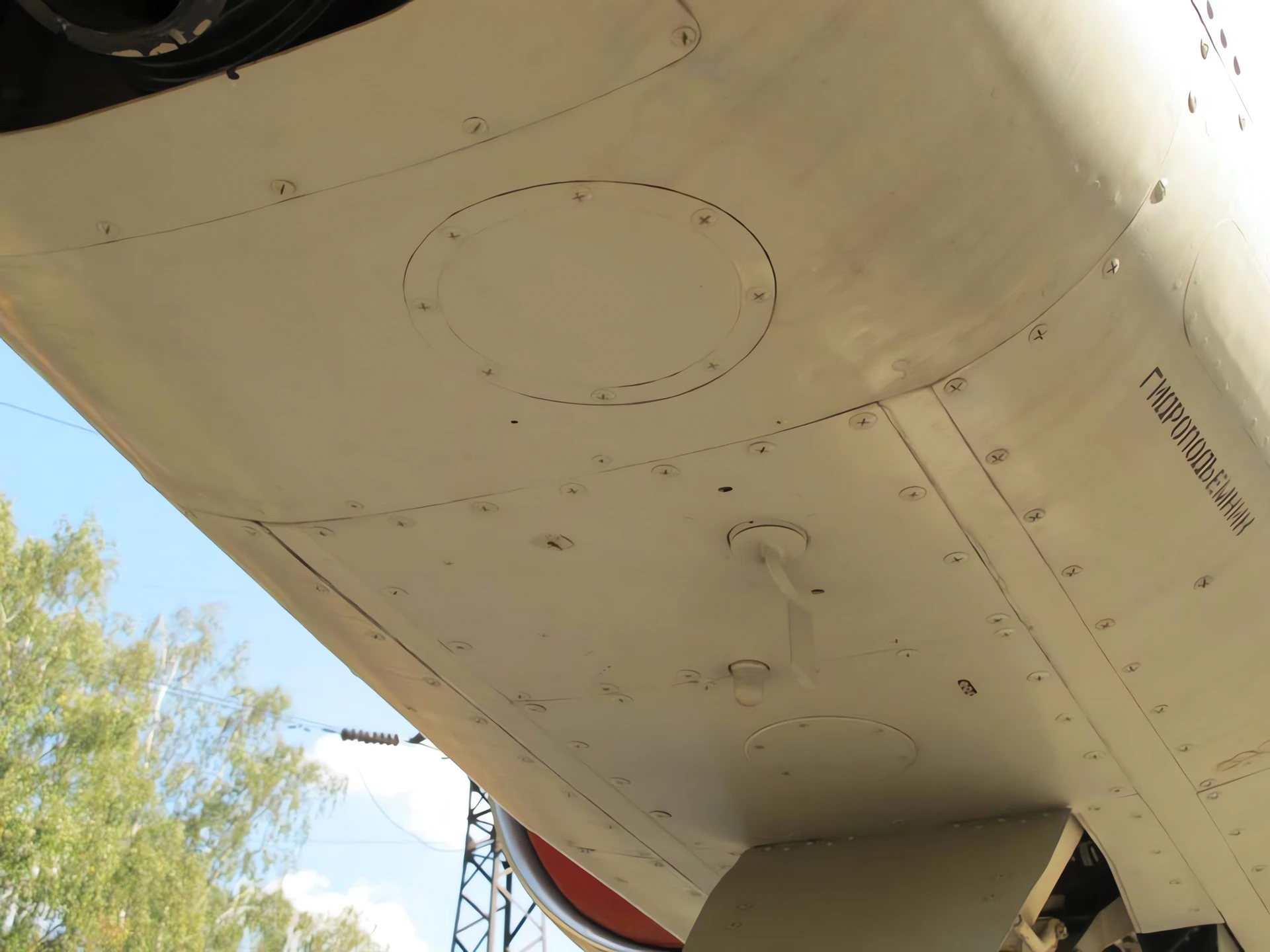
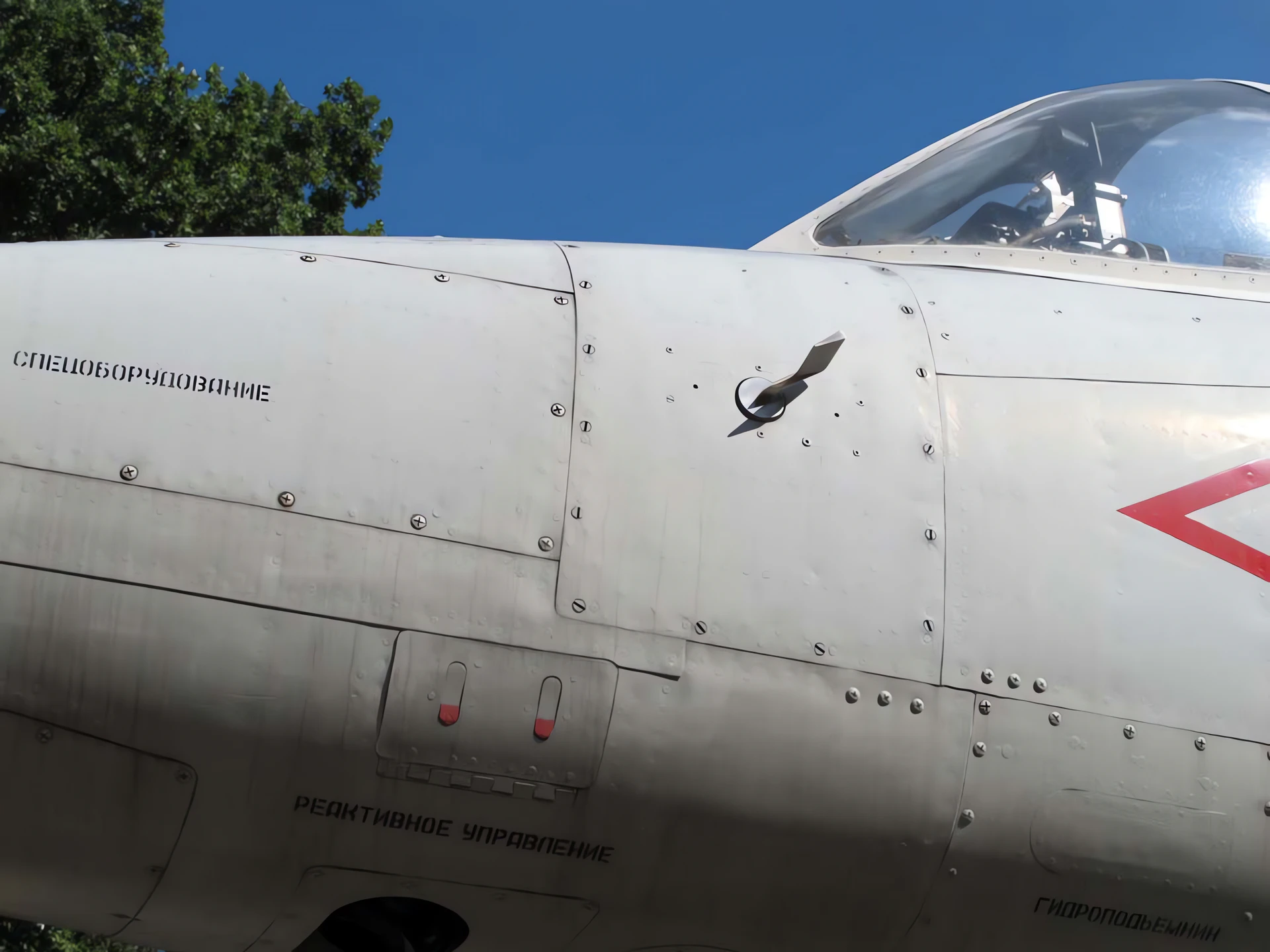
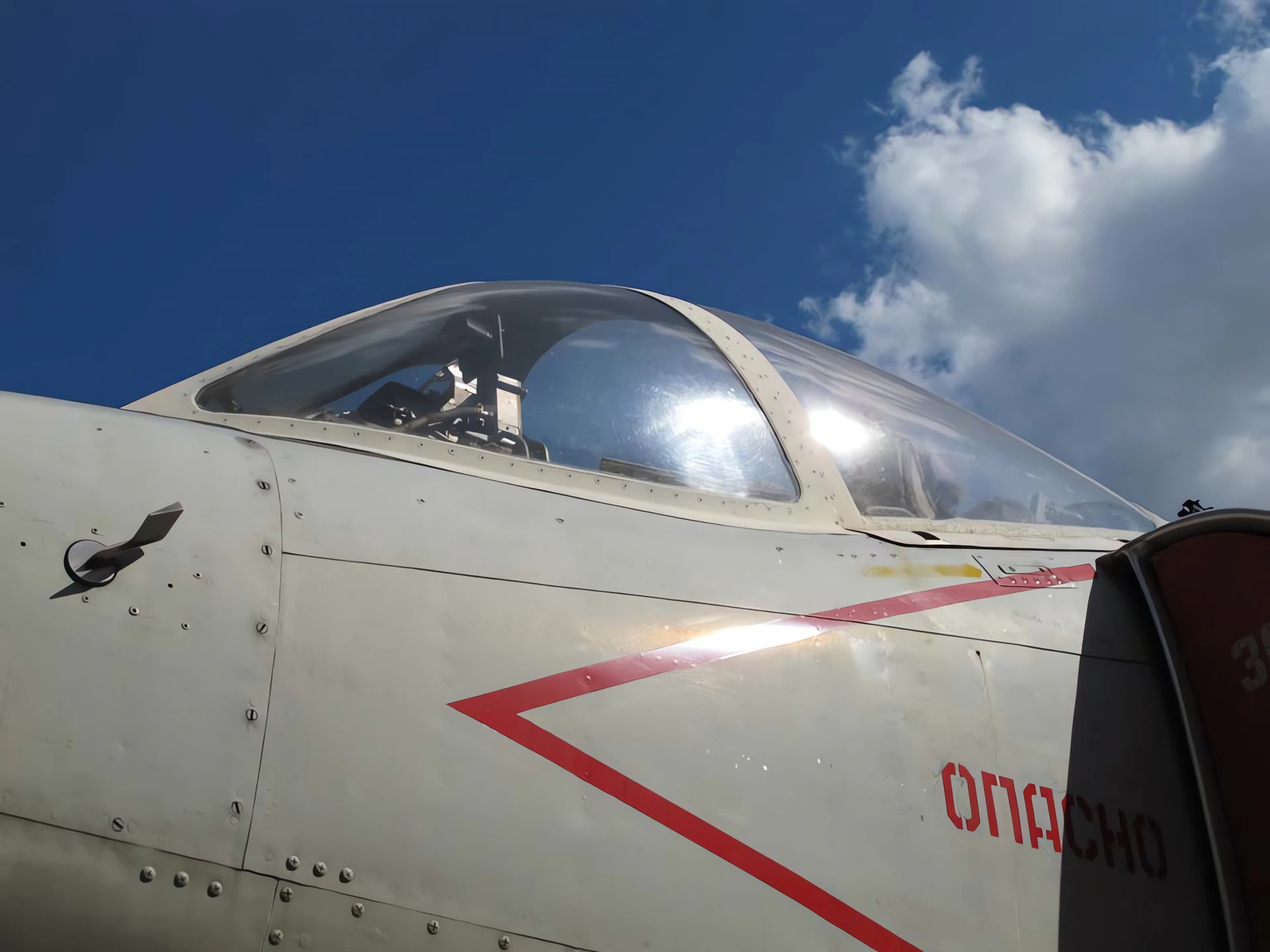
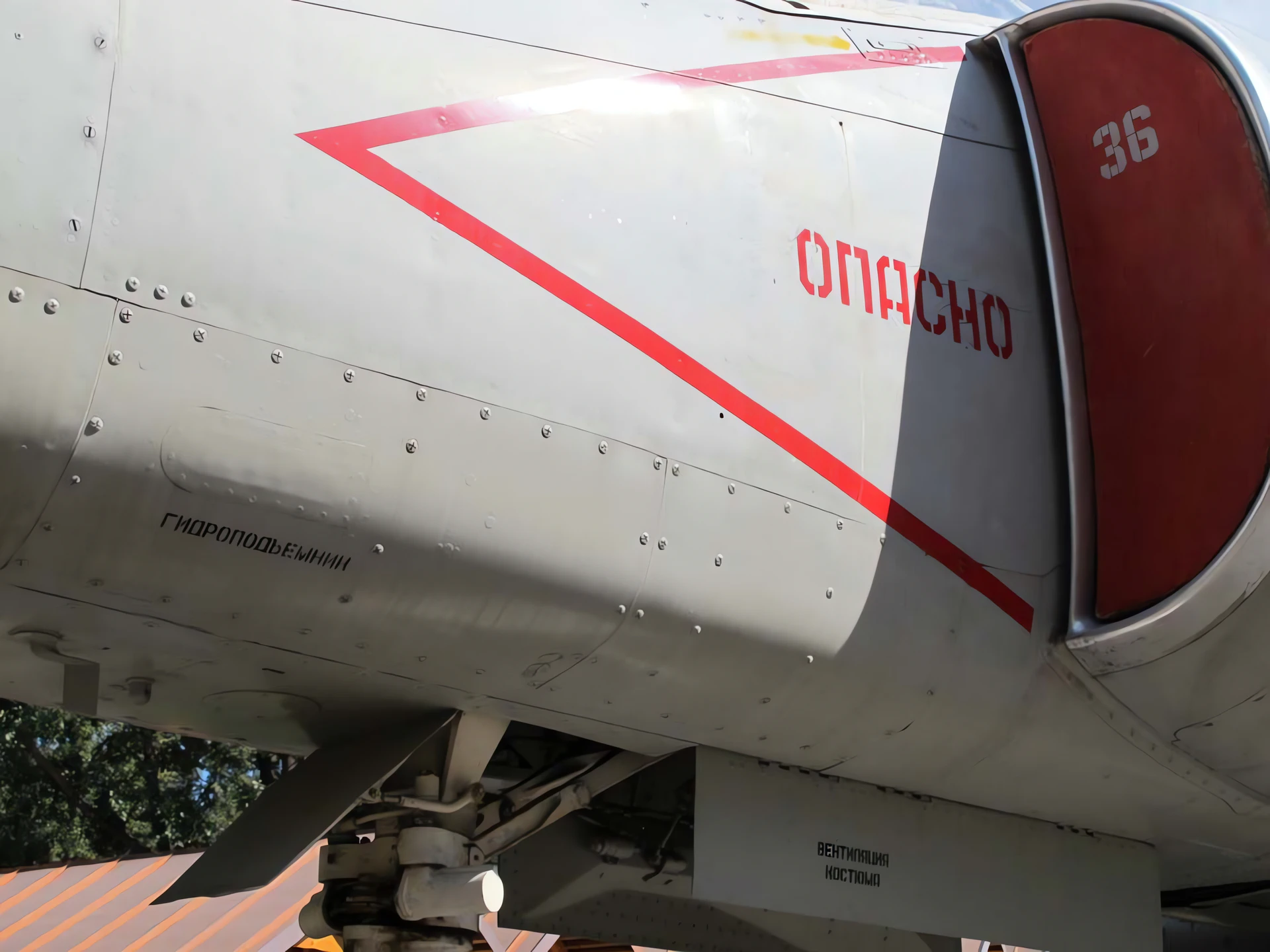

| Jak-38 kalvis vaikščioti aplink | |
|---|---|
| Fotografas | Dmitrijus Sribnyi |
| Lokalizavimo | Jakovlevo dizaino biuro muziejus |
| Nuotraukos | 145 |
| Jak-38 Vaikščioti aplink | |
|---|---|
| Fotografas | Nežinoti |
| Lokalizavimo | Nežinoti |
| Nuotraukos | 24 |
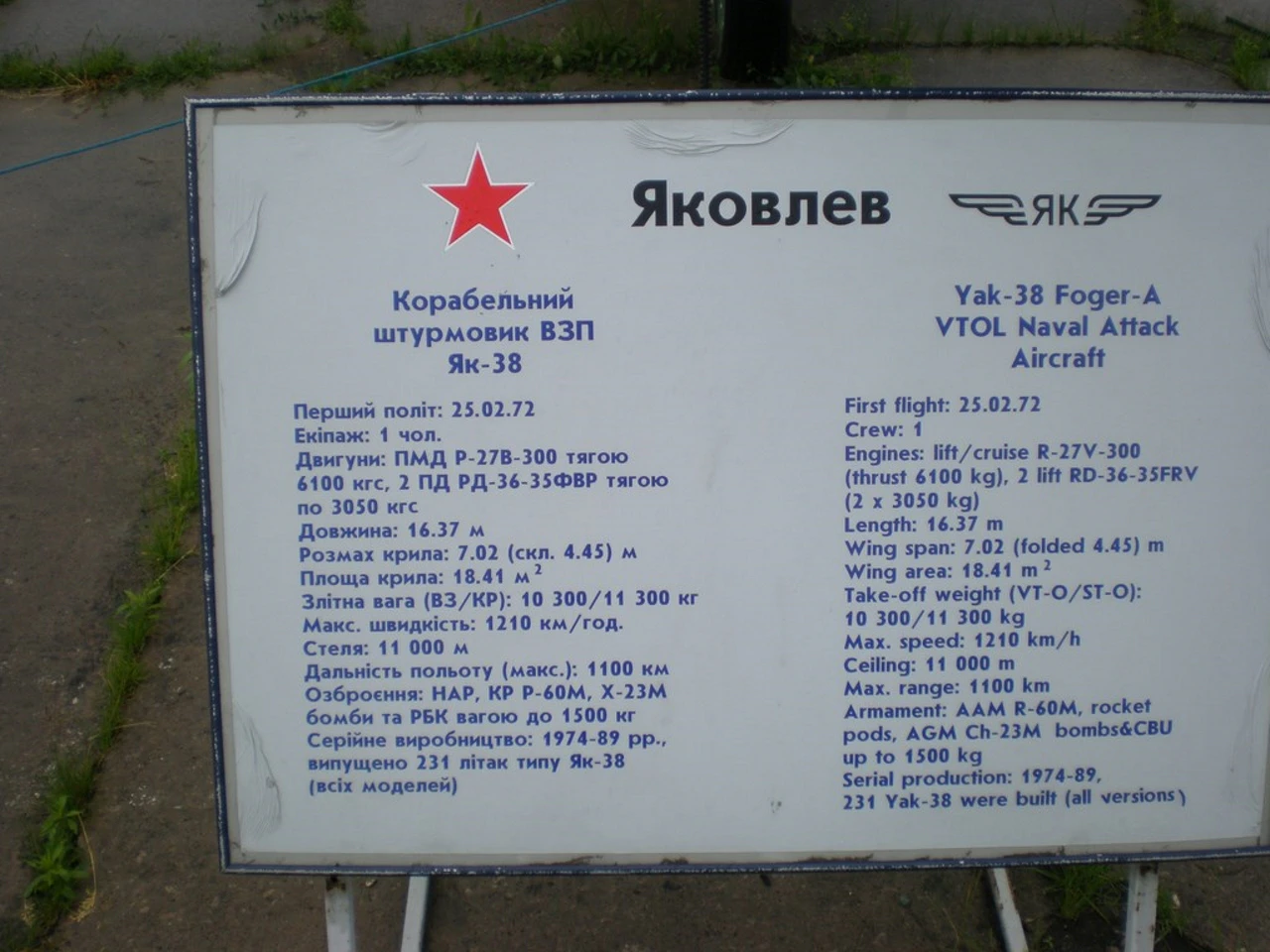
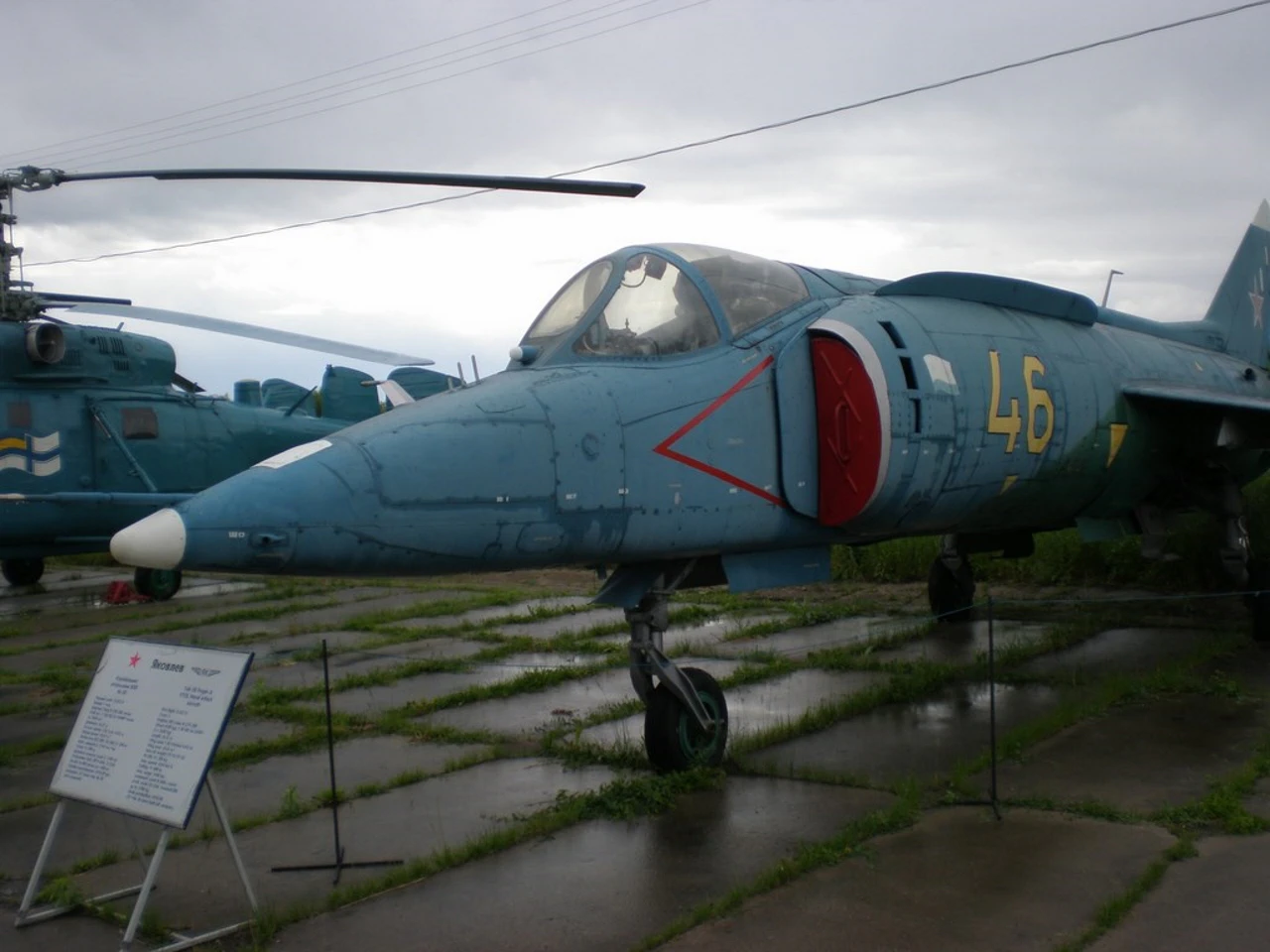
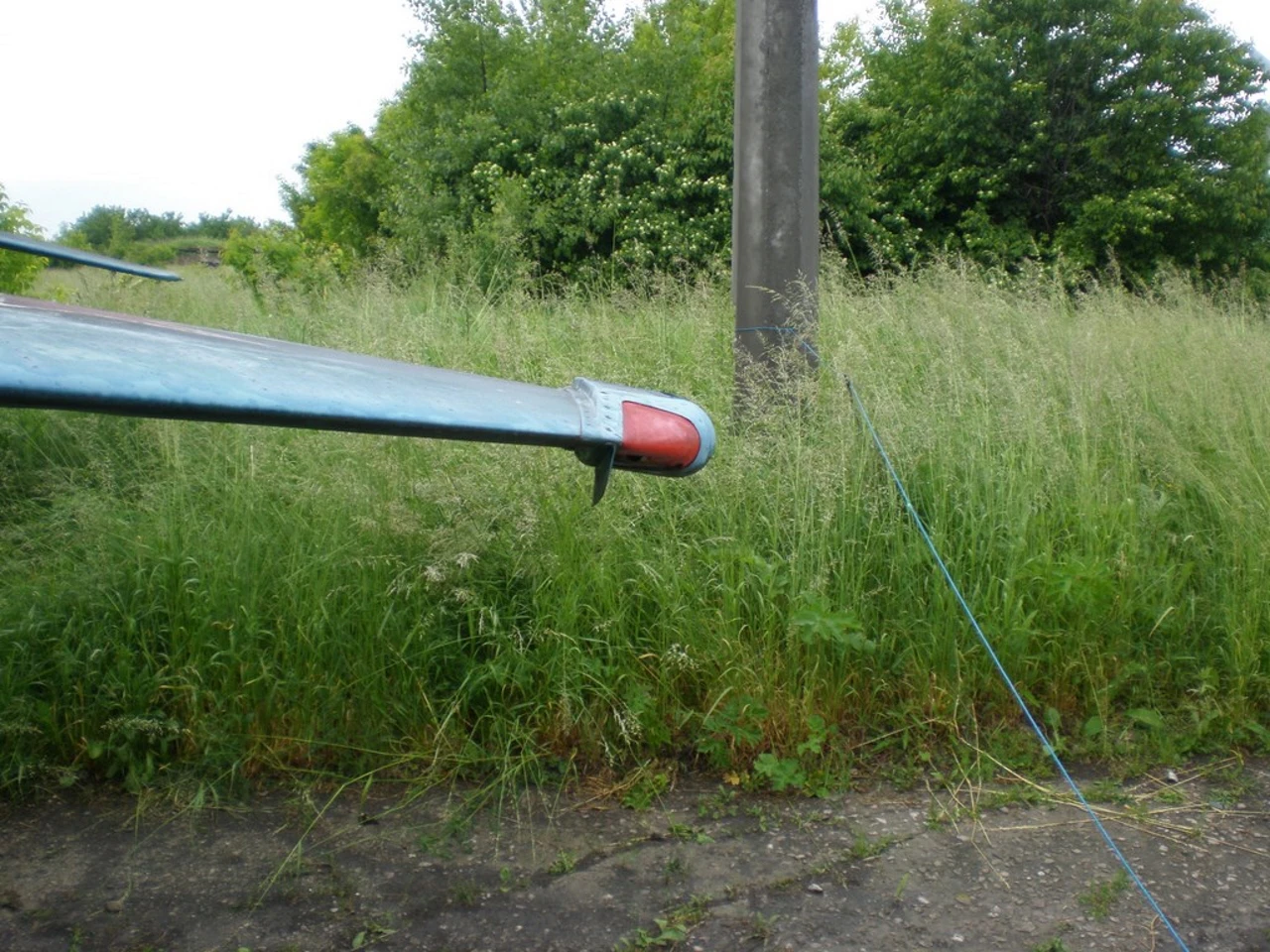
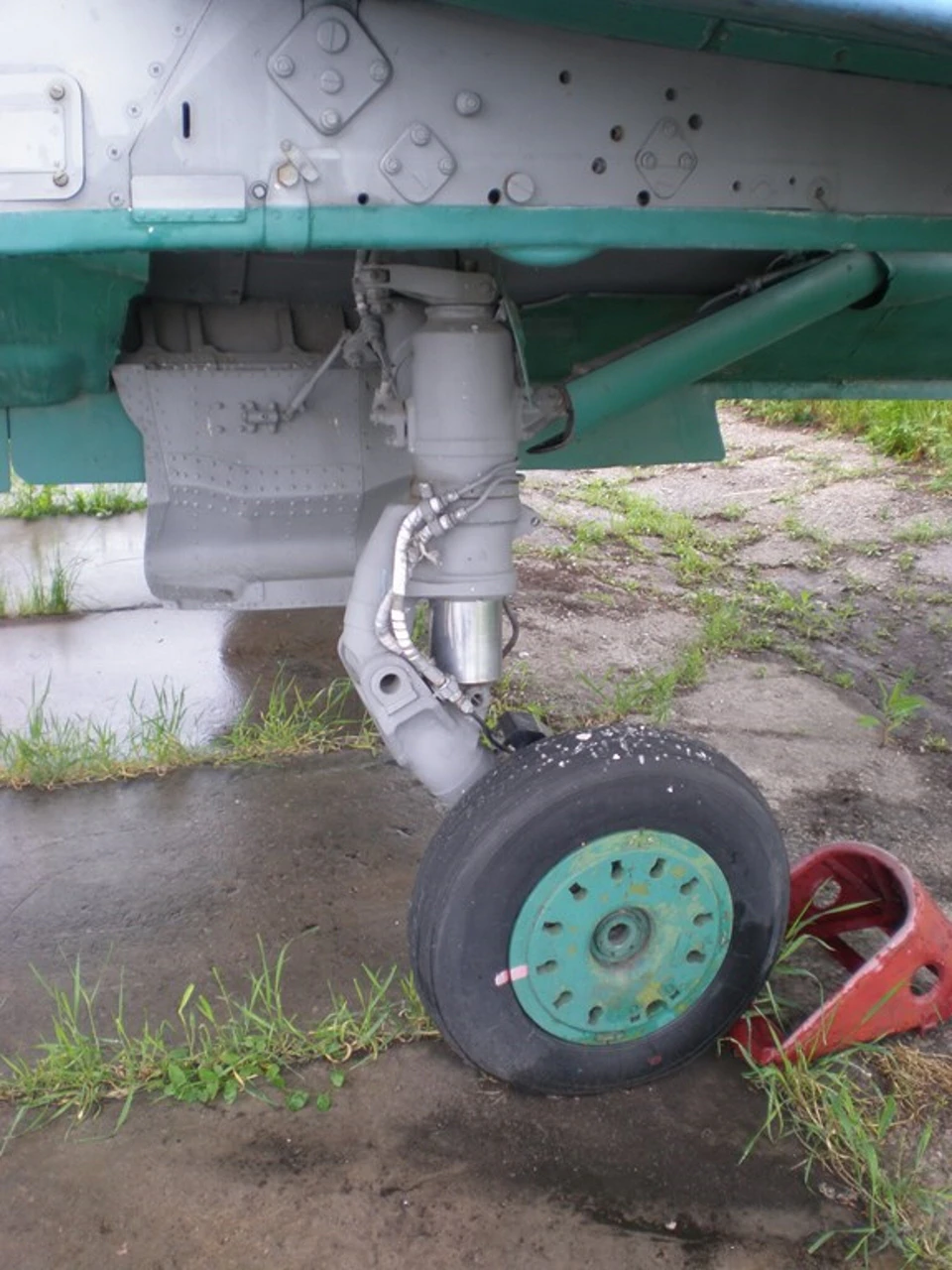
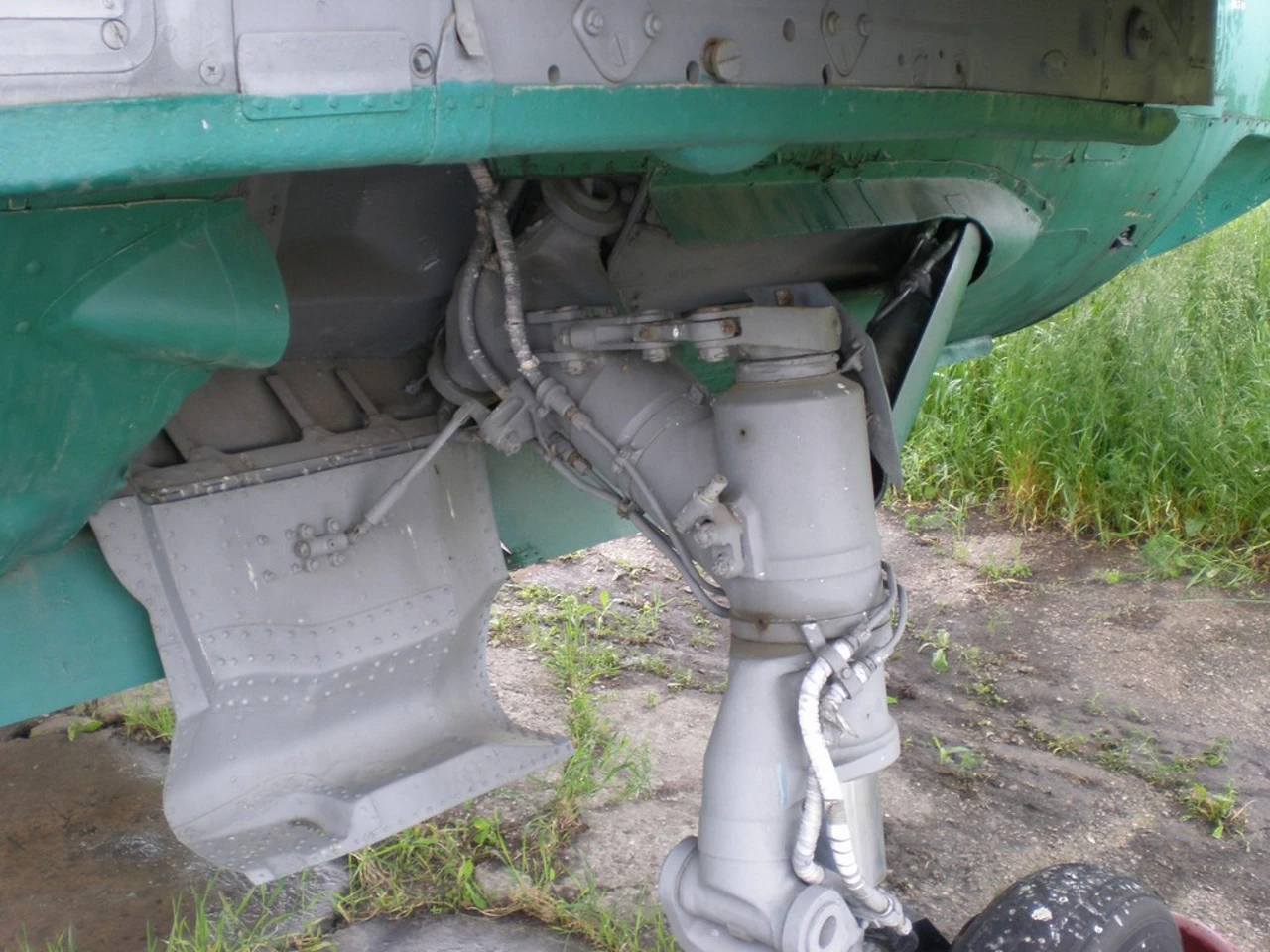
 Nupirk man kavos
Taip pat žiūrėkite:


| Yakovlev Yak-38 Forger Walk Around | |
|---|---|
| Fotografas | Gunkalo Vladimir |
| Lokalizavimo | Nežinoti |
| Nuotraukos | 33 |
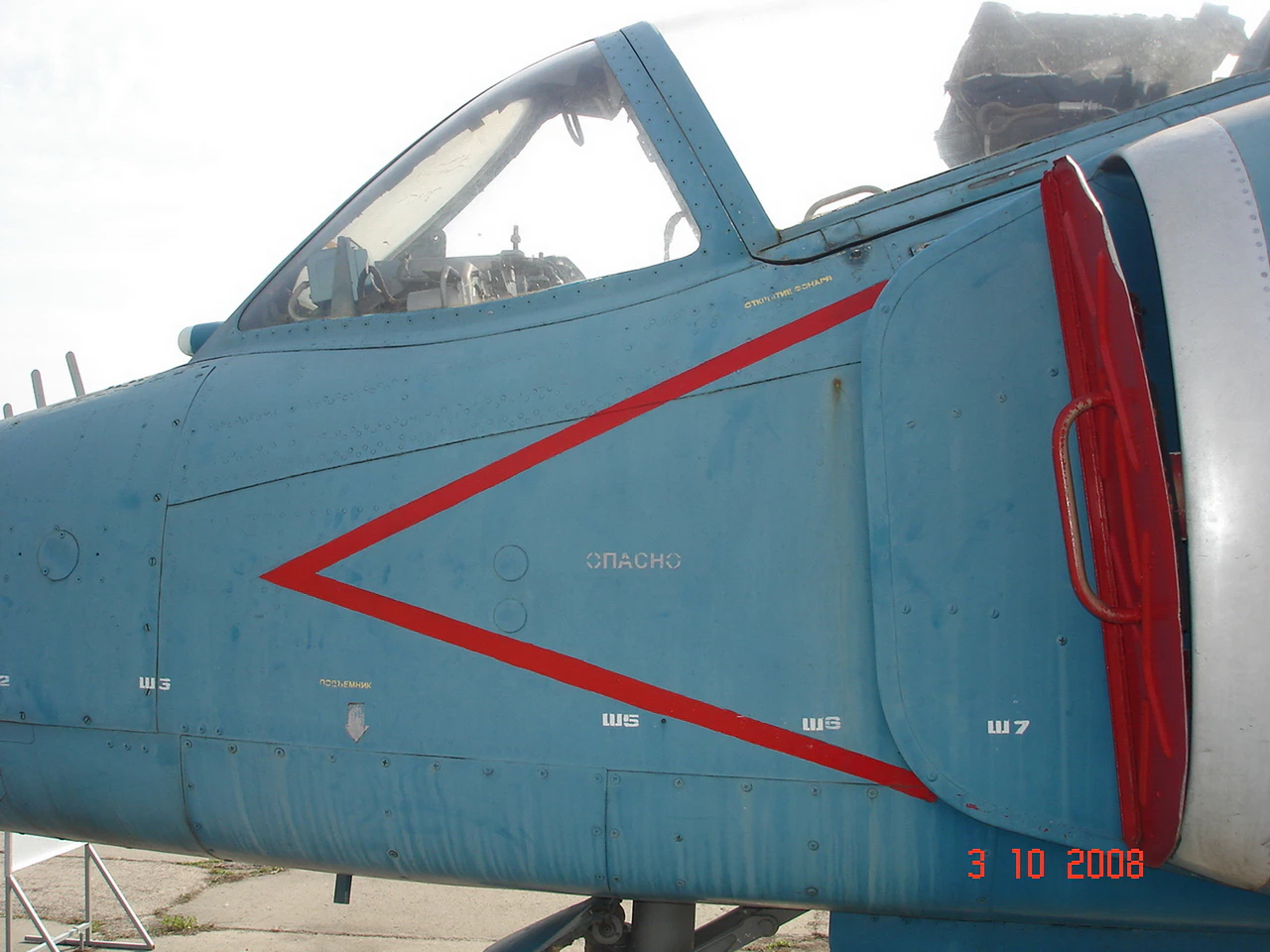
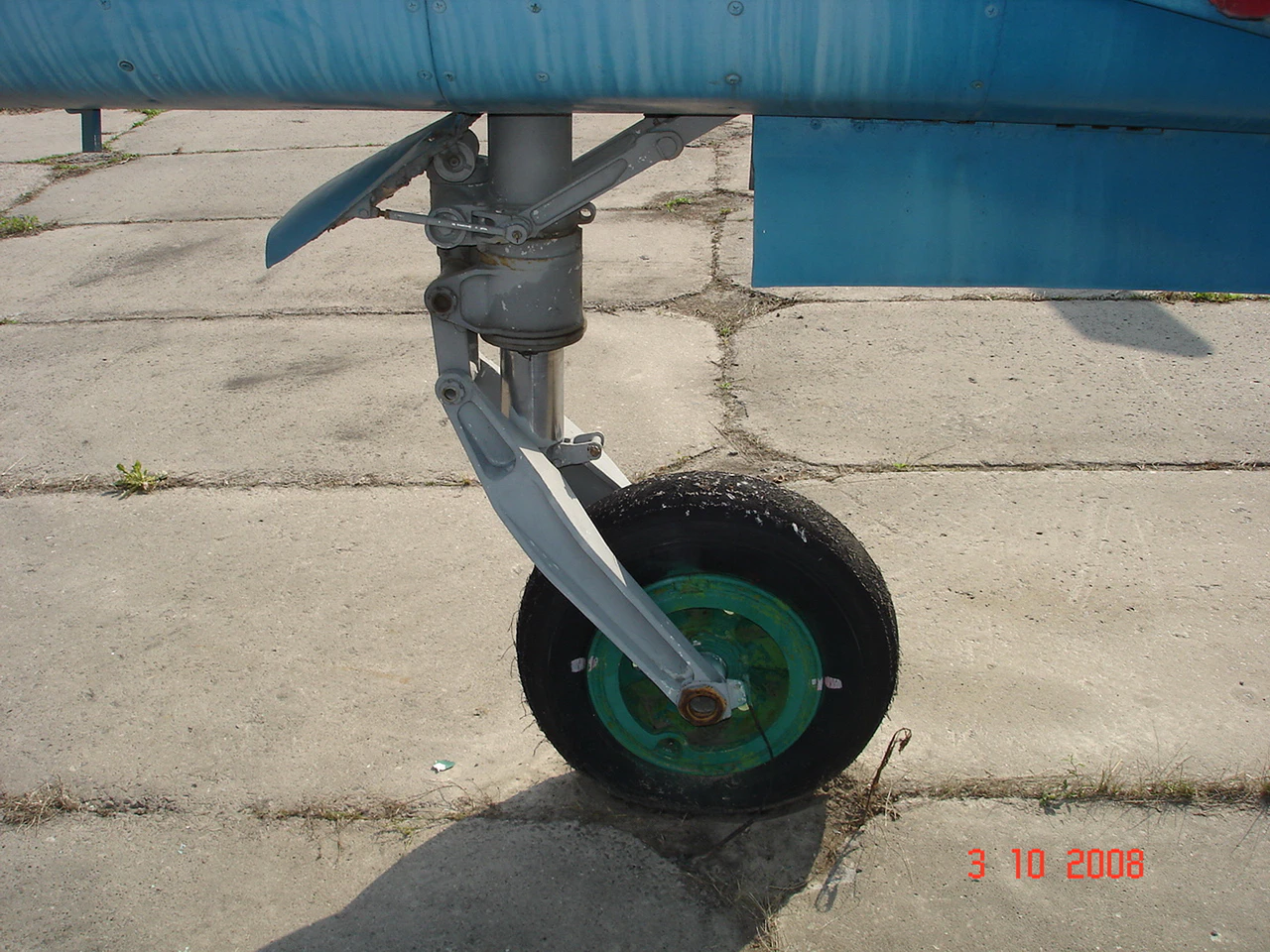
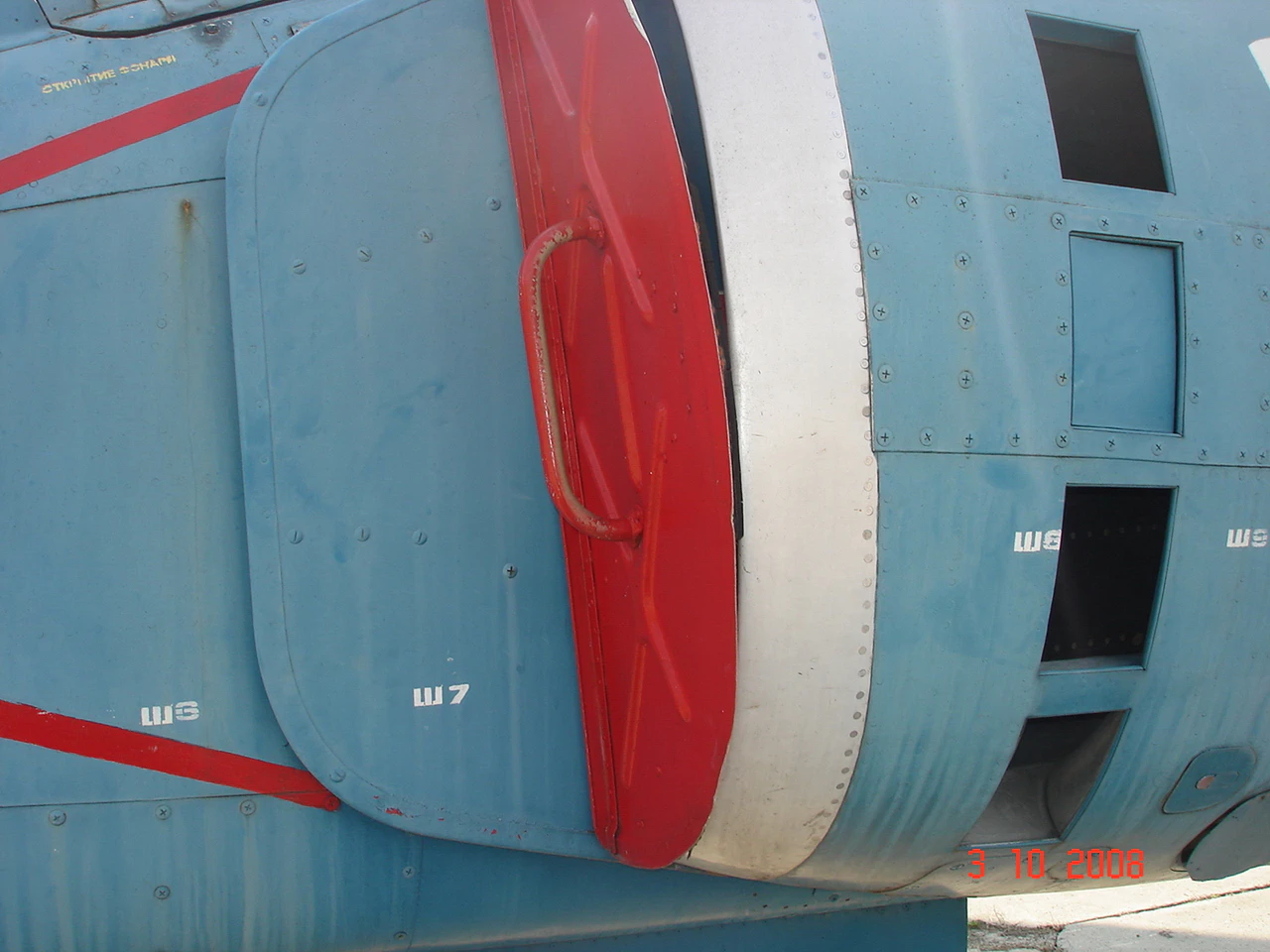
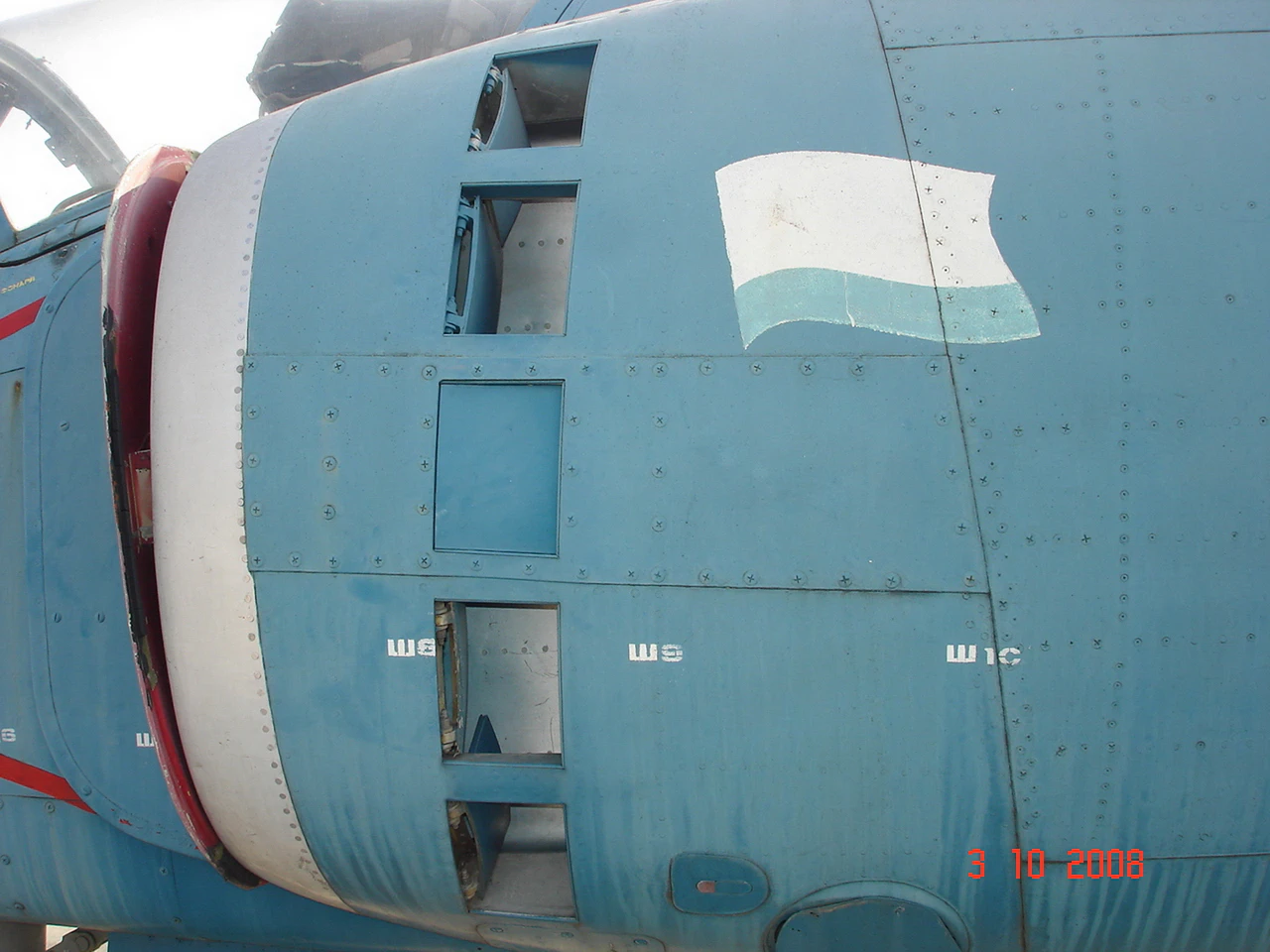
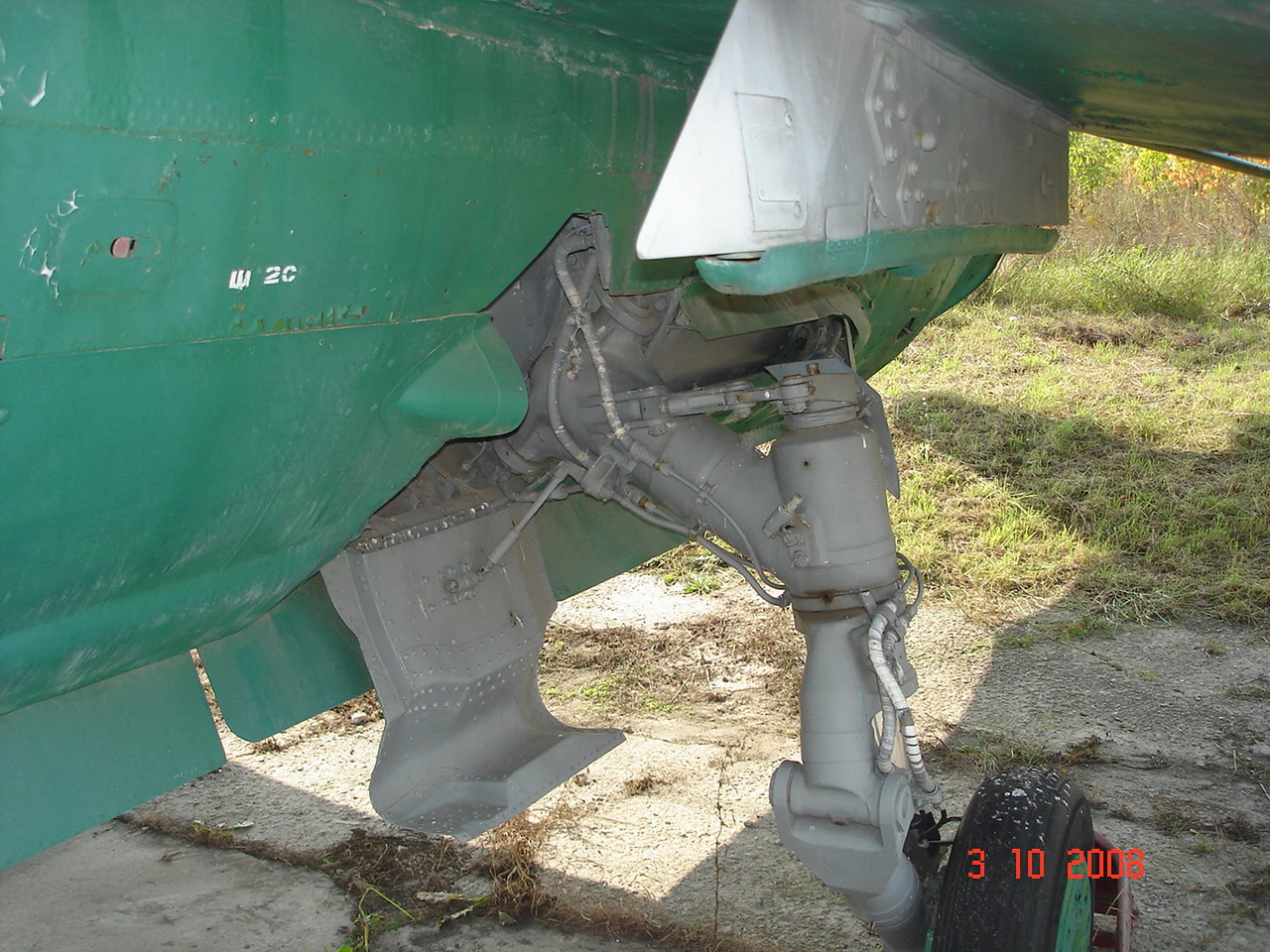
The “Steel-Winged” Experiment
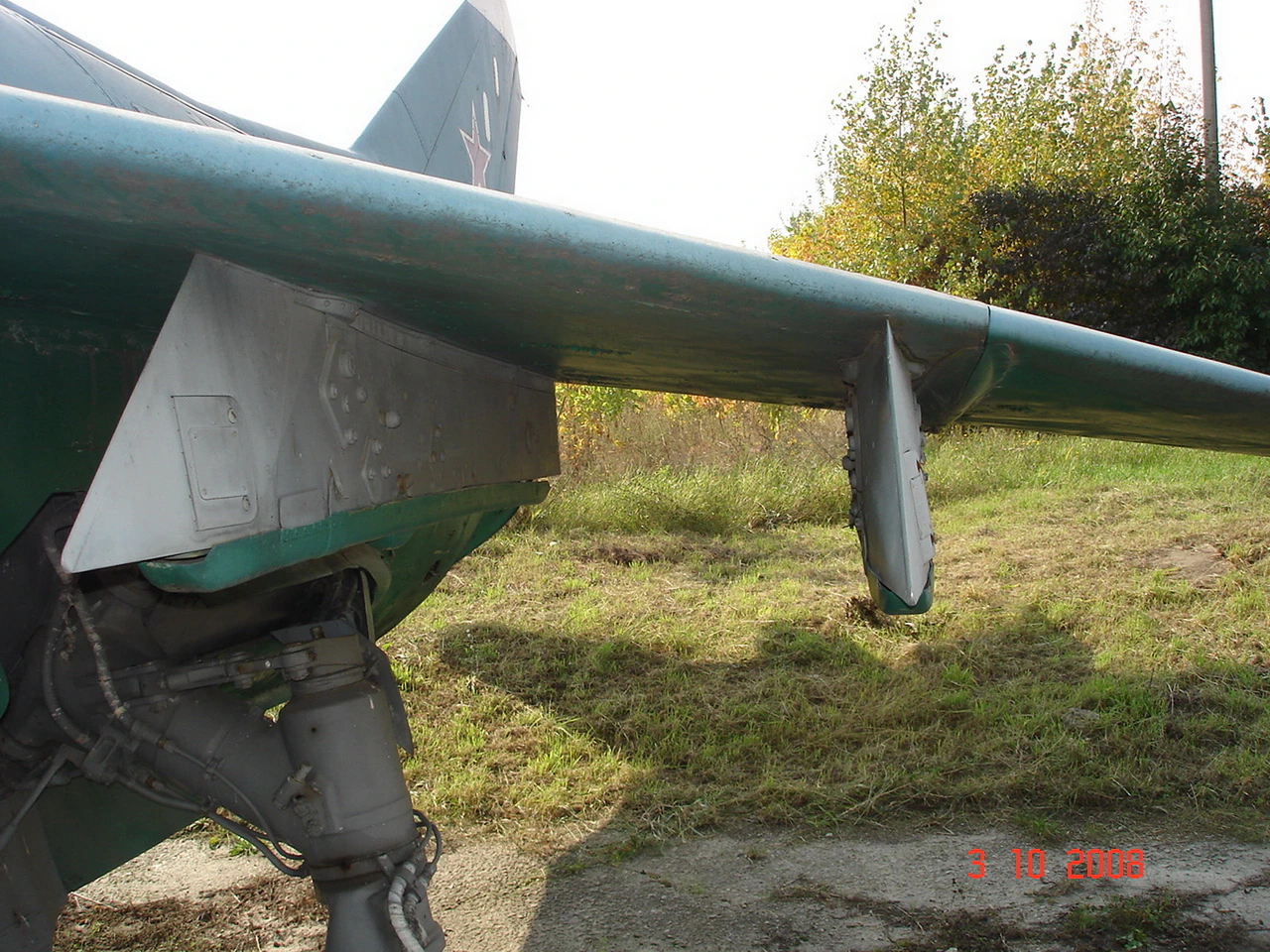
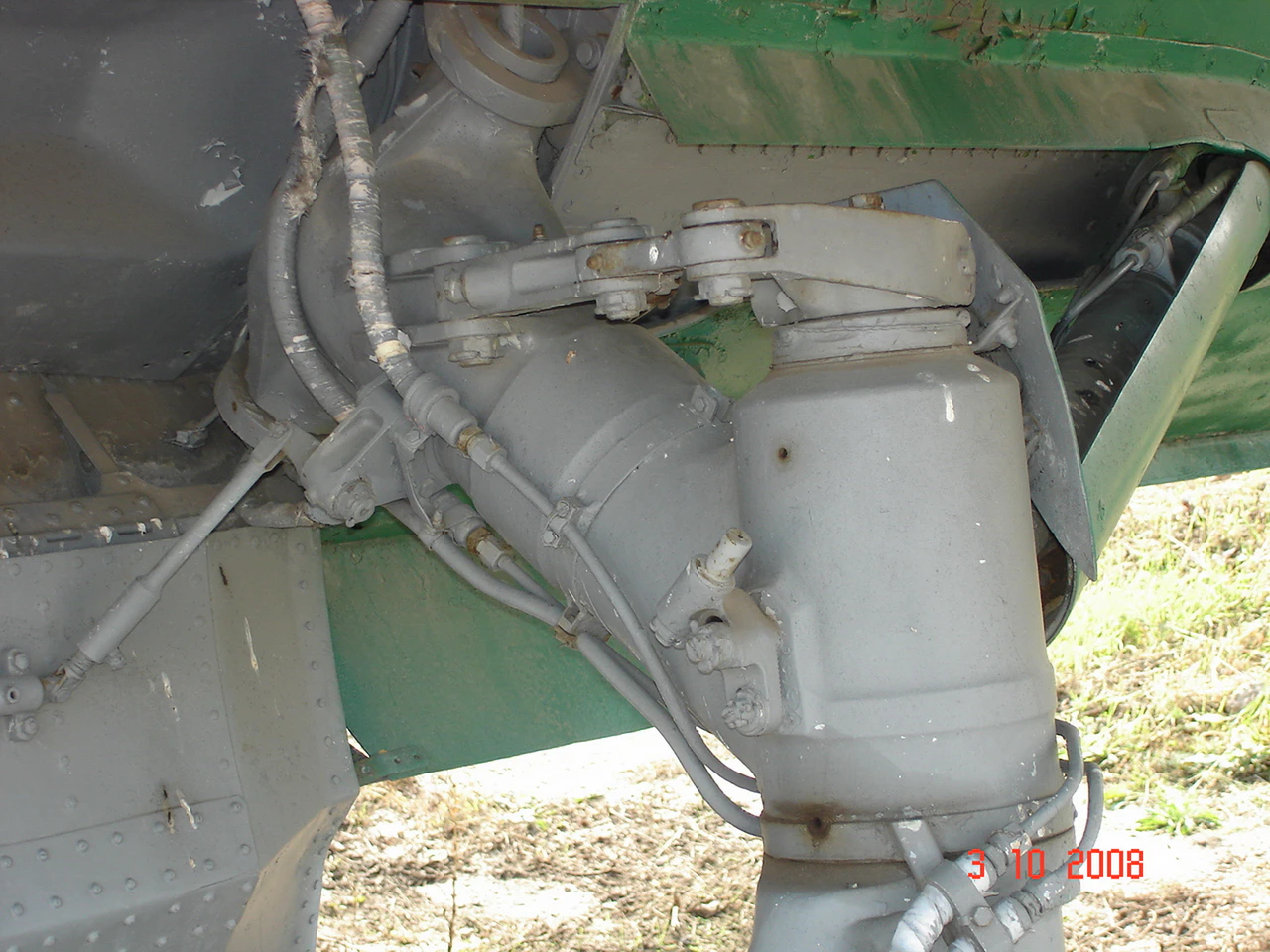
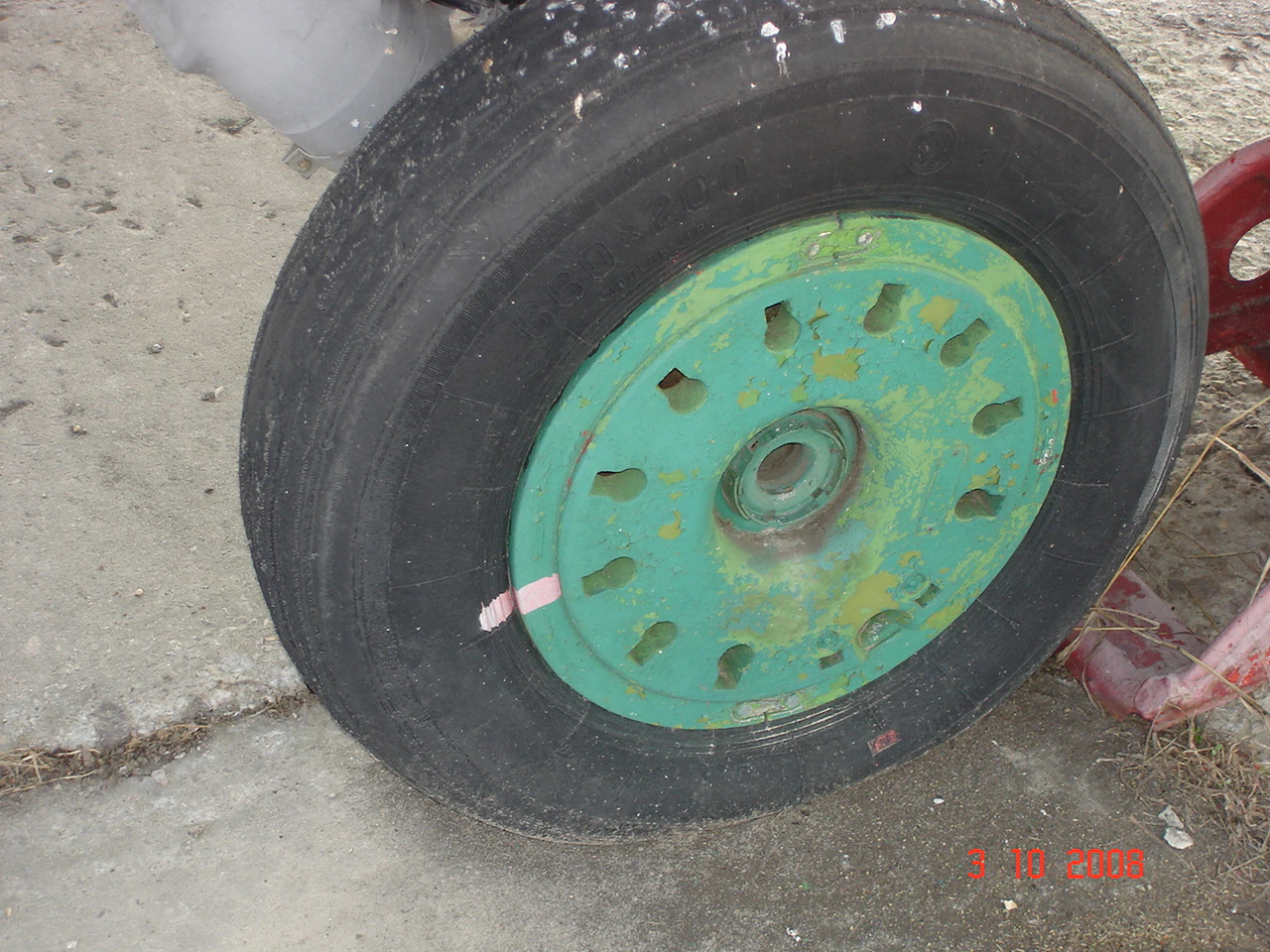
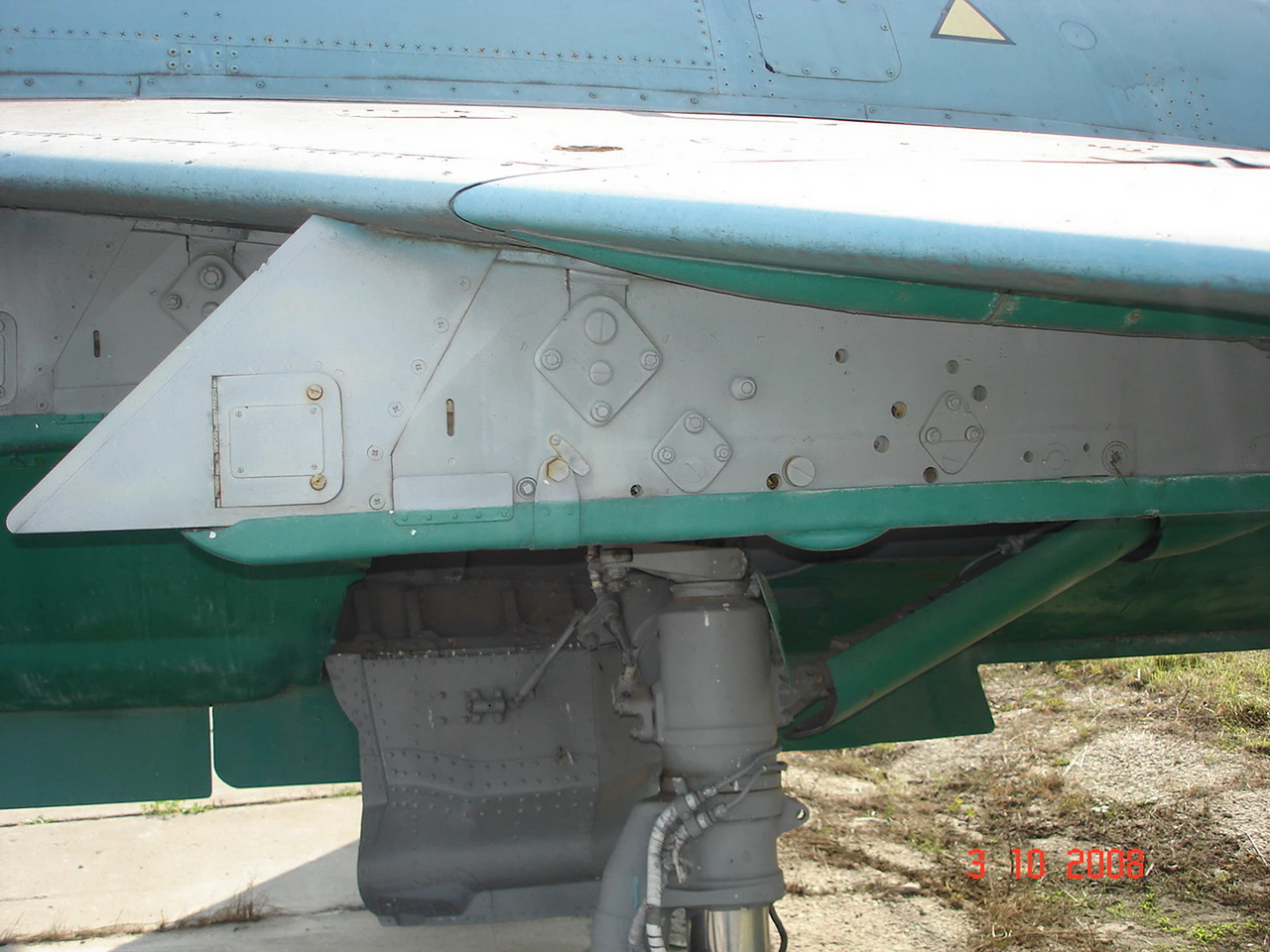
2007 Jakovlev Jak-38 was the Soviet Navy’s answer to the British Harrier. Entering service in 1976, it was designed specifically to operate from the Kiev-class “heavy aircraft-carrying cruisers.” Unlike the Harrier’s single engine with four swiveling nozzles, the Yak-38 used a complex and controversial “lift-plus-cruise” configuration: one main engine for forward flight and two dedicated vertical-lift jets behind the cockpit. While it gave the Soviet Union a fixed-wing presence at sea, it was a temperamental machine with limited range and a payload capacity that often left it nicknamed “the deck-bound toy.”
| Attribute | Technical Specification (Yak-38M) |
|---|---|
| Vaidmenį | VTOL Shipborne Strike/Fighter |
| Įgulos | 1 (Pilot) |
| Main Engine | 1 × Tumansky R-28V-300 vectored-thrust turbofan (15,000 lbf) |
| Lift Engines | 2 × Rybinsk RD-38 turbojets (7,200 lbf each) |
| Maximum Speed | 1,050 km/h (650 mph / Mach 0.95) |
| Combat Radius | 130–300 km (depending on takeoff mode) |
| Ginkluotės | 4 × External hardpoints (up to 2,000 kg / 4,400 lbs) |
| Standard Load | R-60 AAMs, Kh-23M ASMs, FAB-250/500 bombs, or 23mm gun pods |
Design Engineering: The Perils of Vertical Flight
- Automatic Ejection System: The Yak-38 featured a unique (and terrifying) safety feature. Because the aircraft would flip instantly if one lift engine failed, Yakovlev installed an automatic ejection seat. If the plane exceeded a certain pitch or roll angle during VTOL, the seat would fire the pilot out without their permission.
- The “Lift-Plus-Cruise” Trap: During vertical takeoff, the Yak-38 burned fuel at a staggering rate. To carry a useful weapons load, pilots often had to perform “short” rolling takeoffs instead of purely vertical ones, but the small wings provided very little lift.
- No Radar: The “Forger-A” lacked an internal radar, relying on the pilot’s eyes and the “Mother Ship’s” controllers for interception. It was primarily intended to shoot down slow-moving NATO maritime patrol planes like the P-3 Orion.
- Environmental Fragility: The lift engines were notoriously finicky in hot or humid climates. During deployments to Africa and Afghanistan, the engines often refused to start if the air temperature was too high, earning it the reputation of being a “fair-weather fighter.”
Combat and Service History
- Operation Romb (Afghanistan, 1980): A small detachment of Yak-38s was sent to Afghanistan for “trial by fire.” They performed roughly 12 sorties, but the high-altitude, dusty environment was brutal on the engines, and the aircraft proved to have almost no tactical value compared to the Su-25.
- The “Baka” of the Cold War? While it looked futuristic, Western analysts quickly realized the Yak-38 was no match for the Sea Harrier. It lacked the maneuverability for dogfighting and the range for deep strikes.
- Safety Record: Roughly one-third of the total production (approx. 231 built) was lost in accidents. However, the automatic ejection system saved dozens of lives, despite occasionally firing during minor malfunctions that might have been recoverable.
- Legacy: Despite its flaws, the Yak-38 taught the Soviets everything they needed to know about VTOL. Its successor, the Yak-141 Freestyle, was a supersonic beast that later influenced the design of the American F-35B’s swivel-nozzle system.
Peržiūrų : 5550
Taip pat galite pamatyti:
 Bell XV-15 Tiltrotor – nuotraukos ir vaizdo įrašai
 "Avro Canada VZ-9 Avrocar" – nuotraukos ir vaizdo įrašai
 Ryan X-13 Vertijet – nuotraukos ir vaizdo įrašai
 Jakovlev Jak-1 - nuotraukos ir vaizdo įrašai
 Jakovlev Jak-52 - nuotraukos ir vaizdo įrašai
 Jakovlev Jak-50 - nuotraukos ir vaizdo įrašai
 Jakovlev UT-2 – nuotraukos ir vaizdo įrašai
 Dornier Do 31E3 – nuotraukos ir vaizdo įrašai
 "Jak-25" žibintuvėlis - nuotraukos ir vaizdo įrašas
 Jak-15 – nuotraukos ir vaizdo įrašai