Martin AM Mauler

Martin AM Mauler

米国
役割攻撃機
初飛行26 August 1944
構築151

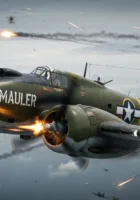
The Martin AM Mauler (originally XBTM) is a single-seat carrier-based attack aircraft built for the United States Navy. Designed during World War II, the Mauler encountered development delays and did not enter service until 1948 in small numbers. The aircraft proved troublesome and remained in frontline service only until 1950, when the Navy switched to the smaller and simpler Douglas AD Skyraider. Maulers remained in reserve squadrons until 1953. A few were built as AM-1Q electronic-warfare aircraft with an additional crewman in the fuselage.

ソース: Martin AM Mauler on Wikipedia
続きを読む

再生 : 612

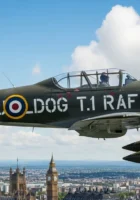
Bulldog T.1 RAF london

Bulldog T.1 RAF

英国
役割 Basic trainer with aerobatic capability
初飛行 19 May 1969
ビルド数 328
Scottish Aviation Bulldog is a British two-seat side-by-side (with optional third seat) training aircraft designed by Beagle Aircraft as the B.125 Bulldog.
ソース: Bulldog T.1 RAF on Wiki
続きを読む

ビュー : 530

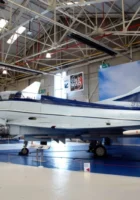
BAE EAP

British Aerospace EAP

英国
Private venture demonstrator fighter
初飛行 8 August 1986
構築 1
British Aerospace EAP (standing for Experimental Aircraft Programme) is a British technology demonstrator aircraft developed by aviation company British Aerospace (BAe) as a private venture. It was designed to research technologies to be used for a future European combat aircraft, and for the multinational Eurofighter Typhoon.
ソース: British Aerospace EAP Hawk on Wiki
続きを読む

ビュー : 523

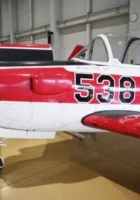
Fuji T-3 Trainer

Fuji T-3

日本
役割 プライマリトレーナー
初飛行 1978
ビルド数 50
Fuji T-3 is a primary military trainer aircraft used by the Japan Air Self Defense Force, manufactured by Fuji Heavy Industries. Its first flight was in 1978. In the course of its service life, 50 units were produced. It has been replaced by the Fuji T-7.
ソース: Fuji T-3 on Wiki
続きを読む

ビュー : 380

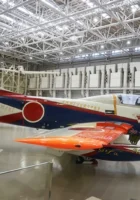
Fuji T-1 Trainer Jet

Fuji T-1

日本
役割 Intermediate trainer aircraft
初飛行 January 1, 1958
ビルド数 66
The Fuji T-1 Hatsutaka was Japan’s first jet-powered trainer aircraft. Its first flight was in January 1958. A total of 66 T-1 planes were built. It was retired in March 2006.
ソース: Fuji T-1 on Wiki
続きを読む

ビュー : 326

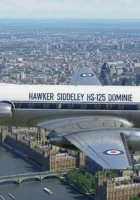
Hawker Siddeley HS-125

Hawker Siddeley HS-125 Dominie

英国
Mid-size business jet
初飛行 13 August 1962
作成された数 1720
British Aerospace 125 is a twinjet mid-size business jet. Originally developed by de Havilland and initially designated as the DH.125 Jet Dragon, it entered production as the Hawker Siddeley HS.125, which was the designation used until 1977. Later on, more recent variants of the type were marketed as the Hawker 800.
ソース: Hawker Siddeley HS-125 Dominie on Wiki
続きを読む

ビュー : 384

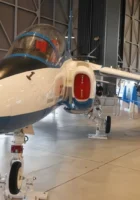
Kawasaki T-4

Kawasaki T-4

日本
役割 Intermediate trainer aircraft
初飛行 29 July 1985
ビルド数 208+
Kawasaki T-4 is a Japanese subsonic intermediate jet trainer aircraft developed and manufactured by the commercial conglomerate Kawasaki Heavy Industries. Its sole operator is the Japan Air Self-Defense Force (JASDF), in part due to historic restrictions on the exporting of military hardware. In addition to its primary training mission, the T-4 has been used by the JASDF’s Blue Impulse aerobatic team as well as liaison duties with most fighter units. The first XT-4 prototype flew on 29 July 1985, while the first production aircraft was delivered during September 198
ソース: Kawasaki T-4 on Wiki
続きを読む

再生 : 393

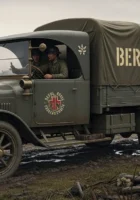
Berliet CBA war

ベリエCBA

フランス
トラック
生産 1913–1932
構築 知りません
ベリエCBA is a series of medium-duty trucks with chain drive, initially for the military and later also for commercial use. It was produced by the French manufacturer Berliet from 1913 to 1932, and was one of the most used trucks in World War I. It was replaced by the Berliet GD series.
ソース: ウィキペディア
続きを読む

ビュー : 424

Dodge WC-53 war

ダッジWC-53

米国

4×4軽トラック

メーカー ダッジ (クライスラー)
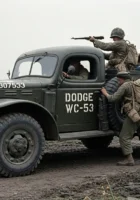
A carryall, mechanically the WC-53 was virtually identical to the WC-54 but was fitted with a body which was the 1939 civilian carryall modified to military specifications. All four rear side windows were wind-up opening and the seating consisted of front folding passenger seat to allow rear access, two person second row leaving space to access to the rear full width three person seat. The spare wheel was carried on a mount on the driver’s side and although the door was fully operational it could not be opened and the driver had to enter from the passenger side. The rear end had a horizontally split tailgate
ソース: ダッジWC-53 - ウィキペディア
続きを読む

再生 : 739