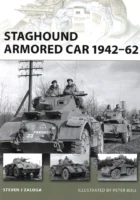
159 - Staghound Armored Car 1942-62

Osprey Publishing

SerieNuova Avanguardia
AuteurSteven J. Zaloga
Oggetto

Staghound Armored Car 1942-62

Ref159

Un libro firmato Osprey Publishing le livre «Staghound Armored Car 1942-62 – NEW VANGUARD 159» .

Lo Staghound era un veicolo corazzato unico nella seconda guerra mondiale, progettato e prodotto negli Stati Uniti, ma destinato esclusivamente all'esercito britannico. Dal suo debutto in combattimento in Italia nel 1943 fino alla fine della guerra aveva svolto un servizio particolarmente prezioso in un ruolo di ricognizione in cui la sua velocità e armatura assicuravano che fosse in grado di districarsi dai guai come richiesto senza ulteriore supporto. Questo libro esamina lo sviluppo di questa categoria di auto blindate e offre un'analisi dettagliata dell'ampio uso in combattimento dello Staghound nel servizio britannico e al servizio di altri paesi alleati tra cui Canada, Nuova Zelanda e Polonia.

fonte: Staghound Armored Car di Osprey Publishing

Punti di vista : 952

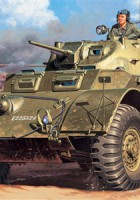
Staghound MK. I - ITALERI 6459

Italeri

Ref 6459
digitareMaquette
Scala1/35
Argomento

STAGHOUND MK. Io

Un kit del marchio Italeri il kit "STAGHOUND MK. I – ITALERI 6459".

Le Staghound l'auto blindata è stata progettata negli Stati Uniti ed è entrata nella seconda guerra mondiale sulla base delle specifiche britanniche che richiedevano una ricognizione ruotata a metà con un alto livello di protezione, quindi con una forte armatura, buone armi e alta mobilità.

Da un progetto questo grande risultato corazzato Chevrolet fu che dopo una vasta serie di valutazioni, e test entrarono in produzione alla fine del 1942, troppo tardi per essere inviato ai dipartimenti inglesi impegnati in Nord Africa. Il dipartimento ricevette lo Staghound nella primavera del '43 e fece il suo debutto durante la campagna d'Italia utilizzata dai dipartimenti che esploravano britannici e polacchi. Nonostante le buone caratteristiche di questo mezzo non è stato adottato dall'esercito degli Stati Uniti e quindi praticamente tutte le circa 3.000 unità sono state prodotte e utilizzate solo dai dipartimenti del Commonwealth britannico. Nel dopoguerra gli Staghound furono ampiamente distribuiti ai nuovi eserciti europei, dove rimasero in servizio in alcuni casi fino agli anni '70.

fonte: STAGHOUND di Italeri

Continua a leggere

Punti di vista: 1150

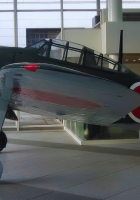
Mitsubishi A6M5 Zero Fighter (Zeke) - Tamiya 60779

Tamiya

Ref 60779
digitareMaquette
Echelle1/72
Oggetto

Mitsubishi A6M5 Zero Fighter (Zeke)

Un mock-up del marchio Tamiya le kit: «Mitsubishi A6M5 Zero Fighter (Zeke) – Tamiya 60779».

Le Mitsubishi A6M Zero è stato il caccia principale della Marina giapponese durante la seconda guerra mondiale. La variante A6M5 (Modello 52) seguì l'A6M3 (Modello 22) e fu sviluppata per contrastare i sempre più potenti caccia americani. Questa variante presentava un sistema di scarico che forniva una piccola quantità di spinta e punte alari arrotondate che miglioravano le prestazioni di immersione e rollio e la massima velocità. Fu introdotto per la prima volta nell'autunno del 1943 e continuò a servire valorosamente fino alla fine della guerra.

Continua a leggere

Visualizzazioni : 2360

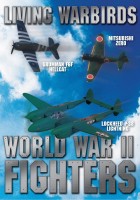
Uccelli da guerra viventi

Living Warbirds: Combattenti della Seconda Guerra Mondiale

StudioUna chiave inglese nell'intrattenimento delle opere
linguaAnglais
FormatoAnamorfico, Colore, Dolby, DVD, NTSC, Widescreen
Periodo

Seconda guerra mondiale

ASINB003IQBRT6

Descrizione del prodotto : Featuring four original fighter pilot training films from World War II and new video of beautifully restored warbirds in flight! Lockheed P-38 Flight Characteristics – Featuring excellent color flying footage, Lockheed Chief Engineer and Test Pilot Milo Burcham takes this interceptor/high altitude attack airplane through routine takeoffs and landings, maximum performance in combat, engine failure procedures, and emergency landings.

Grumman F6F Hellcat Flight Characteristics – The F6F Hellcat was designed to take back the skies over the Pacific from the Japanese Zero, and this film teaches pilots everything they need to know about flying this aiplane. Recognition of the Japanese Zero Fighter – With the motto Know it before you can destroy it! , this military training film covers the characteristics, capabilities, weaknesses, and recognition of the World War II Japanese fighter aircraft, Mitsubishi A6M Rei Shiki Kanjo Sento Ki, known as the Zero.

Continua a leggere

Visualizzazioni : 609

Pubblicato in Lire.
A6M5 Zero

Mitsubishi A6M Zero

PaeseGiappone
RuoloCombattente
Prima moscaIl 1o aprile 1939
Costruito10939

Le Mitsubishi A6M "Zero" Il è un caccia a lungo raggio prodotto dalla Mitsubishi Aircraft Company, una parte della Mitsubishi Heavy Industries, e gestito dalla Marina Imperiale Giapponese dal 1940 al 1945. L'A6M fu designato come caccia portaerei Mitsubishi Navy Type 0 (零ラ艦ラララ闘ラ rei-shiki-kanjō-sentōki), o Mitsubishi A6M Rei-sen. L'A6M era solitamente indicato dai suoi piloti come il "Reisen" (caccia zero), "0" era l'ultima cifra dell'anno imperiale 2600 (1940) quando entrò in servizio con la Marina Imperiale. Il nome ufficiale degli Alleati era "Zeke", anche se l'uso del nome "Zero" fu in seguito adottato anche dagli Alleati.

fonte: Mitsubishi A6M Zero su Wikipedia

Continua a leggere

Views : 4719

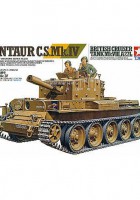
Carro armato Centaur MK.IV - Tamiya 35232

Tamiya

Ref35232
digitareModello in scala
Scala1/35
Argomento

Carro armato Centaur MK.IV

Un kit del marchio Tamiya il kit: «Carro armato Centauro MK.IV – Tamiya 35232». The Carro armato incrociatore Mk VIII Centaur (A27L) era una versione del carro armato Cromwell alimentato da un motore Liberty. Non fu un grande successo in sé, ma molti Centauri furono convertiti o completati come Cromwell e in quella configurazione utilizzati in combattimento nell'Europa nord-occidentale.

Continua a leggere

Punti di vista: 1506

Centurion Mk.5/1 RAAC Versione Vietnam - AFV Club 35100

AFV Club

Ref 35100
digitareModello in scala
Scala1/35
Argomento

Centurion Mk.5/1 RAAC Versione Vietnam

Un kit del marchio AFV Club le kit: «Centurion Mk.5/1 RAAC Vietnam Version – AFV Club 35100».

The Centurion has seen action in a number of theatres such as the Indo-Pakistan wars, Korea and Vietnam with the most extensive service being with the IDF which still uses versions of the Cent today in many support configurations. As well as the gun tanks from Mk.I to Mk.13 ranging in armament from the original 17pdr (76.2mm), through the 20pdr (83.4mm) to the later L7 105mm the Centurion was also used as the basis for many specialised vehicles such as ARV/AVREs, bridge layers, Dozer tanks, BARVs as well as the many specialised vehicles in the IDF with these vehicles also being fitted with the AVD-S1790-2A Diesel engine.

Continua a leggere

Visualizzazioni : 1801

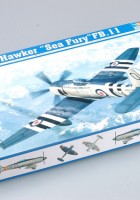
Hawker “Sea Fury” FB.11 - Trumpeter 01631

Trombettista

Ref 01561
digitareKit modello
Scala1/72
Argomento

Hawker “Sea Fury” FB.11

Un kit dal marchio Trumpeter il kit: «Hawker “Sea Fury” FB.11 – Trumpeter 01631».

The first Sea Fury prototype, powered by a Bristol Centaurus XII, had first flown on 21 February 1945, but the first fully-navalized version with folding wings did not fly until 12 October 1947. The Boulton Paul contract was cancelled in early 1945, and of the 100 Sea Furies that remained on order, the first 50 were completed under the designation Sea Fury Mk X.

Nel maggio 1948, le prime Sea Furies divennero operative con il No. 802 Squadron, sotto forma di Sea Fury FB.Mk 11, di cui furono costruiti 615. Almeno 66 di questi sono stati consegnati in Australia e Canada. All'inizio della guerra di Corea, Sea Furies operò con grande successo nel ruolo di attacco al suolo dai ponti delle portaerei della Royal Navy. La RN ha anche ricevuto 60 addestratori biposto T.Mk 20 nei primi anni 1950. Sea Furies sono state esportate in diversi altri paesi, tra cui Paesi Bassi, Pakistan, Egitto, Birmania, Cuba e Iraq. Peso: vuoto 9.240 libbre, decollo massimo 12.500 libbre. Apertura alare: 38 piedi. 4,75 pollici. Lunghezza: 34ft. 8in. Altezza: 15ft. 10.5in. Velocità massima: 435 mph Soffitto: 34.300 ft. Portata: 680 miglia Armamento: quattro cannoni da 20 mm in ali Rack sottoala per otto razzi da 60 libbre o due bombe.

fonte: Hawker “Sea Fury” FB.11 by Trumpeter

Continua a leggere

Punti di vista : 936

Russo KV-1 Mod1939 - Trombettista 01561

Trombettista

Ref01561
digitareKit modello
Scala1/35
Argomento

Russo KV-1 Mod1939

Un kit del marchio Trumpeter il kit: «Russian KV-1 Mod1939 – Trumpeter 01561». The KV type tank that research to manufacture wins in the competition of the heavy type tank from the factory of Kirov in 1939, ising named after KV-1. First material in KV-1 types L-11s 76.2 mm of artillery; July of 1940, the heavy type in the series of KV tank production be transfered by the factory of Kirov the 100 factory production, henceforth the KV-1 that produce all changed to pack better types F-32s in function 76.2 mm of artillery.
fonte: Russo KV-1 Mod1939 di Trumpeter
Continua a leggere

Punti di vista: 1329

KV-1S - WalkAround

KV-1S

PaeseUnione Sovietica
RuoloCarro pesante
In servizio1939–45
Costruito5219 (Kv)

Le Kliment Vorošilov I carri armati (KV) erano una serie di carri pesanti sovietici che prendevano il nome dal commissario e politico della difesa sovietica Kliment Voroshilov e utilizzati dall'Armata Rossa durante la seconda guerra mondiale. KV-1S: In response to criticisms, the lighter KV-1S was developed, with thinner armour and a smaller, lower turret in order to reclaim some speed. Importantly, the KV-1S had a commander’s cupola with all-around vision blocks. It also had a sophisticated planetary transmission that significantly increased the reliability, and allowed use of more efficient regenerative geared steering, unlike the solely clutch and brake steering systems used by the Panzer III, IV and T-34. Its reduced weight allowed it to achieve a top speed of 43.3 km/h.

fonte: KV-1S su Wikipedia

Continua a leggere

Visualizzazioni : 4581