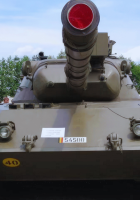
Leopardo 1A3 BE

Leopardo 1

PaeseGermania Ovest
RuoloCarro armato da battaglia principale
In servizioDal 1965 ad oggi

Dopo la consegna del primo lotto, i successivi tre lotti sono stati Leopardo 1A1 model, which included a new gun stabilization system from Cadillac-Gage, allowing the tank to fire effectively on the move. The 1A1 also added the now-famous “skirts” along the sides to protect the upper tracks, and a new thermal jacket on the gun barrel to control heating. A less important change was to use rectangular rubber blocks fastened to the treads with a single pin instead of the earlier two-pin “shaped” versions. The rubber blocks could be easily replaced with metal X-shaped crampons for movement on ice and snow in the winter. Between 1974 and 1977 all of the machines in the first four batches were brought to the same Leopard 1A1A1 standard, and given additional turret armor developed by Blohm & Voss. A further upgrade in the 1980s added leftover image-intensifier night sights which were being handed down from the Leopard 2 as they were themselves upgraded. The PZB 200 image intensification system was mounted in a large box on the upper right of the gun, creating the Leopard 1A1A2. A further upgrade with SEM80/90 all-digital radios created the Leopard 1A1A3.

fonte: Leopardo 1 su Wikipedia

Continua a leggere

Views : 11805

Giapponese Tipo 1 - Tamiya 35095

Tamiya

Ref 35095
digitareModello in scala
Scala1/35
Argomento

Japanese Type 1

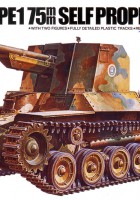
Un modello del marchio Tamiya il kit: Japanese Type 1 – Tamiya 35095 .

-Riveted hull details -75mm gun is movable. Gun barrel also enables recoil movement. -Belt type tracks included. -Kit comes with 2 crew figures. The Japanese Type 1 75mm self-propelled gun was the first self-propelled gun developed by the Imperial Japanese Army during WWII. It used the chassis of the successful Type 97 medium tank with the turret replaced by a Type 90 75mm field gun in an open superstructure. Although the prototype was completed in May 1941, production did not begin until the latter half of 1943 as priority was given to aircraft manufacturing during the war. The self-propelled guns were deployed to Mobile Artillery Regiments and first saw action during the Battle of Luzon in the Philippines in 1944. The Tamiya model faithfully captures all the detail in 1/35 scale.

fonte: Tamiya

Continua a leggere

Visualizzazioni : 1788

SdKfz.124 Wespe - Ace Modelli 72295

Modelli ace

Ref 72295
digitareModello
Scala1/72
Argomento

SdKfz.124 Wespe

Un modello del marchio Modelli ace il kit: SdKfz.124 Wespe – Ace Models 72295.

10,5cm LeFH-18/2 auf Fgst PzKpfw.II (Sf) SdKfz.124 "Wespe"("Obice da campo leggero 18 su telaio Panzer II") Dopo la battaglia di Francia nel 1940 i generali dei carri armati tedeschi capirono che il Panzer II era diventato sia sotto-cannone che sotto-corazzato. Così, quando sorse la necessità di un veicolo di artiglieria SP, il Panzer II fu una scelta naturale. Il motore è stato spostato in avanti e il telaio è stato leggermente allungato per guadagnare spazio sufficiente per l'obice leFH 18 da 10,5 cm montato posteriormente.

Continua a leggere

Punti di vista: 1551

ACADEMY 12290 B-25 academy b-25 Academy B-25G Mitchell "Shark Mouth" accademia bocca di squalo b-25 recensione tmmyrohj 爱ララ(ACADEMY)12290 B-25

Accademia

Argomento

B-25G [Shark Mouth]

Scala1/48
Ref12290

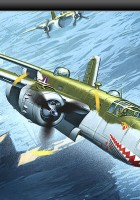
Un modello del marchio Academy il kit B-25G [Shark Mouth] – ACADEMY 12290

Il Nord America B-25 · Mitchell was an American twin-engined medium bomber manufactured by North American Aviation. It was used by many Allied air forces, in every theater of World War II, as well as many other air forces after the war ended, and saw service across four decades. The B-25 was named in honor of General Billy Mitchell, a pioneer of U.S. military aviation. By the end of its production, nearly 10,000 B-25s in numerous models had been built. These included a few limited variations, such as the United States Navy’s and Marine Corps’ PBJ-1 patrol bomber and the United States Army Air Forces’ F-10 photo reconnaissance aircraft. Because of the urgent need for hard-hitting strafer aircraft, a version dubbed the B-25G was developed, in which the standard-length transparent nose and the bombardier were replaced by a shorter solid nose containing two fixed .50 in (12.7 mm) machine guns and a 75 mm (2.95 in) M4 cannon,[1] one of the largest weapons fitted to an aircraft, similar to the experimental British Mosquito Mk. XVIII, and German Ju 88P heavy cannon carrying aircraft. The cannon was manually loaded and serviced by the navigator, who was able to perform these operations without leaving his crew station just behind the pilot. This was possible due to the shorter nose of the G-model and the length of the M4, which allowed the breech to extend into the navigator’s compartment.

fonte: Wikipedia

Continua a leggere

Views : 1230

Sd.Kfz.234/4 Panzerspähwagen - DML 6772

Dragon Models

Ref 6772
digitare1/35 Militare della seconda guerra mondiale
Scala1/35
Argomento

Sd.Kfz.234/4 Panzerspähwagen

Un modello del marchio Modelli di Dragon il kit : Sd.Kfz.234/4 Panzerspähwagen – DML 6772

Exhaust pipe can be optionally assembled on either left or right Newly designed Sd.Kfz. 234/4 Authentically recreated suspension and steering assembly Wheels made from multiple parts for maximum details Wheels hubs are finely detailed Wheels can be adjusted to different positions One-piece upper hull complete with weld seams and bolt pattern 3-directional slide-molded hull bottom provides superb detail Slide-molded side fenders for Sd.Kfz. 234/4 One-piece chassis frame is slide molded to give finer detail Detailed spare tire mount Engine deck ventilation louvers with open/closed option Both front and rear steering controls superbly reproduced Detailed breech can be assembled open/closed Interior details of PaK 40

fonte: Drago

Continua a leggere

Visualizzazioni : 1152

Tedesco Pz.kpfw.I Ausf.F (VK18.01) - Presto - HOBBY BOSS 83804

Hobby Boss

Argomento

Tedesco Pz.kpfw.I Ausf.F (VK18.01)-Early

Scala1/35
Ref83804

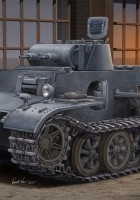
Un modello del marchio HobbyBoss il kit : German Pz.kpfw.I Ausf.F (VK18.01) – Early – HOBBY BOSS 83804

Caratteristiche : the kit consists of over 280 parts – multi-directional slide molded lower hull w/fine detail – photo-etched parts included

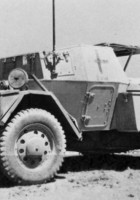
Il secondo veicolo, l'Ausf F, era tanto diverso dall'Ausf C quanto dall'Ausf A e B. Inteso come carro armato di supporto alla fanteria, il Panzer I Ausf F aveva uno spessore massimo della corazza di 80 millimetri (3,15 pollici) e pesava tra 18 e 21 tonnellate. L'Ausf F era armato con due MG-34 da 7,92 millimetri. Trenta furono prodotti nel 1940 e un secondo ordine di 100 fu successivamente annullato. Per compensare l'aumento di peso, è stato utilizzato un nuovo motore Maybach HL45 Otto da 150 cavalli (110 kW), che consente una velocità massima su strada di 25 chilometri all'ora (15,5 mph). Otto dei trenta carri armati prodotti furono inviati alla 1ª Divisione Panzer nel 1943 e videro il combattimento nella battaglia di Kursk. Il resto è stato dato a diverse scuole dell'esercito per scopi di addestramento e valutazione.

fonte: Hobby Boss

Continua a leggere

Visualizzazioni : 1248

Uk Technics in German Units vol2 - Foto dell'album

Tecniche britanniche in unità tedesche

PeriodoSeconda guerra mondiale
EsercitoWehrmacht tedesca
Descrizione

Album di 120 foto di Uk Technics in German Units

A volte sui carri armati tedeschi per i trofei tedeschi chiaramente apparsi è presente la designazione, che include la lettera E, il numero romano e altri numeri a tre cifre. In tutte le fotografie esistenti i serbatoi aventi tali designazioni hanno i danni insignificanti, che non rendono possibile introdurlo immediatamente nel sistema, o semplicemente chiaramente non viene utilizzato. Sulle ipotesi esistenti la lettera "E" indica a Erprobung - test, o Erbeuten - di prendere come trofeo, anche se del tutto possibile che anche Evakuieren – evacuare per evacuare il trofeo nella parte posteriore, il numero romano a giudicare dalle fotografie esistenti designa il tipo della macchina sequestrata. I numeri arabi molto probabilmente designano il numero ordinale di trofeo.

Continua a leggere

Visualizzazioni : 2821

USS Lassen DDG-82 - HOBBY BOSS 83412

Hobby Boss

Scala1/700
Ref83412
Oggetto

USS Lassen DDG-82

Un modello del marchio HobbyBoss il kit : USS Lassen DDG-82 – HOBBY BOSS 83412

Caratteristiche : – upper hull made from multi-directional slide moulds. – Separate sonar due to her sphere. – Either full hull version or waterline version can be selected. – Two SH-60B included – Contains display stand and name plate – Photo-etched frets for handrails etc.

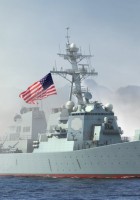
Lassen destroyer (USS Lassen (DDG-82)) is belonged to U.S. Navy Arleigh Burke-class, named to Navy Lt. Col. Clyde Everett • Lassen. Lassen`s keel was laid at Ingalls shipyard in Pascagoula, Mississippi on August 24, 1998. Launched on October 16, 1999, served on April 21, 2001. An aircraft carrier SH-60B”Seahawk” anti-submarine helicopters. is equipped.

fonte: Hobby Boss

Continua a leggere

Numero visioni : 1126

Mi-2URP Hoplite variante antitank - HOBBY BOSS 87244

Hobby Boss

Scala1/72
Ref87244
Oggetto

Mi-2URP Hoplite antitank variant

Un modello del marchio HobbyBoss il kit : Mi-2URP Hoplite antitank variant – HOBBY BOSS 87244

Caratteristiche : The kit consists of over 100 parts , include 7 clear parts

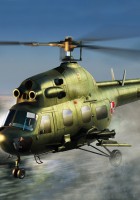
The Mi-2 (NATO reporting name is “Hoplite”) is a small, lightly armored transport helicopter that could also provide close air support when armed with 57 mm rockets and a 23 mm cannon. It was first introduced into the Soviet Air Force in 1965. The Mi-2 is used by mainly former Soviet and Eastern Bloc countries. Most of armed Mi-2 variants were used by Poland. Some were also used by the East Germany,Mi-2T is utility cargo version.

fonte: Hobby Boss

Continua a leggere

Visualizzazioni : 840

Italiano MC.200 Saetta - HOBBY BOSS 80291

Hobby Boss

Oggetto

Italian MC.200 Saetta

Scala1/72
Ref80291

Un modello del marchio HobbyBoss il kit : Italian MC.200 Saetta – HOBBY BOSS 80291

Caratteristiche : The kit consists of 15 parts, includes 1 clear windscreen/canopy

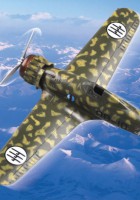
Le Macchi MC.200 Saetta was built by Aeronautica Macchi in Italy.The excellent manoeuvrability the great general flying characteristics and exceptional stability in a high-speed dive can be the biggest advantage of this fighter.Despite the lack of power and firepower,the MC.200 can still be regard as a good fighter.The pilots of the Italian Air Force and their MC.200 were very active in all theaters of war by the Italian army and won their glory in many air combat.The Saetta shown no sign of weakness when facing the lastest allied fighters.

fonte: Hobby Boss

Continua a leggere

Visualizzazioni : 1675