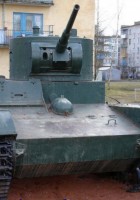
T-26 Staraya

T-26 Staraya

PaeseUnione Sovietica
Ruolo

Carro armato di fanteria leggera

In servizio1931–45
Costruito10300+

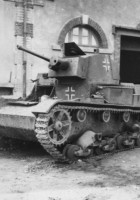
Le T-26 Il era un carro armato di fanteria leggera sovietico utilizzato durante molti conflitti degli anni '30 e durante la seconda guerra mondiale. Fu uno sviluppo del carro armato britannico Vickers 6-Ton e fu uno dei progetti di carri armati di maggior successo degli anni '30 fino a quando la sua armatura leggera divenne vulnerabile ai nuovi cannoni anticarro. Fu prodotto in numero maggiore di qualsiasi altro serbatoio del periodo, con più di 11.000 unità prodotte. Durante gli anni '30, l'URSS sviluppò 53 varianti del T-26, tra cui carri armati lanciafiamme, veicoli da combattimento, carri armati telecomandati, cannoni semoventi, trattori di artiglieria e portaerei corazzate. Ventitré di questi erano prodotti in serie, altri erano modelli sperimentali.

fonte: T-26 su Wikipedia

Continua a leggere

Visualizzazioni : 5867

Grumman E-2C Occhio di Falco

Northrop Grumman E-2 Occhio di Falco

PaeseUsa
digitare

Allarme rapido tattico aereo capace di portaerei

Primo volo21 ottobre 1960
ProdottoDal 1960 ad oggi

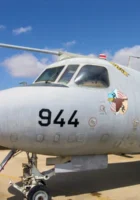
Galleria fotografica di un Northrop Grumman E-2 Occhio di Falco, The Grumman E-2 Occhio di Falco è un aereo a trasmissione aerea (AEW) statunitense. Questo aereo biturboelica fu progettato e sviluppato tra la fine degli anni '50 e l'inizio degli anni '60 dalla Grumman Aircraft Company per la Marina degli Stati Uniti in sostituzione del precedente E-1 Tracer, che stava rapidamente diventando obsoleto. Le prestazioni dell'aereo sono state migliorate con le versioni E-2B ed E-2C, dove la maggior parte delle modifiche sono state apportate alle comunicazioni radar e radio a causa dei progressi nei circuiti integrati elettronici e in altre elettronica. La quarta versione dell'Occhio di Falco è l'E-2D, che volò per la prima volta nel 2007. L'E-2 fu il primo aereo progettato per essere un aereo AEW fin dall'inizio, in contrapposizione alla modifica di una cellula esistente, come l'E-3.

fonte: Wikipedia

Continua a leggere

Visualizzazioni : 12425

GAZ UAZ-69 - WalkAround

GAZ UAZ-69

PaeseURSS
digitare

Camion leggero a quattro ruote motrici

Descrizione

Album di 151 foto walk-around di un UAZ-69

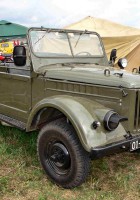
GAZ-69 is a four wheel drive light truck, produced by GAZ between 1953 and 1955. From 1954 until 1972 it was produced by UAZ, as UAZ-69, though they were commonly known as GAZ-69s as well. It was also produced under licence by ARO in Romania, first as IMS-57, then as Muscel M59, later modernized as the Muscel M461. Many GAZ-69 trucks were used in Poland during the Cold War. The basic variant GAZ-69 has a pair of doors only and most often appears with standard canvas top and upper sides. Further variant GAZ-69A (UAZ-69A) has two pair of doors. From the UAZ-69 there were developed off-road van and light truck UAZ-450 and newer jeep UAZ-469.

fonte: Wikipedia

Continua a leggere

Visualizzazioni : 5630

B-52H Stratofortress

Boeing B-52 Stratofortress

PaeseUsa
Ruolo

Bombardiere strategico

Primo voloIl 15 aprile 1952
Costruito744

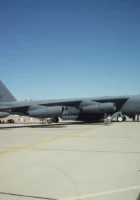
Le Boeing B-52 Stratofortress è un bombardiere strategico a lungo raggio, subsonico e a reazione. Il B-52 è stato progettato e costruito da Boeing, che ha continuato a fornire supporto e aggiornamenti. È stato gestito dalla United States Air Force (USAF) dagli anni '50. L'attentatore trasporta fino a 70.000 libbre (32.000 kg) di armi. B-52B/RB-52B : The B-52B was the first version to enter service with the USAF on 29 June 1955 with the 93rd Bombardment Wing at Castle AFB in California. This version included minor changes to engines and avionics, enabling an extra 12,000 pounds of thrust to be produced using water injection. Temporary grounding of the aircraft after a crash in February 1956 and again the following July caused training delays, and at mid-year there were still no combat-ready B-52 crews. Of the 50 B-52Bs built, 27 were capable of carrying a reconnaissance pod as RB-52Bs (the crew was increased to eight in these aircraft). The 300 pound (136 kg) pod contained radio receivers, a combination of K-36, K-38, and T-11 cameras, and two operators on downward-firing ejection seats. The pod required only four hours to install.

fonte: Boeing B-52 Stratofortress su Wikipedia

Continua a leggere

Visualizzazioni : 4605

Kfir C2

Kfir C2

PaeseIsraele
Ruolo

Cacciabombardardo

Primo voloGiugno I - 1973
Costruito220+

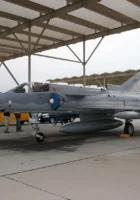
Galleria fotografica di un Kfir C2, The Israel Aircraft Industries Kfir è un aereo da combattimento multiruolo costruito da Israele basato su una cellula francese Dassault Mirage 5 modificata, con avionica israeliana e una versione israeliana del motore turbogetto General Electric J79. Kfir C.2 : Un C.1 migliorato che presentava molti miglioramenti aerodinamici. I cambiamenti includevano bordi anteriori "dogtoothed" sulle ali, piccoli strakes sotto il naso e un angolo di sweep più grande dei canard.

fonte: Kfir su Wikipedia

Continua a leggere

Views : 6970

Polikarpov R-5

Polikarpov R-5

PaeseURSS
digitare

Aerei bombardieri da ricognizione

Primo voloAutunno 1928
Costruito7000+

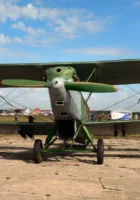
Le Polikarpov R-5 was a Soviet reconnaissance bomber aircraft of the 1930s. It was the standard light bomber and reconnaissance aircraft with the Soviet Air Force for much of the 1930s, while also being used heavily as a civilian light transport, in the order of 7,000 being built in total. The R-5 was developed by the design bureau led by Nikolai Nikolaevich Polikarpov as a replacement for the R-1 which served as the standard reconnaissance and light bomber aircraft with the Soviet Air Force. The prototype first flew in autumn 1928, powered by an imported German BMW VI V-12 engine. It was an unequal span single bay biplane of mainly wooden construction. After extensive evaluation, the R-5 entered production in 1930, powered by Mikulin M-17s, a licence built copy of the BMW-VI, as a reconnaissance bomber. Further modified versions were produced to serve as floatplanes, ground attack aircraft and civil transports. The R-5SSS, an improved reconnaissance bomber with improved streamlining, served as the basis for the Polikarpov R-Z, which succeeded the R-5 in production.

fonte: Polikarpov R-5 su Wikipedia

Continua a leggere

Views : 3073

Grumman F8F-2 Bearcat

Grumman F8F Bearcat

PaeseUsa
RuoloCaccia navale monomotore
Primo voloIl 21 agosto 1944
Costruito1265

Le Grumman F8F Bearcat Il è un caccia monomotore statunitense introdotto alla fine della seconda guerra mondiale. Continuò a servire verso la metà del XX secolo nella Marina degli Stati Uniti, nel Corpo dei Marines degli Stati Uniti e nelle forze aeree di altre nazioni. Sarebbe stato l'ultimo caccia a pistoni della Grumman Aircraft. Le versioni modificate hanno battuto i record di velocità per gli aerei con motore a pistone, e sono popolari tra i proprietari di uccelli da guerra.

fonte: Grumman F8F Bearcat su Wikipedia

Continua a leggere

Views : 9194

Tecniche polacche nelle unità tedesche

Tecniche polacche in unità tedesche

PeriodoSeconda guerra mondiale
Esercito

Wehrmacht tedesca

Descrizione

Album di 274 foto di Tecniche Polacche in Unità Tedesche

L'invasione della Polonia, nota anche come campagna di settembre o guerra difensiva del 1939 (in polacco: Kampania wrześniowa o Wojna obronna 1939 roku) in Polonia e nella Campagna di Polonia (in tedesco: Polenfeldzug) o Fall Weiss (Caso Bianco) in Germania, fu un'invasione della Polonia da parte della Germania, dell ' Unione Sovietica e di un piccolo contingente slovacco che segnò l'inizio della seconda guerra mondiale in Europa. L'invasione tedesca iniziò il 1o settembre 1939, una settimana dopo la firma del Patto Molotov-Ribbentrop, mentre l'invasione sovietica iniziò il 17 settembre 1939 in seguito all'accordo Molotov-Tōgō che terminò l'incidente di Nomonhan il 16 settembre 1939. La campagna terminò il 6 ottobre 1939 con la Germania e l'Unione Sovietica che dividevano e annettevano l'intera Polonia.

fonte: Wikipedia

Continua a leggere

Visualizzazioni : 3166

52-K 85mm

Cannone di difesa aerea da 85 mm M1939 (52-K)

PaeseURSS
PeriodoSeconda guerra mondiale
digitarePistola per la difesa aerea
Equipaggio7

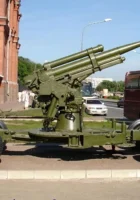
Le Cannone di difesa aerea da 85 mm M1939 (52-K) was an 85-mm Soviet air defense gun, developed under guidance of leading Soviet designers M. N. Loginov and G. D. Dorokhin. This gun was successfully used throughout the German-Soviet War against level bombers and other high- and medium-altitude targets. In emergencies they were utilized as powerful anti-tank weapons. The barrel of 52-K was the base for the family of 85-mm Soviet tank guns. Crews of 85-mm AD guns shot down 4,047 Axis aircraft. The mean quantity of 85-mm ammunition required to shoot down one enemy plane was 598 rounds. After the war some 52-Ks were refitted for peaceful purposes as anti-avalanche guns in a mountainous terrain. Virtually every country behind the Iron Curtain received this gun after World War II for their air defense. In the Soviet Union itself, these guns were largely superseded by the 100 and 130 mm guns./p>

fonte:52-K su Wikipedia

Continua a leggere

Visualizzazioni : 6073

Churchill Mk1

Churchill Mk1

PaeseRegno unito
ArgomentoCarri armati della seconda guerra mondiale
digitareFanteriaCarro armato
Descrizione

Album di 38 foto walk-around di un carro armato «Churchill Mk1»

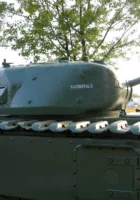
Galleria fotografica di un carro armato Churchill Mk1, il Churchill Mk1 era un carro armato pesante di fanteria britannico utilizzato nella seconda guerra mondiale

Continua a leggere

Visualizzazioni: 2977