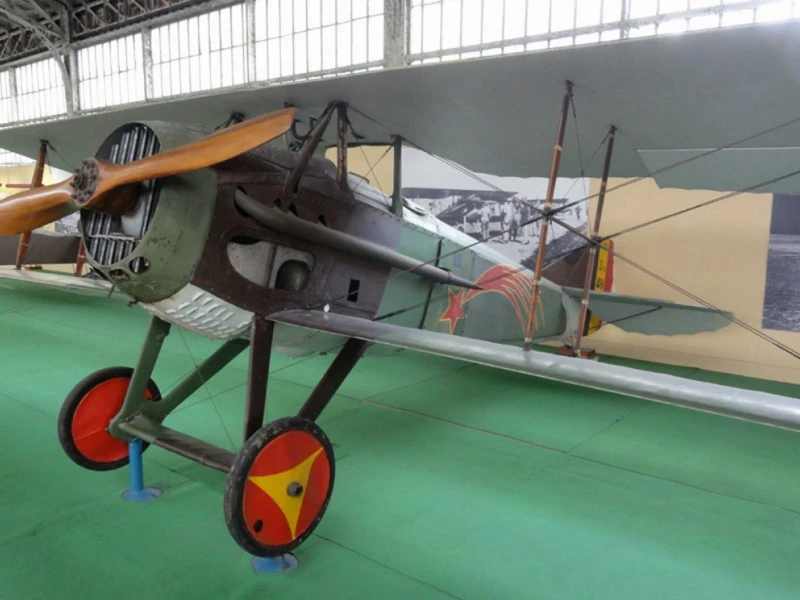
Lla SPAD S.XIII était un Français avion de chasse biplan de la Première Guerre mondiale, développé par la Société Pour L’Aviation et ses Dérivés (SPAD) from the earlier and highly successful SPAD S.VII.
During early 1917, the French designer Louis Béchereau, spurred by the approaching obsolescence of the S.VII, decided to develop two new fighter aircraft, the S.XII and the S.XIII, both utilizing a powerful new geared version of the successful Hispano-Suiza 8A engine. The cannon armament of the S.XII was unpopular with most pilots, but the S.XIII proved to be one of the most capable fighters of the war, as well as one of the most-produced, with 8,472 built and orders for around 10,000 more cancelled at the Armistice
The SPAD XIII C.1 (Société Pour L’Aviation et ses Dérivés, with « C.1 » meaning *Chasseur*, or fighter, single-seat) was one of the most successful and widely produced French fighter aircraft of World War I. Designed by Louis Béchéreau, it was an evolution of the earlier SPAD VII, featuring a more powerful engine, larger wings, and crucially, double the armament. The SPAD XIII was valued for its rugged wooden construction, excellent speed, and ability to withstand high g-forces in a dive, making it a formidable high-altitude interceptor. It was the primary fighter used by the French and American air services during the final year of the war.
Property
Typical Value (SPAD S.XIII C.1)
Type
Single-Seat Fighter (Chasseur) Biplane
National Origin
France
Fabricant
SPAD (and licensed by eight others)
First Flight
April 4, 1917
Crew
1 (Pilot)
Empty Weight
Approx. 663 kg (1,464 lb)
Max Takeoff Weight
Approx. 845 kg (1,863 lb)
Envergure
8.25 m (27 ft 1 in)
Powerplant and Armament
Engine: 1 x Hispano-Suiza 8Be water-cooled, V-8 engine (later versions).
Engine Power: 220–235 hp (164–175 kW).
Maximum Speed: Approx. 218 km/h (135 mph) at altitude.
Armament: 2 x .303 in (7.7 mm) Vickers machine guns (synchronized to fire through the propeller arc), each with 400 rounds. American-operated aircraft sometimes used Marlin M1917/1918 guns.
Structural Advantage: The strong structure allowed the SPAD XIII to safely perform high-speed dives, a key tactic used by Allied aces to attack the enemy.
Fuel Capacity: Approximately 114 liters (30 gallons), sufficient for about two hours of combat endurance.
Service History and Legacy
Mass Production: Approximately 8,472 units were built, making it one of the most mass-produced fighters of the war.
Ace Pilot’s Choice: It was flown by many of the leading French and American aces, including René Fonck (75 victories), Charles Nungesser (43 victories), and America’s top ace, Captain Eddie Rickenbacker (26 victories).
Allied Dominance: Along with the British S.E.5a, the SPAD XIII helped secure Allied air superiority over the Western Front in 1918, successfully countering the threat posed by German fighters like the Fokker D.VII.
Primary Users: Aéronautique Militaire (France), United States Army Air Service (USAS), Royal Flying Corps/Royal Air Force (UK), Belgium, and Italy.
Legacy: The SPAD XIII is considered the most significant French fighter of the Great War, setting a new standard for speed and ruggedness that influenced post-war fighter design.


 Aero A.10 – Photos & Vidéos
 Aero A.12 – Photos & Vidéos
 Avia BH-11 – Photos & Vidéos
 FVM Ö1 Tummelisa – Photos & Vidéos
 Fokker C.V – Photos & Vidéos
 Travel Air 2000 – Photos & Vidéos
 Spijker V.2 – Photos & Vidéo
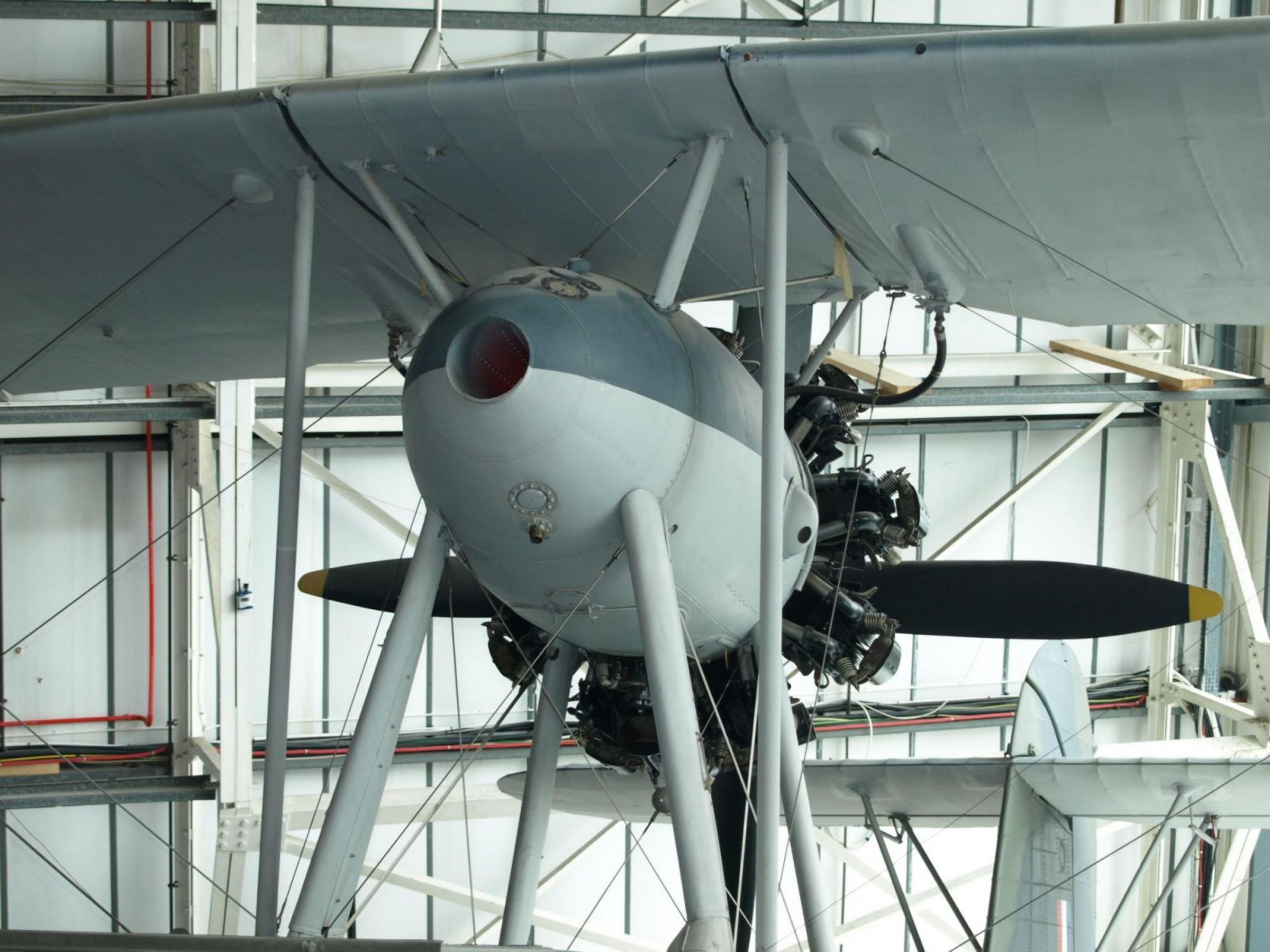 Supermarine Walrus – Photos & Vidéo
 Caudron G.III – Photos & Vidéo
 Bucker Bu-131 Jungmann – Photos & Vidéo