Opel Olympia

Opel Olympia

LandTyskland
TypeBil
Produktion1935–1970
ByggetUnknow

Den Opel Olympia is a compact car produced by the German automaker Opel from 1935 to 1940, from 1947 to 1953 and again from 1967 to 1970. The 1935 Olympia was Germany’s first mass-produced car with an all-steel unitized body (monocoque). This revolutionary technology reduced the weight of the car by 180 kilograms (400 lb.) compared to its predecessor. Production of the unibody design required new production methods and materials. Spot welding, advanced types of steel, and a new production line layout were among the many advances introduced by the Olympia.

Kilde: Opel Olympia på Wikipedia

Fortsæt med at læse

Set antal gange : 1699

Bartini Beriev VVA-14

Bartini Beriev VVA-14

LandSovjetunionen
TypeAmfibie-ASW-fly
Første flyvning4. september 1972
Bygget2

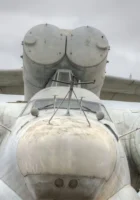
Den Bartini Beriev VVA-14 Vertikaľno-Vzletayushchaya Amfibiya (lodret start amfibiefly) var et vinge-i-jord-effekt fly udviklet i Sovjetunionen i begyndelsen af 1970'erne. Designet til at være i stand til at tage ud fra vandet og flyve med høj hastighed over lange afstande, var det at gøre sande flyvninger i stor højde, men også har evnen til at flyve effektivt lige over havets overflade, ved hjælp af aerodynamiske jordeffekt. VVA-14 blev designet af den italienskfødte designer Robert Bartini som svar på et opfattet krav om at ødelægge polaris-missilubåde fra den amerikanske flåde. Det sidste fly blev pensioneret i 1987.

Kilde: Bartini Beriev VVA-14 på Wiki

Fortsæt med at læse

Views : 3473

Lun-klasse ekranoplan

Lun-klasse ekranoplan

LandSovjetunionen
RolleAngreb/Transport jordeffekt køretøj
I brug 1987-slutningen af 1990'erne
Bygget2

Den Lun-klasse ekranoplan (also called Project 903) is a ground effect vehicle (GEV) designed by Rostislav Alexeyev in 1975 and used by the Soviet and Russian navies from 1987 until sometime in the late 1990s. It flew using lift generated by the ground effect acting on its large wings when within about four metres (13 ft) above the surface of the water. Although they might look similar to traditional aircraft, ekranoplans like the Lun are not classified as aircraft, seaplanes, hovercraft, or hydrofoils. Rather, crafts like the Lun-class ekranoplan are classified as maritime ships by the International Maritime Organization due to their use of the ground effect, in which the craft glides just above the surface of the water.

Kilde: Lun-klasse ekranoplan på Wikipedia

Fortsæt med at læse

Views : 1783

Kort Sunderland ML814

Short Sunderland

LandUk
RolleMilitær flyvende båd bombefly
Første flyvning16. oktober 1937
Bygget749

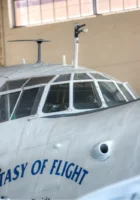
Den Kort S.25 Sunderland was a British flying boat patrol bomber, developed and constructed by Short Brothers for the Royal Air Force (RAF). The aircraft took its service name from the town (latterly, city) and port of Sunderland in North East England. Developed in parallel with the civilian S.23 Empire flying boat, the flagship of Imperial Airways, the Sunderland was developed specifically to conform to the requirements of British Air Ministry Specification R.2/33 for a long-range patrol/reconnaissance flying boat to serve with the Royal Air Force (RAF). As designed, it served as a successor to the earlier Short Sarafand flying boat. Sharing several similarities with the S.23, it featured a more advanced aerodynamic hull and was outfitted with various offensive and defensive armaments, including machine gun turrets, bombs, aerial mines, and depth charges. The Sunderland was powered by four Bristol Pegasus XVIII radial engines and was outfitted with various detection equipment to aid combat operations, including the Leigh searchlight, the ASV Mark II and ASV Mark III radar units, and an astrodome.

Kilde: Kort Sunderland på Wikipedia

Fortsæt med at læse

Set antal gange : 1127

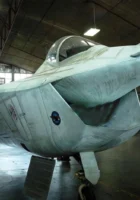
Boeing X-32 (Prototype)

Boeing X-32

LandUsa
RolleKoncept demonstrant fly
Første flyvning18. september 2000
Bygget2

Den Boeing X-32 er et koncept demonstrant fly, der blev designet til Joint Strike Fighter konkurrence. Den tabte til Lockheed Martin X-35 demonstranten, som blev videreudviklet til Lockheed Martin F-35 Lightning II.

Kilde: Boeing X-32 på Wikipedia

Fortsæt med at læse

Visninger : 1297

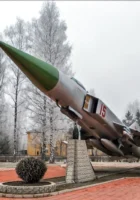
Sukhoi Su-15A Flagon

Sukhoi Su-15

LandSovjetunionen
TypeInterceptor fly
Første flyvning30. maj 1962
Bygget1290

Den Sukhoi Su-15 (NATO's rapporteringsnavn: Flagon) er et twinjet supersonisk interceptor-fly udviklet af Sovjetunionen. Det blev taget i brug i 1965 og forblev en af front-line design i 1990'erne. Su-15 var designet til at erstatte Sukhoi Su-11 og Sukhoi Su-9, som var ved at blive forældede, da NATO introducerede nyere og mere kapable strategiske bombefly.

Kilde: Sukhoi Su-15 på Wiki

Fortsæt med at læse

Visninger : 2107

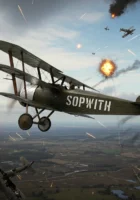
Sopwith Triplane war

Sopwith Triplane

LandUk
RolleFighter
Første flyv28. maj 1916
Bygget147

Den Sopwith Triplane was a British single seat fighter aircraft designed and manufactured by the Sopwith Aviation Company during the First World War. It has the distinction of being the first military triplane to see operational service. The Triplane was developed by the firm’s experimental department as a private venture, the project was headed by the designer Herbert Smith. Aside from its obvious difference in wing configuration, the aircraft shared many similarities with the company’s successful biplane fighter, the Sopwith Pup. The prototype Triplane performed its maiden flight on 28 May 1916 and was dispatched to the French theatre two months later, where it garnered high praise for its exceptional rate of climb and high manoeuvrability. During late 1916, quantity production of the type commenced in response to orders received from the Admiralty. During early 1917, production examples of the Triplane arrived with Royal Naval Air Service squadrons.

Kilde: Sopwith Triplane på Wikipedia

Fortsæt med at læse

Visninger : 1018

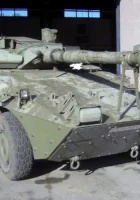
Centauro B1 105 mm

B1 Centauro

LandItalia
RolleHjultank destroyer
Produceret1991–2006
Bygget490+

Den Centauro is a family of Italian military vehicles originating from a wheeled tank destroyer for light to medium territorial defense and tactical reconnaissance. It was developed by a consortium of manufacturers, the Società Consortile Iveco Fiat – OTO Melara (CIO). Iveco Fiat was tasked with developing the hull and propulsion systems while Oto Melara was responsible for developing the turrets and weapon systems. Over the years, the Centauro platform has been developed into multiple variants to fulfill other combat roles, such as infantry fighting vehicle or self-propelled howitzer.

Kilde: B1 Centauro på Wikipedia

Fortsæt med at læse

Views : 3175