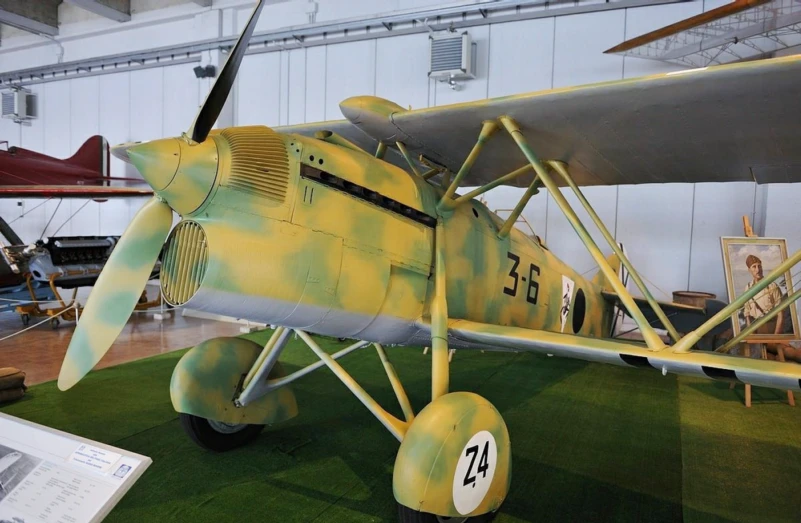
Фиат CR.32 | |
| Страна | Италия |
| Роля | Биплан изтребител |
| Първи полет | 28 април 1933 г. |
| Построен | 1052 |
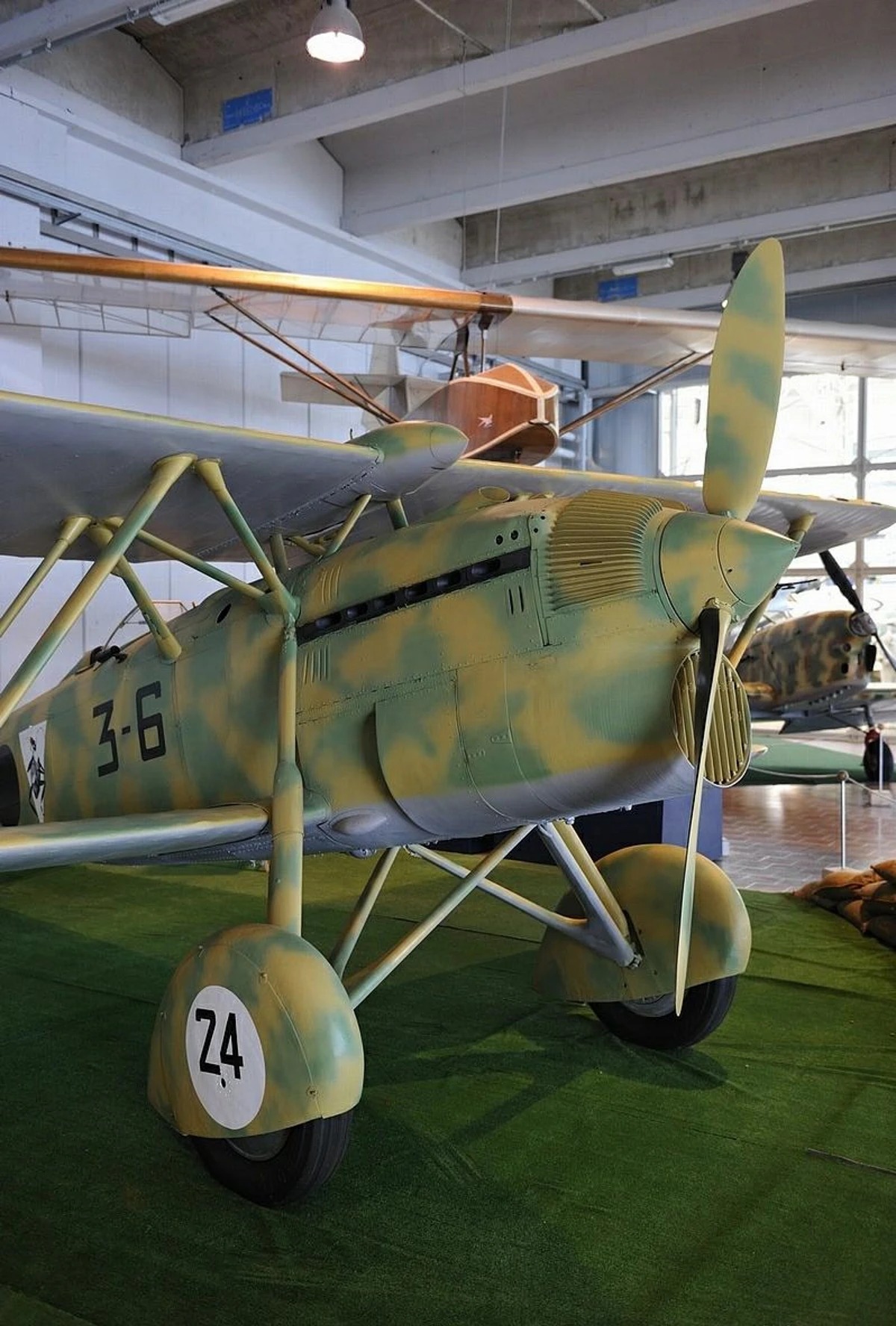
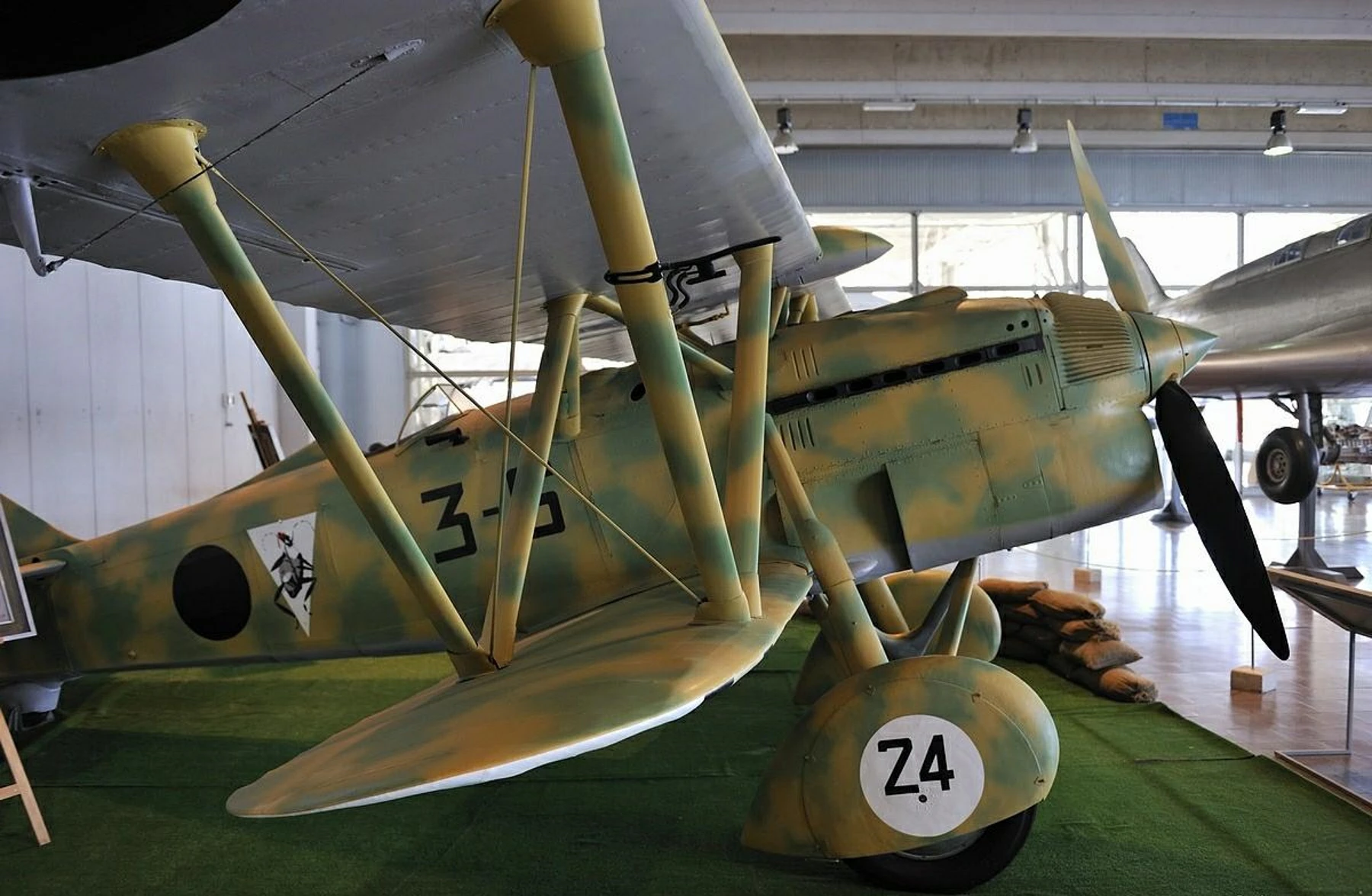
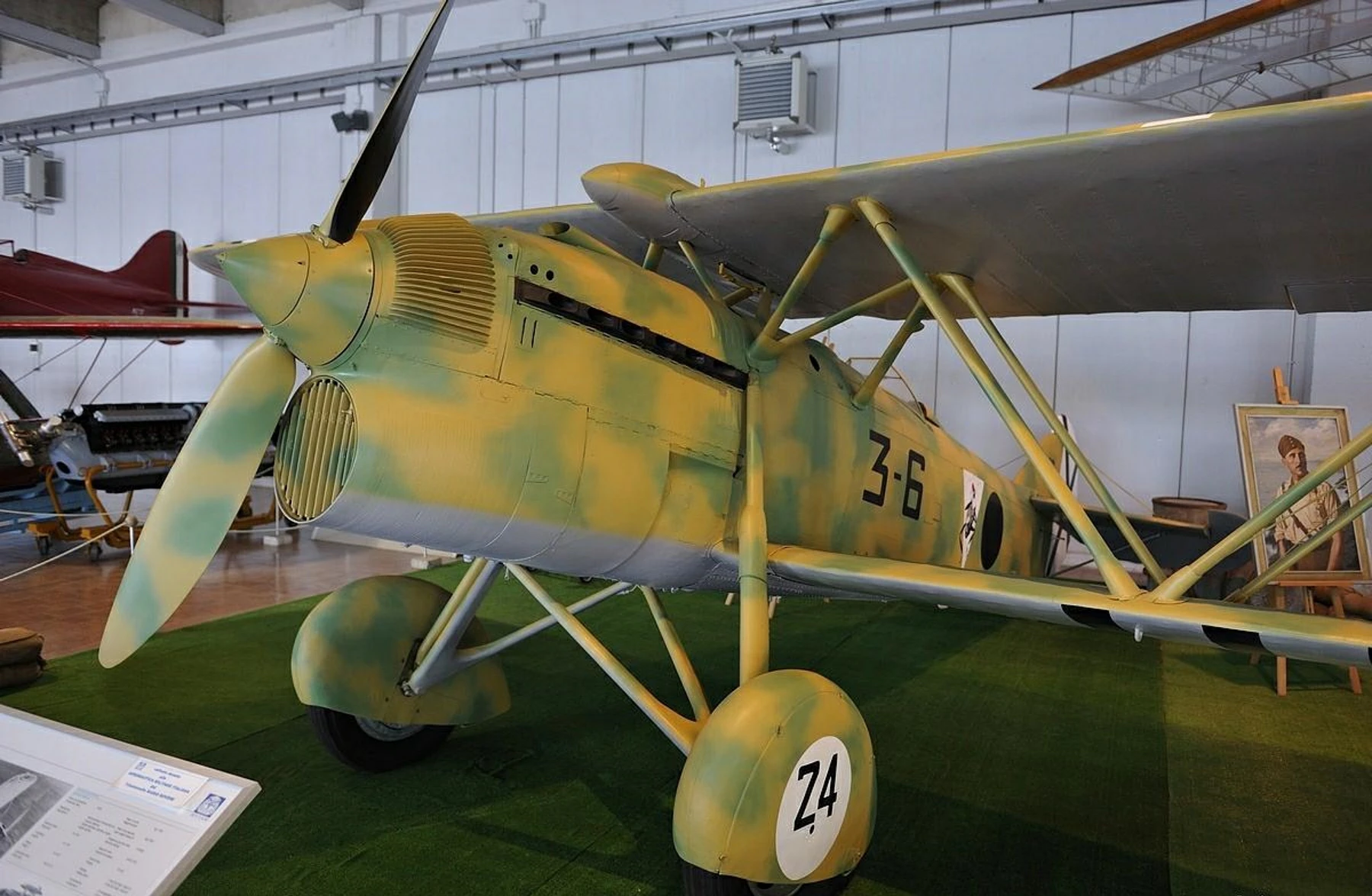
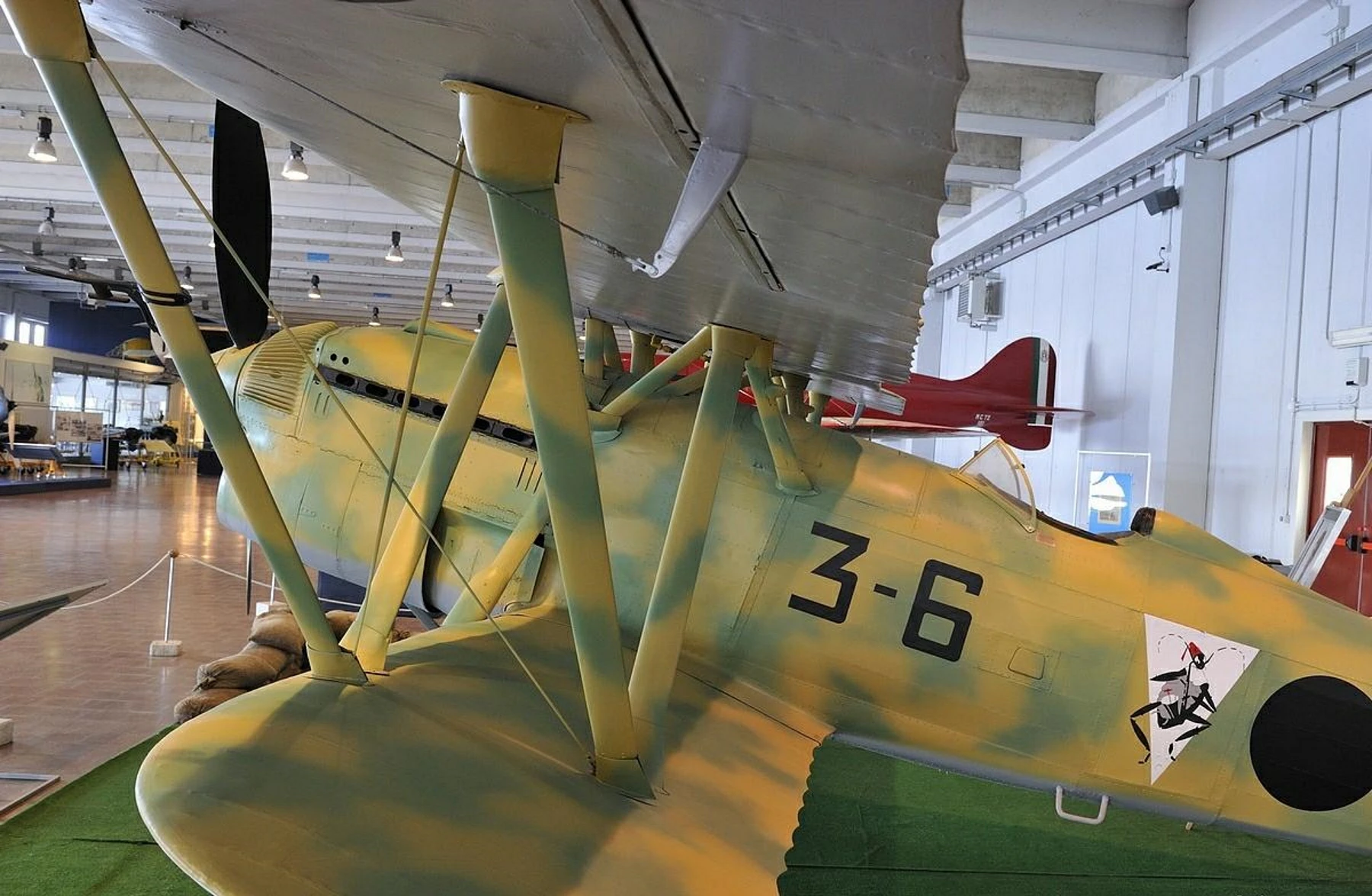
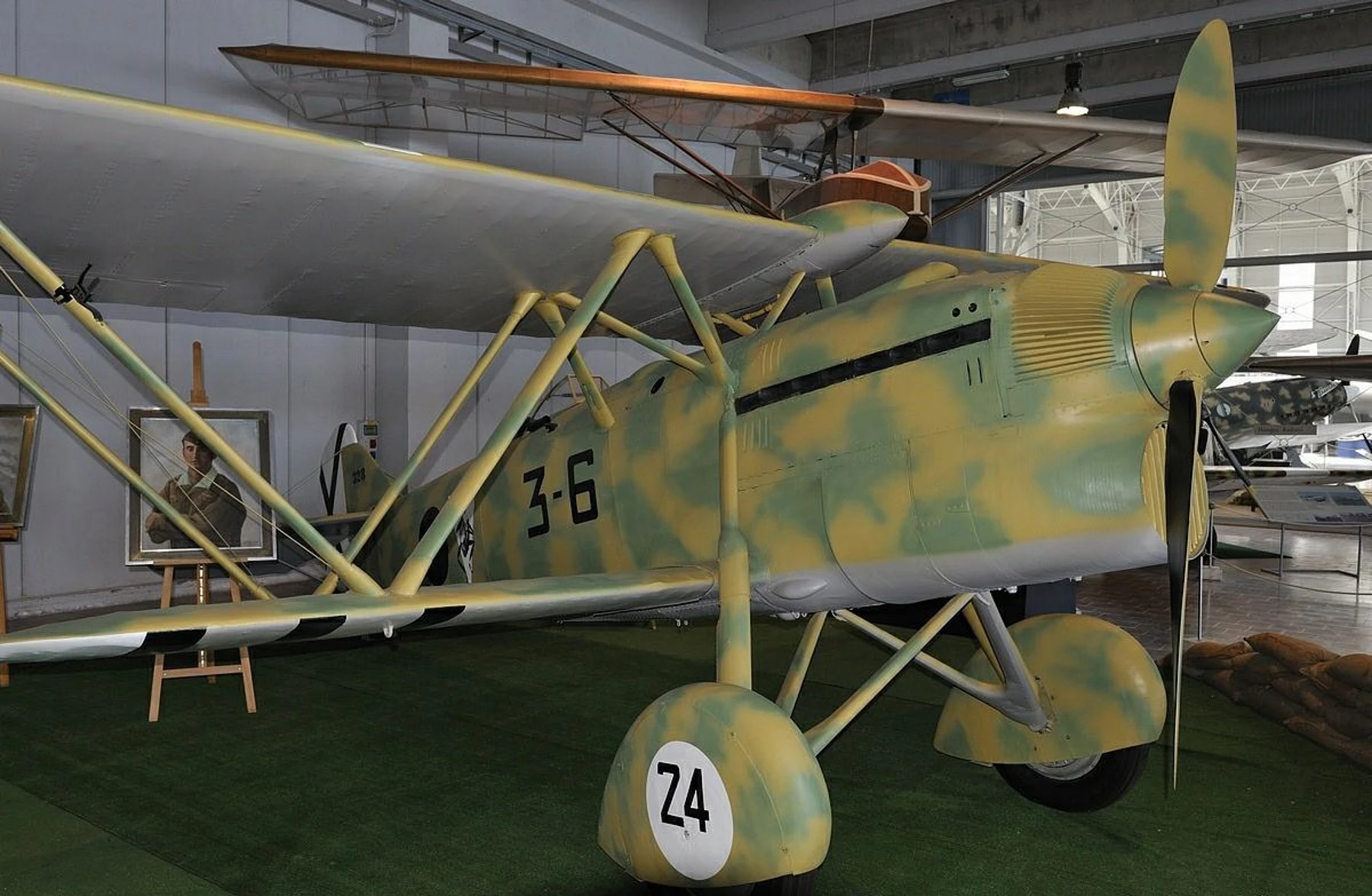
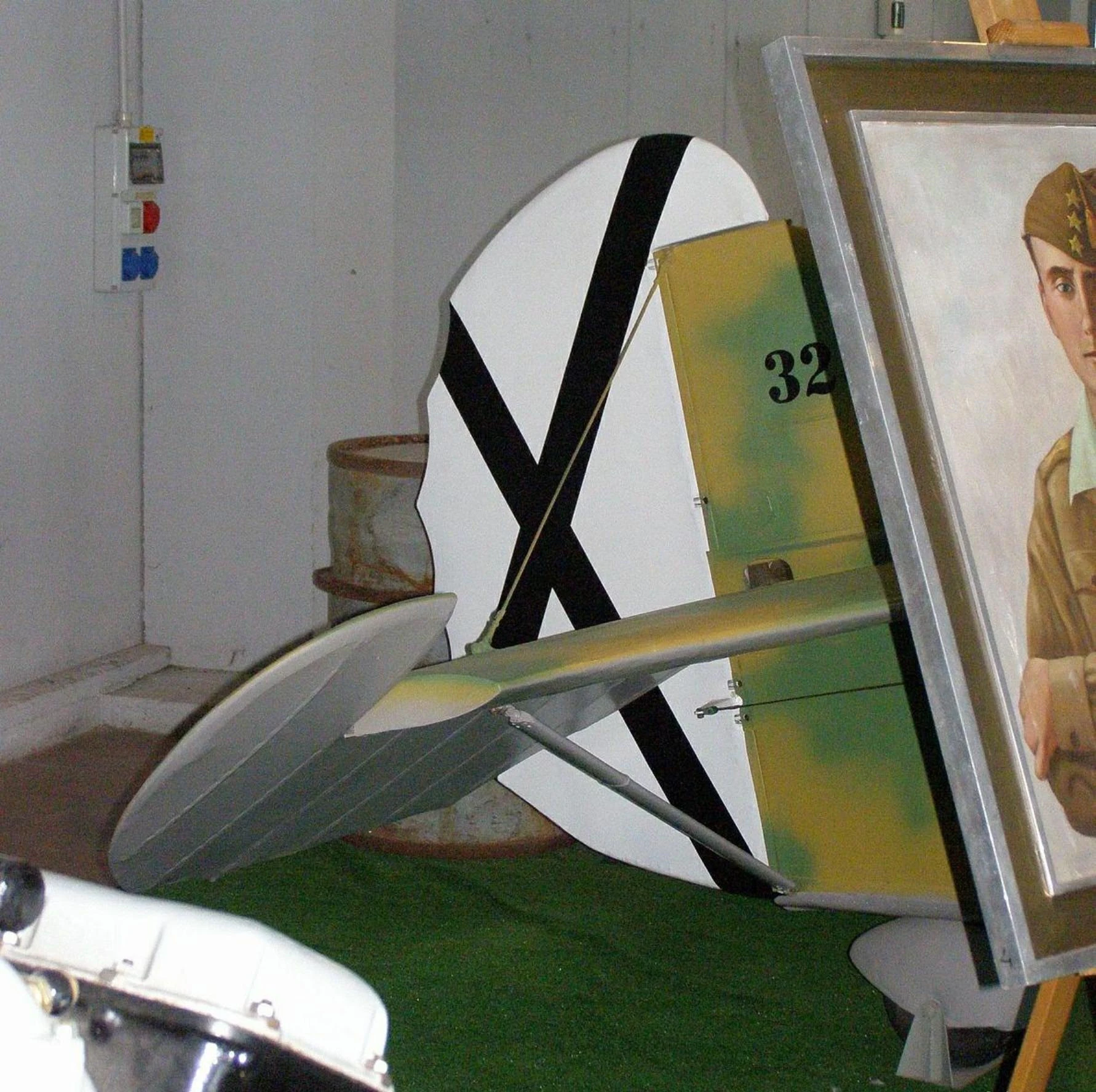
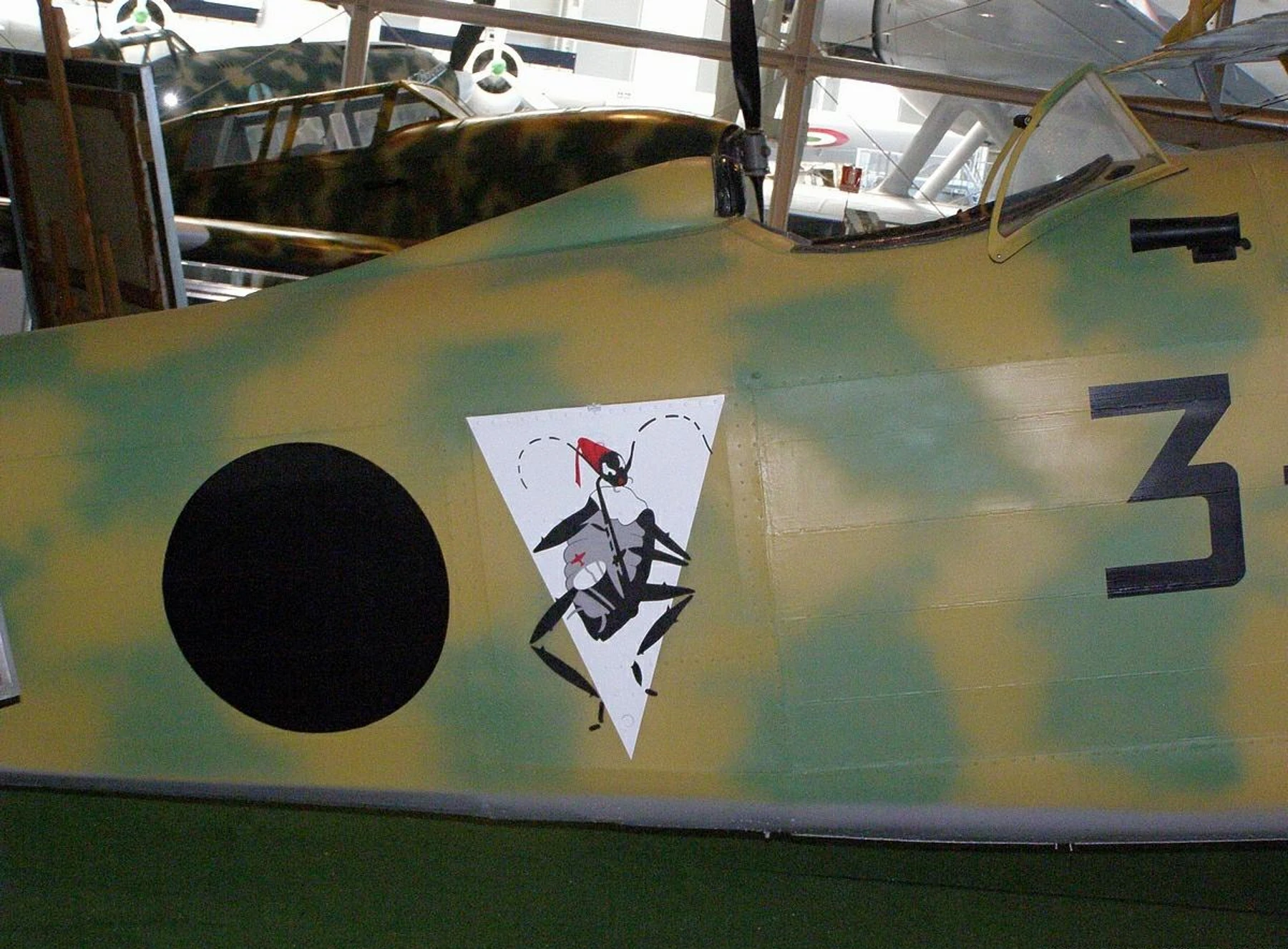
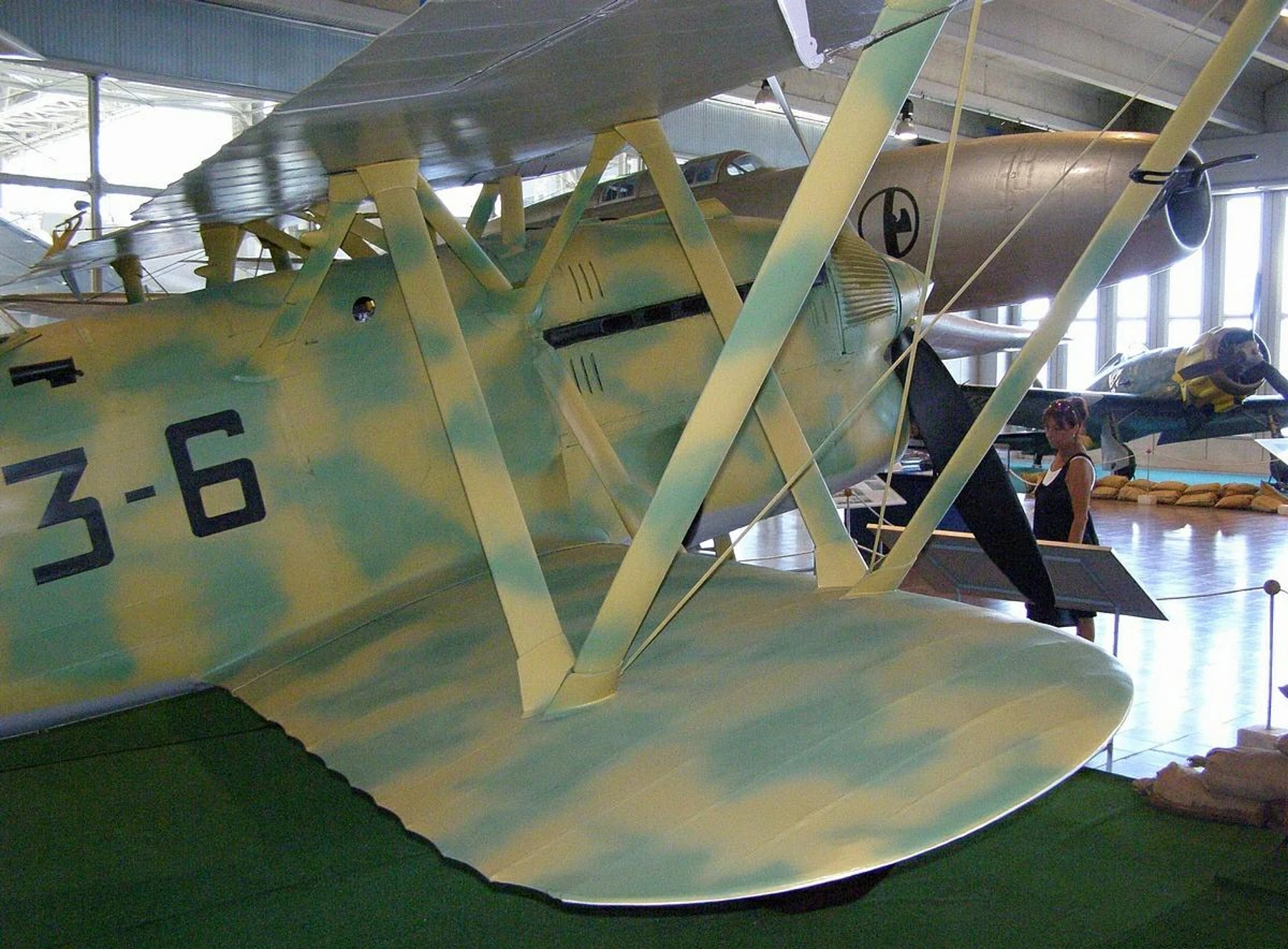
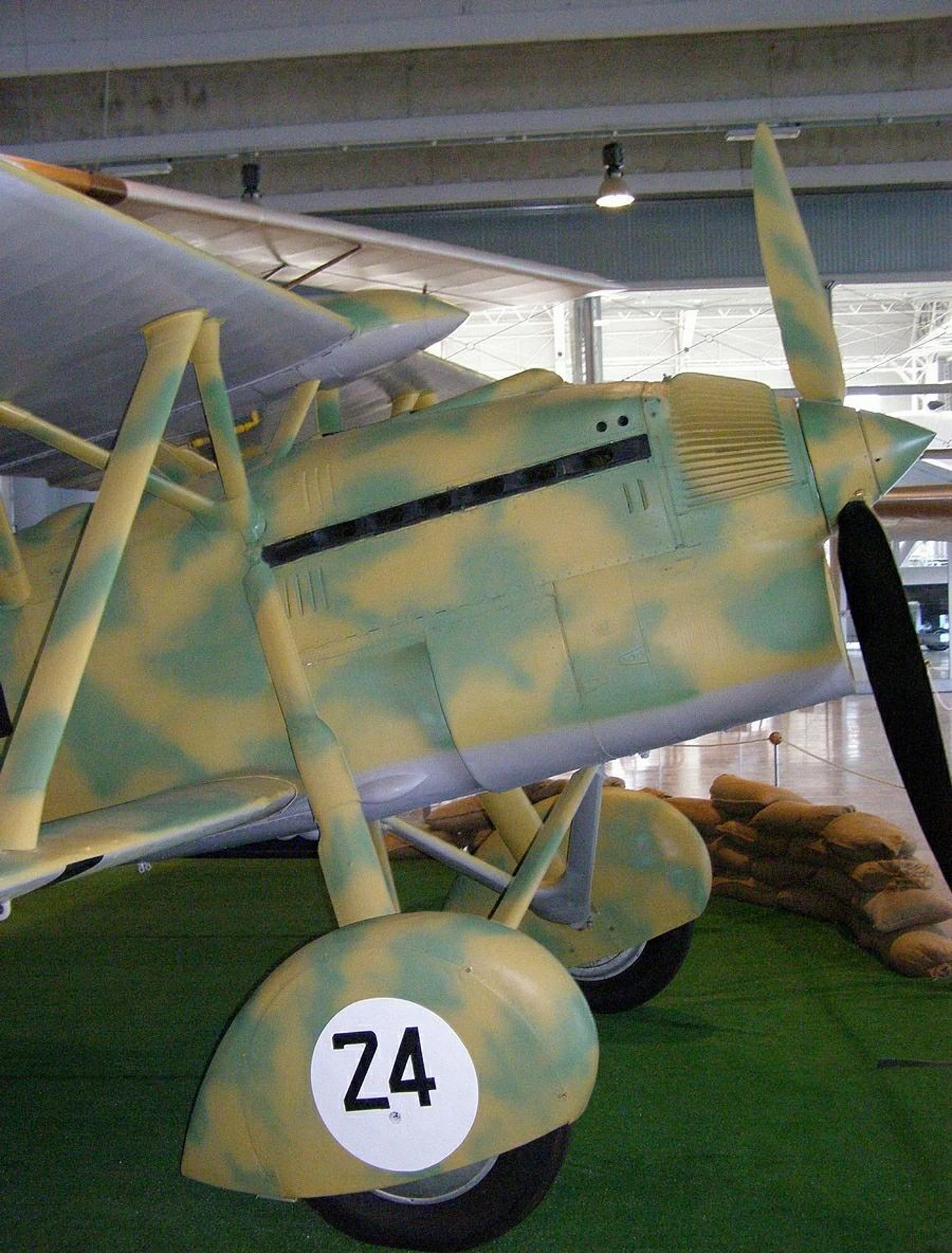
Фото галерия на Фиат CR.32, The Fiat CR.32 was an Italian biplane fighter used in the Spanish Civil War and World War II. It was compact, robust and highly manoeuvrable and gave impressive displays all over Europe in the hands of the Italian Pattuglie Acrobatiche. The CR.32 fought in North and East Africa, in Albania, and in the Mediterranean theatre. It saw service in the air forces of China, Austria, Hungary, Paraguay and Venezuela. Used extensively in the Spanish Civil War, it gained a reputation as one of the most outstanding fighter biplanes of all time. Subsequently it was overtaken by more advanced monoplane designs and was obsolete by 1939.
Източник: Фиат CR.32 на Уики
| Fiat CR.32 | |
|---|---|
| Фотограф | Либор Спурек |
| Локализация | Не знам |
| Снимки | 21 |

 Купи ми кафе
| Fiat CR.32 Walk Around | |
|---|---|
| Фотограф | Unknow |
| Локализация | Не знам |
| Снимки | 27 |
| Fiat CR.32 Walk Around | |
|---|---|
| Фотограф | Unknow |
| Локализация | Не знам |
| Снимки | 17 |
Вижте също:


The Acrobat of the Skies
1. Фиат CR.32 was the most widely used Italian fighter of the 1930s. Designed by Celestino Rosatelli (the “CR” in its name), it represented the peak of biplane technology before the monoplane era took over. Known for its incredible agility and robustness, it gained worldwide fame during the Spanish Civil War, where it dominated the skies against Soviet-built fighters. Pilots loved it for its aerobatic grace, earning it the nickname Chirri (Cricket). Though technically aging by the start of WWII, its maneuverability allowed it to remain a dangerous opponent in East Africa and the Mediterranean.
| Attribute | Technical Specification (CR.32bis) |
|---|---|
| Роля | Fighter / Ground Attack |
| Екипажа | 1 (Pilot) |
| First Flight | April 28, 1933 |
| Силова установка | 1 × Fiat A.30 RA bis V12 liquid-cooled engine |
| Horsepower | 600 hp (447 kW) |
| Maximum Speed | 360 km/h (224 mph) |
| Въоръжение | 2 × 12.7 mm Breda-SAFAT machine guns (synchronized) |
| Конструкция | Duralumin and steel frame, fabric-covered |
Design Engineering: The Warren Truss
- Warren Truss Wing Bracing: The CR.32 used a unique “W-strut” or Warren Truss wing arrangement. This eliminated the need for traditional external bracing wires, making the wings extremely rigid and strong while reducing drag. This allowed the pilot to pull violent high-G maneuvers without fear of structural failure.
- The Fiat A.30 Engine: Unlike many contemporary biplanes that used bulky radial engines, the CR.32 used a sleek liquid-cooled V12. This allowed for a much narrower, aerodynamic nose, though the “honeycomb” radiator placed beneath the engine was a distinctive feature of the aircraft’s silhouette.
- Heavy Firepower: While many fighters of the era still used light .30 caliber machine guns, the CR.32 was often armed with two 12.7 mm (.50 cal) Breda-SAFAT guns. These fired high-explosive and incendiary rounds, making it a lethal “tank” of the sky.
- Metal Construction: Despite its fabric outer skin, the underlying structure was made entirely of high-strength steel and duralumin tubes, making it much tougher and easier to maintain in the field than wooden-framed biplanes.
Legacy: Dominance in Spain
- The Spanish Civil War: The CR.32 was the mainstay of the Aviazione Legionaria. It famously faced the Soviet Polikarpov I-15 and I-16. While the I-16 was faster, the CR.32 could out-turn almost anything, allowing Italian and Spanish pilots to dominate through superior dogfighting tactics.
- A Global Export: Its success in Spain led to massive exports. It was used by Китай against the Japanese, as well as by Hungary, Austria, Paraguay, and Venezuela.
- Longevity: The Spanish were so impressed by the CR.32 that they produced it under license as the Hispano Ha-132-L “Chirri” and kept them in service as trainers until 1953—twenty years after its first flight.
- The Final Biplane: The lessons learned from the CR.32 led directly to the Фиат CR.42 Фалко, the last biplane fighter to be produced by any major power during World War II.
Преглеждания : 5899
Можете да видите също :
 Fiat CR.46 – Снимки и видео
 Илюшин Ил-28 – Снимки и видео
 Stout Bushmaster 2000 – Снимки и видеоклипове
 Beechcraft RC-12 мантинела – снимки и видео
 Cessna 310 – Снимки и видео
 Къртис P-36 Хоук – снимки и видео
 Fiat G.91 – Снимки и видео
 Cessna T-37 Tweet – Снимки и видео
 Fiat CR.42 – Снимки и видео
 Фиат Г-55 Сентауро – Разходка Около