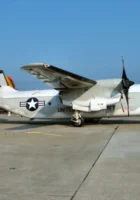
C-2A Greyhound

C-2A Greyhound

CountryUSA
TypeHigh-wing cargo aircraft
First flight4 November 1968
Built2900

Photo gallery of a C-2A Greyhound, The Grumman C-2 Greyhound is a twin-engine, high-wing cargo aircraft, designed to carry supplies, mail, and passengers to and from aircraft carriers of the United States Navy. Its primary mission is carrier onboard delivery (COD). The aircraft provides critical logistics support to carrier strike groups. The aircraft is mainly used to transport high-priority cargo, mail and passengers between carriers and shore bases, and can also deliver cargo like jet engines and special stores.

Source: C-2A Greyhound on Wiki

Continue reading

Views : 3295

L-39 Albatros

L-39 Albatros

CountryCzechoslovakia
TypeJet trainer aircraft
PhotographerSergei Tsvetkov
Description

Album of 53 photos walk-around of a «L-39 Albatros»

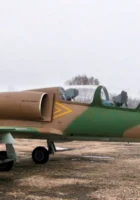
Photo gallery of a L-39 Albatros, The Aero L-39 Albatros is a high-performance jet trainer aircraft developed in Czechoslovakia by Aero Vodochody. It was designed during the 1960s as a replacement for the Aero L-29 Delfín as a principal training aircraft. The L-39 Albatros has the distinction of being the first of the second-generation jet trainers to be produced, as well as being the first trainer aircraft to be equipped with a turbofan powerplant. The type was widely exported to a wide range of international operators as a military trainer.

Source: L-39 Albatros on Wiki

Continue reading

Views : 4810

CH-53GS Super Stallion

CH-53GS Super Stallion

CountryUSA
RoleHeavy-lift transport helicopter
First flight14 October 1964
Produced1964–1978

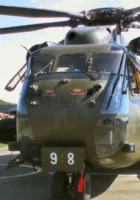
Photo gallery of a CH-53GS Super Stallion, The CH-53 Sea Stallion is the most common name for the Sikorsky S-65 family of heavy-lift transport helicopters. Originally developed for use by the United States Marine Corps, it is in service with Germany, Iran, Israel, and Mexico. The United States Air Force operated the HH-53 “Super Jolly Green Giant” during the late– and post–Vietnam-War era, updating most of them as the MH-53 Pave Low. The dimensionally-similar CH-53E Super Stallion is a heavier-lifting, improved version designated S-80E by Sikorsky. Its third engine makes it more powerful than the Sea Stallion, which it has replaced in the heavy-lift mission.

Source: Sikorsky CH-53 Sea Stallion on Wiki

Continue reading

Views : 3423

Morane-Saulnier MS.406

Morane-Saulnier MS.406

CountryFrance
TypeFighter aircraft
First flight8 August 1935
Built1176

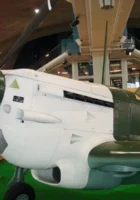
Photo gallery of a Morane-Saulnier MS.406, at Museum der Schweizerischen Fliegertruppe Dubendorf, The Morane-Saulnier M.S.406 was a French fighter aircraft built by Morane-Saulnier starting in 1938. Numerically, it was France’s most important fighter during the opening stages of World War II. Although sturdy and highly maneuverable, it was underpowered and weakly armed when compared to its contemporaries. Most critically, it was outperformed by the Messerschmitt Bf 109E during the Battle of France. The M.S.406 held its own in the early stages of the war (the so-called Phoney War), but when the war restarted in earnest in 1940, losses to all causes amounted to approximately 400 aircraft. Out of this total some 150 were lost to enemy fighters and ground fire, another 100 were destroyed on the ground in enemy air raids and the remainder was deliberately destroyed by French military personnel to prevent the fighters from falling into enemy hands intact. In return M.S.406 squadrons achieved 191 confirmed victories and another 83 probable victories. The type was more successful in the hands of Finnish and Swiss air forces who developed indigenous models.

Source: Morane-Saulnier MS.406 on Wiki

Continue reading

Views : 5339

Dassault Mirage F.1

Dassault Mirage F.1

CountryFrance
TypeAttack aircraft
PhotographersEugeny Ivanov
Description

Album of 27 photos walk-around of a «Dassault Mirage F.1»

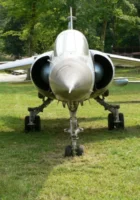
Photo gallery of a Dassault Mirage F.1, at Tartu aviation museum Estonia The Dassault Mirage F1 is a French fighter and attack aircraft designed and built by Dassault Aviation as a successor of the Mirage III family. The Mirage F1 entered service in the French Air Force (Armée de l’Air) in 1974. Powered by a single SNECMA Atar turbojet providing about 7 tonnes-force (69 kN; 15,000 lbf) of thrust, the Mirage F1 has been used as a light multipurpose fighter and has been exported to about a dozen nations. More than 720 Mirage F1s have been produced.

Source: Dassault Mirage F.1 on Wiki

Continue reading

Views : 5521

Breguet Aviation Br.1050 Alize

Breguet Br.1150 Atlantic

CountryFrance
RoleLong-range maritime patrol aircraft
First flight21 October 1961
Built87+28

Photo gallery of a Breguet Br.1150 Atlantic, The Breguet Br.1150 Atlantic is a long-range maritime patrol aircraft designed and manufactured by Breguet Aviation. Introduced to service in 1965, it has been operated by several NATO countries, commonly performing maritime roles such as reconnaissance and anti-submarine warfare. The Atlantic is also capable of carrying air-to-ground munitions to perform ground-attack missions; a small number of aircraft were also equipped to perform ELINT operations. An updated version, the Atlantique 2 or ATL2, was produced by Dassault Aviation for the French Navy in the 1980s. Other operators of the Atlantic have included the German Navy, the Italian Air Force, the Pakistan Navy, and the Royal Netherlands Navy.

Source: Breguet Br.1150 Atlantic on Wiki

Continue reading

Views : 5609

Sikorsky H-34

Sikorsky H-34 (S-58)

CountryUSA
RoleMilitary helicopter
First flight8 March 1954
Built2108

Photo gallery of a Sikorsky H-34 (S-58), The Sikorsky H-34 (company designation S-58) is a piston-engined military helicopter originally designed by American aircraft manufacturer Sikorsky as an anti-submarine warfare (ASW) aircraft for the United States Navy. It has seen extended use when adapted to turbine power by the British licensee as the Westland Wessex and Sikorsky as the later S-58T. H-34s served, mostly as medium transports, on every continent with the armed forces of twenty-five countries. It saw combat in Algeria, the Dominican Republic, Nicaragua, and throughout Southeast Asia; other uses included saving flood victims, recovering astronauts, fighting fires, and carrying presidents. It was one of the last piston-powered helicopter designs before its replacement by turbine-powered types such as the UH-1 Huey and CH-46 Sea Knight. A total of 2,108 H-34s were manufactured between 1953 and 1970

Source: Sikorsky H-34 (S-58) on Wiki

Continue reading

Views : 8547

PZL TS-11 Iskra

PZL TS-11 Iskra

CountryPoland
RoleTrainer aircraft
First flight5 February 1960
Built424

Photo gallery of a PZL TS-11 Iskra, The PZL TS-11 Iskra (English: Spark) is a Polish jet trainer aircraft, used by the air forces of Poland and India. It is notable as the main training aircraft of the Polish Air Force, and as the oldest jet aircraft still in service in Poland.

Source: PZL TS-11 Iskra on Wiki

Continue reading

Views : 5387

SEP W1

SEP W1

CountrySweden
TypeModular armoured vehicle
PhotographerErik Gustavsson
Description

Album of 60 photos walk-around of a «SEP W1»

Photo gallery of a SEP W1, The SEP modular armoured vehicle (Splitterskyddad enhetsplattform), Swedish for “Fragmentation Protected Standard Platform”, is a hybrid diesel-electric powered armoured fighting vehicle developed by BAE Systems AB. The vehicle is codenamed “Thor”. The first demonstration models were produced in 2000 (tracked) and 2003 (wheeled).[1] It was originally contracted by the Swedish Defence Materiel Administration. The series-hybrid electric drivetrains for both the wheeled (SEP-W) and two generations of tracked (SEP-T) vehicles were designed and manufactured by MAGTEC (Magnetic Systems Technology Ltd, Sheffield, UK).

Source: SEP W1 on Wiki

Continue reading

Views : 1865

Fokker C.X

Fokker C.X

CountryNetherlands
TypeJet-powered fighter
PhotographerMikhail Mamalygin
Description

Album of 20 photos walk-around of a «Fokker C.X»

Photo gallery of a Fokker C.X at Museum der Schweizerischen Fliegertruppe, The Fokker C.X was a biplane scout and light bomber designed in 1933. It had a crew of two (a pilot and an observer). It was originally designed for the Royal Dutch East Indies Army, in order to replace the Fokker C.V. Like all Fokker aircraft of that time, it was of mixed construction, with wooden wing structures and a welded steel tube frame covered with aluminium plates at the front of the aircraft and with fabric at the rear. The prototype was built in 1934 with a Rolls-Royce Kestrel V engine.

Source: Fokker C.X on Wiki

Continue reading

Views : 2230