Panzerkampfwagen II - Waffen Arsenal 019

Waffen Arsenal

SeriesWaffen Arsenal
Sujet

Panzerkampfwagen II – Panzer II – Sdkfz.121

Réf019

Signed documentation Waffen Arsenal "Panzerkampfwagen II - Waffen Arsenal 019" .

The Panzerkampfwagen II ( PzKpfw II ) or Sd. Kfz. 121 was a German-made tank. Like the PzKpfw I, it was designed as a temporary model, waiting for tanks like the PzKpfw III or the PzKpfw IV. Both types of vehicles were intended to provide training gear for The Panzerwaffe crews to develop the tactics of the future Blitzkrieg. However, the delay in the production of real battle tanks forced the Germans to use them massively during the beginning of the Second World War, and it was not until 1941 that they were gradually removed from the front lines. Subsequently, however, the PzKpfw II remained for a long time an important vehicle in the Wehrmacht's arsenal, thanks to reconnaissance derivatives and as a chassis for self-propelled guns, such as the Marder II and the Wespe. It had one more crew member than the Panzer I, a radio operator, also responsible for reloading the 20 mm automatic gun.

Source: Wikipedia

Continue reading

Views: 961

Panzerkampfwagen I - Waffen Arsenal 018

Waffen Arsenal

SérieWaffen Arsenal
Sujet

Panzerkampfwagen I – Panzer I – Sdkfz.101

Réf018

Une documentation signée Waffen Arsenal la revue «Panzerkampfwagen I – Waffen Arsenal 018» .

Le Panzer I est un char léger allemand, conçut dans les années 1930 et utilisé, lors de la Guerre d’Espagne et au début de la Seconde Guerre mondiale. Il fut le premier panzer réalisé alors que l’Allemagne, suite au traité de Versailles, avait interdiction d’étudier ou de construire des engins blindés, si bien que la première désignation qui lui fut appliquée pour brouiller les pistes, fut bien anodine, Landwirtschaftlicher Schlepper, ou tracteur agricole, mais par la suite il en reçut une plus officielle Panzerkampfwagen I (véhicule de combat blindé I). Il est également connu sous le nom de Sonderkraftfahrzeug 101 (abréviation SdKfz 101) littéralement véhicule spécial à moteur. Il était principalement destiné à servir comme véhicule d’instruction, peu coûteux car légèrement armé et blindé, pour formaliser les nouvelles doctrines de la blitzkrieg, mais les retards sur les modèles suivants contraignirent les allemands à l’utiliser au combat. Il constitua ainsi les gros des panzerdivisions, lors des campagnes de Pologne et de France, mais fut rapidement retiré des premières lignes et converti à d’autres usages, principalement comme tracteur pour des canons sur roues. Son équipage se composait d’un conducteur et d’un commandant qui était également tireur. Il possédait deux mitrailleuses de calibres 7,92 mm. La faible épaisseur de son blindage n’était efficace que contre l’infanterie légère. Pour un poids de près de 5 tonnes, le moteur de 100 chevaux était nettement insuffisant et sa consommation de près de 120l les 100km trop importante. En dépit de ses faibles performances de combat, l’expérience du “Panzer I” s’avéra précieuse lorsqu’il fallut développer des chars plus puissants et la plupart des équipages de “Panzers” furent formés sur ce char.

Source: Wikipedia

Continue reading

Views : 874

Das waffen arsenal 017 - Me 109

Waffen Arsenal

SeriesWaffen Arsenal
Sujet

Messerschmitt Bf 109

Réf017

Signed documentation Waffen Arsenal the magazine "Messerschmitt Bf 109 - Waffen Arsenal 017" .

The Messerschmitt Bf 109 is a German single-engine fighter designed in the 1930s by German engineer Willy Messerschmitt in response to a tender from the Reichsluftfahrtministerium (RLM) for the design of a modern fighter to equip the nascent Luftwaffe. Around the most powerful engine available, a Junkers Jumo 210 12-cylinder inverted V, Messerschmitt designed the thinnest possible airframe, using very innovative techniques he had developed for the Bf 108 light aircraft. The prototype Bf 109, superior to its competitors, was finally chosen, despite the enmity of the Minister of The Air, Erhard Milch, towards Messerschmitt.

Source: Wikipedia

Continue reading

Views : 1527

Das waffen arsenal 014 - Panzerkampfwagen IV

Waffen Arsenal

SeriesWaffen Arsenal
Sujet

Panzer IV

Réf014

Signed documentation Waffen Arsenal la revue «Panzer IV – Waffen Arsenal 014» .

The Panzerkampfwagen IV (PzKpfW IV), often referred to as Panzer IV, was a tank used by Nazi Germany during World War II. Originally designed as a fire support tank, with a short 75 mm gun, for the Panzerkampfwagen III, it eventually replaced the panzerkampfwagen III when allied tanks became too protected for the pan. Re-equipped with a long anti-tank gun, the PzKpfW IV was the main German tank during the second part of the war with more than 9000 copies produced and gave birth to many versions.

Source: Wikipedia

Continue reading

Views : 1030

Matilda

Matilda Tank

CountryUK
RoleInfantry tank
In service1939–1945
Built2987

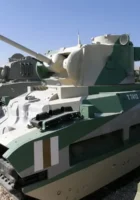
The Infantry Tank Mark II, best known as the Matilda, was a British infantry tank of the Second World War. The design began as the A12 specification in 1936, as a gun-armed counterpart to the first British infantry tank, the machine gun armed, two-man A11 Infantry Tank Mark I. The Mark I was also known as Matilda, and the larger A12 was initially known as the Matilda II, Matilda senior or Waltzing Matilda. The Mark I was abandoned in 1940, and from then on the A12 was almost always known simply as “the Matilda”.

Source: Matilda Tank on Wikipedia

Continue reading

Views : 9310

Das waffen arsenal 012 - Panther

Waffen Arsenal

SeriesWaffen Arsenal
Sujet

Panther - PzKpfw V - Sdkfz.171

Réf012

Signed documentation Waffen Arsenal "Panther - Waffen Arsenal 012" magazine .

The Panther tank is a medium tank widely used by the German army during World War II, starting in mid-1943. Designed to counter the Soviet T-34 tank, from which it was largely inspired, and replace the Panzerkampfwagen III and Panzerkampfwagen IV, it ultimately served alongside them until the end of the war. Until an order from Adolf Hitler, dated February 27, 1944, he was designated as PzKpfw V Panther and, in the ordinance inventory, as SdKfz 171.

Source: Wikipedia

Continue reading

Views : 657

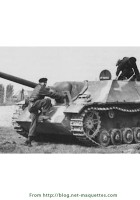
Jagdpanzer - Jagdpanther - JagdTiger - Photos

Jagdpanzer - Jagdpanther - JagdTiger

PaysGermany
Type

Tank hunter

Description

Album de 79 Jagdpanzer tank photos - Jagdpanther - JagdTiger

A tank destroyer est un engin blindé, le plus souvent chenillé, destiné à combattre et à détruire les autres blindés. Ceci en fait une unité particulière, spécialisée, possédant les qualités universellement reconnues comme nécessaires pour un char d’assaut : mobilité, puissance de feu, protection. Plus qu’un autre char, il doit satisfaire à ces conditions : les autres chars sont aussi employés pour réduire l’infanterie ou parfois même les fortifications légères ennemies. Ils satisfont donc à d’autres nécessités, ce sont des unités plus polyvalentes.

Ces engins sont apparus pendant la Seconde Guerre mondiale, et leur importance a diminué depuis 1945. Durant la Seconde Guerre mondiale, les unités blindées étaient plus diversifiées qu’aujourd’hui, où l’on ne retrouve sur la plupart des théâtres d’opération que des MBT (main battle tanks, par exemple le char Leclerc), des véhicules de l’avant blindés, plus légers et destinés au soutien des troupes d’infanterie mécanisées, et des transports de troupes blindés. Le rôle de chasseur de char est aujourd’hui plutôt dévolu à l’hélicoptère de combat. Les armées de terre se sont munies de ces véhicules spécialisés, plus particulièrement la Wehrmacht et l’US Army, ainsi que toutes les autres puissances alliées ayant massivement dépendu du matériel américain durant cette période. À l’origine, le besoin pour ces véhicules est venu d’une supériorité matérielle de l’arme blindée ennemie, et ce dans les deux cas.

Source: Jagdpanzer – Jagdpanther – JagdTiger sur Wikipedia

Continue reading

Views : 4170

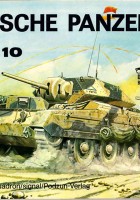
Das waffen arsenal 010 - Britische Panzer

Waffen Arsenal

PublisherWaffen Arsenal
Sujet

British Tanks

Réf010

Signed documentation Waffen Arsenal la revue «British Tanks – Waffen Arsenal 010» .

The Crusader is a British tank of the Second World War. It was the most built Cruiser tank (5,300 units). Widely used in 1942 in Libya and Egypt, it could not match the German Panzer IV except from a short distance, where its cannon was also effective.

Source: Wikipedia

Continue reading

Views: 532

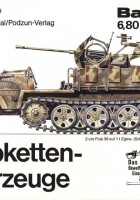
Halbketten Fahrzeuge - Waffen Arsenal 008

Waffen Arsenal

EditeurWaffen Arsenal
Sujet

Halbketten Fahrzeuge

Réf008

Signed documentation Waffen Arsenal magazine "Halbketten Fahrzeuge - Waffen Arsenal 008" .

The "SdKfz 10 leichter Zugkraftwagen 1 t." (Sonderkraftfahrzeug 10) was a German semi-tracked product produced at 17,000 between 1934/1937 and 1944, capable of carrying eight men, and towing the 3.7-cm Pak 35/36 anti-tank guns; Pak 38 5-cm and Pak 40 7.5-cm; or the 7.5-cm LeIG 18 infantry howitzers; sIG 33 of 15-cm; 12-cm Heavy Granatwerfer 42 mortars; as well as any artillery or Flak pieces with the weight included in the cathegorie of these weapons. The chassis of the "SdKfz 10" was used for the production of the SdKfz 250.

Source: Wikipedia

Continue reading

Views: 672

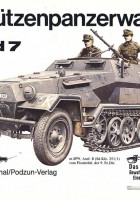
Das waffen arsenal 007 - Schützenpanzerwagen

Waffen Arsenal

SeriesWaffen Arsenal
Sujet

Schützpanzerwagen

Réf007

Signed documentation Waffen Arsenal the magazine "Schützpanzerwagen – Waffen Arsenal 007".

The Sonderkraftfahrzeug 251 (SdKfz.251) (literally: special combat vehicle) was a German semi-tracked combat armoured vehicle built during World War II, which was produced throughout the conflict. It was primarily intended to equip Panzer Divisions and Panzergrenadieren units and shared many mechanical elements with the SdKfz 7.

Source: Wikipedia

Continue reading

Views : 768